-
-
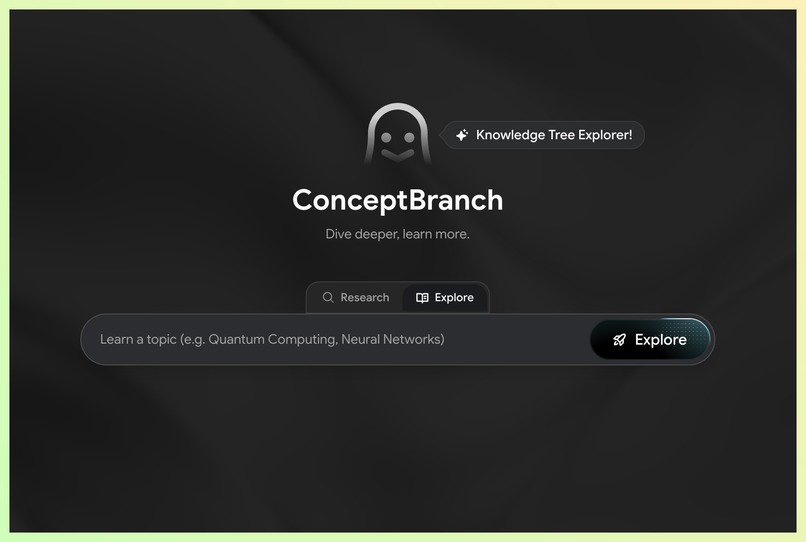
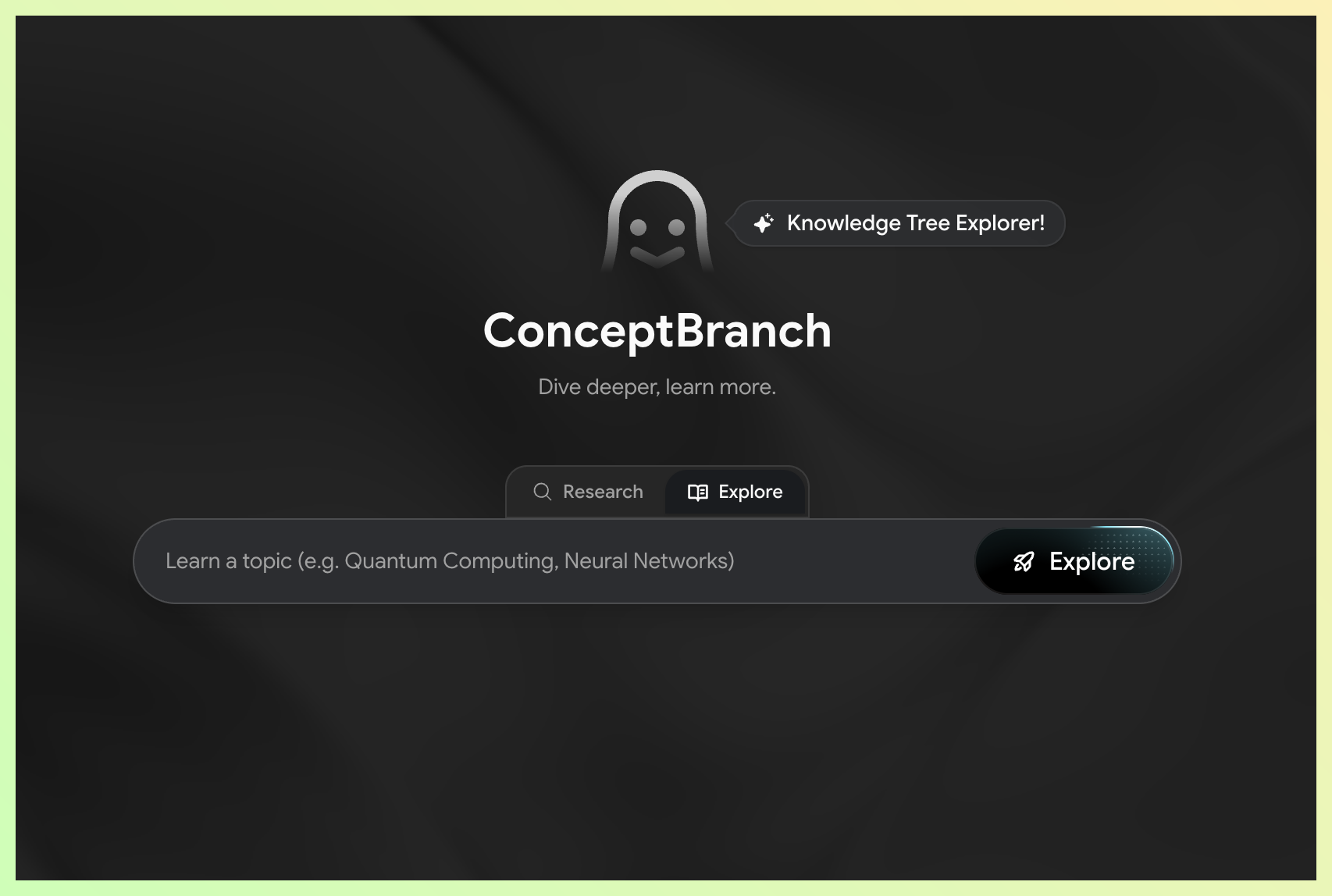
Home page
-
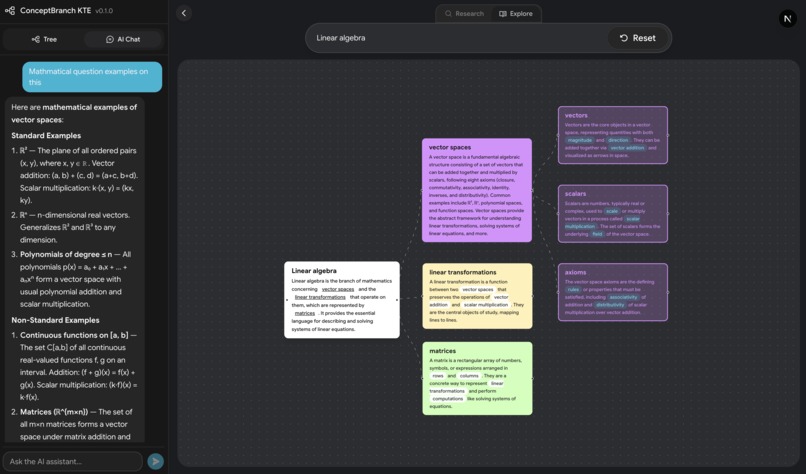
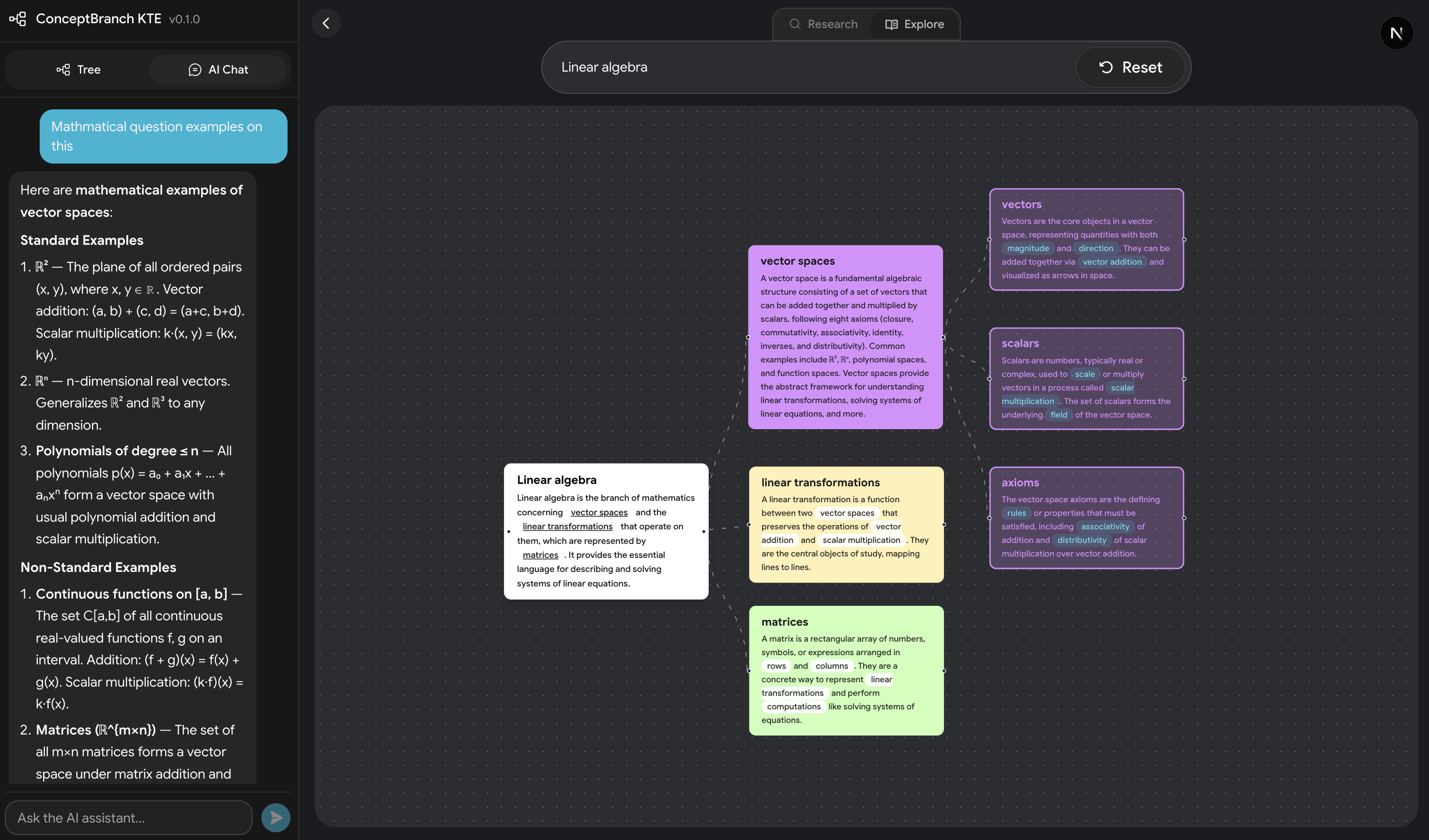
Knowledge tree and AI agent
Inspiration
We built ConceptBranch because modern learners are drowning in information. In today's world, everything from AI to finance, politics to sports, “what’s current” changes weekly. Most tools either give shallow overview or overwhelm users with poorly structured walls of text. We asked ourselves: can keeping up with research feel as fun as scrolling RedNote?
ConceptBranch does just that! It delivers RedNote-style, bite-sized visual paper intros and recommends them based on each learner’s past clicks which makes discovery more engaging and personal. We wanted to create a living map of knowledge that evolves with the learner and the world, delivering information in a far more engaging and interactive manner.
Unlike one-directional feeds that cluster similar content, ConceptBranch offers a tree-shaped exploration map: learners can branch into any concept direction, jump across related ideas, and keep expanding along multiple threads as their knowledge evolves.
What it does
ConceptBranch transforms a user query into a dynamic, explorable learning graph:
- Generates a structured concept tree from a broad topic.
- Lets users dive deeper into any topic for progressive, targeted expansion.
- Runs context-aware AI chat grounded in the exact branches the learner selected.
- Surfaces key terms and subtopics to guide focused exploration.
- Supports both “Research” mode (breadth-first discovery) and “Explore” mode (education-first depth).
How we built it
- Frontend: Next.js + React + animated graph interface for intuitive knowledge navigation.
- Knowledge engine: tree generation + subtree expansion APIs with strict JSON schemas for stable graph output.
- Adaptive learning flow: progressive node expansion, context propagation, and keyword-aware branching.
- AI assistant: MiniMax-powered contextual chat (
MiniMax-M2.5) grounded by selected nodes and full tree context. - Streaming UX: incremental response handling and resilient JSON recovery for partial outputs, reducing perceived latency.
- Data model: normalized nodes/edges with deterministic IDs to keep expansions reliable and merge-safe.
Challenges we ran into
- LLM outputs can drift from strict JSON formats, especially during streaming.
- Balancing depth vs. breadth in tree expansion without overwhelming users.
- Maintaining low-latency interaction while preserving answer quality.
- Keeping the UI smooth while graph structure updates in real time.
- Grounding responses to user-selected context so the assistant stays specific, not generic.
Accomplishments that we're proud of
- Built an end-to-end working platform from query → structured learning map → adaptive deep dives.
- Created a context-aware tutoring loop where each answer reflects exactly what the learner is viewing.
- Designed a polished, interactive interface that makes complex domains feel navigable.
- Implemented robust parsing/normalization pipelines that make AI-generated structures production-tolerant.
- Shaped a product with clear EdTech utility and startup potential beyond the hackathon.
What we learned
- Learners don’t just need “better summaries”; they need better structure.
- Context grounding dramatically improves relevance and trust in AI tutoring.
- Streaming and partial rendering make AI feel fast enough for real learning workflows.
- Personalization works best when it’s visual, interactive, and continuously updated.
What's next for ConceptBranch
- Ship full MiniMax multimodal pipeline: auto-generated micro-lectures (audio), concept animations (video), and memory hooks (music cues).
- Add adaptive learning plans with mastery tracking, spaced review, and weak-spot targeting.
- Introduce source credibility scoring + freshness signals to prioritize up-to-date materials.
- Improve webscraping capabilities to increase breadth and depth of search without compromising efficiency
- Launch collaborative study spaces for teams/classes to co-build concept trees.
- Pilot with students and professionals in AI ethics
Built With
- deepseek
- exa
- javascript
- langchain
- minimax-api
- nextjs
- react
- react-flow
- tailwindcss
- typescript
- vercel-ai-sdk


Log in or sign up for Devpost to join the conversation.