Video
https://www.loom.com/share/833976356d1e49d3bc1264ae7017ef41?sid=bc447a23-a7b2-4fe7-90eb-8e92e367b122
Inspiration
Unpaid care work (UCW) is largely unreported. According to Bill & Melinda Gates Foundation’s report only 85 countries have run time-use surveys (most common way of gathering data on UCW), 42 of which have conducted a survey later than 2010. Without data, addressing the challenges of changing norms around unpaid care work is very difficult. Therefore, I wanted to create a solution that could collect the data in a scalable way and showcasing the results in an engaging manner.
A big inspiration was Dollar street. It is an initiative by Gapminder to visualise the everyday life of people from different economic backgrounds across the world. The project has won innovation awards and is praised for increasing the use and understanding of statistics about global development. Data is collected by photographers that goes to families to collect pictures and videos of how they use everyday things.
What if we applied a similar to unpaid care work, but facilitating the data collection through AI?
What it does
TIUSE consists of two parts:
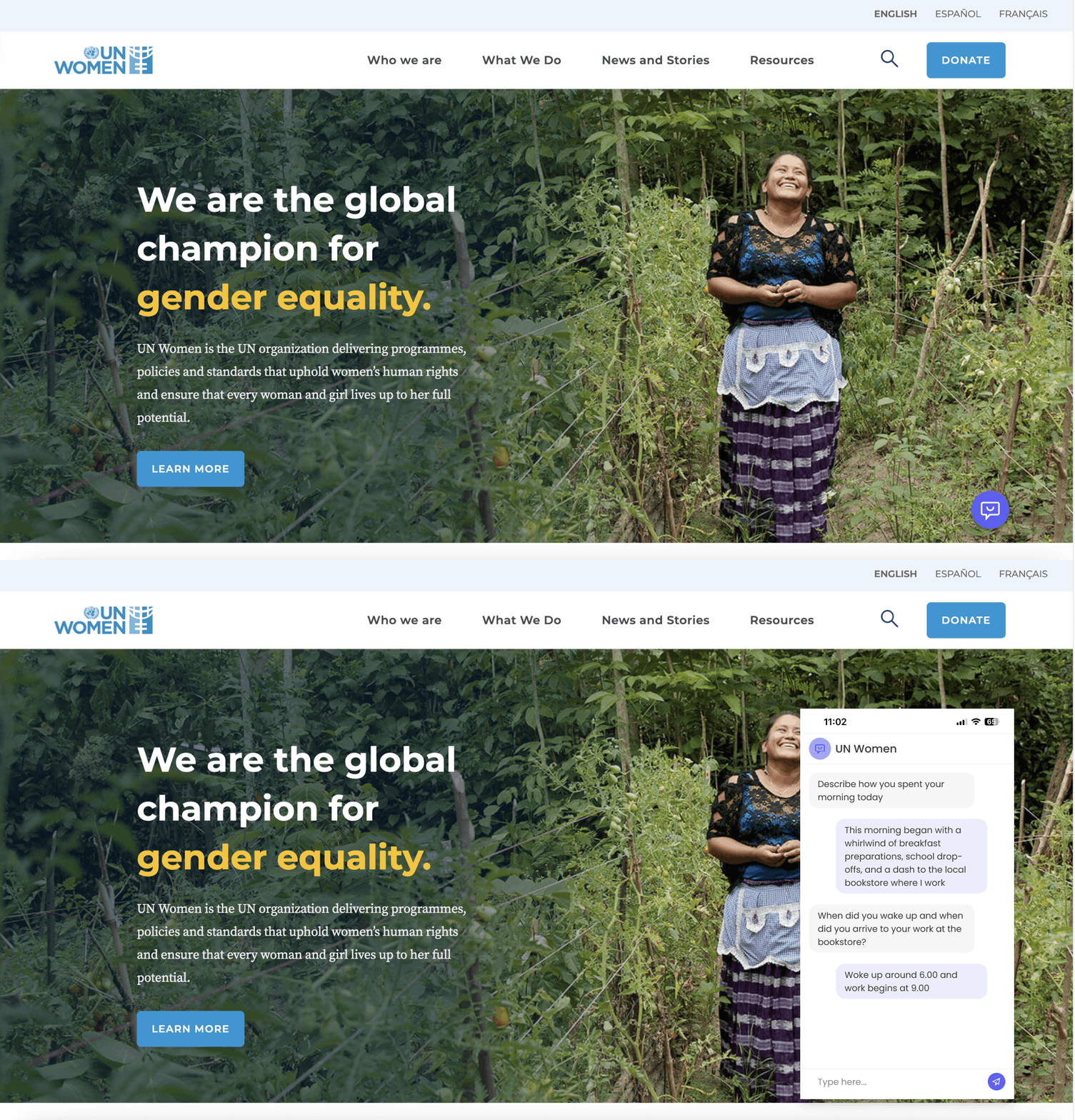
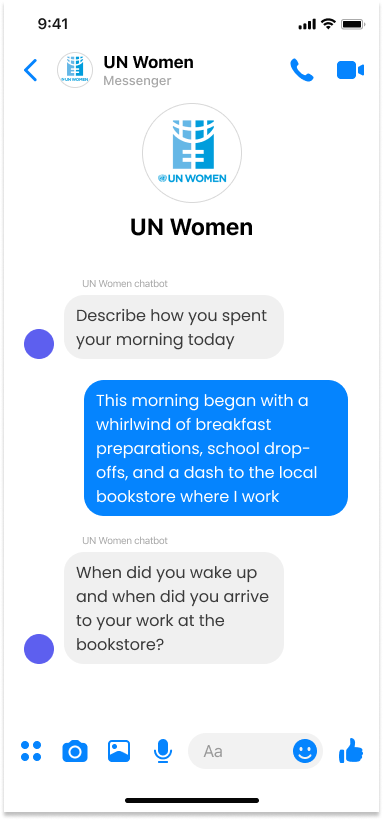
- A chatbot using LLM to collect time use data in a standardised and conversational way By using a large language model trained chatbot the data can be collected in a conversational manner. Instead of using a normal survey it can be gathered using the words and stories people would actually use to describe how they spend their day. Making it a chatbot is also a way to make it accessible. The chatbot can be integrated into websites or social media accounts as well as SMS. By partnering with local trusted organisations working with these issues it will help to both localise the conversational aspect of the chatbot as well as integrating the chatbot into their trusted channels to reach people that can answer the survey.
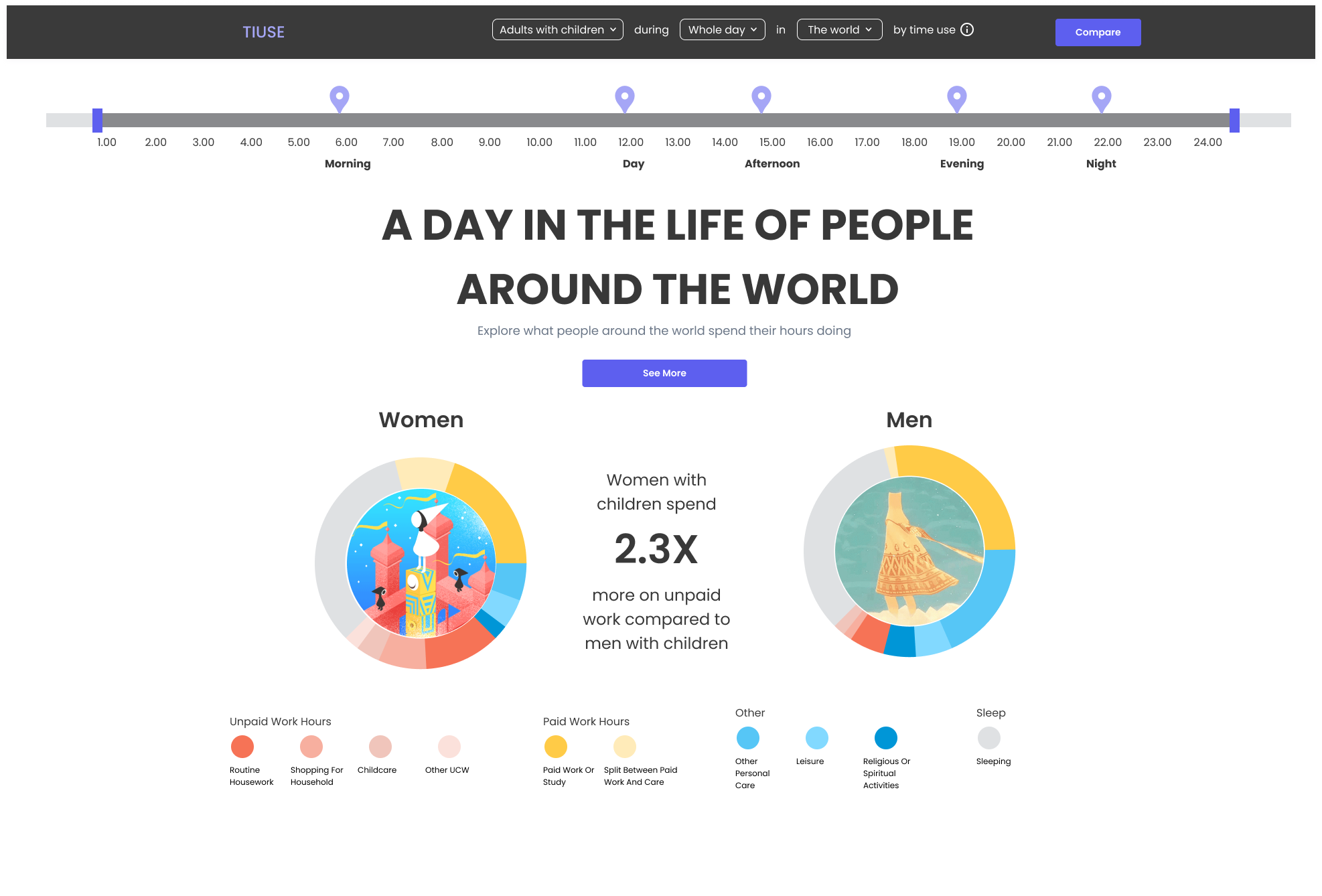
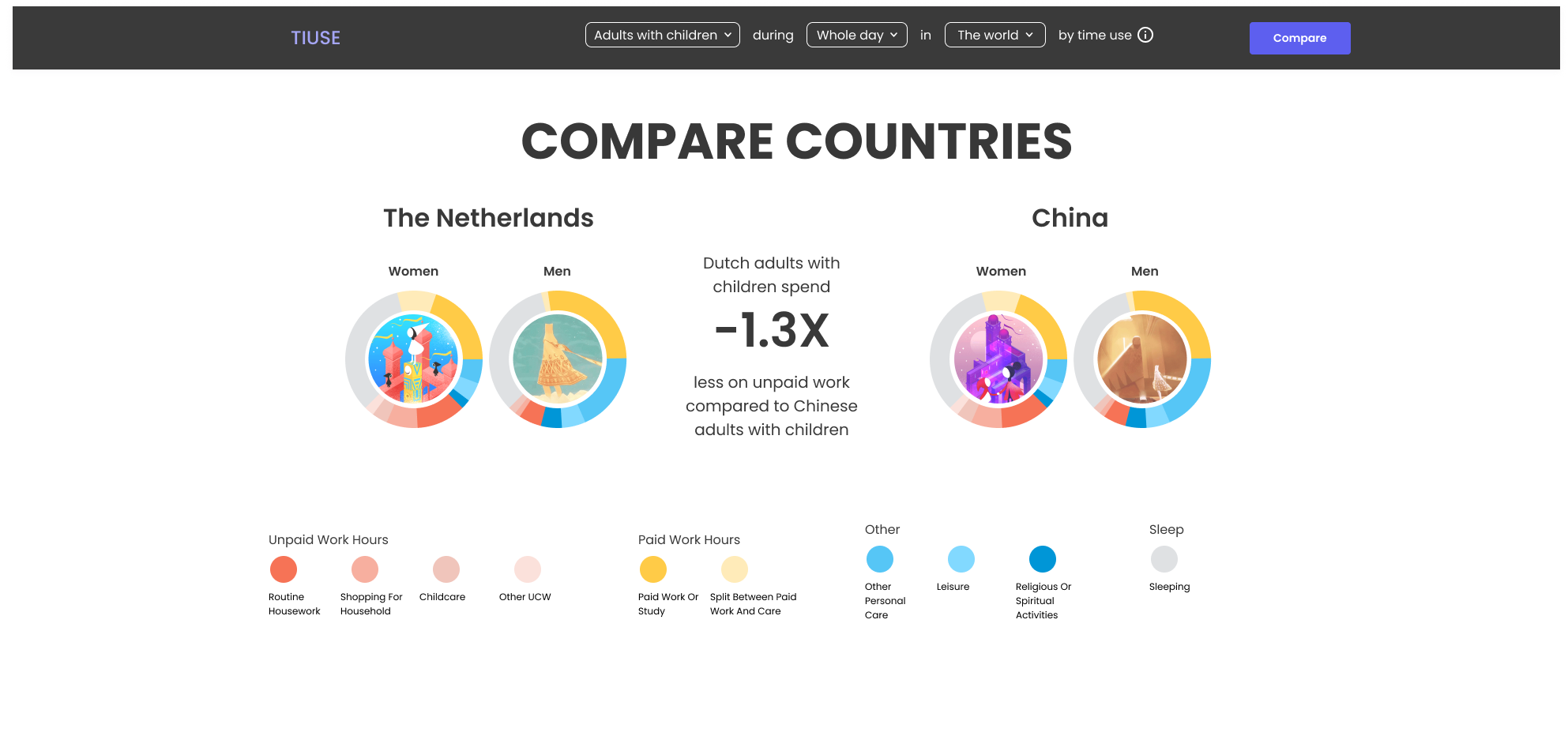
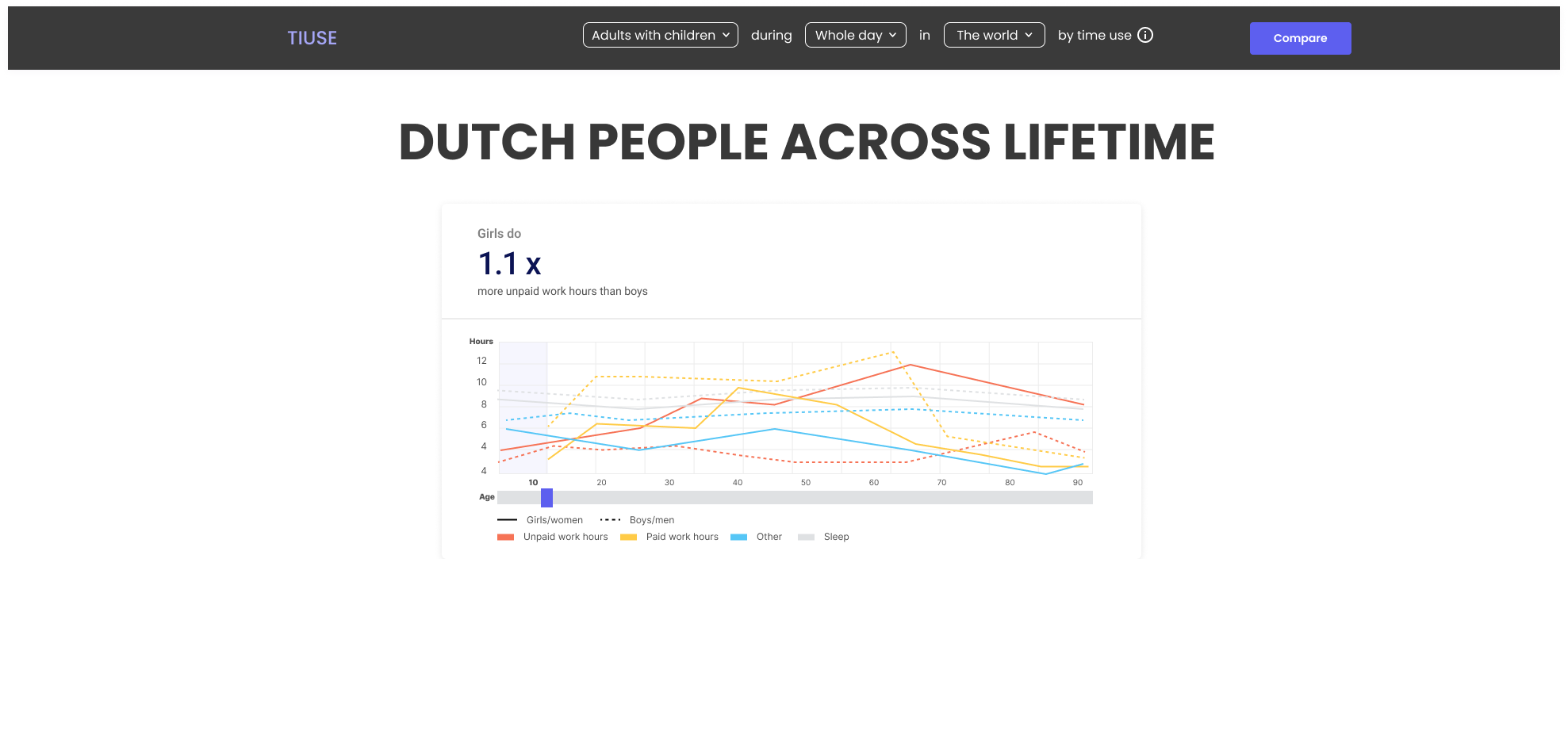
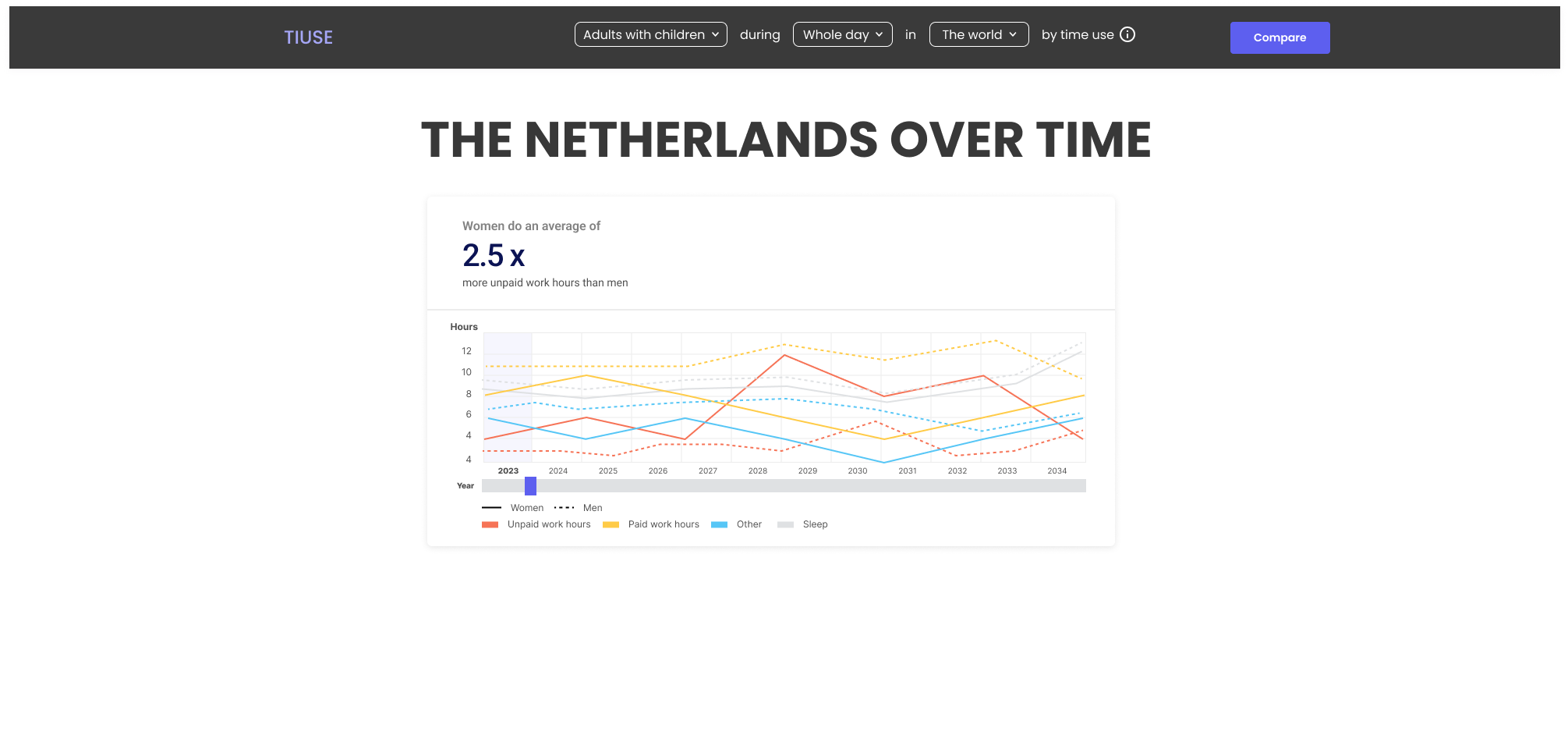
- A website to visualise and compare the data The data will be gathered in a website that showcases how people across the world spend their time. This will focus on highlighting the differences in unpaid care work. It will showcase it both using graphs and AI generated GIFs which represents an average day (using the data input from the survey answers). On the website you can also do comparisons of data over time for a specific country and compare different countries.
Challenges we ran into
- Best way to visualise time use data At first I tried visualising the data in a more complex way with more data points. With the intention of showcasing data that is not gathered today (like multi-tasking or time-use preferences). Ultimately, it took away from the main message in this time-frame of the hackathon. Therefore, I opted for a more simplistic way of showing the main message of the differences in time use between men and women
- Model for compensating participants My general belief is that people should be compensated for their data when participating in a study. But when making the solution as accessible as it is and using channels like social media, a website, and SMS to reach people this opens up opportunities for abuse. There would also have to be localised ways of compensating people through online means since we do not want to force people to use certain global actors (it’s common in my industry to give out compensation through Amazon gift cards or PayPal). To start of the idea is to let local partner organisations decide how and what to compensate participants with. Knowing that this also puts more pressure on local organisations while also opening up more opportunities for seeing participants as simply data points.
- Showing gender as a binary The prototype is showing gender as a binary (woman/men). Future iterations would have to consider non-binary and trans experiences that could also highlight interesting data on time use for marginalised groups.
Losing a day of work I had to skip one day of the hackathon for personal reasons which gave very limited time to expand on the idea.
Accomplishments that we're proud of
An idea that is hopefully very scalable I believe that the use of a chatbot is very scalable since it can be integrated with other channels and platforms. The scalability of it will hopefully help a lot in terms of being able to collect more data on this unpaid care work.
Finding ways to quickly visualise the idea Using already existing design libraries I could quickly visualise the core essence of the idea
What we learned
There is very little data on unpaid care work. And something that this idea does not address is the even fewer examples of successful ways of combating gender imbalances in unpaid care work nor the affect it has on women’s economic empowerment.
Links
Figma: link
Presentation: link
Built With
- generativeai
- llm


Log in or sign up for Devpost to join the conversation.