-
-
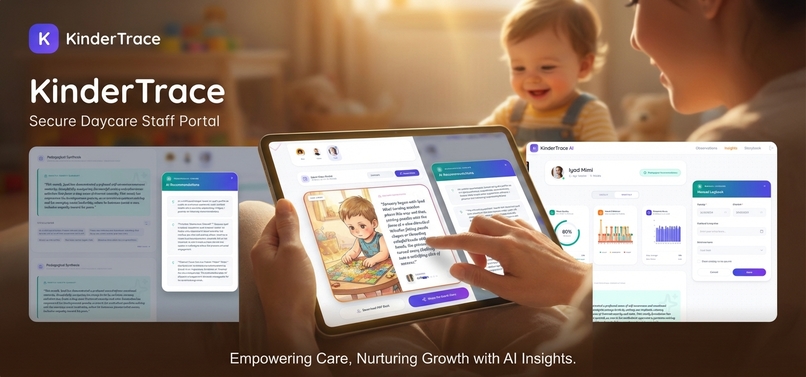
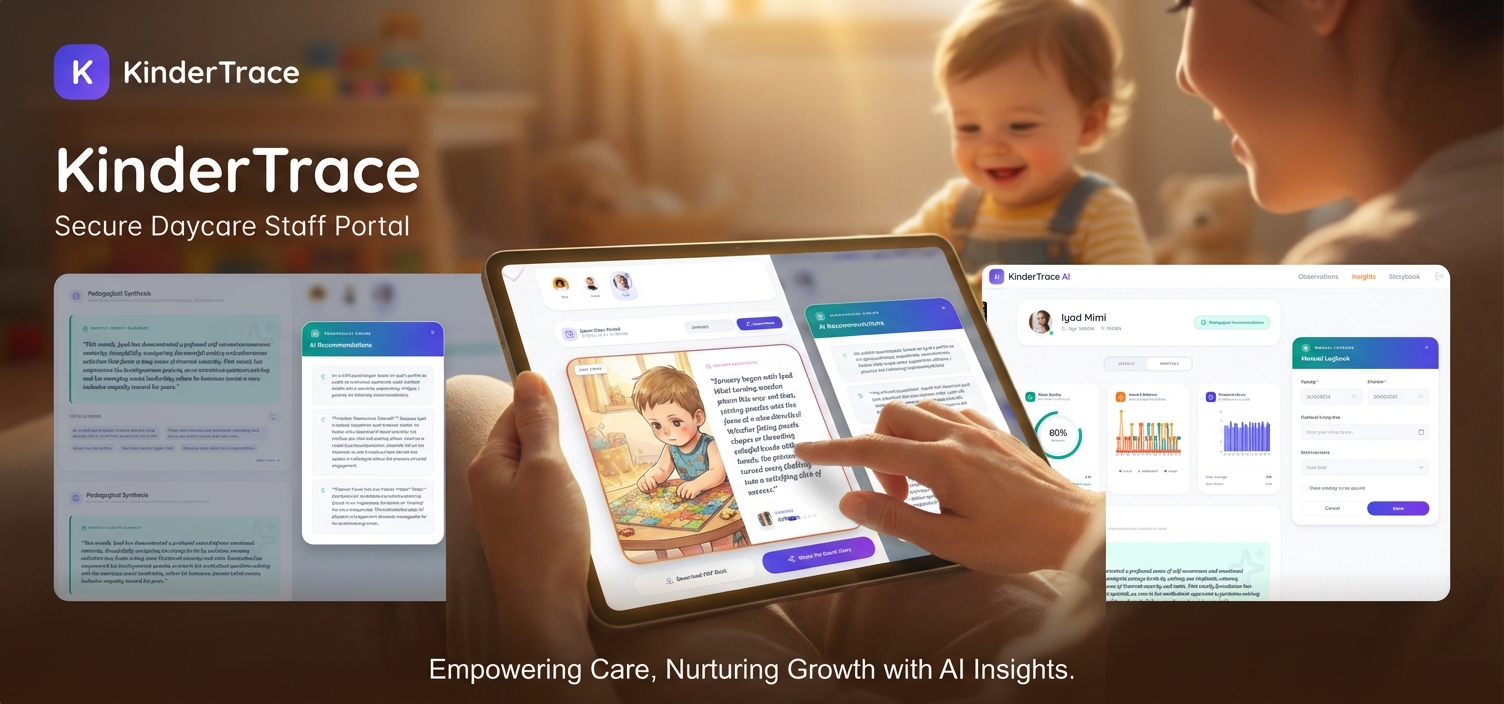
Kinder Trace thumbnail
-
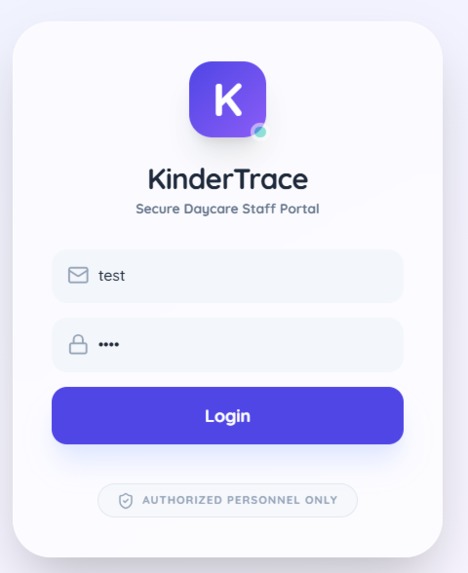
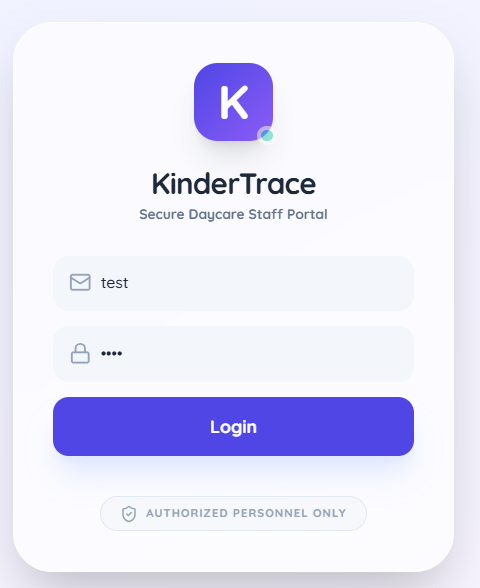
Authentication Section
-
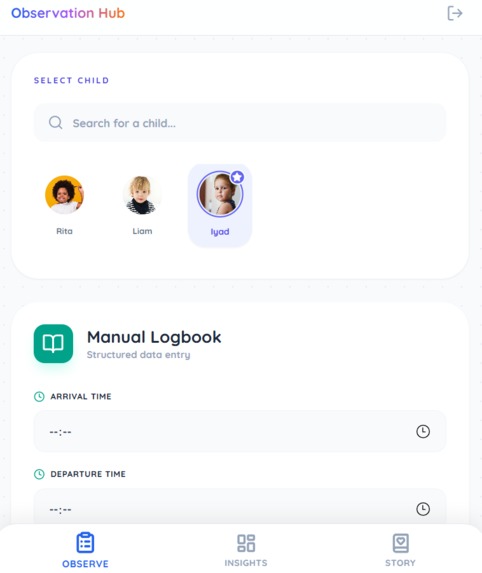
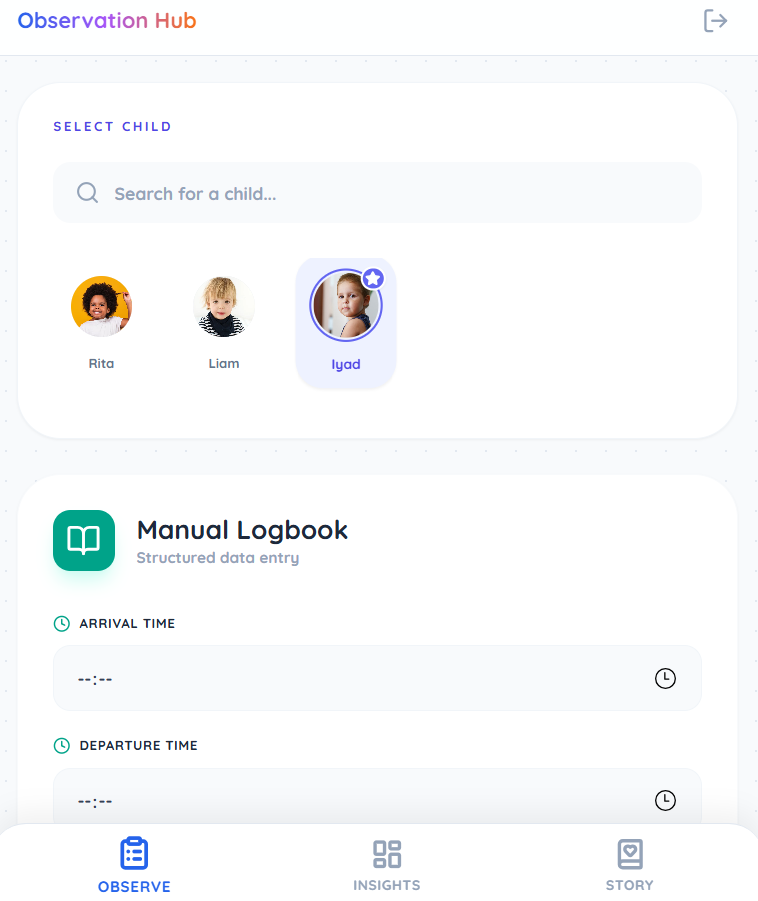
Child selection for observation entry
-
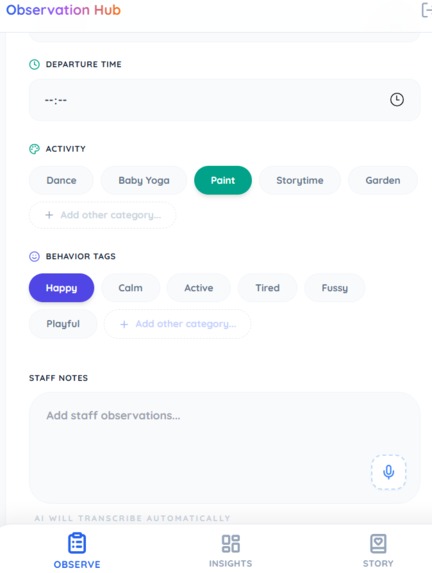
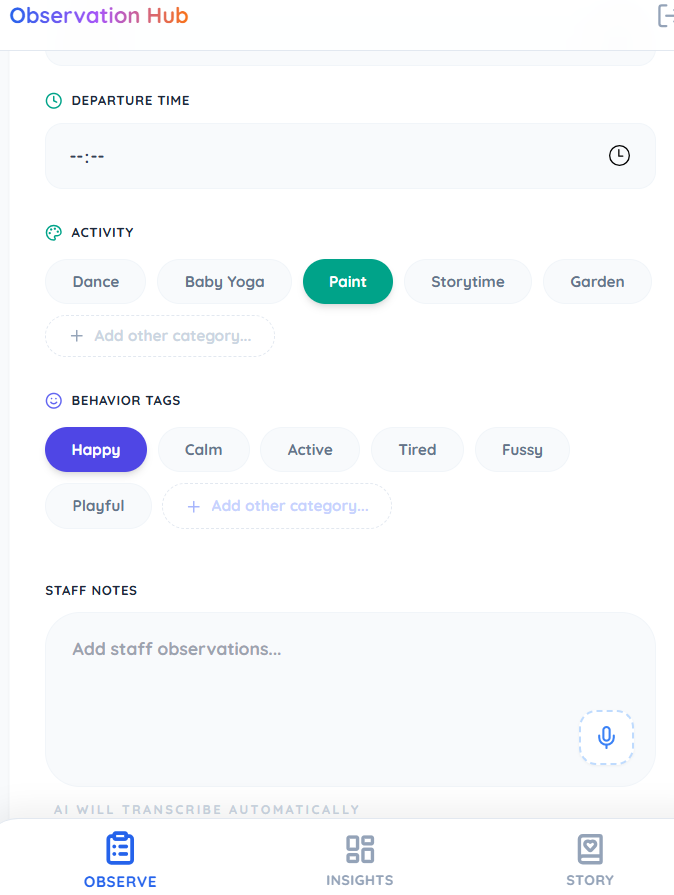
Observation entry - speech to text
-
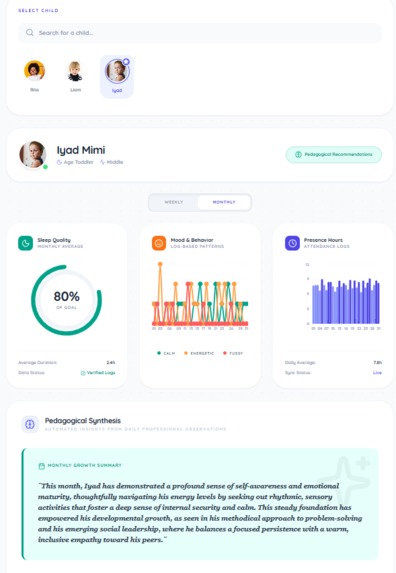
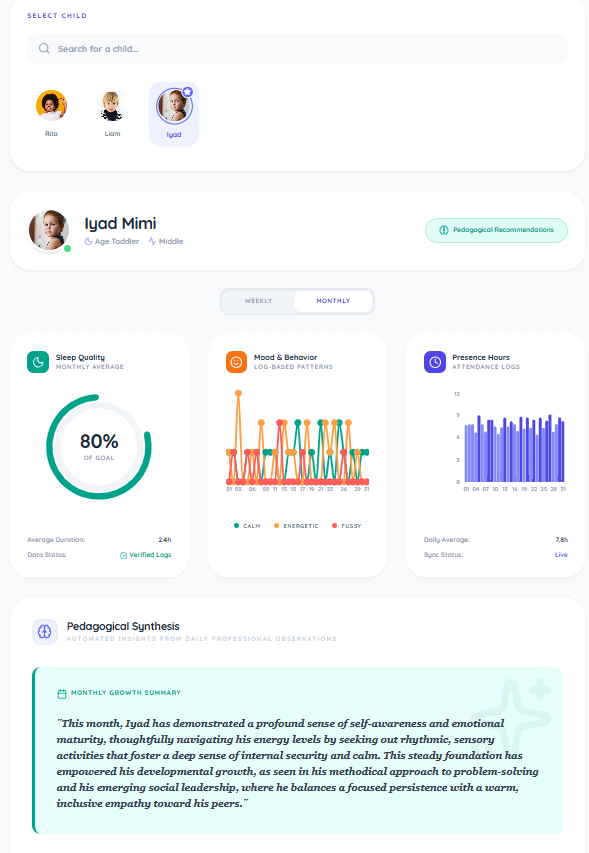
Insights Section - dashboards
-
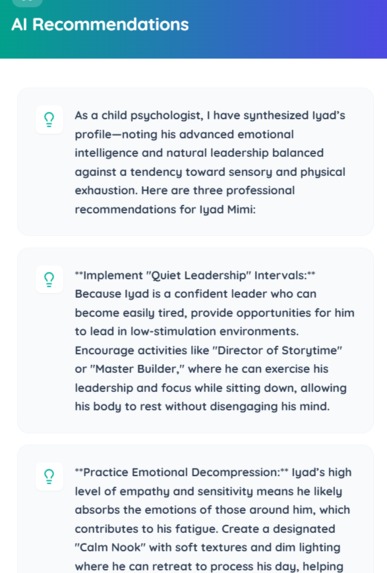
Agent insights
-
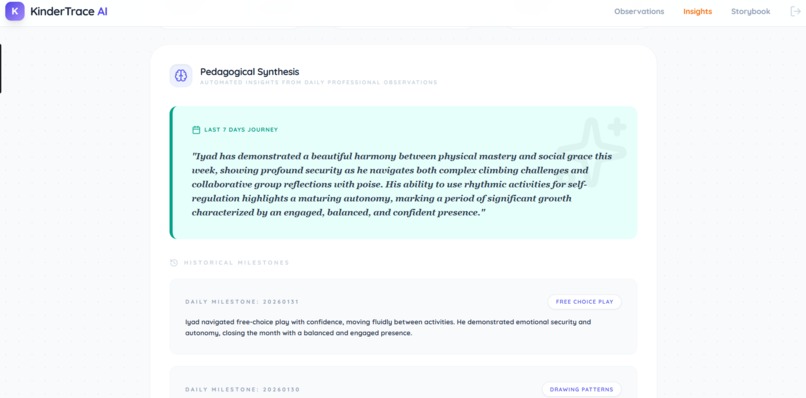
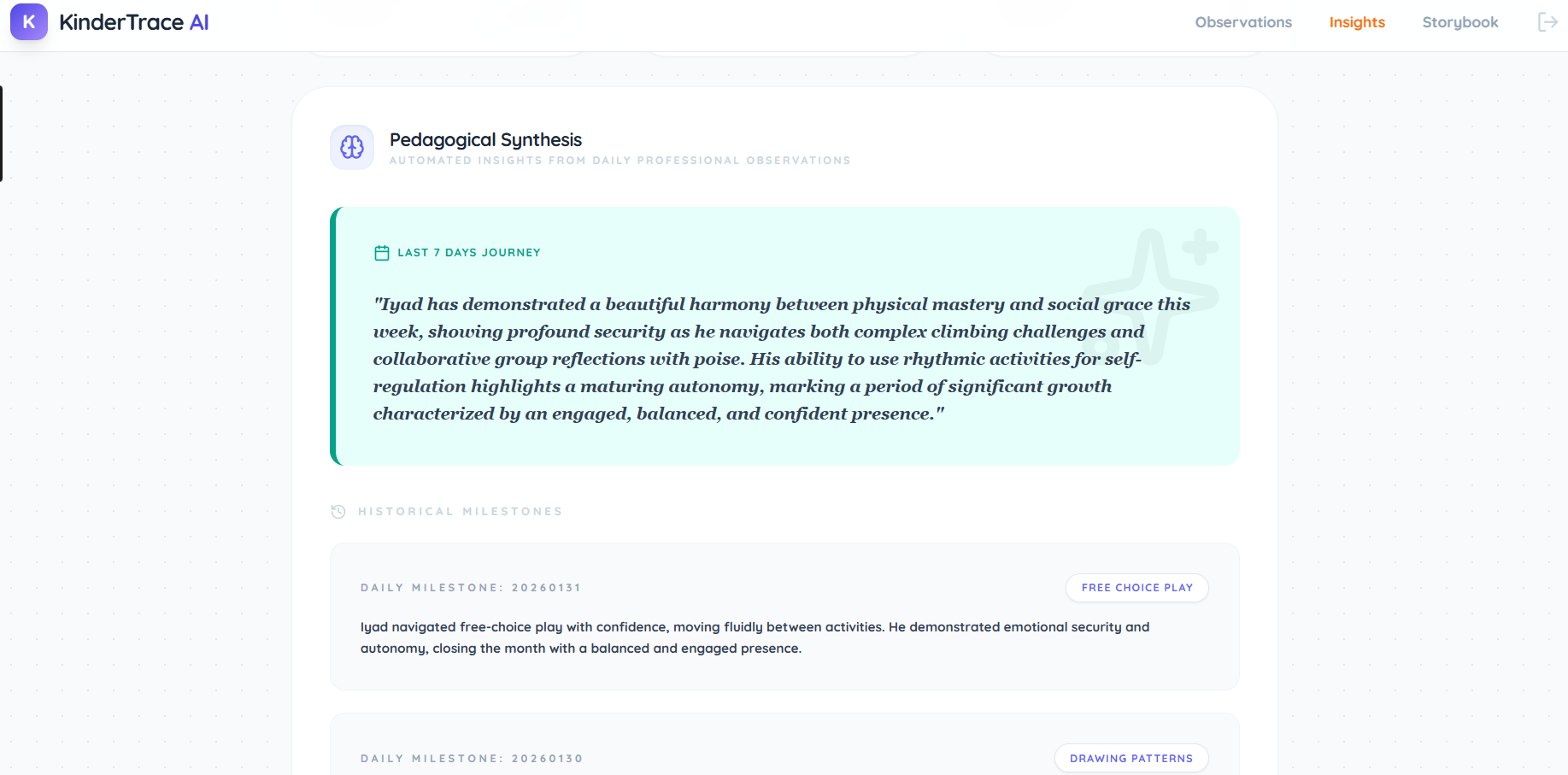
Agent Synthesis
-
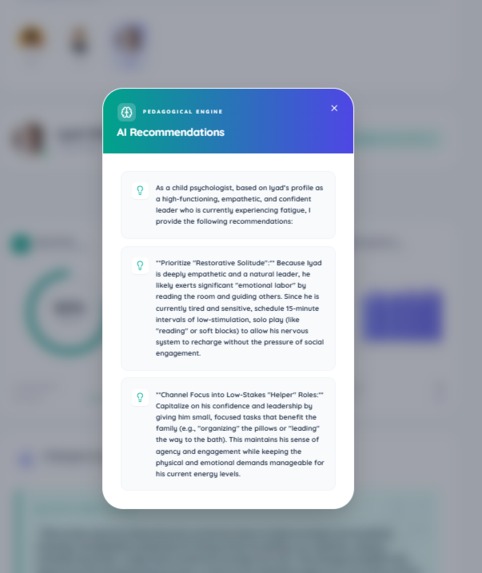
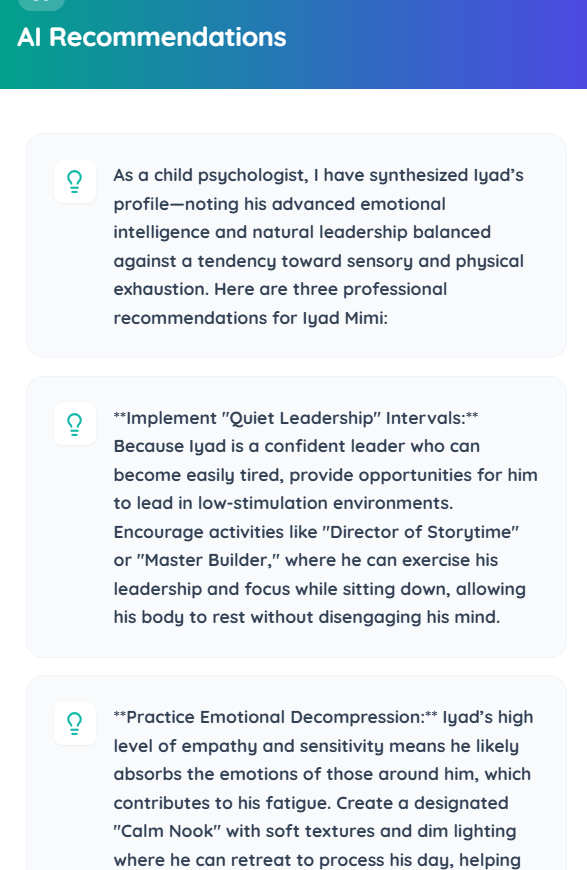
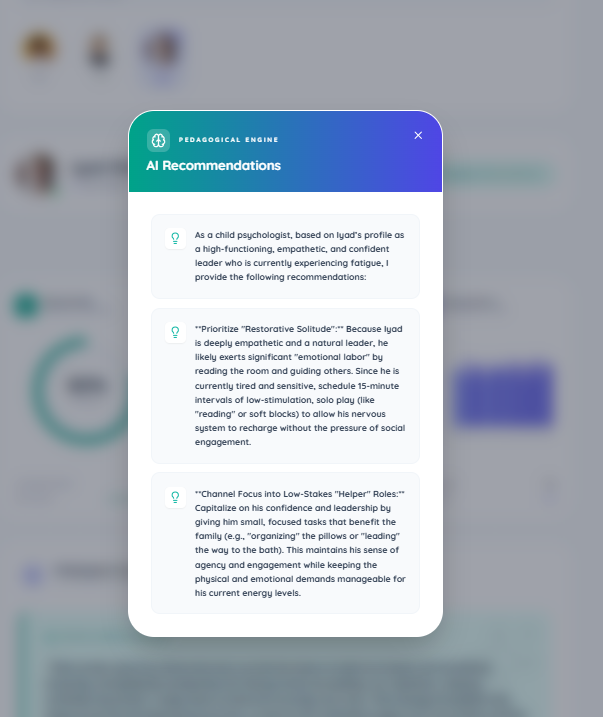
Agent recommendation
-
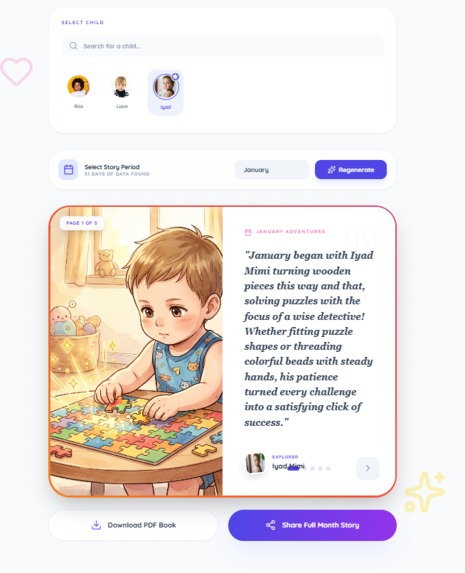
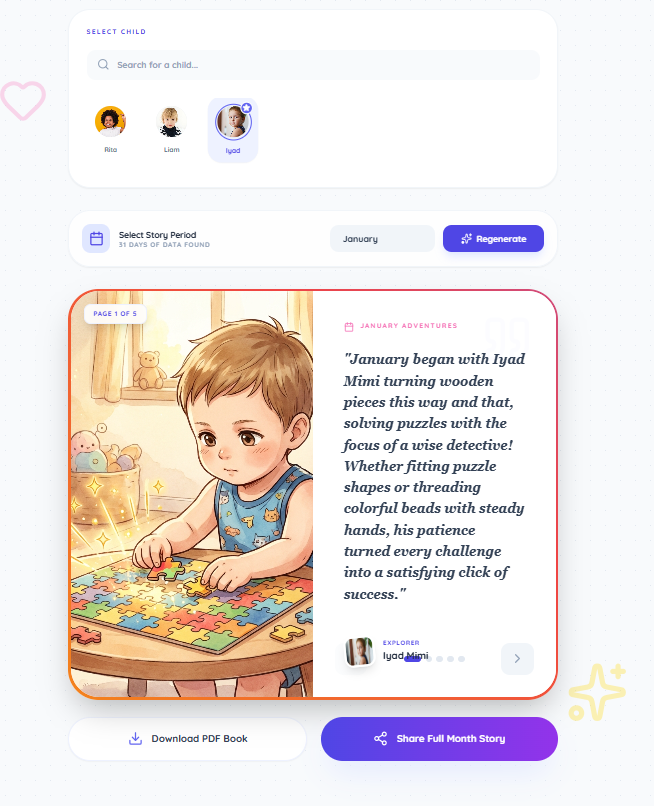
agent Storybook generation
KinderTrace AI
Inspiration
The idea for KinderTrace AI was inspired by a real, personal experience.
Enrolling my child in daycare was a lesson in trust, but it was also a wake-up call. As a mother, I lived for the daily updates about how my child slept or ate. But as a tech enthusiast, I couldn't ignore the inefficiency.
While caregivers were doing their best to comfort children and manage safety, critical data about our children’s days was being scribbled into physical books and locked in a drawer, destined only for compliance audits rather than parental insight.
That was the turning point. I realized that to support the child, we first have to support the professional. KinderTrace AI leverages technology to fix this imbalance. We don't want to automate the care; we want to automate the burden.
Our goal is to bring that data out of the drawer and into a useful format, improving efficiency and trust while keeping the human element of childcare exactly where it belongs: at the center
What it does
From Daily Care to Meaningful Insights and Memories.
KinderTrace AI is an intelligent childcare documentation and insight platform that supports educators throughout the day while preserving human-centered care. Using voice-first observations and smart tagging, childcare professionals can effortlessly log activities, moods, sleep, and milestones in real time. These observations are processed by agentic AI to generate structured pedagogical summaries, visual insights on attendance, sleep quality, and emotional trends, and actionable recommendations aligned with educational frameworks. Beyond operational insights, KinderTrace AI transforms selected real-life daycare moments into personalized monthly storybooks, complete with custom illustrations and narratives, strengthening transparency, trust, and emotional connection between educators and families—all while prioritizing data privacy and security..
How we built it
KinderTrace AI was built as a React single-page application using TypeScript and a decoupled service architecture to support real-time pedagogical logging and downstream content generation. The frontend uses Tailwind CSS for responsive design, Recharts for data visualization, and the Web Speech API to enable voice-first observations. An agentic AI orchestration layer powered by Google Gemini3 assigns tasks based on cognitive complexity: a low-latency analysis agent extracts structured data from voice inputs, while advanced reasoning agents generate pedagogical insights, narrative summaries, and storybook content. Application state is managed through a centralized context and a service layer that simulates cloud persistence using structured JSON logs. The system follows privacy-first principles, relying on stateless AI processing, explicit permissioning, and professionally grounded prompts to ensure security, compliance, and pedagogical rigor
Challenges we ran into
From vision to execution: During the ideation phase, the solution appeared straightforward, but translating a broad concept into concrete, implementable components revealed significantly more complexity than expected.
Decomposing a large idea: Breaking the product vision into smaller, interoperable features and assembling them into a coherent system required careful prioritization and architectural decisions under tight time constraints.
Prompt engineering as a technical challenge: We learned that prompt quality had a major impact on AI output. Iterating on prompts was essential to achieve reliable, structured, and pedagogically relevant results.
Model selection and output quality: Experimenting with Google AI Studio highlighted meaningful differences between Gemini 3 Flash and Gemini 3 Pro, particularly in code generation quality, reasoning depth, and consistency of responses.
Synthetic data design: Building realistic synthetic data was a major challenge. To ground the application in real-world practices, we collaborated with childcare professionals to understand how observations are collected, stored, and used, and then translated this information into structured, auditable data logs suitable for the platform.
Operational Environment: Designing an interface usable in a noisy, mobile environment where professionals often have their "hands full" (carrying children, meals, etc.).
Data Sensitivity: Balancing the use of powerful language models with strict confidentiality (GDPR) and security requirements for sensitive early childhood data.
AI Ethics: Ensuring the AI remains strictly factual and pedagogical, avoiding any drift toward medical or psychological diagnostics.
Team coordination under time constraints: Maintaining alignment and momentum across the team while adapting to changing levels of availability during the project.
*Google Ai Studio: * We encountered difficulties sharing the environment space for collaborative work on the same platform. However, switching to private mode enabled the sharing option, similar to testing. Additionally, when working within the app, sometimes the LLM would modify another feature without indicating it while editing a specific feature, which could be frustrating. Nonetheless, regular checkups helped us prevent this issue.
Accomplishments that we're proud of
- Functional Multi-Agent Orchestration: Successfully getting different models (Analyst, Pedagogue, Creative) to collaborate to turn a messy note into high-value content.
- Empathic Design: Creating the "Storybook" feature, which converts an administrative burden into an emotional gift for families.
- Privacy-by-Design: Implementing stateless AI calls to ensure pedagogical data is processed securely without compromising PII.
What we learned
Team and conflict management: Gained valuable experience in coordinating collaboration, aligning expectations, and navigating challenges that arise in fast-paced, team-based environments.
From idea to impact with AI: Learned how AI can significantly accelerate the transition from concept to tangible results, enabling rapid validation and faster iteration cycles.
Specification-driven development: Practiced defining clear specifications upfront and using them as a foundation for implementation, improving focus, structure, and development efficiency.
Leverage AI for video editing: utilizing AI to transform conceptual ideas into reality by the demo creation. ( Google Flow , Elevenlabs , clideo )
What's next for KinderTrace AI
While the project has achieved major milestones, we have a clear roadmap for the future:
- Current Hackathon Status: The app currently features AI-assisted text fields and voice-to-text transcription deployed on Cloud Run.
- Production Readiness: Transitioning the application to a FastAPI model (frontend/backend) to make it "prod-ready".
- Advanced Agentic Features: Completing the full development of the multi-agent orchestration (Analyst, Compliance, Creative) in the next phase.
- Live conversational experience: Include Gemini3 live API to ask questions about the child without having to search in the dashboards or in the synthesis.
- Enhanced Governance: Automating pseudonymization mechanisms and building "observability" tools to explain AI-generated classifications or alerts to parents and directors.
- Human in the loop: include an HITL option for every data output generated by the LLM, allowing validation or modification to ensure accuracy


Log in or sign up for Devpost to join the conversation.