-
-
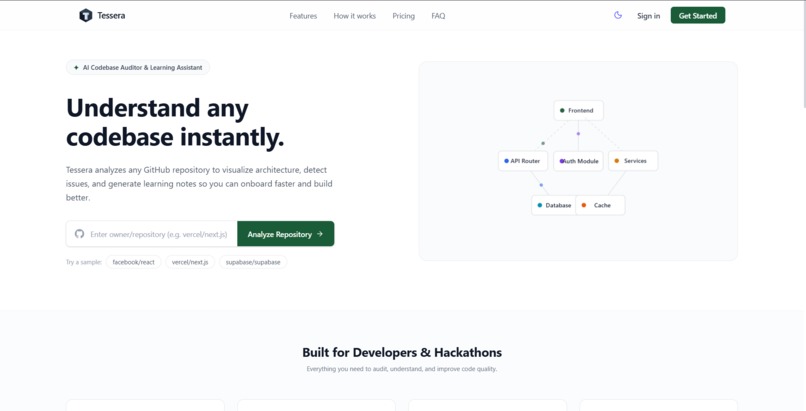
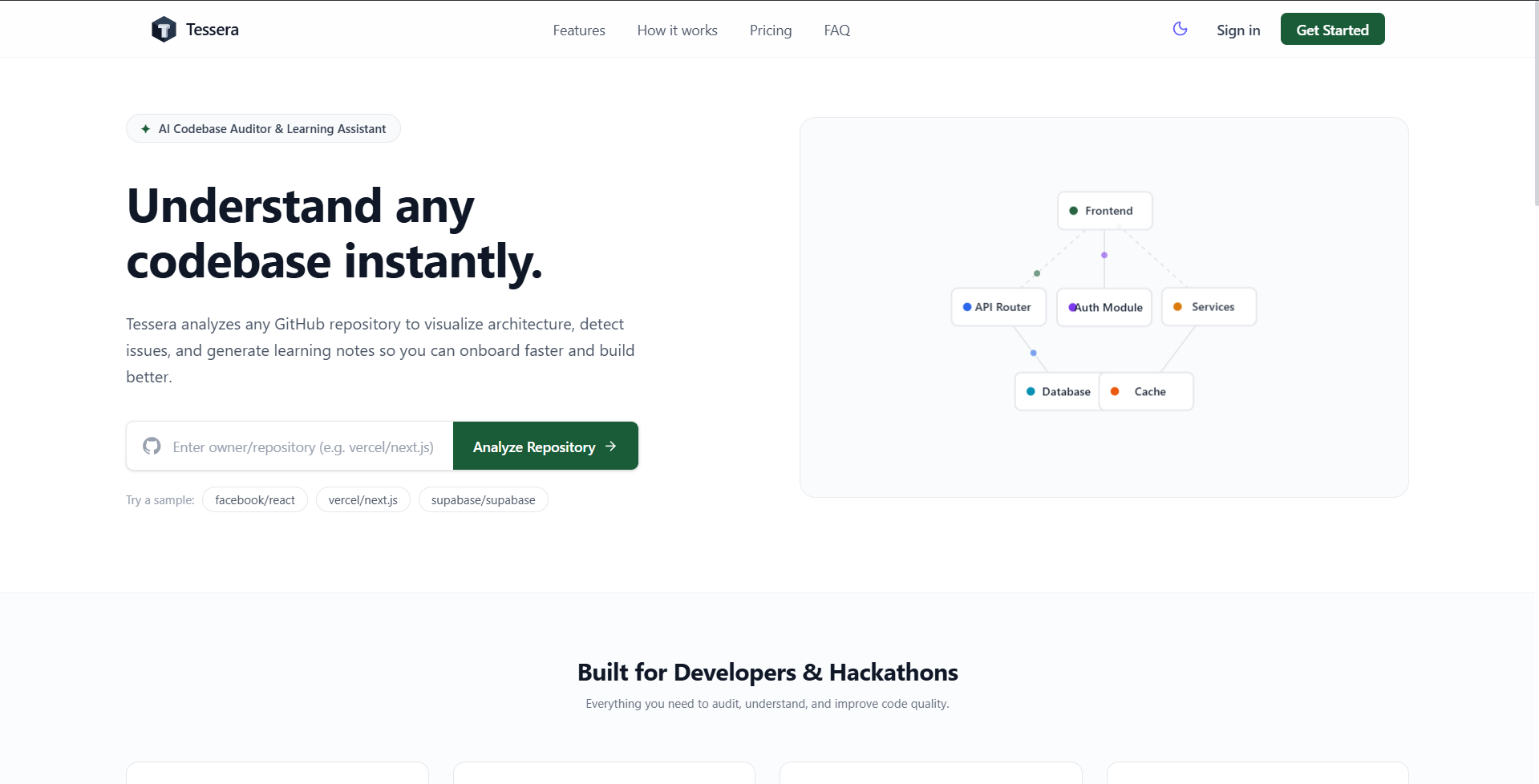
Landing page
-
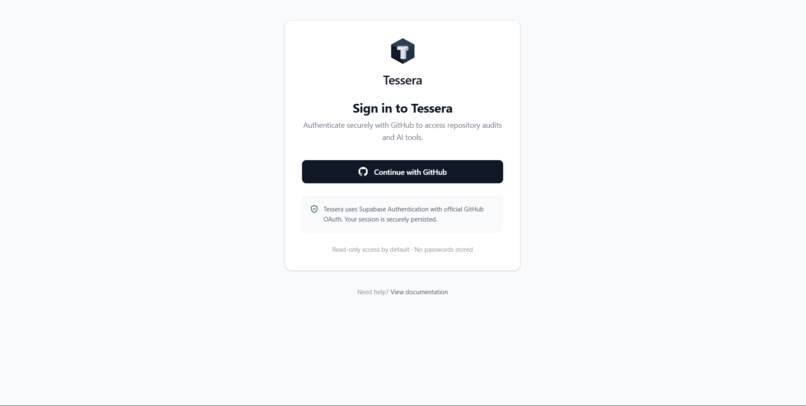
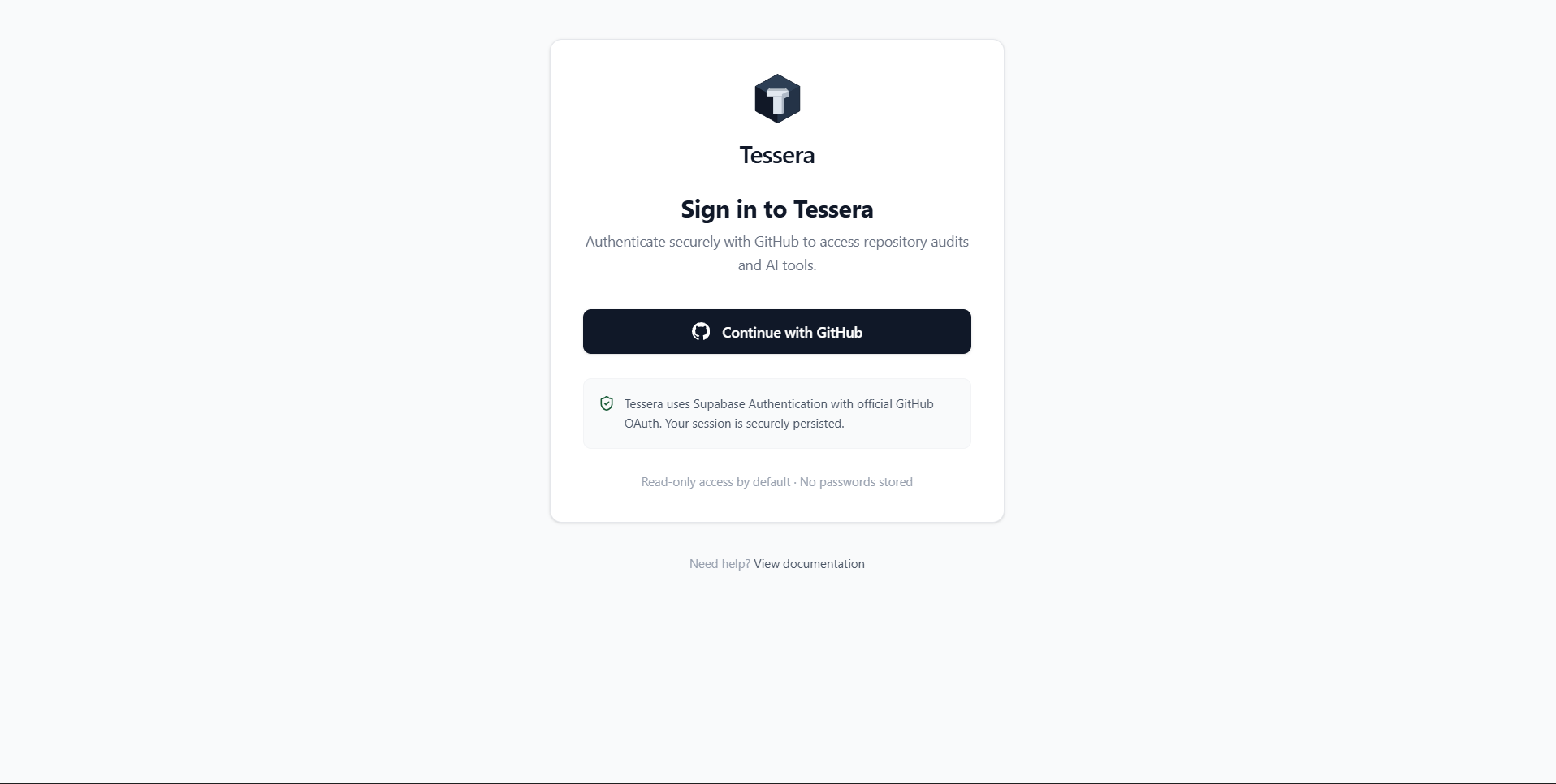
Sign up page
-
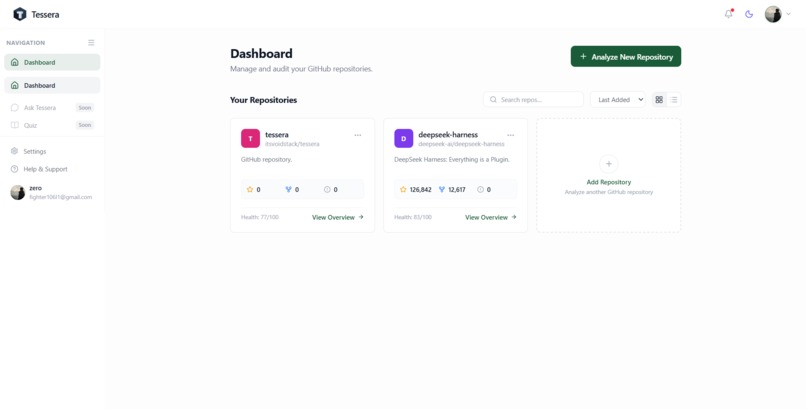
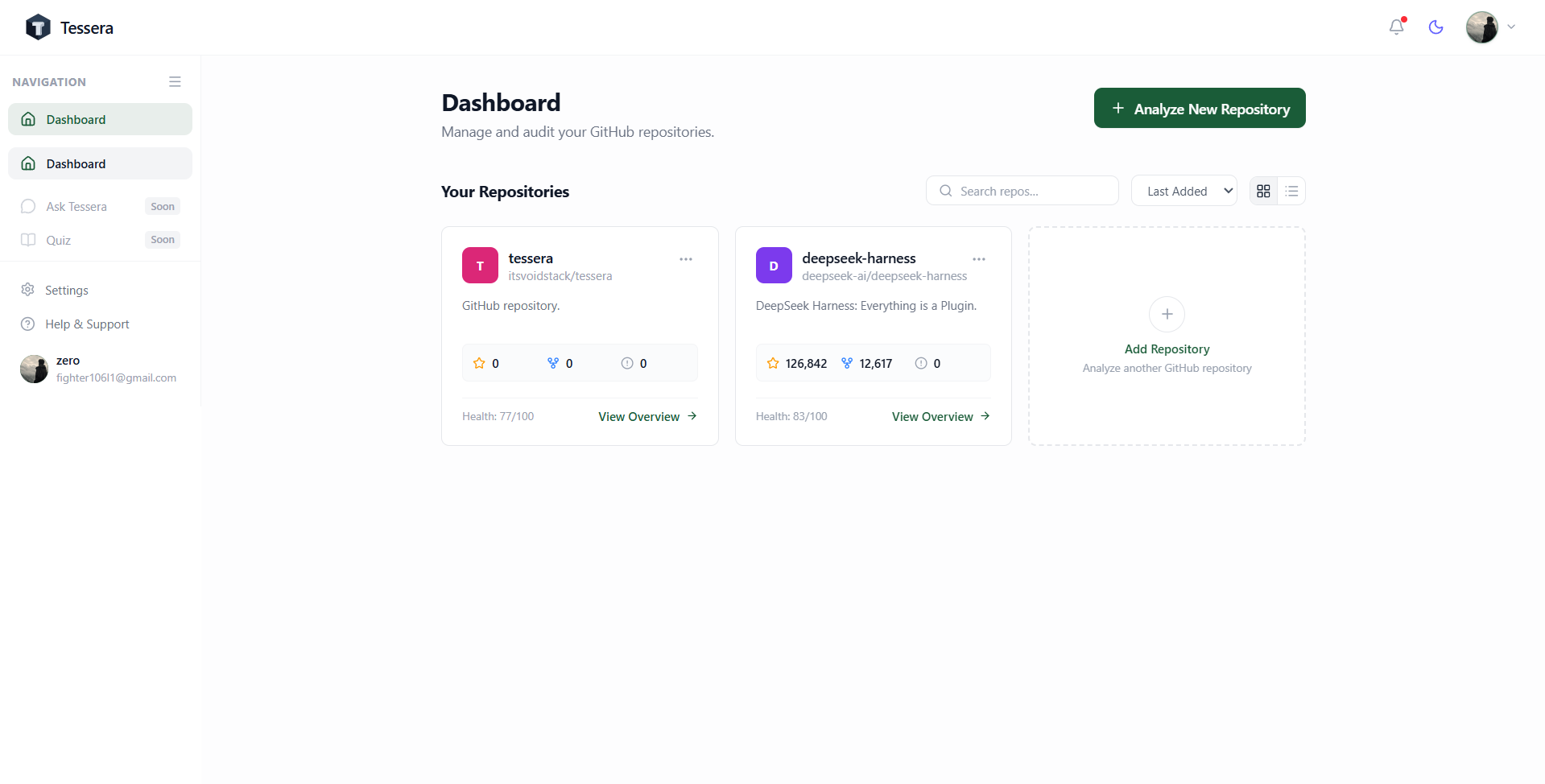
Dashboard
-
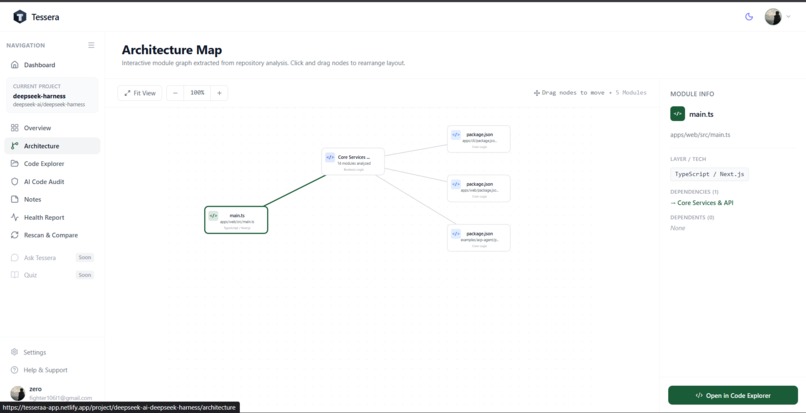
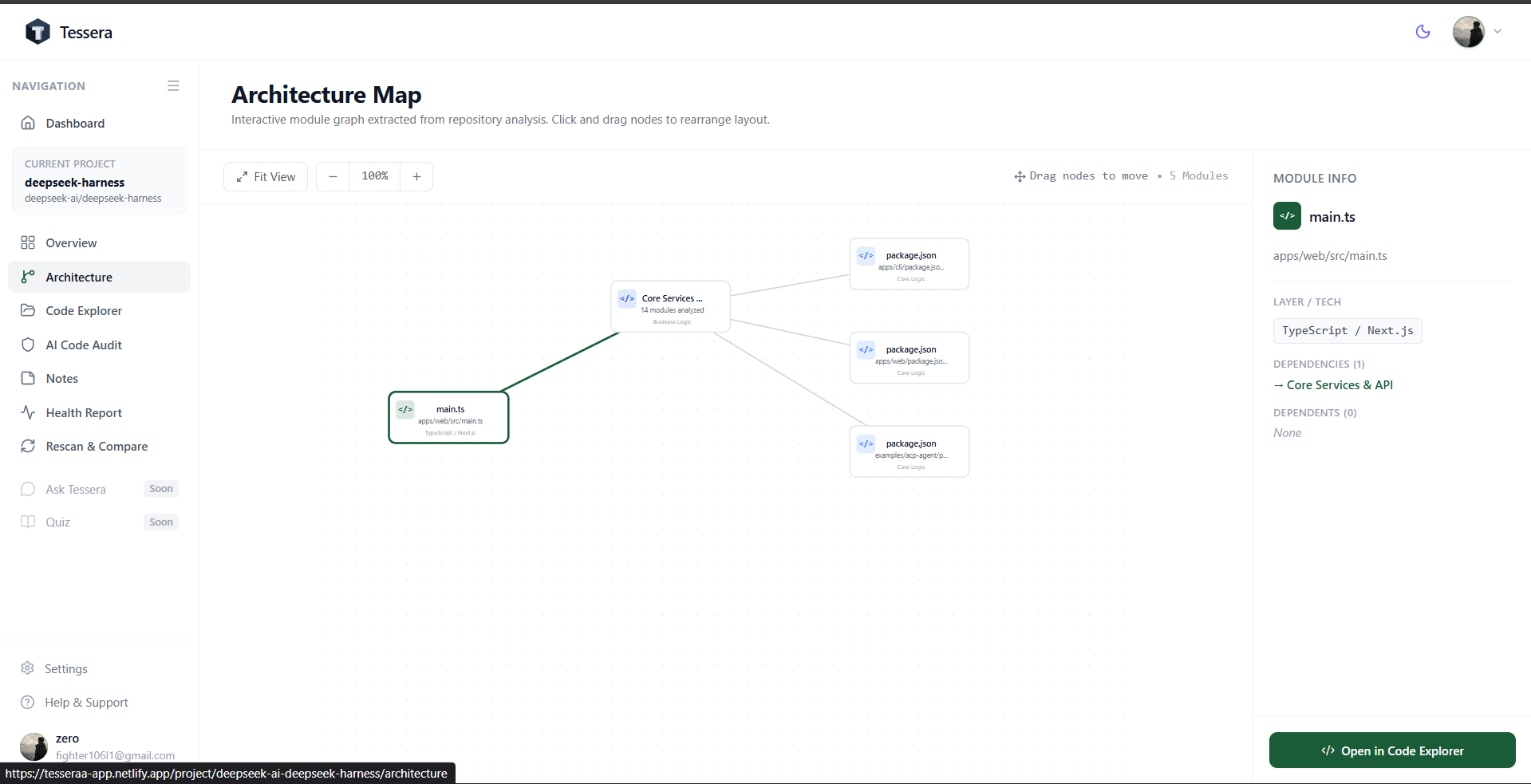
Architecture
-
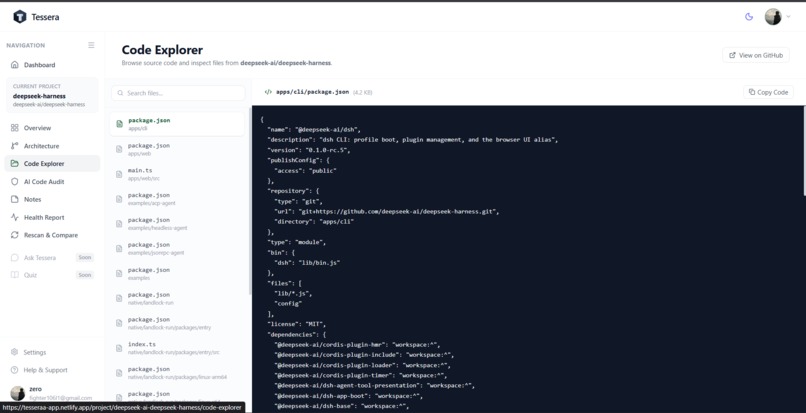
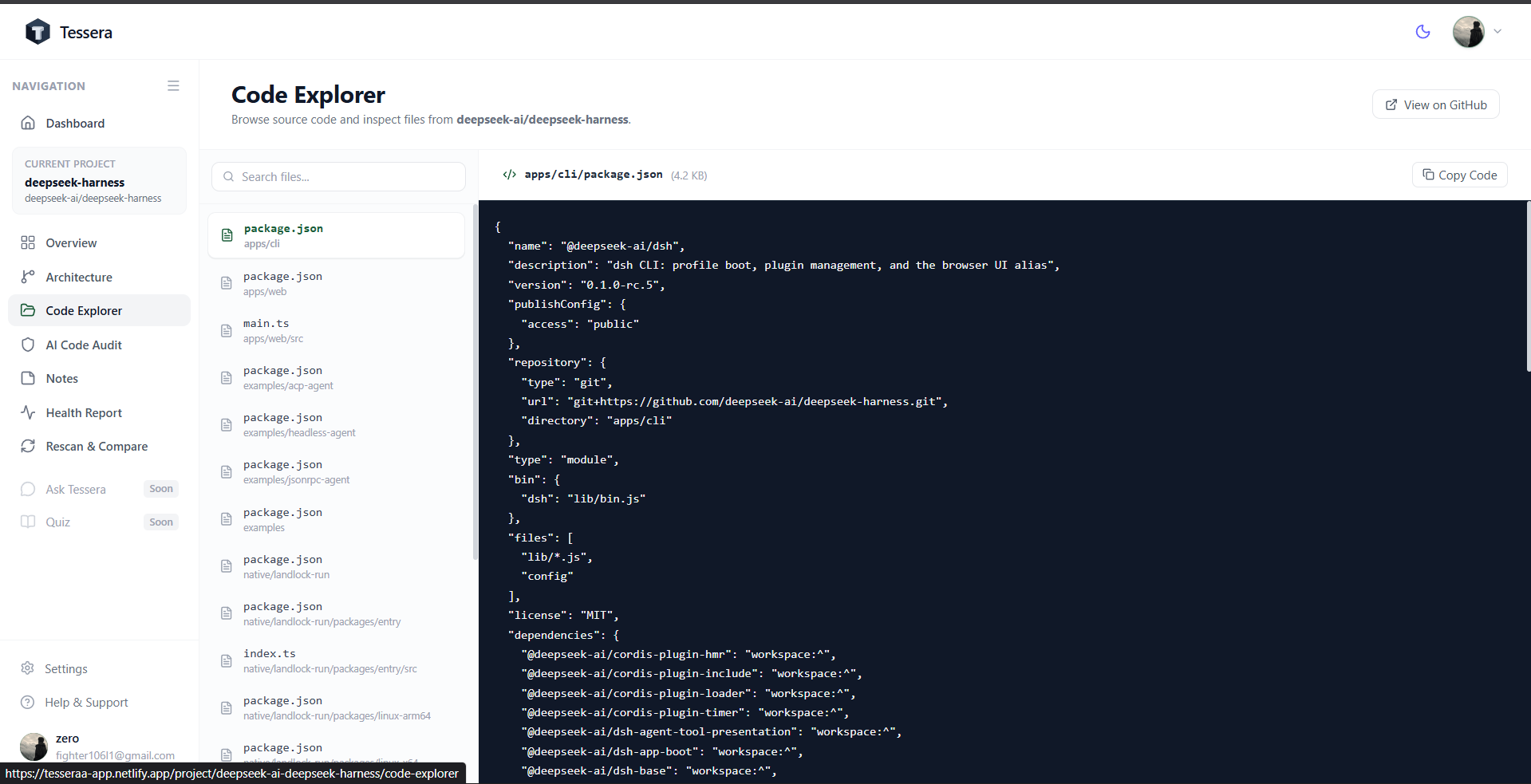
Code Explorer
-
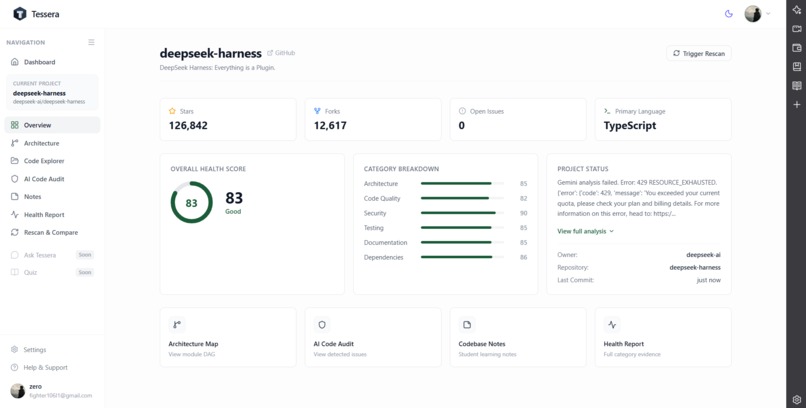
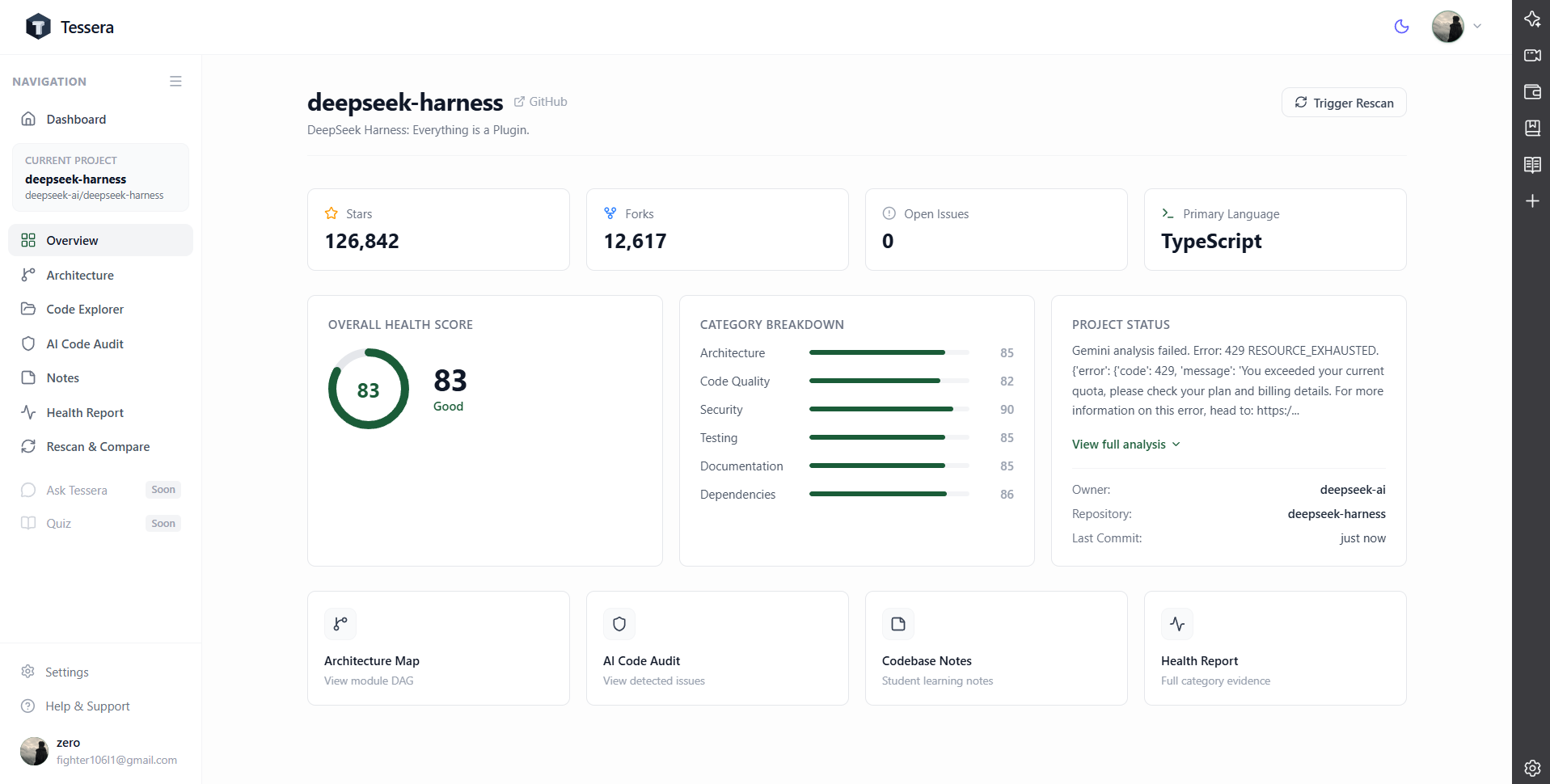
Overview
-
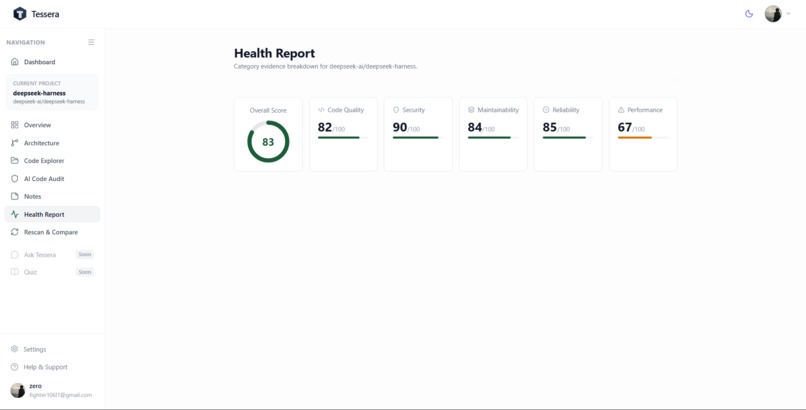
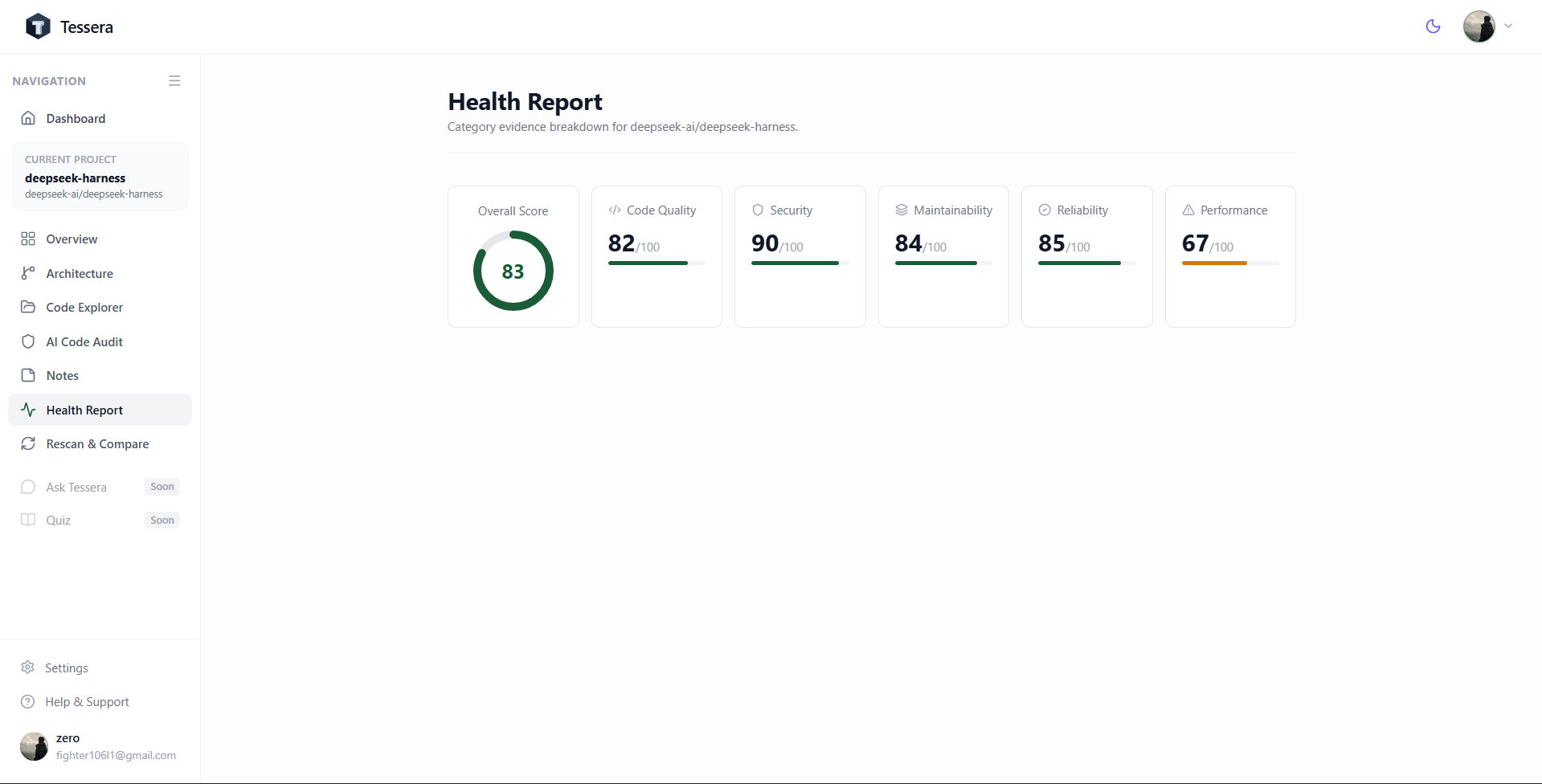
Health report
-
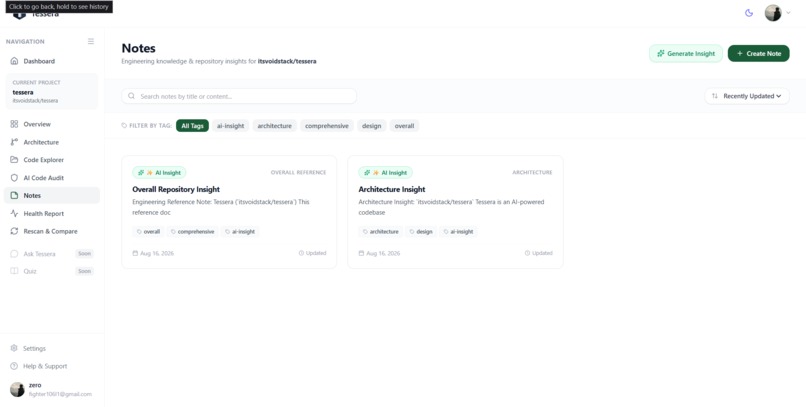
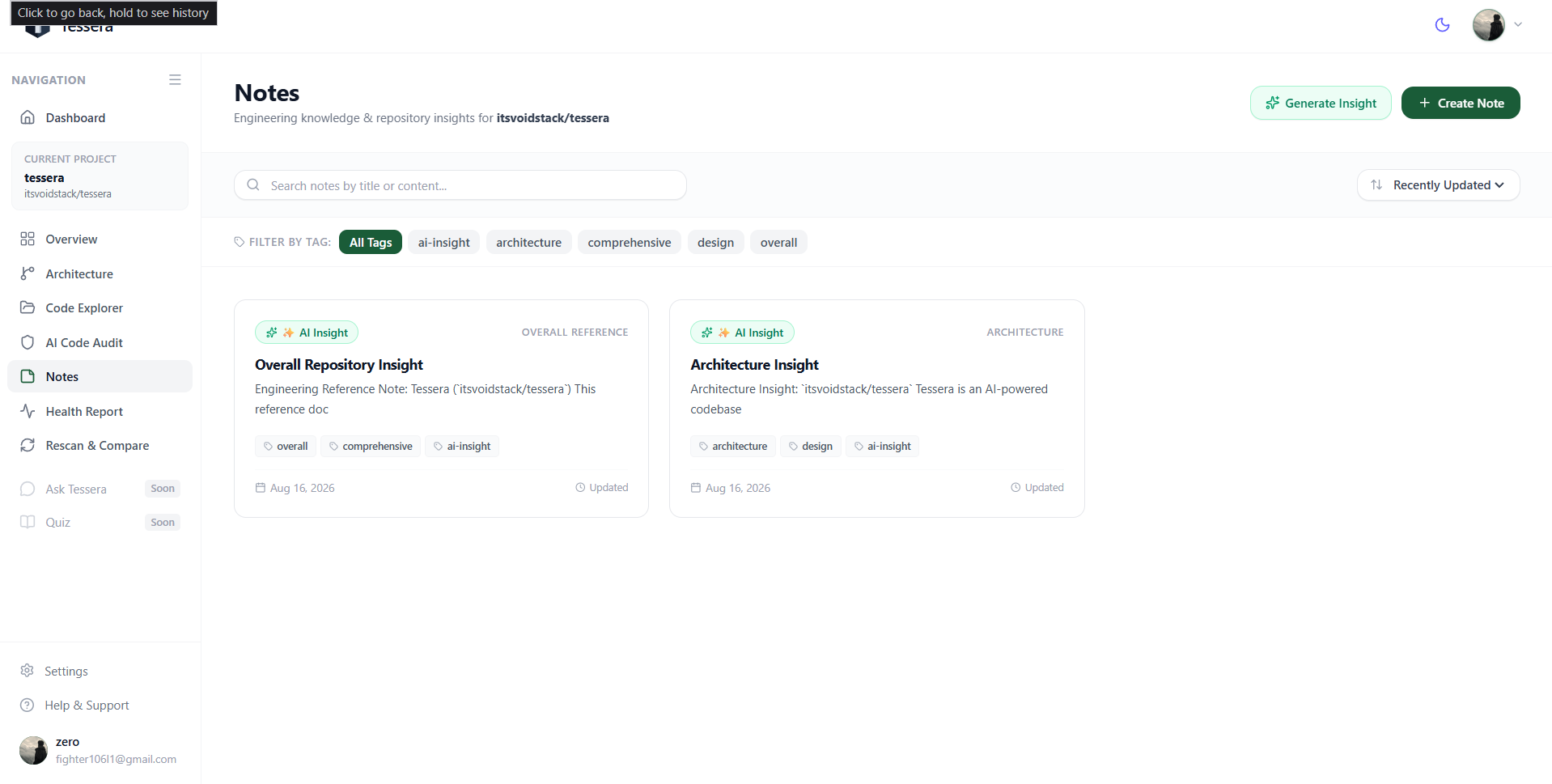
Notes
-
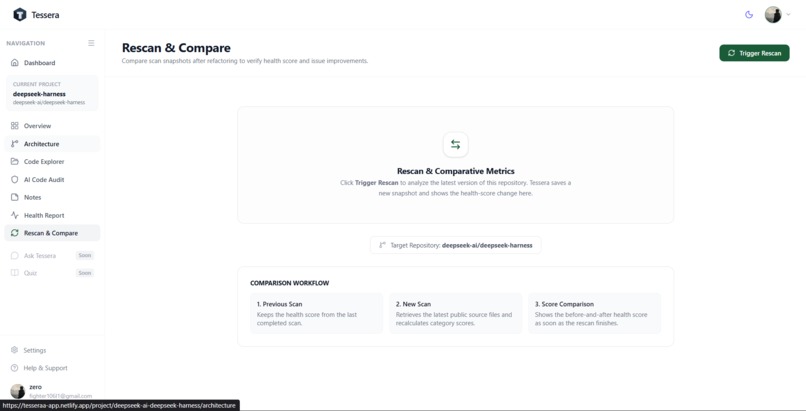
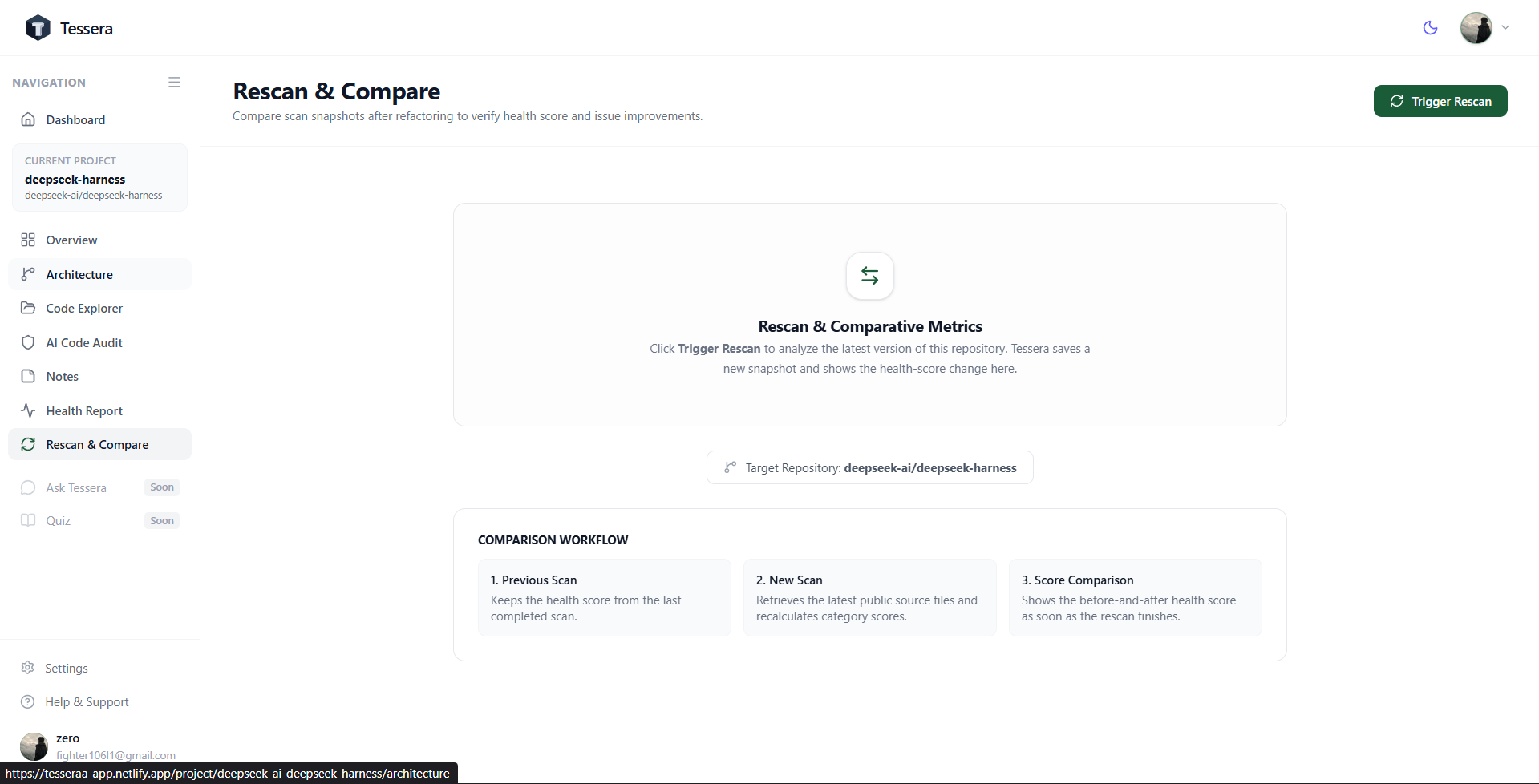
Rescan page
-
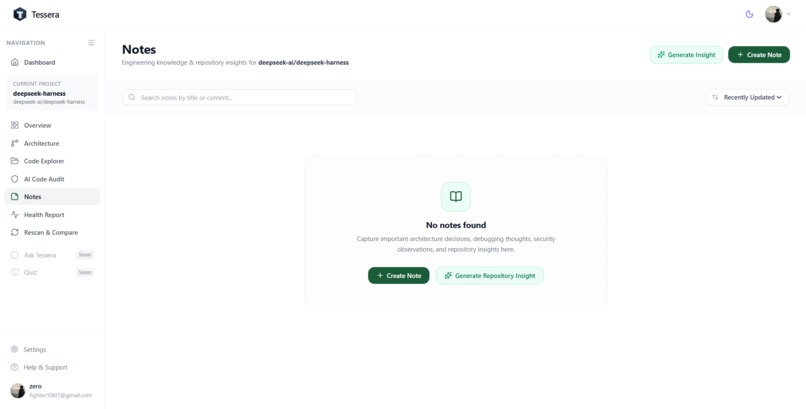
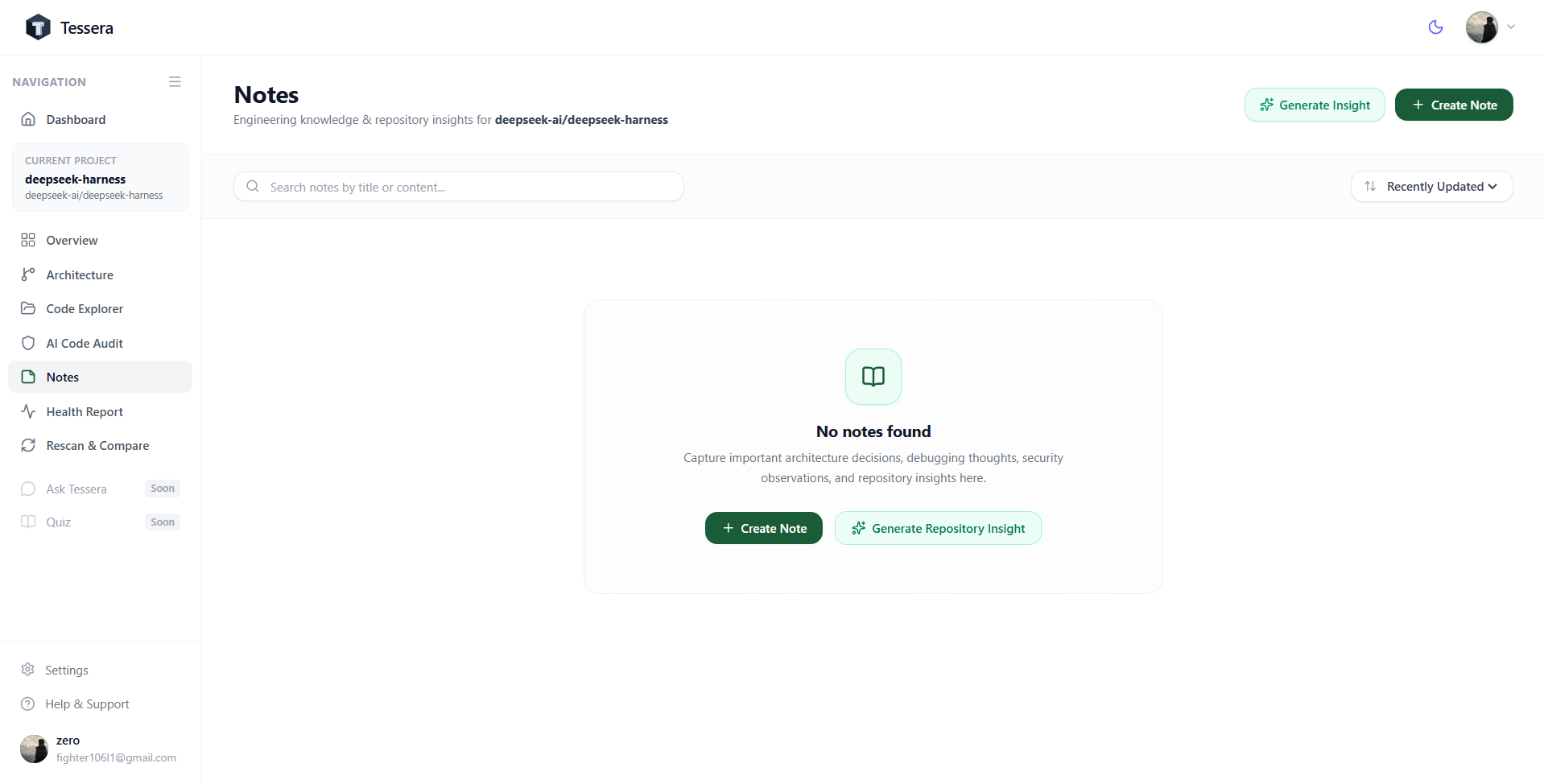
Note page
Inspiration
We are students building projects with AI and we found reading other people’s codebases can be harder than building our own. We wanted to make that quicker and less overwhelming.
What it does do
Tessera analyzes GitHub repositories and turns them into accessible engineering knowledge via architecture, code walkthroughs, AI audits, project insights, and notes.
How we built it.
We built Tessera with Next.js, FastAPI, Supabase, GitHub and Gemini. The backend analyzes real repository data and uses Gemini to generate grounded insights, and the frontend provides an interactive workspace.
Difficulties we encountered
The biggest challenge was to make the AI analysis useful and accurate and not generic. We also had to handle repository complexity, authentication, API limits, database persistence, and deploying the frontend and backend together.
Achievements we are proud of
We are proud that Tessera has become a real deployed product, not just a prototype.” It can take a brand new repository and provide developers with a structured way to understand and explore it.
What we learned
What we learned is that creating with AI is more than simply making responses – the data and context you give the AI is equally important. We also learned a lot about building, integrating and deploying a full stack application.
What’s next for Tessera
We want to make Tessera more accurate, handle larger repositories, improve our AI-powered insights, and ultimately help developers understand and onboard any codebase in minutes not hours.
Built With
- fastapi
- gemini
- github
- netlify
- next.js
- python
- react
- render
- supabase
- tailwind
- typescript


Log in or sign up for Devpost to join the conversation.