-
-

icon
-
iterations
-
screenshot
-
games
-
loop
-
money
-
journey
-
cover


Inspiration
Logic puzzles are one of the nicest ways to spend ten quiet minutes, but most puzzle apps treat them like homework. You get a grid, a timer and a list, and then an ad. I wanted the opposite: a place that feels like a small game world, where every puzzle you solve adds up to something you can see, and where nothing ever interrupts you.
What it does
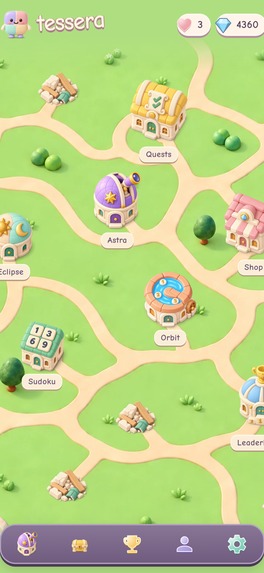
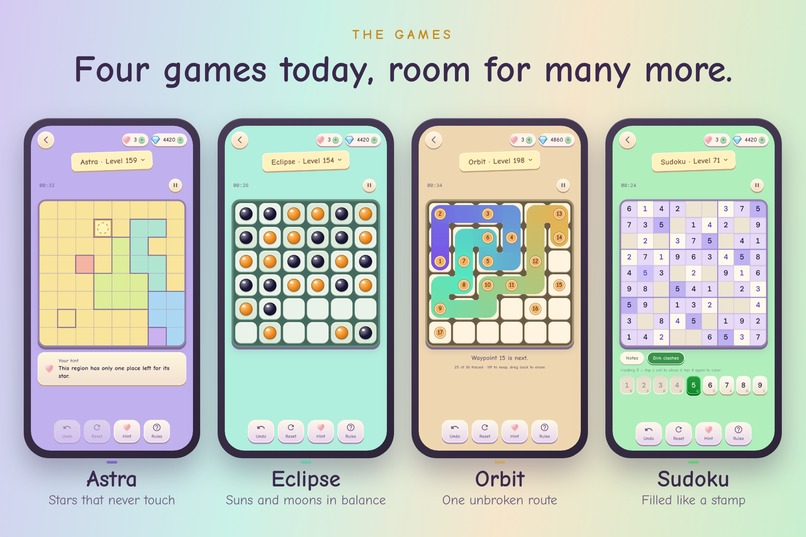
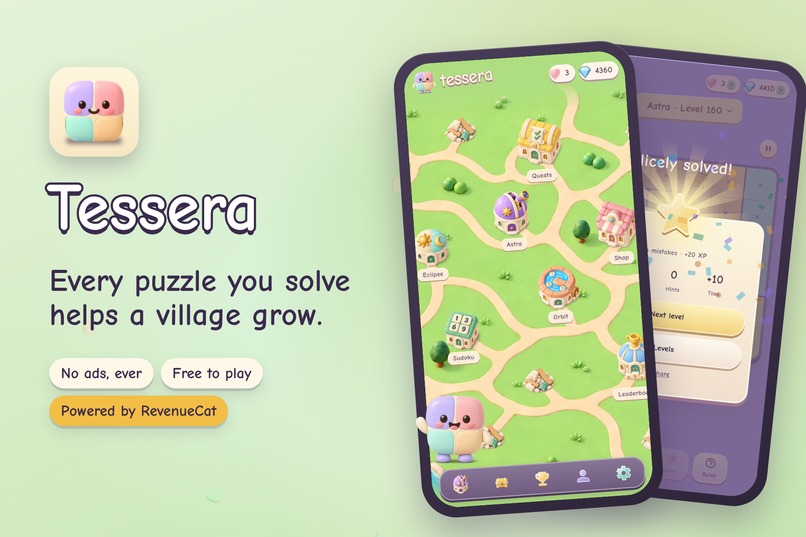
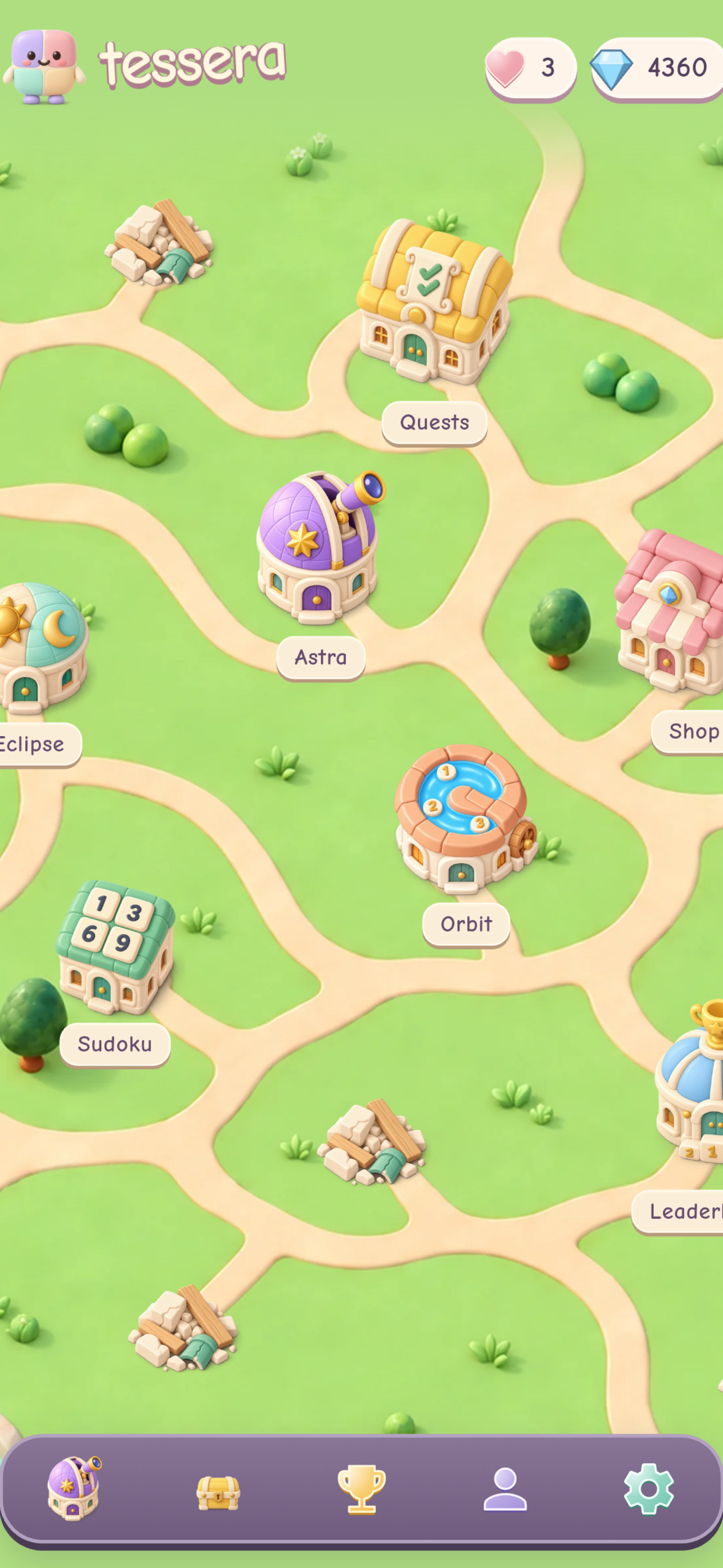
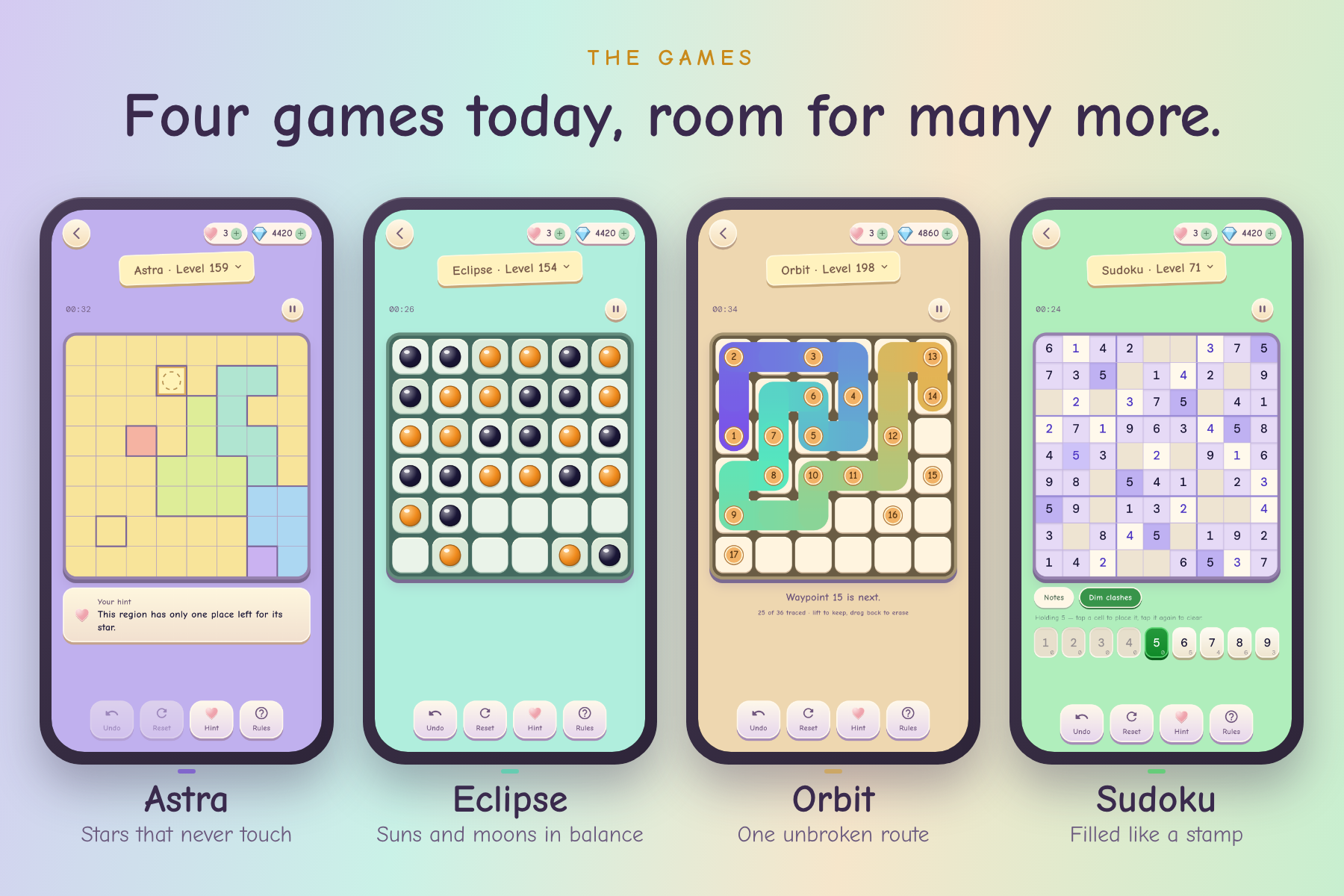
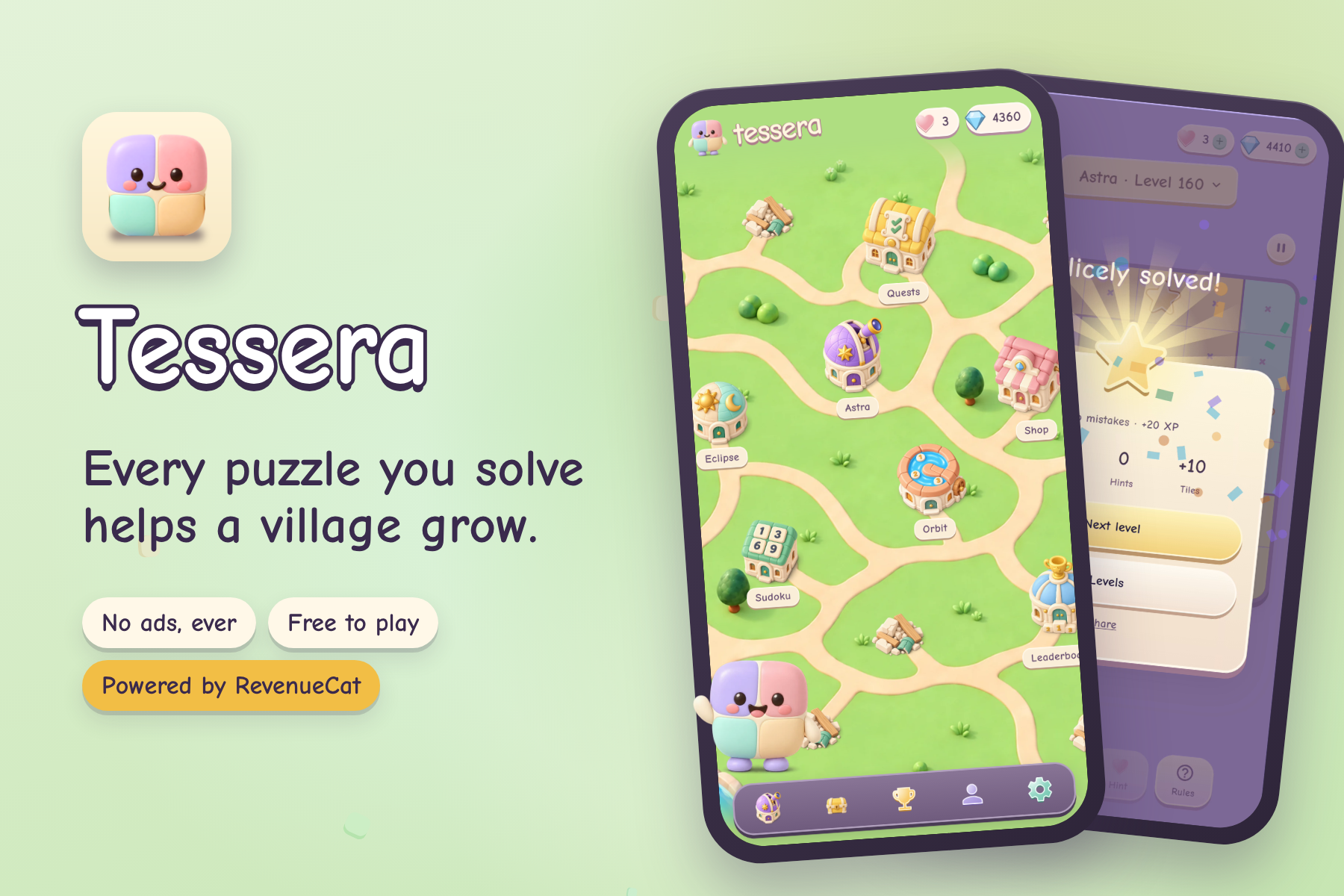
Tessera is a little village that grows as you solve puzzles. Each game is a building on a painted map that you drag around with your finger. Astra (place stars that never touch), Eclipse (suns and moons in balance), Orbit (one unbroken route through every square) and Sudoku live there today, and there is room on the map for many more. Each new game moves into the same village, so your gems, quests, badges and leaderboard place come with you.
Tap a building and its levels climb up a winding trail from the bottom of the screen, with the next level always waiting in the middle and a small mosaic companion beside it. Every level has exactly one answer, and each game teaches itself on the real board the first time you open it.
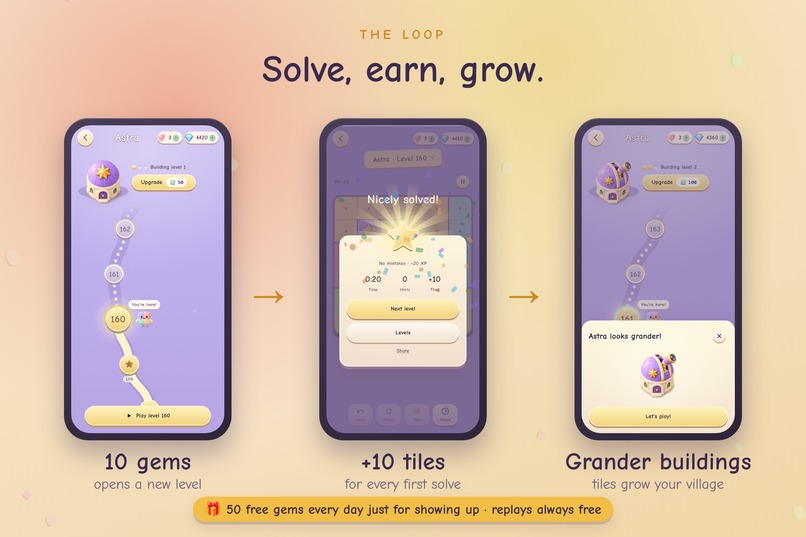
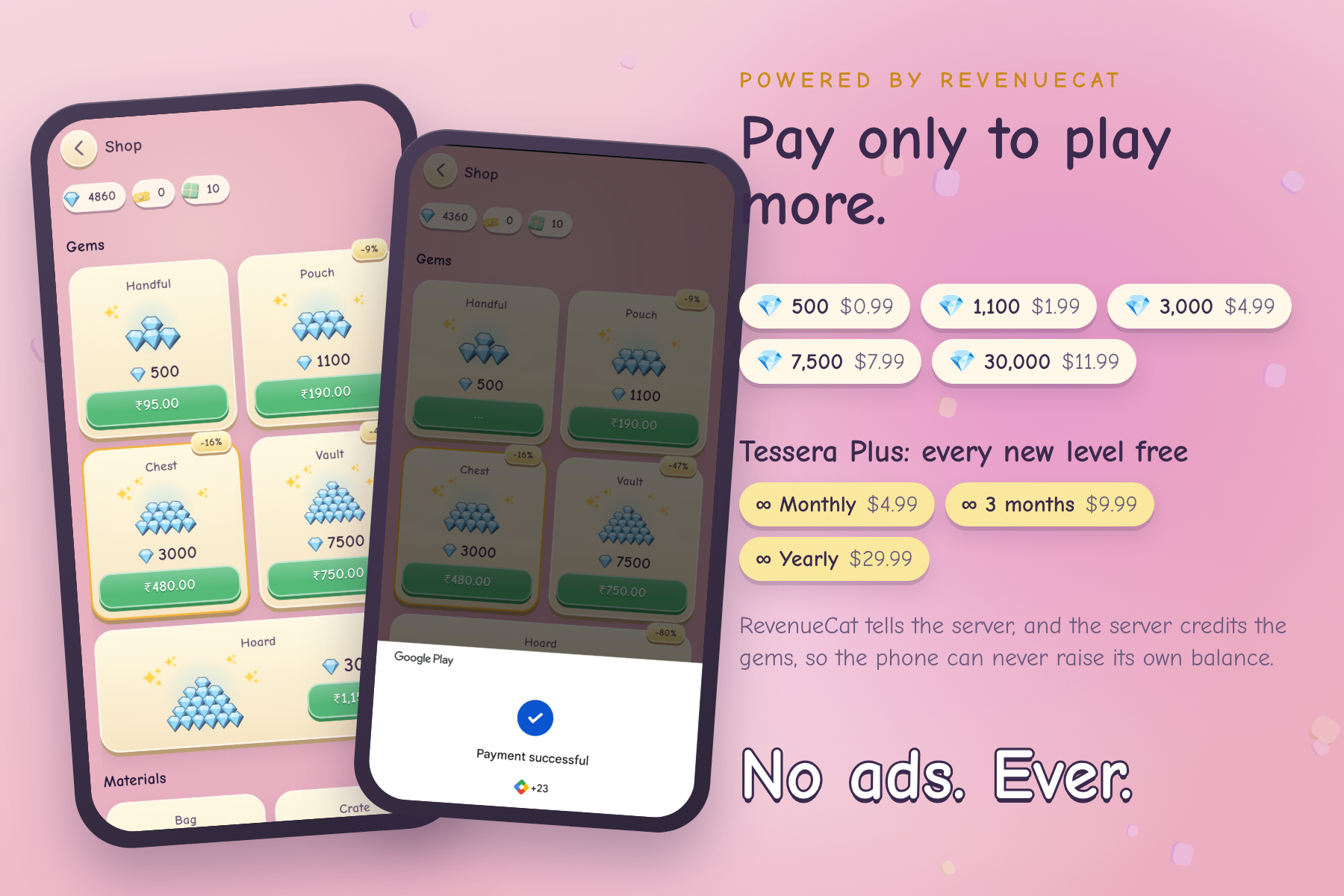
The loop is simple. A new level costs 10 gems, replays are always free, and just opening Tessera each day gives you 50 gems, which is five new levels. Every first solve earns tiles, and tiles upgrade your buildings, so the village visibly changes as you play. Hearts refill to five every day and buy hints, and each hint explains why the move is right in one plain sentence. Three quests a day, plus weekly and monthly ones, pay real gems.
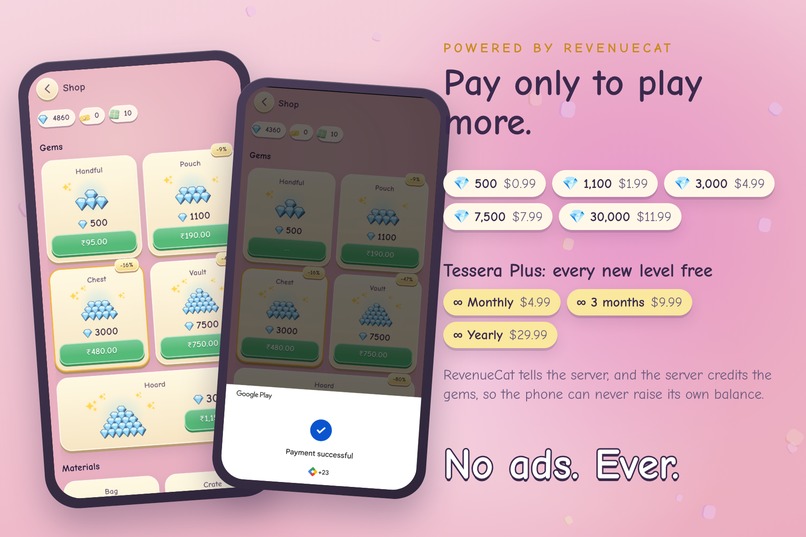
There are no ads anywhere. If you want to play more than the daily gems allow, you can buy a gem pack or join Tessera Plus, which makes every new level free.
How we built it
I built Tessera on my own with help of AI in Flutter, with Supabase for accounts and progress and RevenueCat for every purchase. The puzzles come from my own engine, which builds each board, proves it has exactly one answer and grades how hard it really is before it is published. Levels, quests and prices live on the server, so new content reaches every player without an app update.
When a purchase goes through, RevenueCat tells my server and the server adds the gems, so the phone never decides that a balance went up. The same rule covers everything that pays out, from quest rewards to tiles, which is what made it safe to add a whole new economy in September.
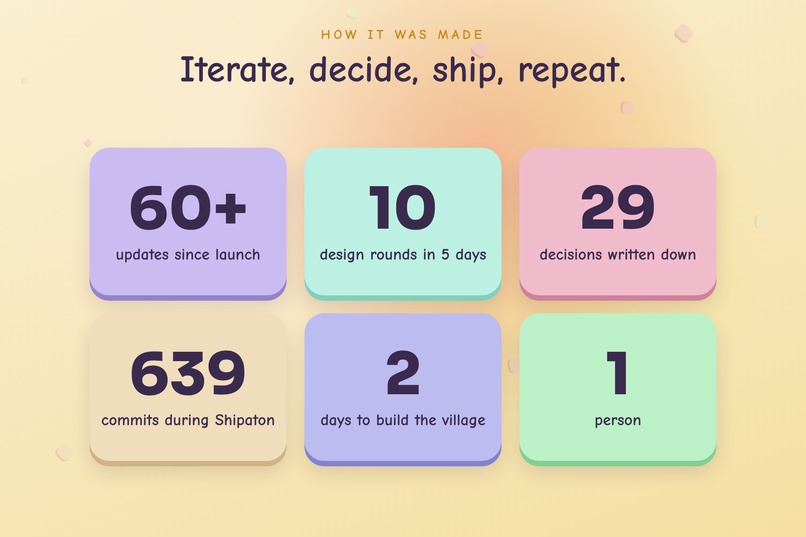
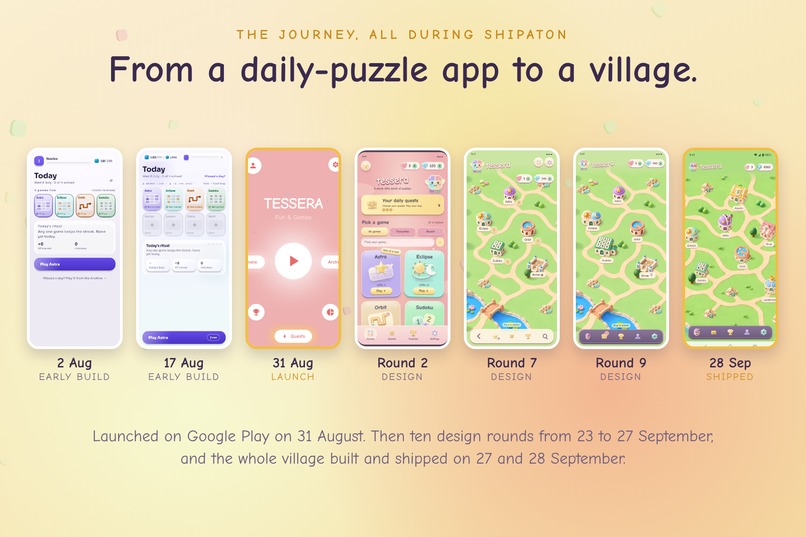
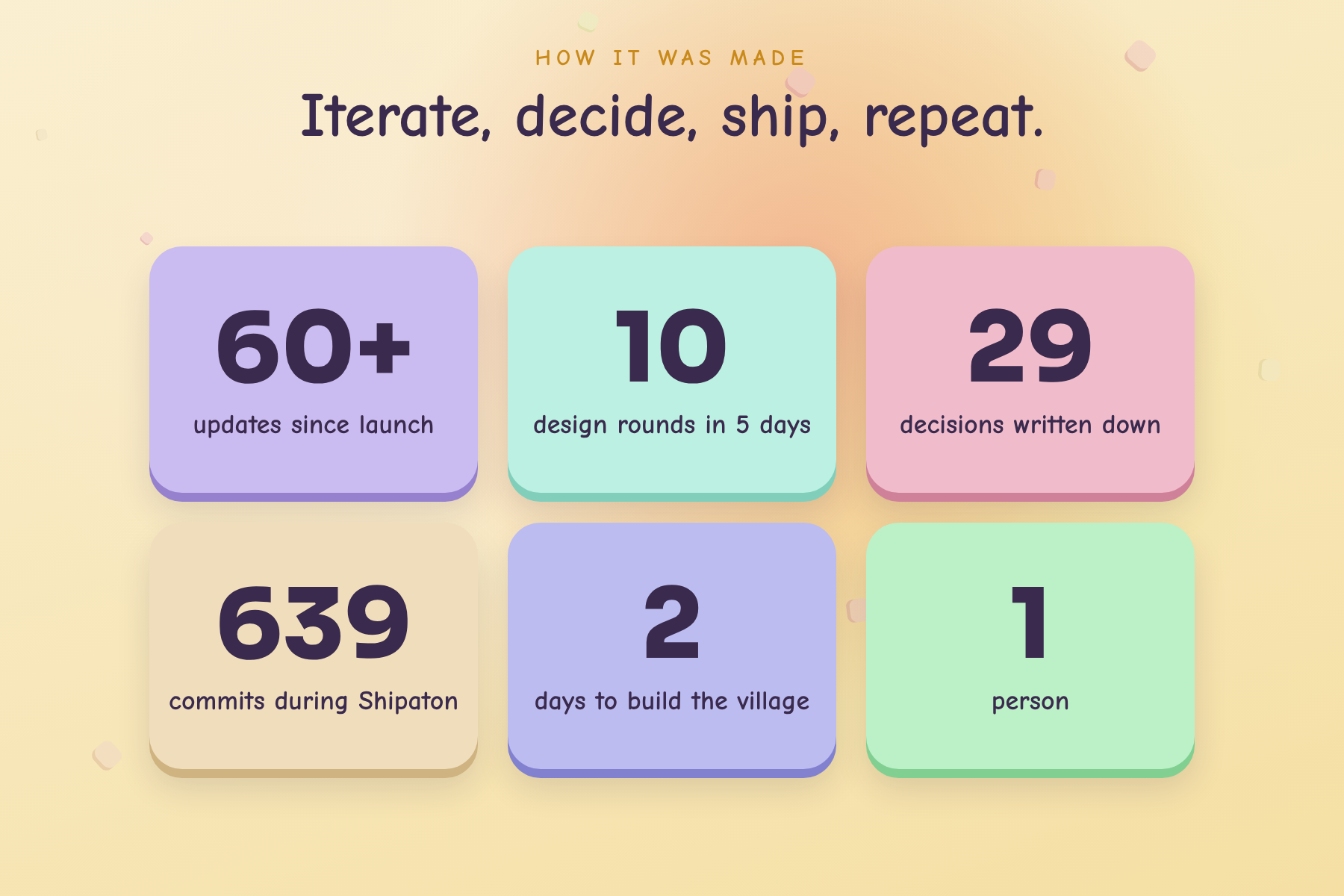
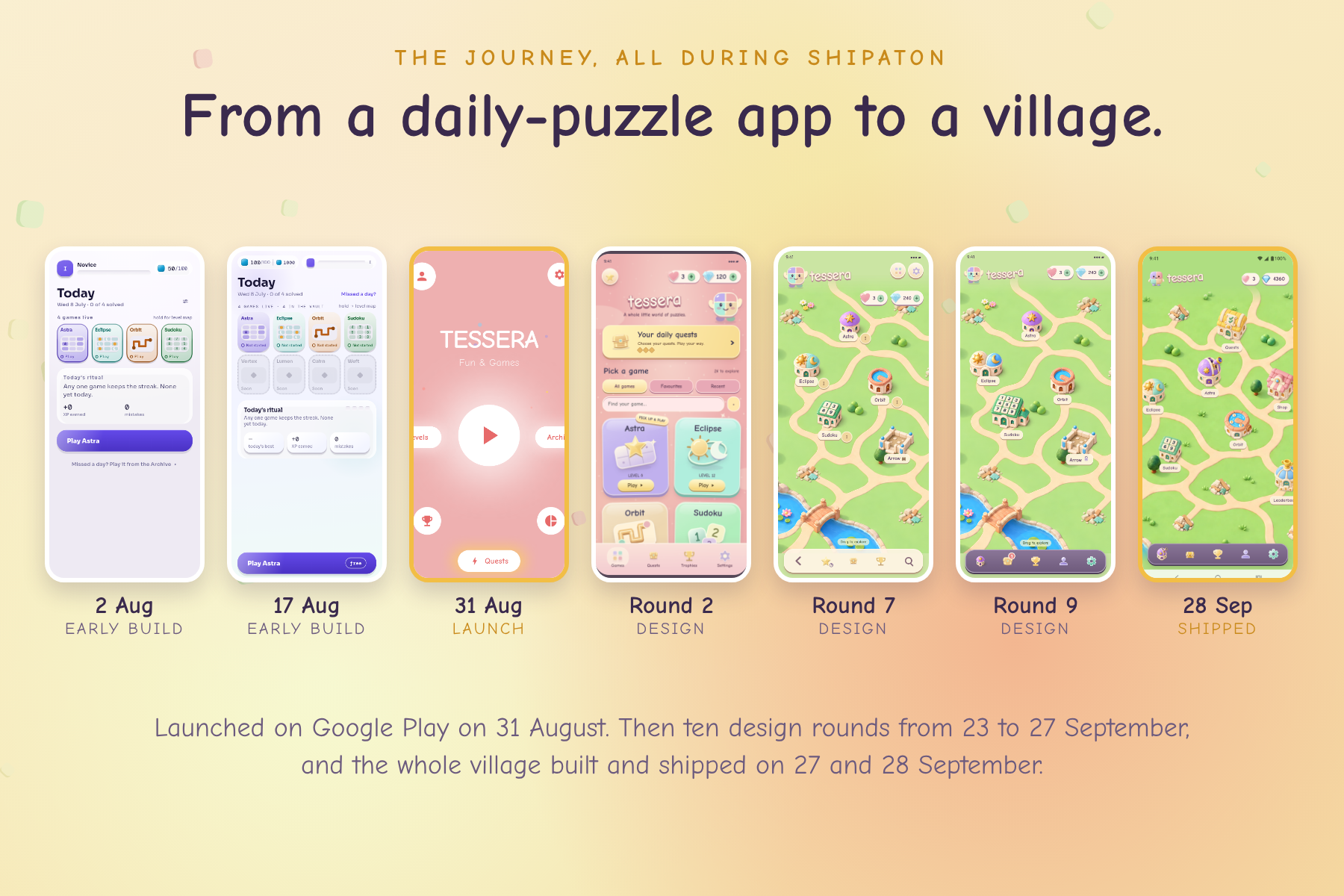
The design came from ten rounds of mock-ups over five days, from 23 to 27 September. I recorded every decision I made in each round, twenty-nine in all, and then built the approved design in two days, one piece at a time, with the old tests kept green along the way.
Challenges we ran into
The biggest challenge was admitting that the launched design was not a game. Tessera went live on 31 August as a calm daily-puzzle app: one flat screen, a set of daily puzzles and an archive of past days. It worked, and it was tidy, but it felt like a productivity tool, and there was nothing to look forward to after the day's puzzles were done. I decided it had to look and behave like a game, with motion, sound and rewards you can see.
Getting there took ten design rounds. The first idea was an arcade shelf of game tiles, which still felt like a menu. A dense fantasy map came next, and it was too busy to read on a phone. A plain map looked lifeless. The painted village, with simple rounded buildings that grow from rubble to a foundation to three building levels, was the one that worked. Along the way I cut the daily puzzles entirely and moved the daily habit to a daily gift and quests, which meant rewriting the economy on the server without breaking any existing player's progress.
The second challenge was trust in the money. Early testing on a real phone showed that reinstalling could mint free gems and that some solves never reached the server. Both came from the phone and the server each keeping their own count, so I made the server the only record. Every gem, tile and reward now passes through it, including RevenueCat purchases.
Accomplishments that we're proud of
- A puzzle app that feels like a game, without ads, energy timers or anything locked behind a paywall.
- A village where your progress is visible: buildings grow as you solve.
- Hints that teach. Each one explains the reasoning in one sentence and is worked out from the puzzle's single solution, so a hint is never wrong.
- A redesign done in the open window of the contest: ten design rounds in five days, then the whole village built and shipped in two.
- More than sixty updates since launch, all built by one person.
What we learned
A working app is not the same as a fun one. The launched version passed every test and still did not make me want to come back, and fixing that meant changing the shape of the product rather than polishing it.
Writing decisions down made fast iteration possible. Each design round ended with a short record of what was decided and why, so the build could move quickly without re-arguing anything.
A real phone finds the problems that tests don't. Every serious bug in Tessera passed the automated tests and only showed up when I played the store build like a normal player.
What's next for Tessera
The village has room for many more games, and each new one moves in as a building. Arrow is the next site on the map. New level batches and quests will keep arriving from the server, building upgrades will open more levels as they are published, and purely visual extras such as themes will follow. Now that the app is something I am proud to show, my focus turns to putting it in front of puzzle players.
Built With
- android
- astra
- claude
- dart
- deno
- flutter
- postgresql
- revenuecat
- supabase


Log in or sign up for Devpost to join the conversation.