-
-
Tessera — A new way to shop
-
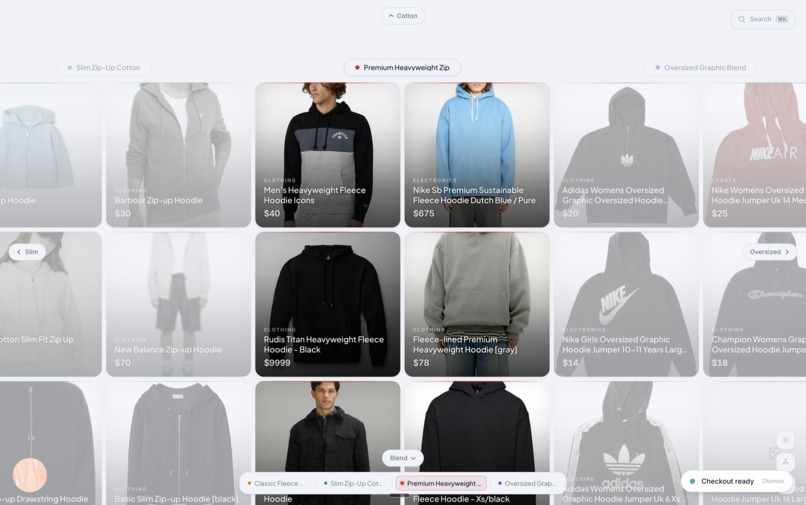
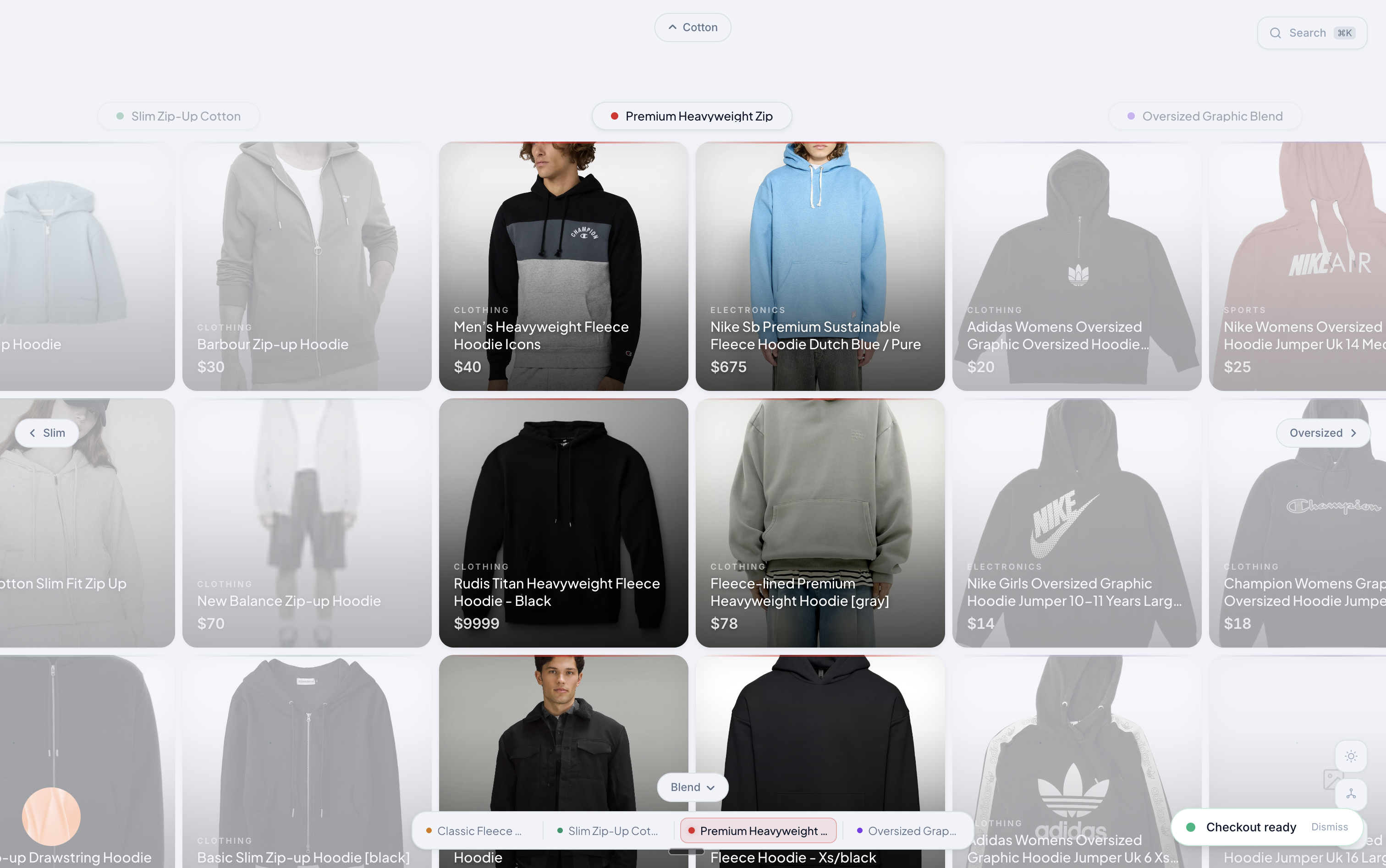
Explore products from thousands of brands — all in one place
-
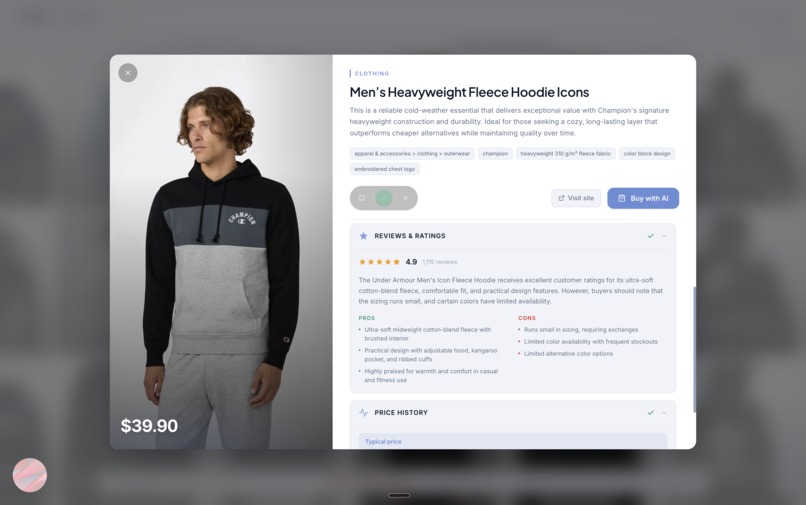
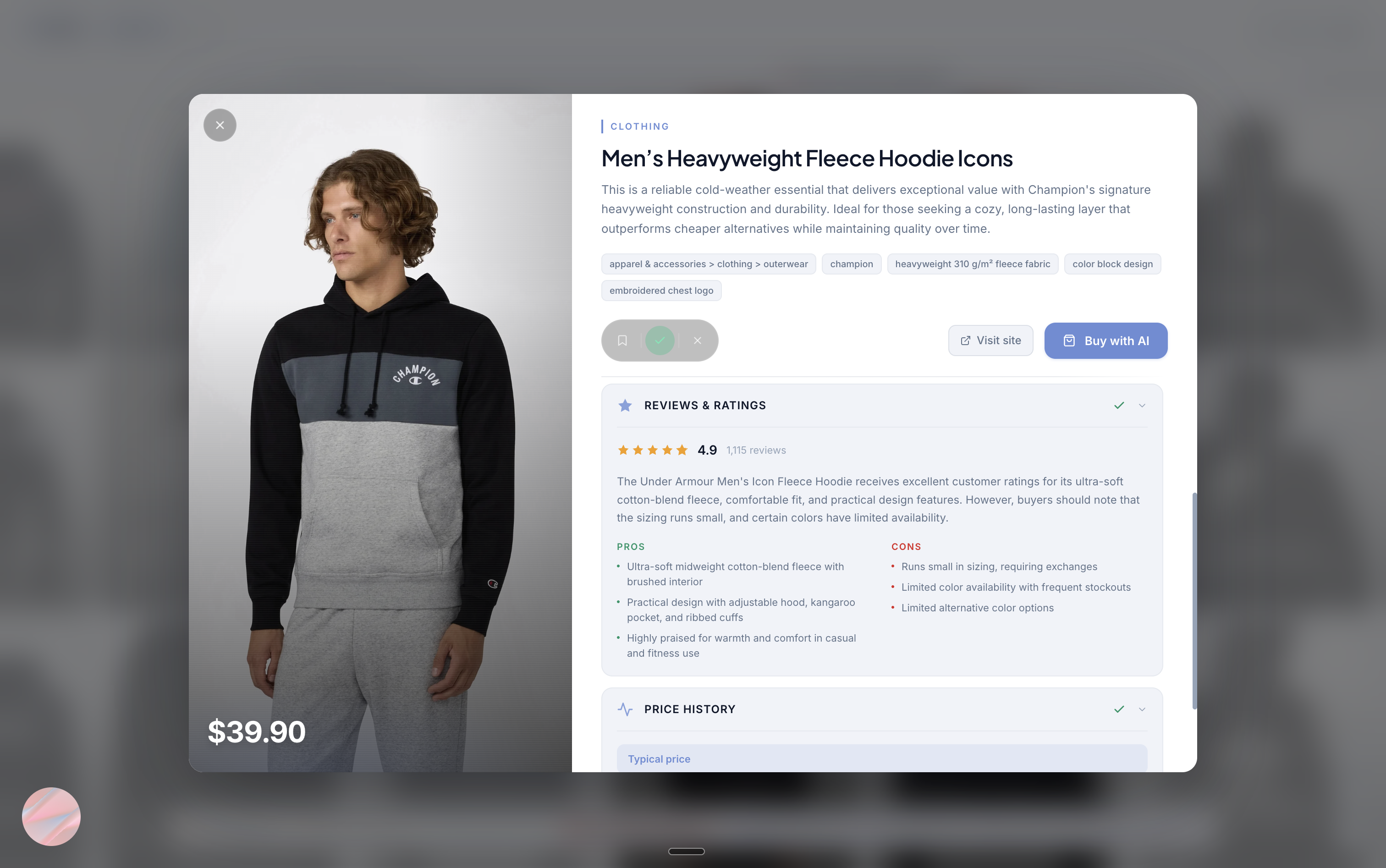
Agents instantly analyze reviews, price history, and features of any product
-
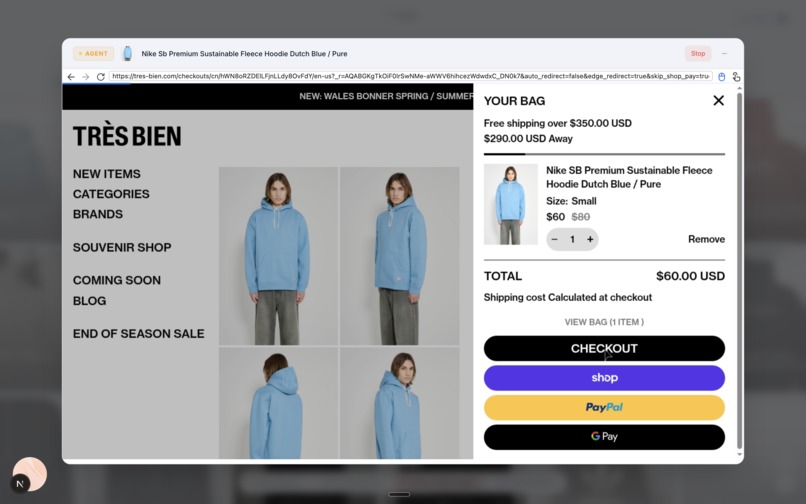
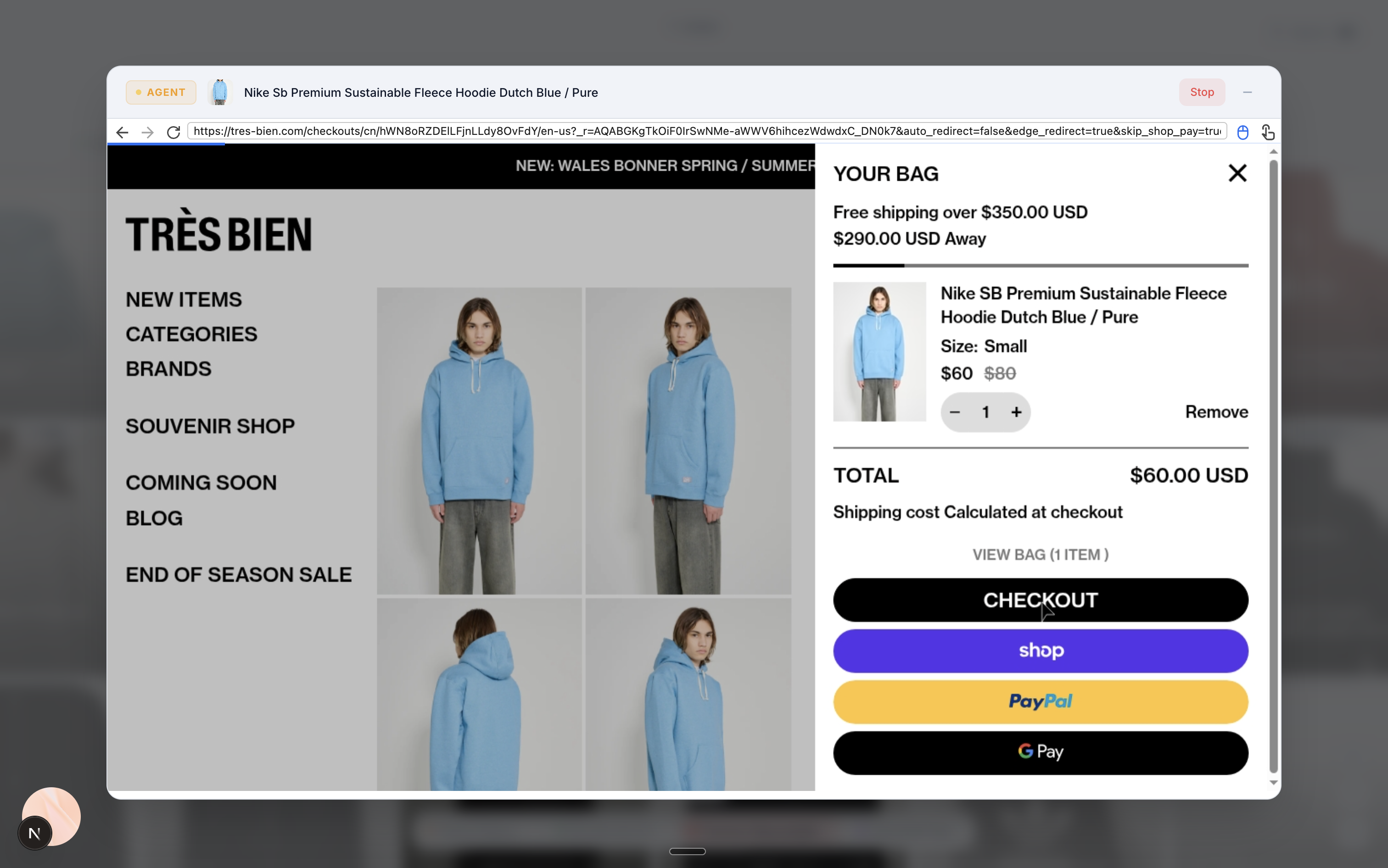
Checkout hands-free — web agent automatically adds to cart and fills your information in a remote browser
-
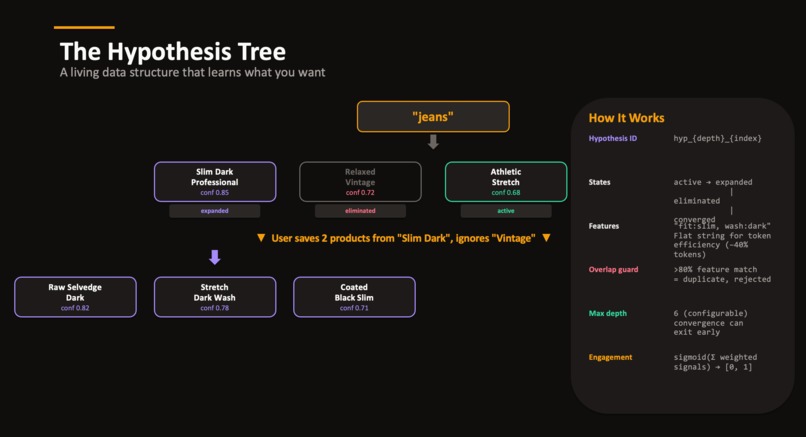
Search and exploration algorithm automatically adapts to your preferences
-
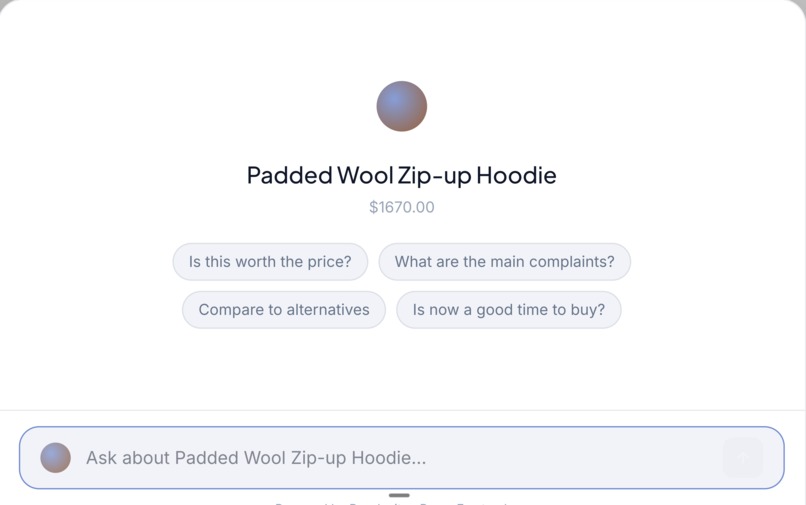
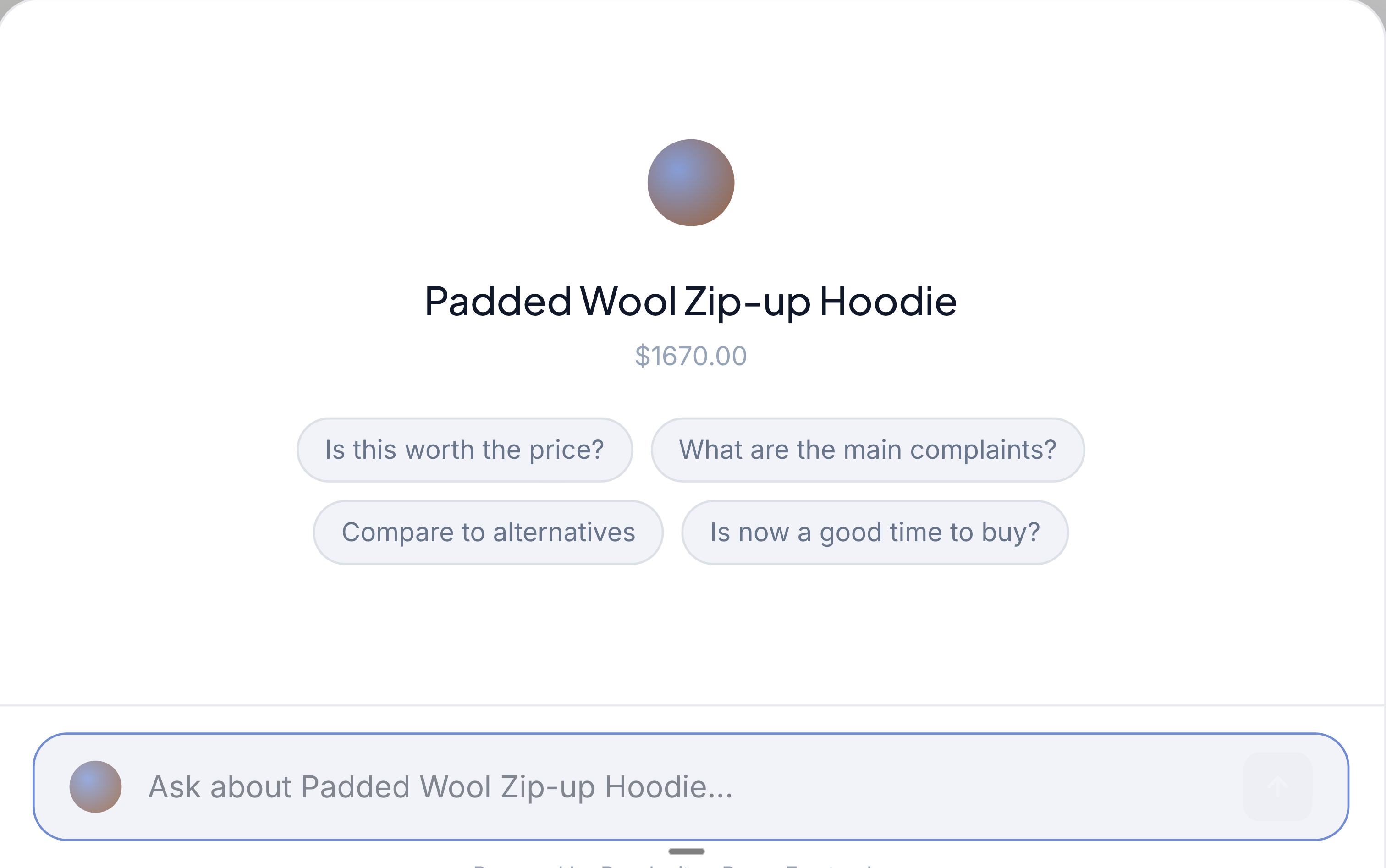
Context-aware Tessera Assistant helps you understand products and make the right decisions
-
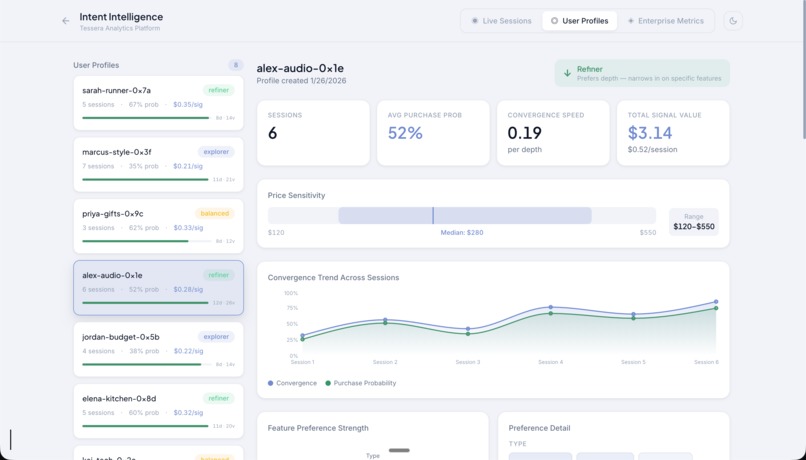
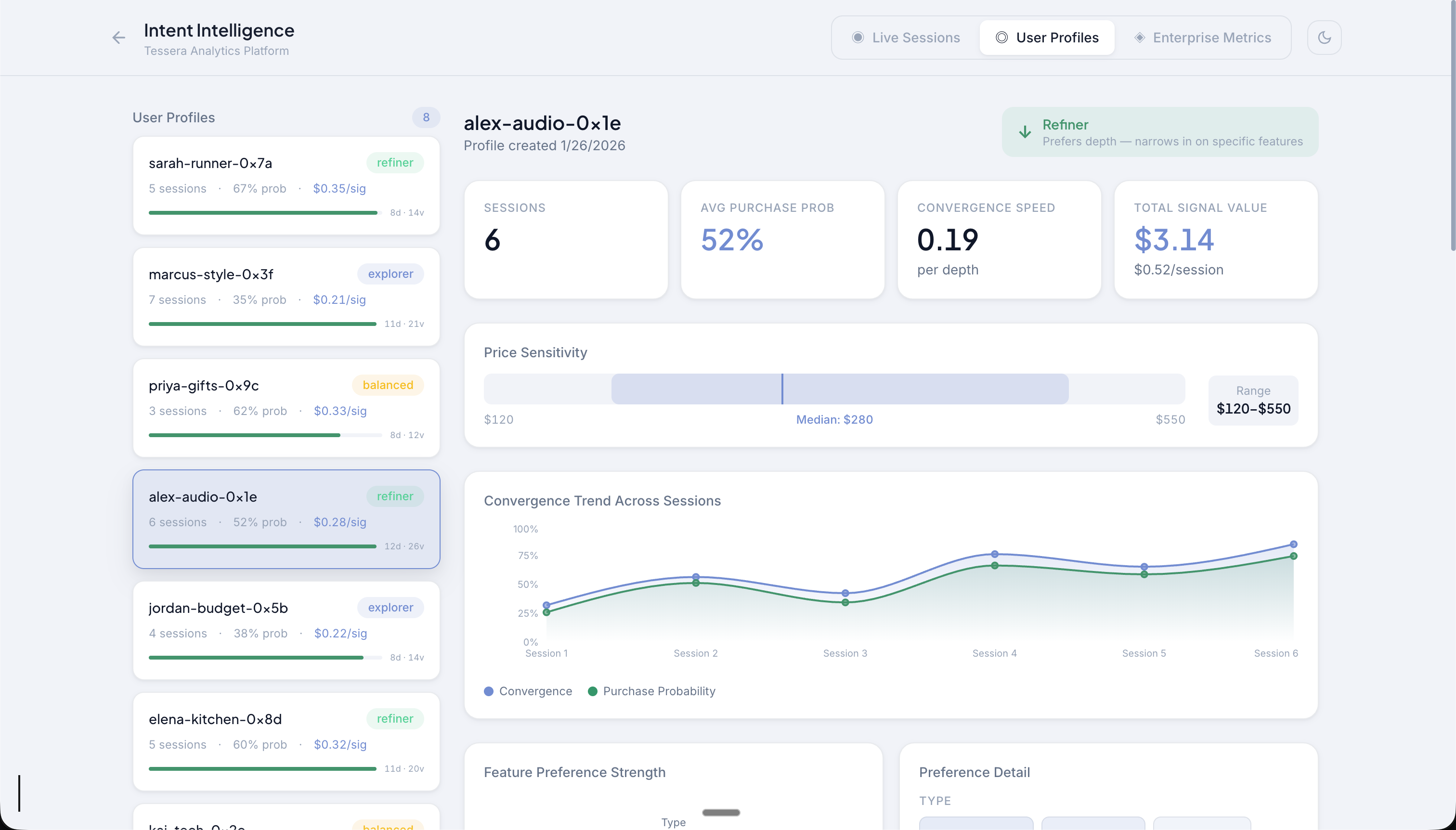
Analytics platform for merchants, showing user decisions
Inspiration
Product discovery is broken. You type a query, get 10 ranked results, scroll, refine, repeat. It's linear, static, and ignores the way people actually shop — by exploring, comparing, and narrowing down through a combination of conscious choices and unconscious preferences.
We wanted to build something that models the shopping journey as a living, spatial experience — a map that adapts to you in real-time, where every interaction teaches the system what you want and what you don't.
What It Does
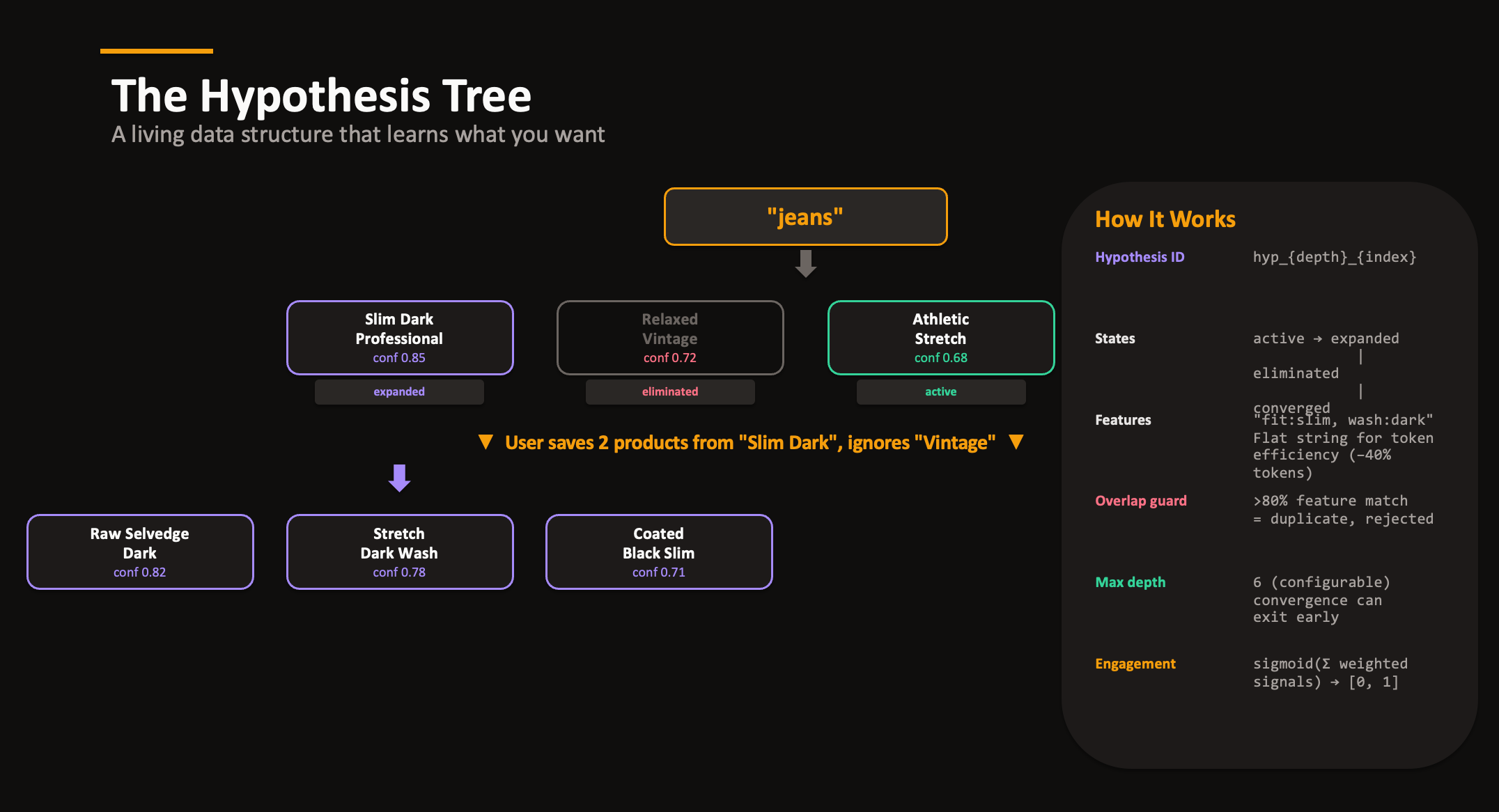
You type "jeans" and instead of a list, you get an infinite 2D canvas with 3-4 product clusters: Slim Dark Wash, Relaxed Light Wash, Bootcut Classic. Each cluster is a grid of real, buyable products. Hover over the slim fits, click one, like another — expand south and the system generates sub-hypotheses: Slim Dark Stretch, Slim Raw Denim, Slim Selvedge. The clusters you ignored get eliminated. Within a few expansions, the map has converged on exactly what you want.
Key capabilities:
- Trajectory Engine — A 3-tier LLM system that decomposes search queries into hypothesis trees, tracks engagement signals (clicks, saves, dwell time, pan direction), and uses Bayesian confidence recalibration to prune bad branches and expand promising ones
- Real Products — Every item comes from Channel3's product database with real affiliate links, current pricing, availability, and multiple product images
- AI Checkout — Click "Buy with AI" and a headless browser agent (Stagehand + Browserbase) navigates to the retailer, selects options, fills in shipping and payment, and stops before placing the order — leaving the final click to the user
- Product Intelligence — Four research agents run in parallel when you view a product: reviews & ratings, price history with buy/wait recommendations, detailed specs, and a deep-dive analysis powered by Perplexity Sonar
- Product Chat — Ask questions about any product ("Is this worth the price?", "How does this compare to X?") and get research-backed answers grounded in live web data
- Intent Analytics — Every interaction is captured and transformed into structured intent signals: purchase probability, feature preference profiles, exploration style classification, and convergence metrics — all viewable on a real-time analytics dashboard
How We Built It
Frontend: Next.js 16, React 19, Tailwind CSS 4, Zustand (13 stores), Framer Motion. The infinite canvas uses translate3d transforms applied directly to the DOM for 60fps panning, with spatial index virtualization so only visible products render.
AI Pipeline: Vercel AI SDK with a 3-tier model strategy — Claude Sonnet for query decomposition (Tier 3), Claude Haiku for trajectory refinement and hypothesis elimination (Tier 2), and Haiku/GPT-5-nano for fast product alignment scoring (Tier 1). All models use generateText() + JSON parse instead of structured output for 2-4x speed gains.
Product Data: Channel3 API for the real product catalog — search, price tracking, product details, affiliate links. Perplexity Sonar for web-grounded research and chat.
Checkout Automation: Stagehand (Browserbase) launches cloud browser sessions driven by Claude Haiku. The agent resolves affiliate URLs, navigates retailer sites, dismisses popups, selects variants, fills forms — all streamed to the user via a live iframe.
Analytics: 8 interaction event types feed into a signal computation engine that produces purchase probability (sigmoid of 5 weighted factors), feature preference profiles (weighted voting across hypotheses), and cross-session user profiles persisted locally.
Challenges We Ran Into
- Cold-start hypothesis quality — The system has zero historical data about each user. We solved this with aggressive query decomposition and directional expansion semantics (pan south = refine, pan east = explore) so the tree converges fast from engagement alone.
- LLM latency vs. UX — Every expansion click triggers an LLM call. We got this under control with tiered models (cheap/fast for scoring, smarter for decomposition), aggressive caching, and parallel retrieval.
- Spatial placement — Arranging hypothesis clusters on a 2D grid so they're semantically meaningful (not just random) required mapping feature dimensions to spatial axes and solving for non-overlapping cluster positions.
- Checkout reliability — Every retailer's site is different. Popups, CAPTCHAs, varying form layouts, iframes — the agent needs robust fallback strategies and a strict safety rule to never finalize a purchase.
Accomplishments That We're Proud Of
- The trajectory engine genuinely converges — within 3-4 expansions, the map narrows from broad categories to specific products that match user intent
- Real, buyable products with affiliate links from day one — not mock data in production
- The analytics pipeline produces commercially valuable intent signals: knowing what features a user prefers and what they explicitly rejected is more useful than click-through rates
- AI checkout that works across diverse retailer sites with a hard safety boundary
What We Learned
- Hypothesis trees are a powerful alternative to collaborative filtering for cold-start product discovery — you don't need historical data if you can decompose intent structurally and observe engagement in real-time
- Spatial layout communicates information — users intuit that moving right means "more premium" and moving down means "more specific" without being told
- The cheapest LLM that can do the job is always the right choice — tier your models aggressively
- Viewport dwell (where users linger without clicking) is one of the strongest passive preference signals available
What's Next
- Collaborative trajectories — Use cross-session intent profiles to warm-start hypothesis trees for returning users
- Multi-query sessions — Spotlight search (Cmd+K) already merges new hypotheses into the existing grid; the next step is having the system suggest related searches based on emerging preferences
- Expanded checkout coverage — More retailer adapters, CAPTCHA handling, and a user-controlled "place order" confirmation step
- Intent marketplace — The structured signals (feature preferences, elimination patterns, purchase probability) are the real product; building the API for downstream consumers
Built With
- anthropic
- browserbase
- channel3
- nextjs
- openai
- vercel


Log in or sign up for Devpost to join the conversation.