-
-
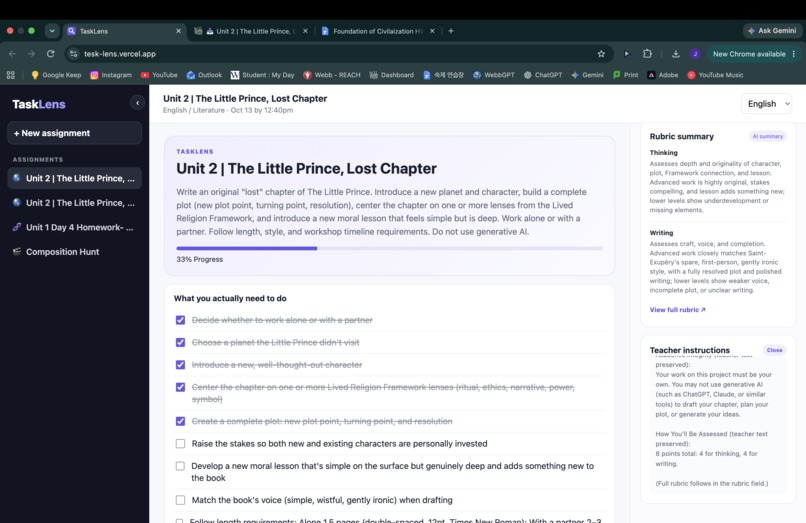
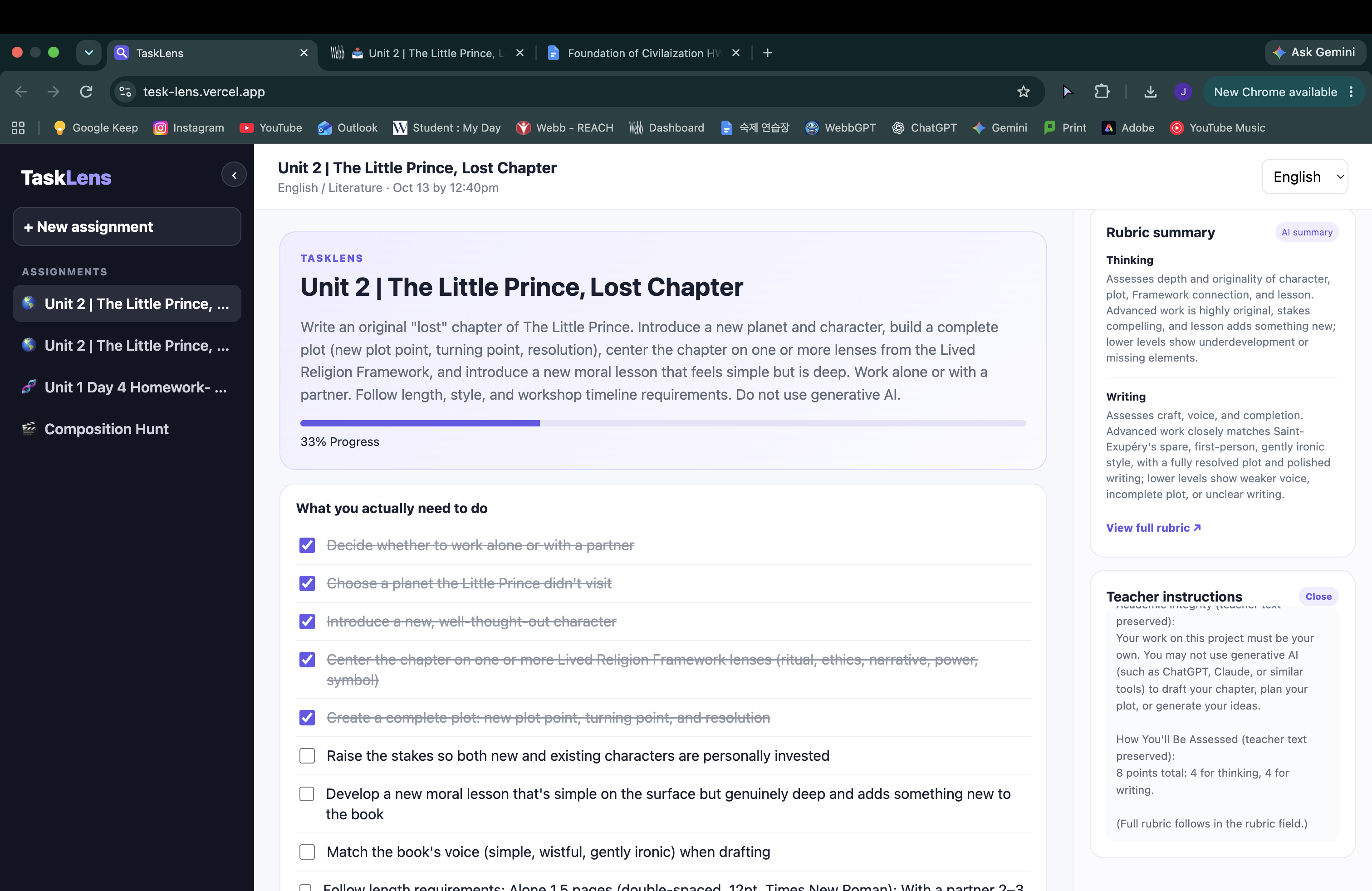
It analyze the assignment
-
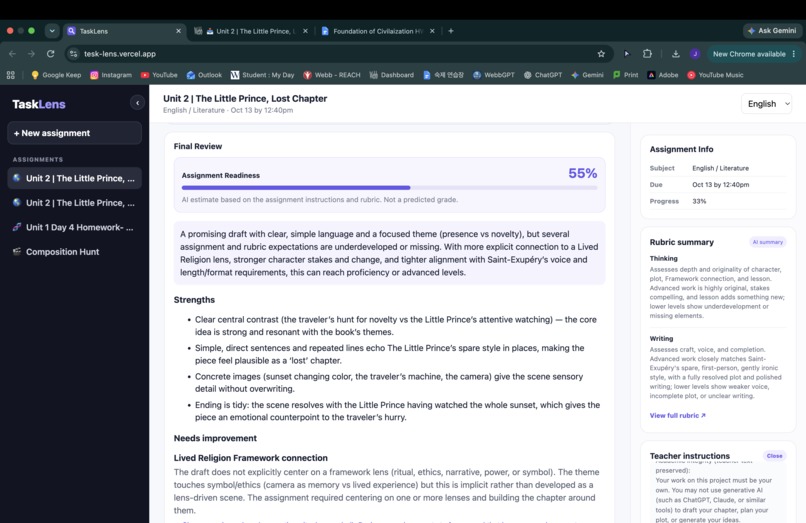
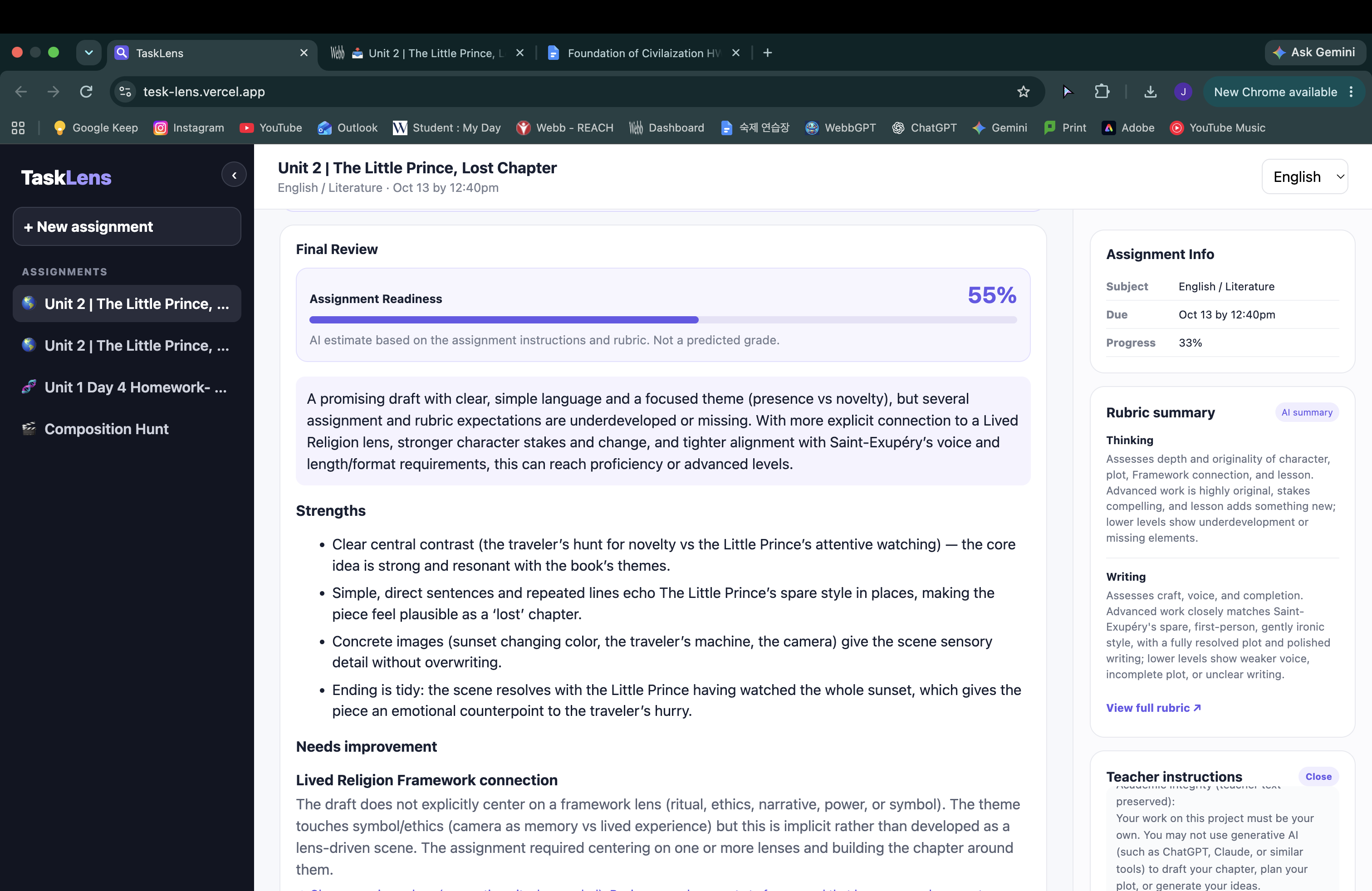
AI can give feedback for student
-
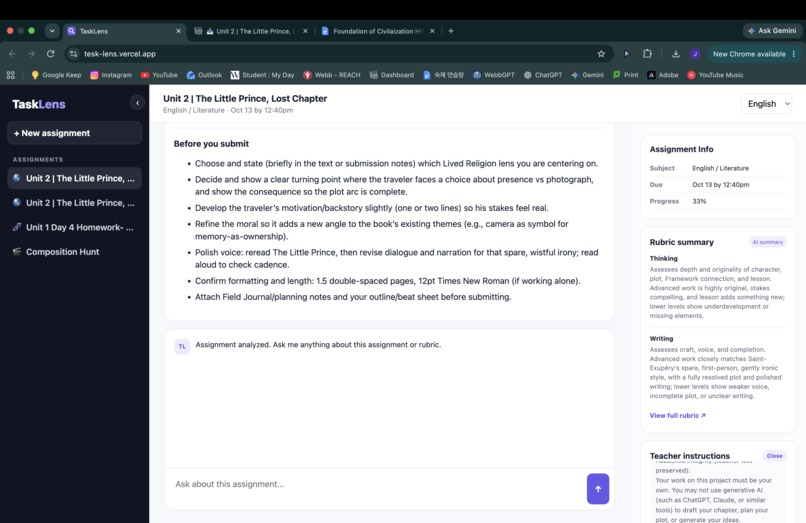
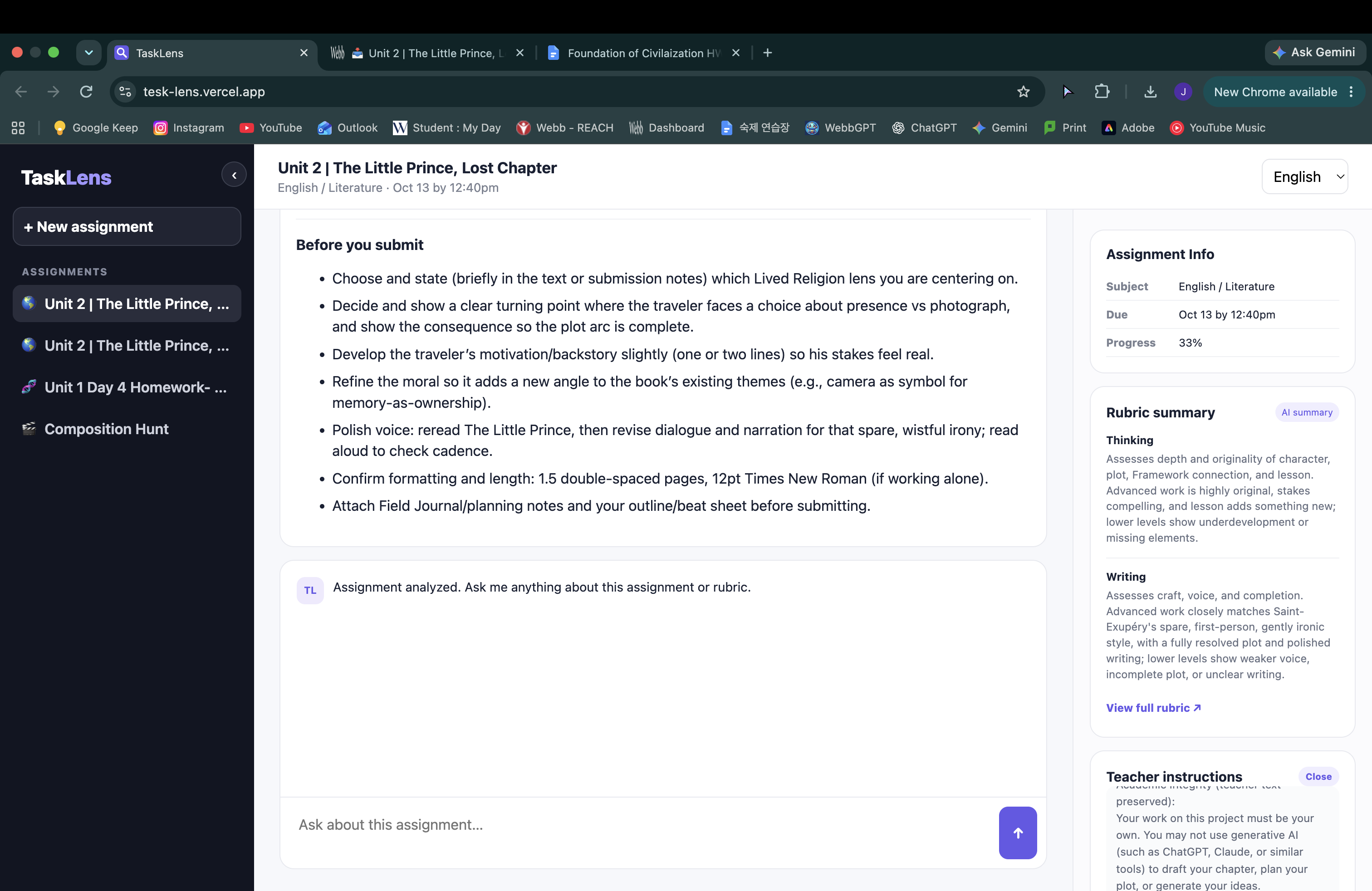
You can ask anything to AI about the assignment
-
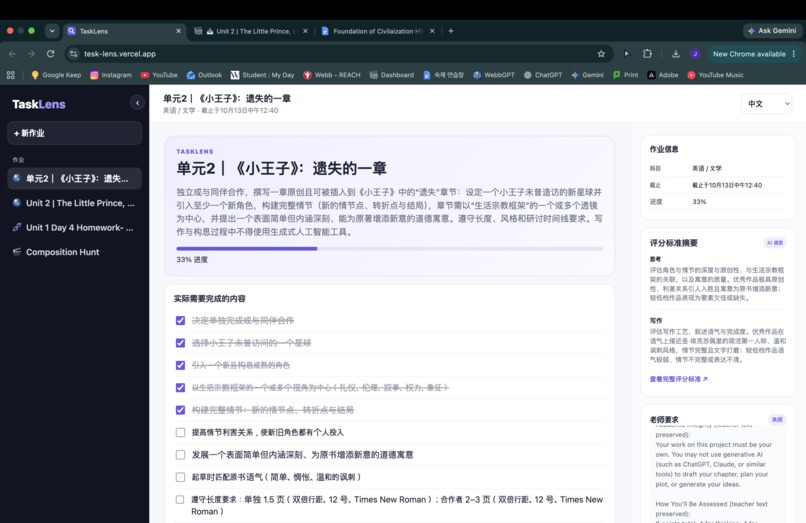
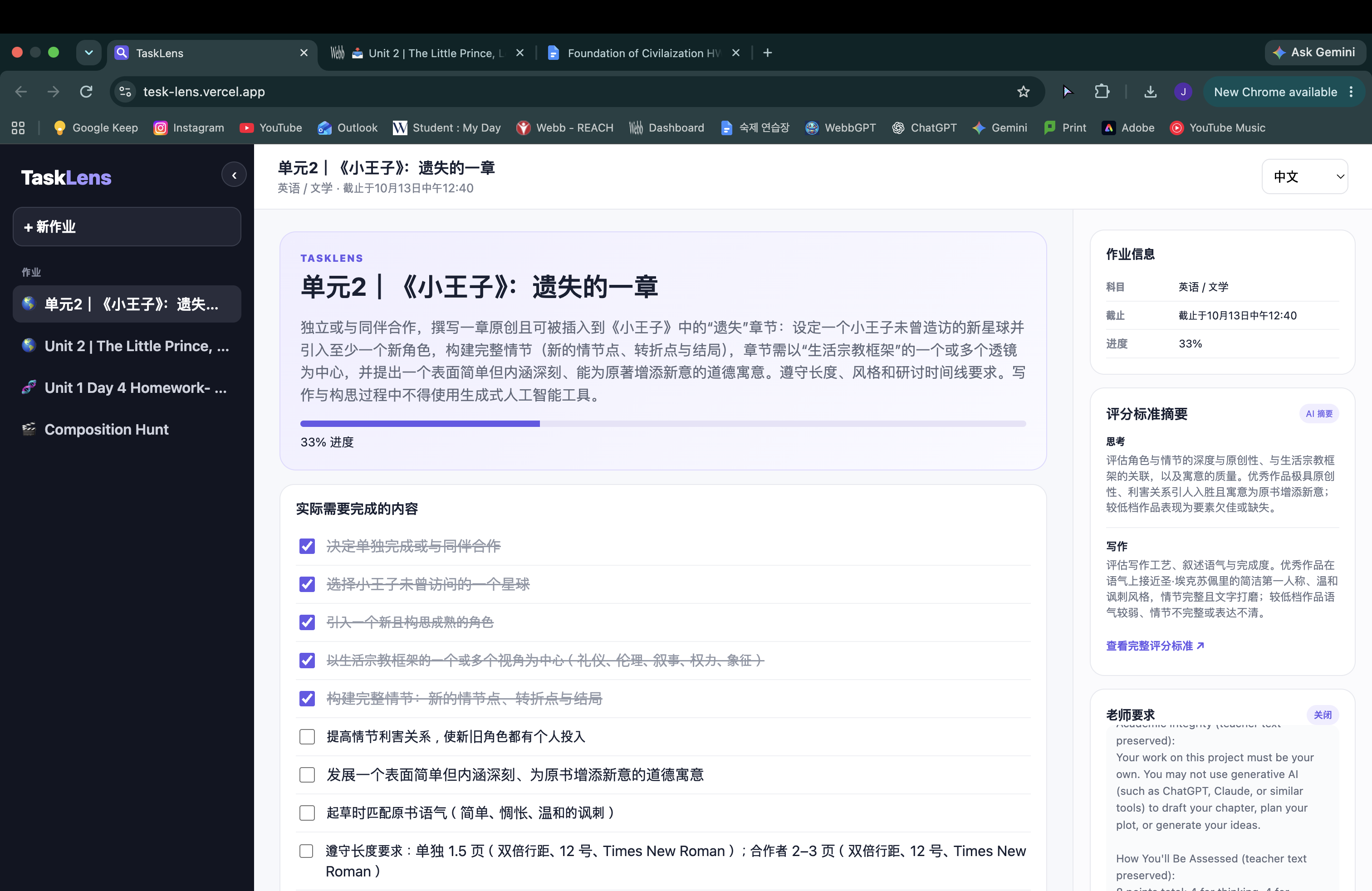
The language can be changed for international students
Inspiration
As an international student, I sometimes have trouble understanding assignments, especially when the instructions are long or use words that I am not familiar with. Sometimes I understand the topic, but I am still confused about what the assignment is actually asking me to do. Translation helps, but it does not always explain the requirements clearly.
This inspired me to create TaskLens. I wanted to build a tool that helps students understand not only the language of an assignment, but also what they actually need to do.
What it does
TaskLens turns assignment instructions into a clear workspace. Students can upload screenshots, images, PDFs, or text, and AI analyzes the assignment to identify the subject, deadline, requirements, checklist, and rubric.
Each assignment gets its own AI chat, so students can ask questions about confusing instructions without having to explain the assignment again. TaskLens also supports multiple languages to make instructions easier for international students to understand.
The Final Review feature lets students upload their completed work and compares it with the assignment requirements and rubric. It gives targeted feedback, identifies missing requirements, and provides an Assignment Readiness percentage from 0–100%. The percentage is an AI estimate of how well the work appears to meet the provided requirements, not a predicted grade.
How we built it
I built TaskLens as a web application using Next.js and JavaScript. I integrated the OpenAI API to analyze uploaded assignments, organize instructions into structured information, answer assignment-specific questions, translate content, and review completed work.
I also designed the interface around persistent assignment workspaces, so students can keep their checklist, rubric, instructions, chat, and final review in one place.
Challenges we ran into
One of the biggest challenges was handling AI responses reliably. Assignment instructions can come from different file types and can be formatted very differently.
Another challenge was multilingual support. I had to prevent translated content from different languages from mixing together and improve the way translation results were stored and displayed. I also worked on loading states so users can clearly see when the AI is analyzing, translating, thinking, or reviewing instead of wondering whether the website has frozen.
Accomplishments that we're proud of
I am proud that TaskLens became more than a simple assignment summarizer. A student can upload a real assignment, receive an organized workspace, track requirements, ask questions with the assignment as context, and then return with their finished work for a final review.
I am especially proud of the Final Review system because it focuses on feedback rather than simply generating answers for the student. It uses the teacher's instructions and rubric to help the student identify what they should improve themselves.
What we learned
Building TaskLens taught me that making an AI application useful requires more than connecting an API. The way information is structured, stored, and presented can be just as important as the AI response itself.
I also learned a lot about debugging API requests, handling files, managing application state, designing loading feedback, and building an interface around an actual problem I experience as a student.
What's next for TaskLens
Next, I want to make TaskLens faster and improve its multilingual experience. I would also like to improve how it handles different types of rubrics and assignments and make the Final Review more detailed while keeping it focused on feedback rather than providing students with answers.
In the future, TaskLens could also integrate with learning management systems so students can organize assignments from their classes in one place.
Built With
- javascript
- next.js
- openai

Log in or sign up for Devpost to join the conversation.