-
-
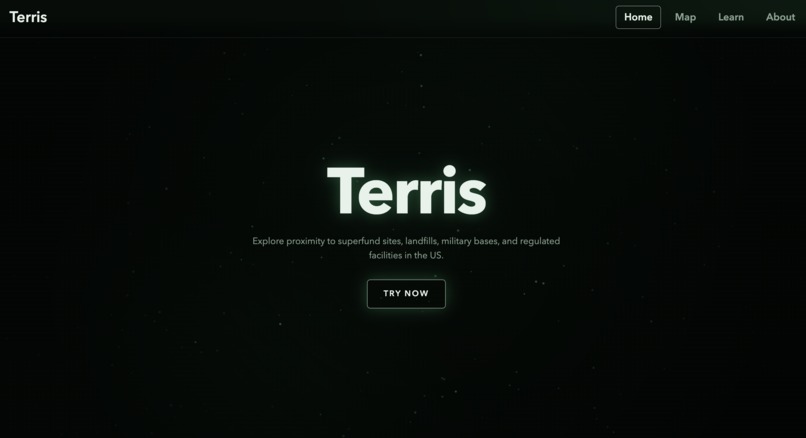
Landing Page
-
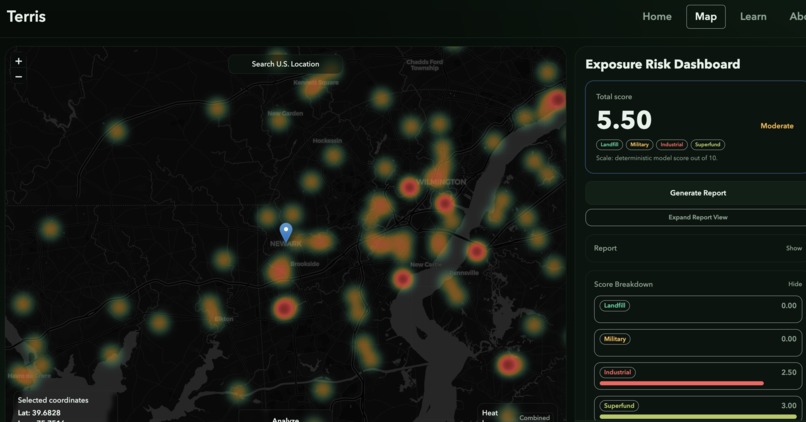
Map
-
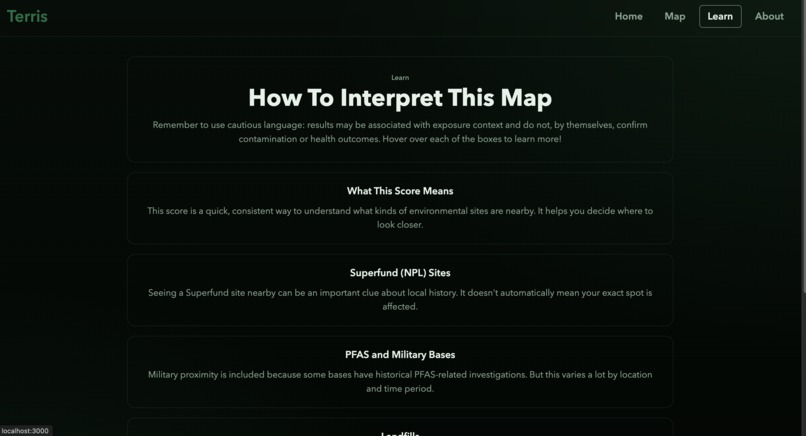
Learn Tab
-
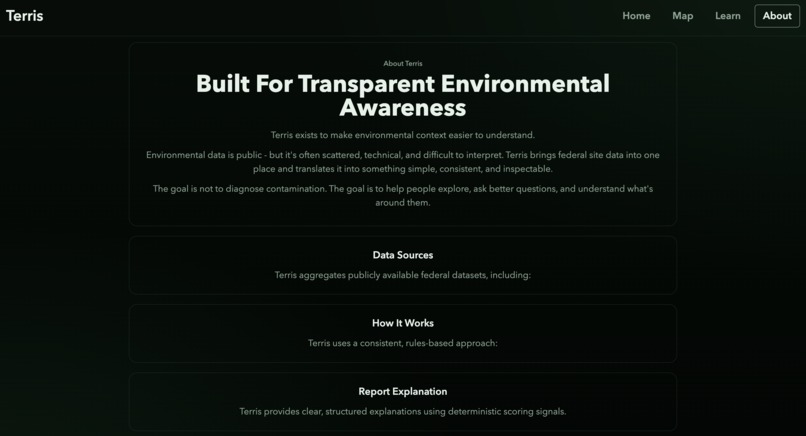
About
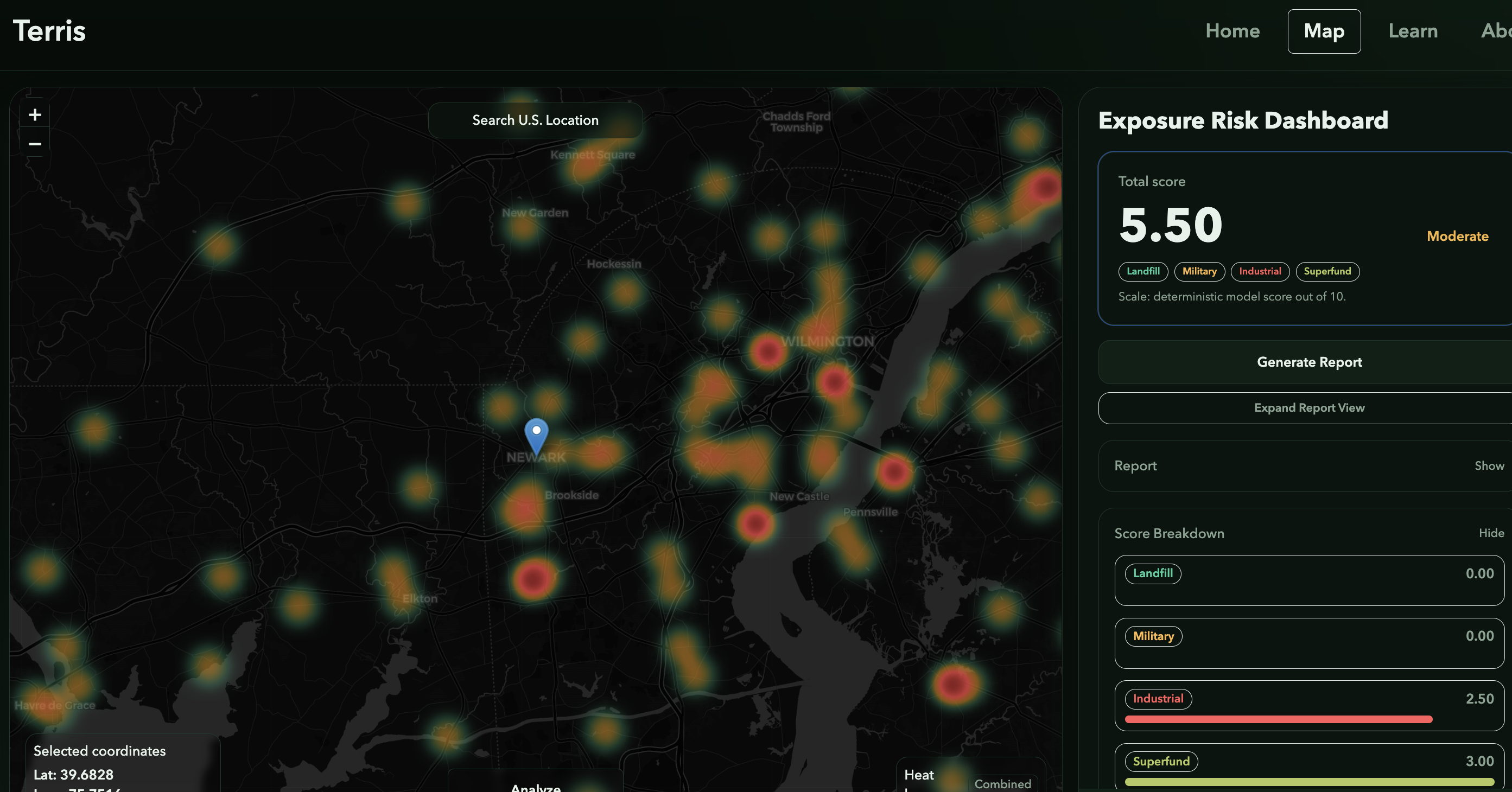
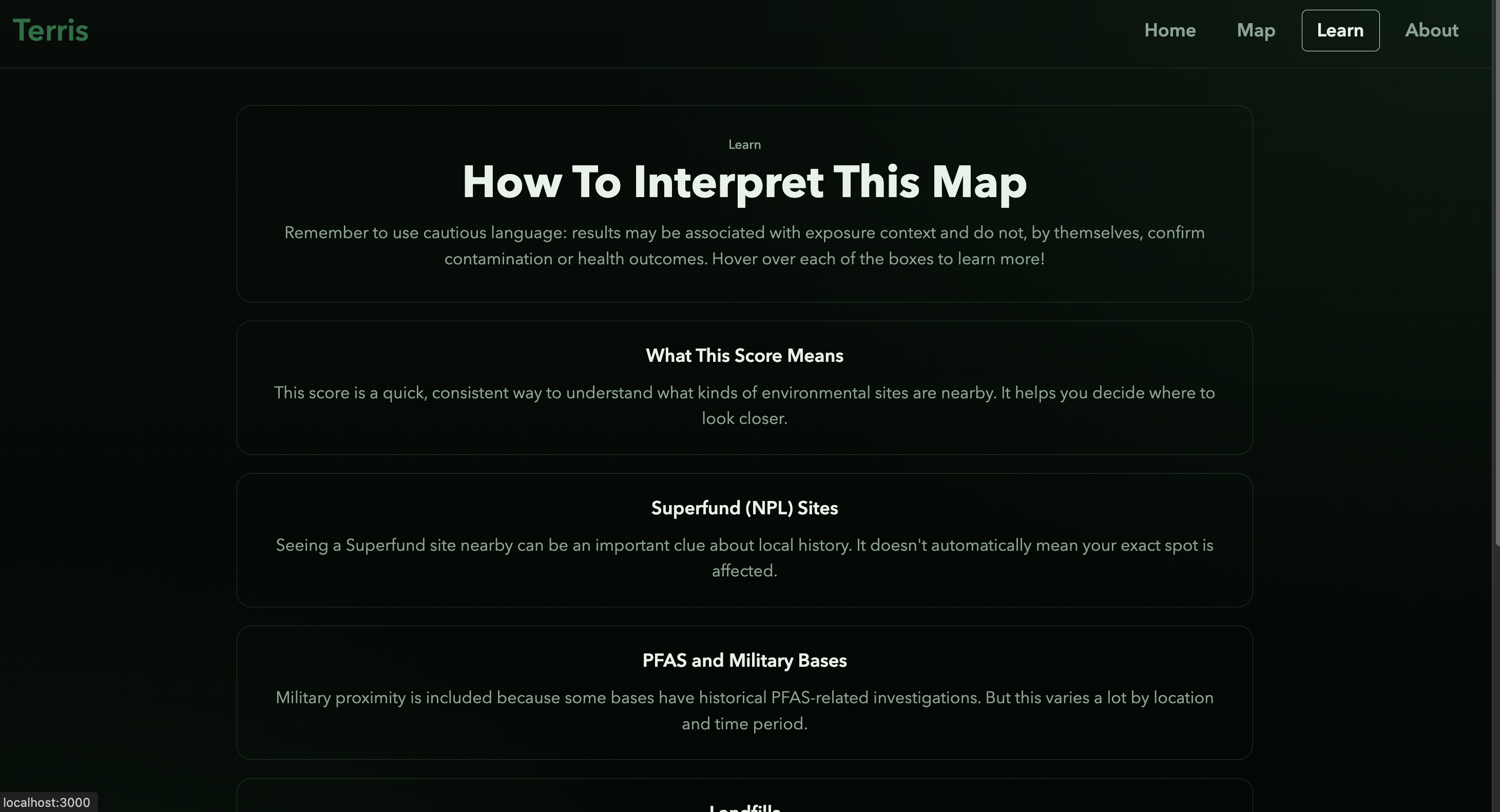
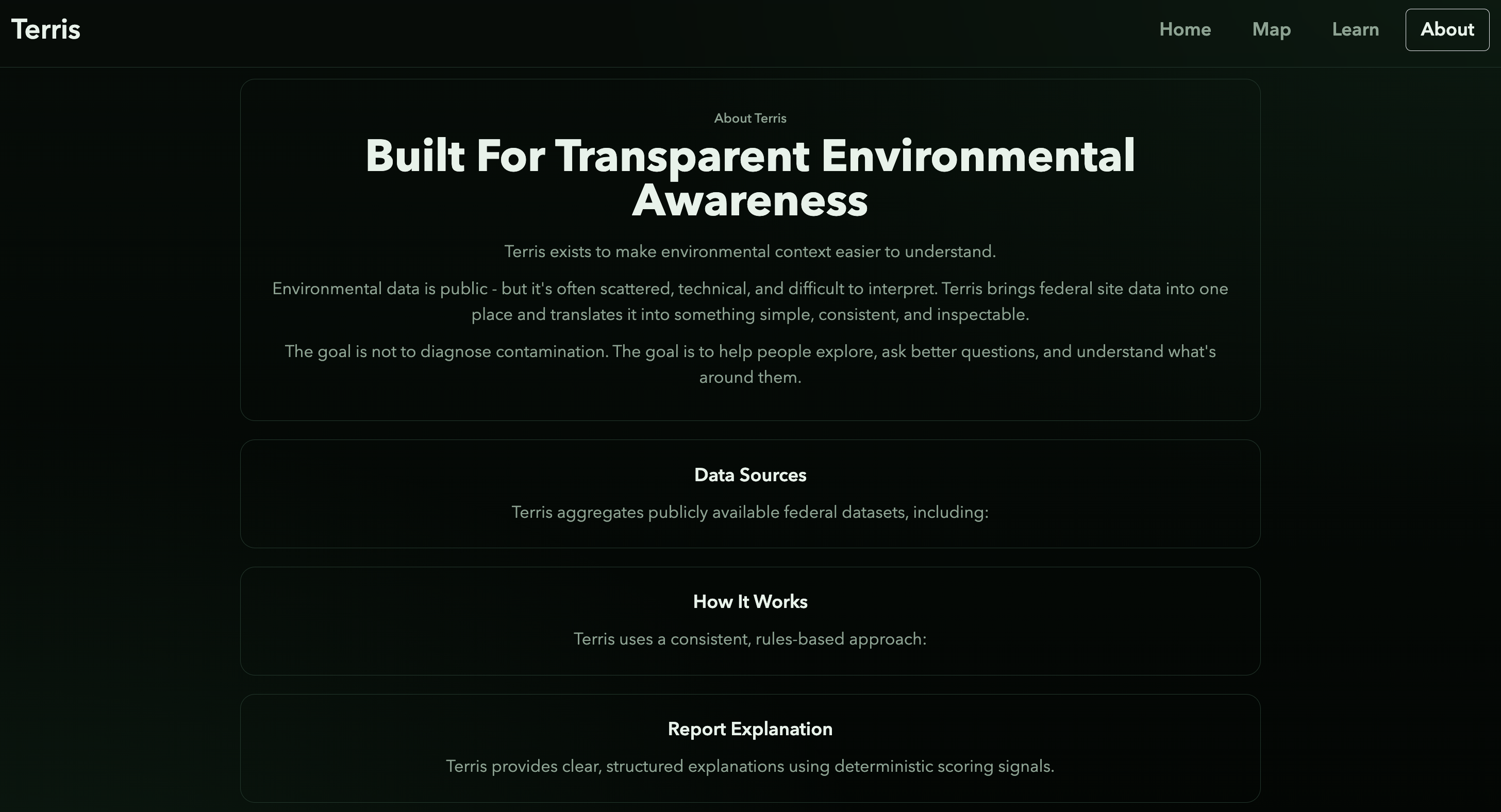
Terris is a national environmental exposure screening tool built to address a key problem: environmental site data in the United States is public, but it is fragmented, difficult to interpret, and inaccessible to everyday users. There is no simple way for someone to understand what major environmental infrastructure is near them or how concentrated it may be in a given area.
Terris solves this by mapping proximity to major environmental site types across the United States and generating a deterministic 0–10 exposure proxy score. The platform processes over 49,000 environmental sites, including landfills, military bases, industrial facilities, and Superfund NPL locations. Using spatial indexing and a transparent scoring model, Terris produces fast, reproducible proximity signals without relying on AI in the request path.
Importantly, Terris does not detect contamination. It provides proximity-based screening insights intended to improve infrastructure awareness and data transparency.
This tool can be used by residents, homebuyers, researchers, journalists, civic planners, and community advocates who want a clearer understanding of environmental infrastructure density in a given location. By combining geospatial modeling, structured scoring, and an intuitive interactive interface, Terris transforms fragmented public datasets into a transparent, production-ready civic resource.
How it works: The FastAPI backend loads a unified national site dataset once at startup, builds category-specific BallTree spatial indexes, and serves low-latency /analyze and /report endpoints with no per-request CSV scans. For each coordinate, it computes fixed proximity/density signals (landfill, military, industrial, superfund), combines them into a clamped 0–10 score with transparent breakdown and evidence, and returns a deterministic report that explicitly frames results as screening context, not contamination detection. The Next.js frontend renders an interactive Leaflet map, calls the backend APIs, and presents score drivers, nearby evidence, and structured explanations in a user-friendly workflow.
Built With
- fastapi
- nextjs
- python
- scikit

Log in or sign up for Devpost to join the conversation.