-
-
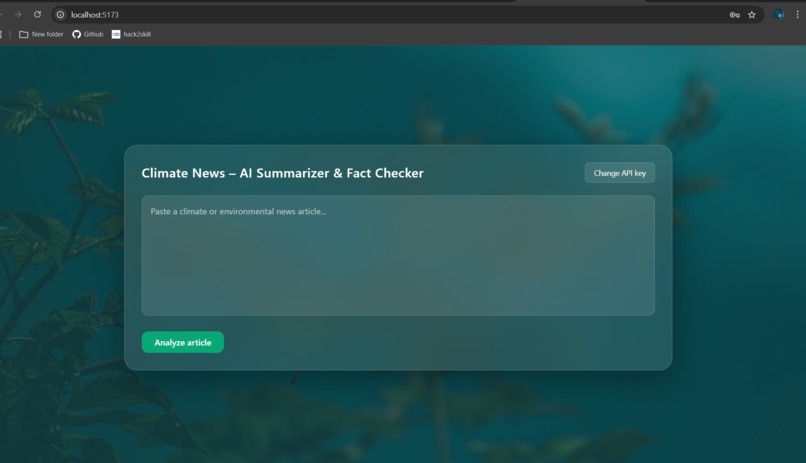
Terrafactum - Turning environmental headlines into trusted facts
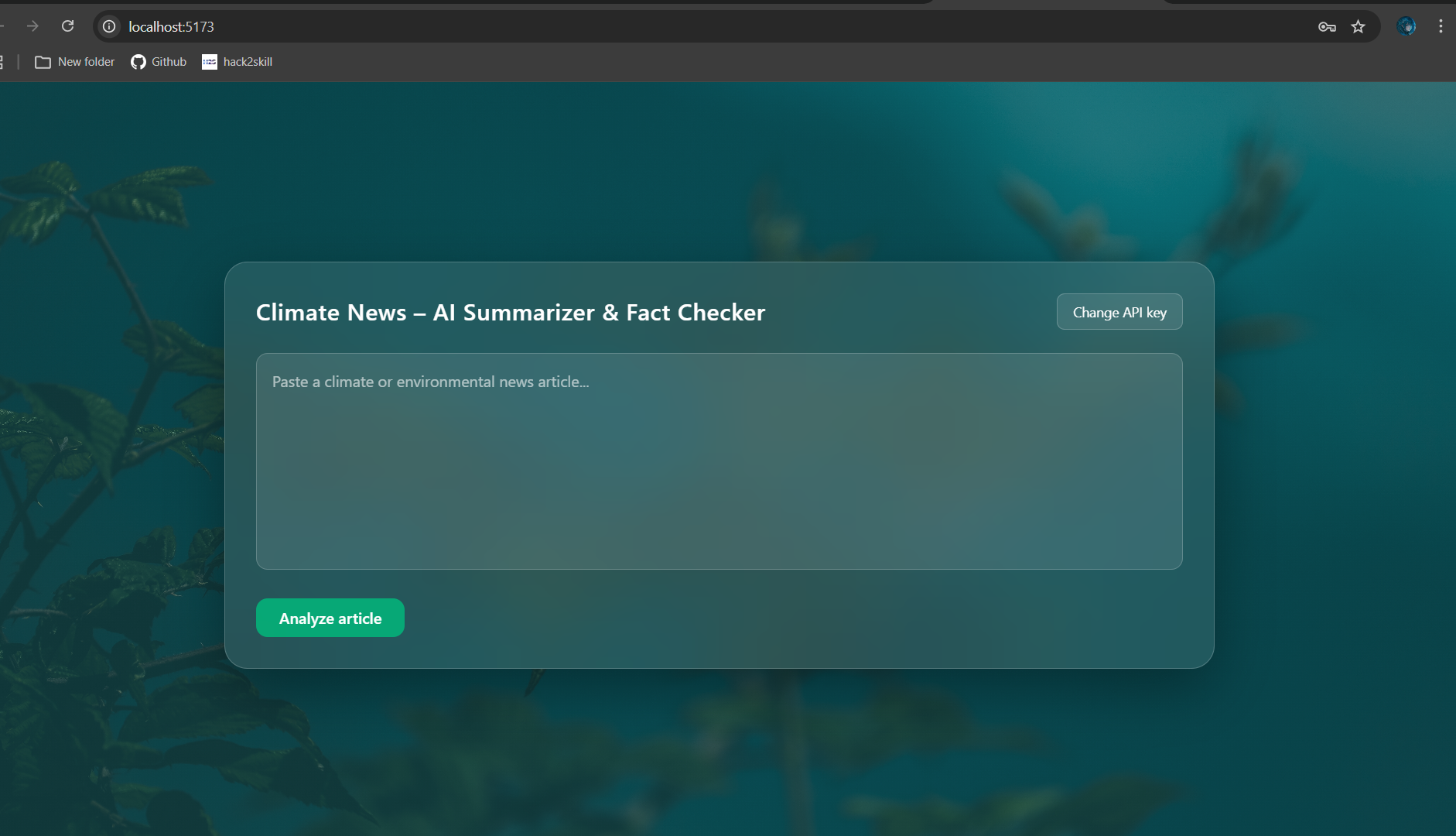
Inspiration
Terrafactum was inspired by the growing amount of climate and environmental news on the internet and the difficulty people face in identifying reliable and well-supported information. Many articles mix scientific facts with opinions or incomplete data, which makes it hard for readers to understand what is accurate. The goal was to build a simple AI-powered tool that can summarize environmental news and automatically review major claims using natural language processing.
What it does
- Terrafactum is an AI-based environmental news summarizer and fact-checking web application.
- It allows users to paste a climate or environment related article and receive a concise summary along with an automated claim-level assessment.
- The system classifies each claim as well-supported, questionable, or potentially misleading and presents the results in an easy-to-read visual interface.
How we built it
- The frontend is built using React with Tailwind CSS for a responsive and modern user interface.
- The application uses the Groq AI chat completion API with a large language model to perform text summarization, information extraction, and claim assessment.
- The logic for parsing the model response is implemented on the client side, and browser local storage is used to securely store the user’s API key.
- The application communicates with the AI service using standard HTTP requests and JSON payloads.
Challenges we ran into
- One of the main challenges was handling inconsistent model responses and making the output follow a strict format for summary and fact-checking sections.
- Parsing unstructured text into structured claim cards required careful use of regular expressions and error handling.
- Another challenge was dealing with API errors and model deprecations, which required selecting a supported free model and adding robust modal-based error reporting in the user interface.
Accomplishments that we're proud of
- We successfully created a complete client-side AI application that performs real-time article analysis, structured fact-checking, and visual classification of claim reliability.
- The application provides clear color-coded feedback for each claim and generates an overall conclusion panel that helps users quickly understand the credibility of an article.
What we learned
- We learned how to integrate large language models through REST APIs, manage asynchronous requests in React, and design a resilient frontend that can handle failures from external AI services.
- We also gained experience in prompt engineering, structured output extraction, and building user-friendly interfaces for complex AI-generated results.
What's next for Terrafactum
- The next step for Terrafactum is to add automatic source suggestions for each claim, integrate trusted scientific and journalism databases for cross-verification, and introduce user accounts for saving analyzed articles.
- We also plan to improve claim extraction accuracy and extend support to multiple languages for global environmental news coverage.


Log in or sign up for Devpost to join the conversation.