-
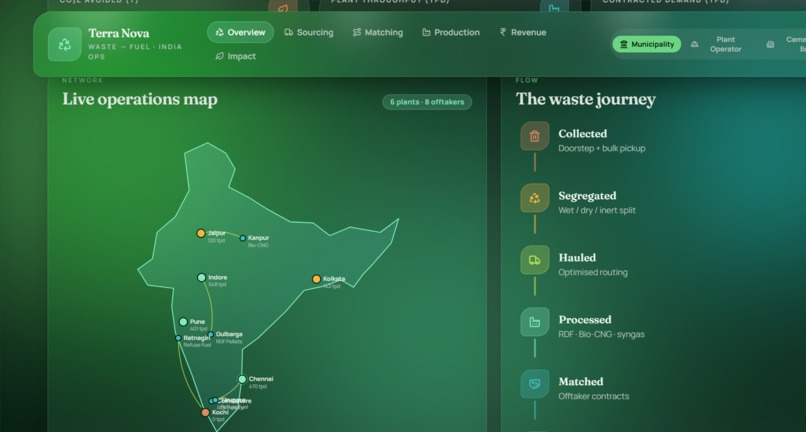
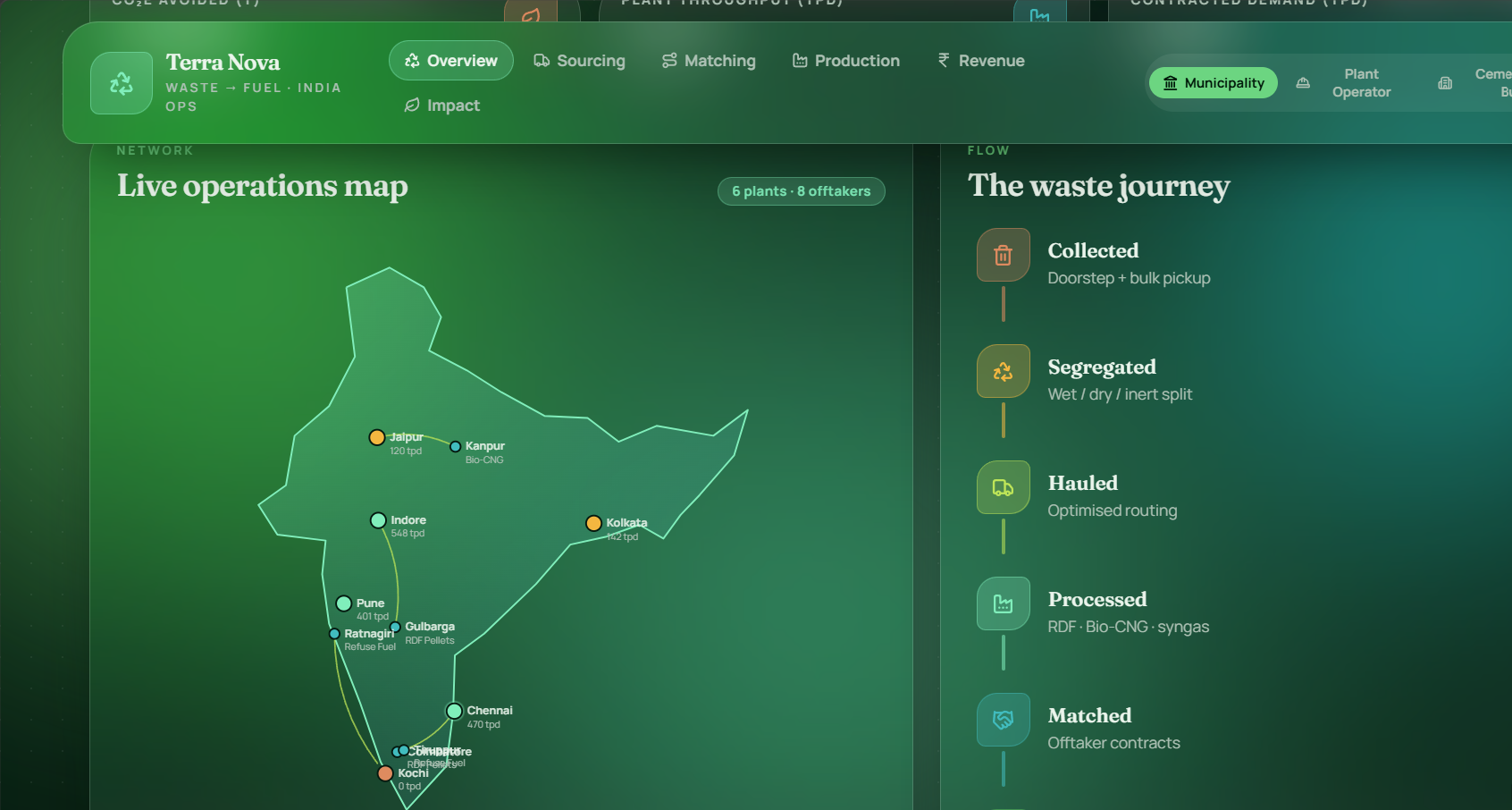
Live Operations map
-
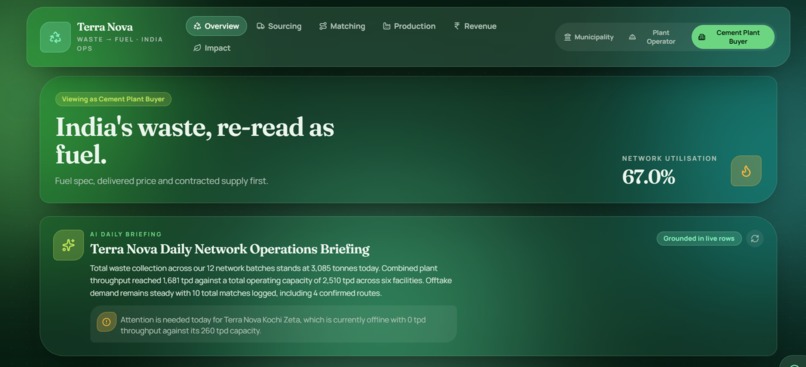
Ai integration - can be viewed differently
-
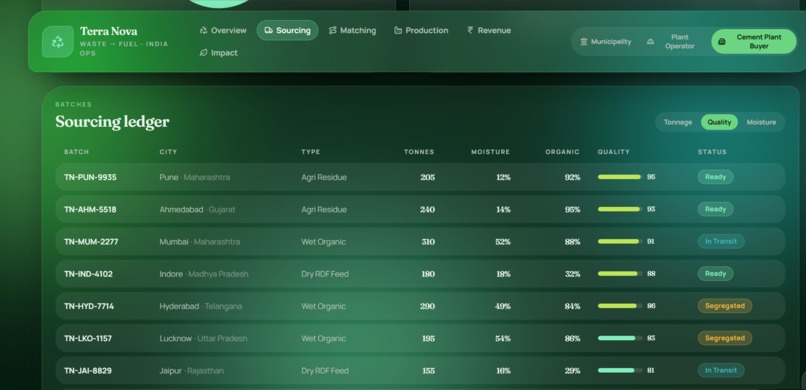
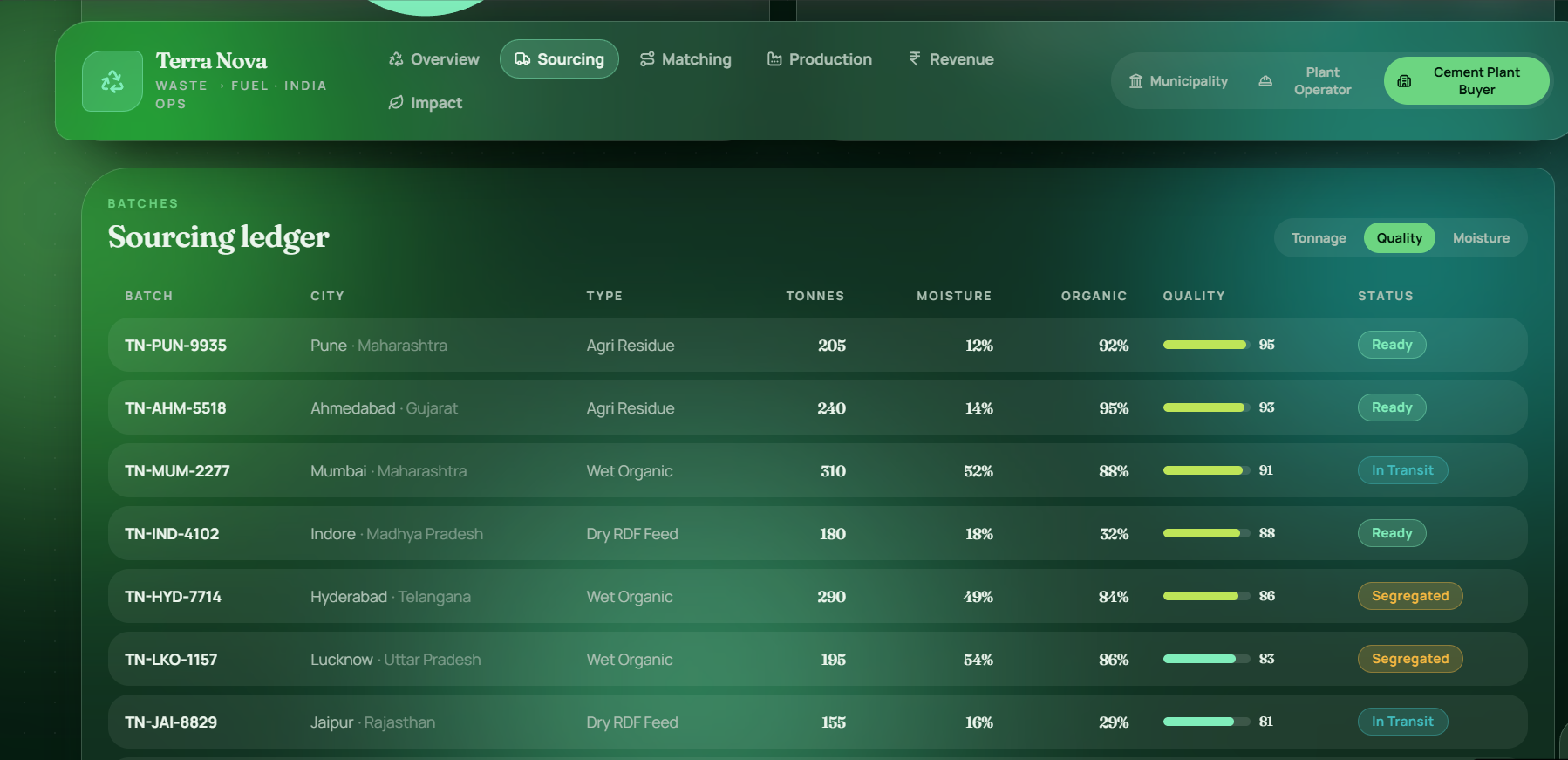
Sourcing
-
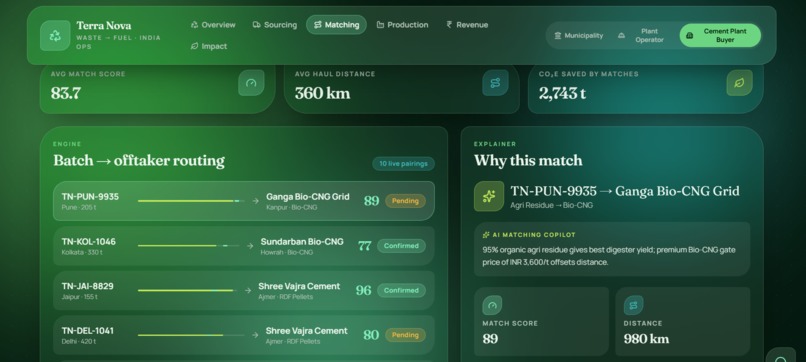
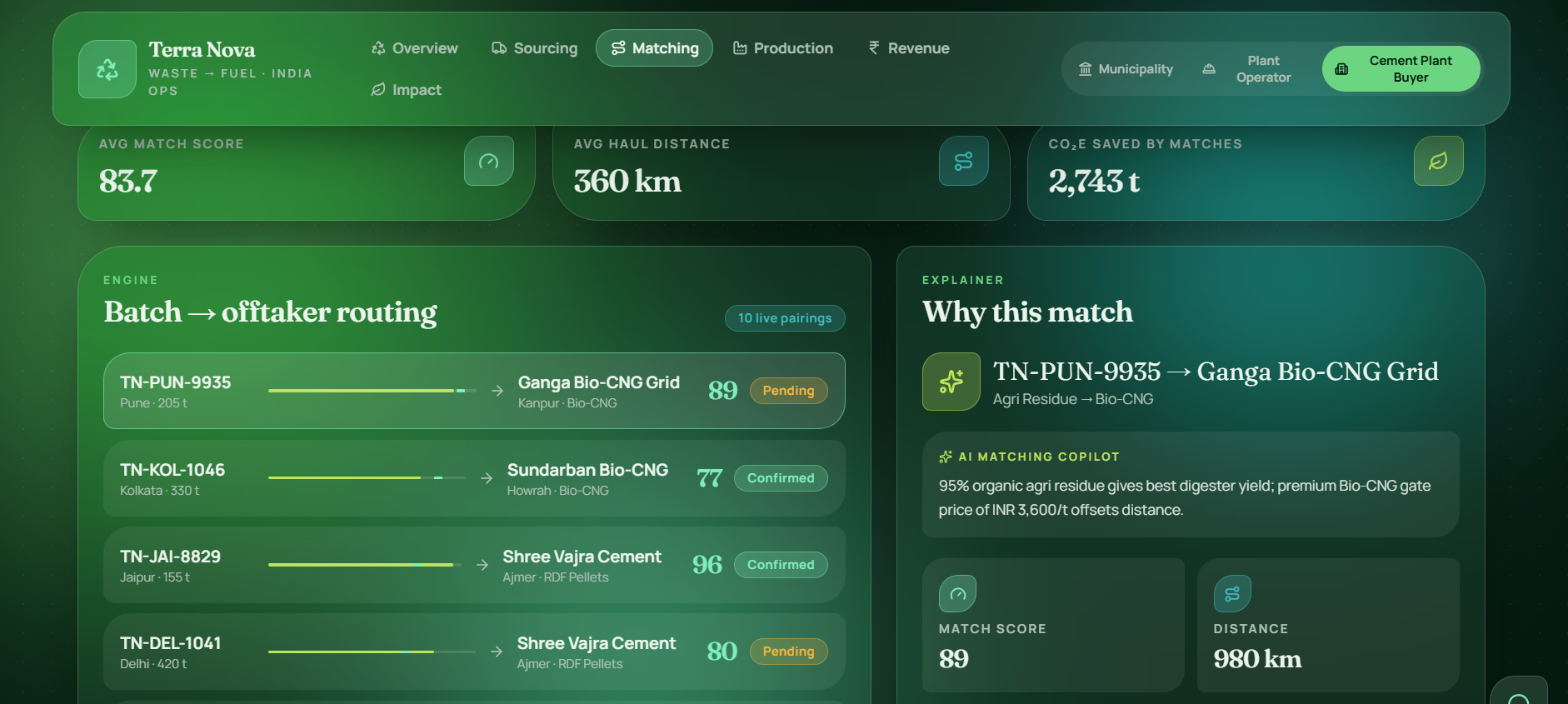
Matching
-
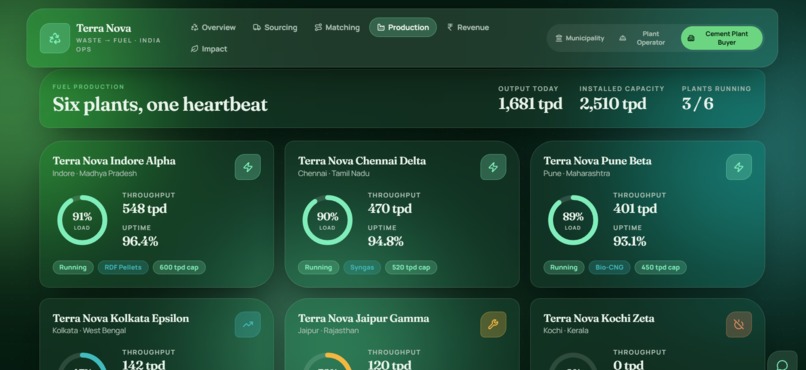
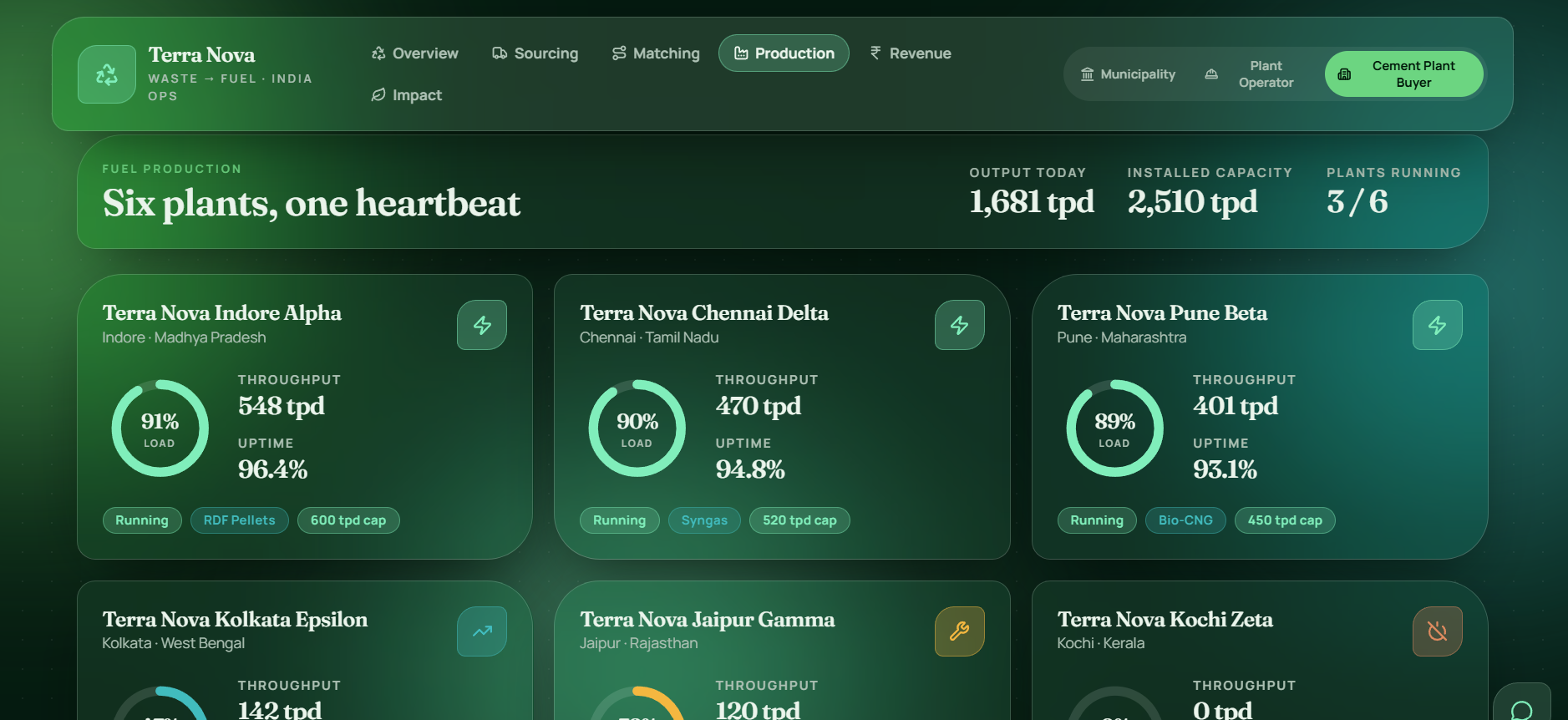
Production
-
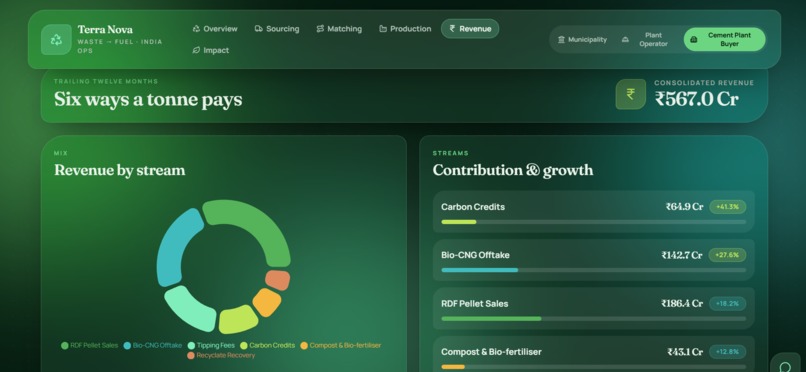
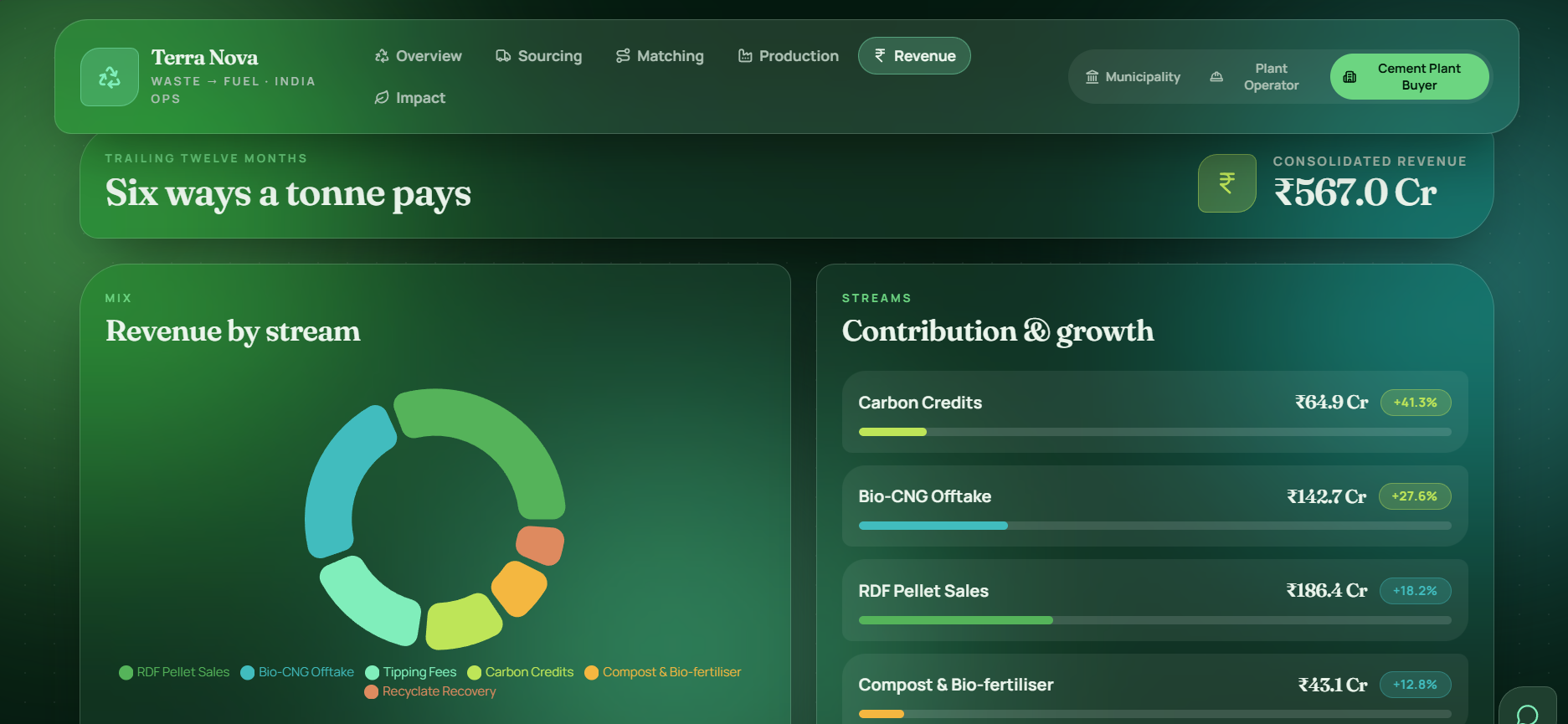
Revenue
-
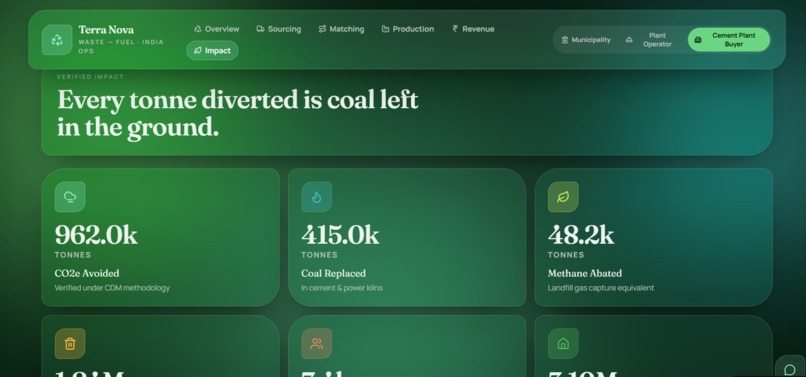
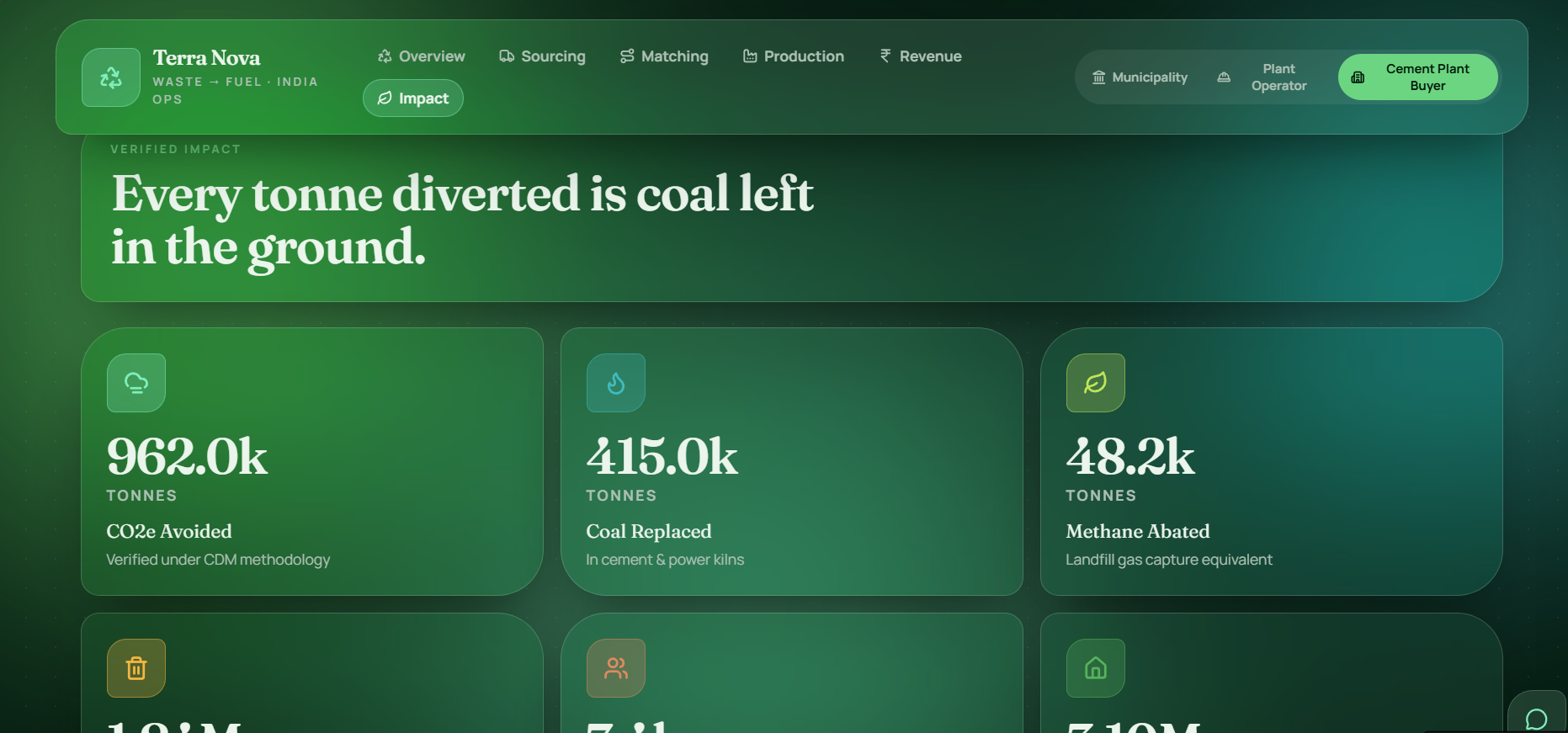
Impact
TERRA NOVA
A data-backed, policy-aligned, impact-driven waste-to-fuel platform transforming India's municipal solid waste into clean energy.
PRISM Track
Sustainability & Climate
Problem Statement
Waste-to-fuel solutions in India have struggled to scale due to execution gaps across the value chain:
- Feedstock: Poor source segregation, high moisture content, and inconsistent feedstock quality
- Financial: High CAPEX, slow fund disbursal, and limited access to low-cost financing
- Infrastructure: Inadequate collection systems, lack of Material Recovery Facilities (MRFs), and high logistics costs
- Policy: Complex regulatory requirements and inconsistent policy implementation
- Technology: Technology mismatch, low project IRR, and limited operational track record
Our Focus: Technology Mismatch & Limited Track Record
Among these challenges, TERRA NOVA focuses on addressing the technology gap and limited operational visibility.
The key stakeholders experiencing this problem include:
- Municipalities / Urban Local Bodies (ULBs)
- Plant operators, including CBG and other waste-to-fuel facilities
- Cement plants and industrial offtakers actively seeking cost-effective, sustainable alternatives to conventional fuels
Today, these stakeholders lack a unified, real-time platform to monitor and manage the complete waste-to-fuel value chain—from waste generation and sourcing to transportation, processing, fuel conversion, and offtake.
This creates gaps in visibility, coordination, resource utilization, and decision-making across the network.
Why This Matters
With increasing geopolitical conflicts, energy security concerns, and volatility in conventional fuel markets, the transition toward sustainable and renewable fuel sources is becoming increasingly important.
TERRA NOVA addresses one critical part of this larger challenge by creating the digital infrastructure required to make waste-to-fuel operations more visible, measurable, coordinated, and scalable.
Our Solution
We began with a detailed study of the problem, its root causes, and the requirements for building a scalable waste-to-fuel ecosystem.
For the PRISM Hackathon, we chose to focus specifically on the technology gap and lack of operational visibility. This led to the development of the TERRA NOVA Operations Dashboard.
The TERRA NOVA Operations Dashboard serves as the digital nerve center of TERRA NOVA's waste-to-fuel network, providing stakeholders with a unified view of operations, feedstock movement, plant performance, environmental impact, and offtake.
Dashboard Features
1. Real-Time Operations Metrics
The dashboard provides a live view of critical network and plant-level performance indicators:
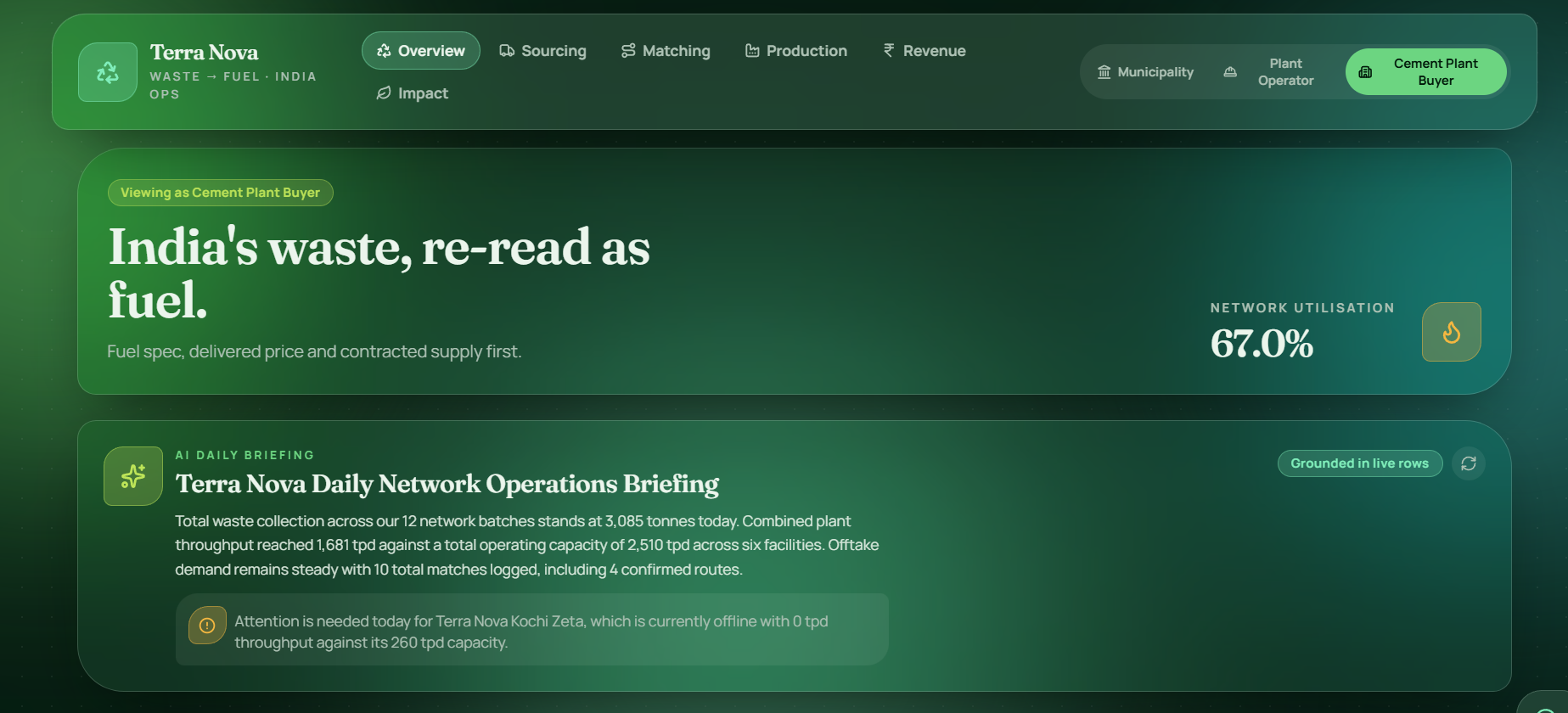
- Network utilization percentage
- Tonnes in pipeline
- Landfill diversion
- Average segregation score
- CO₂e avoided
- Plant throughput (TPD)
- Contracted demand (TPD)
2. Live Operations Map
An interactive map provides a geographic view of:
- Waste processing plant locations
- Municipalities and collection networks
- Offtaker locations
- Inter-state and regional waste-to-fuel networks
This enables stakeholders to understand the spatial relationship between waste sources, processing facilities, and fuel offtakers.
3. Waste Journey Tracker
The Waste Journey Tracker provides end-to-end batch-level visibility, following waste from collection through final fuel utilization.
Collection → Segregation → Transportation → Processing → Matching → Combustion
Collection
Doorstep and bulk waste pickup.
Segregation
Separation into:
- Wet waste
- Dry waste
- Inert waste
Hauled
Optimized routing and transportation of feedstock to processing facilities.
Processed
Conversion into alternative fuels such as:
- RDF
- Bio-CNG
- Syngas
Matched
Matching produced fuel with suitable offtaker contracts.
Combusted
Fuel is utilized by industrial offtakers, such as cement plants, to replace conventional coal-based fuel.
4. Municipality View
A dedicated dashboard view for Urban Local Bodies (ULBs) enables municipalities to monitor and improve waste-management performance.
Key indicators include:
- Collection coverage
- Source-segregation quality
- Waste volumes
- Landfill diversion
- Feedstock movement
- Operational performance
This gives municipalities greater visibility into how effectively their waste is being collected, processed, and diverted from landfills.
5. AI-Powered Operations & Plant Performance
The dashboard incorporates AI capabilities to support faster and more informed operational decision-making.
Live AI Features
All four AI features are currently live:
- Streamed Match Explanations
- Provides explanations for waste-to-offtaker matches
- Includes confidence scores to support decision-making
- AI Operations Copilot
- A floating AI assistant that provides grounded responses based on dashboard data
- Helps users quickly understand operational information and trends
- AI-Generated Daily Briefing
- Automatically generates a daily operational summary on the Overview page
- Highlights important metrics, developments, and potential areas requiring attention
- Animated Anomaly Notifications
- Detects and highlights operational anomalies
- Provides visual notifications to draw attention to unusual patterns or performance deviations
AI & Technical Architecture
AI data is cached per session using React Query, helping provide a responsive user experience while reducing unnecessary repeated requests.
The current implementation uses Lovable Cloud's AI Gateway with Gemini 3.6 Flash, as Anthropic models are not supported through the gateway.
Key Technical Characteristics
- Gemini 3.6 Flash for AI-powered dashboard functionality
- No user API key required
- AI calls remain server-side
- React Query is used for session-level AI data caching
- Server-side processing uses server functions / server routes
- The architecture does not rely on edge functions and follows the supported approach for the current stack
The Vision
TERRA NOVA aims to build the digital operating layer for India's waste-to-fuel ecosystem.
By connecting municipalities, waste streams, processing plants, logistics, fuel production, and industrial offtakers through a single technology platform, the Operations Dashboard can help transform a fragmented waste-to-fuel value chain into a measurable, coordinated, and scalable network.
From waste generation to fuel utilization, TERRA NOVA makes the entire journey visible.
Built With
- canva
- lovable


Log in or sign up for Devpost to join the conversation.