-
-
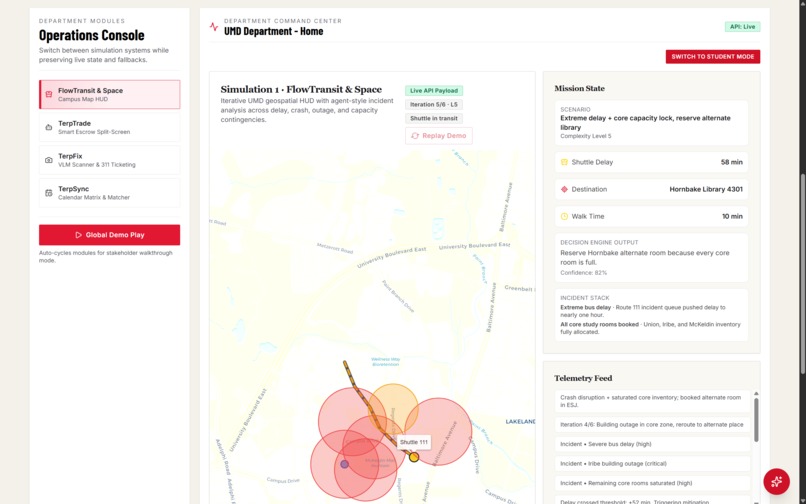
Flow Transit
-
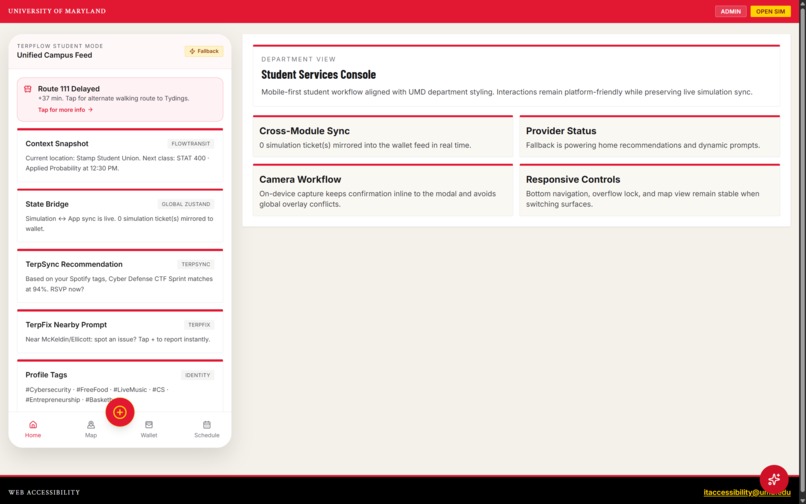
Student Home
Inspiration
Campus life is a logistics problem hiding in plain sight: shuttle delays, packed study spaces, safety incidents, ticket exchange risk, and event overload all happen at once.
We wanted to build something that feels essential to student life at UMD — not just a chatbot, but an operational copilot.
What it does
TerpFlowOS is a multi-agent campus logistics platform with a voice copilot.
It includes four core simulation modules:
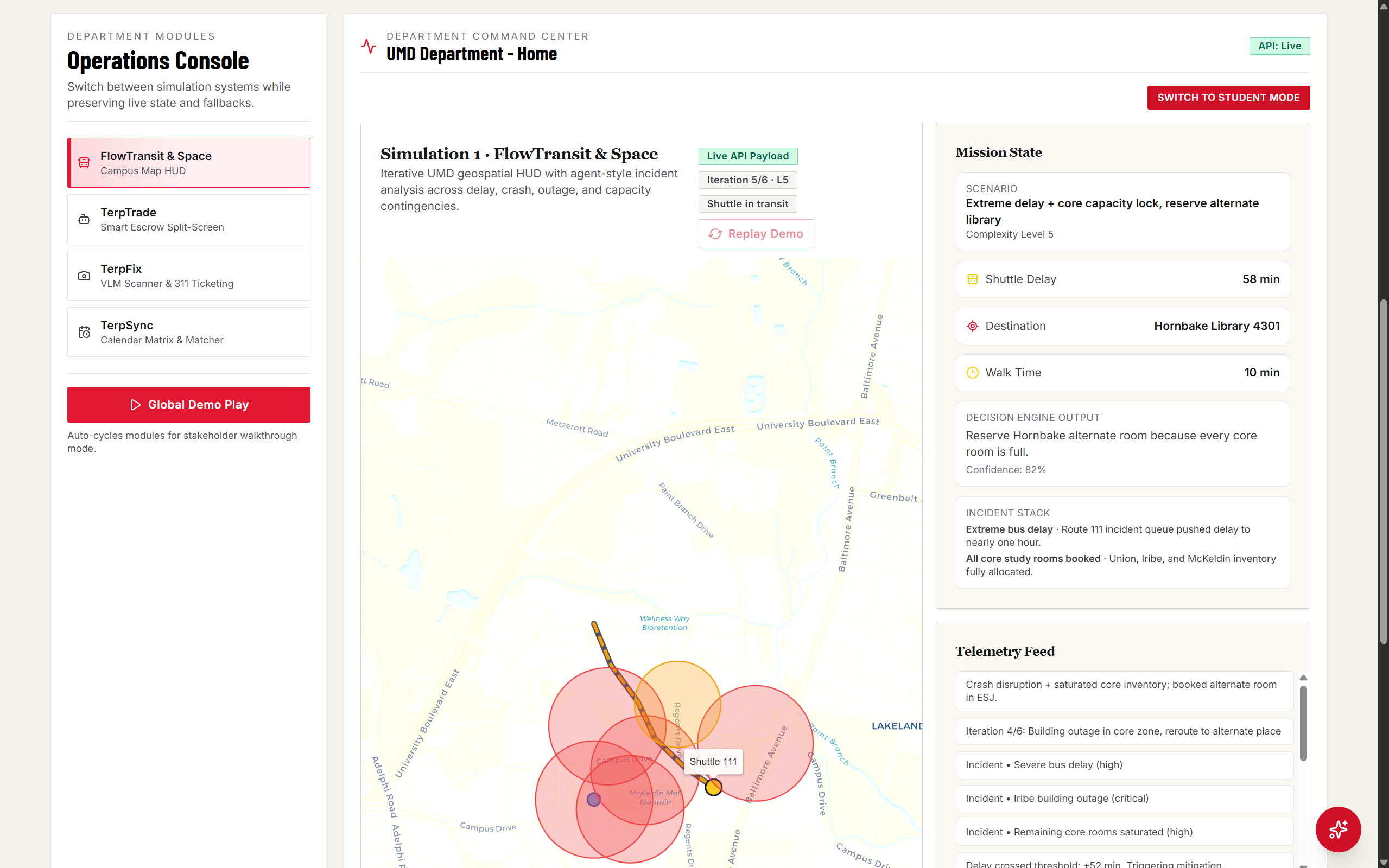
- FlowTransit: adapts to transit delays, outages, and room-capacity constraints
- TerpTrade: models safer ticket exchange workflows
- TerpFix: triages campus maintenance/safety reports
- TerpSync: generates conflict-aware daily recommendations
It also supports:
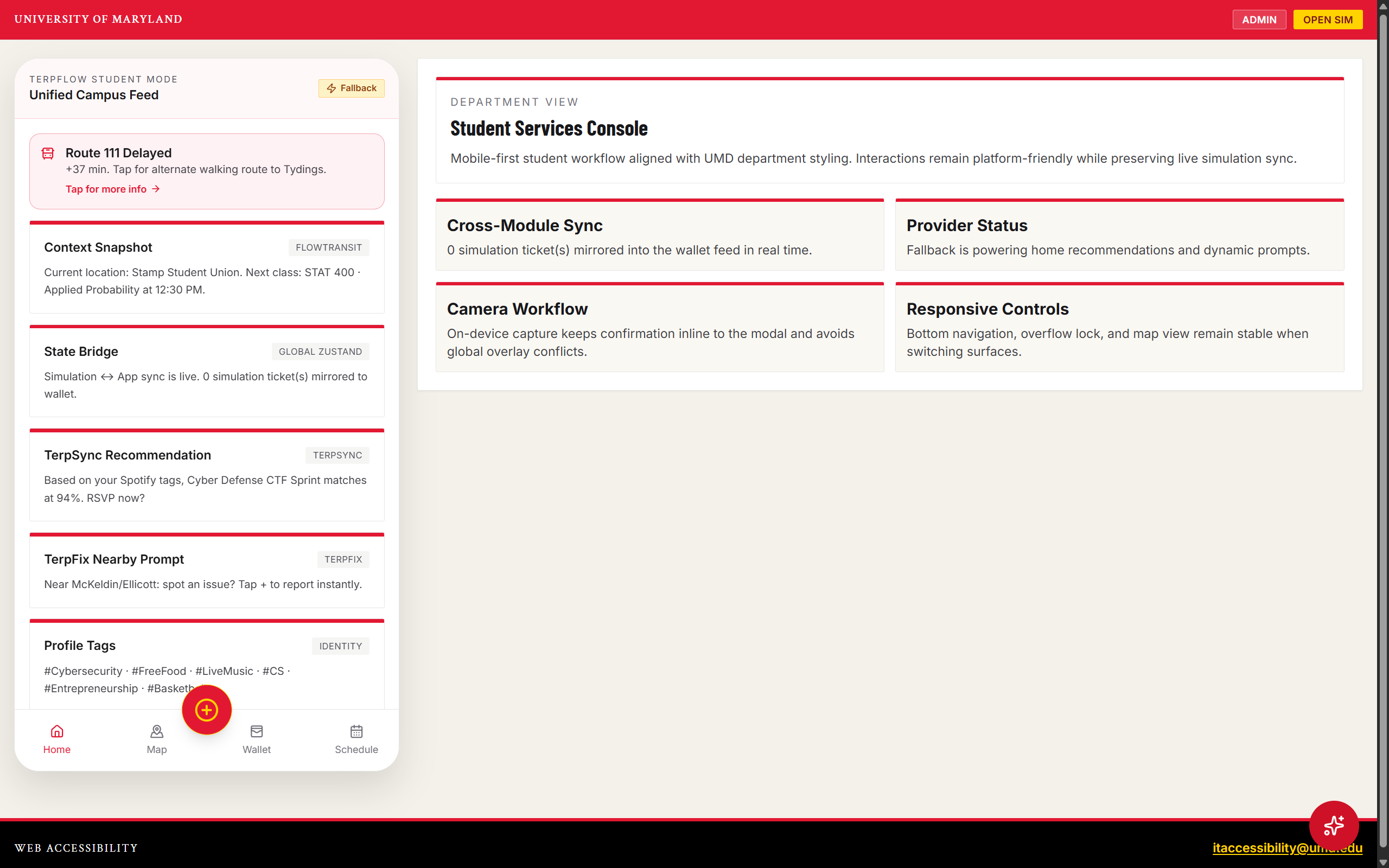
- Student mode with Home, Map, Wallet, and Schedule views
- Voice interaction (speech-to-text, reasoning, text-to-speech)
- Fallback-aware AI orchestration so the system remains usable under degraded conditions
- Moderation + escrow/chat workflow simulation for risk-aware exchanges
How we built it
- Frontend: React + TypeScript + Vite + Tailwind + Framer Motion
- Backend: FastAPI + Python + SQLAlchemy + JWT auth + WebSocket flows
- Data layer: PostgreSQL
- AI + Voice:
- TerpAI-first planning
- secondary planner fallback path
- ElevenLabs for speech input/output
- Infra: Docker Compose stack, Caddy, Cloudflare tunnel modes for demo access
- Testing: Pytest + frontend lint/build checks
We designed the system as modular services so each campus workflow can evolve independently while sharing common auth, routing, and orchestration infrastructure.
Challenges we ran into
- Mobile browser voice playback policies (autoplay/permission constraints)
- Provider reliability + fallback correctness under missing token/key states
- Prompt grounding to avoid incorrect app descriptions
- Cross-device demo networking via tunnel/proxy/CORS constraints
- Balancing realism vs speed in simulation iteration design
Accomplishments that we're proud of
- Built a full-stack, multi-module simulation platform with voice UX
- Implemented robust fallback behavior across AI and speech layers
- Added practical safety/ops themes (triage, moderation, escrow-like transitions)
- Shipped a mobile-aware voice experience with explicit replay fallback
- Kept the system runnable locally and demo-able remotely
What we learned
- Reliability matters as much as model quality: graceful degradation wins demos and real usage.
- Voice UX on mobile requires explicit handling of browser policy constraints.
- Multi-agent products need strong contracts between UI, orchestration, and action safety.
What's next for TerpFlowOS
- Real-time streaming voice transport and interruption handling
- Deeper campus-aware action set (guided workflows, confirmations)
- Richer observability for command success/failure and latency
- Stronger personalization across modules
- Pilot-style validation with real student/operator feedback
Built With
- fastapi
- python
- react
- terpai
- typescript


Log in or sign up for Devpost to join the conversation.