Inspiration
Teria Test began with a familiar question: should I keep this product or throw it away?
Confusing or missing expiration labels, forgotten opening dates, and varying skincare and makeup routines make that decision difficult. Earlier discovery conversations with 15 people in cosmetics and skincare shops on Newbury Street reinforced this uncertainty. Participants described difficulty locating dates, using older products, and deciding when to discard them. Clearer information, convenience, and affordability emerged as important considerations.
We built Teria for everyday makeup and skincare users, especially those with sensitive or reactive skin, managing both newly opened products and products already in their routines.
What it does
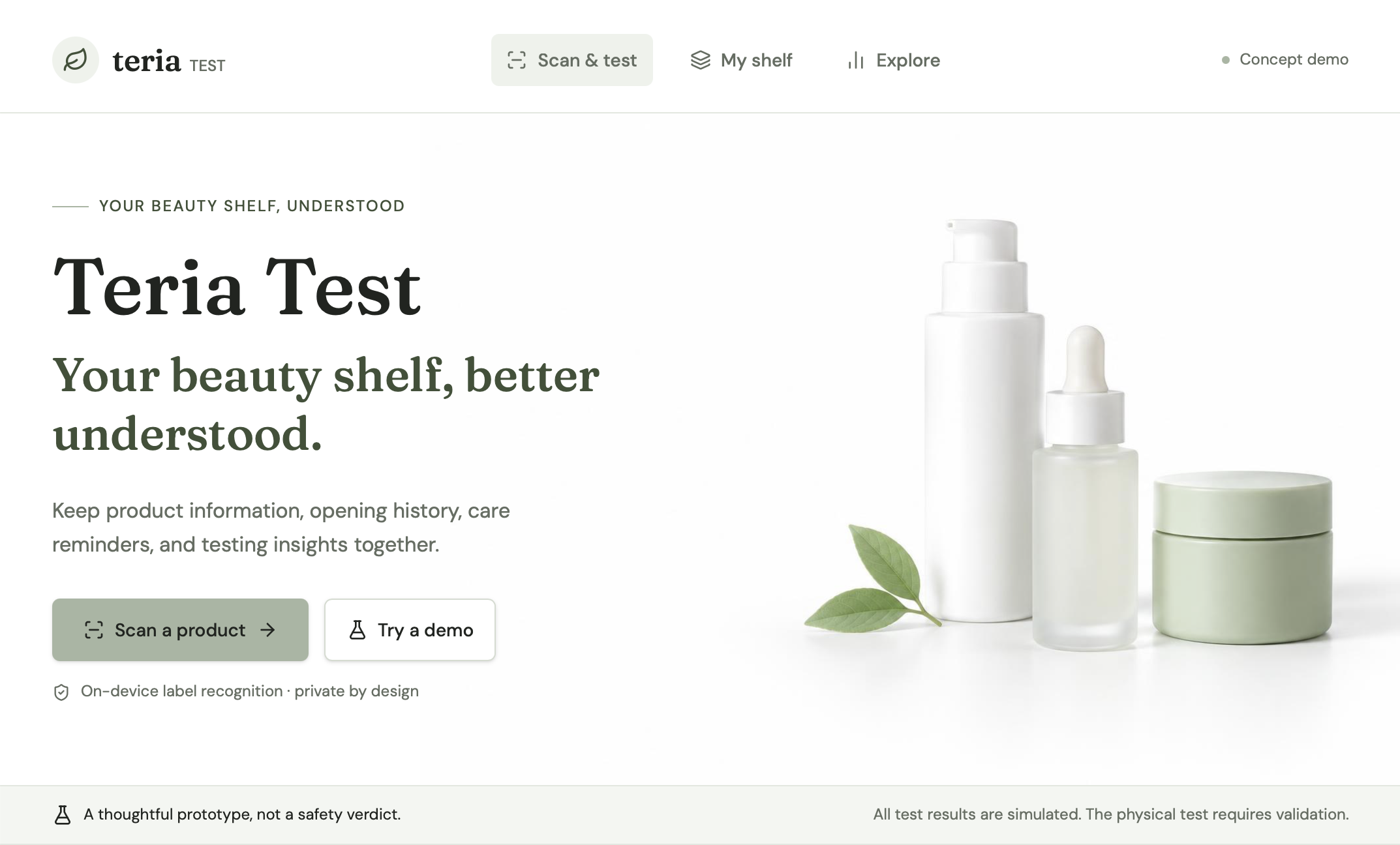
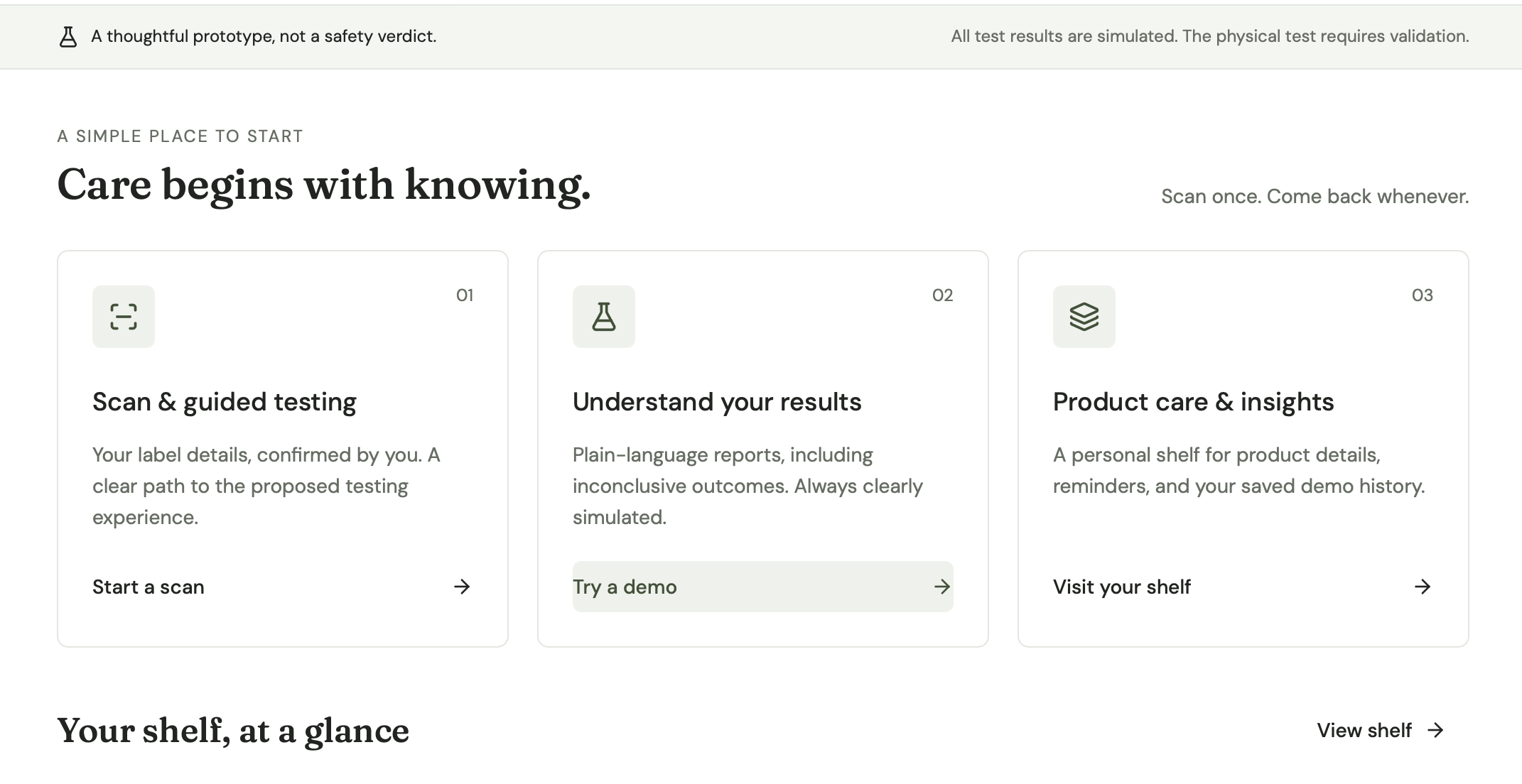
Teria Test brings product information, care tracking, and a proposed at-home contamination test into one digital experience.
Users can:
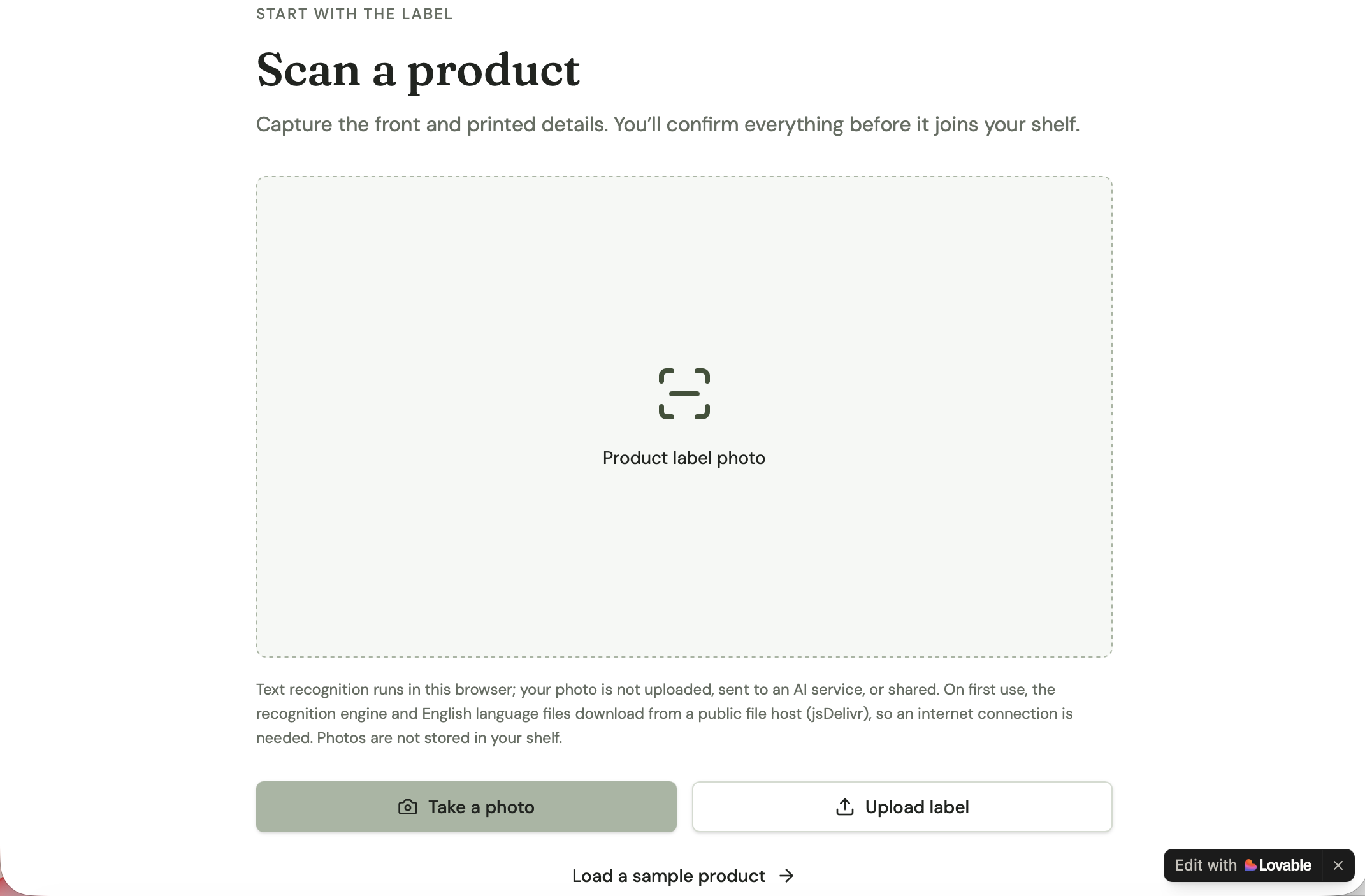
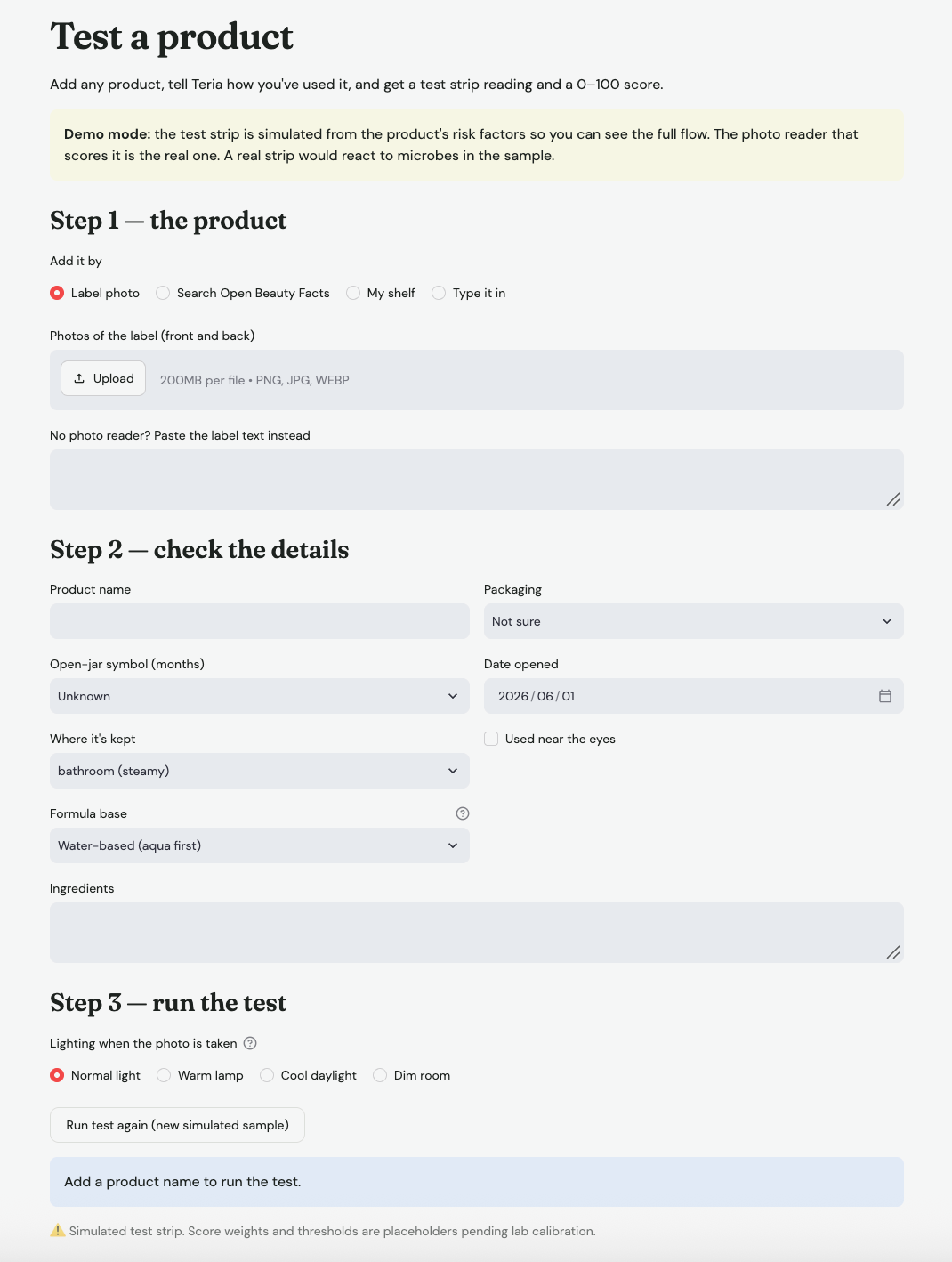
- Scan or find a product: extract label information, search product records, or enter details manually.
- Understand their products: review ingredients, available label details, and explanations.
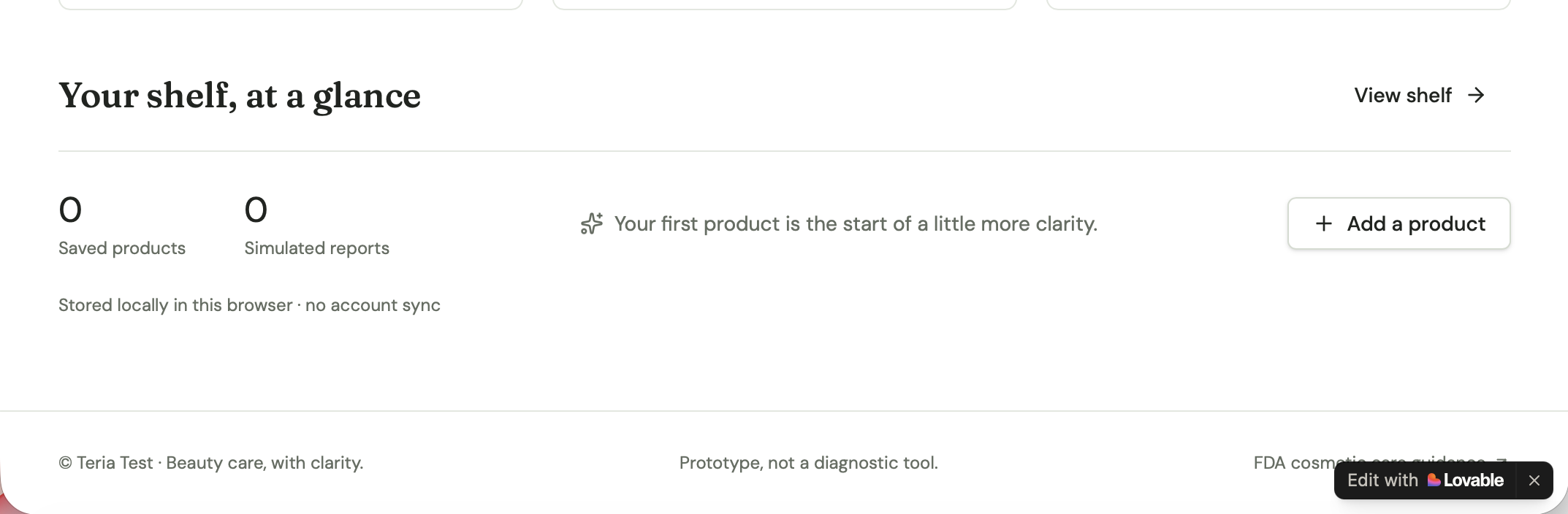
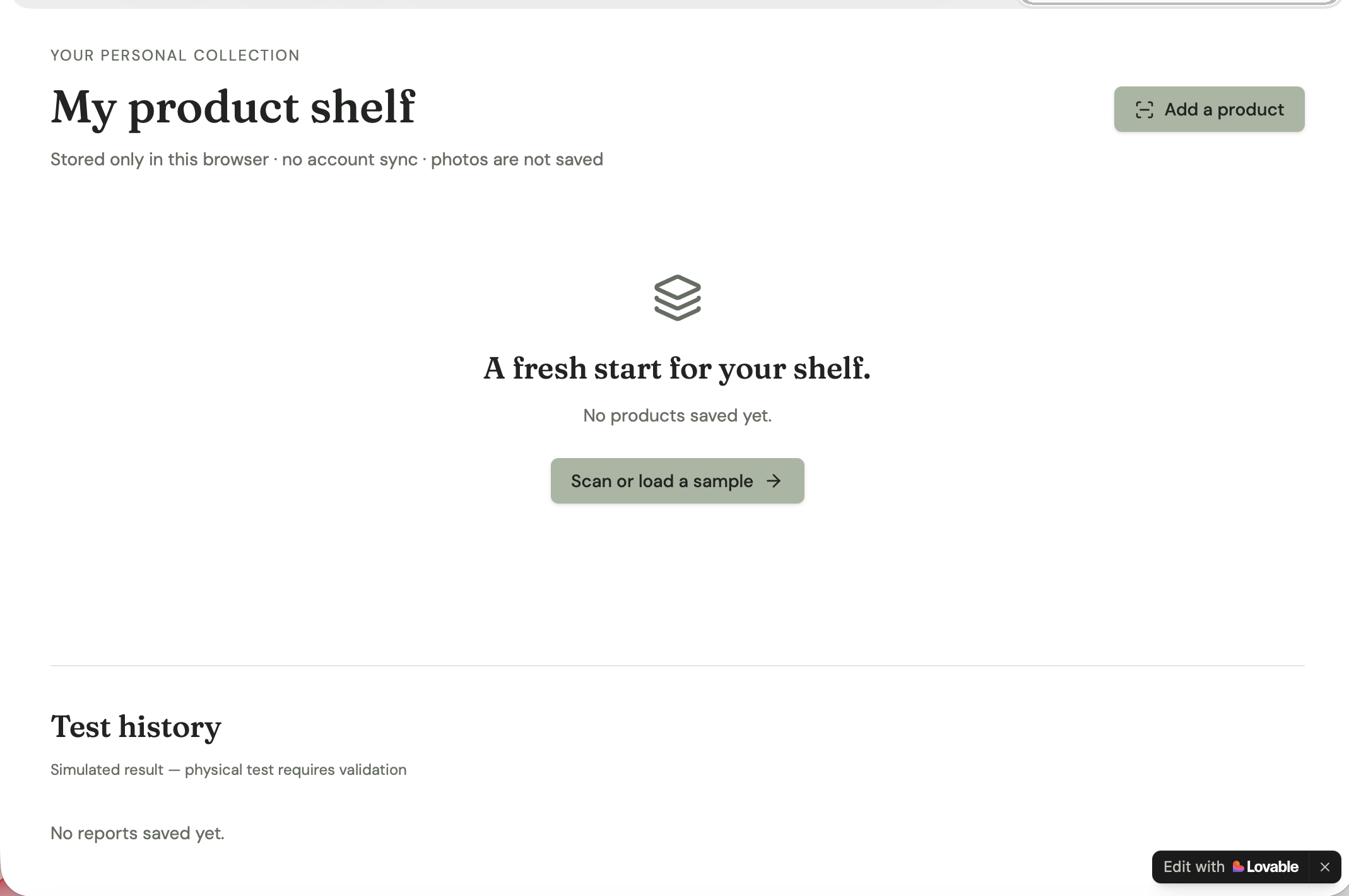
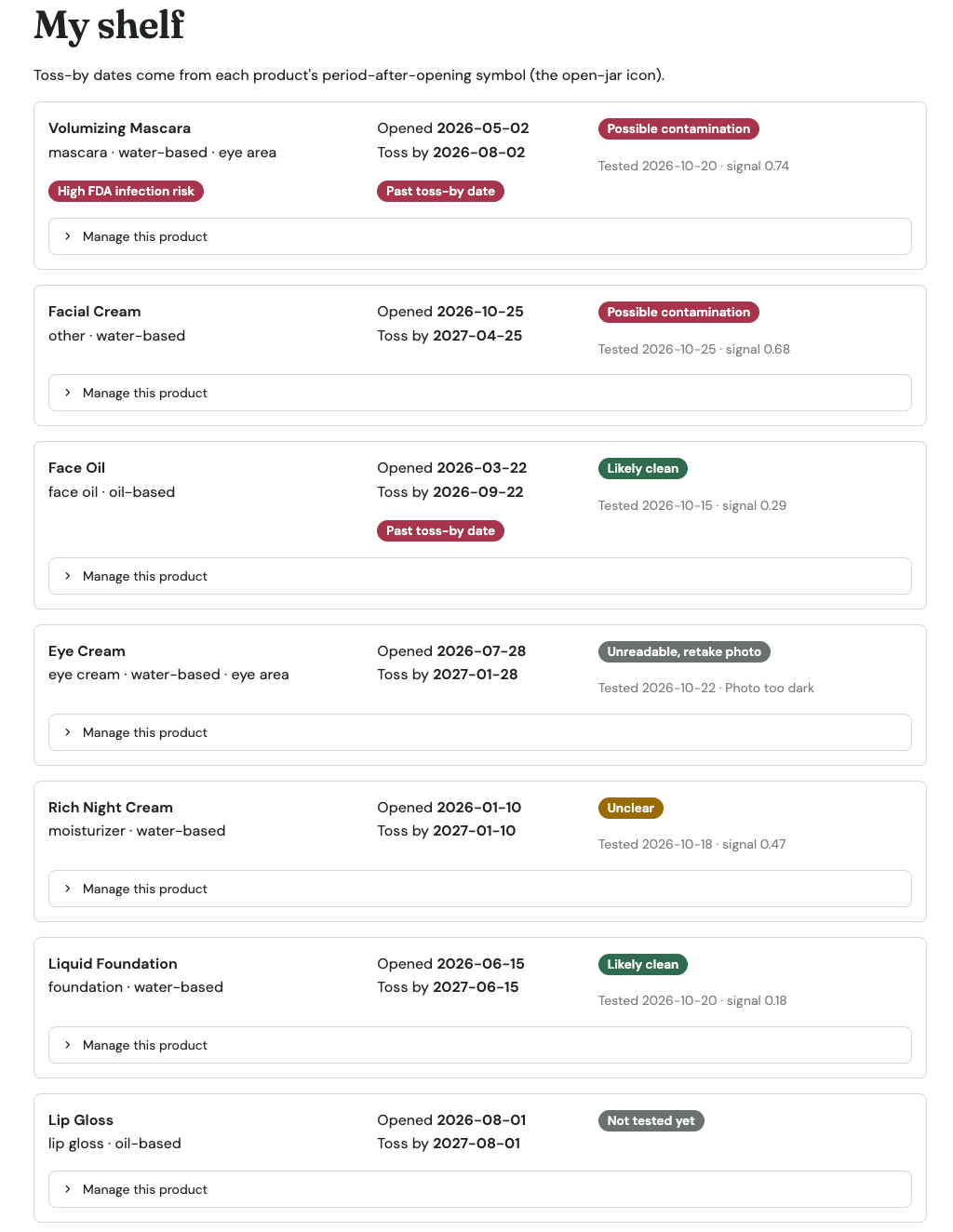
- Manage their shelf: record opening dates, view label-based period-after-opening estimates, and save product history.
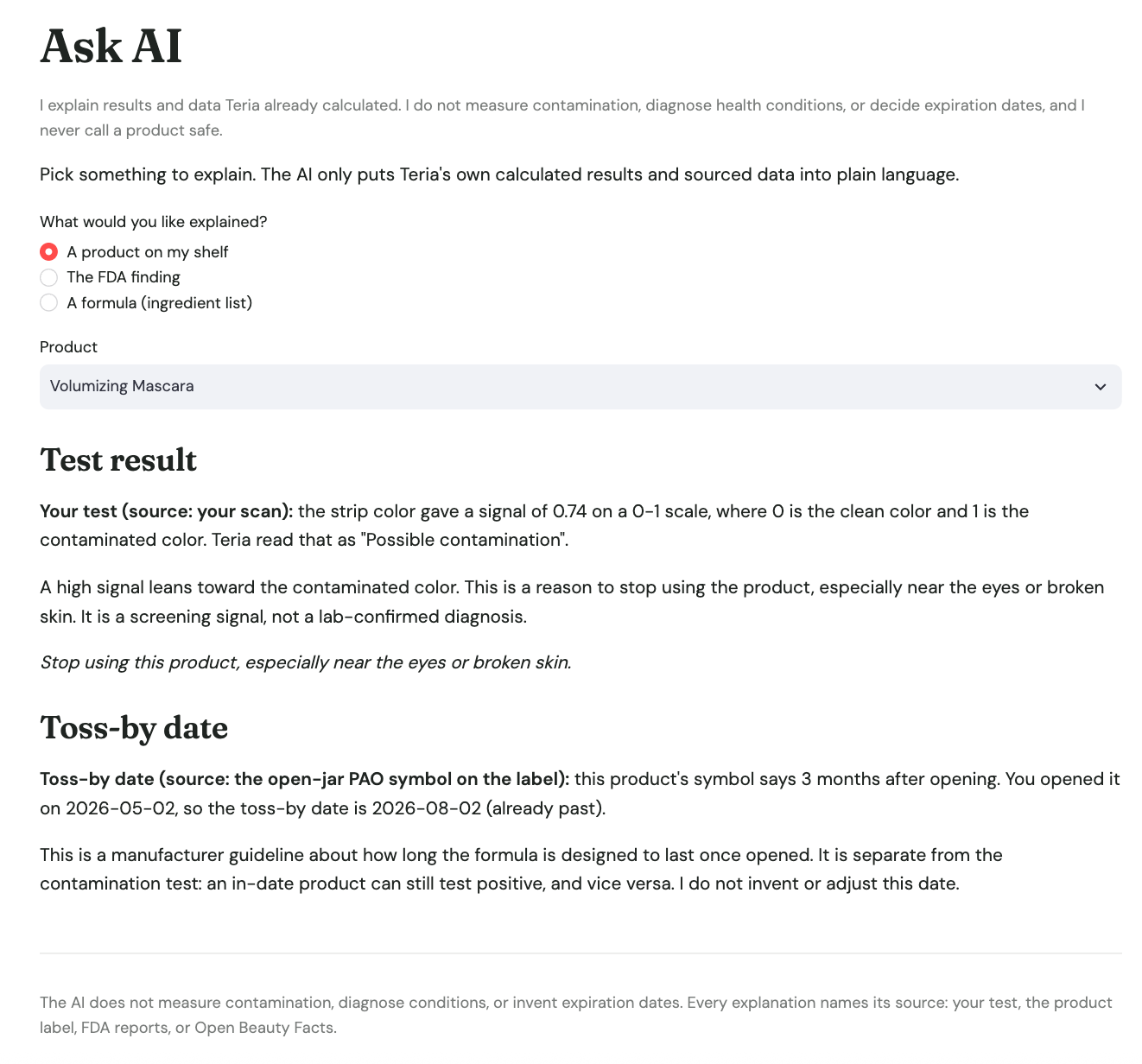
- Explore the testing journey: follow sampling guidance, photograph a simulated test card, and receive an explained demonstration result.
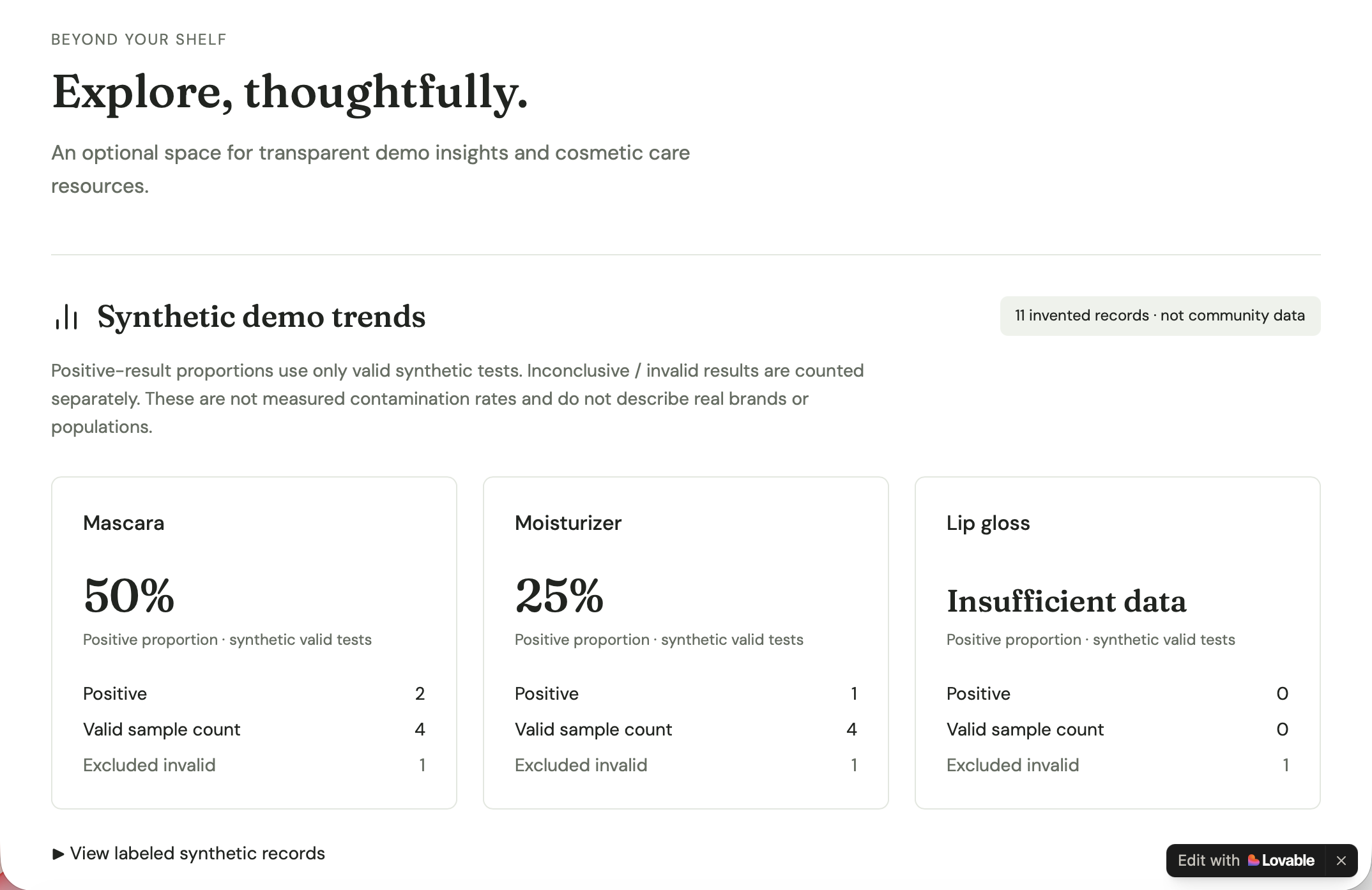
- Explore product data: examine ingredient patterns and category comparisons.
The experience is designed to reduce manual entry and make product care quicker and easier. Search and manual entry provide alternatives when scanning is unavailable or unsuccessful.
Our proposed physical-product workflow is:
Collect a cosmetic sample → apply it to an indicator → photograph the result → understand and save the reading.
Today’s working software demonstrates that digital journey using simulated test cards. Development and laboratory validation of the physical assay are future milestones.
How we built it
We used Lovable to prototype the interface and user journey, focusing on a clear flow from identifying a product to understanding results and saving its history.
We built the working application in Python and Streamlit, using Kiro to support coding, iteration, and review against our project outline. pandas handles data preparation, NumPy and Pillow support image processing, and Plotly powers interactive visualizations. We used Gamma to prepare our presentation.
The implementation connects three layers:
- Extraction: optional OCR and text parsing identify label details, supported by product search and manual entry.
- Calculation: deterministic code handles ingredient features, opening dates, statistical comparisons, and test-card color readings.
- Explanation: predefined rules translate recorded information and calculated outputs into understandable guidance.
Our image reader samples a defined test region, corrects lighting using a white reference, and checks for dark or blurry images. Shelf records can be saved locally as JSON.
Our data science contribution
We analyzed an Open Beauty Facts export containing 4,304 product records across 162 fields, retaining 2,274 records with ingredient text longer than 10 characters. We selected product, ingredient, category, and label information relevant to our analysis.
Our preprocessing extracts features from ingredient and label text:
- Water-related terms among the first two ingredient entries.
- Matches against a predefined preservative keyword list.
- Product categories using English and French terms.
- Natural/organic and paraben-free label indicators.
We compare groups using descriptive statistics and a chi-square test with Yates correction.
Among 1,602 water-based records, after category exclusions, 13.6% of records flagged by our natural/organic label rules had no keyword-listed preservative detected, compared with 7.1% of other records. The comparison produced a p-value of approximately 0.011.
This finding describes ingredient records—not measured contamination. Missing information, keyword coverage, and alternative preservation systems can affect the results. Statistical significance does not establish biological risk or causation.
The analysis supports our ingredient observations and category comparisons, giving users context beyond an opening date. Manual review of classifications is a next step, rather than a completed validation claim.
Responsible data use and limitations
Sourcing and rights: Our product analysis uses community-contributed Open Beauty Facts records. We credit the source below; its database is available under the Open Database License. Redistribution of derived data must follow the applicable license terms.
Privacy: The prototype saves shelf records locally as JSON. Broader deployment would require user-specific access controls, clear photo-retention practices, and deletion controls.
Bias and fairness: Uneven language, market, and ingredient coverage can affect matching and analysis. Our findings should not be generalized to every cosmetic formulation or user population.
Harms and transparency: We distinguish real product records from simulated results. Demonstration scores do not establish product safety, predict skin reactions, or demonstrate physical-test accuracy. Our explanation layer uses predefined rules rather than a generative AI model. Physical validation and careful communication are necessary before real-world contamination claims.
Challenges we ran into
- Incomplete information: Product records and photographed labels can be missing details. Search and manual entry provide alternatives when extraction or matching is unsuccessful.
- Variable photography: Lighting and blur can affect color readings. We implemented reference-based lighting correction and image-quality checks.
- Developing software ahead of a physical assay: Simulated cards let us build the capture, interpretation, and history workflow while identifying what future laboratory calibration must establish.
- Communicating uncertainty: Product-label estimates, ingredient observations, and simulated readings answer different questions. Their explanations must preserve those distinctions.
Accomplishments that we're proud of
We’re especially proud that, at our first hackathon, we built a functional prototype connecting label extraction, product-data analysis, image processing, and shelf tracking.
We prepared 2,274 of 4,304 Open Beauty Facts records for ingredient analysis and connected the findings to interactive product exploration.
Our card reader combines lighting correction with image-quality checks. Explainable demonstration scores show contributing factors, while feedback tells users when to retake a photo.
Together, these features demonstrate the digital workflow for our proposed physical test, with laboratory validation as the next milestone.
What we learned
As first-time participants, we learned how hackathons work—from interpreting the challenge and judging criteria to dividing responsibilities, setting priorities, and preparing a demo. We also learned the less obvious expectations: make your contribution clear, distinguish working features from future plans, and leave time for integration and presentation. Next time, we’ll establish those priorities earlier.
Our customer discovery reinforced that clearer information, convenience, and affordability must guide the design.
Working with ingredient data taught us that missing information does not prove absence: an unmatched preservative does not mean a product is unpreserved. Dataset coverage, language, and classification rules shape our conclusions.
We also learned to separate software performance from biological accuracy. Simulated cards demonstrate our image-processing workflow; actual contamination detection requires laboratory validation. Clear explanations help users understand that distinction.
What's next for Teria Test
- Test the workflow with more users and measure completion time, entry effort, and comprehension.
- Expand and refresh product coverage, and manually evaluate extraction and ingredient-classification accuracy.
- Check keyboard navigation, contrast, and whether results remain understandable without relying on color alone.
- Work with qualified laboratory collaborators to develop and validate the physical assay across cosmetic formulations.
- Investigate affordability and potential brand distribution through further customer discovery.
Our goal is to make understanding and caring for your beauty shelf easier, with a clear path toward integrating validated physical testing.
Sources
- Open Beauty Facts — product and ingredient records.
- Open Beauty Facts dataset listing and license.
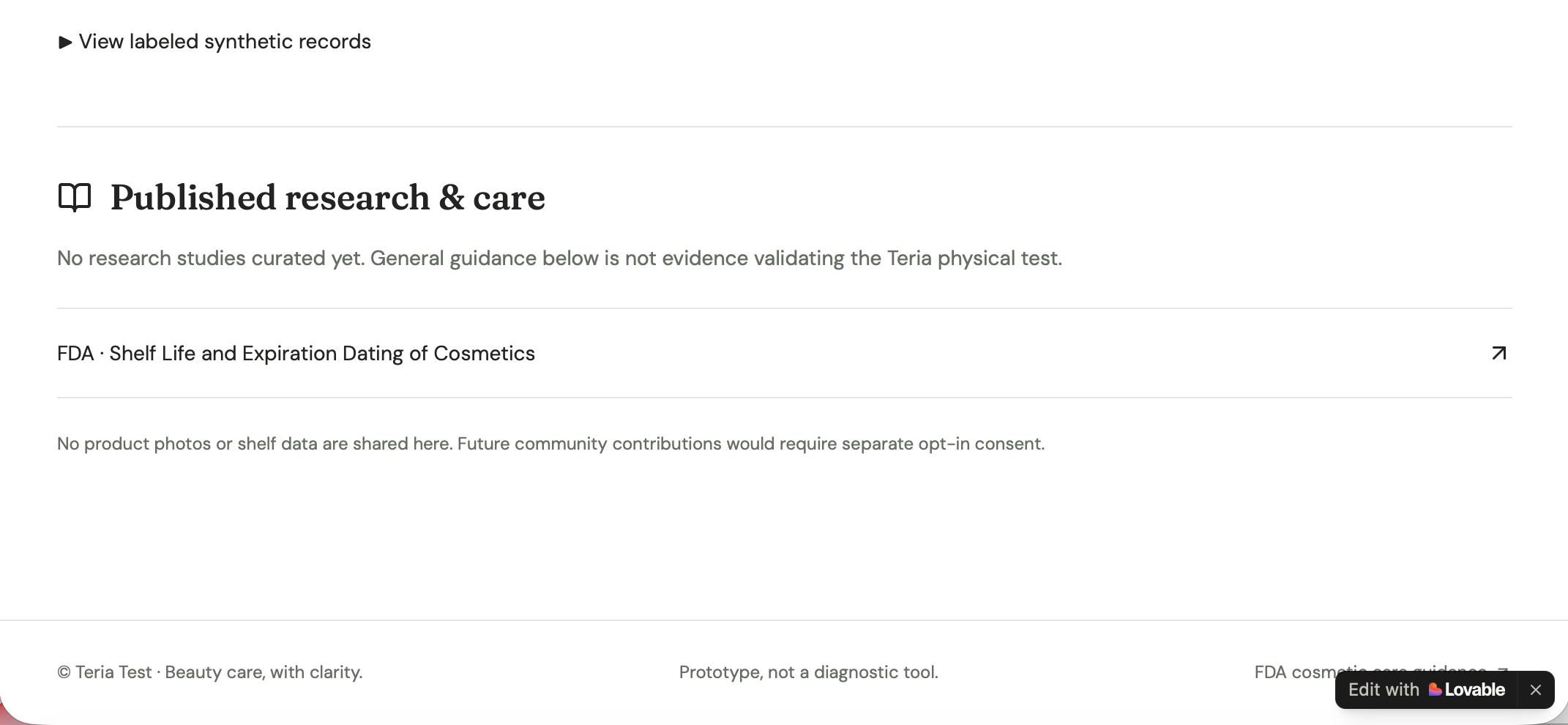
- FDA: Shelf Life and Expiration Dating of Cosmetics — background on product use, storage, and shelf life.

Log in or sign up for Devpost to join the conversation.