-
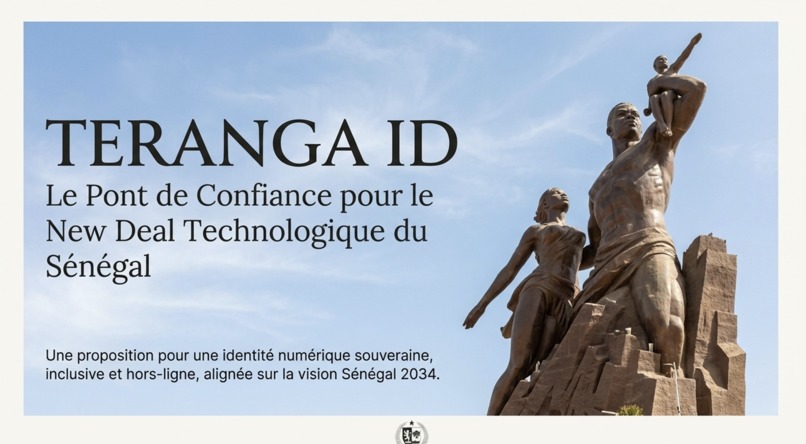
TERANGA ID SENEGAL & AFRICA TRUST
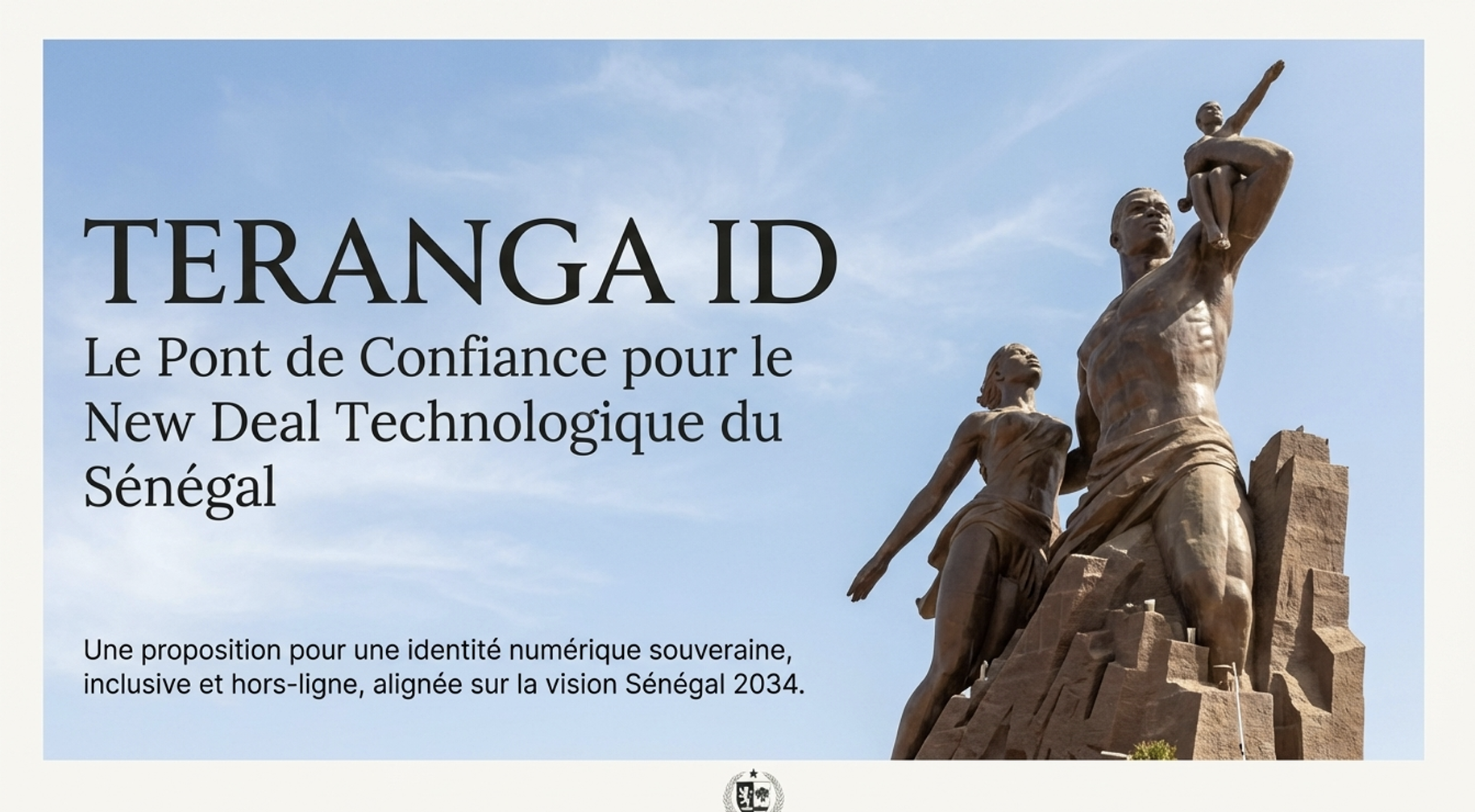
🌍 About the Project – TERANGA ID
💡 Inspiration
TERANGA ID was inspired by a simple but powerful reality: millions of Africans are still excluded from essential services because identity verification requires internet access and centralized databases.
Growing up and studying in Senegal, we observed how citizens in rural areas face difficulties accessing healthcare, banking, education, and government services simply because they cannot prove their identity digitally. At the same time, repeated data breaches and misuse of personal data have eroded trust in centralized systems.
We asked ourselves a key question:
What if identity could work anywhere, even without internet, while remaining secure and privacy-preserving?
This question gave birth to TERANGA ID — a sovereign, offline-first digital identity designed for Africa.
🧠 What We Learned
Through this project, our team gained deep technical and conceptual knowledge, including:
- The principles of Self-Sovereign Identity (SSI) and user-controlled digital identity.
- How biometric authentication (Passkeys / FIDO2) can improve both security and user experience.
- The importance of privacy-by-design, especially using Zero-Knowledge Proofs (ZKP) to minimize data exposure.
- Designing digital solutions with inclusion in mind, particularly for rural populations and non-literate users.
- Working as a multidisciplinary team, combining UX, frontend, backend, infrastructure, and ethics.
🛠️ How We Built the Project
TERANGA ID was built using a modern, scalable, and open-source technology stack:
Frontend:
- Built with Next.js and Tailwind CSS for a fast, lightweight, and responsive interface.
- Designed to be accessible, multilingual (French/Wolof), and icon-driven.
Backend & Security:
- Powered by Supabase (PostgreSQL) with AES-256 encryption for secure data handling.
- Authentication combines biometrics and a secure PIN (Multi-Factor Authentication).
Offline Identity Verification:
- Identity credentials are stored locally on the user’s device.
- Dynamic, cryptographically signed QR codes with a short validity period (60 seconds) enable offline verification.
- Peer-to-peer verification is possible via Bluetooth / NFC.
Standards & Deployment:
- Designed to comply with W3C and ECOWAS digital identity standards.
- Source code managed on GitHub and deployed on Vercel for global availability.
⚙️ Challenges We Faced
Building TERANGA ID came with several challenges:
- Offline security: Ensuring identity verification remains secure without internet connectivity.
- Privacy vs usability: Balancing strong cryptographic protection with a smooth user experience.
- Inclusion constraints: Designing an interface usable by non-literate users and adaptable to low-end devices.
- Time constraints: Delivering a functional prototype within a hackathon timeline.
- Trust model: Defining how the State validates identities without centralizing citizen data.
Each challenge pushed us to think critically, collaborate effectively, and design with real-world African constraints in mind.
🚀 Vision
TERANGA ID is more than a hackathon project. It is a foundation for a trusted, inclusive, and sovereign digital identity ecosystem that can be adopted across Africa.
Our long-term goal is to empower every African citizen with a secure digital identity that works anytime, anywhere — even offline.
Built With
- collaboration-of-github-&-vercel
- next.js-&-tailwind-css
- supabase-(postgresql)


Log in or sign up for Devpost to join the conversation.