-
-
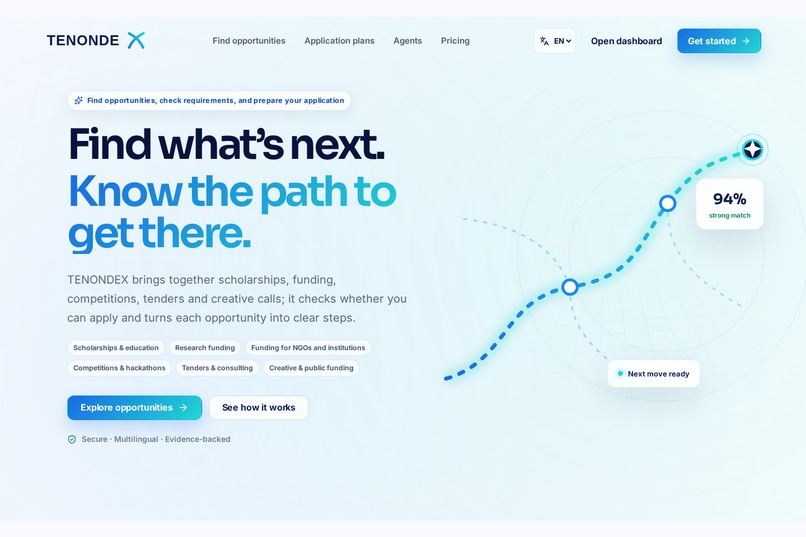
Whatid does
-
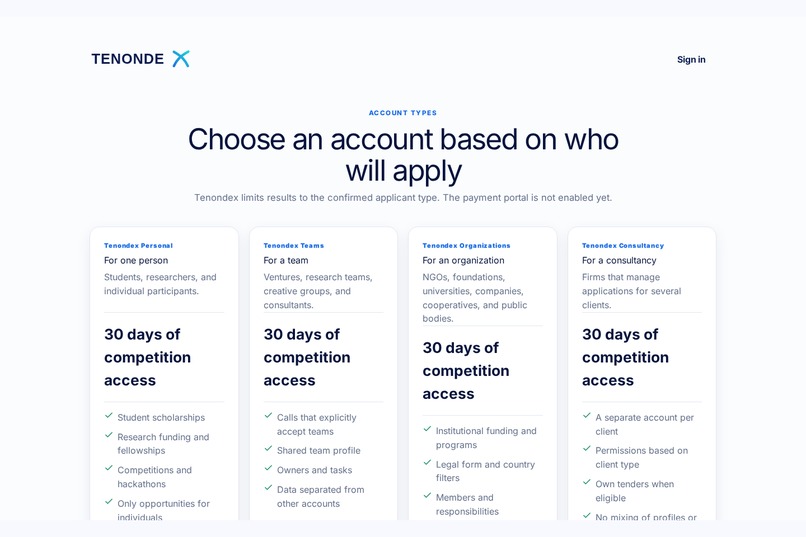
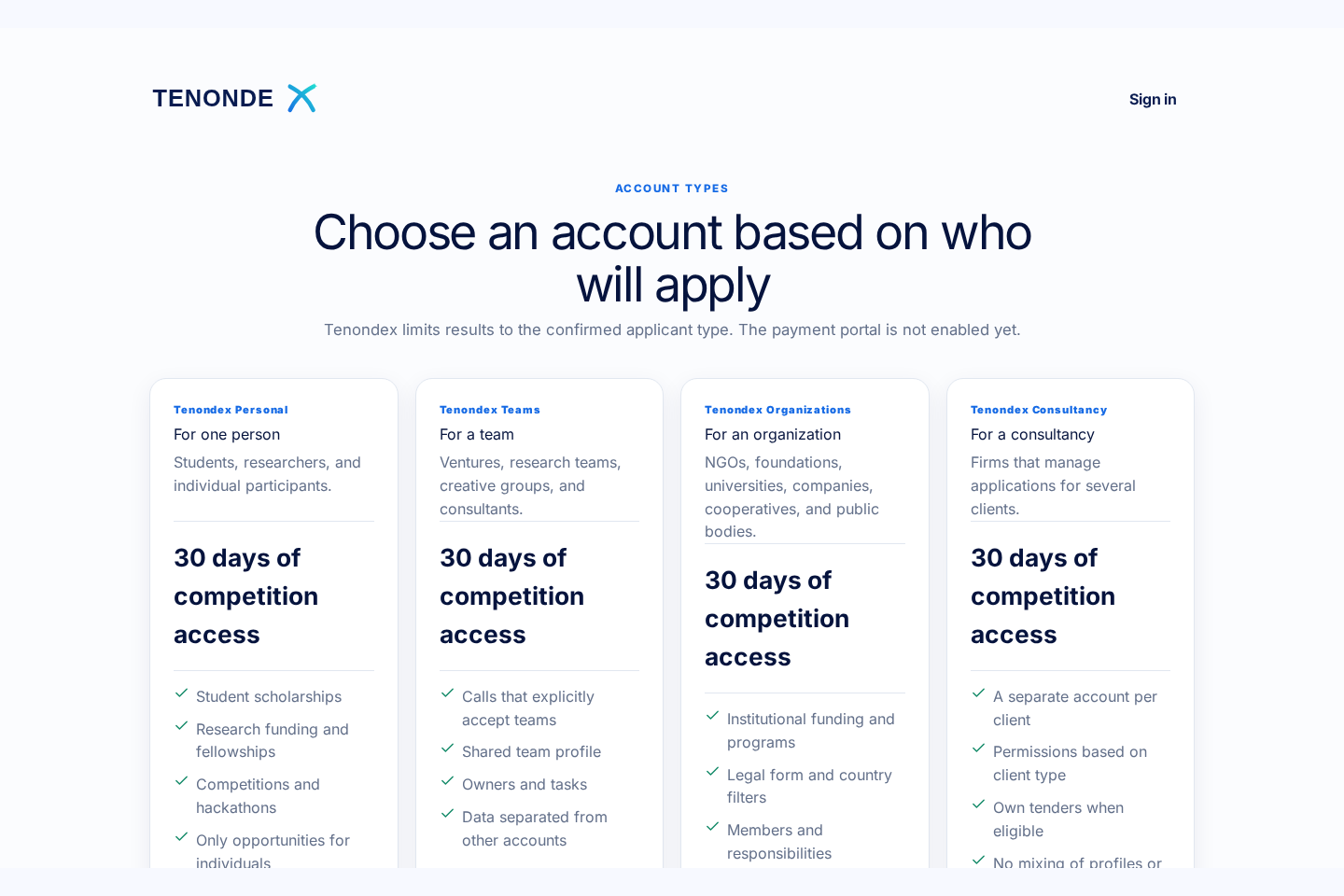
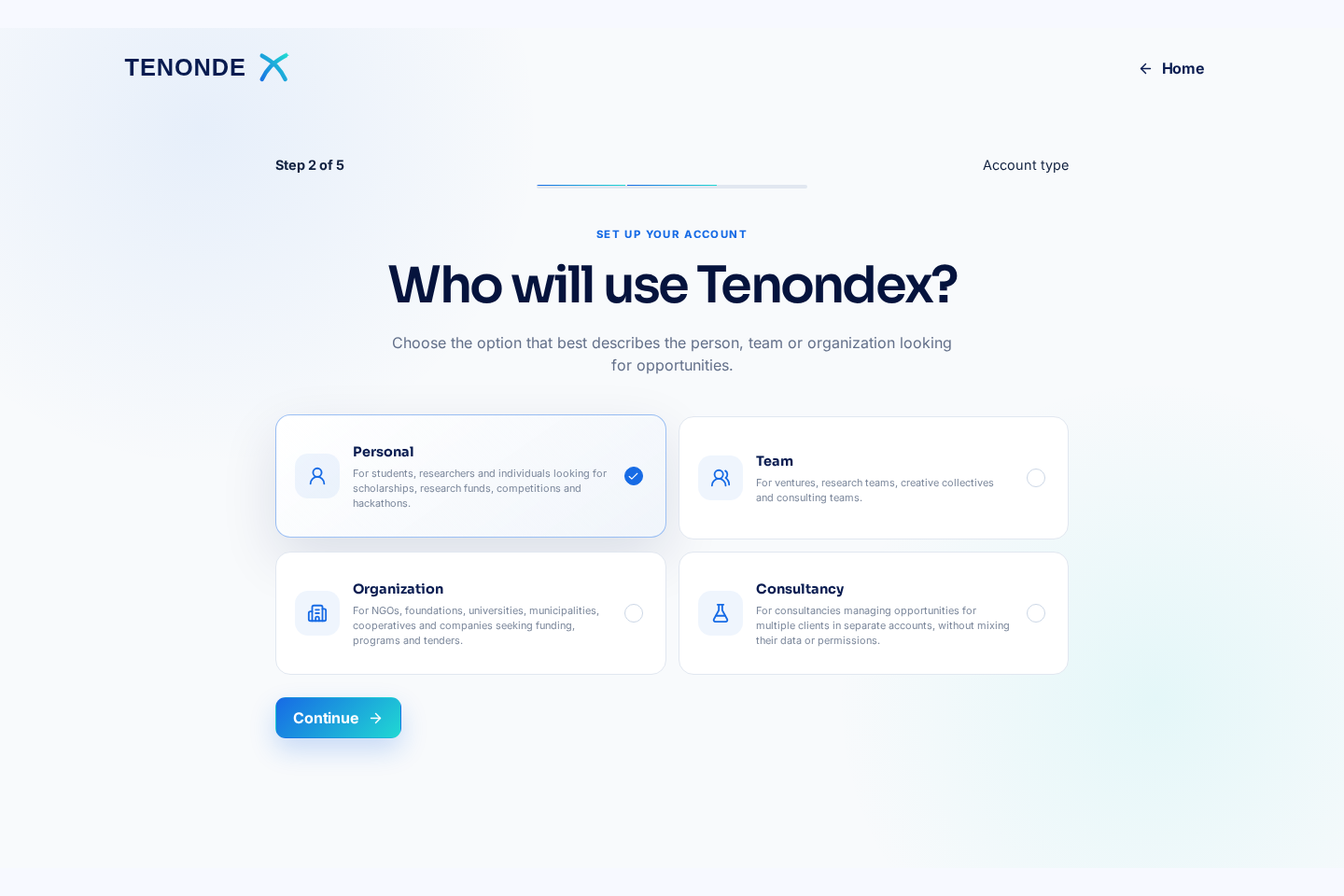
different account types
-
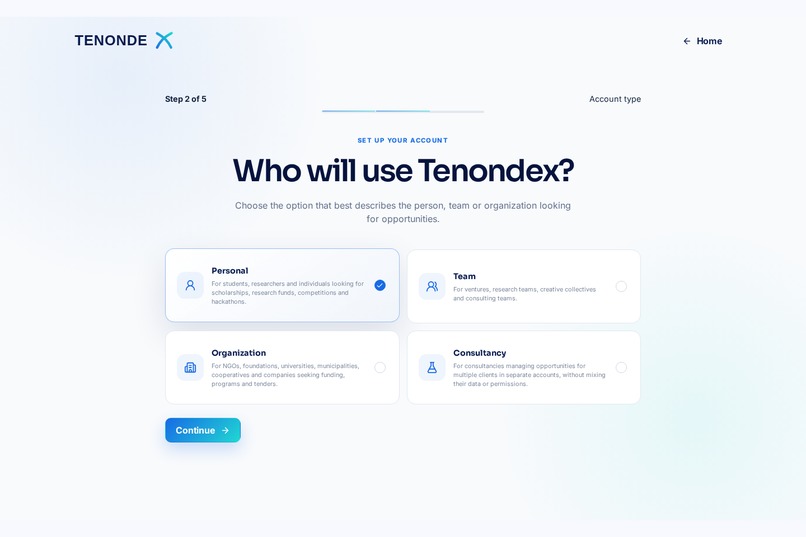
Guided onboarding
-
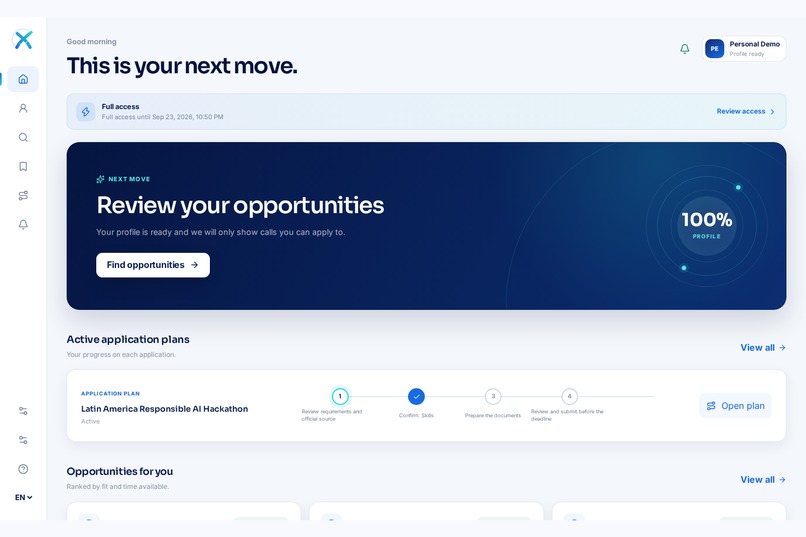
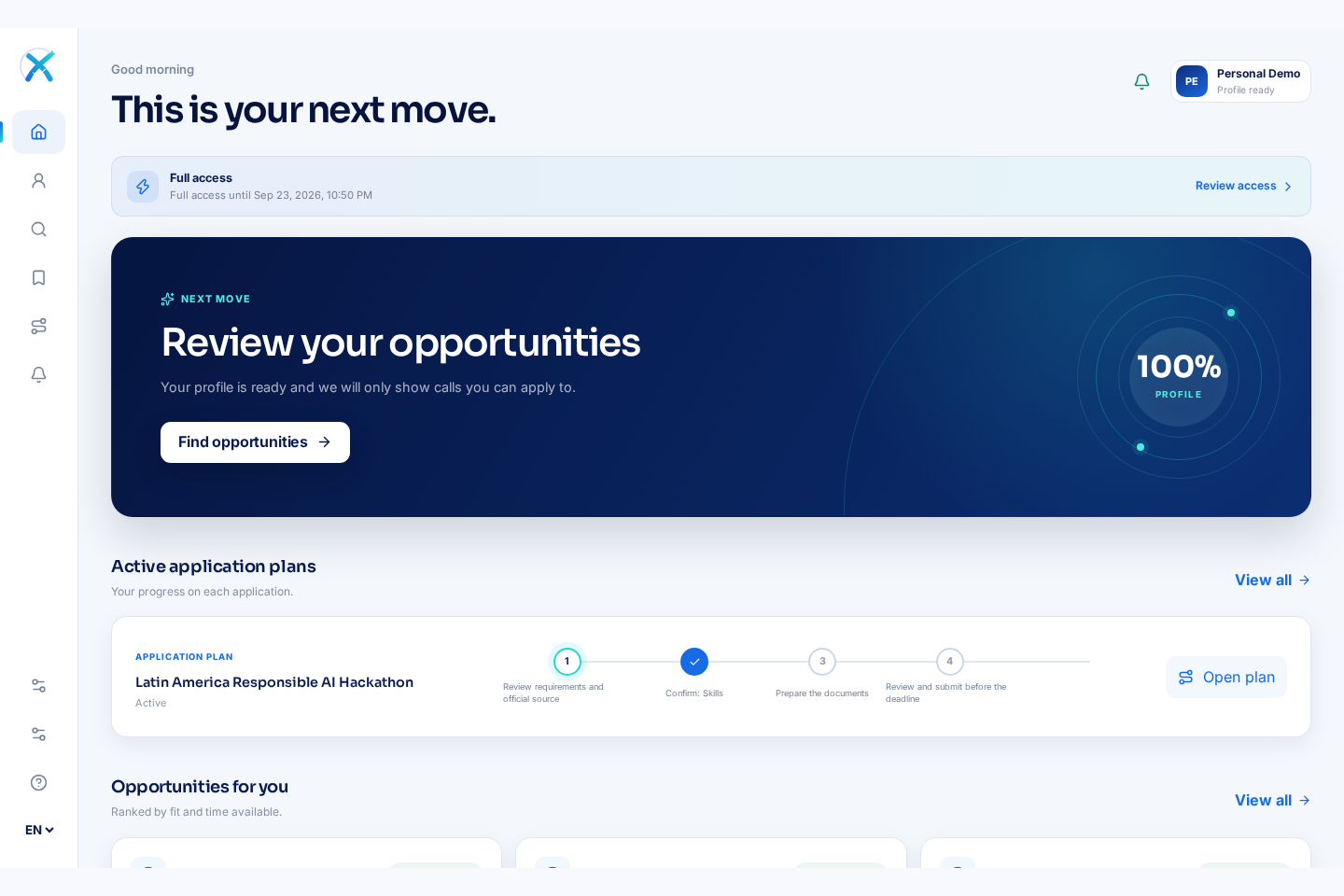
Personalized Dashboard
-
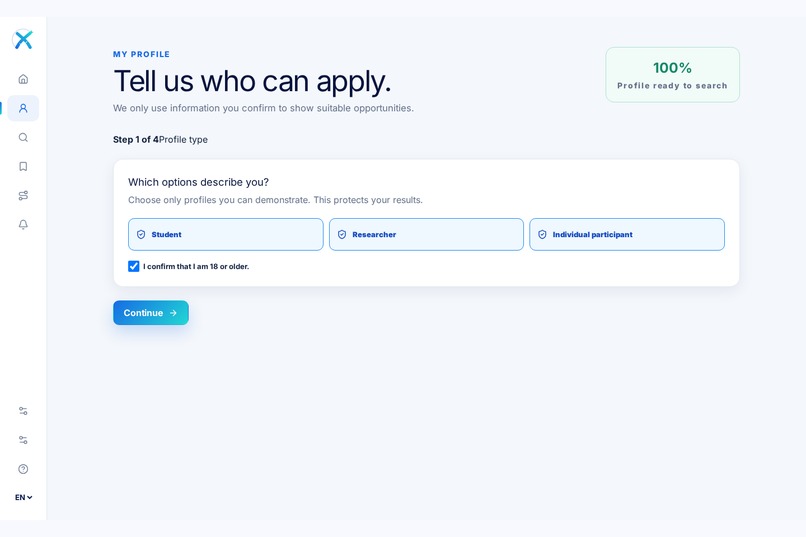
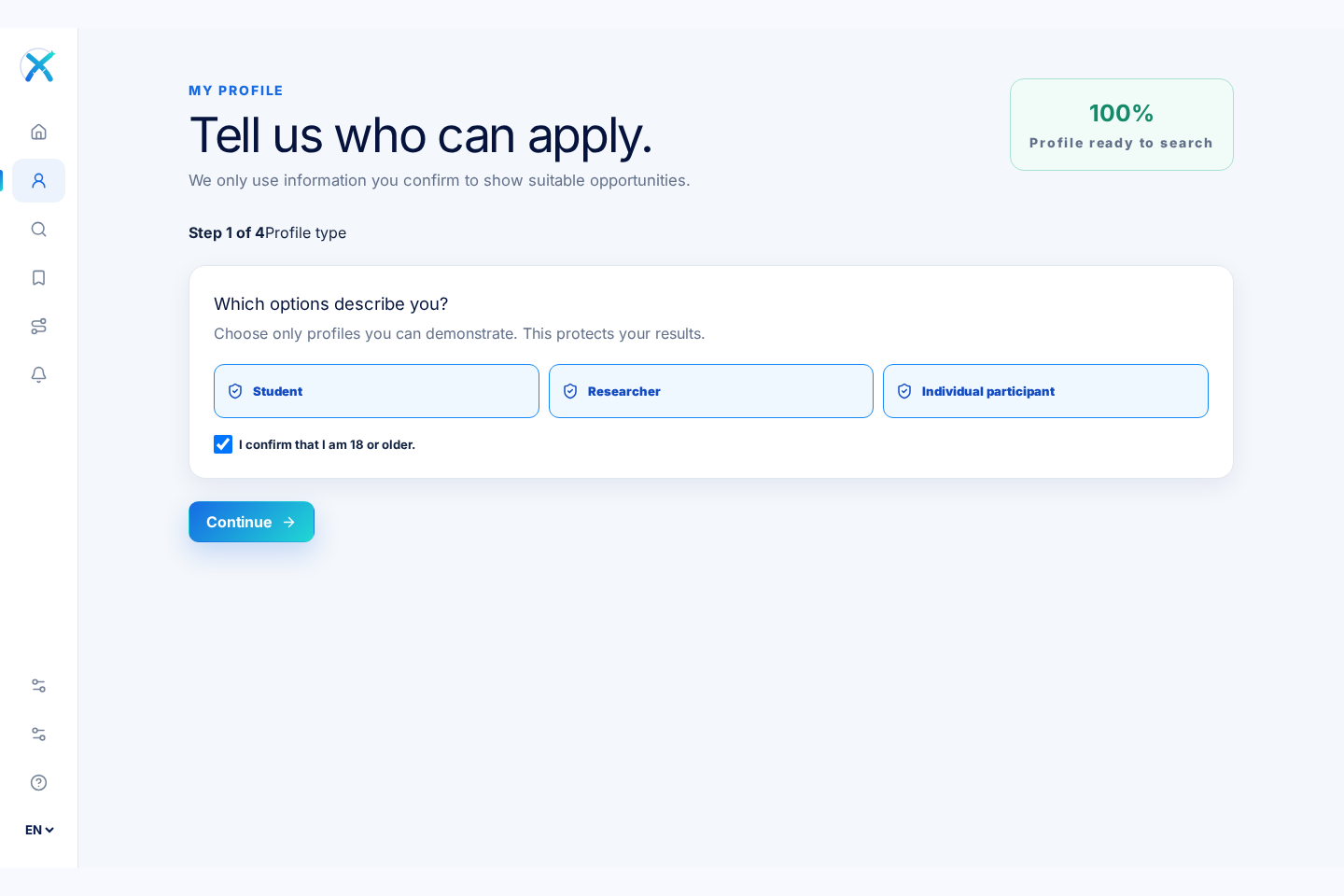
Profile wizard
-
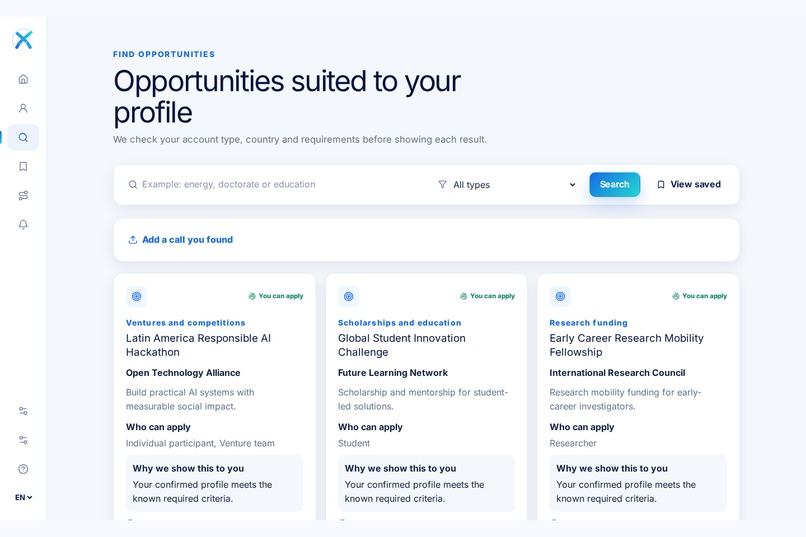
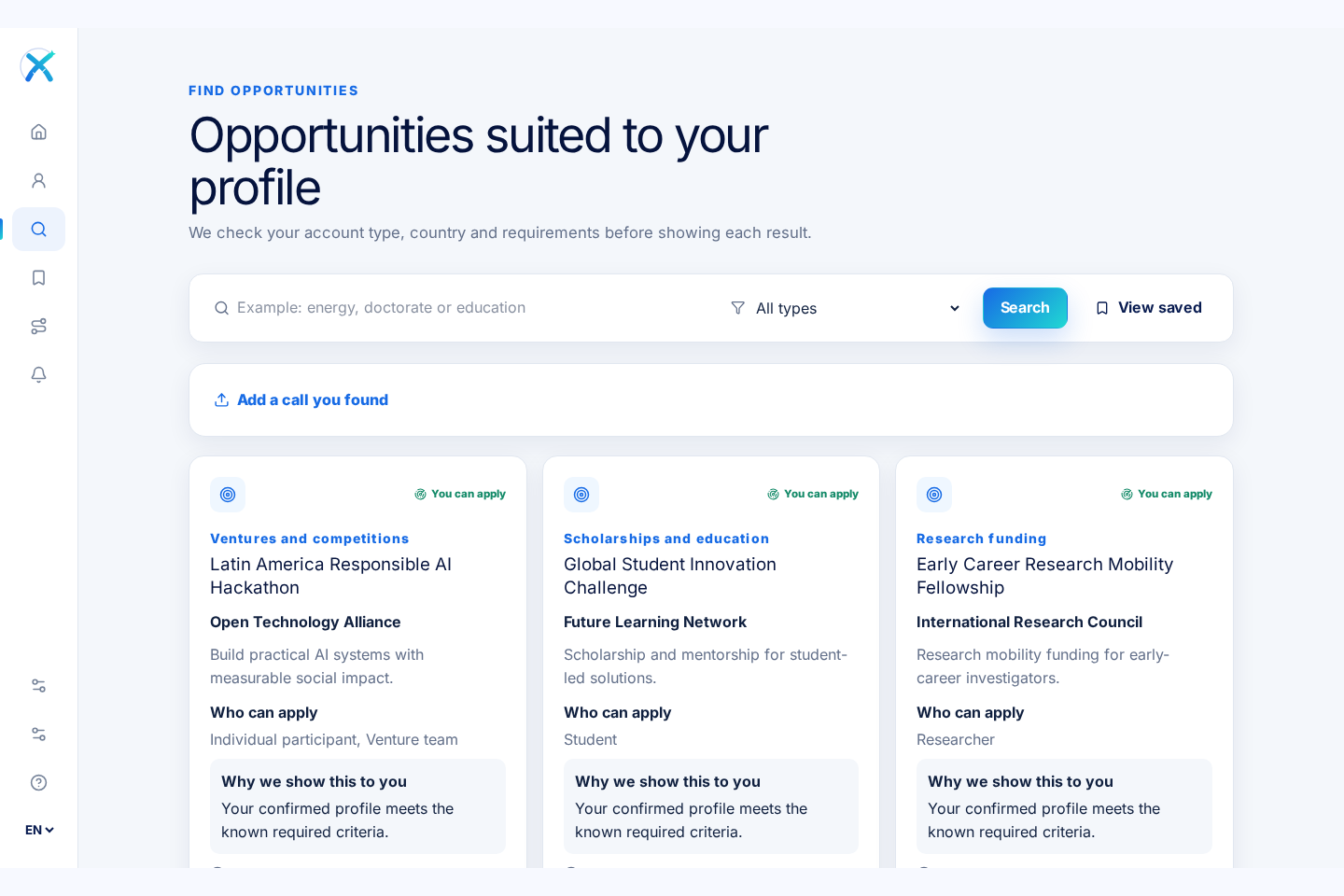
Elegible opportunities
-
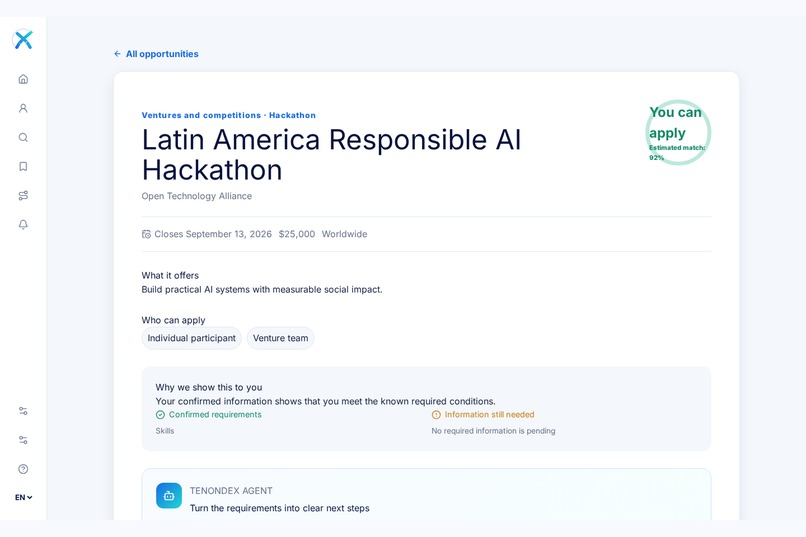
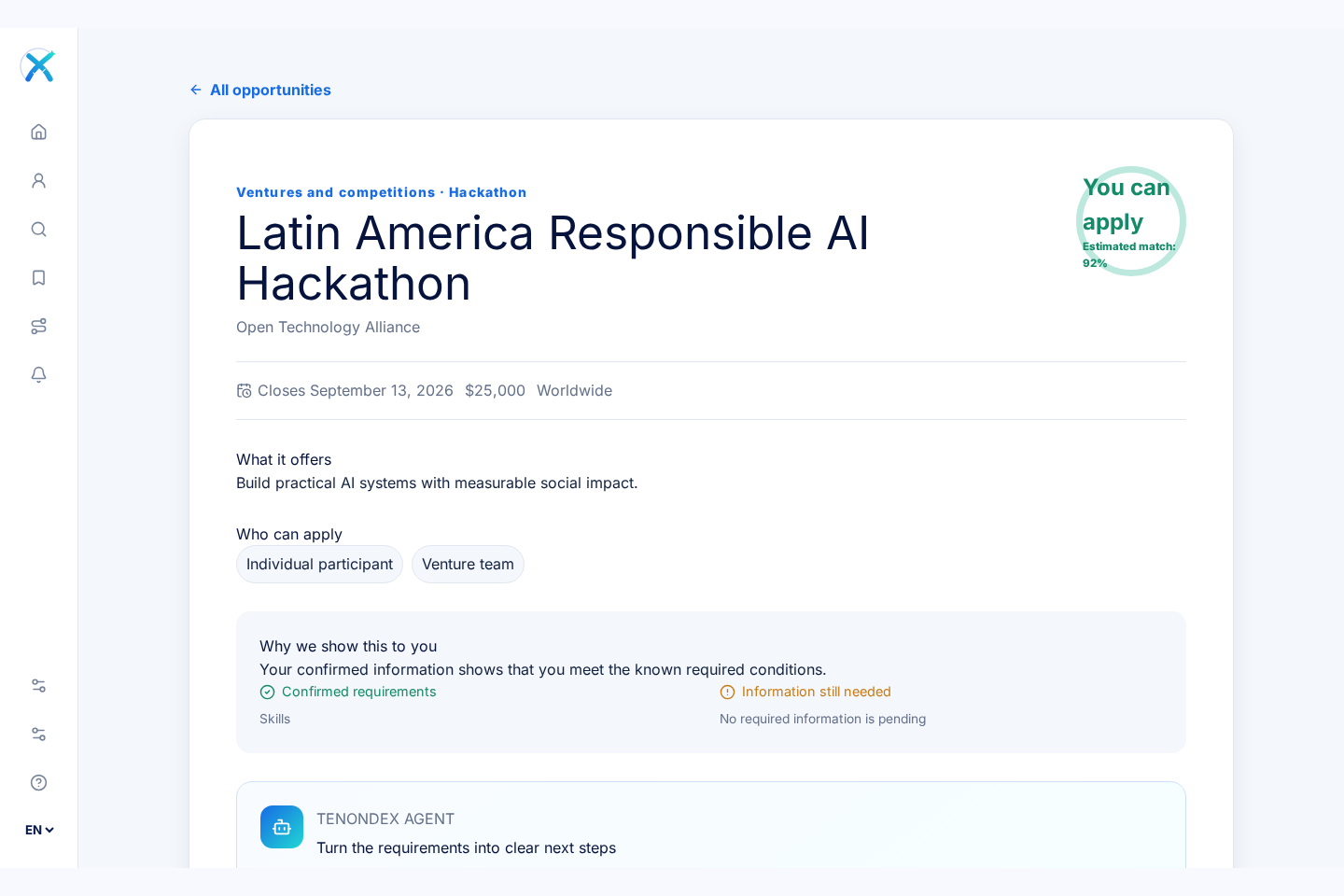
Opportunity details
-
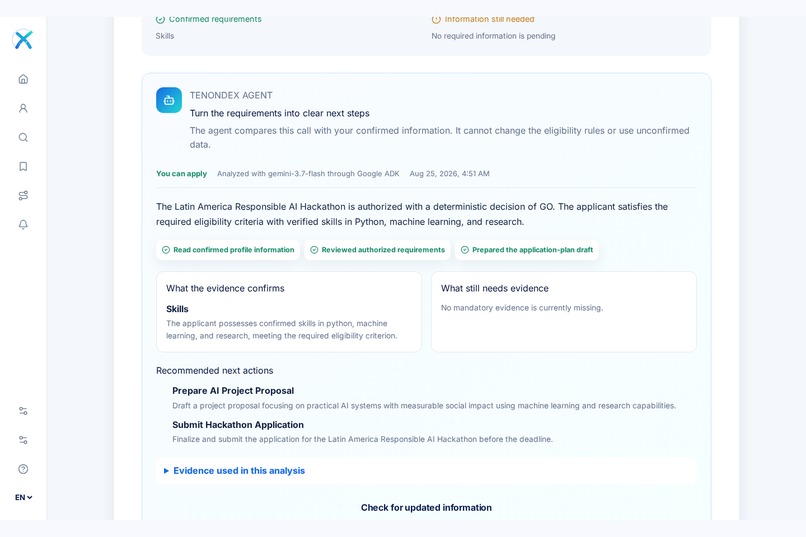
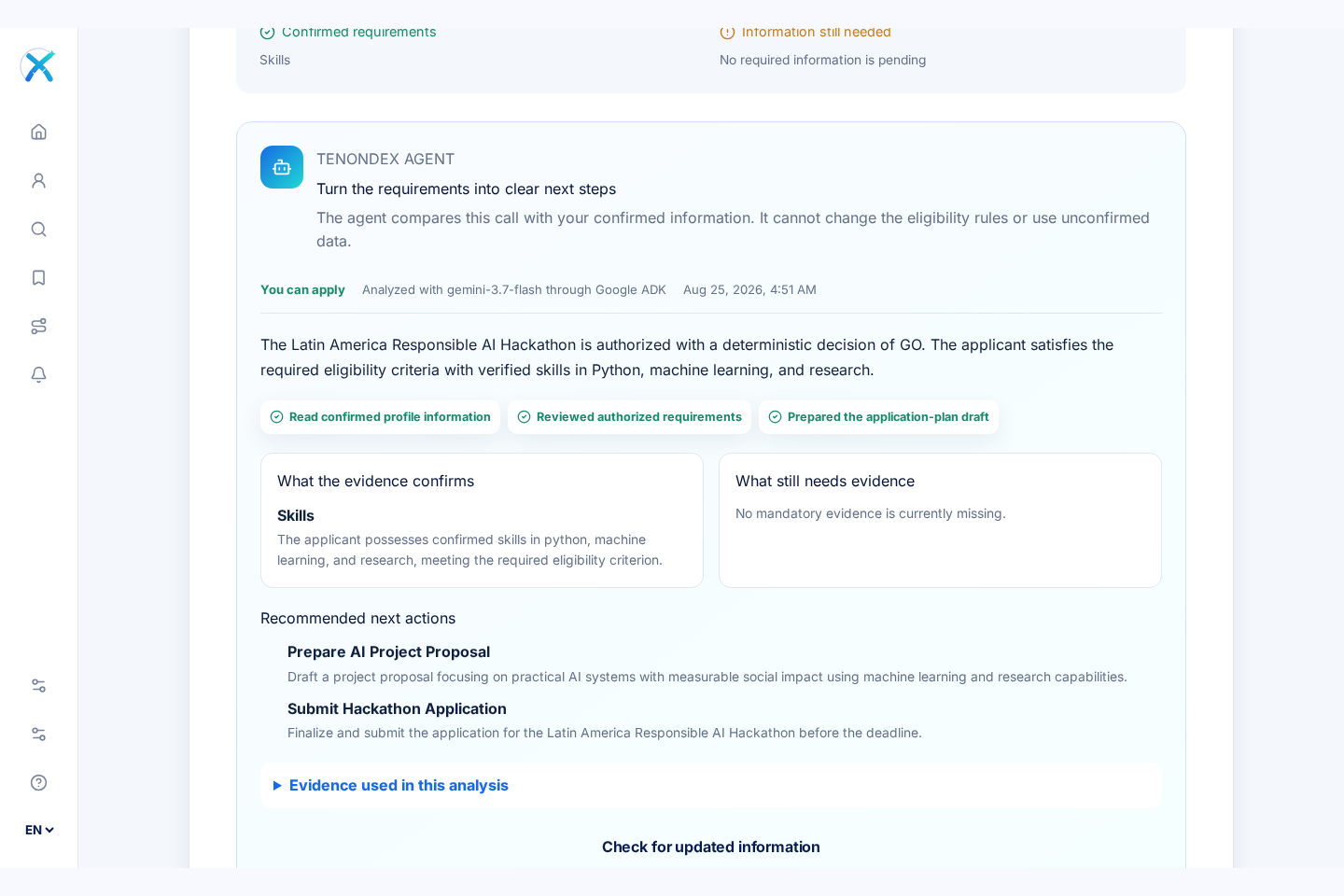
Elegibility analisys
-
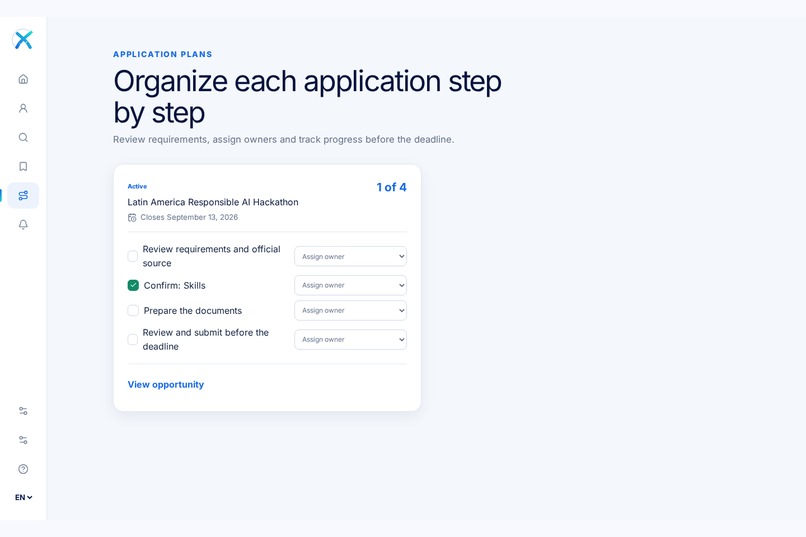
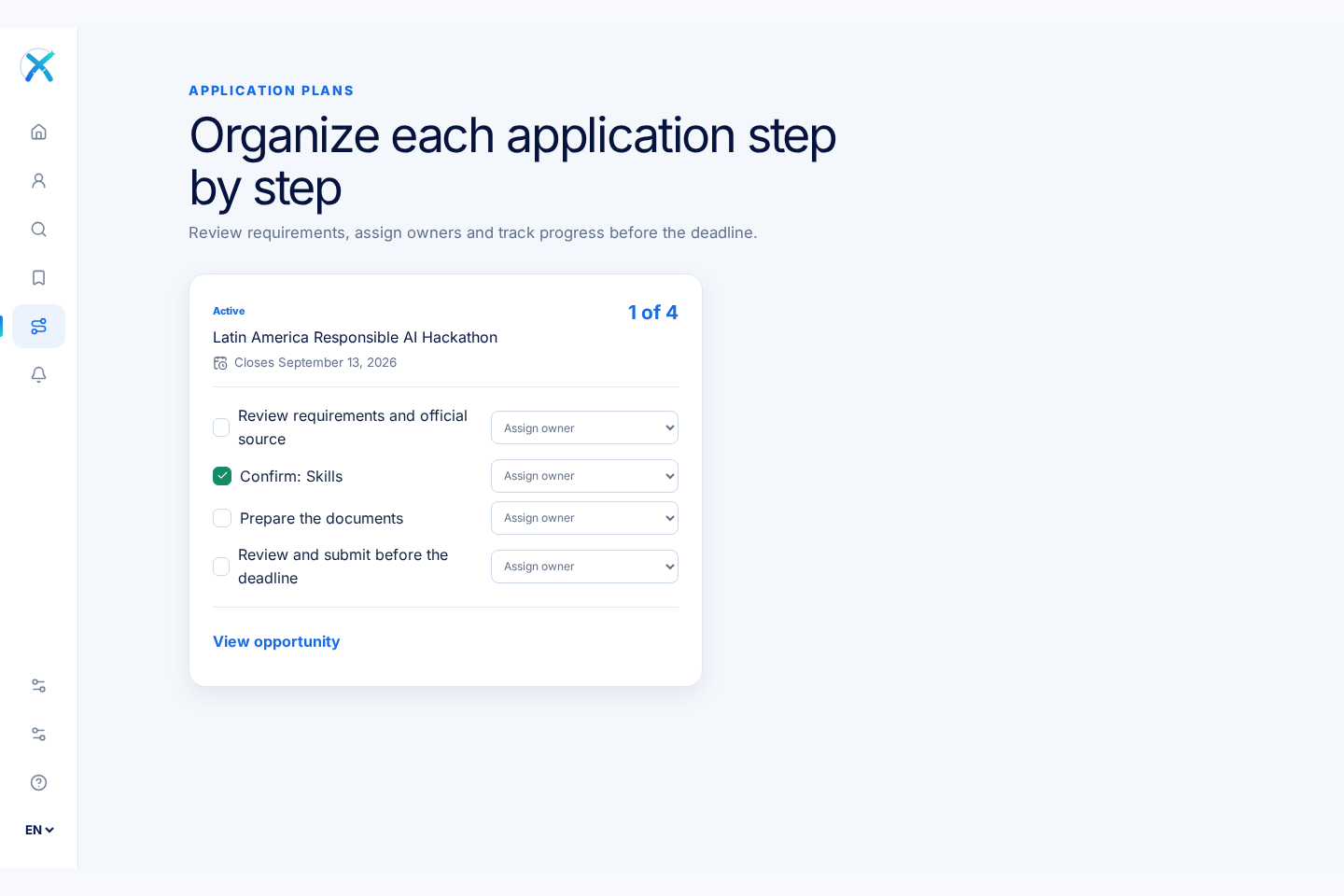
Application plan
-
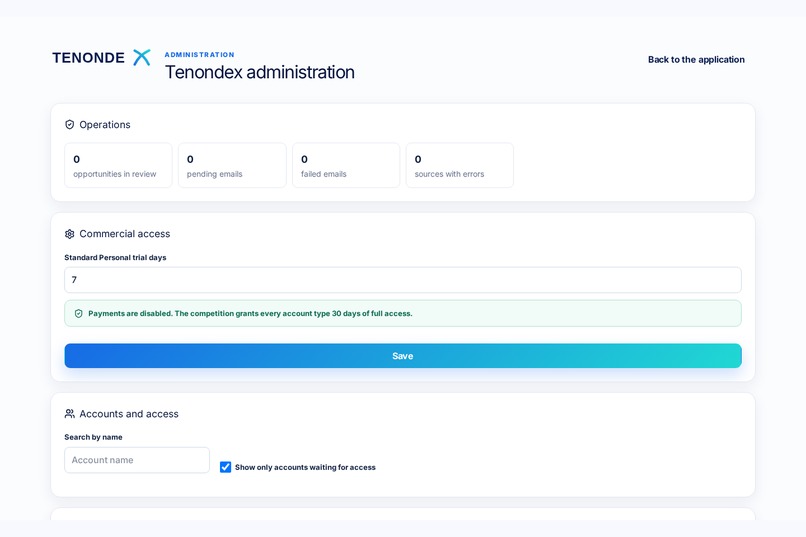
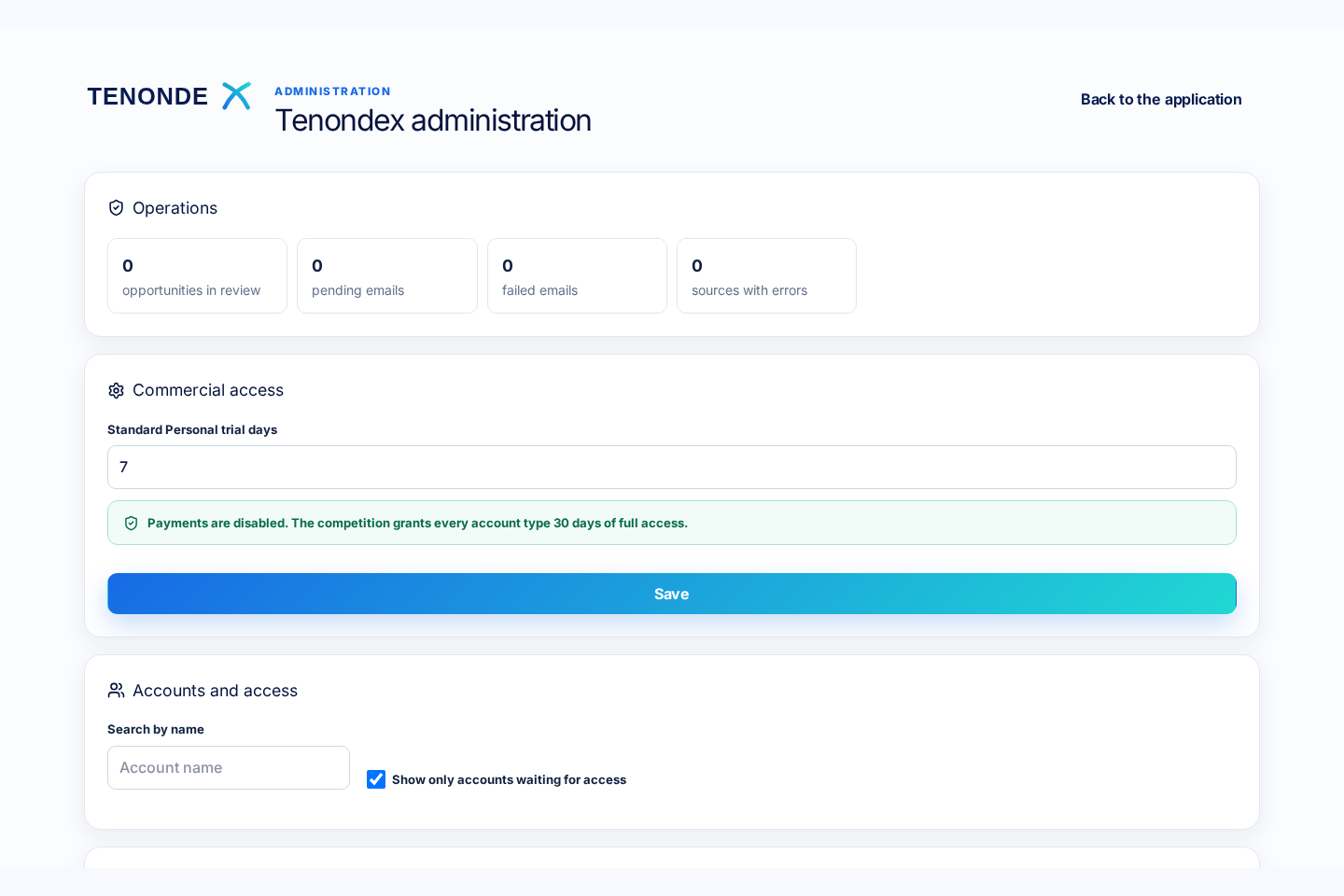
Administration
Inspiration
Tenondex began with a personal problem: searching for scholarships and hackathons meant opening dozens of websites, comparing deadlines, translating requirements, and still not knowing whether I was actually eligible. The same problem affects researchers seeking grants, teams looking for funding, and organizations searching for project grants, tenders, and partners.
What it does
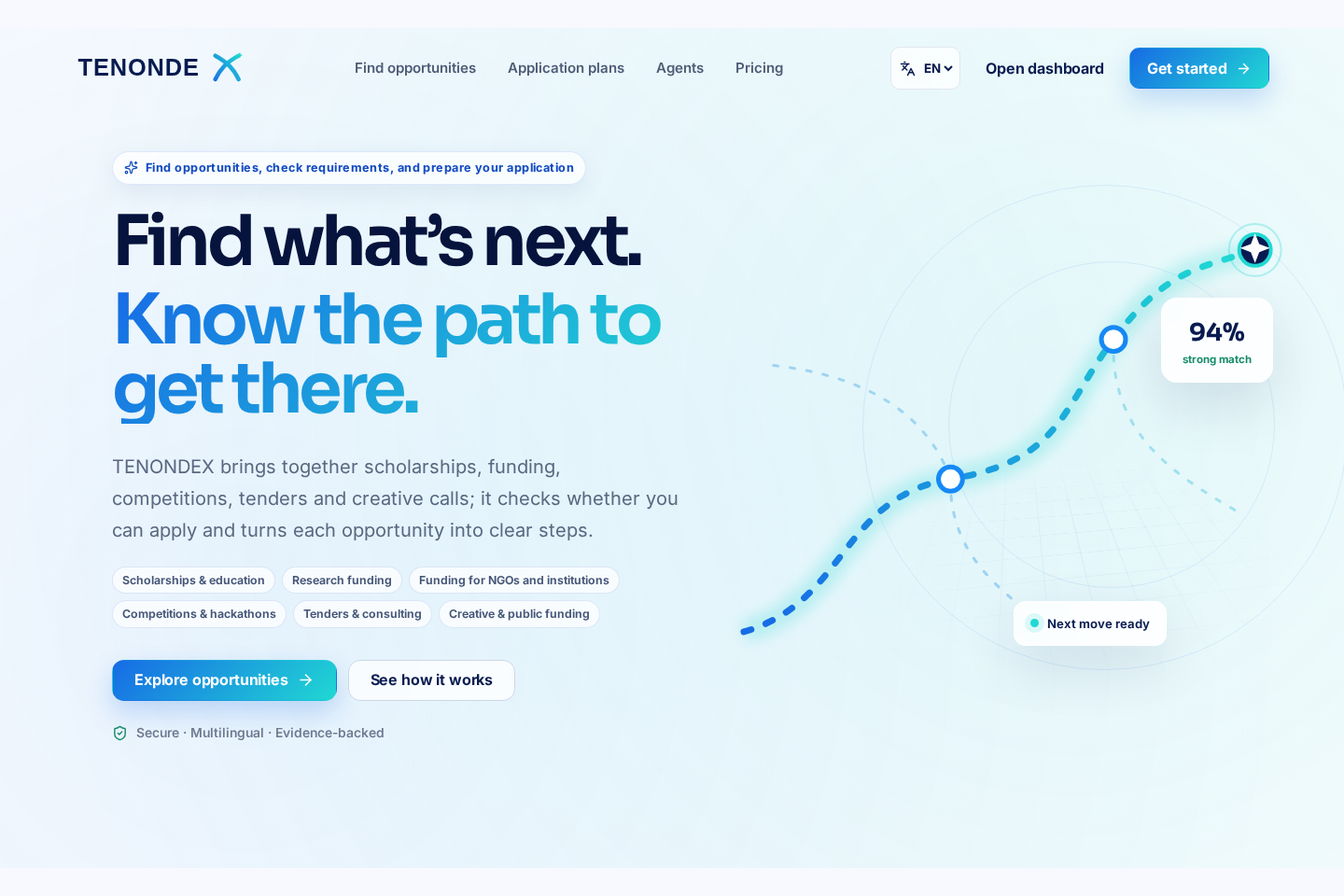
Tenondex helps students, researchers, teams, and organizations discover relevant opportunities and understand whether they can apply.
Users create a structured profile and receive only opportunities compatible with their applicant type, location, confirmed information, and access level. Tenondex explains eligibility, missing requirements, deadlines, and next actions. Users can save opportunities and create practical application plans with checklists.
Educational institutions can sponsor access for cohorts of 100 or more students without accessing students’ private profiles, documents, or searches.
How we built it
We built Tenondex with a Next.js and TypeScript web application, a FastAPI and Python backend, and PostgreSQL for persistent data.
Our agent uses Google ADK and Gemini through Vertex AI to analyze eligible opportunities, extract requirements, and generate understandable explanations. Deterministic rules always run before AI, so the agent cannot override eligibility restrictions.
The platform uses Google Cloud Run, Identity Platform, Secret Manager, private storage buckets, Docker, migrations, role-based access control, and multilingual support in English, Spanish, and Portuguese.
Challenges we ran into
The hardest challenge was making recommendations useful without making them unsafe. A personal account must never discover grants intended only for NGOs, and AI must not broaden access or invent eligibility.
We also had to make complex workflows understandable for both students and institutional users. This required profile-specific forms, clear language, localized interfaces, accessible controls, and examples that match each user type.
Accomplishments that we're proud of
- Built a restrictive eligibility model across personal, team, organization, and consultant accounts.
- Added an AI agent that explains opportunities without replacing human decisions.
- Designed multilingual, accessible onboarding and profile flows.
- Added opportunity trust states and reporting tools to reduce exposure to suspicious listings.
- Created institutional sponsorship for student cohorts while preserving privacy.
What we learned
We learned that better matching is not only an AI problem. Trust comes from structured profiles, deterministic eligibility rules, data provenance, transparent explanations, and keeping users in control.
We also learned that accessibility and plain language are product features, not final polish.
What's next for Tenondex
Next, we will expand curated opportunity sources, strengthen verification workflows, complete payment integrations, and launch institutional programs with student sponsorship. We will also add more regional opportunities, improve source verification, and validate the platform with students, researchers, and organizations in Latin America.
Built With
- fastapi
- google-adk
- next.js
- postgresql
- python
- terraform
- typescript
- vertexai

Log in or sign up for Devpost to join the conversation.