-
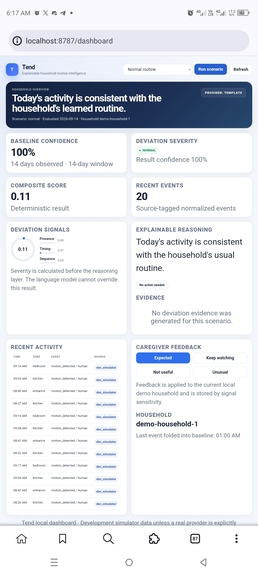
Dashboard overview Tend dashboard — household baseline, deviation status, and explainable routine intelligence
-
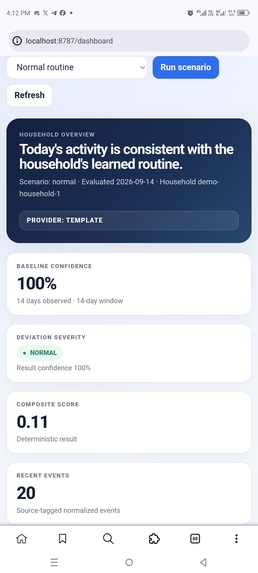
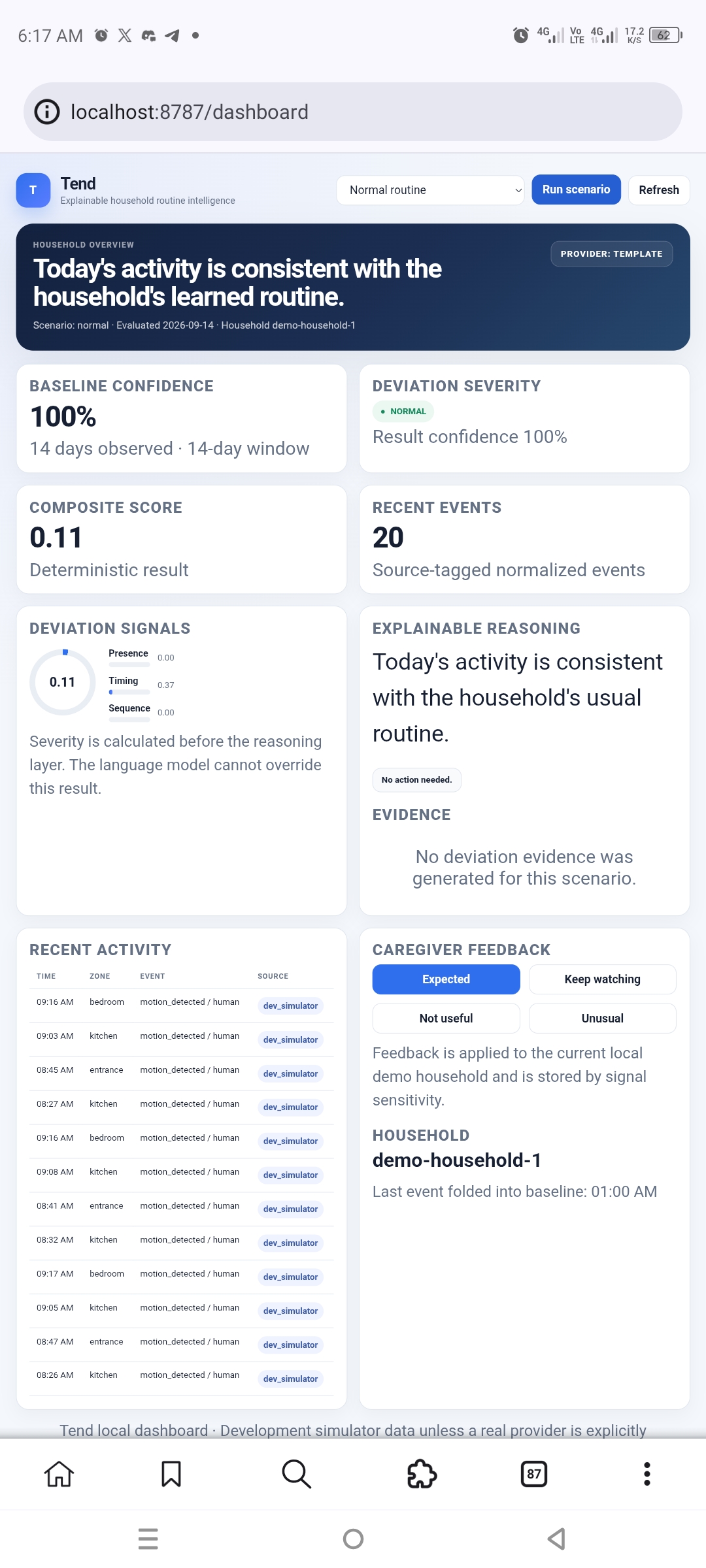
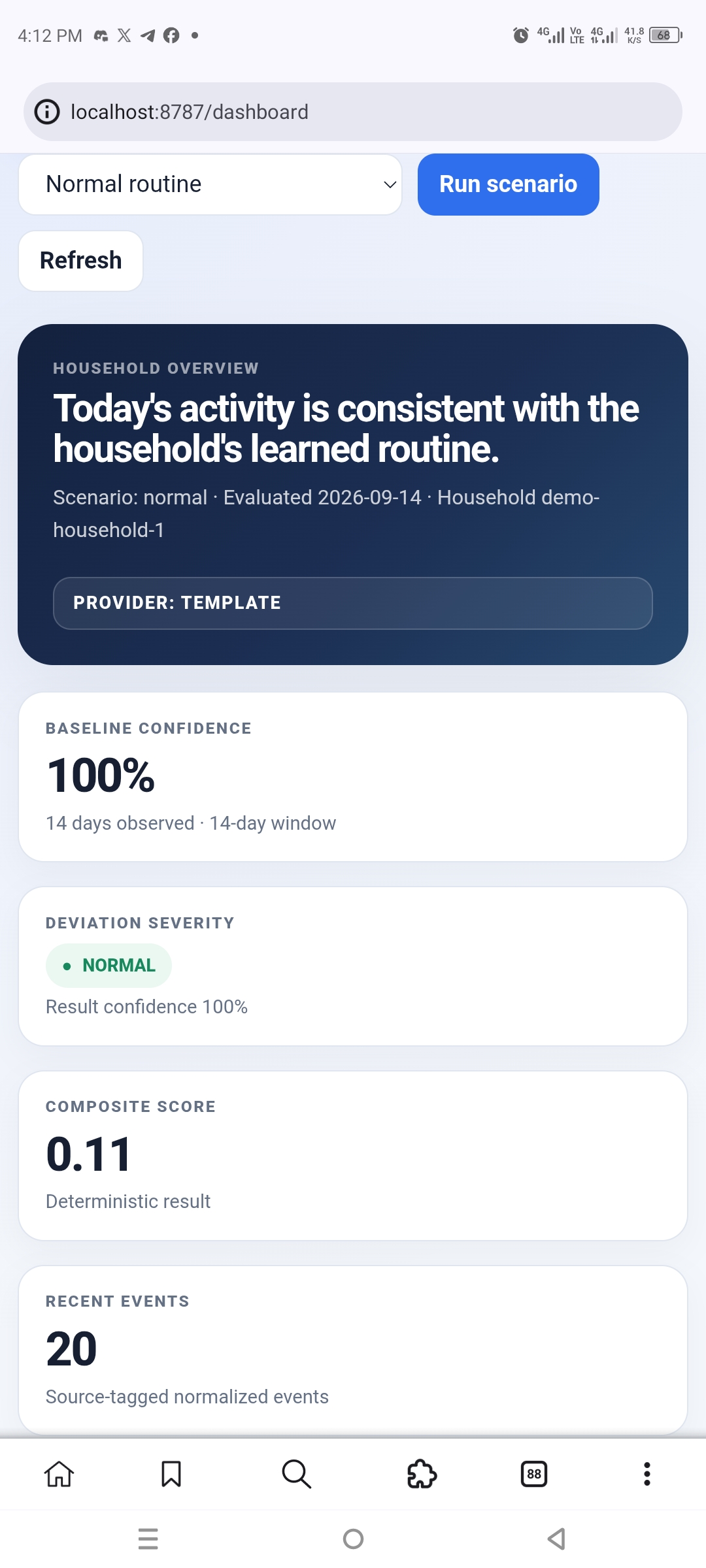
Normal routine — Tend compares current household activity against its learned baseline.
-
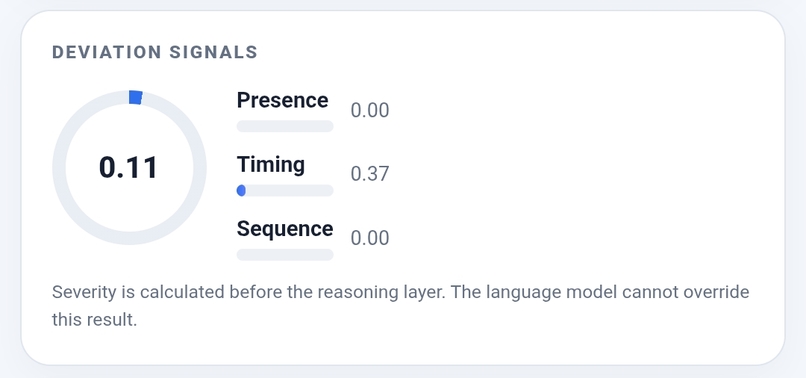
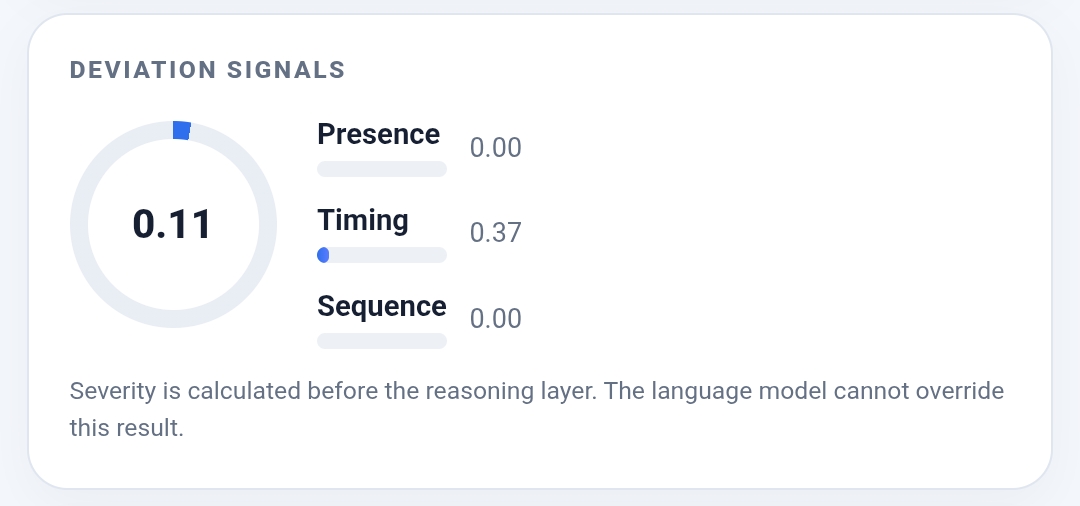
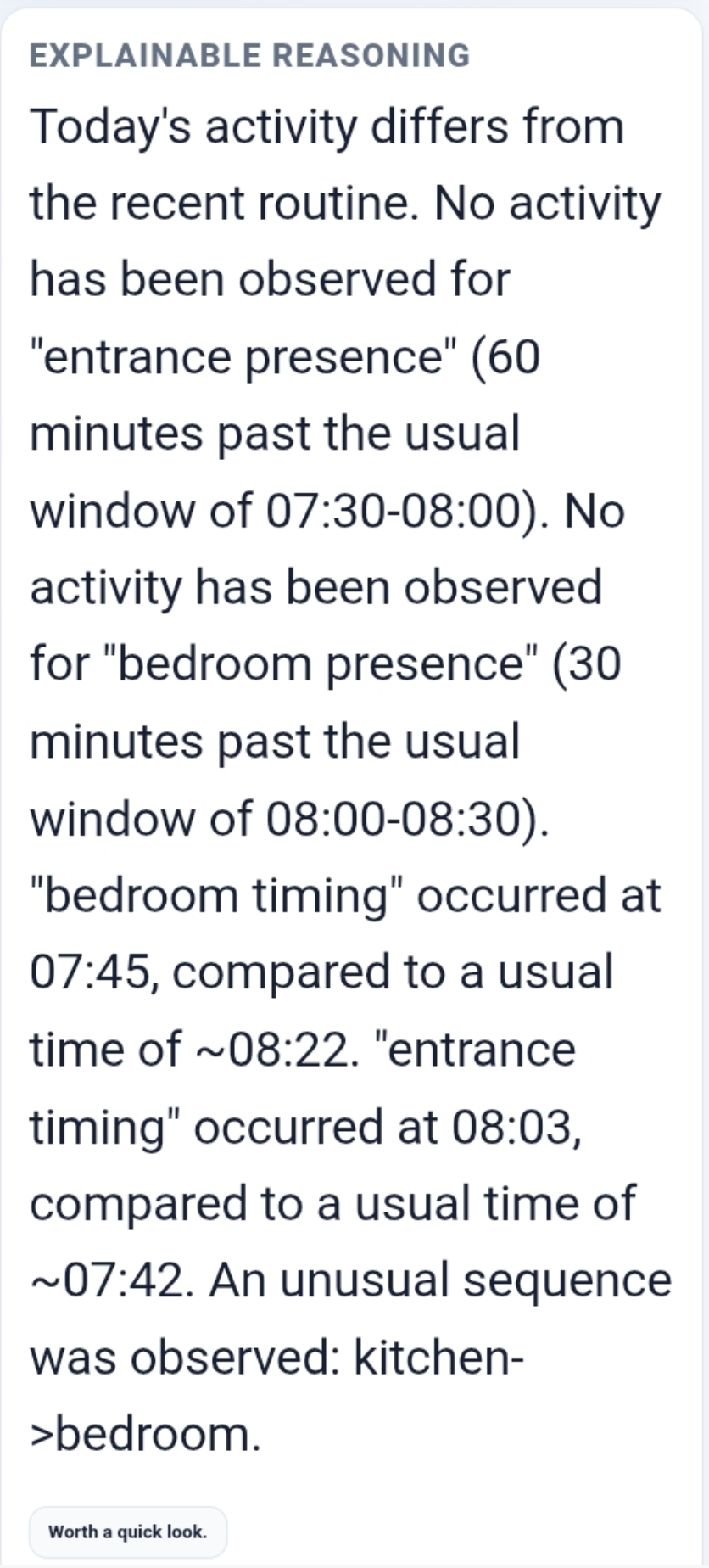
Routine deviation — Tend identifies changes across presence, timing, and sequence.
-
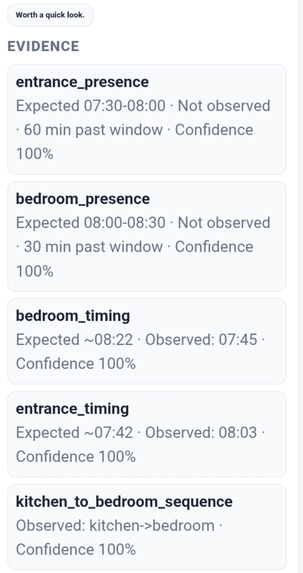
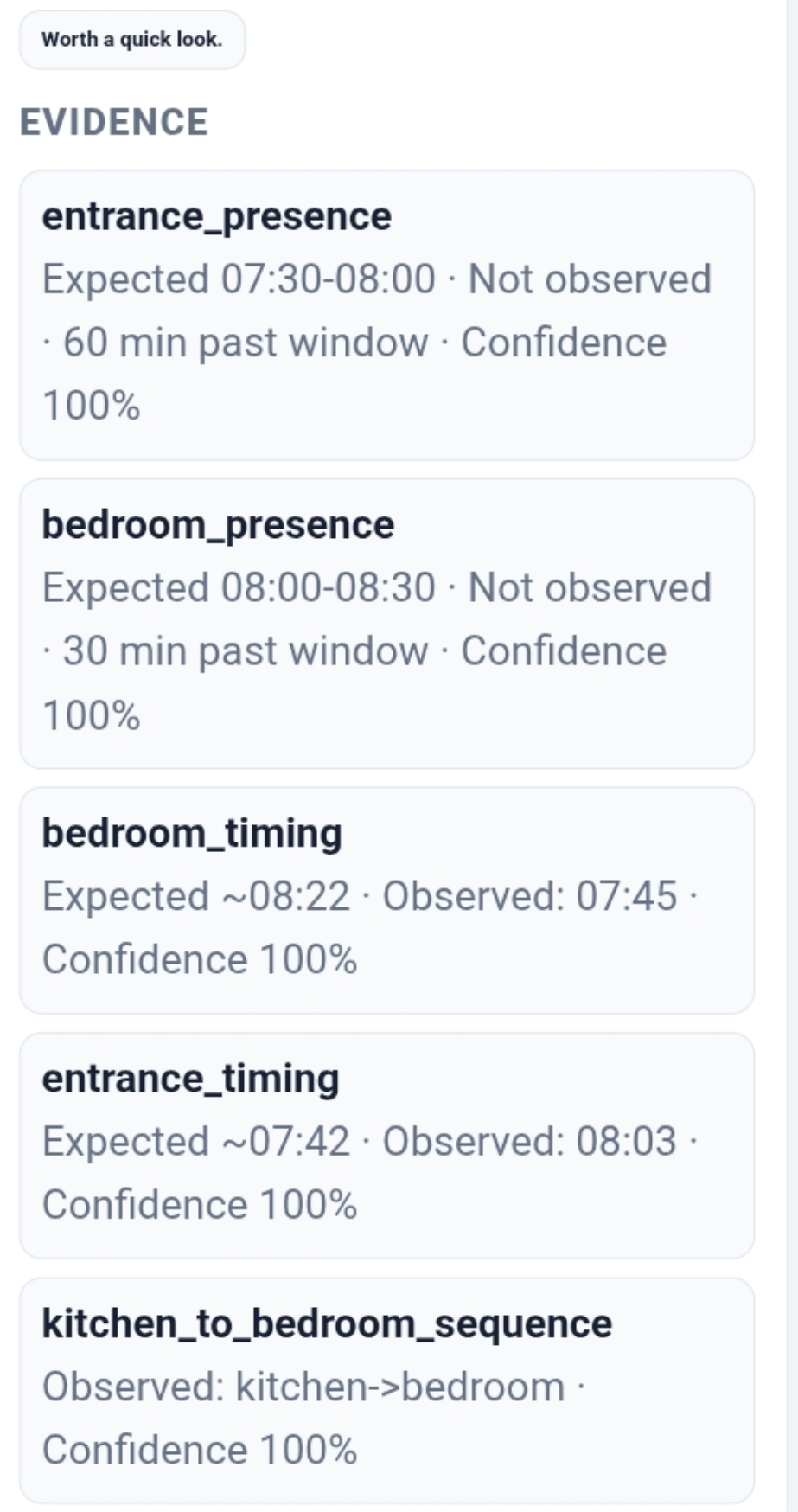
Evidence-backed analysis — deterministic scoring identifies the deviation before AI reasoning.
-
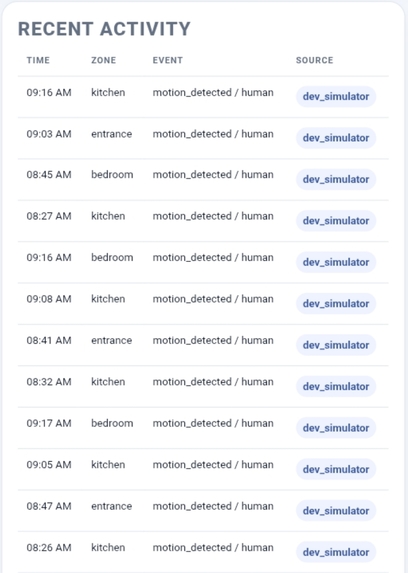
Constrained reasoning — Bedrock explains the computed evidence without determining anomaly severity.
-
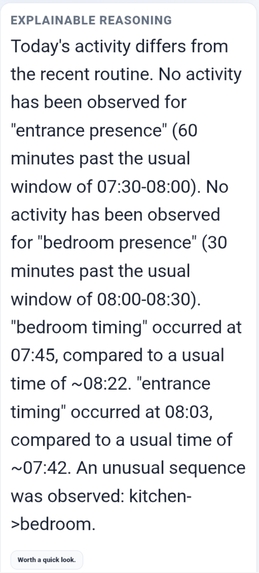
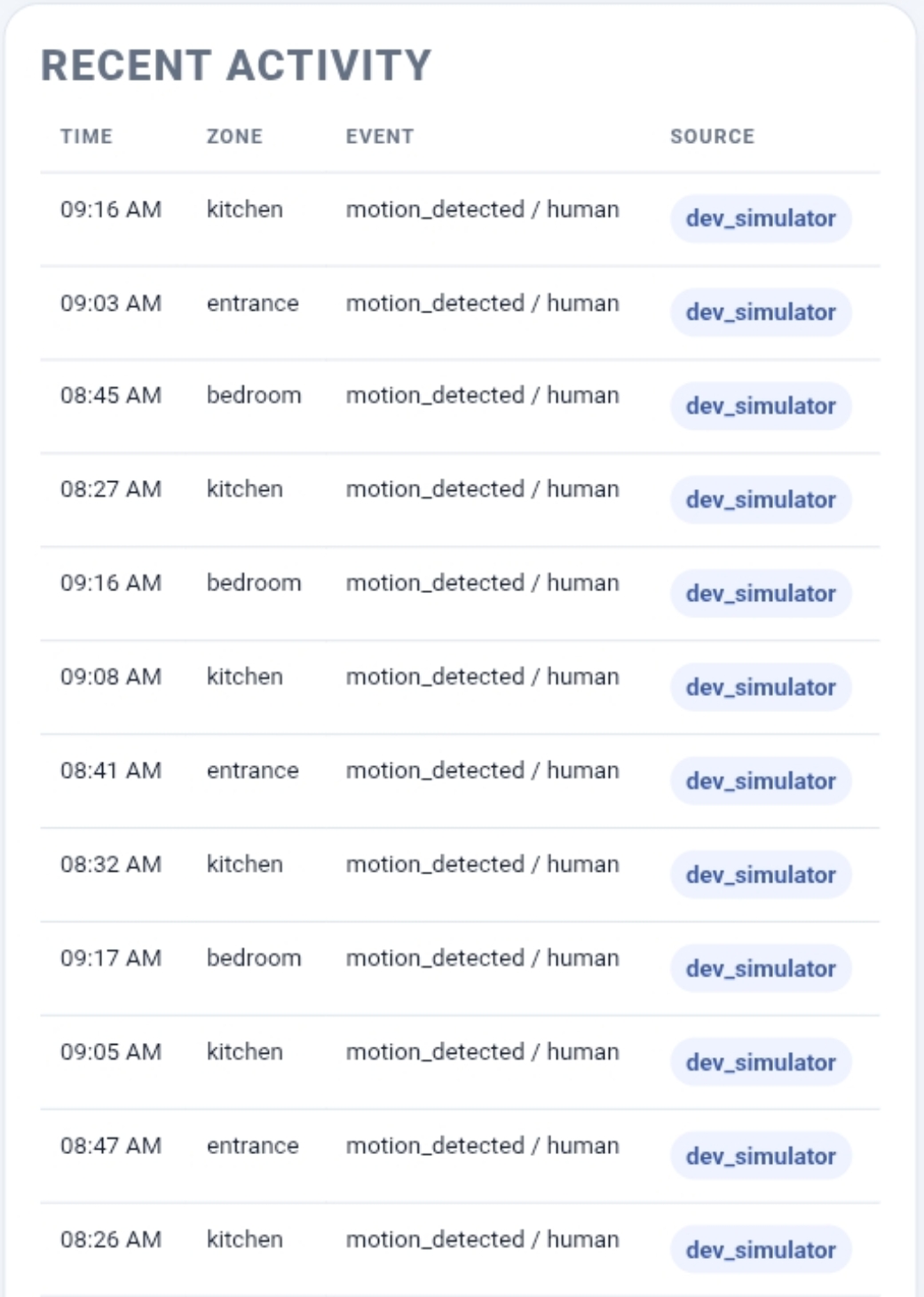
Event history — normalized household events provide the evidence used for analysis.
-
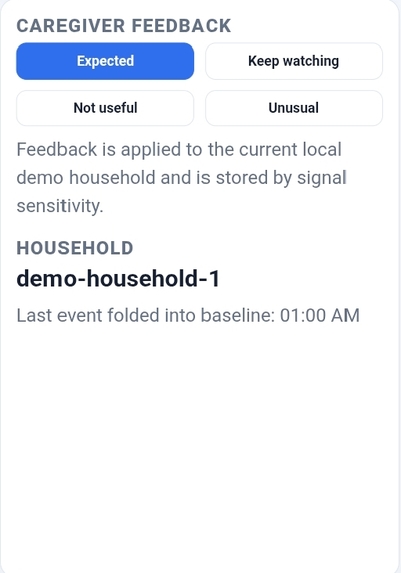
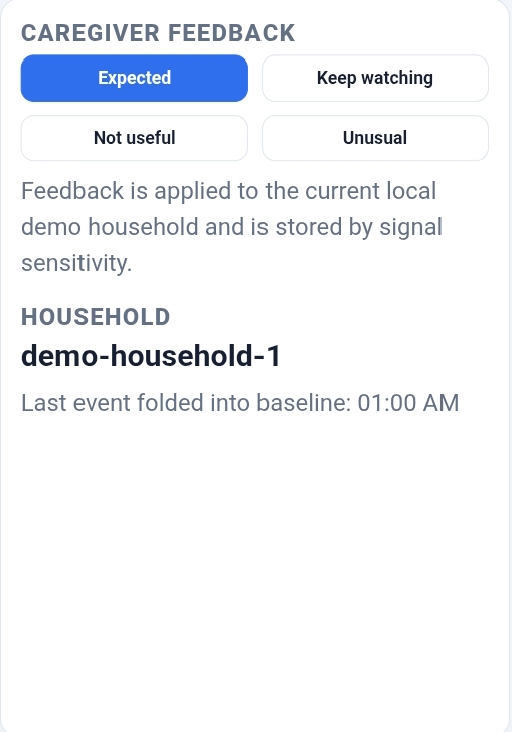
Caregiver feedback — feedback can adjust household sensitivity while preserving deterministic analysis.
Tend is a privacy-first household routine-intelligence system for caretaking and home automation. It learns a household-specific baseline from Ring event data, detects meaningful deviations using deterministic scoring, and uses Amazon Bedrock as a constrained reasoning layer to explain the evidence in caregiver-friendly language.
Additional information
Tend is deliberately designed so generative AI does not decide whether an anomaly exists or change its severity. The deterministic analysis engine computes presence, timing, and sequence deviations first. Caregiver feedback can tune sensitivity, and only then does the reasoning layer receive structured evidence and the already-computed result.
Ring integration uses an ingestion boundary and Event History/simulator-driven development path. Ring data is normalized into Tend's internal event model before analysis.
AWS integration includes Amazon Bedrock for constrained explanation, a DynamoDB-backed event-store implementation, and notification/runtime abstractions. Local in-memory implementations keep development and testing reproducible without requiring live AWS credentials.
The final release includes automated tests, deterministic integration checks, production-security verification, infrastructure validation, and GitHub Actions CI. The public repository's default branch is final-release and includes an MIT license.
Hackathon development
Tend was significantly developed during the hackathon period, including Ring integration, Bedrock reasoning, AWS persistence/runtime work, production hardening, security verification, CI verification, and final release integration.
Demo focus
The final demo should show a Ring or Ring simulator event entering Tend, the household baseline, the deterministic deviation result, and the resulting constrained Bedrock explanation. The demo video must be public, in English, and under three minutes.
Built With
- amazon-bedrock
- aws-dynamodb
- aws-sam
- aws-sns
- github-actions
- node.js
- ring-apis
- typescript