-
-
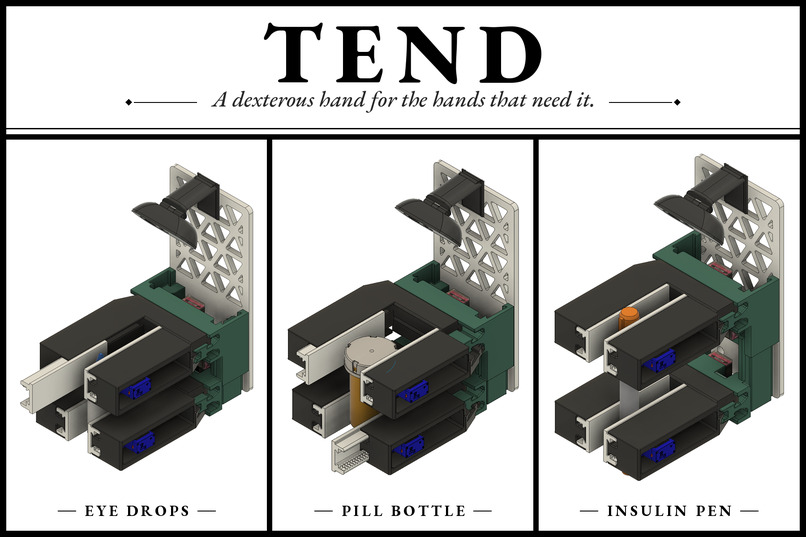
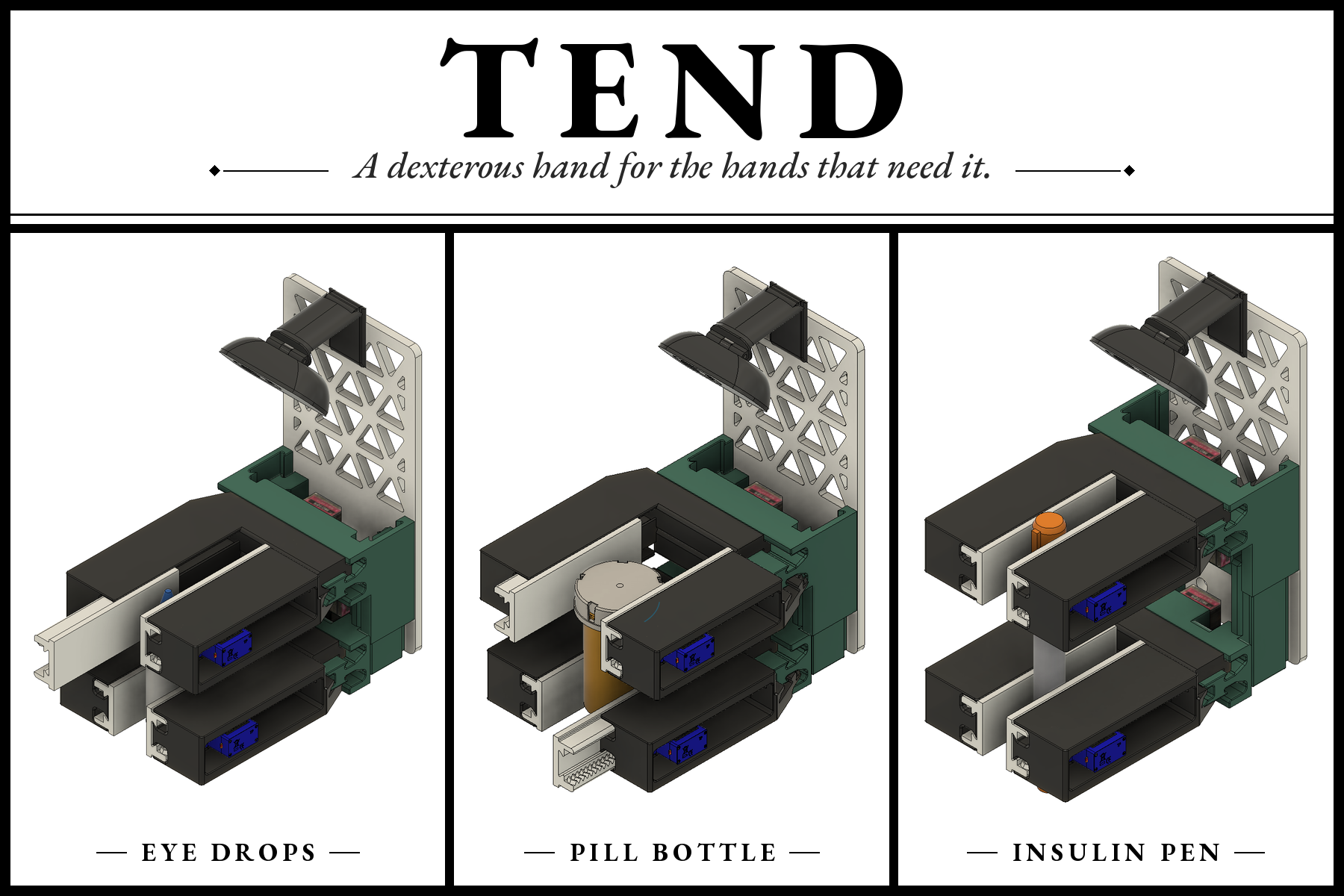
TEND Thumbnail Image
-
 GIF
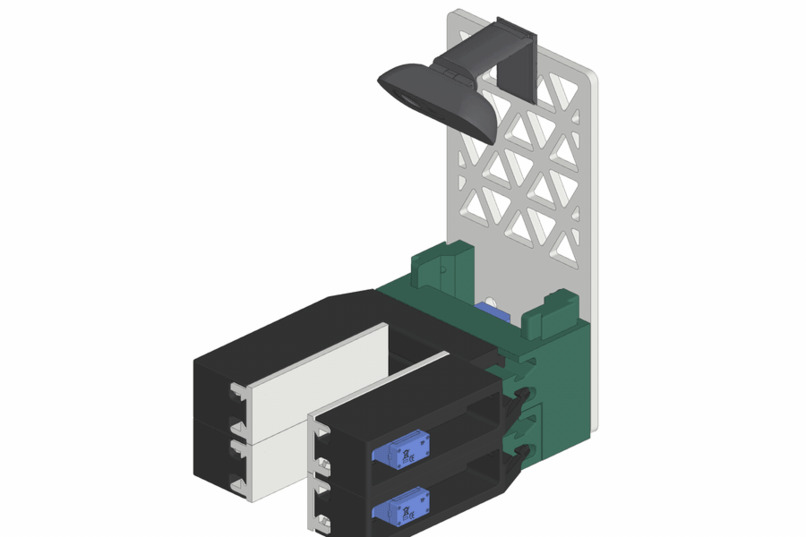
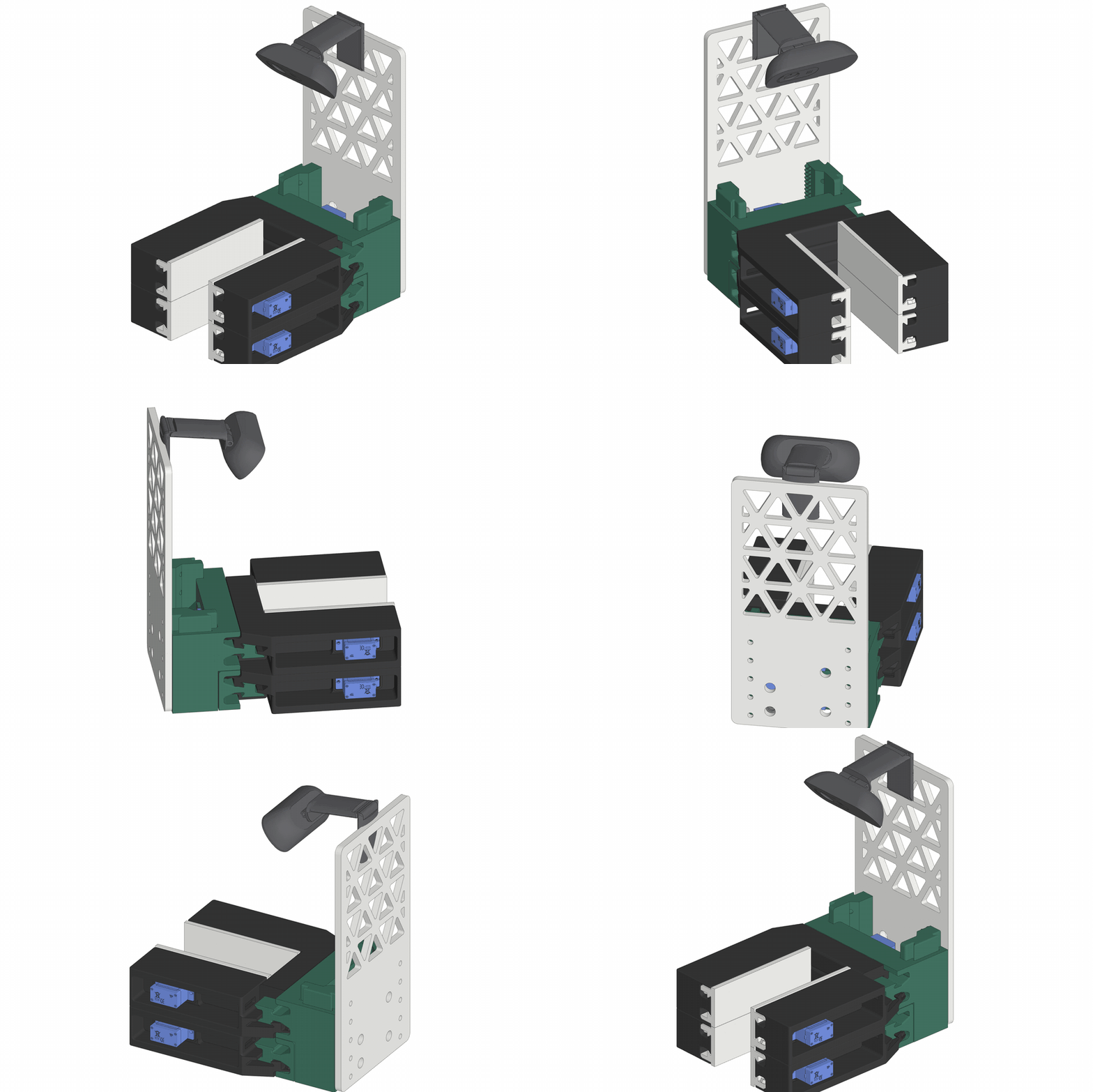
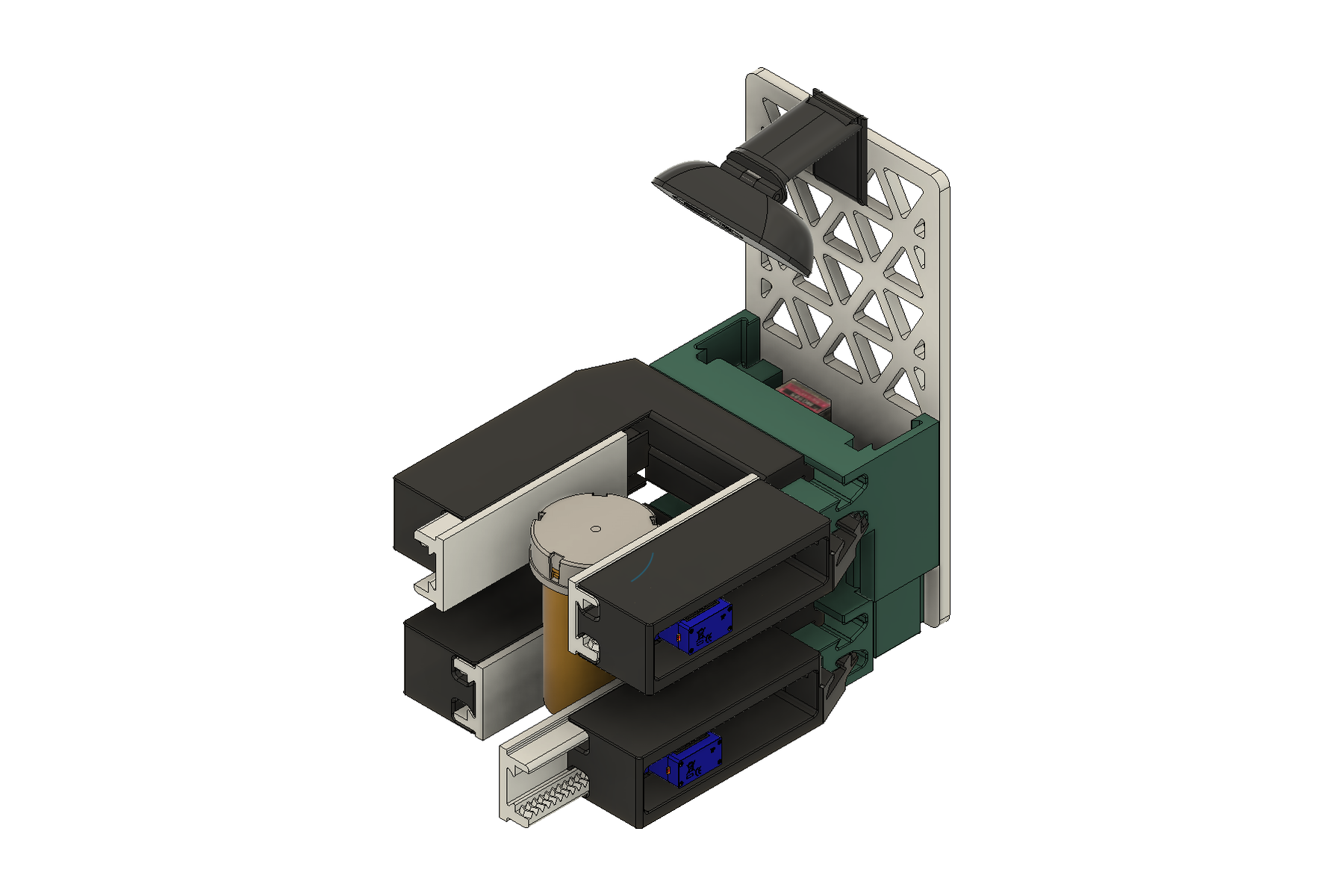
TEND 360° CAD View
-
 GIF
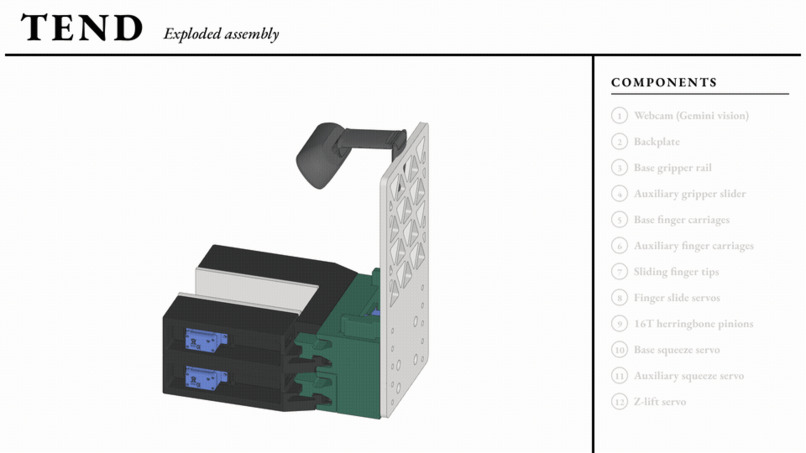
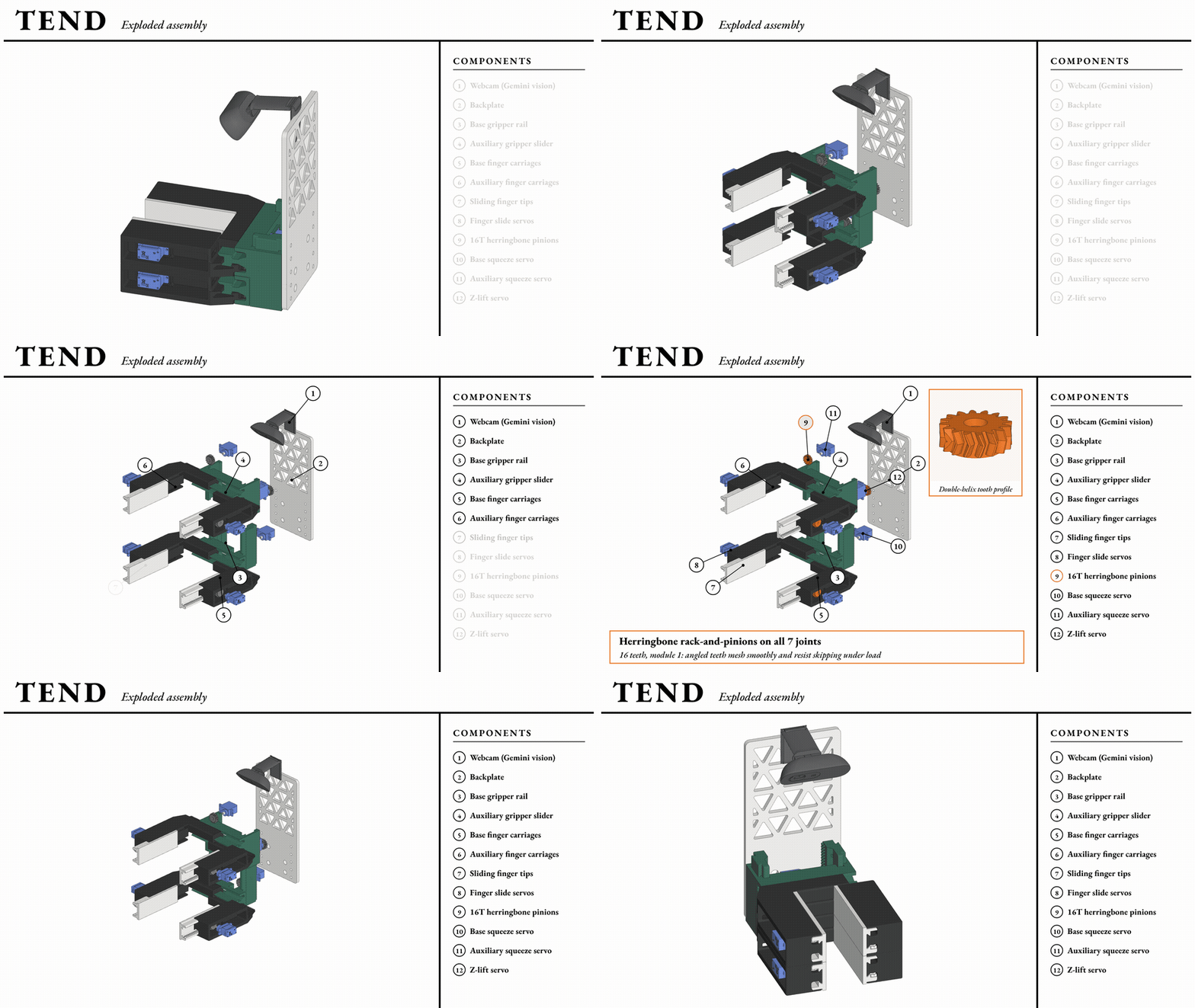
TEND Exploded Assembly
-
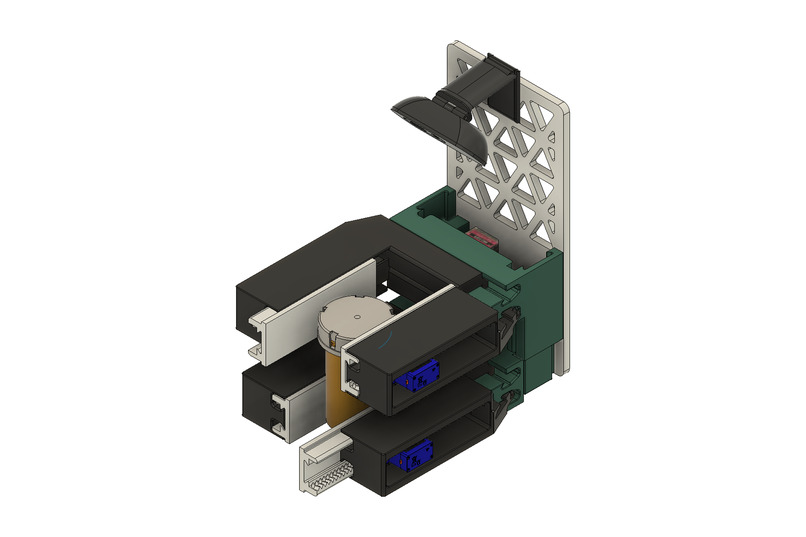
TEND Application Closeup: Pill Bottle
-
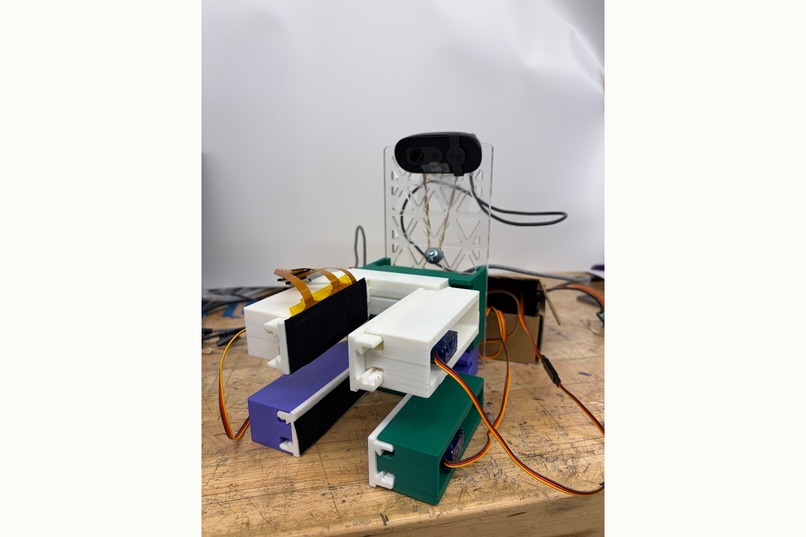
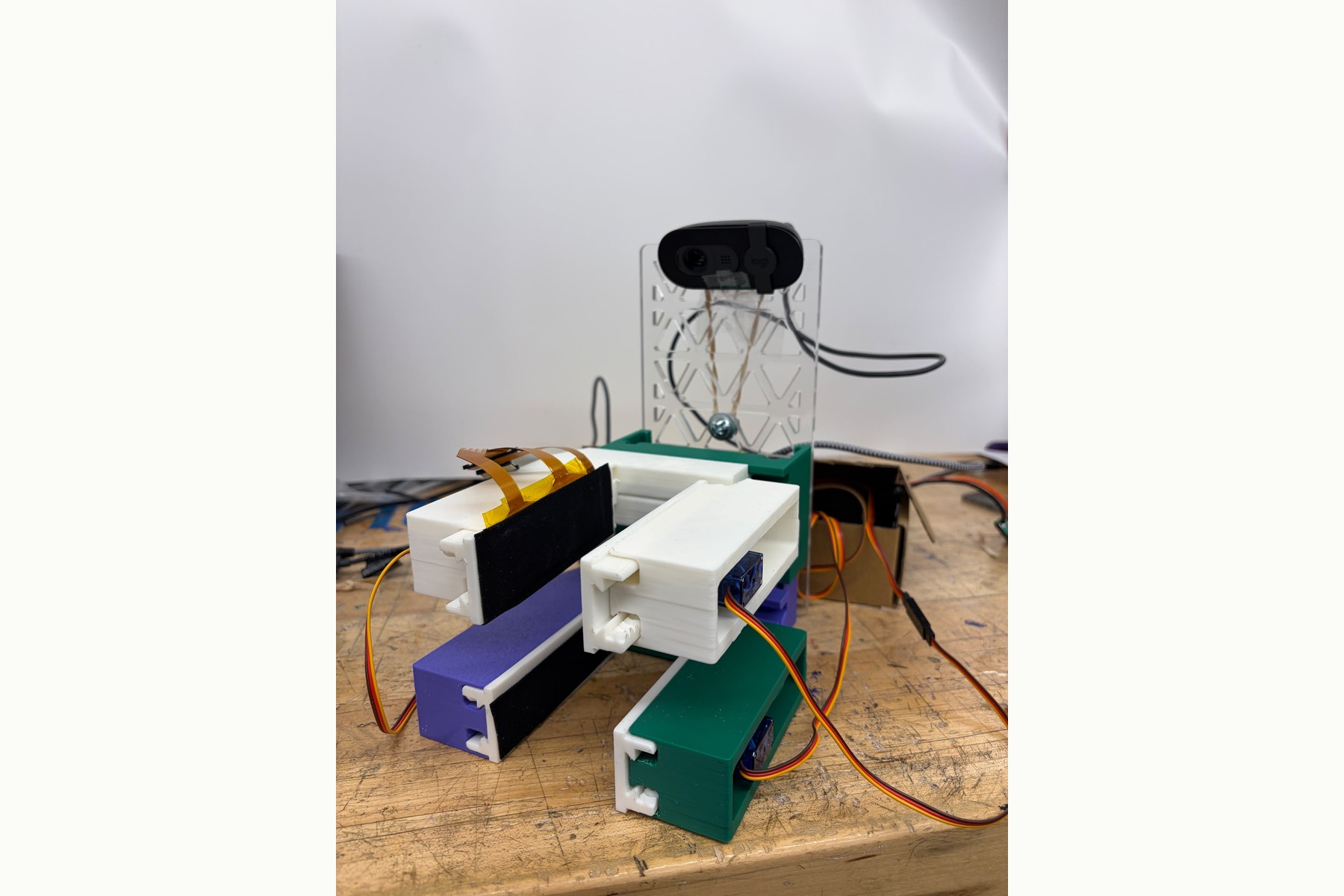
TEND Physical Prototype
-
 GIF
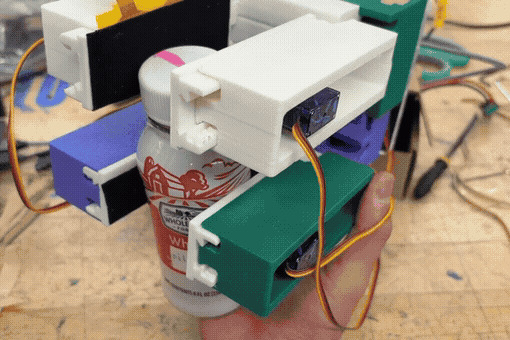
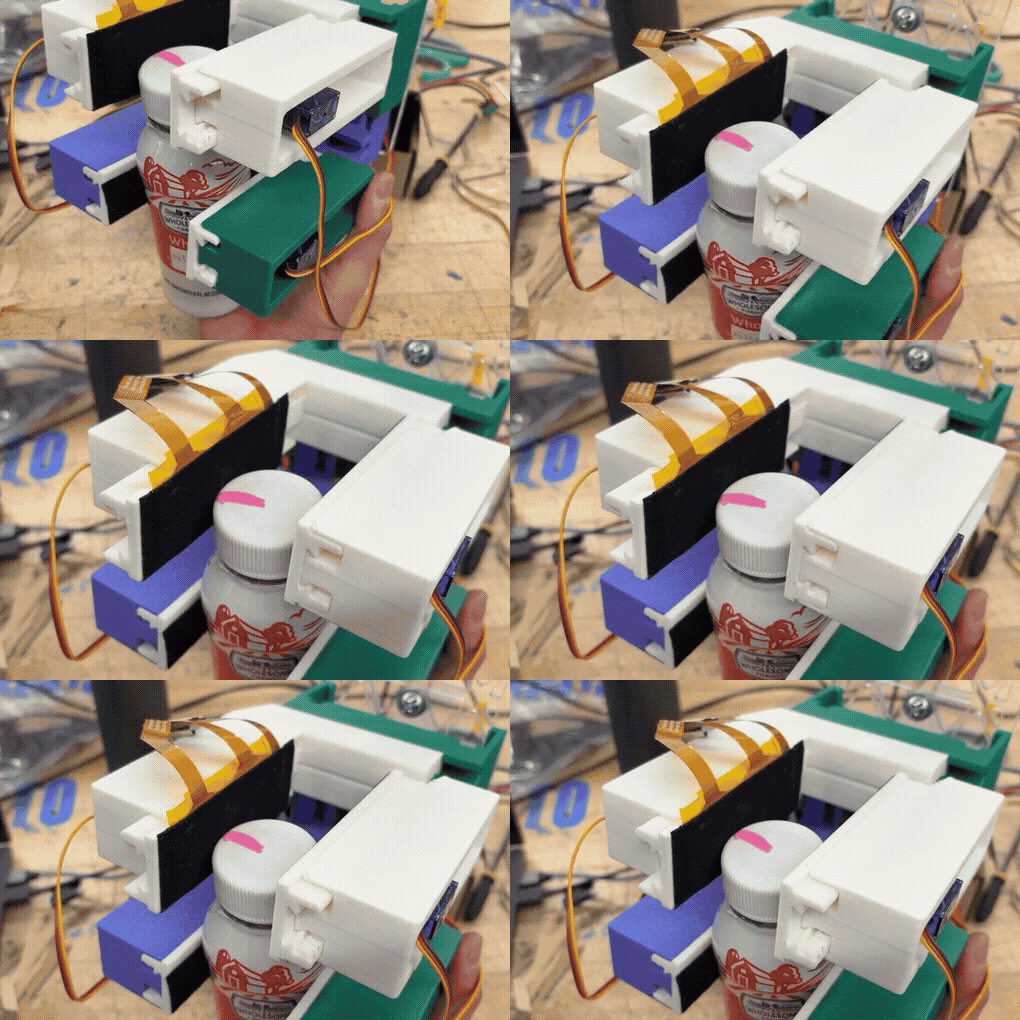
TEND Twisting Cap
-
 GIF
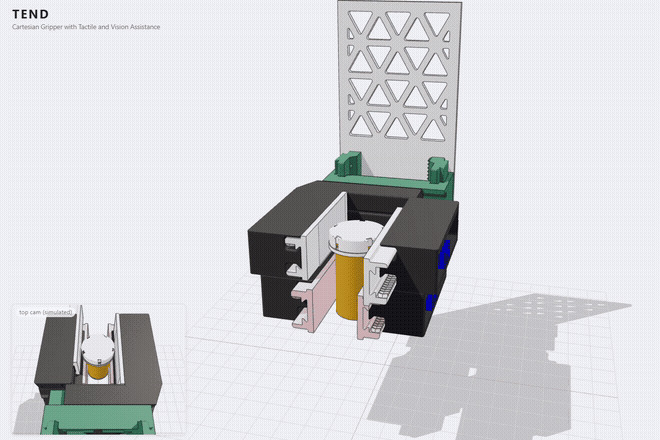
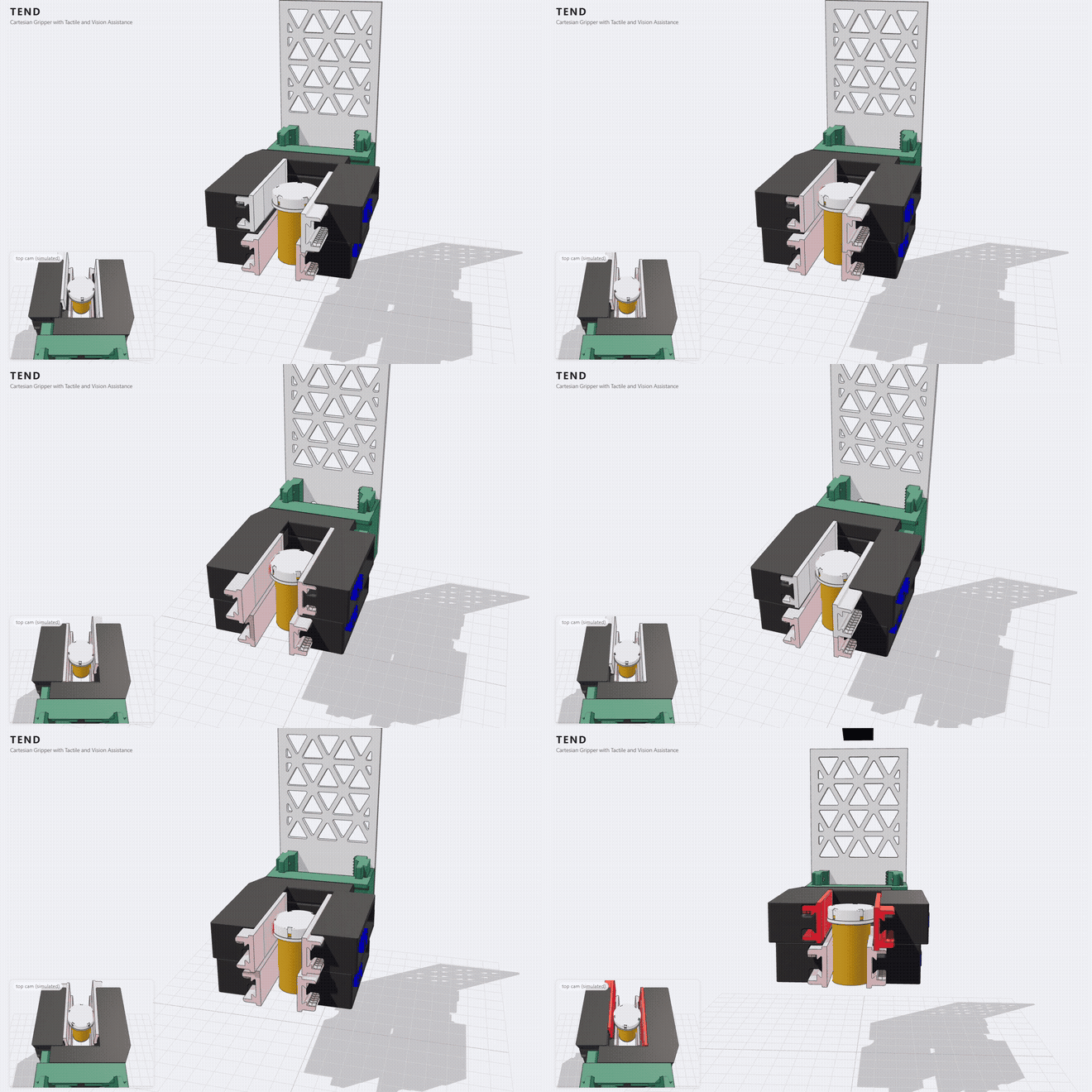
TEND Twist Simulation: Pill Bottle
-
 GIF
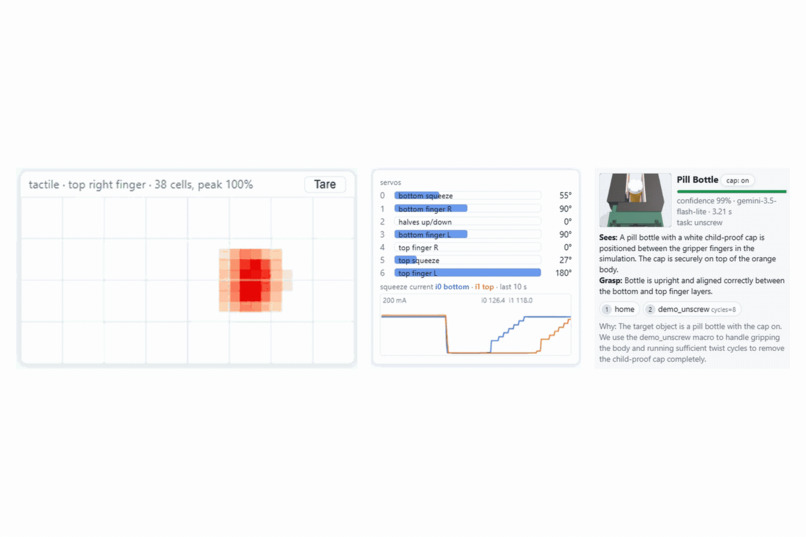
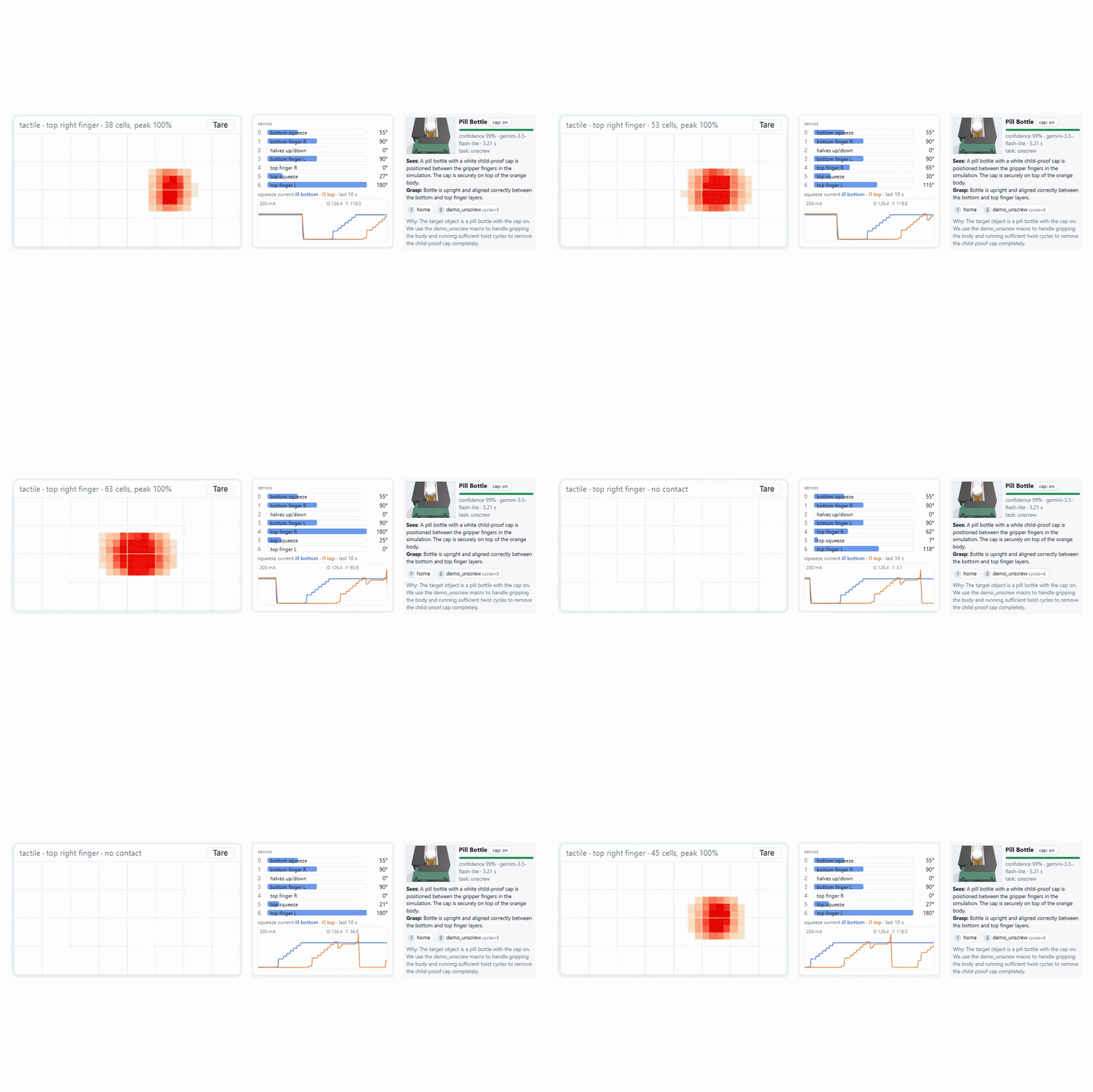
TEND Live Sensing: Tactile, Current & Gemini
-
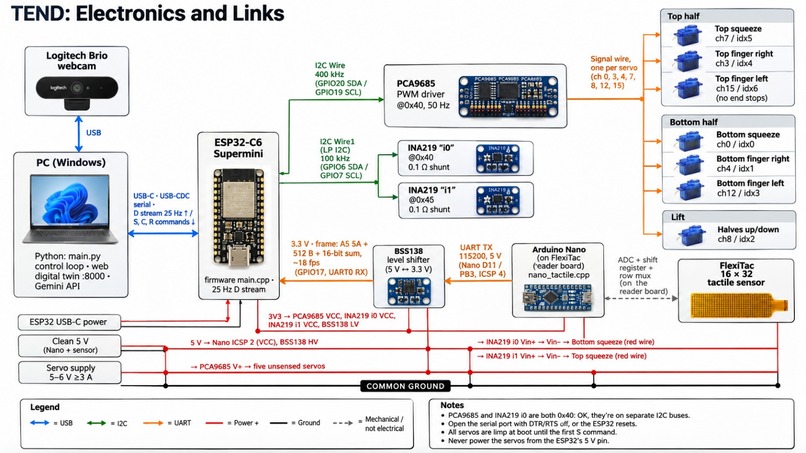
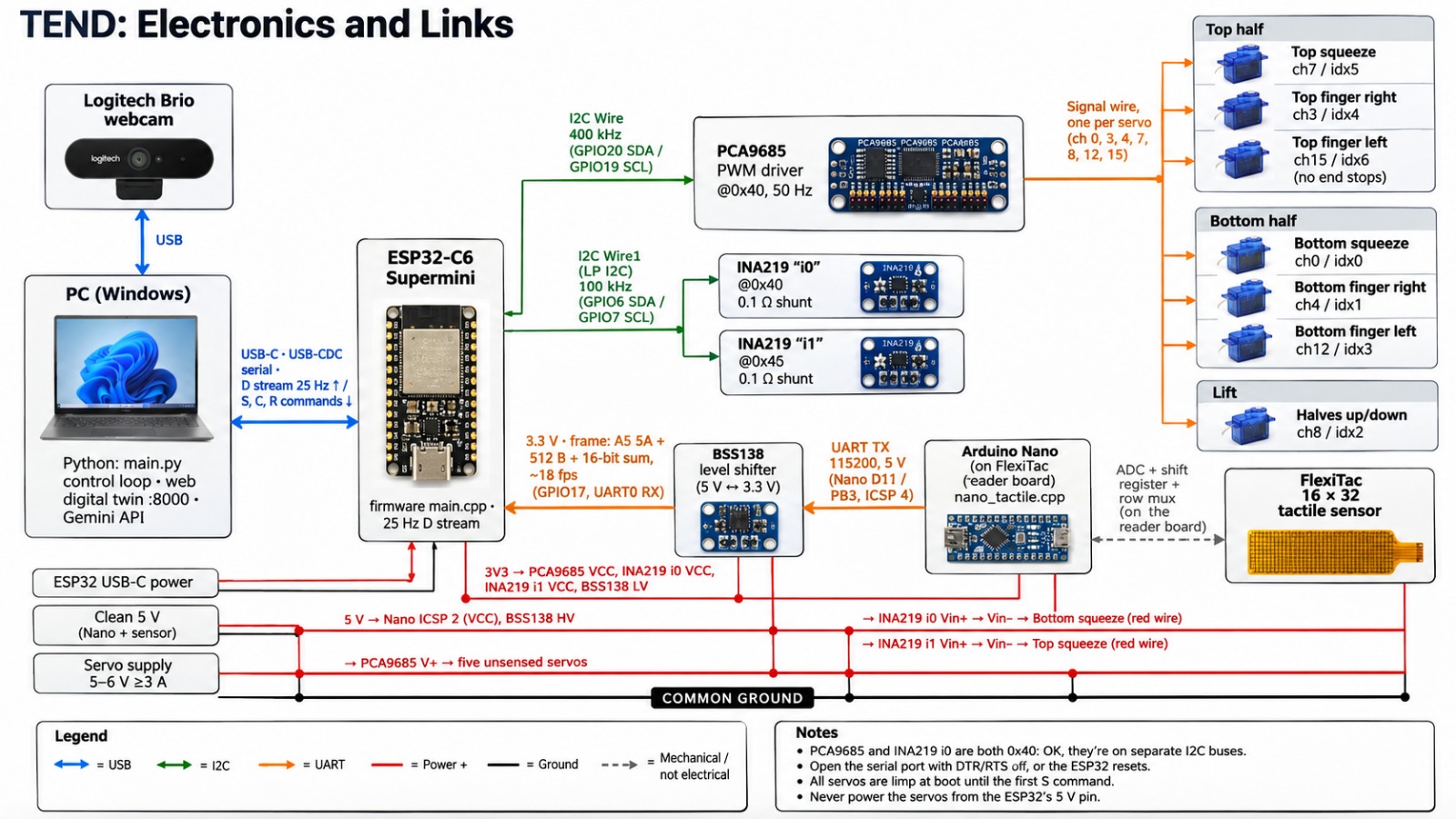
TEND Control Architecture
-
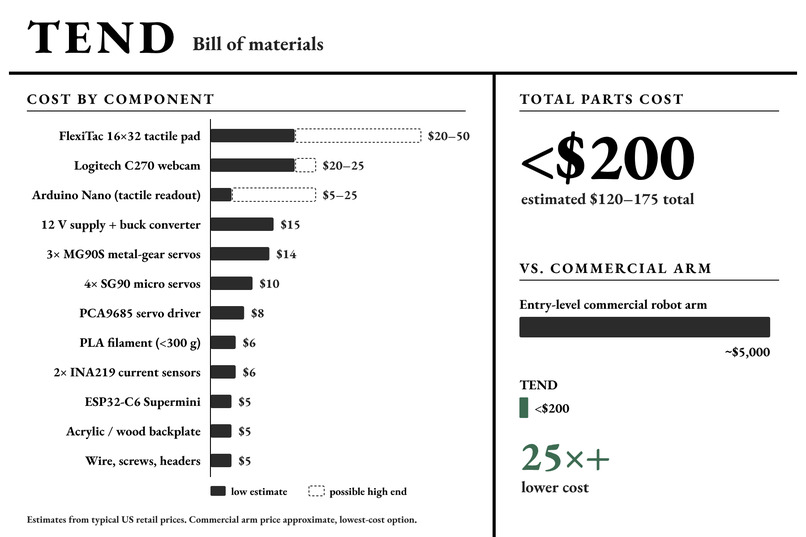
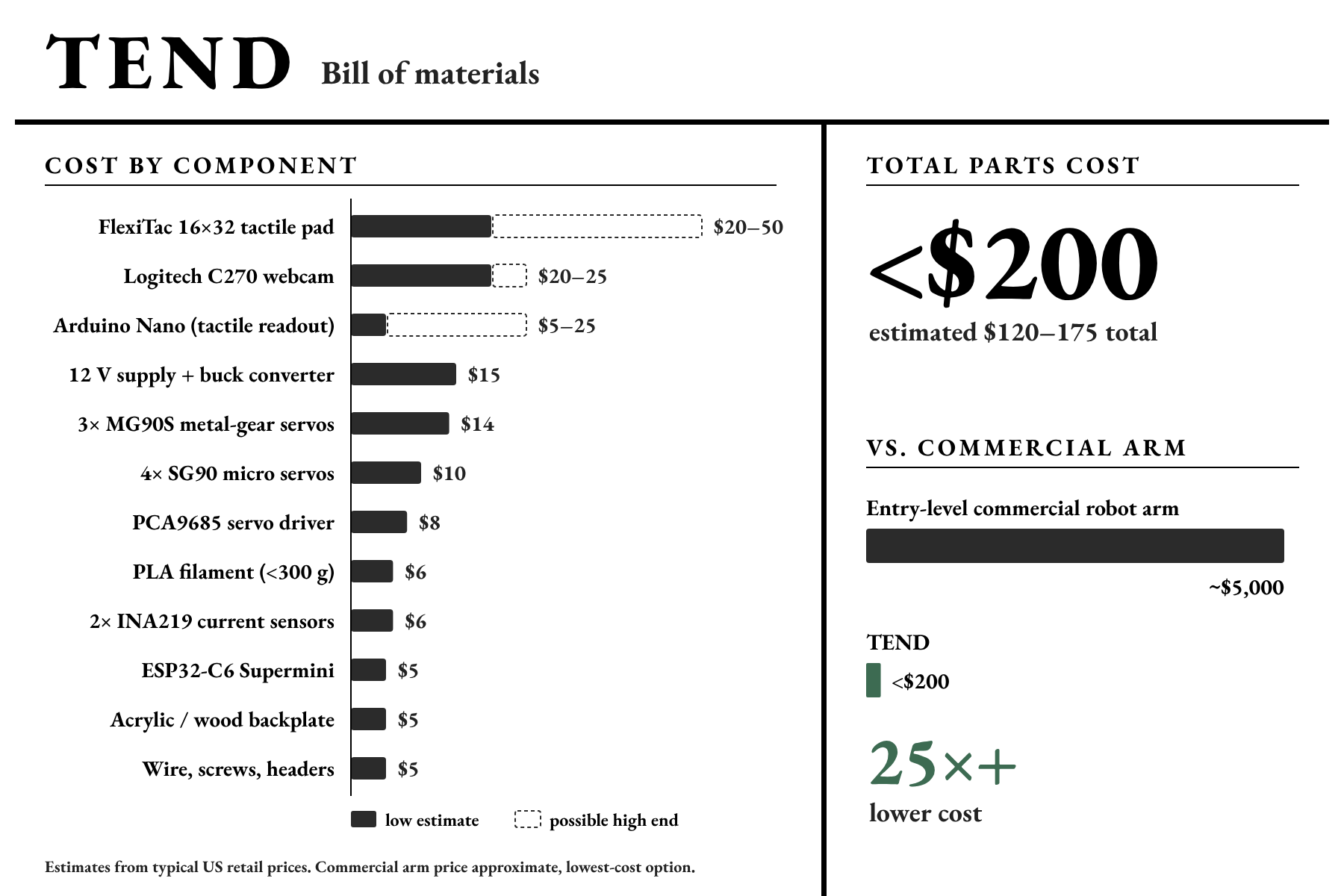
TEND Bill of Materials: Under $200
-
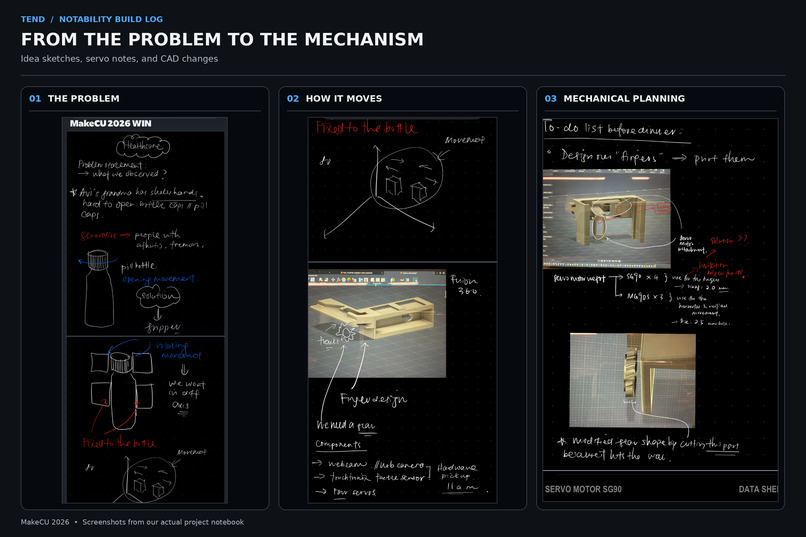
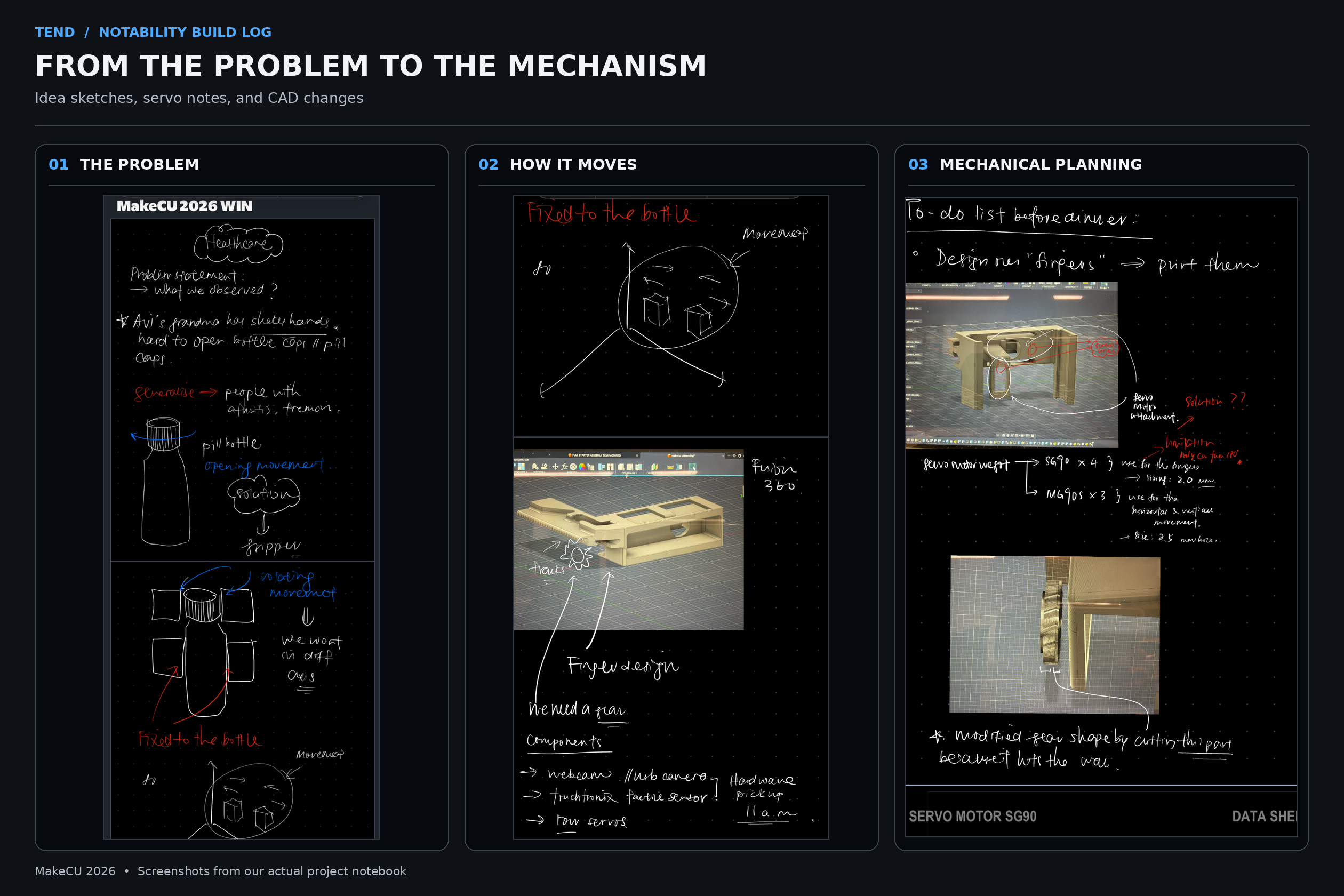
TEND Notability Build Log: Problem to Mechanism
-
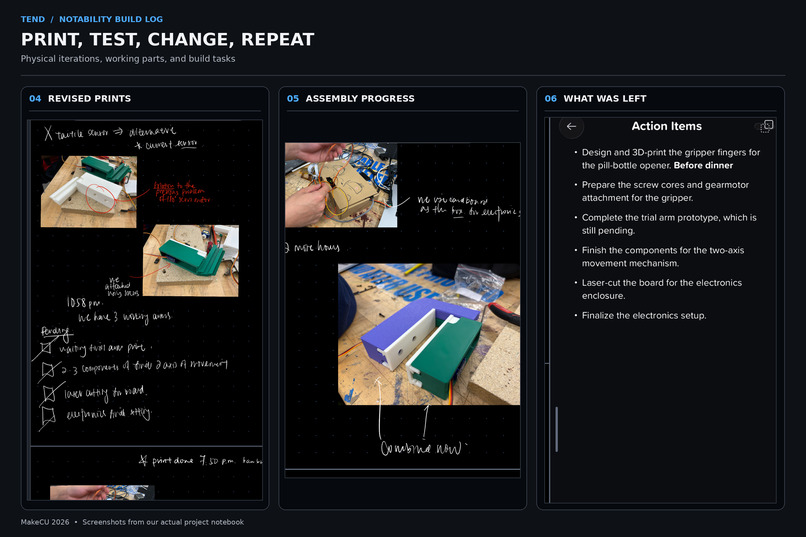
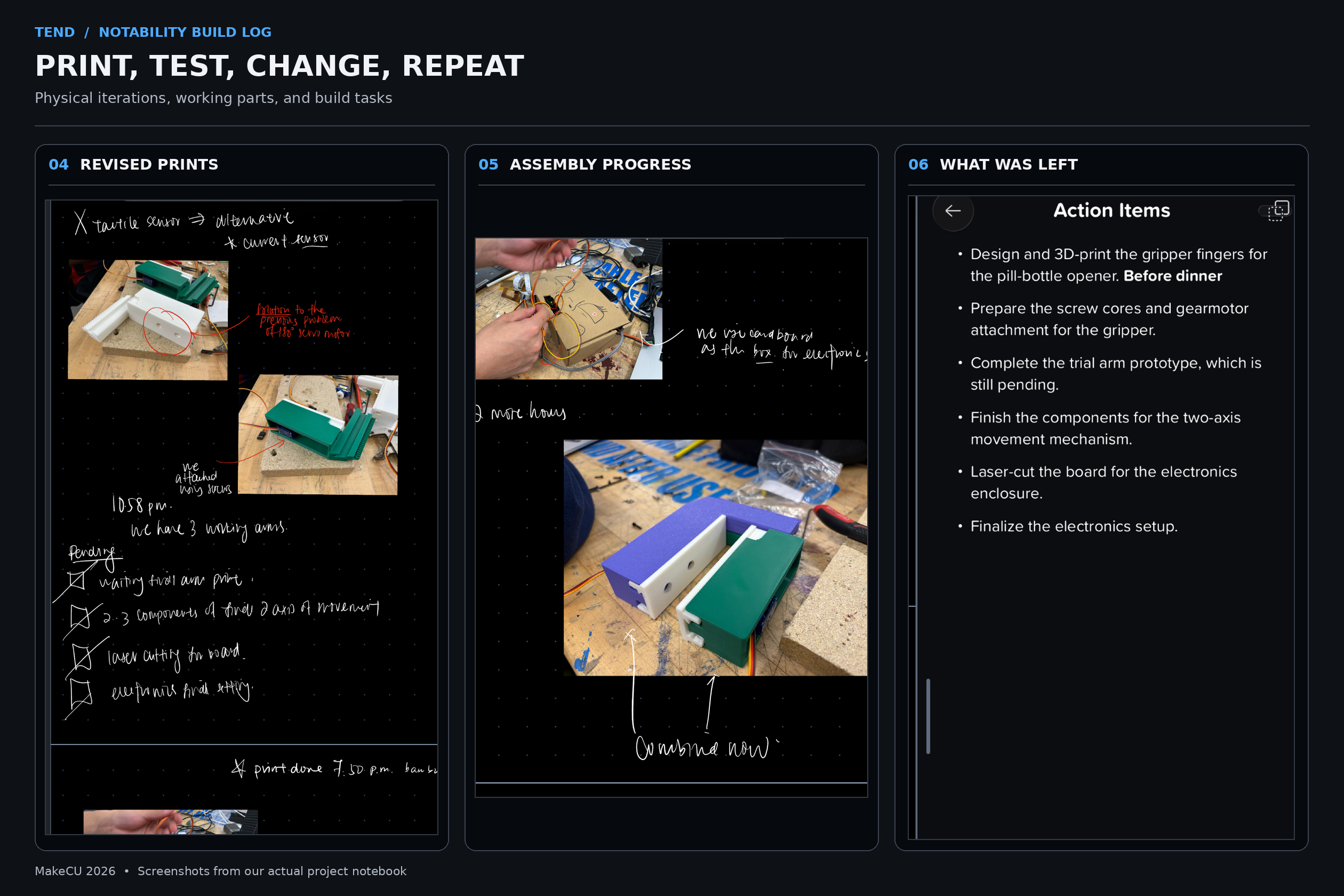
TEND Notability Build Log: Print, Test, Change, Repeat
-
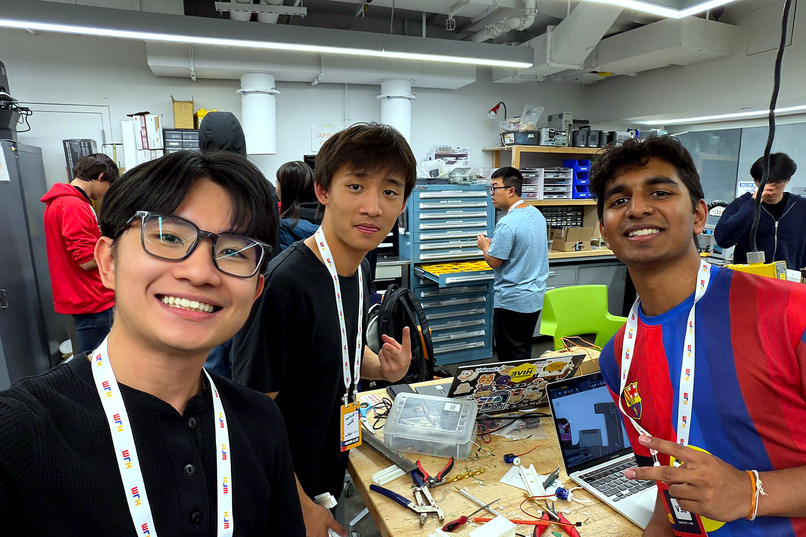
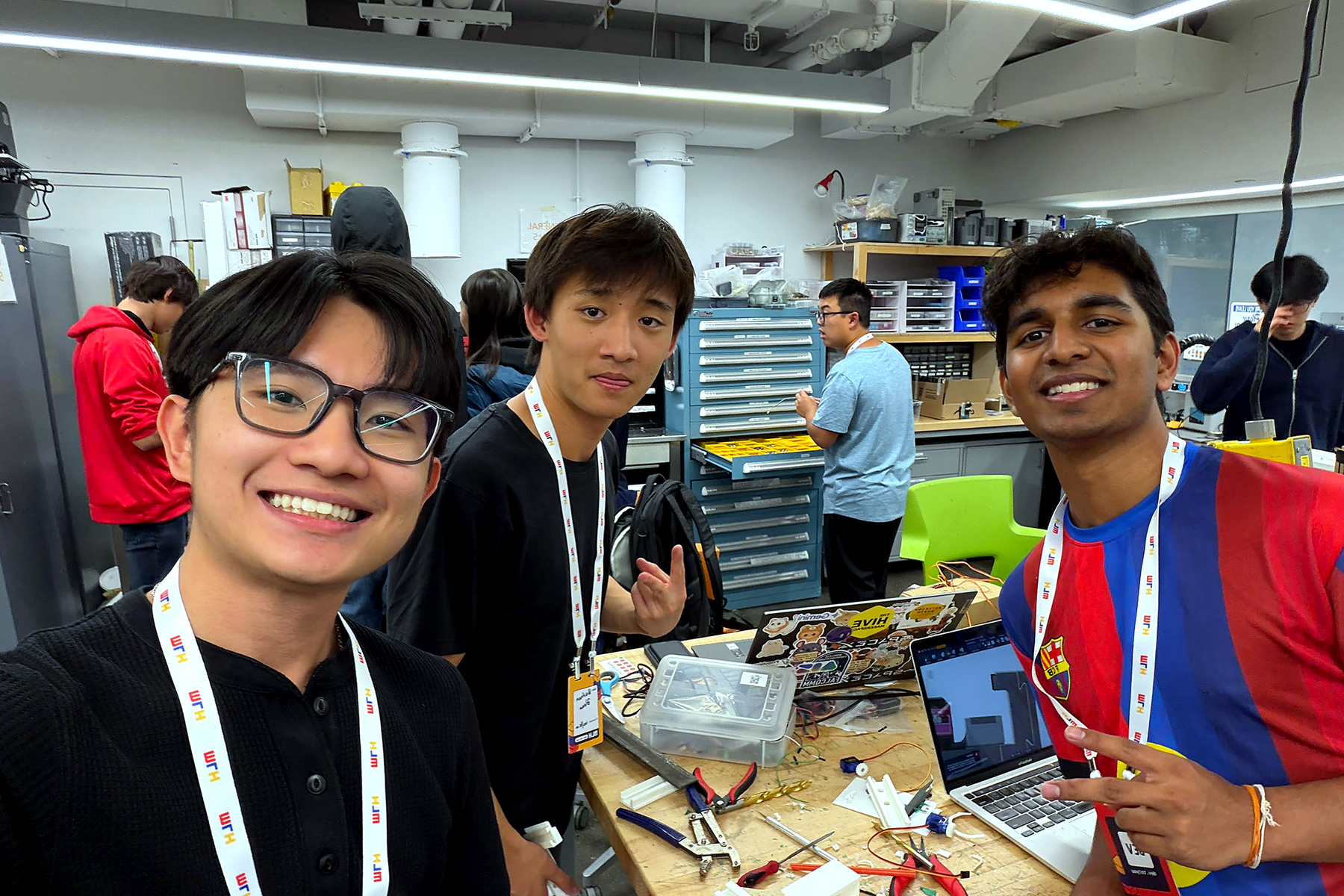
The team at MakeCU 2026. Thank you CURC!
Inspiration
If your hands stop working, what happens to your everyday life?
As Avyukt's grandparents grew older, he noticed their hands becoming less steady and their grip weaker. Opening a pill bottle or twisting off a cap became a daily struggle, often meaning waiting for someone else to help.
They are far from alone. More than 50 million US adults have arthritis, and 23 million are limited in everyday activities because of it. In one survey, 92% of people with rheumatic conditions struggled to open medicine packaging, and 22% struggled every day. Some assistive robotic arms cost around $35,000. We wanted Avyukt's grandparents, and everyone living with a weakening grip, to open what they need independently. That's why we created TEND.
What it does
You place an object, like a pill bottle, in TEND. The bottom two fingers hold it steady while the top two slide in opposite directions to twist, like rolling a pencil between your palms. Unlike conventional grippers that primarily open and close, TEND's independently moving fingers can push, pull, twist, squeeze, and hold. A 16 × 32 tactile sensor maps contact across the fingers, providing feedback on where and how hard they press. A Logitech camera, paired with Gemini, verifies when the task is done, while a live digital twin displays the hand's movements and sensor readings.
How we built it
We designed TEND in Fusion 360, building on a mechanism from Duke's General Robotics Lab. We 3D-printed 17 parts for the gripper and laser-cut the stand. Seven servos move the fingers through herringbone rack-and-pinion gears. An ESP32-C6 controls the servos, two current sensors monitor motor loading, and a 16 × 32 tactile array maps touch. A laptop runs the Python control loop that coordinates gripping and twisting at 25 Hz. It also uses Gemini to verify cap removal and Three.js to render the digital twin.
How we used Notability
Notability helped us ideate TEND before starting the design. We wanted to focus on healthcare, and the problem we kept coming back to was our grandparents struggling to open bottle caps. We realized that as they grew older, even handling everyday items could become difficult. As we started thinking of solutions, we sketched diagrams in Notability, breaking the twisting motion into the axes our servos would need to move. We also imported and annotated servo and gear PDFs to check measurements for our CAD. Throughout the hackathon, we used Smart Notes to quickly summarize our ideas when sharing them with mentors, Action Items to keep track of our tasks and progress, and photos to document each iteration until the final prototype.
Challenges we ran into
The hardest part was getting seven servos and their gears to work together. Our first prints needed several rounds of sanding and reprinting before everything slid smoothly. The servos’ 180° range meant we had to redesign the joints for maximum finger travel. Additionally, we added calibration and an automatic cutoff to prevent overloading. The micro servos we had access to don’t have consistent torque, so we validated the full routine in simulation, with every sensor streaming live.
Accomplishments that we're proud of
In one weekend, we went from CAD models to a functional robotic hand with:
- Seven actuated motions
- Live current and grip sensing
- A tactile sensor streaming at about 18 frames per second
- Camera-based cap-removal verification
- A digital twin mirroring all seven motions in real time
Our full twisting routine runs end-to-end in about 6.5 seconds per cycle in simulation. Built from hobby components for under $200 in parts, TEND costs more than 25× less than the cheapest commercial robot arm, at around $5,000. We’re proud of turning a sketched concept into a sensor-integrated prototype in one weekend.
What we learned
Making a servo move was easy. Making seven of them work together was much harder. We learned to plan around torque from the start, since a design is only as capable as its smallest motor. We also learned that servo current provides an indirect estimate of motor loading, complementing tactile sensing. Most importantly, we learned how much independence depends on small things: one bottle cap can decide whether someone takes their medication on their own or waits for help.
What's next for TEND
Our next step is upgrading to servos with more range and torque so TEND can complete the full twisting sequence physically, then testing it in the real world with Avyukt's grandparents and others living with arthritis and disabilities that affect their grip. Based on their feedback, we'll make TEND simpler and easier to implement. Beyond the home, we see its underlying manipulation technology being adapted for care facilities, labs, and manufacturing. Ultimately, we want TEND to make everyday independence more accessible.
Built With
- 3d-printing
- arduino-nano
- autodesk-fusion-360
- c++
- cad
- computer-vision
- digital-twin
- embedded-systems
- esp32-c6
- flexitac
- gemini-api
- i2c
- ina219
- laser-cutting
- logitech-webcam
- mg90s-servos
- notability
- pca9685
- platformio
- pwm
- python
- sg90-micro-servos
- tactile-sensing
- three.js
- uart


