-
-
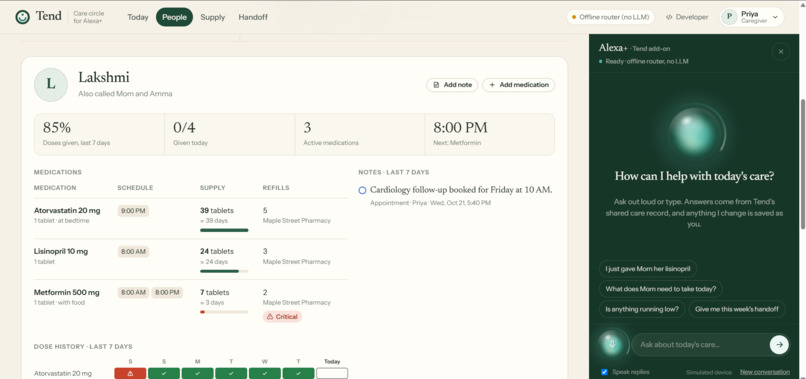
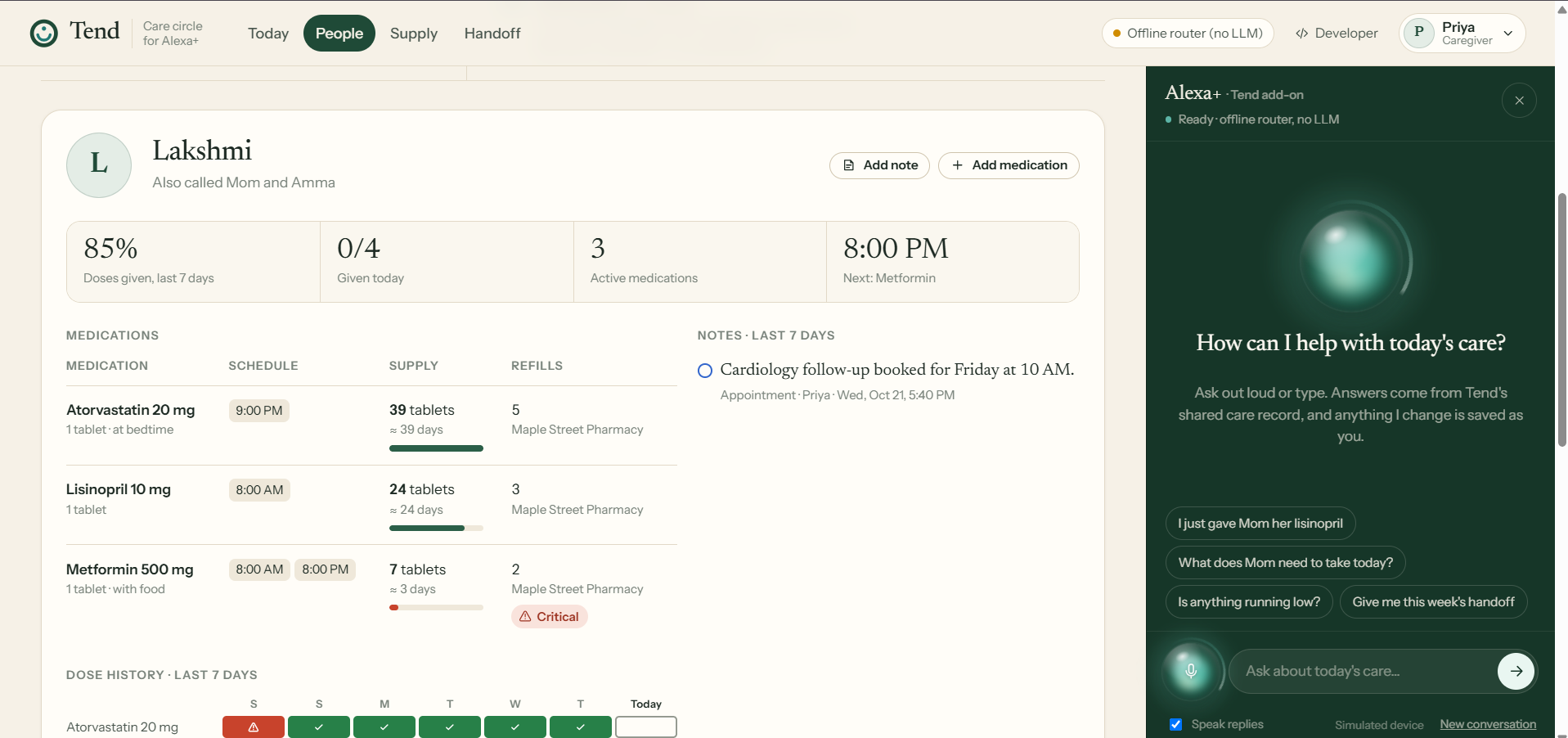
A clear view of each family member’s medications, supply levels, and recent care notes.
-
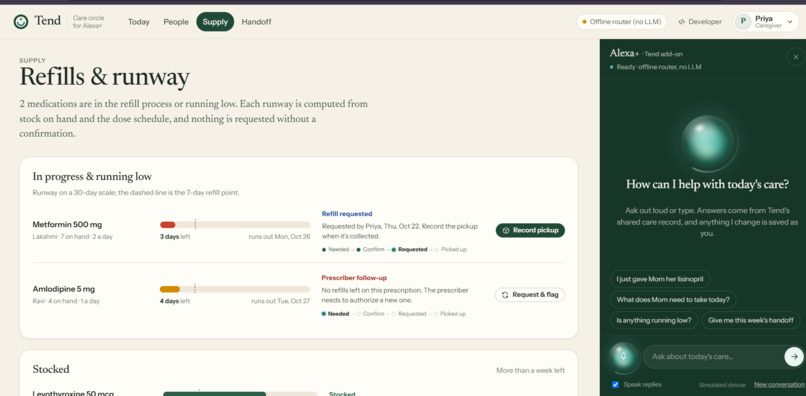
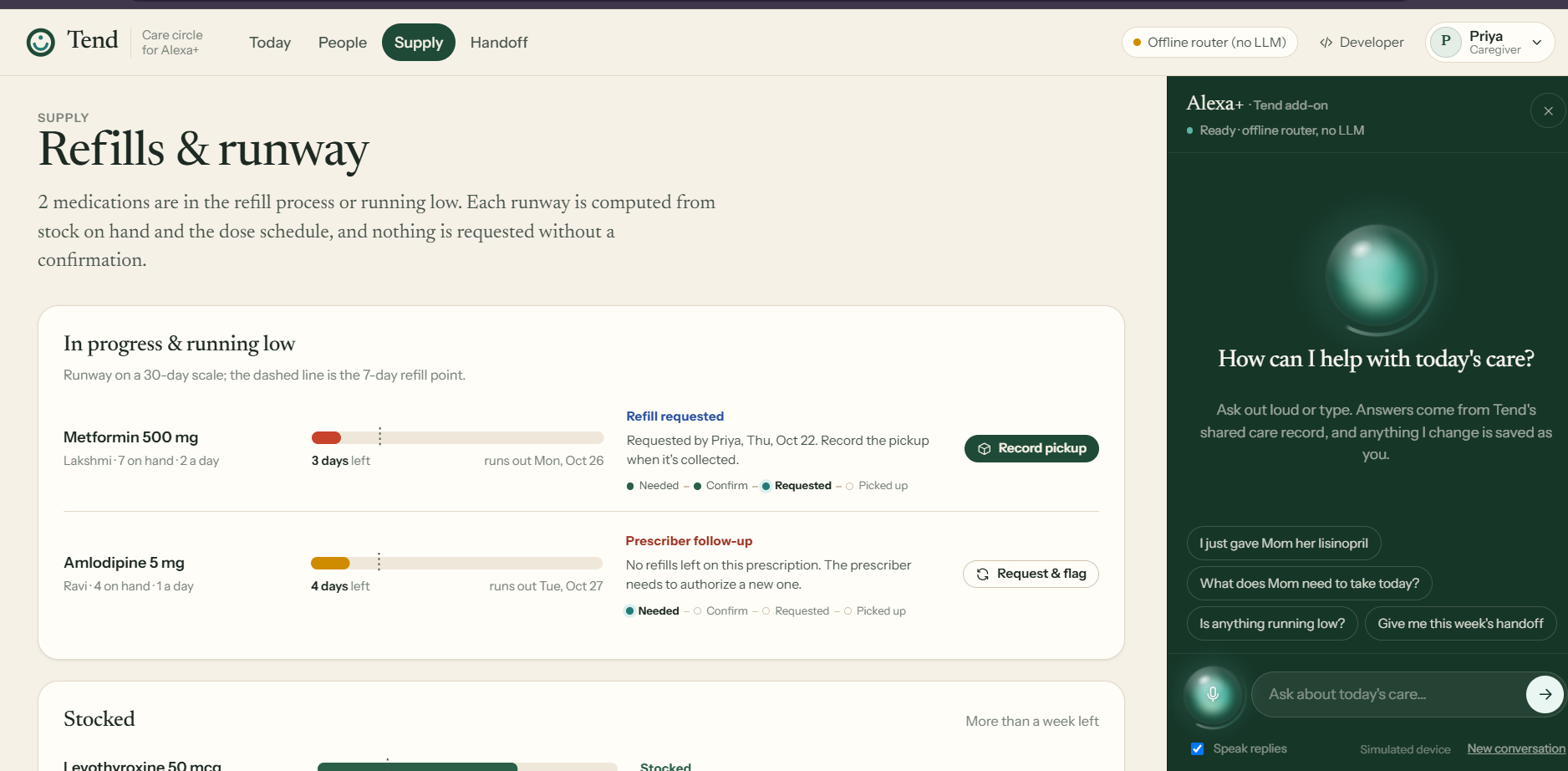
Refill tracking that highlights low supplies, upcoming runouts, and pending pickup actions.
-
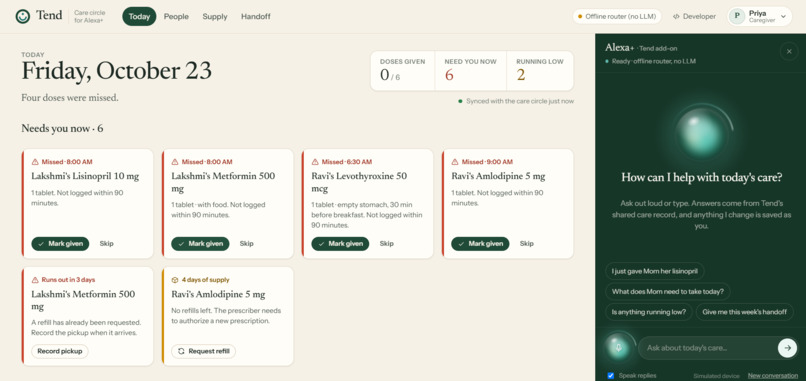
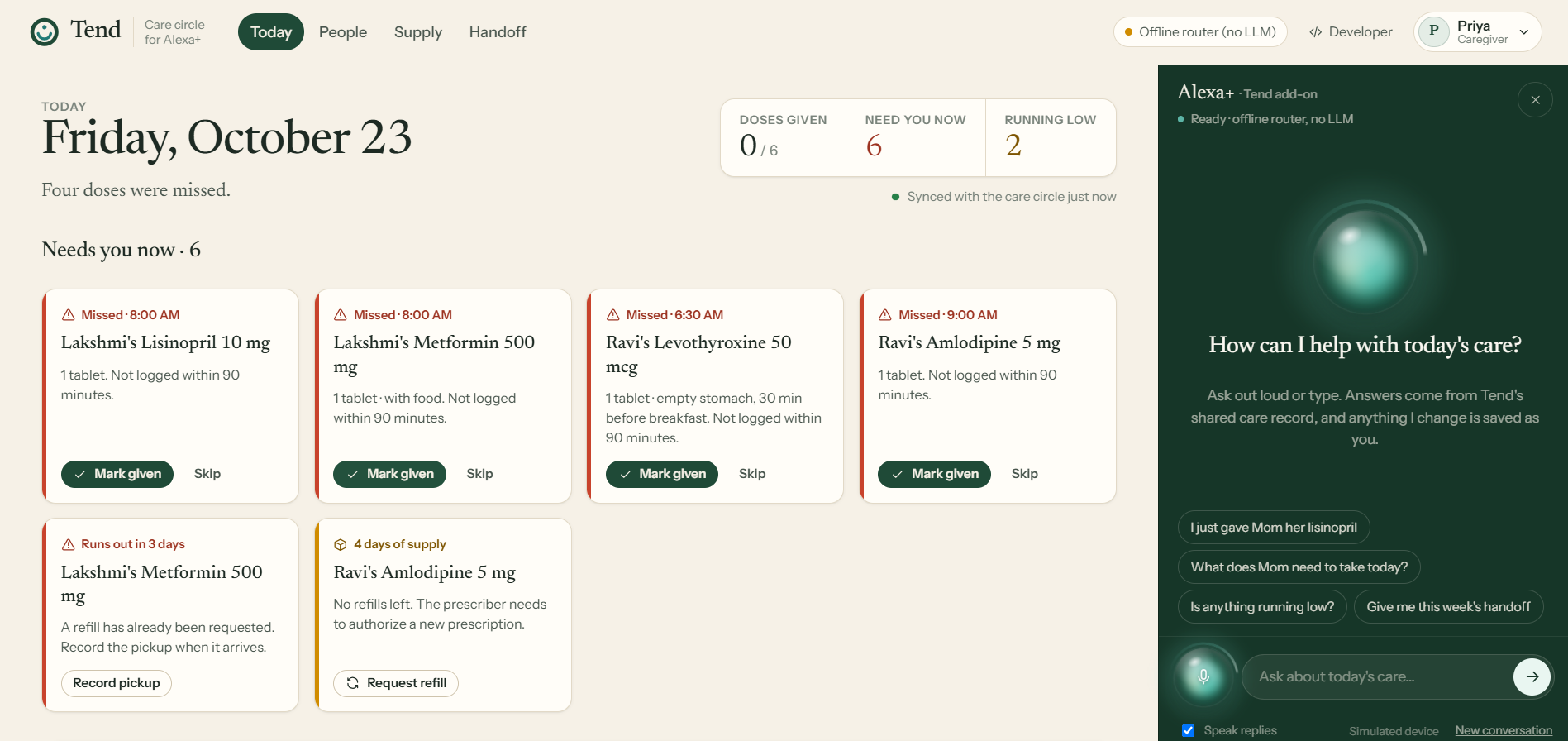
A unified daily view of medication schedules, missed doses, and actions that need attention.
-
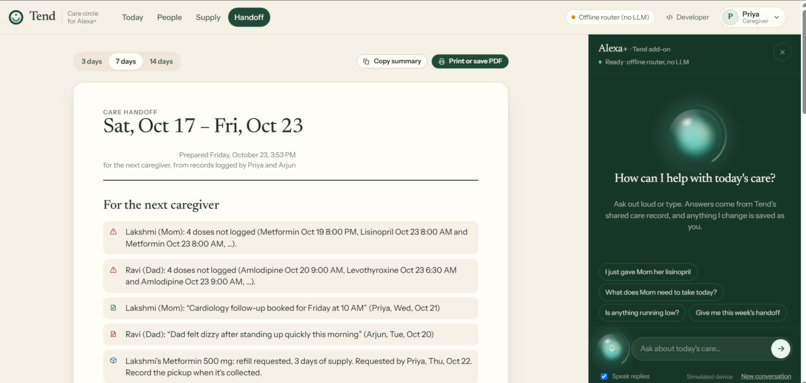
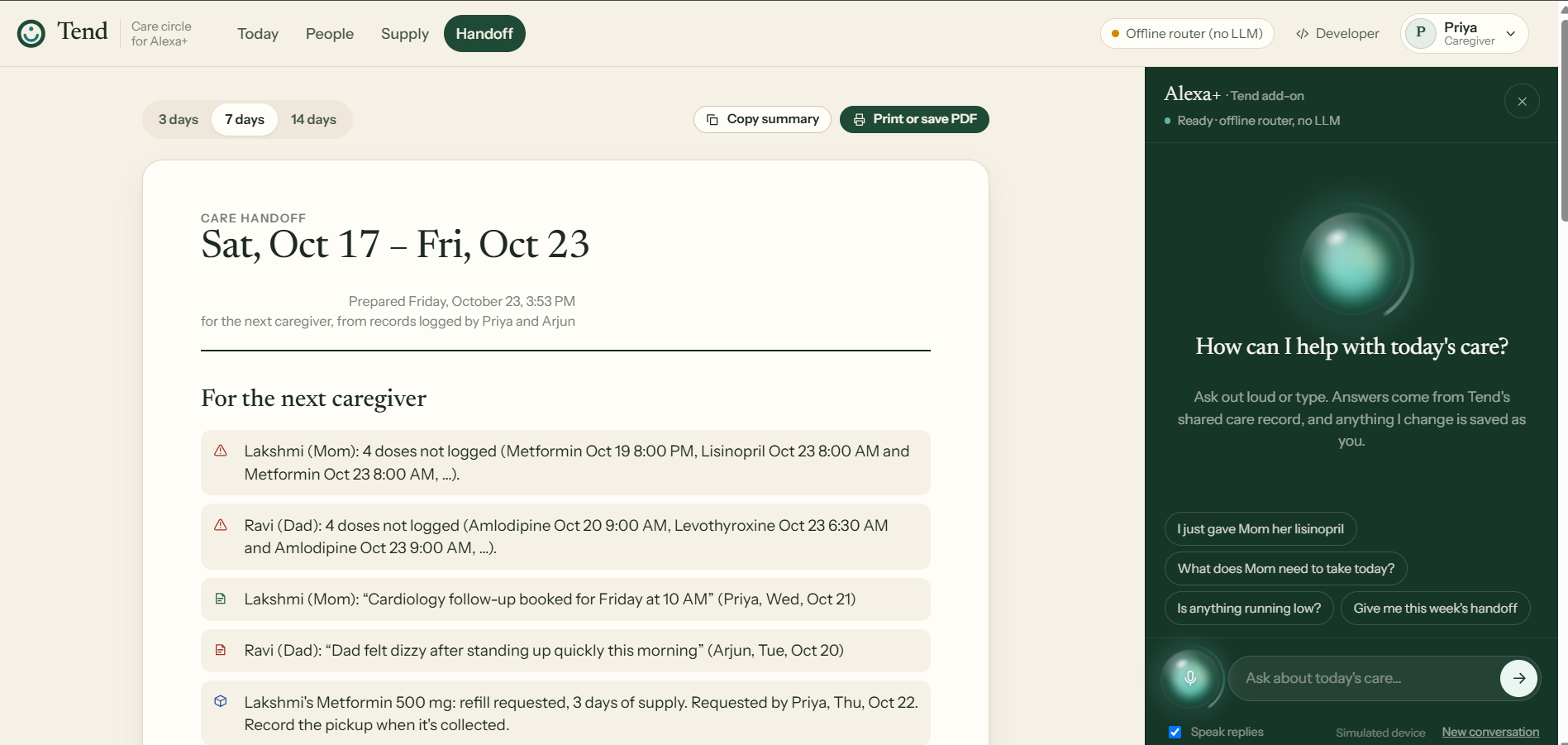
A structured care handoff that keeps the next caregiver informed about missed doses, observations, and refill status.
Inspiration
Caregiving often depends on scattered conversations, memory, and coordination between family members. A missed update can create confusion about medication routines, while unclear handoffs leave the next caregiver without the full picture.
Tend-Care was built around a simple idea: care coordination should be easier, safer, and more human.
What it does
Tend-Care is a conversational care-coordination assistant designed for an Alexa+-style experience. It helps families:
- Track medications: Review scheduled doses and record taken or skipped doses.
- Reduce duplicate logging: Prevent multiple caregivers from accidentally recording the same dose.
- Anticipate refills: Estimate medication runout and surface refill needs.
- Coordinate caregivers: Support role-specific access and maintain structured observations and handoff reports.
- Confirm sensitive actions: Separate a refill request from its final confirmation.
How we built it
Tend-Care uses TypeScript and Node.js, the Model Context Protocol (MCP), a Streamable HTTP server, and persistent SQLite storage. Its care tools are exposed through MCP, while a conversational interface helps users interact with those tools.
The project also includes an Amazon Bedrock Converse integration designed for model-driven tool use, with optional Bedrock Guardrails support. Live Bedrock inference and Guardrails have not yet been verified because AWS account verification is still pending. The current offline conversational experience allows the core workflows to be demonstrated without relying on a live model connection.
Challenges and lessons learned
A key challenge was making medication logging and caregiver coordination reliable rather than merely conversational. We focused on explicit confirmations, duplicate-dose protection, caregiver-specific permissions, input validation, and clear error handling.
Testing also taught us to distinguish between a feature that passes automated tests and a cloud integration that has been verified against the real service. The project’s automated suite currently passes all 147 tests, including tests for the offline workflows and mocked Bedrock integration.
What's next
The next step is to verify live Amazon Bedrock access, validate the integration in an AWS-enabled environment, and continue improving the conversational caregiver experience.
Tend-Care aims to make family care more coordinated, reduce avoidable confusion, and help caregivers spend less energy managing information and more time supporting the people who matter.## Inspiration
What it does
How we built it
Challenges we ran into
Accomplishments that we're proud of
What we learned
What's next for Tend-Care
Built With
- amazon-bedrock
- amazon-web-services
- express.js
- model-context-protocol
- node.js
- sqlite
- typescript

Log in or sign up for Devpost to join the conversation.