-
-
-
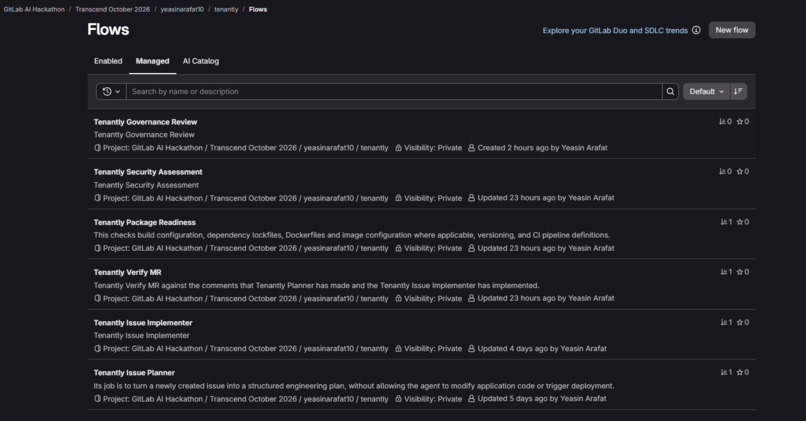
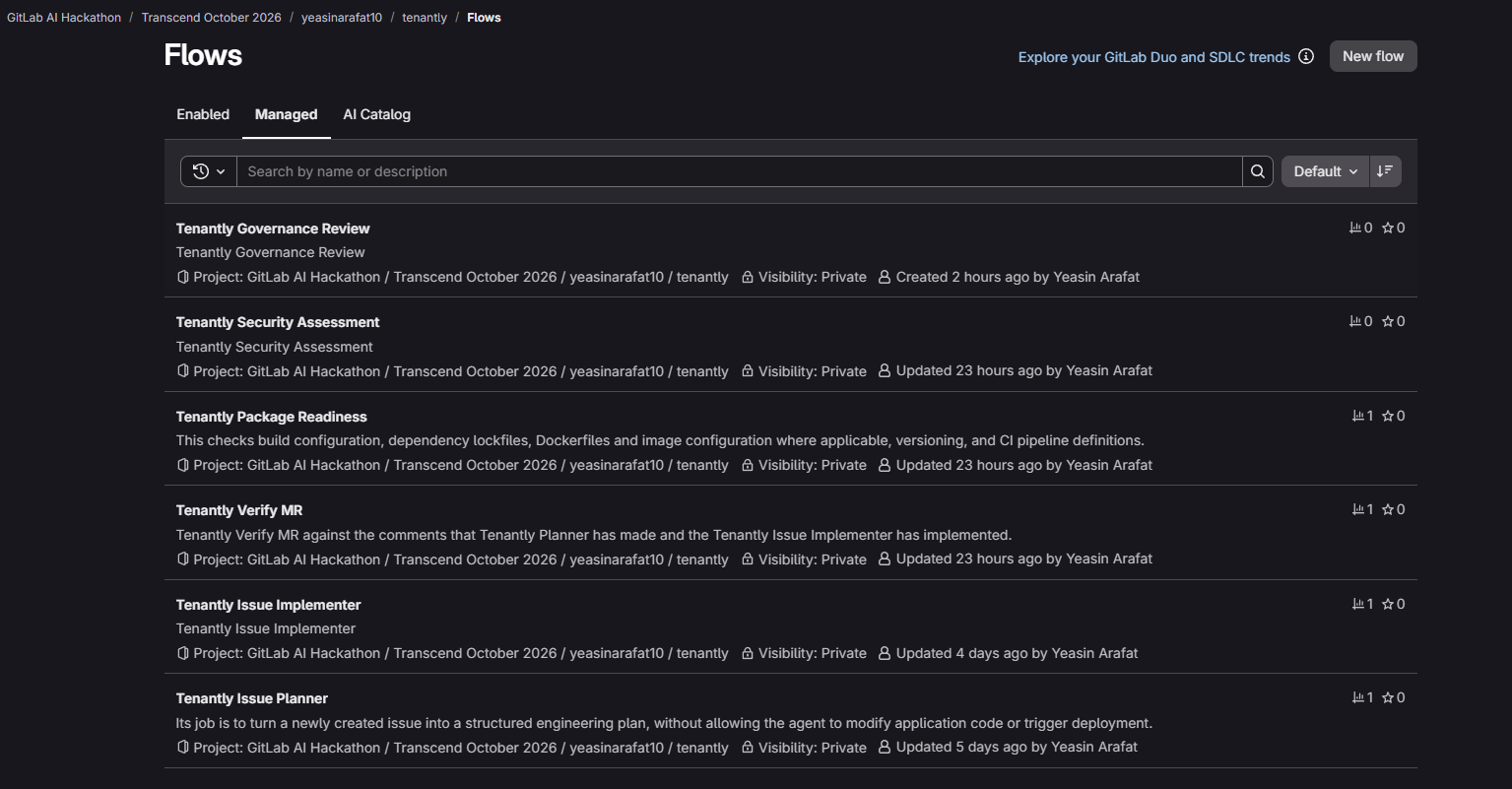
Flows
-
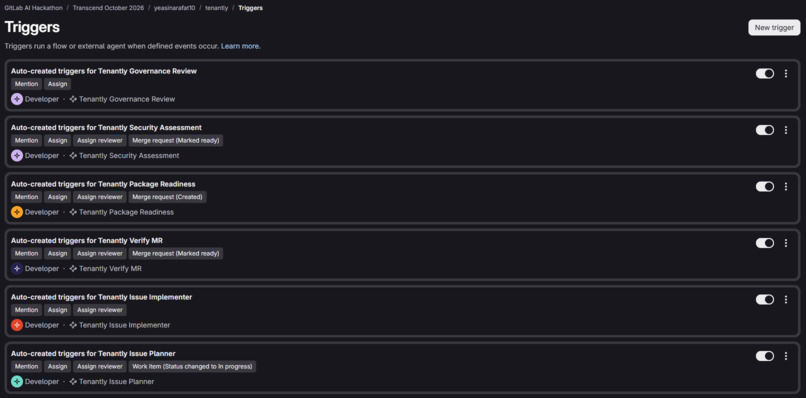
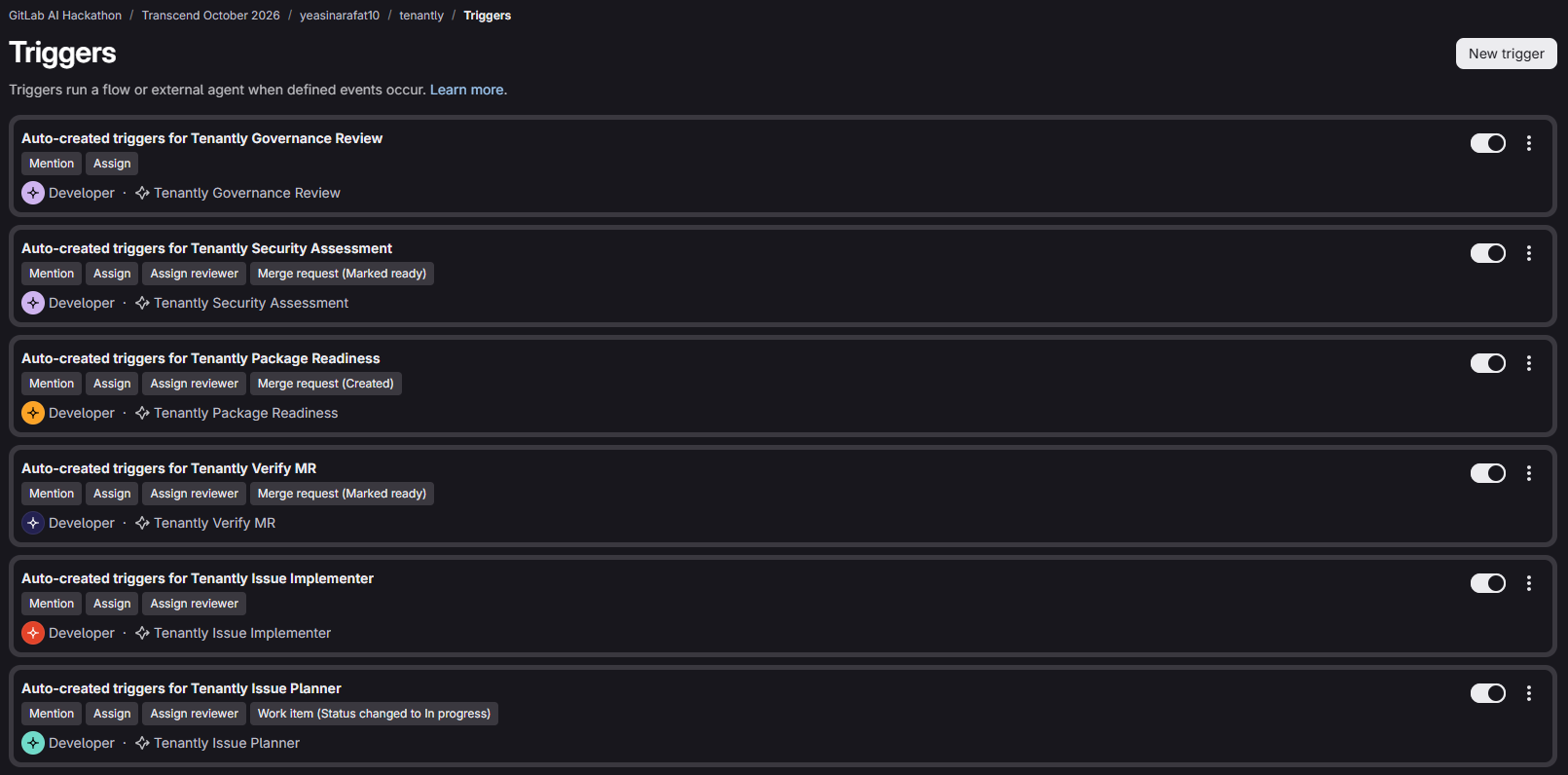
Triggers
-
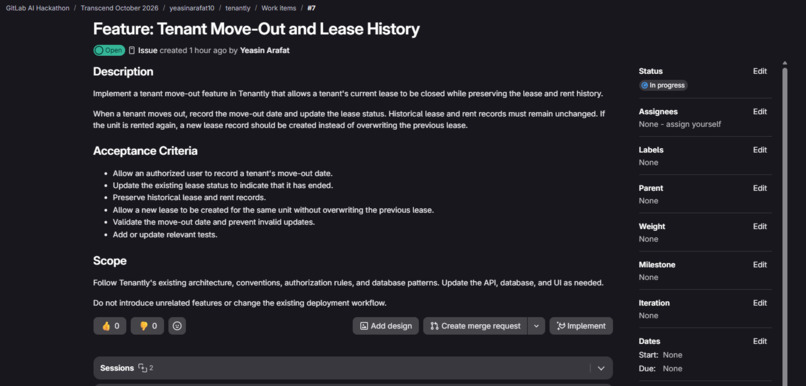
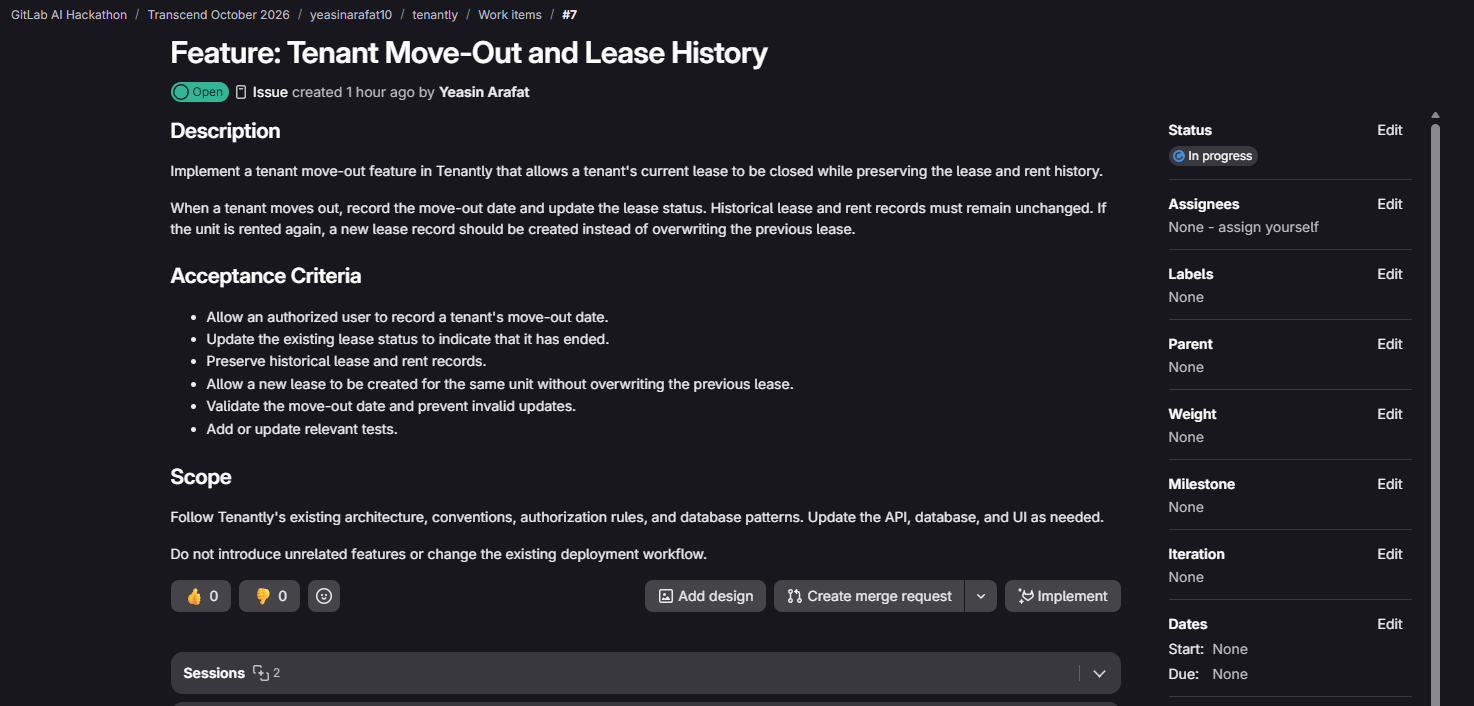
Issue Created Manullay
-
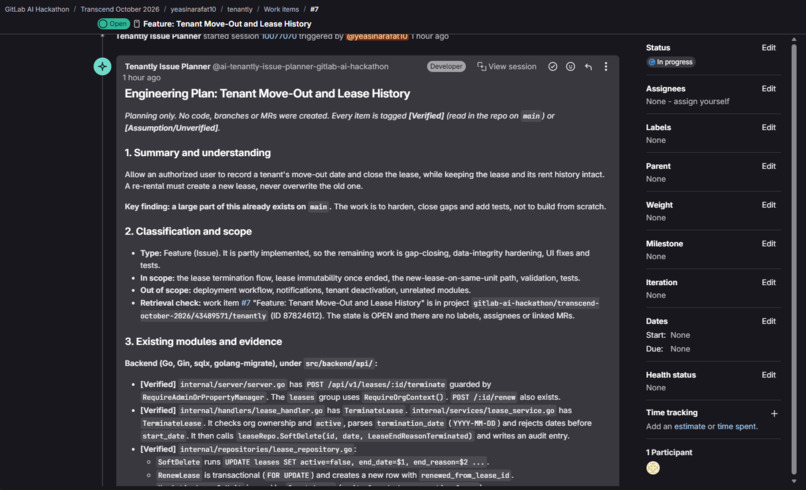
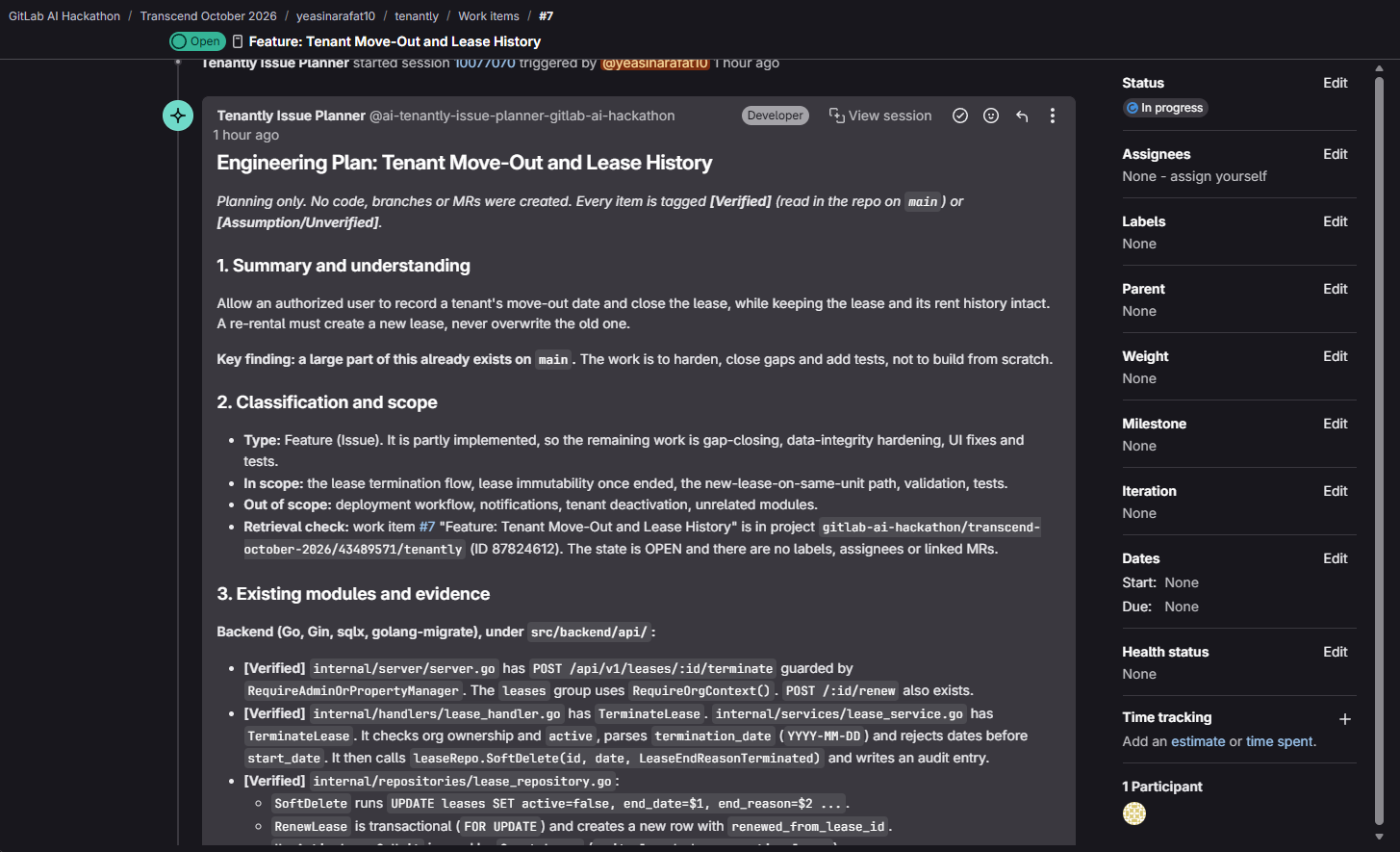
Issue Planner Flow Report
-
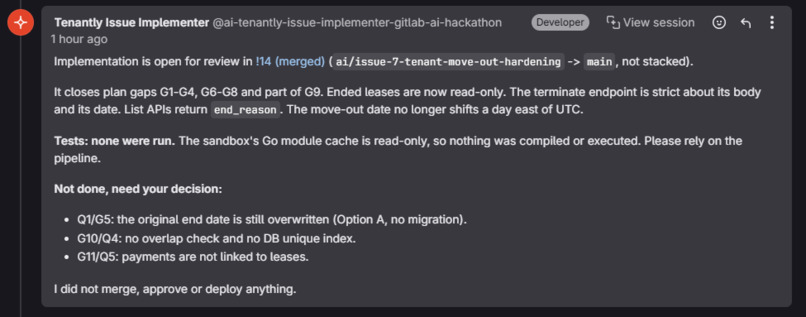
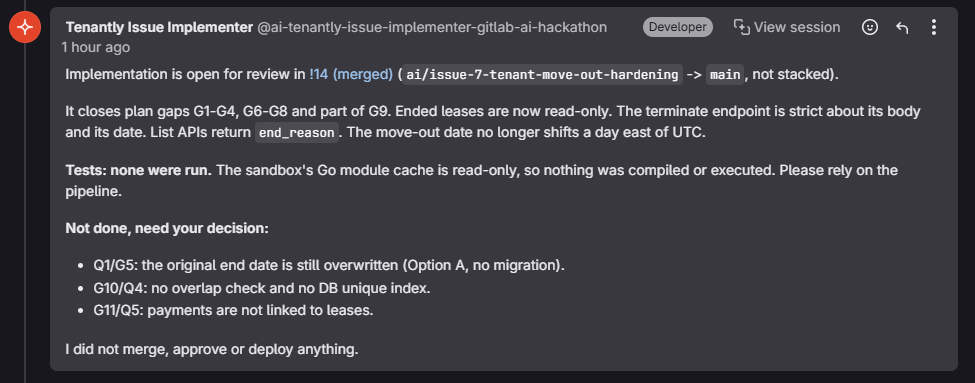
Issue Implementer Report
-
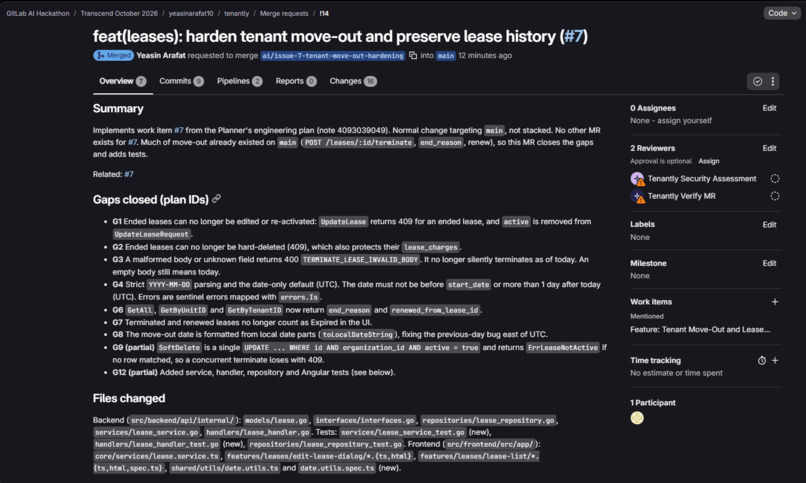
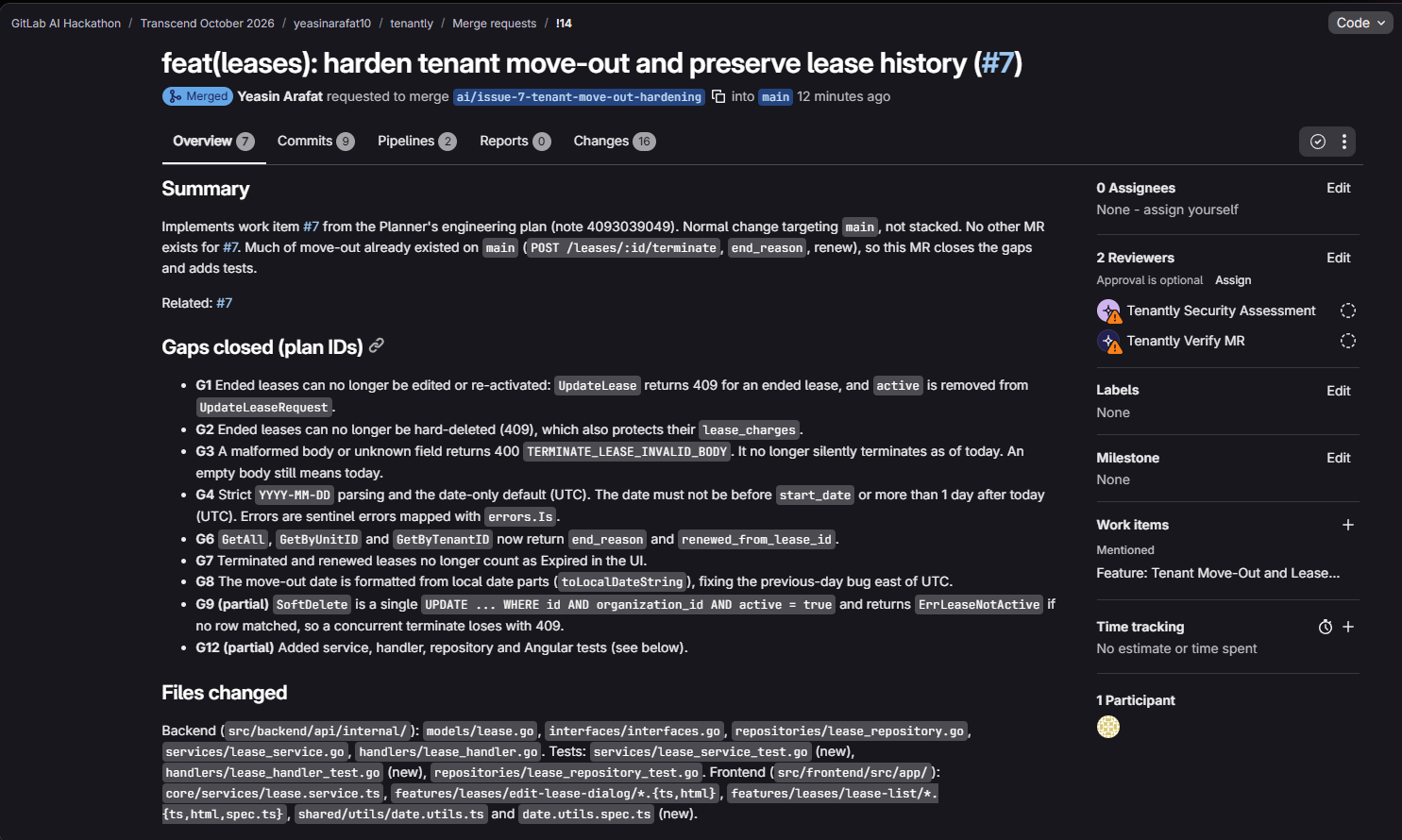
Issue Implementer Create MR
-
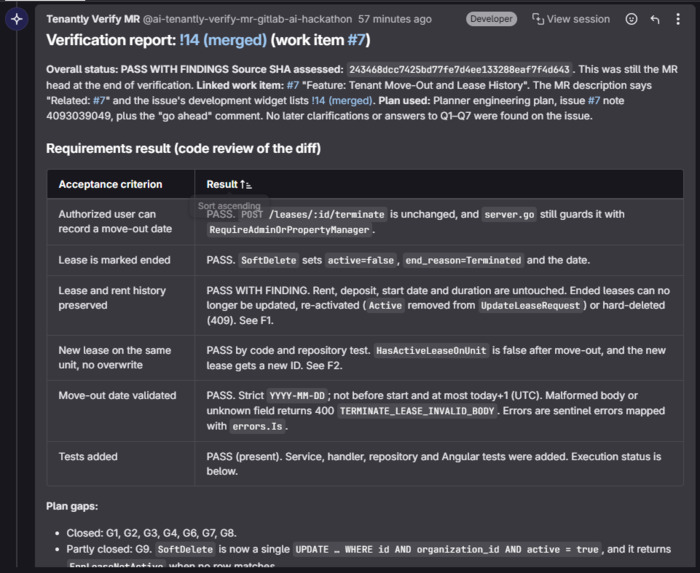
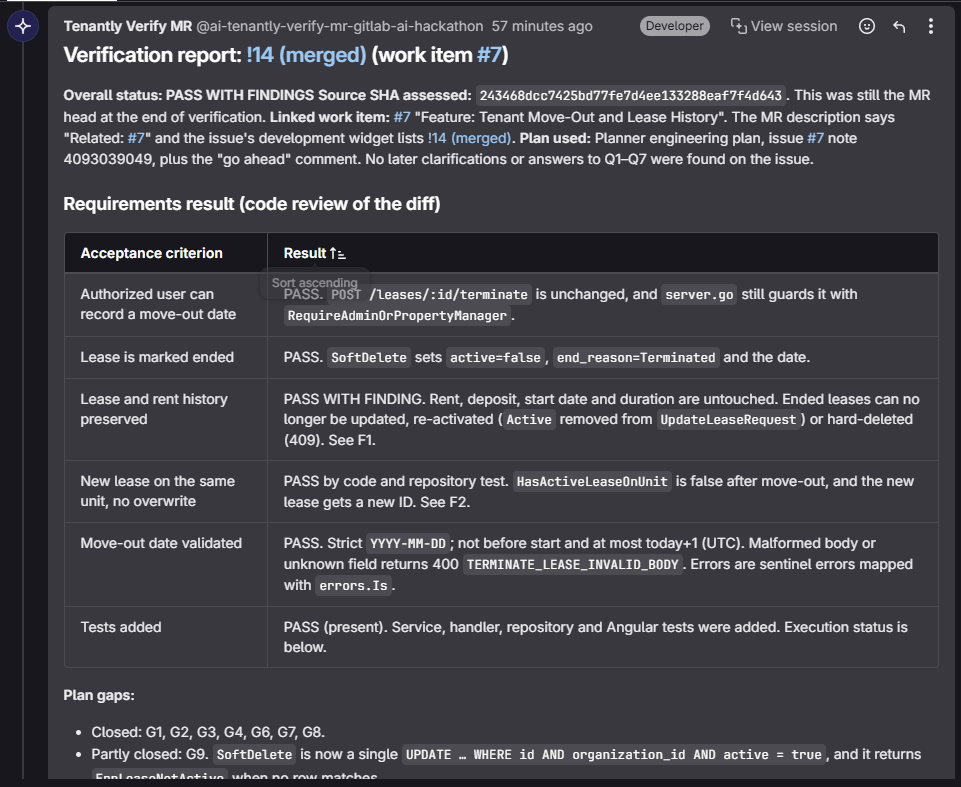
MR Verifier Flow Report
-
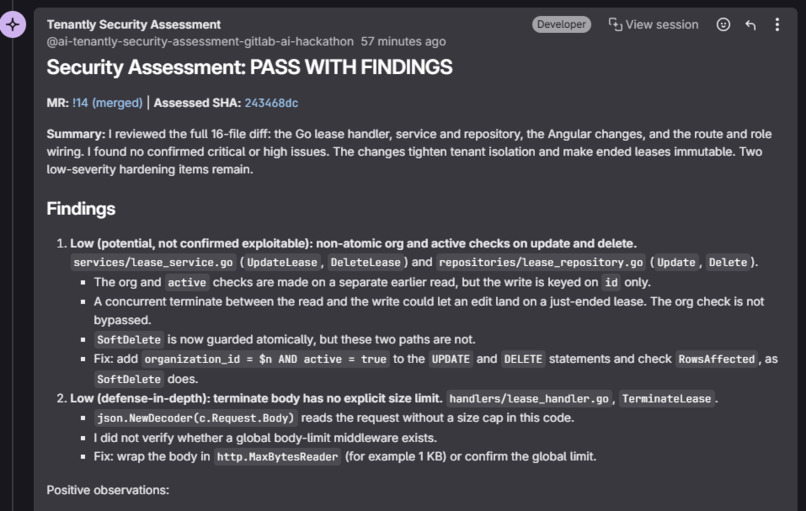
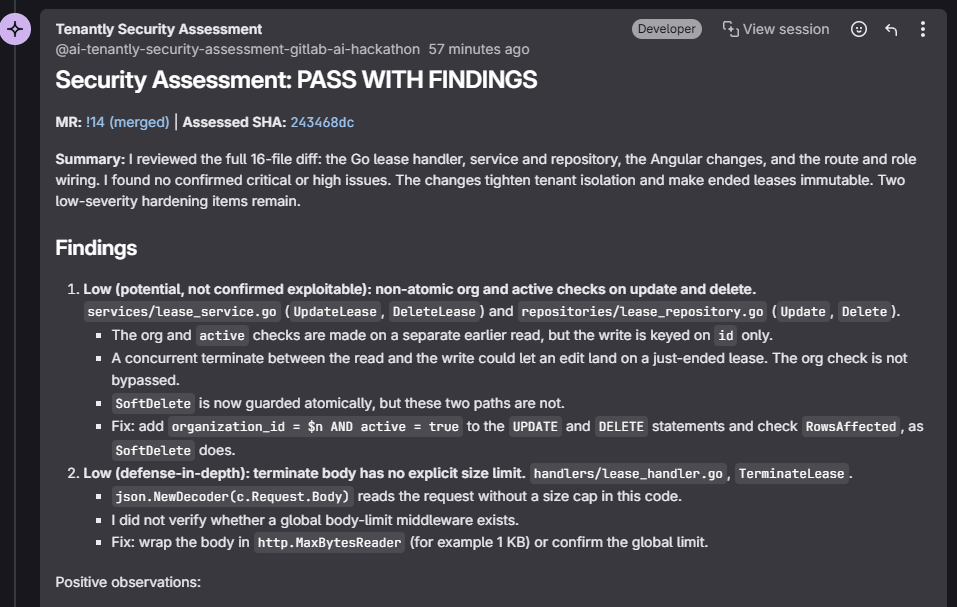
Security Assessment Flow Report
-
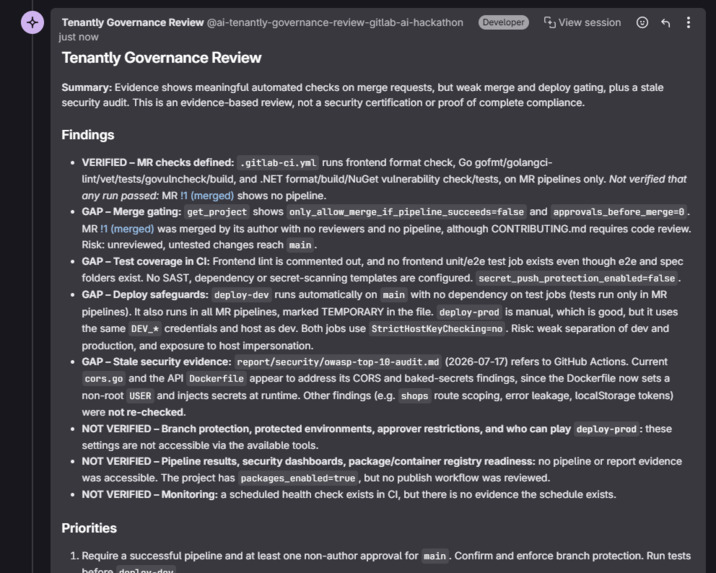
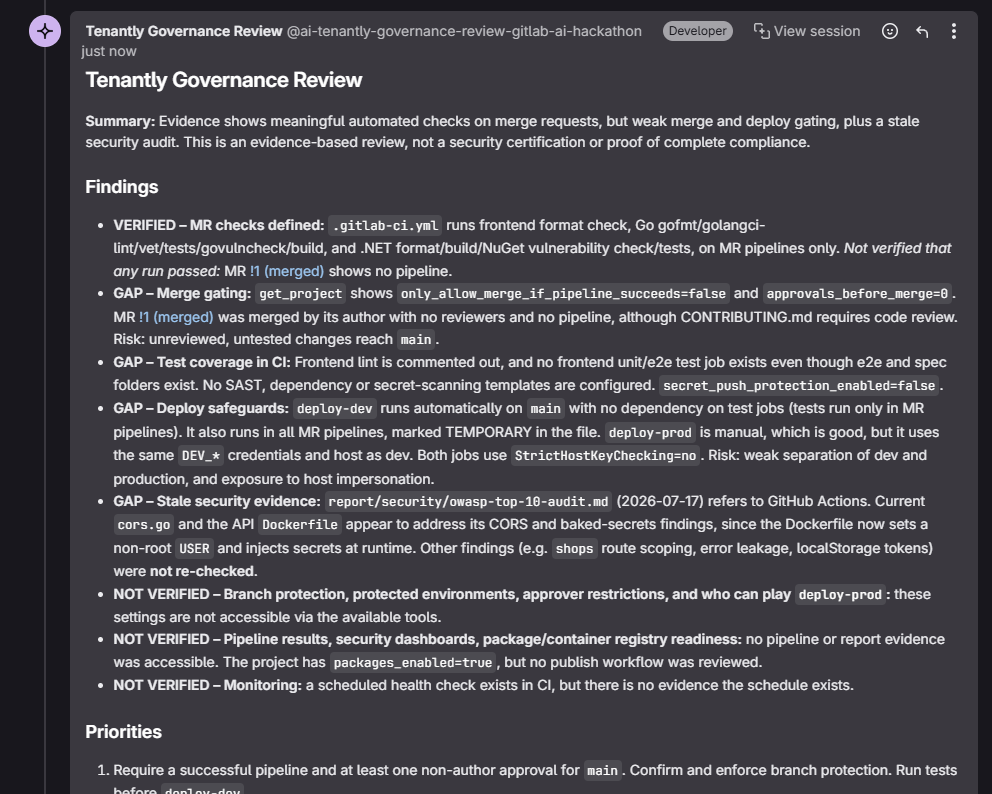
Governance Flow Report
Tenantly: What Happens After Code?
Building software is more than writing code. It also requires planning, implementation, verification, security assessment, packaging, and governance. Tenantly explores how GitLab Duo can assist across this lifecycle while keeping humans in control.
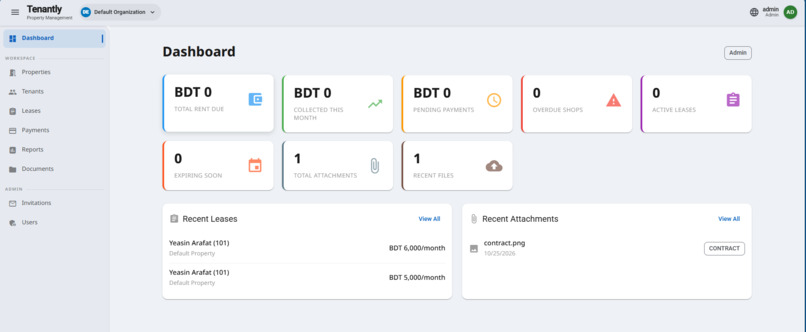
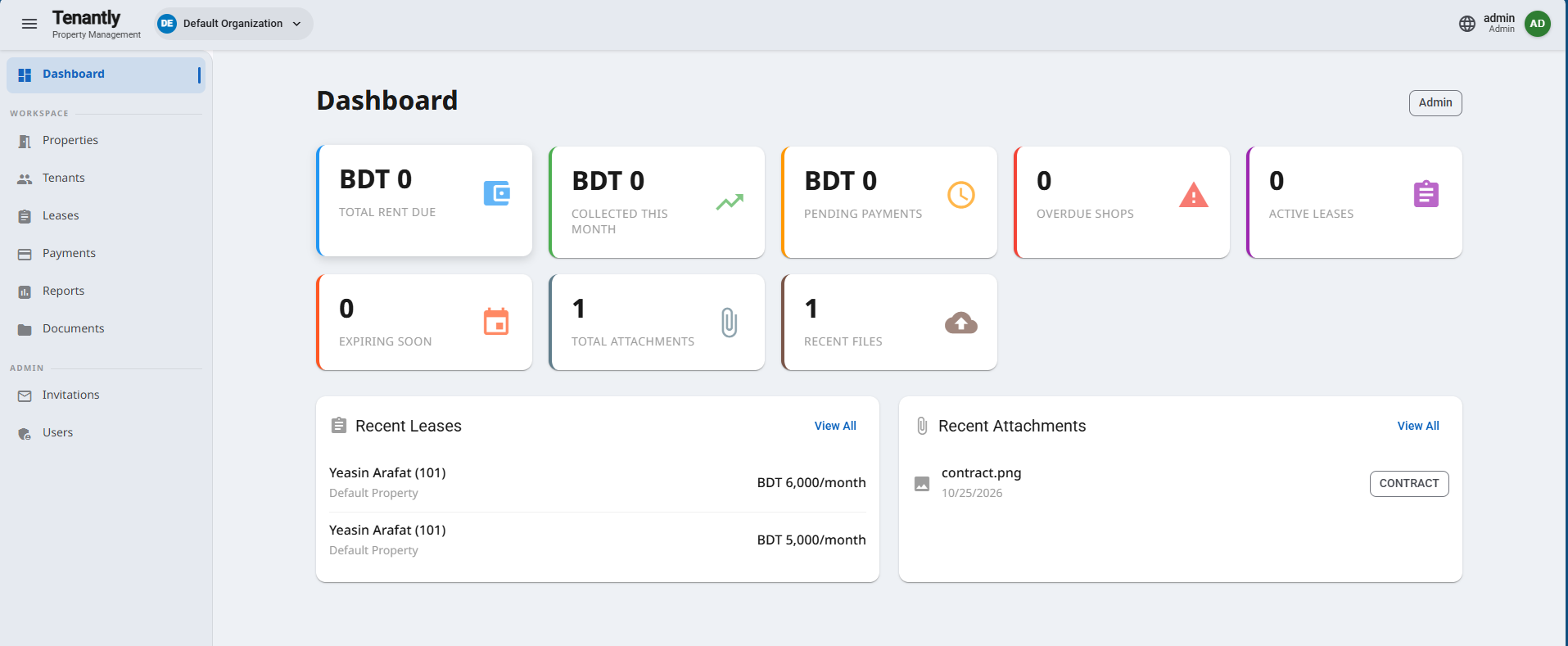
Tenantly is a rental and property management application. For the GitLab Life After Code hackathon, I built six specialized AI workflows to improve how software changes move from an issue toward a release.
- Tenantly Issue Planner turns issues into structured engineering plans.
- Tenantly Issue Implementer implements planned changes and creates merge requests.
- Tenantly Verify MR reviews changes against the plan and implementation.
- Tenantly Security Assessment assesses security concerns.
- Tenantly Package Readiness checks build configuration, dependencies, versioning, and CI/CD definitions.
- Tenantly Governance Review evaluates available governance evidence and recommends improvements.
Rather than pursuing fully autonomous delivery, Tenantly follows an Assisted approach. I trigger and coordinate the workflows, review their findings, and retain responsibility for merging and production deployment.
The principle is simple: AI can accelerate engineering work, but its output must remain reviewable. Agents should report evidence and limitations honestly instead of treating unverified assumptions as facts.
Tenantly demonstrates how specialized AI workflows can support the stages after code—helping developers move toward more structured, secure, and accountable software delivery without surrendering human oversight.

Log in or sign up for Devpost to join the conversation.