-
-
what-it-does
-
how-we-built-it
Call +1 571 651 8232 to demo!!!
Inspiration
One day, our reverent leader Jack Blair was frightened by a suspect holding a knife. He called 911, but it took the responders 2 minutes to arrive! By then, he had to flee himself away from danger, without proper and instructions to handle the situation. At that moment, he knew he needed a more rapid, comforting, and understanding response system.
In Oakland, it takes on average 62 seconds for any source of dispatch (EMS/Firefighters/Police) to reach the distress location. A critical bottleneck in social infrastructure is a reliable, safe, and speedy emergency response system that can “hold your hand” through the most distressful life/death situations. That’s why we introduce 10-1-1, an AI-driven Rapid Incident System that uses AI to track, respond, and predict incidents in real-time. Whether it’s an elderly man who’s missed a step, or a raging house fire that engulfed the exit, 10-1-1 will be there to catch you.
What it does
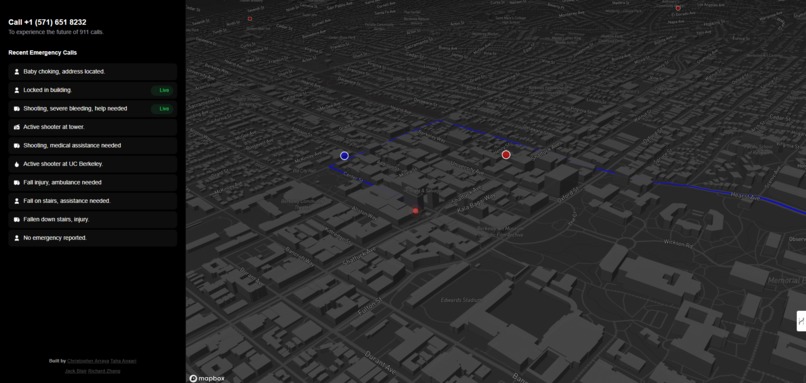
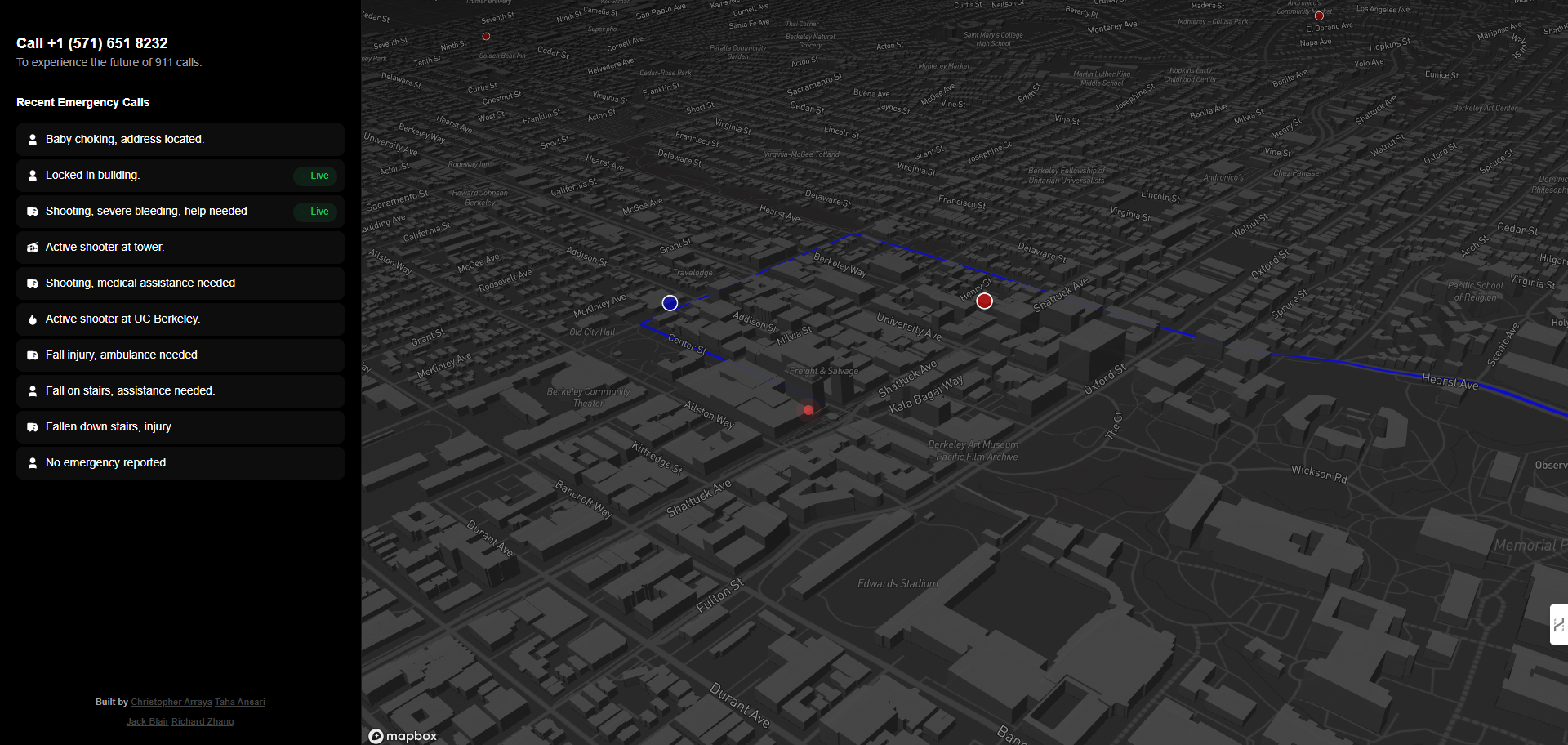
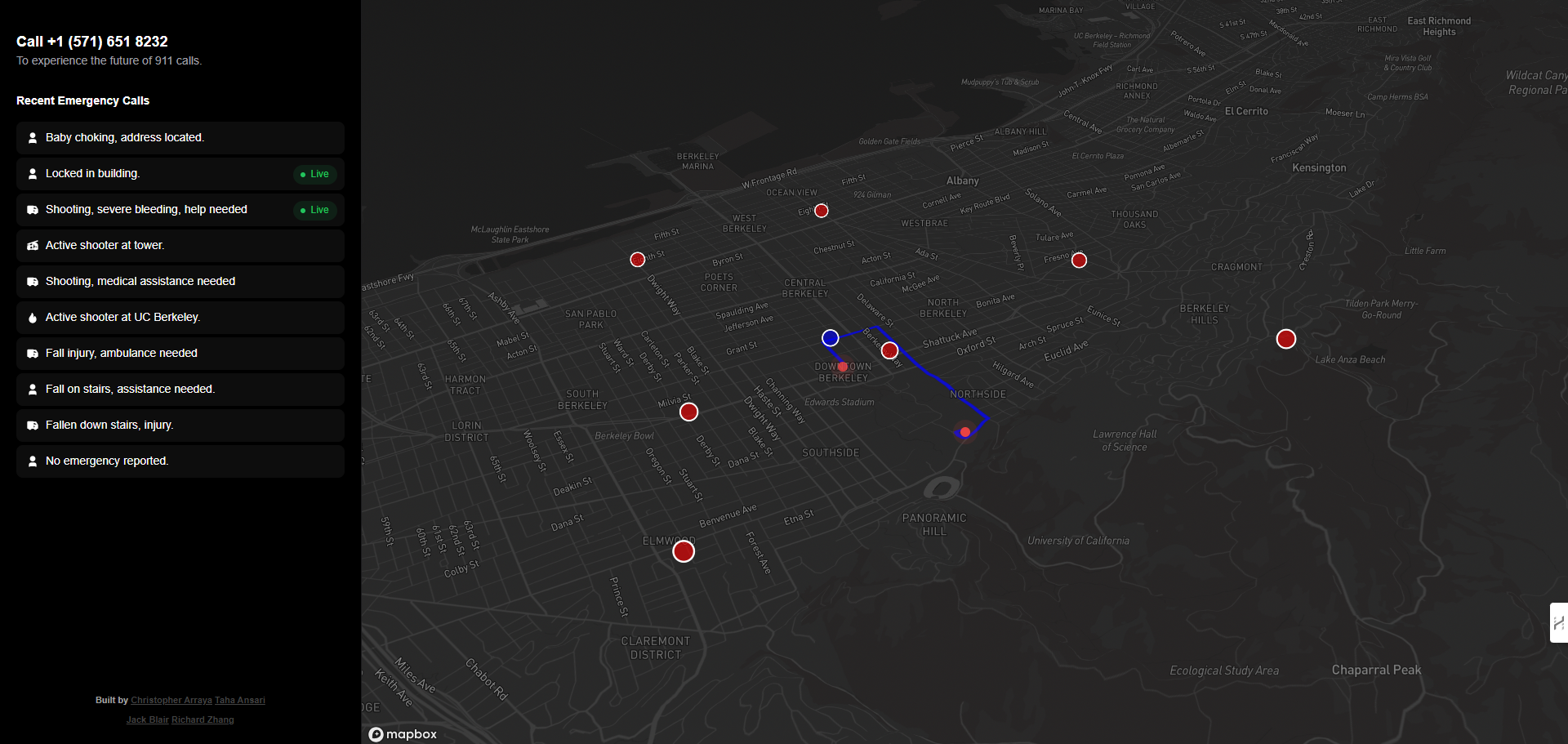
When a user calls 10-1-1, a voice agent will answer the call and ask various questions to gather critical information about the emergency. This agent recognizes emotions in the human voice, and can sensibly respond to the contextualized distress signals. This information streams into our backend and maps location data onto our dashboard for emergency responders to evaluate and respond to the situation.
How we built it
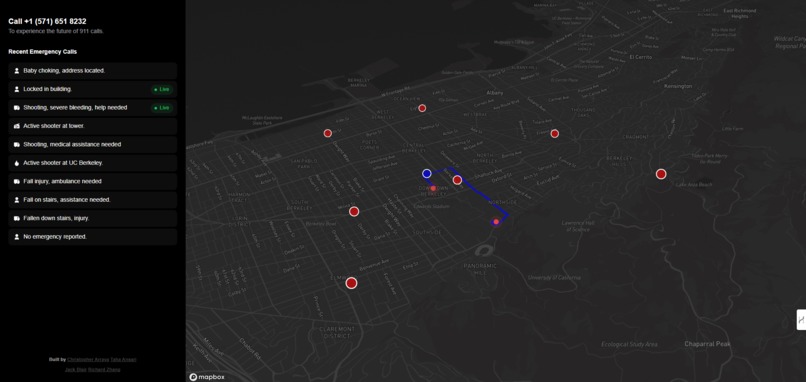
We build the Voice AI Assistant using VAPI. Our backend system, built with Python FastAPI, receives this stream via WebSocket connections. The backend performs named-entity recognition and sends location-specific data to our Operator Response Dashboard UI. This Dashboard provides real-time updates of distress calls ordered and clustered by various attributes such as incident type, location, and dispatch units required. For each ongoing call we also display real-time updates of dispatch units en route.
Challenges we ran into
One of the challenges we faced was high latency between assistant and backend service. This caused delays in response times of dispatch units and location updates on the backend. Another issue was particularly scaling our services. Scaling issues became apparent when handling multiple distress calls simultaneously; our AWS Lambda functions struggled with request bottlenecks, leading to high event throughput and endpoint overwriting problems. Additionally, function calls triggered by the AI assistant either takes too long or events get lost. Prompt engineering proved difficult to control, with the AI sometimes providing inappropriate responses like "give me a sec" during urgent situations, negatively impacting user experience. AWS Serverless Lambda Functions were often troublesome to debug during deployment and hooking it to VAPI. We also ran into some magic problems that we could not even find the root cause of. For such problems, we delayed solving them to ensure our time was spent working on high yield tasks.
Accomplishments that we're proud of
Develop a low latency time sensitive solution to a pressing social issue Develop agents capable of handling explicit nature of emergencies Develop agents based on government teleoperator guidelines. Successful public deployment with custom domains for everyone to test out our project Genuinely valuable product with a measurable social impact
We successfully developed a stable end-to-end system that seamlessly processes user voice input, parses location data, and displays it on an operator's dashboard in real-time. Most importantly, our solution has the potential to revolutionize emergency response systems, potentially saving lives and improving community safety. This project resonates deeply with our team's shared commitment to developing scalable solutions that benefit humanity
What we learned
Not only did we immensely upskill ourselves technically with:
- Scalable Serverless deployments using industry standard AWS services
- Development of CI/CD and DevOps pipelines
- Real-time event-based streaming.
- Understanding VAPI documentation and how to leverage and customize text-to-speech models.
- Animation and orchestration of MapBox apis to create a seamless and welcoming user experience
What's next for Ten-One–One: AI Dispatch and Crisis Response
- Interview and get feedback from real teleoperators, dispatcher, dispatch units and frontline workers.
- Speak with government bodies and representatives to see how our solution may integrate with current infrastructure
- Refine our product to get it to a scalable and commercially viable state
Built With
- amazon-web-services
- gpt4
- groq
- javascript
- lambda
- mapbox
- python
- react
- tsx
- vapi


Log in or sign up for Devpost to join the conversation.