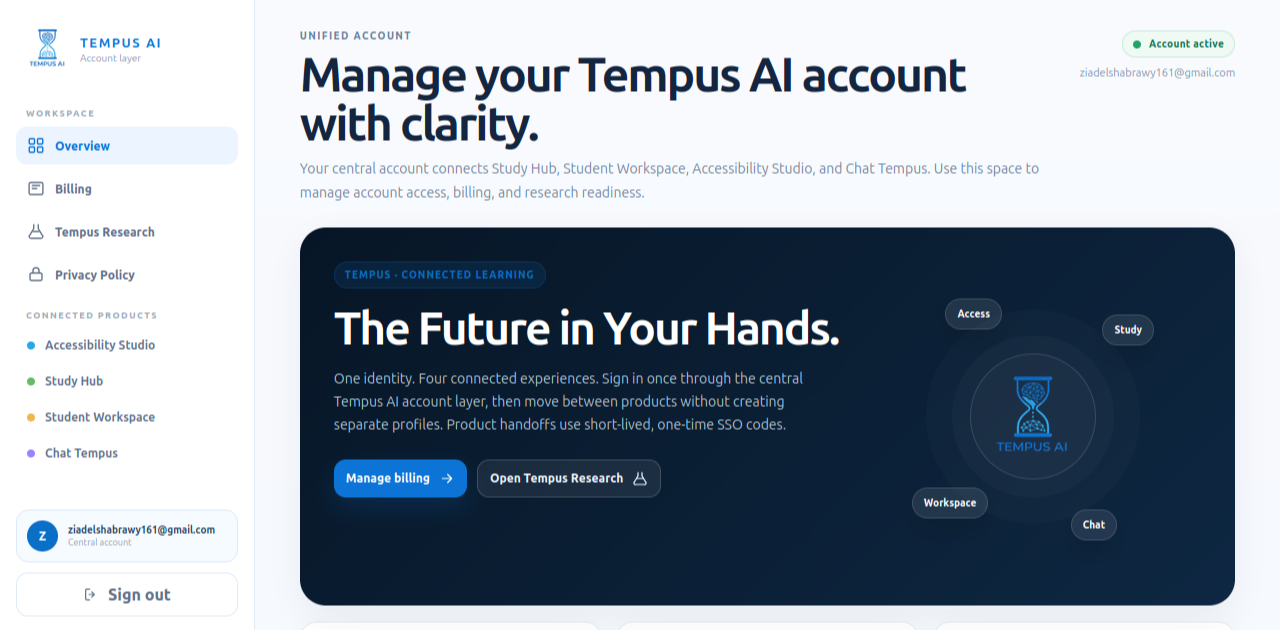
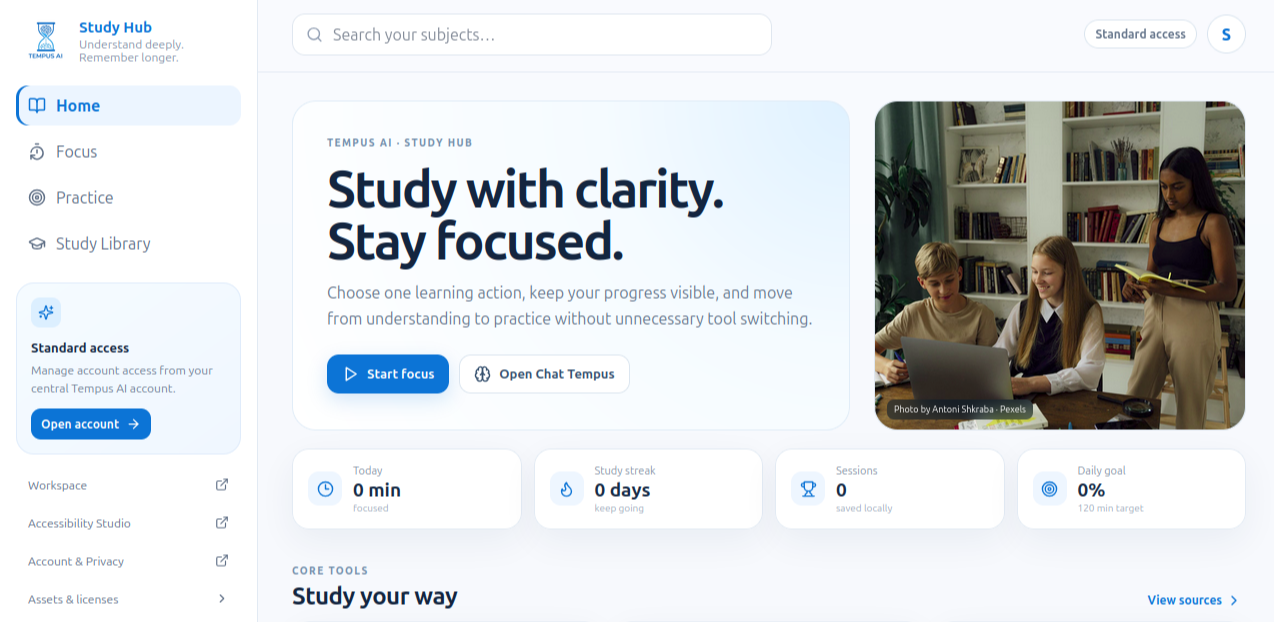
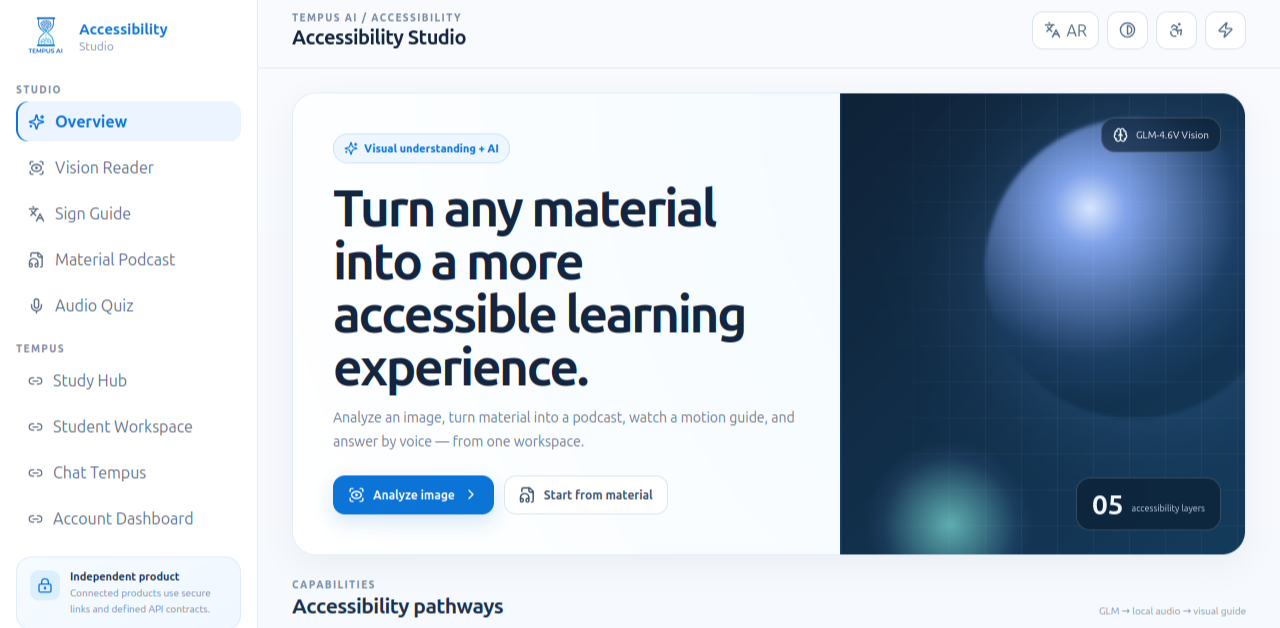
Inspiration Students lose time before they even start studying. Planning lives in one app, flashcards in another, and help in a third. The tools that exist rarely work well for people with visual, hearing or cognitive differences. We wanted one place that adapts to the learner, not the other way around. That became Tempus AI: Your Time. Smarter. What it does One Tempus account connects four products: Study Hub: focus timers (15, 25, 30 or 50 minutes), quizzes, flashcards and streaks. Student Workspace: timetable, calendar, daily tasks and goals from daily up to yearly. Accessibility Studio: image understanding, turning study material into an AI podcast, and a spoken Audio Quiz graded by AI. Chat Tempus: a personal AI mentor and secretary. The model is freemium. Free limits the flashcard set size and has no mentor chat or podcasts. Premium unlocks the private mentor, unlimited practice and a daily podcast allowance. How we built it Frontend: Next.js and React, with each product deployed separately on Vercel. Backend: Supabase for authentication and data, with row-level security so each student only sees their own records. Single sign-on: a central dashboard handles login through a redirect flow with short-lived one-time codes, and each product keeps its own secure session. AI: model calls go through a server-side proxy, so API keys never reach the browser. Billing: XPay hosted checkout, with signed webhooks keeping subscription status in sync. Challenges we ran into Connecting four products to one identity without sharing sessions insecurely. The redirect and one-time-code flow solved this. AI cost. Every active Premium user adds model usage, so profit per user depends on keeping positive. This is why the free and Premium limits exist. Honest accessibility. Our avatar gives teaching cues, but it is not a certified sign-language translator. We label it accurately until it can be validated with native signers. Privacy for young users. We keep student profile data separate from product state and plan a minors-appropriate privacy policy before public launch. What we learned Accessibility works best when it is designed in from the first screen, not added later. Security decisions such as where keys live and how sessions are shared shape the whole architecture. A business model needs real numbers. Pricing and conversion still need pilot data, so we treat them as open questions. What's next Public launch of the free tier, mobile apps, school pilots, and institutional licenses, plus validated sign-language support.
Built With
- cloudflare
- llm
- nextjs
- node.js
- supabase

Log in or sign up for Devpost to join the conversation.