-
-
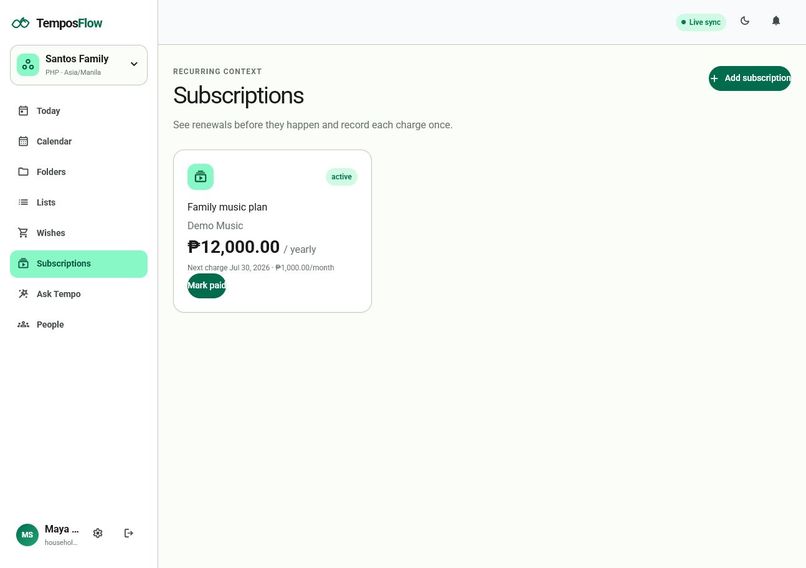
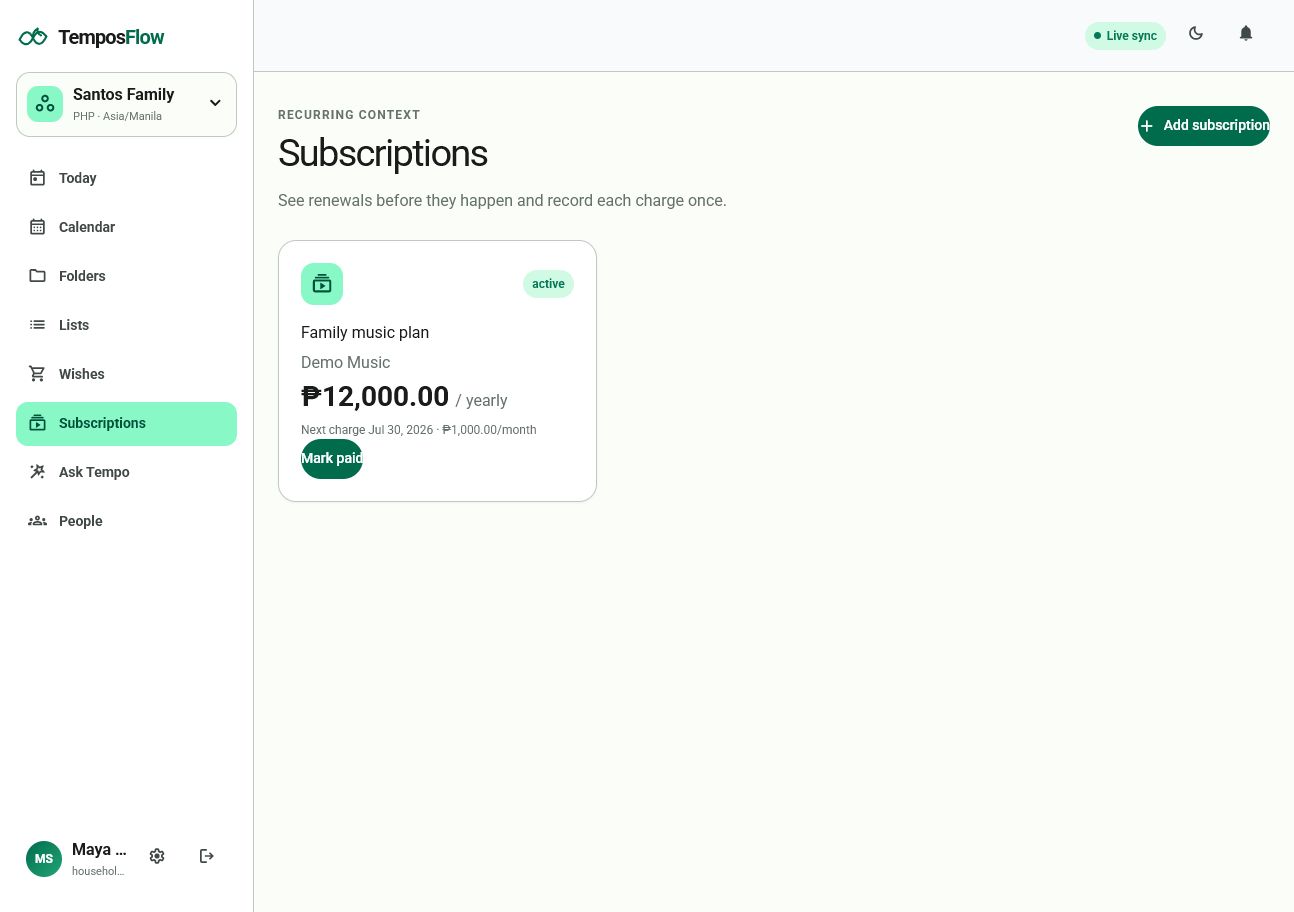
Subscription tracking
-
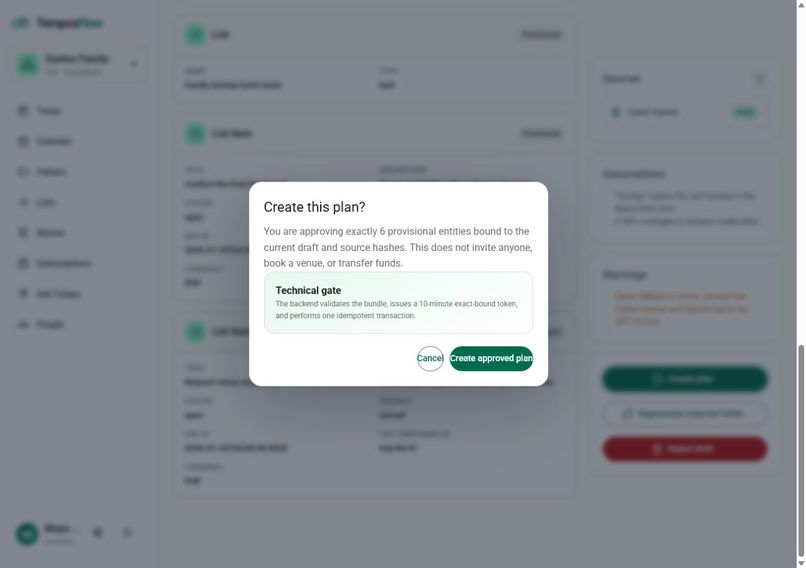
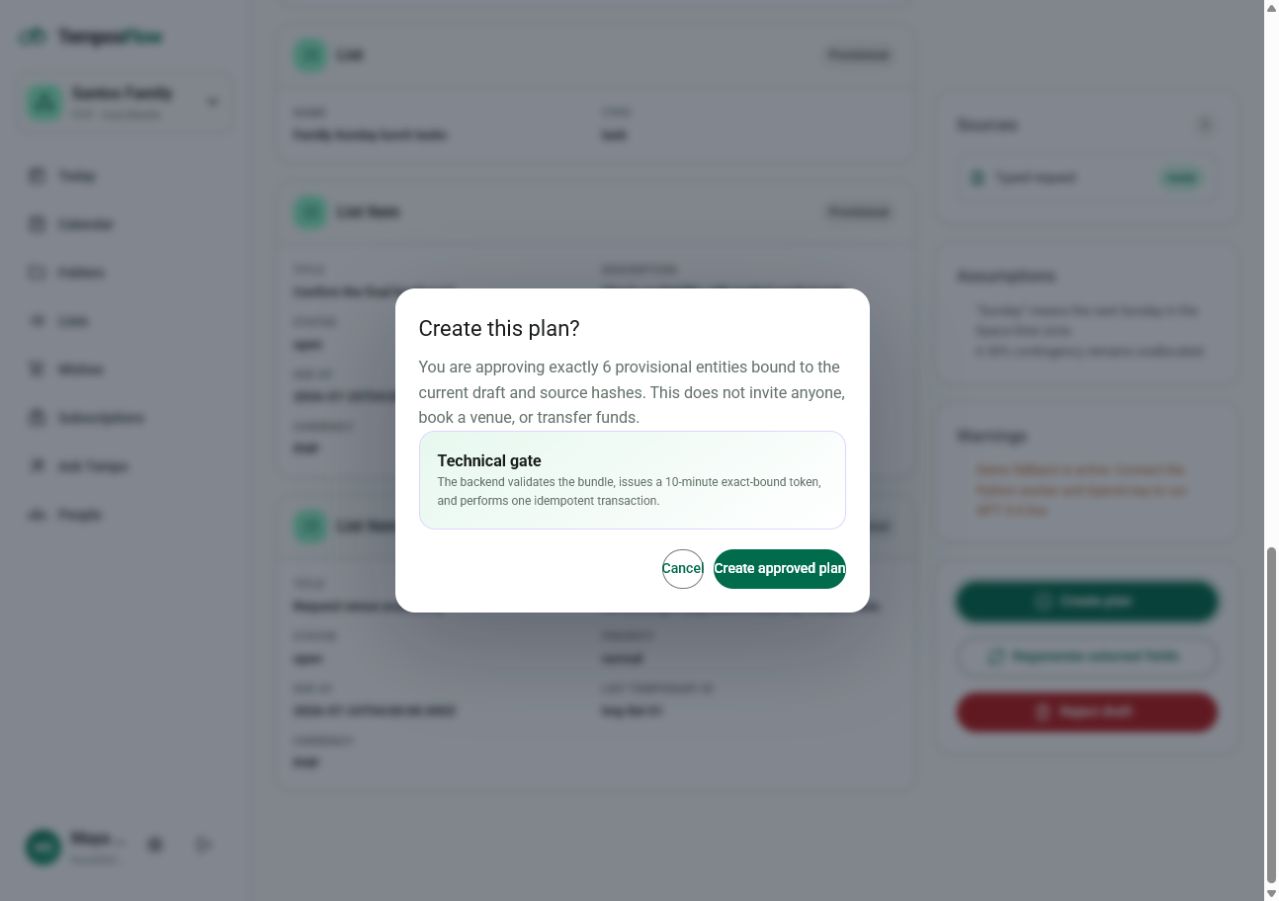
Human approval boundary
-
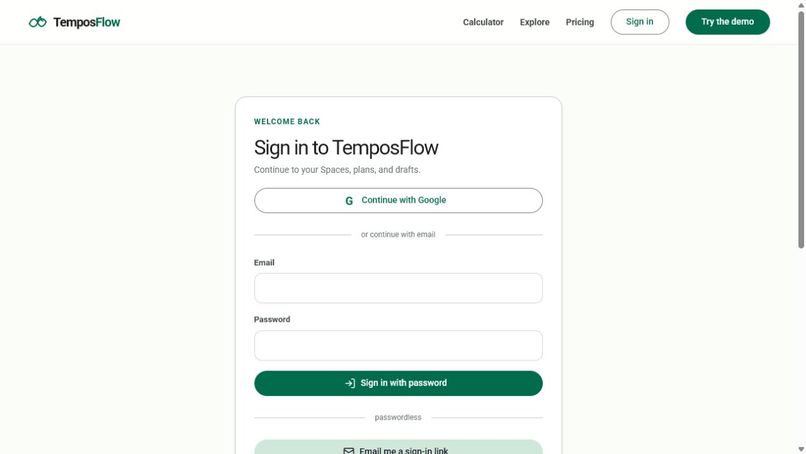
demo entry
-
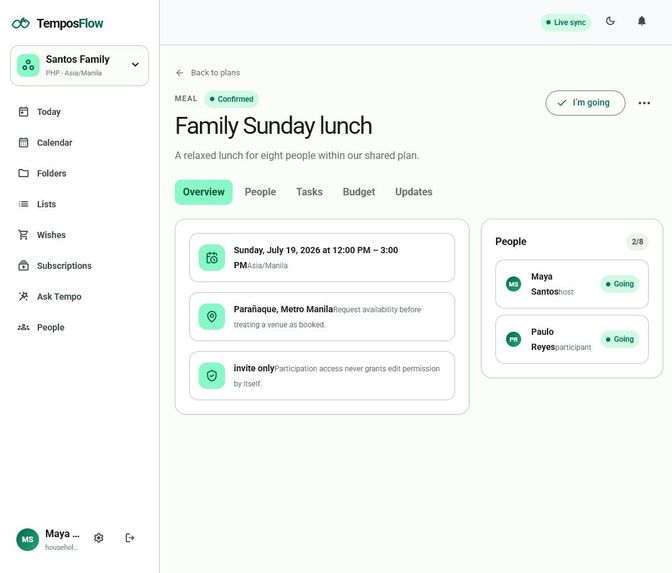
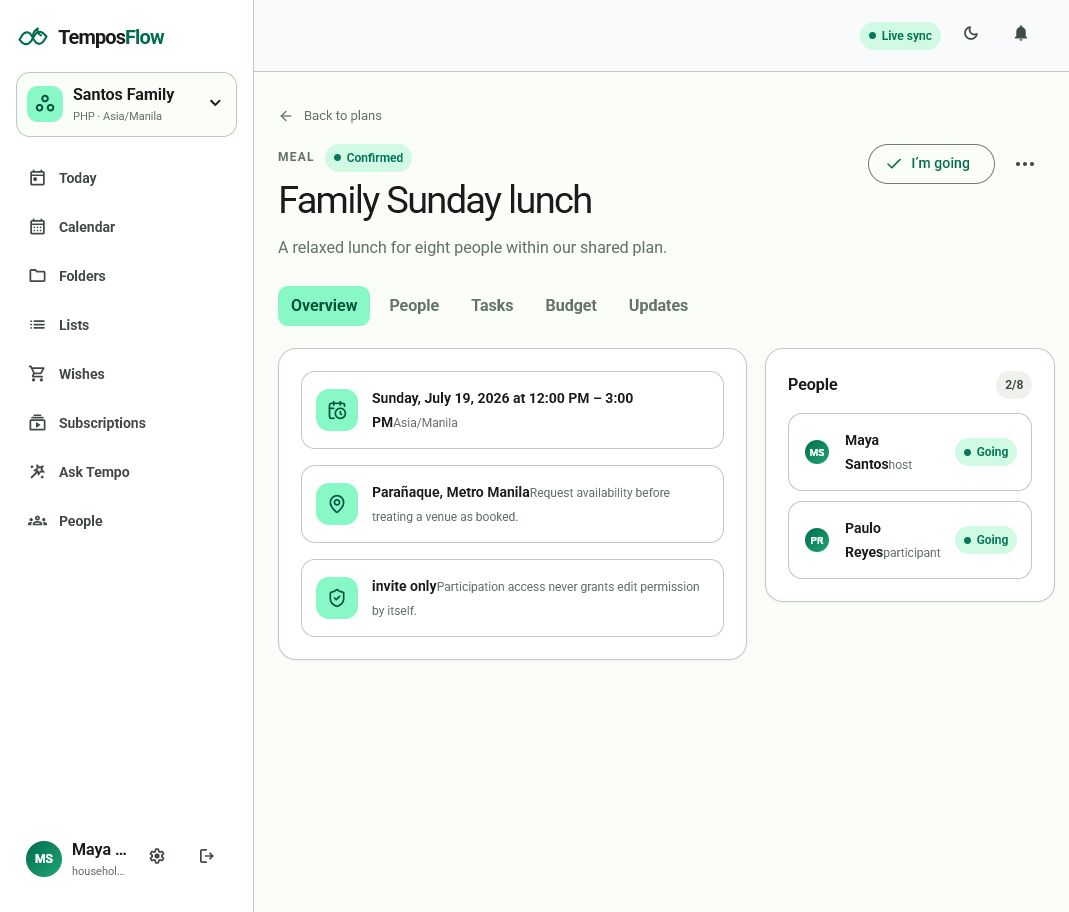
Shared family plan
-
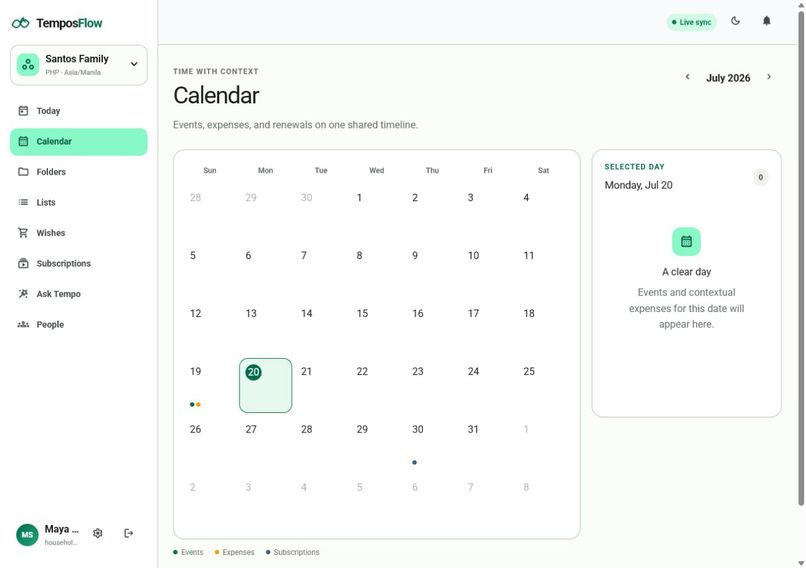
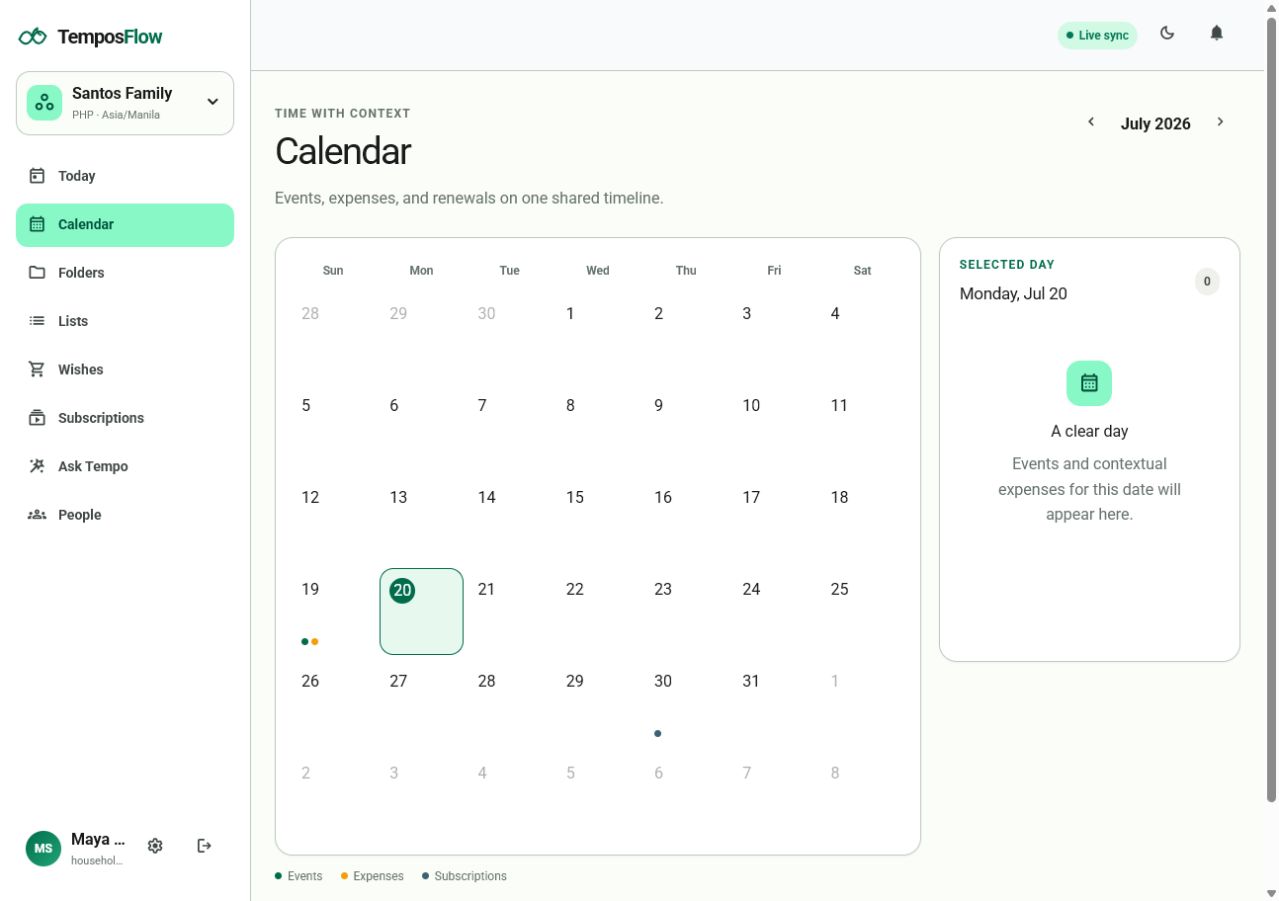
Shared calendar
-
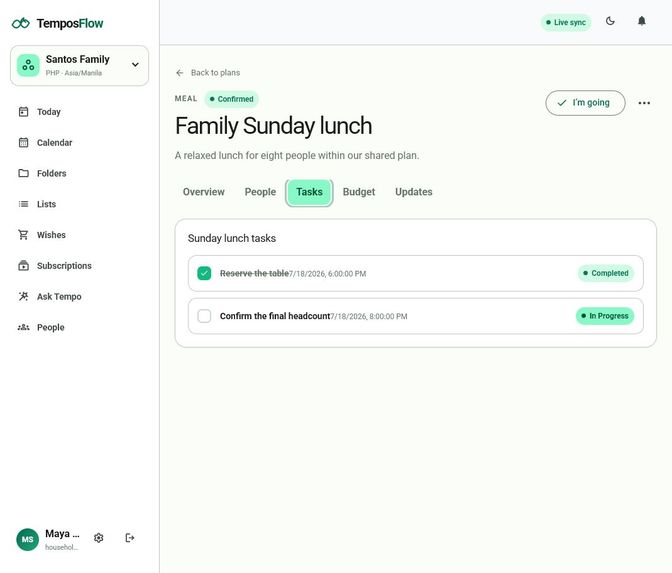
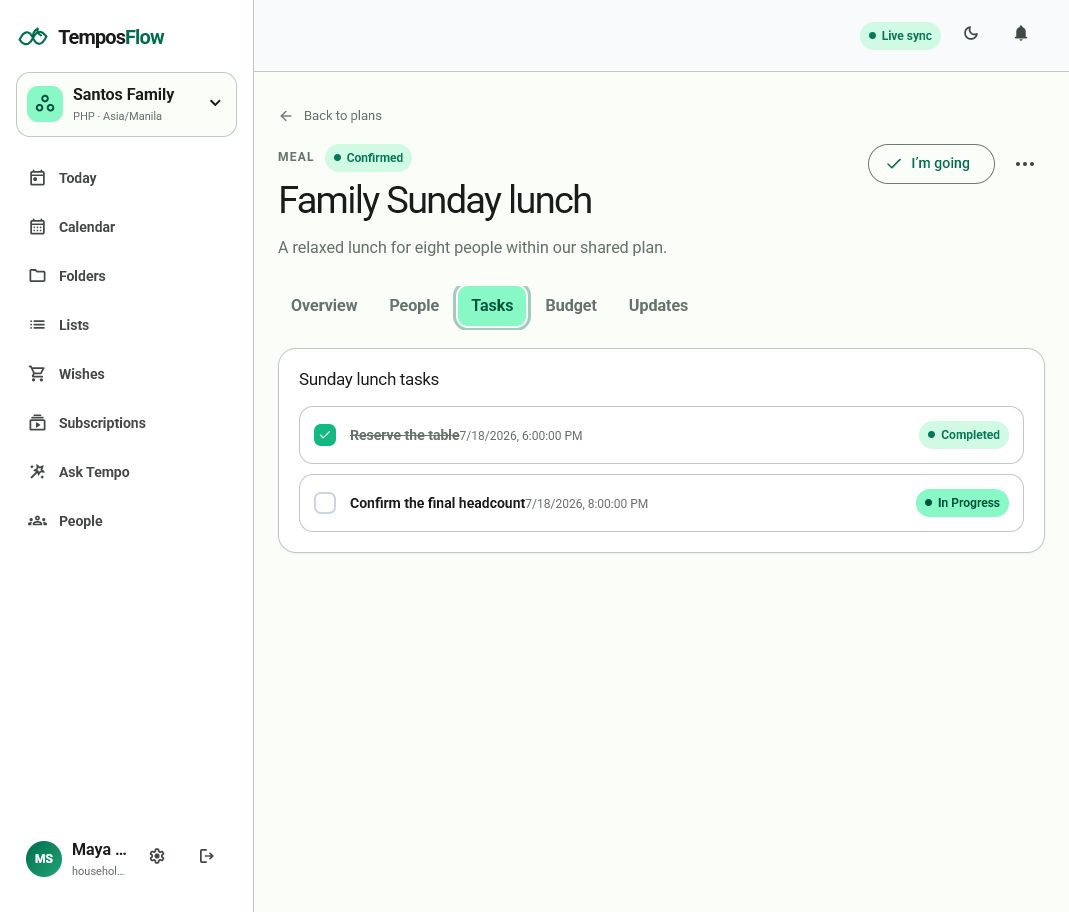
Assigned task progress
-
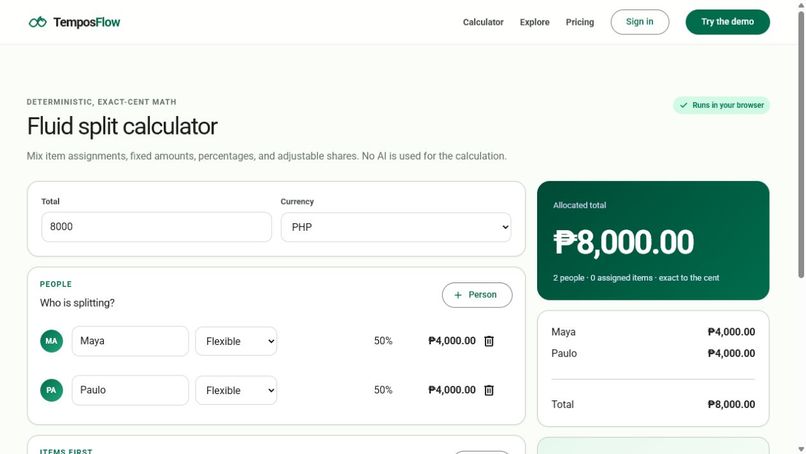
Exact split calculator, Open For all
-
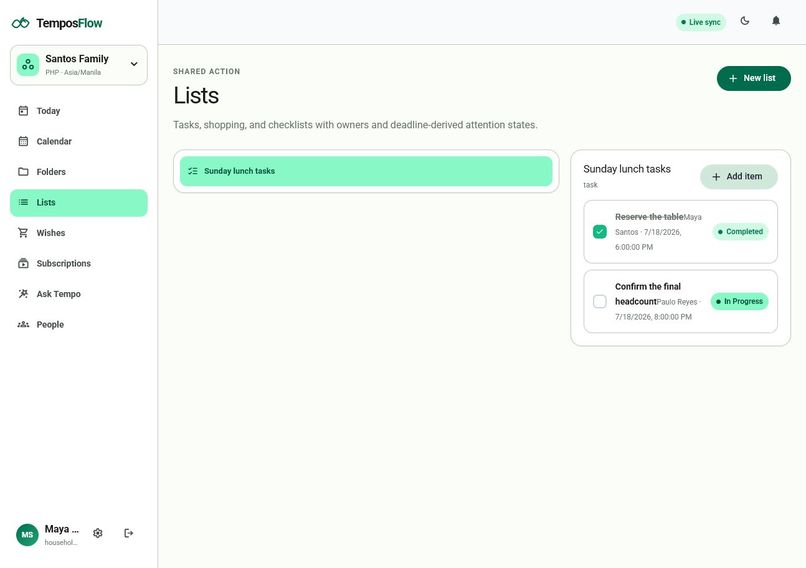
Shared lists
-
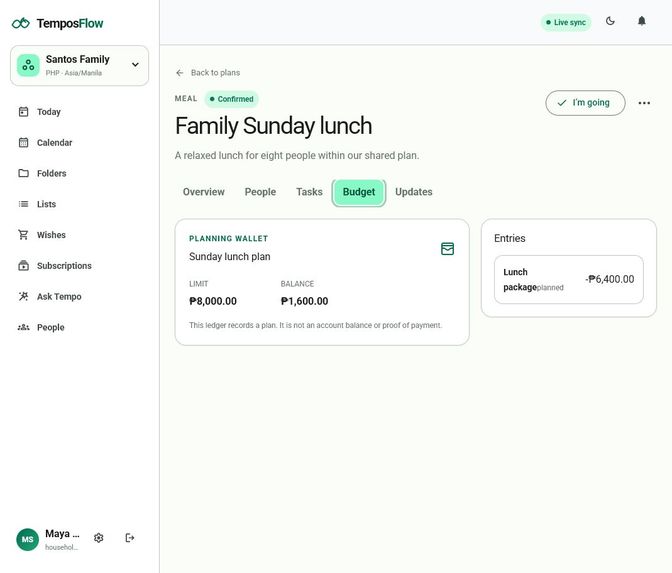
Planning wallet and expenses
-
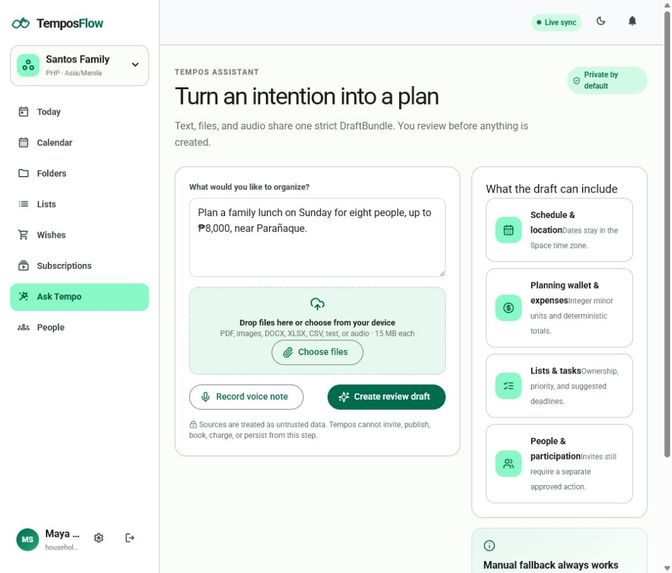
. AI-assisted planning input v1
-
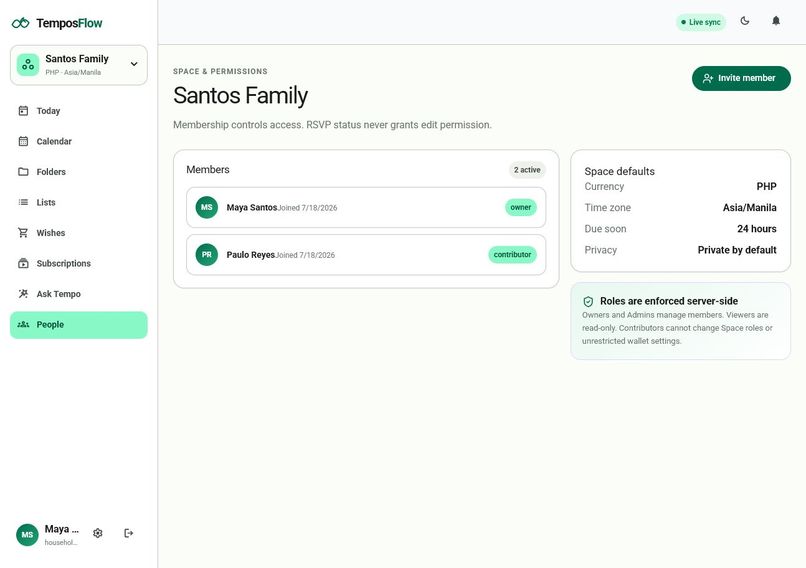
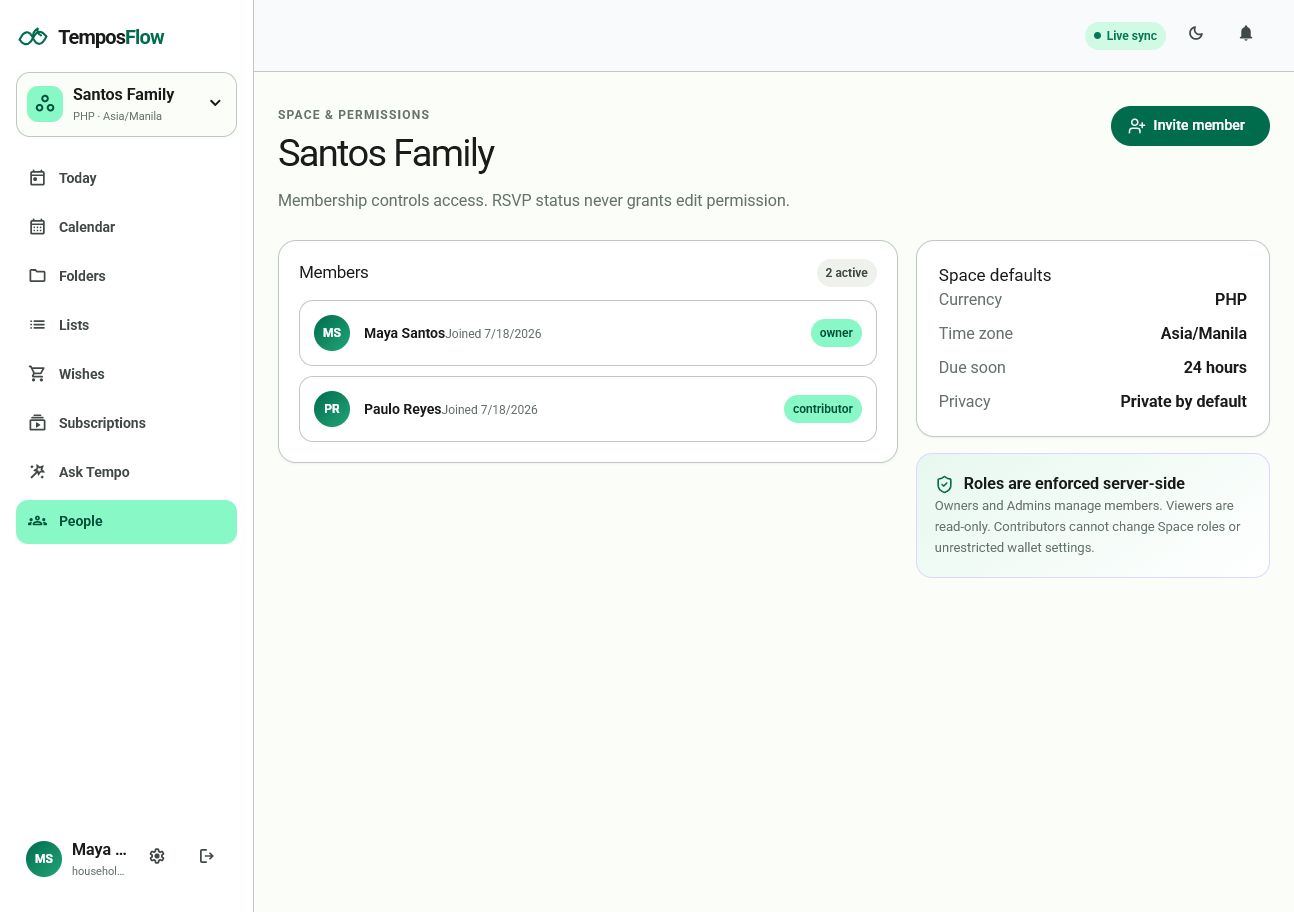
Members and server-enforced roles
-
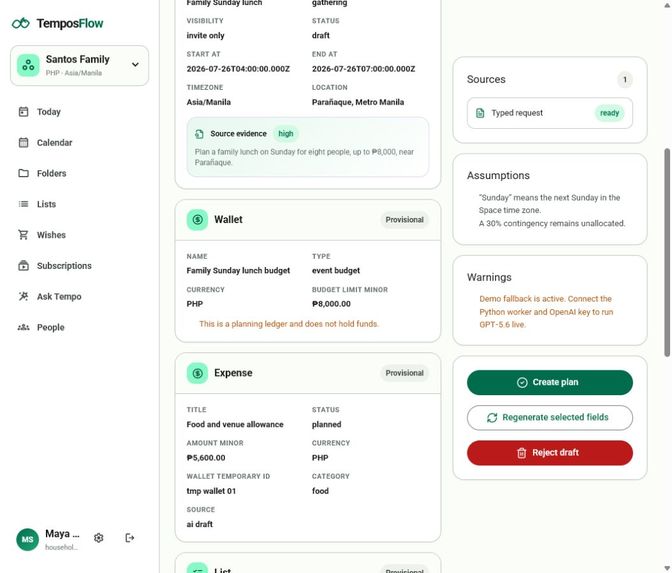
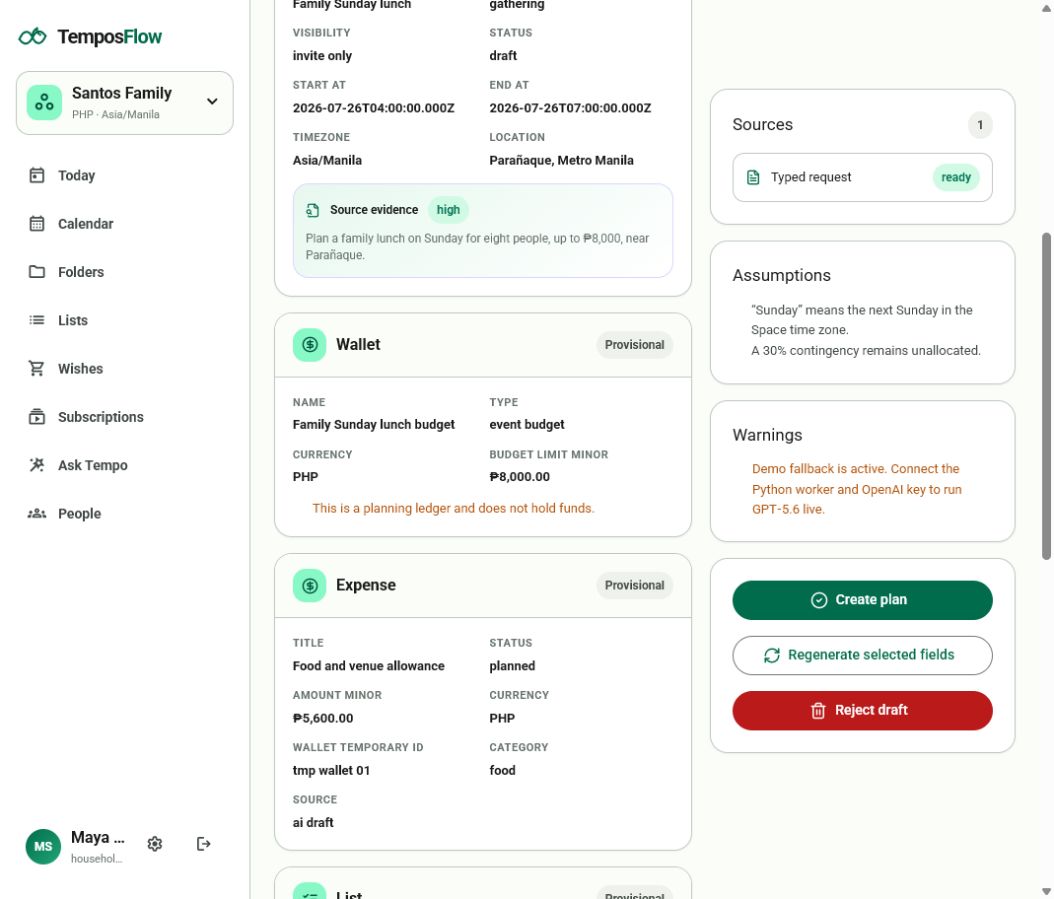
Draft evidence, assumptions, and approval controls
-
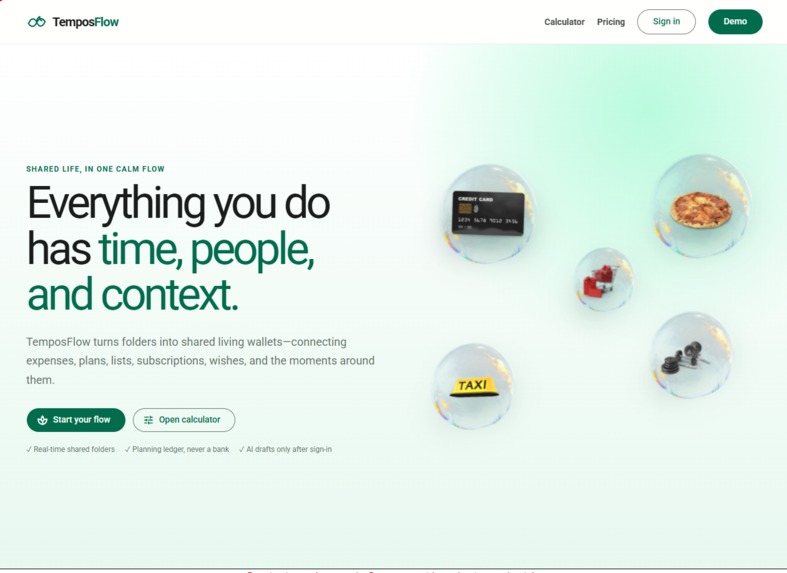
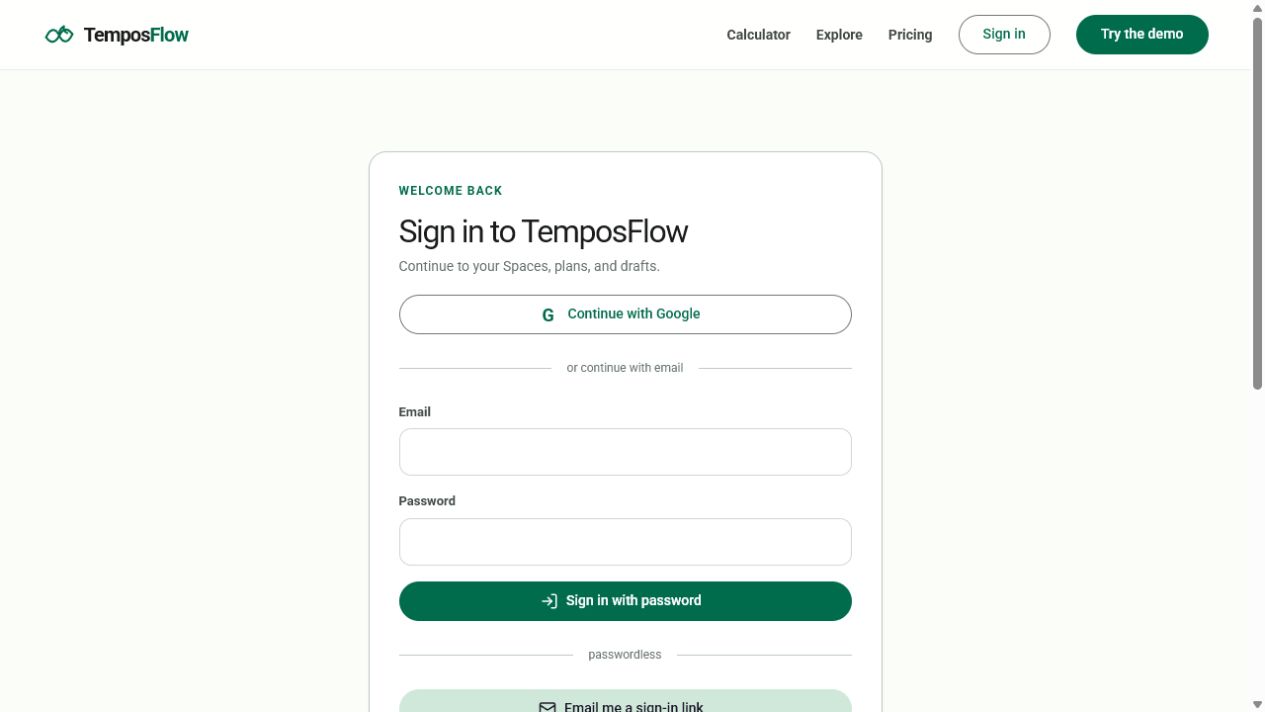
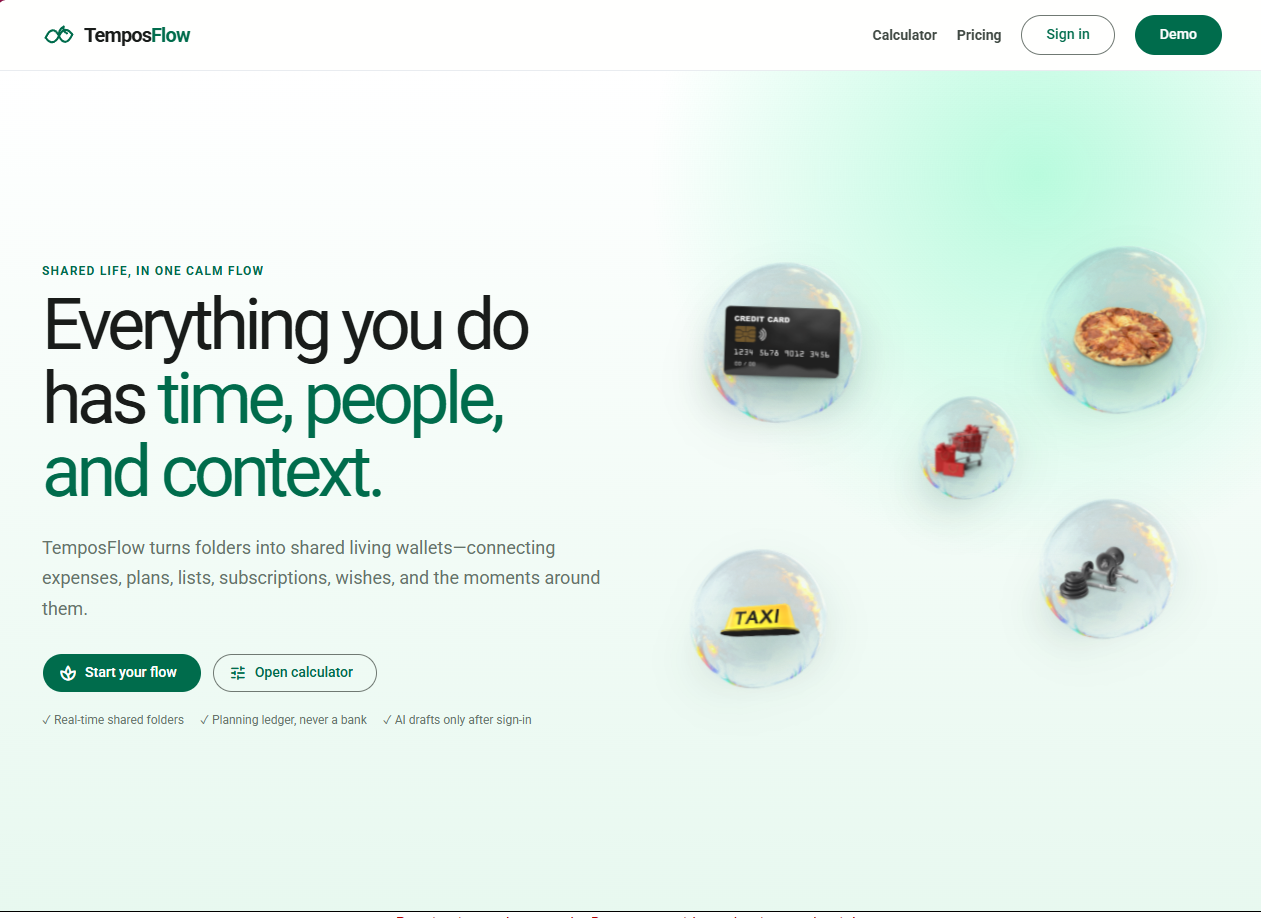
Landing page
-
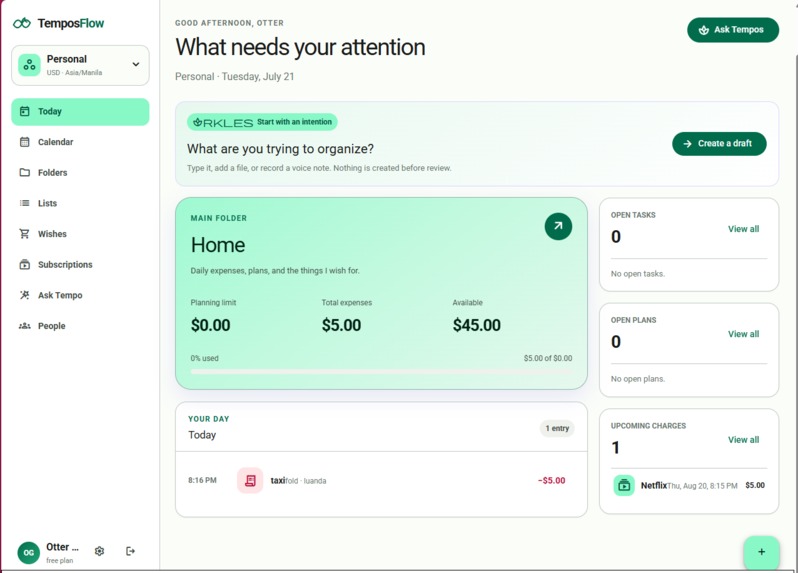
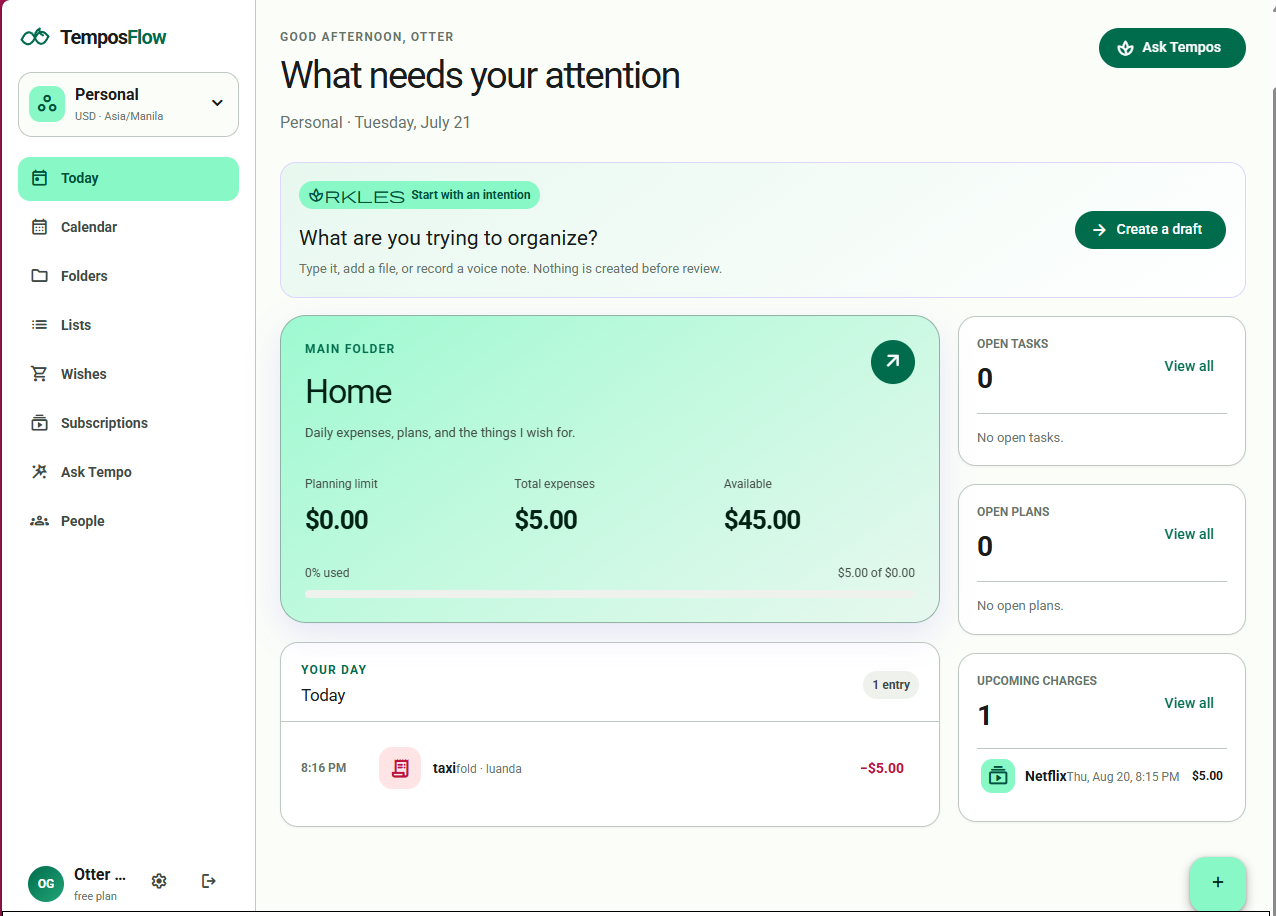
Today dashboard v1
Inspiration
The main inspiration for this project is to build a frictionless channel where me and my family can share our daily expenses, be mindful of the little time we share together as well well as communication our needs trough daily task, planned activities and Wish lists.
I would love to have an application where I can manage my time, monitor our finances, and track activities in the same place. This is basically it: keeping communication clear about what we do and how much it costs us, so that we can grow while enjoying life.
What it does
TemposFlow uses gpt05.6 for planning, it is application for couples, families, households, and groups.
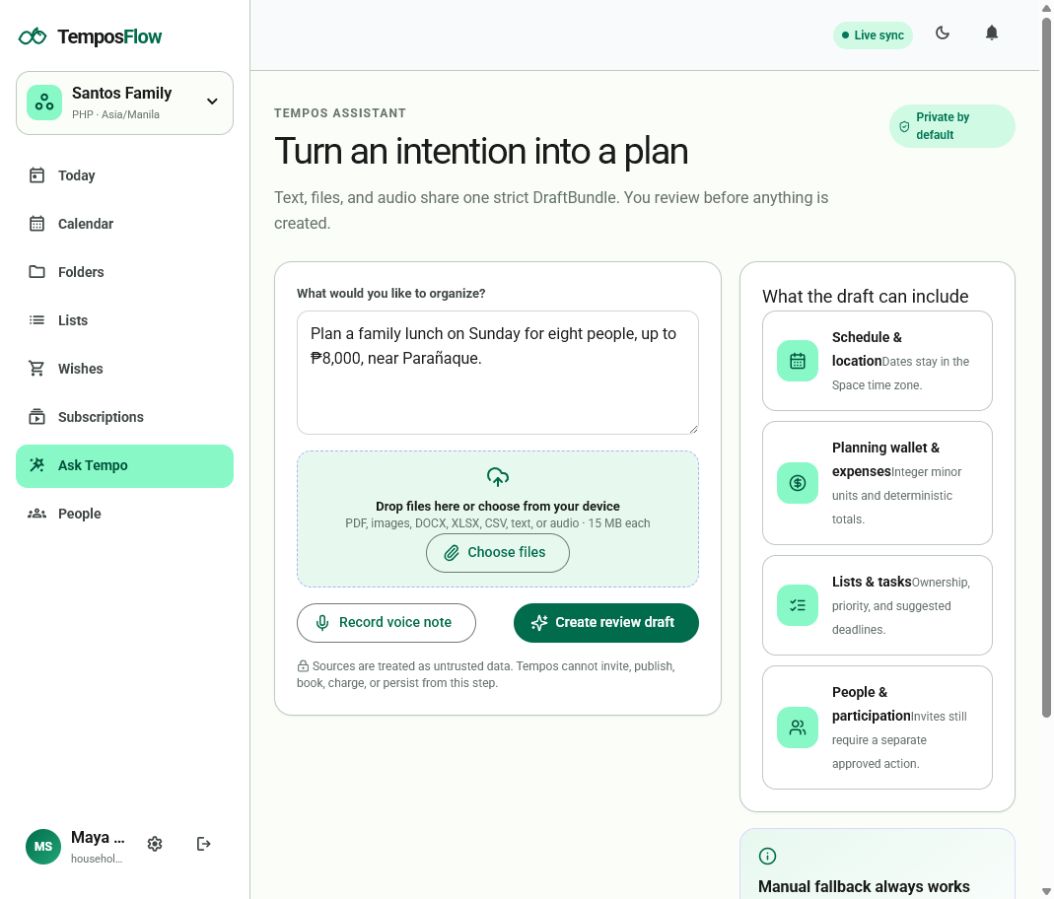
Users can describe a plan in natural language, attach files, or provide a voice note. TemposFlow with the help from gpt turns that information into a structured draft containing connected activities, budgets, expenses, lists, tasks, participants, assumptions, and questions.
For example:
“Plan a family lunch next Sunday for eight people with a budget of ₱8,000.”
Users review and edit the draft before it is saved into the db
AI suggests; people decide.
Implemented features
- Personal and shared Spaces
- Membership roles and secure invitations
- Activities, RSVPs, calendars, and participant responsibilities
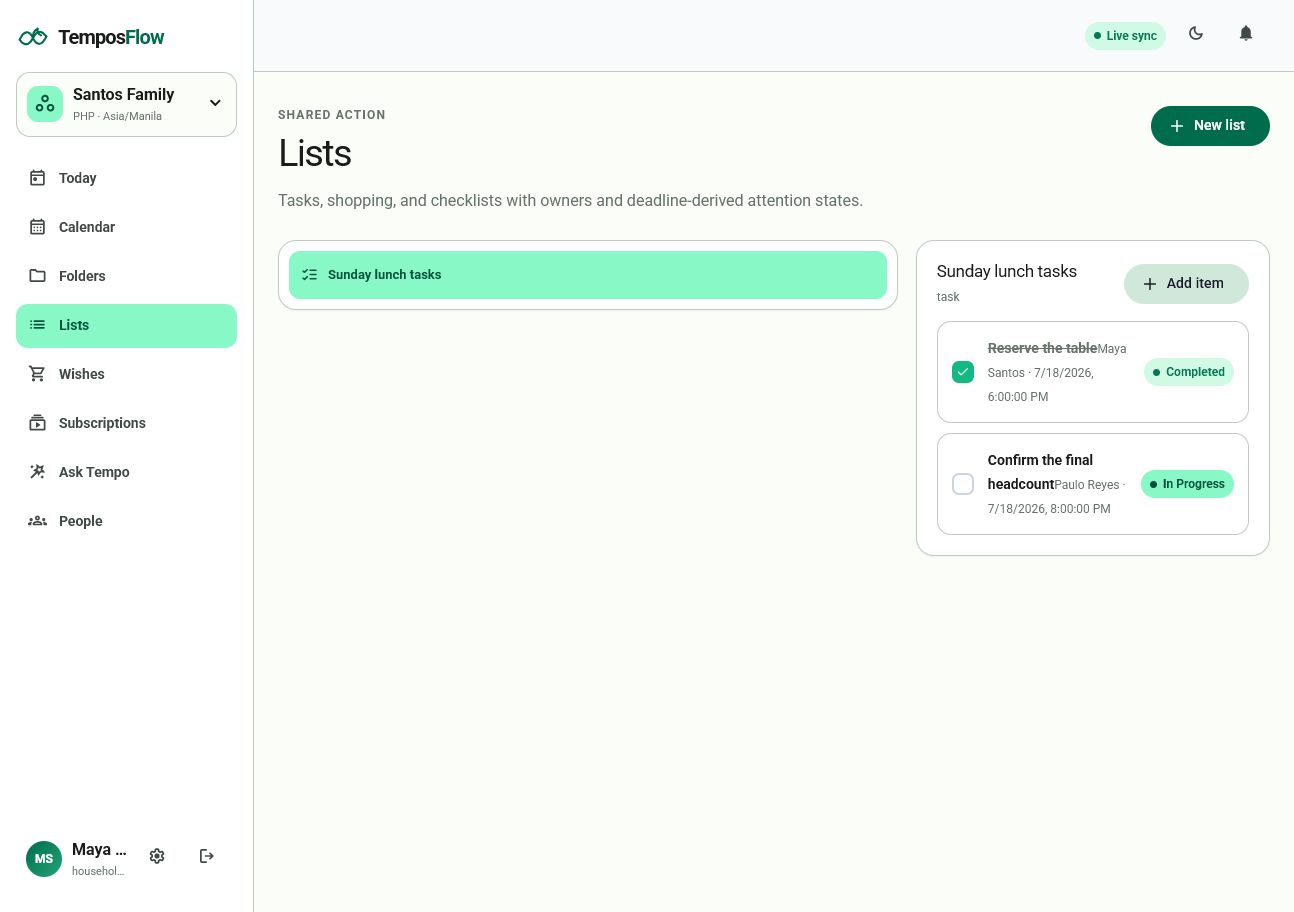
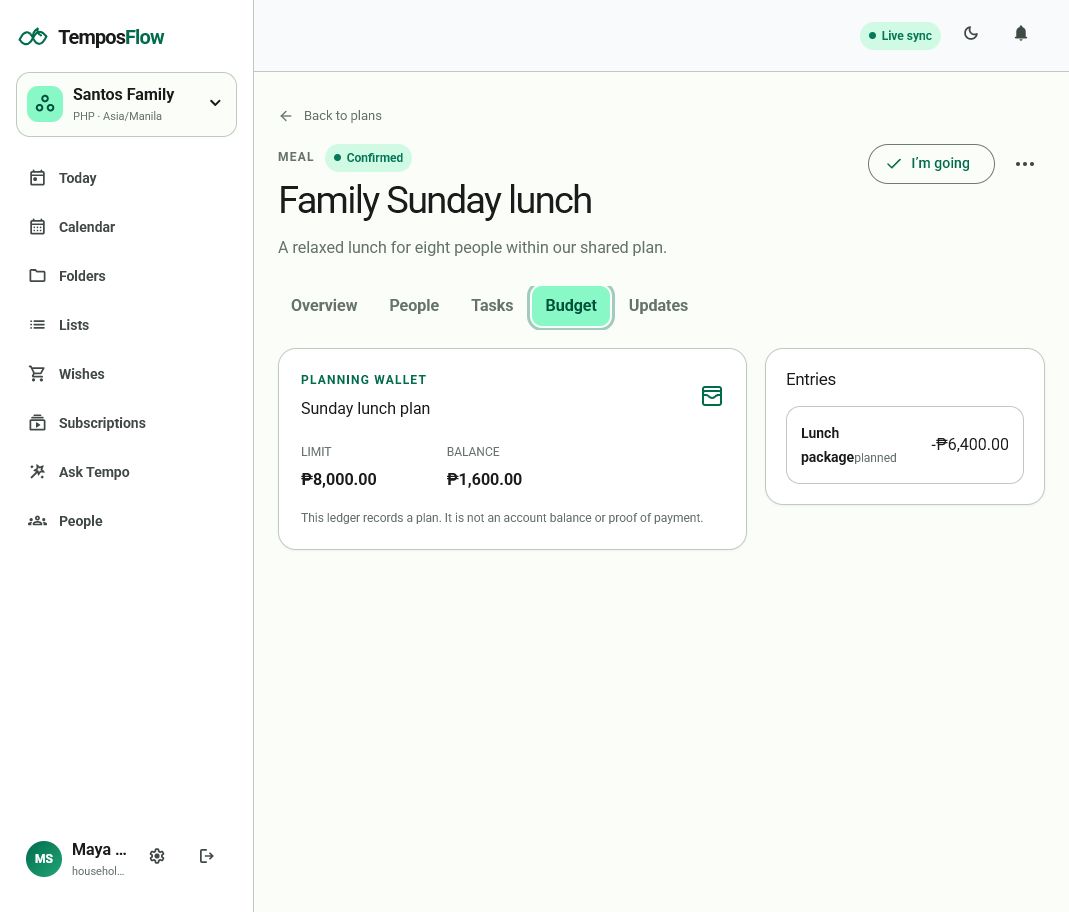
- Shared folders, planning wallets, expenses, and lists
- Wishlists and subscriptions
- Today view and in-app notifications
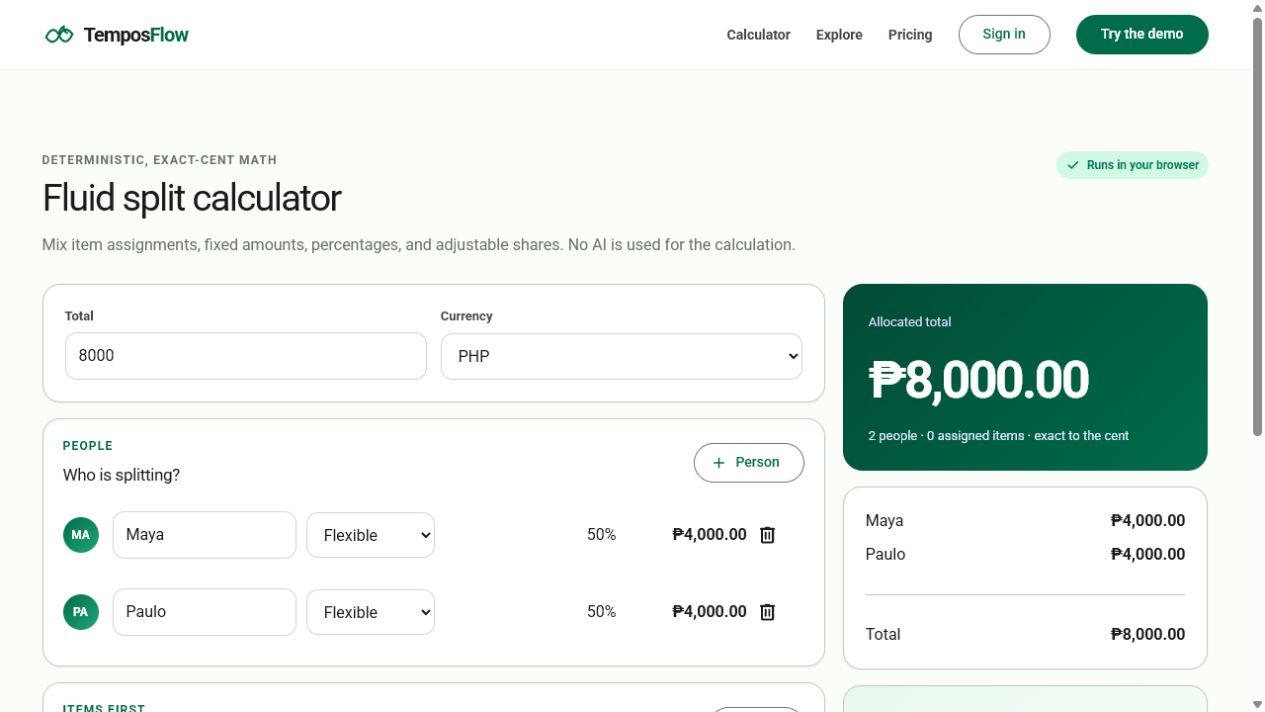
- Public bill-splitting calculator
- Text, PDF, DOCX, spreadsheet, image, and audio ingestion
- Source evidence, assumptions, warnings, and follow-up questions
- Review, approval, and transactional creation of connected records
- Installable, mobile-friendly Progressive Web App
A TemposFlow Wallet is a planning ledger. It does not hold or transfer money.
How we built it
TemposFlow uses:
- codex Used to acelerate tyhe project, it went from detailed spec to an acceptable MVP in 1 try
- Python and Responses from GPT5.6 for multimodal ingestion and structured planning
- Nuxt and Vue for the responsive PWA
- Firebase Authentication for identity
- Cloud Firestore for application data
- Firebase Storage for private uploads
- Firebase Functions for subscription reminders
The Python ingestion service processes authorized text, documents, spreadsheets, images, and audio. It produces a strict DraftBundle containing temporary, connected entities.
GPT interprets the user’s intent, to help with data ingestion
Challenges we ran into
Keeping the MVP focused
The full vision includes planning, household coordination, subscriptions, bookings, and payments. For the hackathon, we focused on one complete journey:
- Describe a plan.
- Generate a structured draft.
- Review its tasks, dates, costs, and assumptions.
- Approve the proposal.
- Create the connected activity, wallet, expenses, and list.
- Collaborate with another participant.
Making AI output safe
Generating suggestions is easy; safely turning them into shared application data is harder.
We separated ingestion, interpretation, validation, approval, and persistence. Uploaded content is treated as untrusted, permissions are checked by the backend, and rejected drafts create no permanent business records.
Handling incomplete information
Real plans often contain missing or conflicting details. TemposFlow exposes assumptions, warnings, confidence, source evidence, and questions instead of silently inventing important information.
Working within limited time
We used the product specification, architecture, security model, tests, and demo script as part of the development process. This reduced repeated decisions and helped keep implementation aligned with the MVP.
Accomplishments that we're proud of
We completed an end-to-end journey from an everyday request to a structured, shared plan.
The implemented system includes:
- A responsive Nuxt PWA with authentication and a fictional demo mode
- Personal and shared Spaces with roles and invitations
- Activities, RSVPs, folders, wallets, expenses, lists, wishes, calendars, and subscriptions
- A multimodal Python ingestion service with structured AI output
- Source provenance, assumptions, warnings, and field-level evidence
- An approval-before-persistence state machine
- Idempotent creation of linked activities, wallets, expenses, lists, and list items
- Deny-by-default Firestore and Storage security rules
- Scheduled subscription reminders
- Deterministic money, date, permission, and validation logic
- Automated frontend, API, ingestion, persistence, and security-rule tests
- A 24-case AI evaluation set covering conflicts, permissions, mixed currencies, stale approvals, prompt injection, and duplicate commits
- A manual planning fallback for environments without an OpenAI key
We also verified the complete validate–approve–commit flow repeatedly, including idempotent replay.
TemposFlow is currently a working local application and demo. Production hosting, external integrations, real payments, and marketplace features remain future work.
What we learned
The most important lesson was that Codex-assisted development begins before code generation.
Clear decisions about scope, architecture, permissions, workflows, and validation gave Codex and the AI services better constraints and reduced guesswork.
Human confirmation must be more than a button push or a multiple choice short quiz.
Finally, documentation proved to be a development tool. It helped prevent contradictions, preserve decisions, and move the project from a broad idea to a working MVP.
What's next for TemposFlow
The next step is to test the application with couples, families, households, and small groups.
Near-term priorities include:
- Improving shared lists and wishlists
- Refining activity planning
- Strengthening image and audio ingestion
- Expanding reminders and recurring plans
- Improving subscription and expense tracking
- Adding Portuguese and Filipino interfaces
- Integrating external calendars
- Measuring whether shared plans are completed
Longer term, TemposFlow may expand into public events, venues, merchants, quotations, bookings, and curated activity collections.
Payments and marketplace transactions will only be considered after the product demonstrates strong retention, security, operational readiness, and legal compliance.
The long-term vision is an operating system for shared life: one place to decide what people want to do, when they can do it, who is responsible, and what it will cost.
Make time and money flow together.
Built With
- codex
- firebase
- google-cloud
- google-fonts
- gpt-5.6
- nitro
- nuxt
- phyton
- tailwind

Log in or sign up for Devpost to join the conversation.