-
-
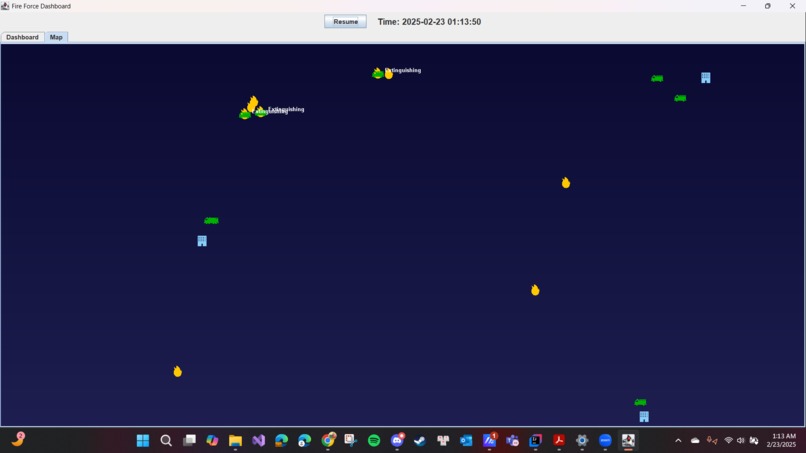
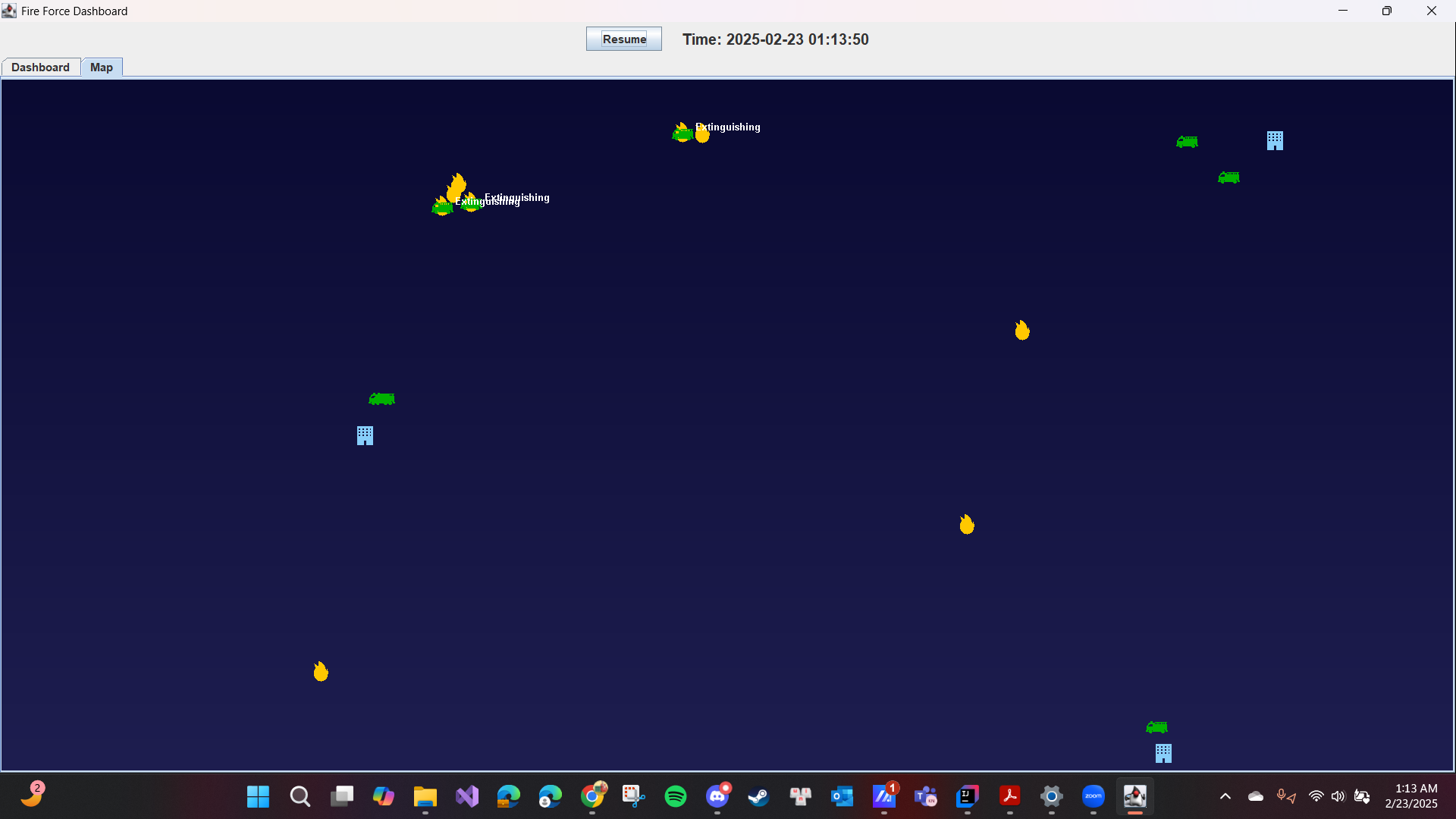
A glimpse at our program
Inspiration
The LA fire happened last month has haunted many of us by its catastrophic loss in both properties and casualties, and what we already knew about the cause of the fire is inarguably vague: drought, wind, human activity.
The inspiration for our project stemmed from real-world challenges in fire emergency management. So, the first thing that comes to our mind for the topic is a system that constantly surveilling the fires as well as monitoring the fire stations.
What it does
Fire emergencies demand quick and efficient responses to minimize damage and save lives. So the program we created - Fire Force - is a fire response simulation system designed to optimize the dispatch of fire trucks from multiple fire stations based on proximity, availability, and fire severity.
How we built it
Our project Fire Force simulates dynamic fire spread and real-time fire station resource allocation to optimize emergency response. It models fire incidents, fire stations, and fire trucks while using multi-threading and scheduled tasks to manage fire growth, dispatch resources, and ensure efficient firefighting operations.
Language: Java
Development Tools: IntelliJ IDEA / Visual Studio Code (IDEs), GitHub (Version Control), JavaDoc (Documentation)
Challenges we ran into
Two of our biggest challenges were:
- Getting access to actual mapping of LA's areas. This data were exceptionally sophisticate for us to replicate the real world as much as possible in our implementation, so we had to take simpler approaches like generate our own simulating data of fires and fire stations in LA for our project to run smoothly.
- External causes of the fire, which are mostly unpredictable like wind's speed, humidity,... And we decided to assume these factors are minimal to our results.
Accomplishments that we're proud of
Implemented a probabilistic fire spread model to realistically simulate fire escalation, allowing better strategic planning and real-time updates.
Successfully optimized the program to efficiently respond to fire with fast dispatchment and resources allocations based on fire's severity and station proximity:
Reduced the time for fire extinguishing deployments.
Ensured that severe fires are tackled first, decreasing the likelihood of uncontrolled fire spread.
What we learned
Project planning and execution: By using tools such as Excel, Google Docs, and Tableau, we easily mapped out ideas and tracked progress.
GUI Development: Gaining experience in building an interactive graphical user interface (GUI) to visualize fire response simulations more effectively.
Fire Emergency System logistic: Going deeply into the logistic of the Fire Emergency System by understanding firefighting strategies, emergency responses coordination, etc.
What's next for Fire Force
Integrate real-world GIS mapping data: Using the real world map with more function, enable users to track the fire faster and more accuracy.
Enhance fire spread modeling: By adding more factors, such as: weather conditions, traffics, moisture.
Improve Algorithm: Using historical data to strengthen decision-making progress of the program.
Advanced GUI: Having an updated version of the GUI, where efficient functions are added, easier for users to use and recognize the fire coordinates on the real-world map.
Built With
- java
- javaswing


Log in or sign up for Devpost to join the conversation.