-
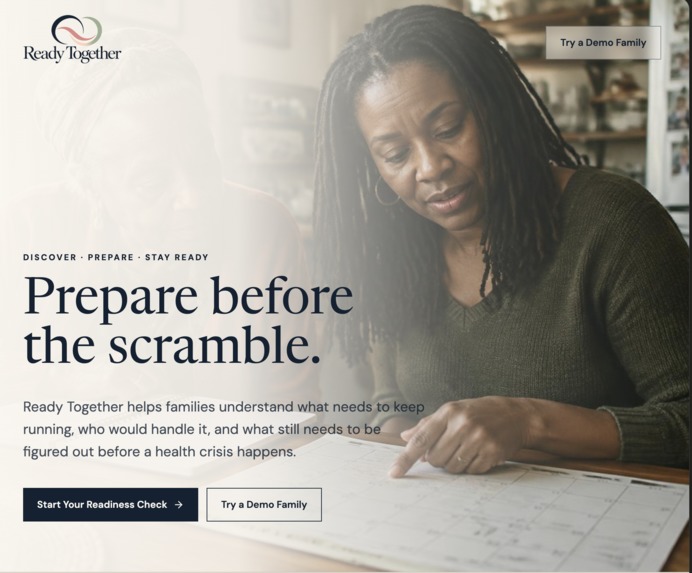
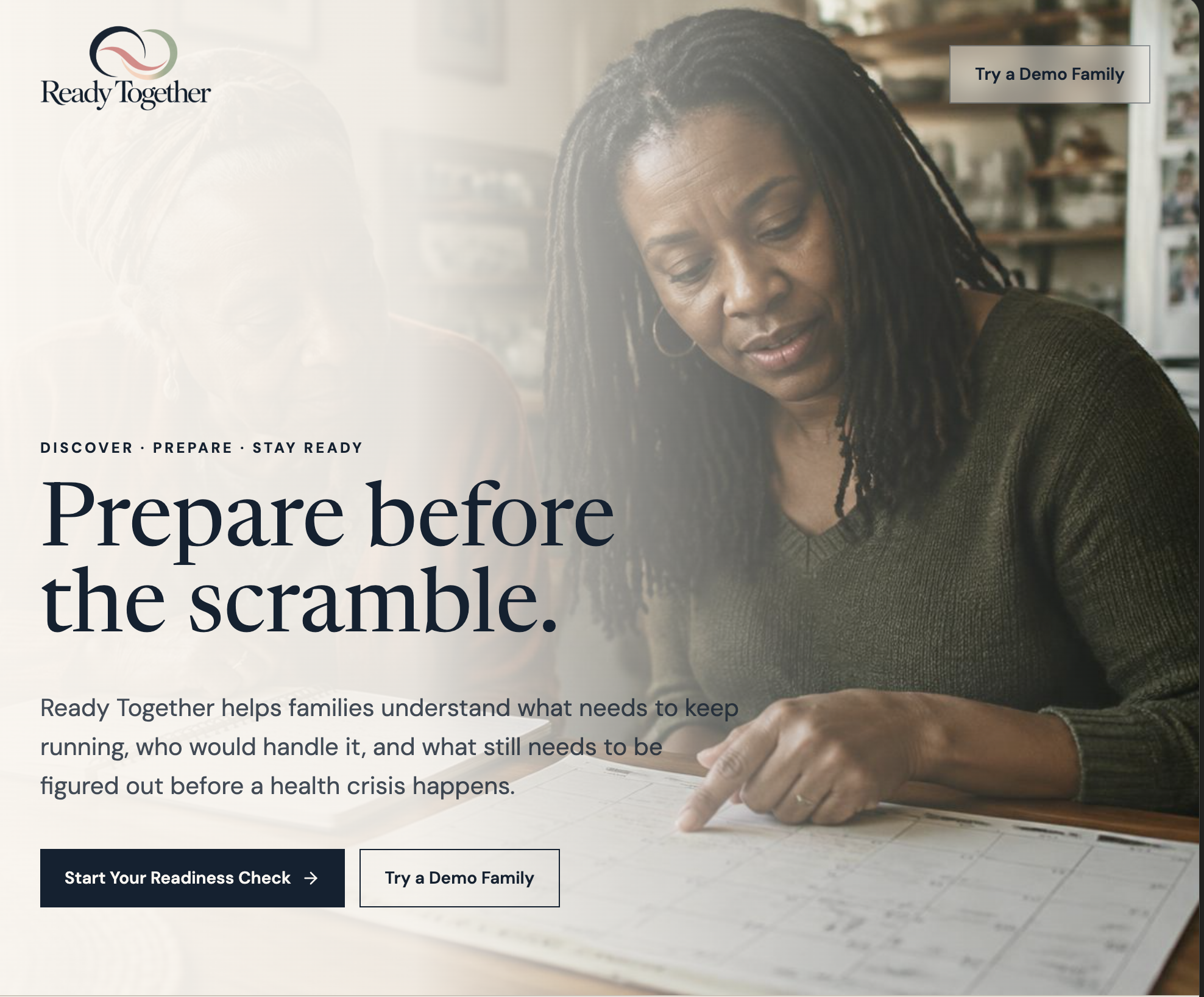
Landing Page
-
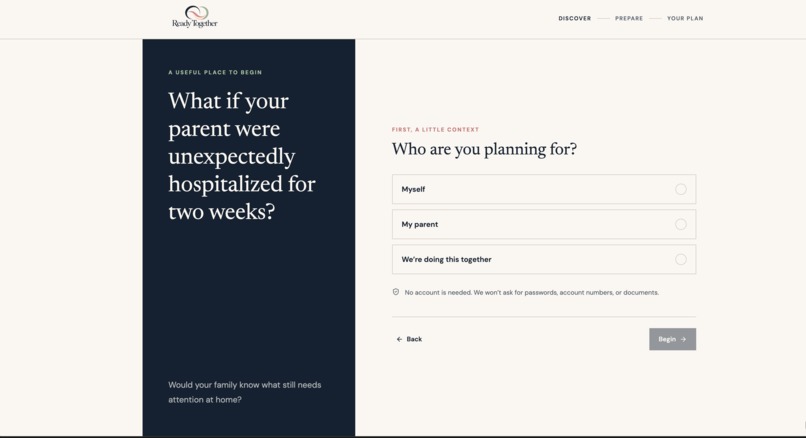
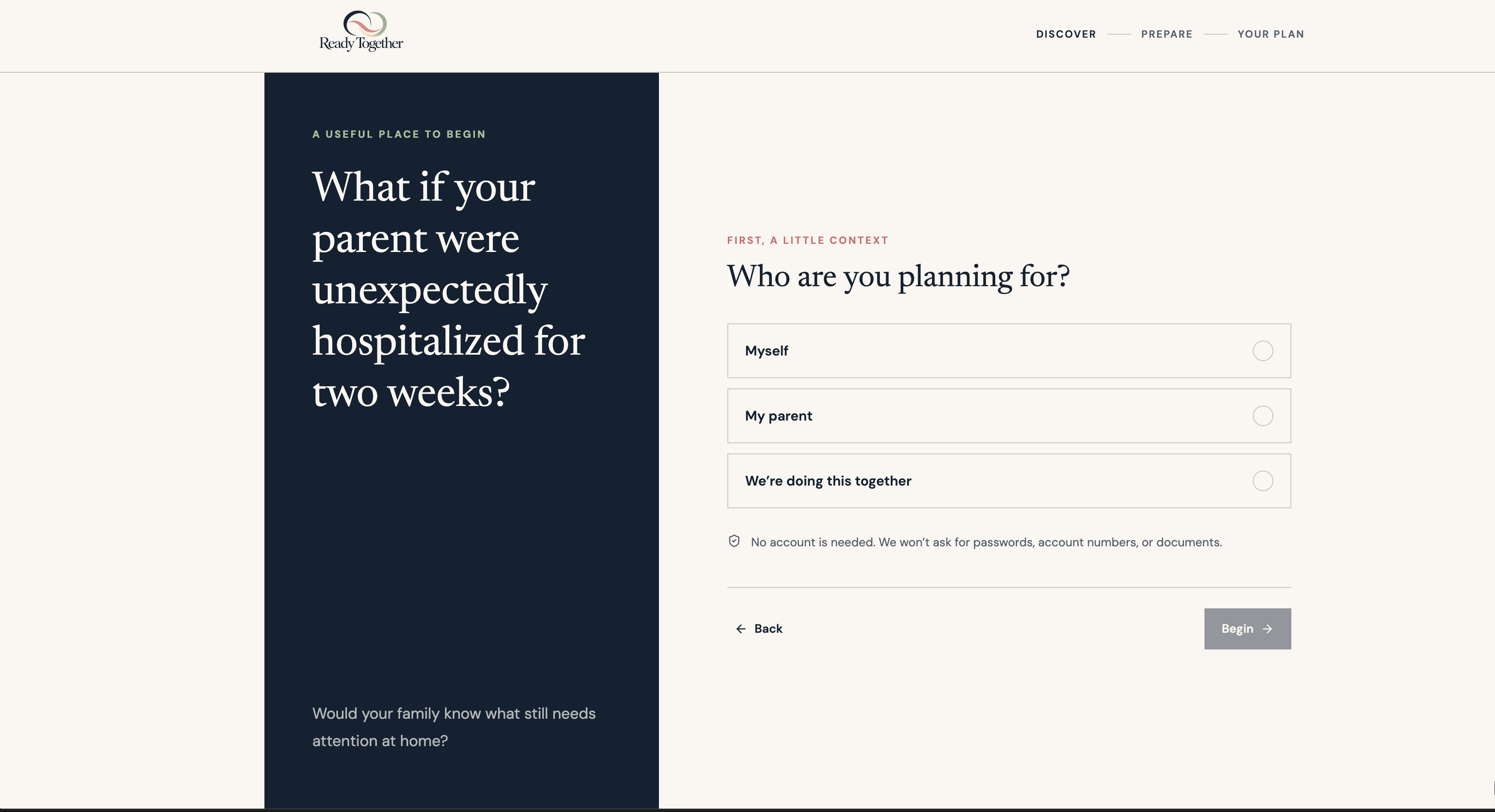
Intake Questionnaire
-
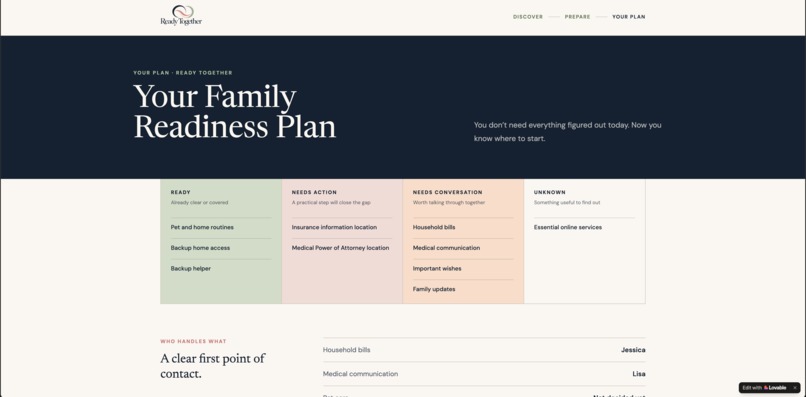
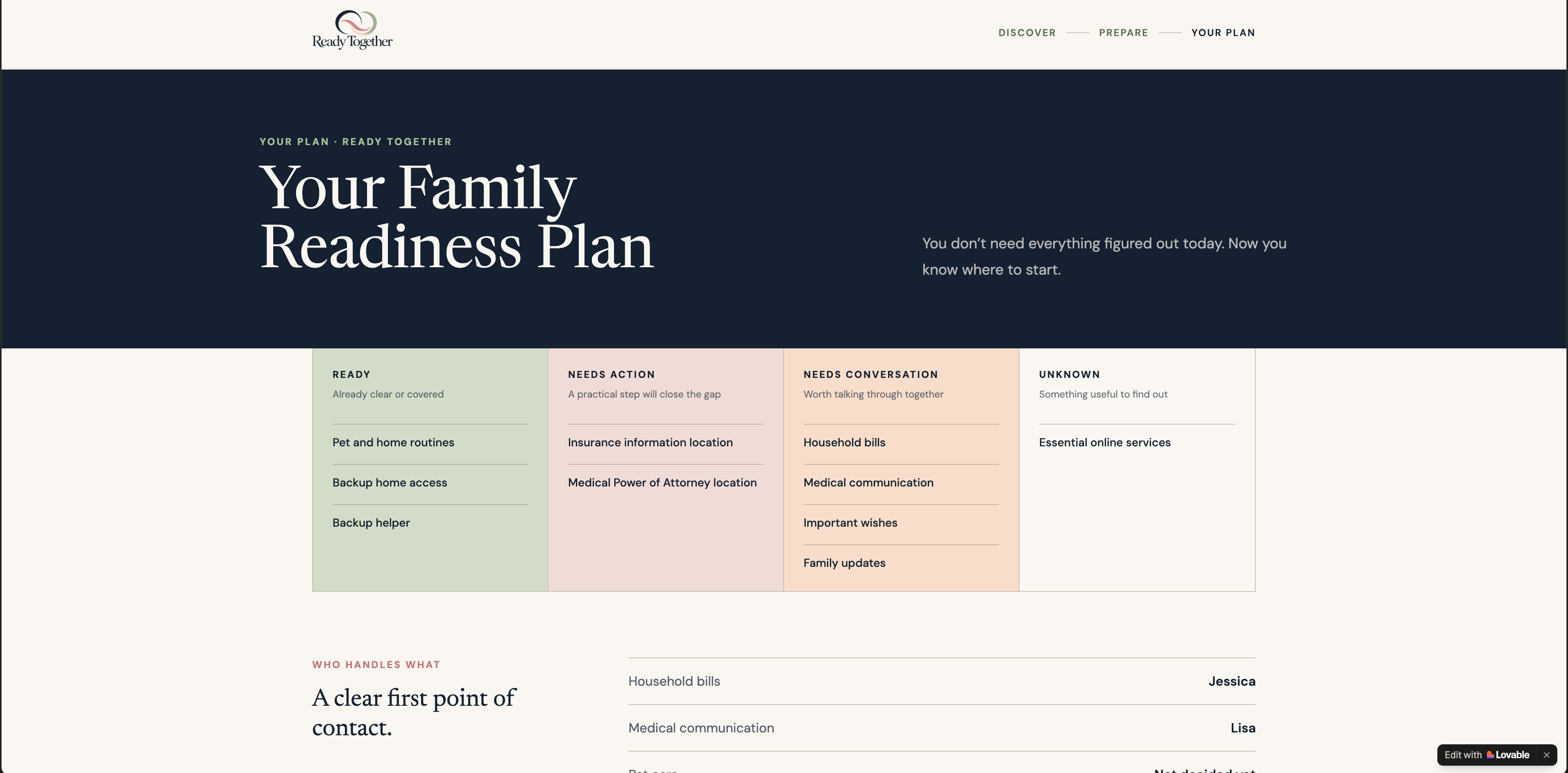
Family Readiness Plan
-
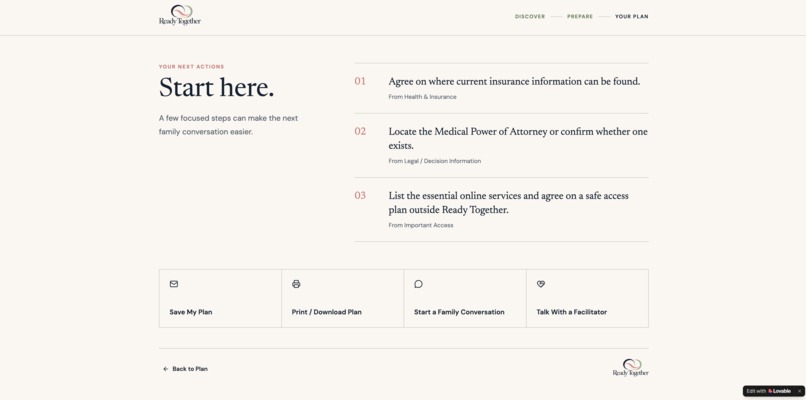
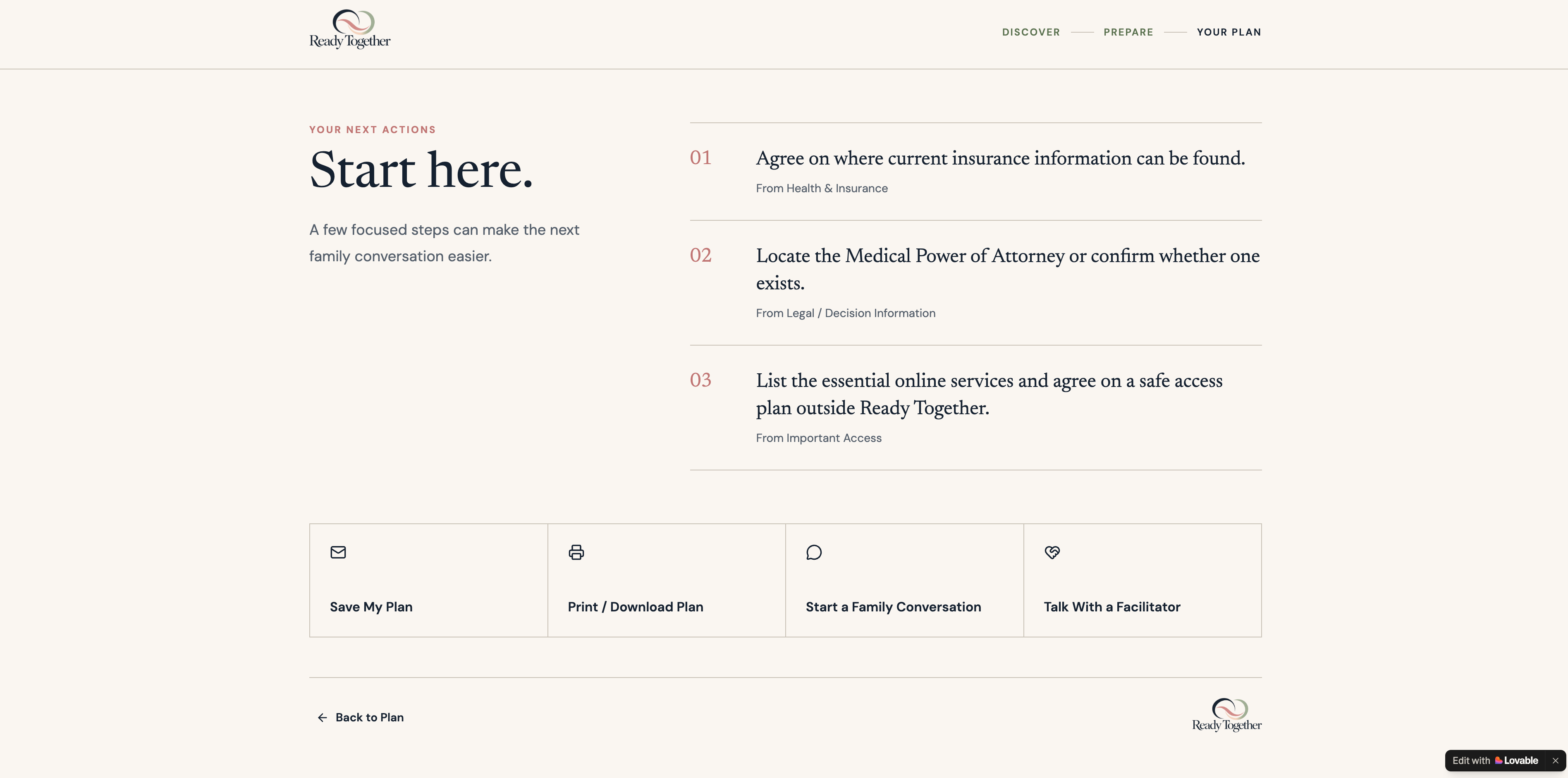
Next actions
Inspiration
The idea began during the hackathon while we were exploring one of the challenges focused on senior re-housing. That challenge opened up a much broader conversation about what families actually experience when an aging parent suddenly has a major health event.
For Whitney, that question was very immediate. Her family is currently navigating a major health crisis with her mom, which has meant figuring out bills, important information, responsibilities, access, care decisions, family communication, and what still needs to keep moving while also trying to be present as a daughter.
Pam connected with the problem from her own firsthand caregiving experience and brought a systems and research perspective to many of the same gaps around preparedness, communication, coordination, and families being forced to figure things out only after a crisis has already started.
That led us to a shared question:
What could families put in place before something happens that would make an already difficult situation even a little easier?
As we talked with other people during the hackathon, we were surprised by how many had experienced their own version of the same problem, either personally or while caring for an aging parent.
That helped us recognize this was not just one family’s experience. It was a broader preparedness problem worth exploring.
What it does
Ready Together focuses on preparedness before a crisis happens.
It gives aging adults and their adult children a guided way to think through the information, responsibilities, relationships, and backup plans that may suddenly matter if the older adult becomes hospitalized or temporarily unable to manage everyday life.
The goal is not simply to store documents.
The goal is to help families identify what they may not have thought about, understand what needs to keep running, decide who would handle what, surface conversations that still need to happen, and create a practical continuity plan before they are forced to figure everything out during a crisis.
How we built it
We started with a broader view of the caregiving journey because there are so many connected stages and challenges: preparation, hospitalization, discharge, ongoing care, housing, family coordination, access, and more.
One of our first decisions was to narrow the problem.
We kept coming back to one question:
What do families wish had already been figured out before the crisis happened?
That led us to focus specifically on the pre-crisis preparedness stage.
From there, we began defining what a guided digital experience, facilitated support model, and family planning process could look like.
We also reviewed existing tools and walked through their user experiences to understand what is already being solved, where those tools are strong, and where there may still be gaps in the experience.
Challenges
One of our biggest challenges was scope.
There are so many related problems in aging and caregiving that it would have been easy to try to solve everything at once. We had to keep pulling ourselves back to the specific stage we wanted to address first.
Another challenge was discovering how many established products and services already exist in this space.
For a moment, that was discouraging.
But instead of treating competition as a reason to stop, we used it as a reason to dig deeper.
We asked:
What would we still need if we were the customer?
That pushed us to think more intentionally about guided discovery, preparedness rather than just storage, scenario-based planning, human support, and community access.
Accomplishments
One of our biggest accomplishments was simply continuing to build while navigating real life.
This project was created during a weekend when both of us had other responsibilities and limited schedules, and Whitney is still actively navigating the family health situation that helped inspire the idea.
Despite that, we moved from a broad problem space to a clearer concept, researched the market, challenged our assumptions, narrowed the audience, developed an MVP, and created an initial prototype that demonstrates the preparedness workflow.
More importantly, we now have something concrete that we can put in front of real families and learn from.
What’s next
Our next step is validation.
We want to talk with more aging adults, adult children, caregivers, and families who have experienced health disruptions to understand whether the gaps we identified match what they have experienced.
We also want to bring in people with deeper expertise in aging services, caregiving, legal and financial planning, privacy and security, community programming, and product development to help us identify what we may still be missing.
From there, we want to test the MVP with a small group of families, understand where the digital experience works on its own and where human guidance adds value, and use what we learn to refine both the product and facilitation model.
The goal now is not to assume we have the final answer.
It is to test whether this approach actually helps families feel more prepared before they are forced to figure things out in the middle of a crisis.
This reads much more like “we built this together” while still being truthful that your current experience was the immediate spark.
Built With
- chatgpt
- gemini
- jarvis
- notebooklm


Log in or sign up for Devpost to join the conversation.