-
-
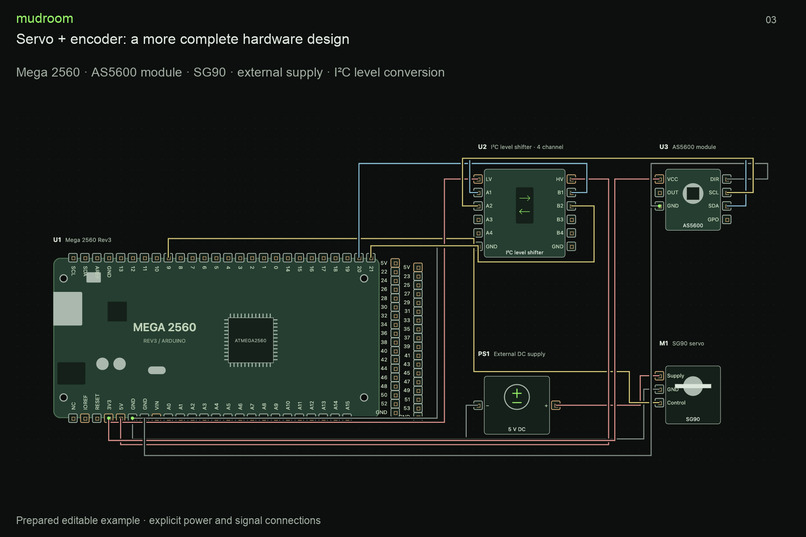
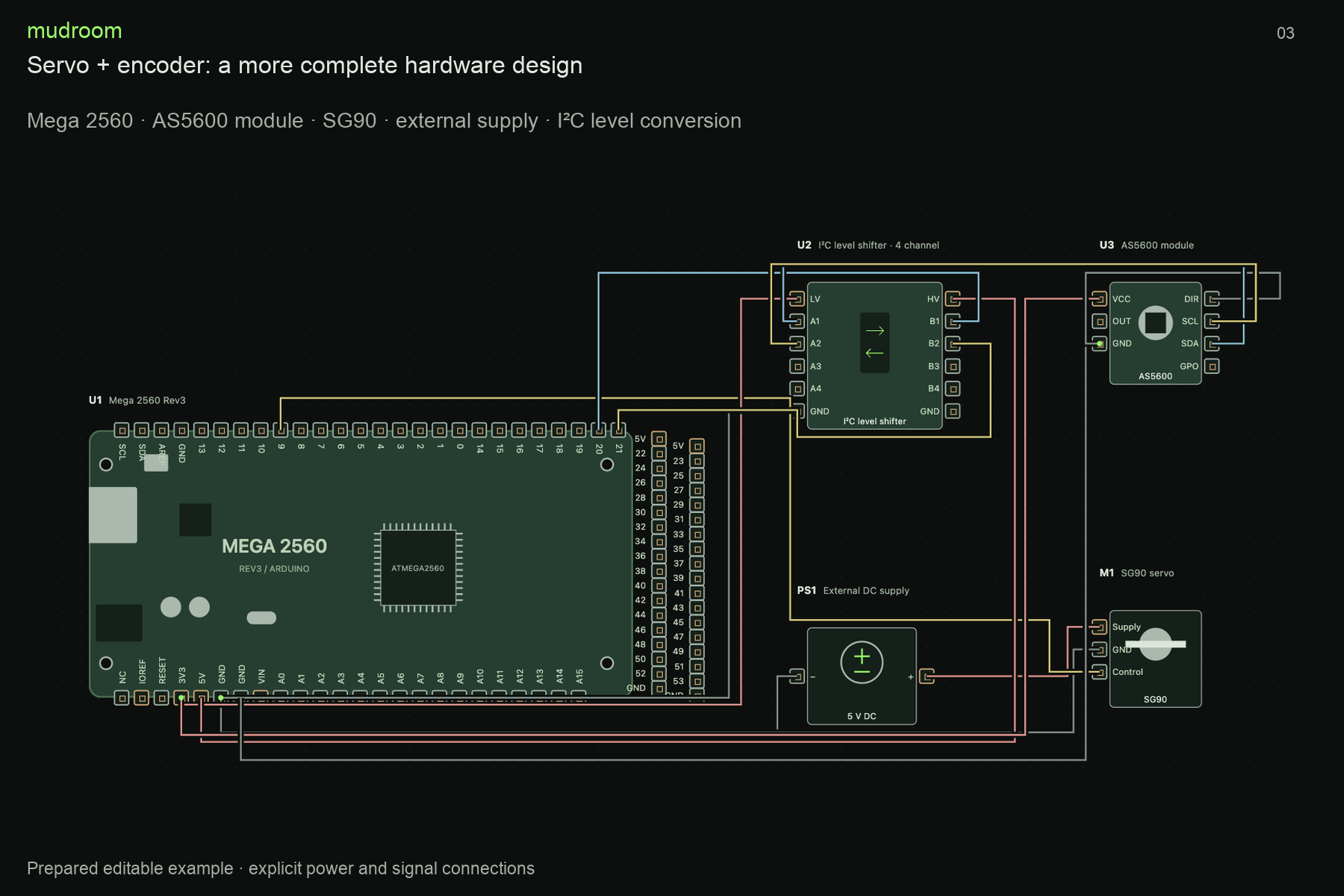
servo encoder
-
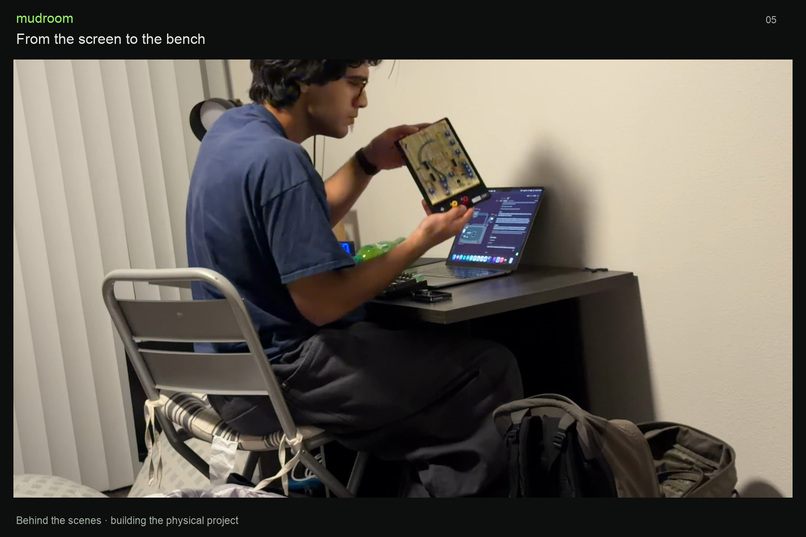
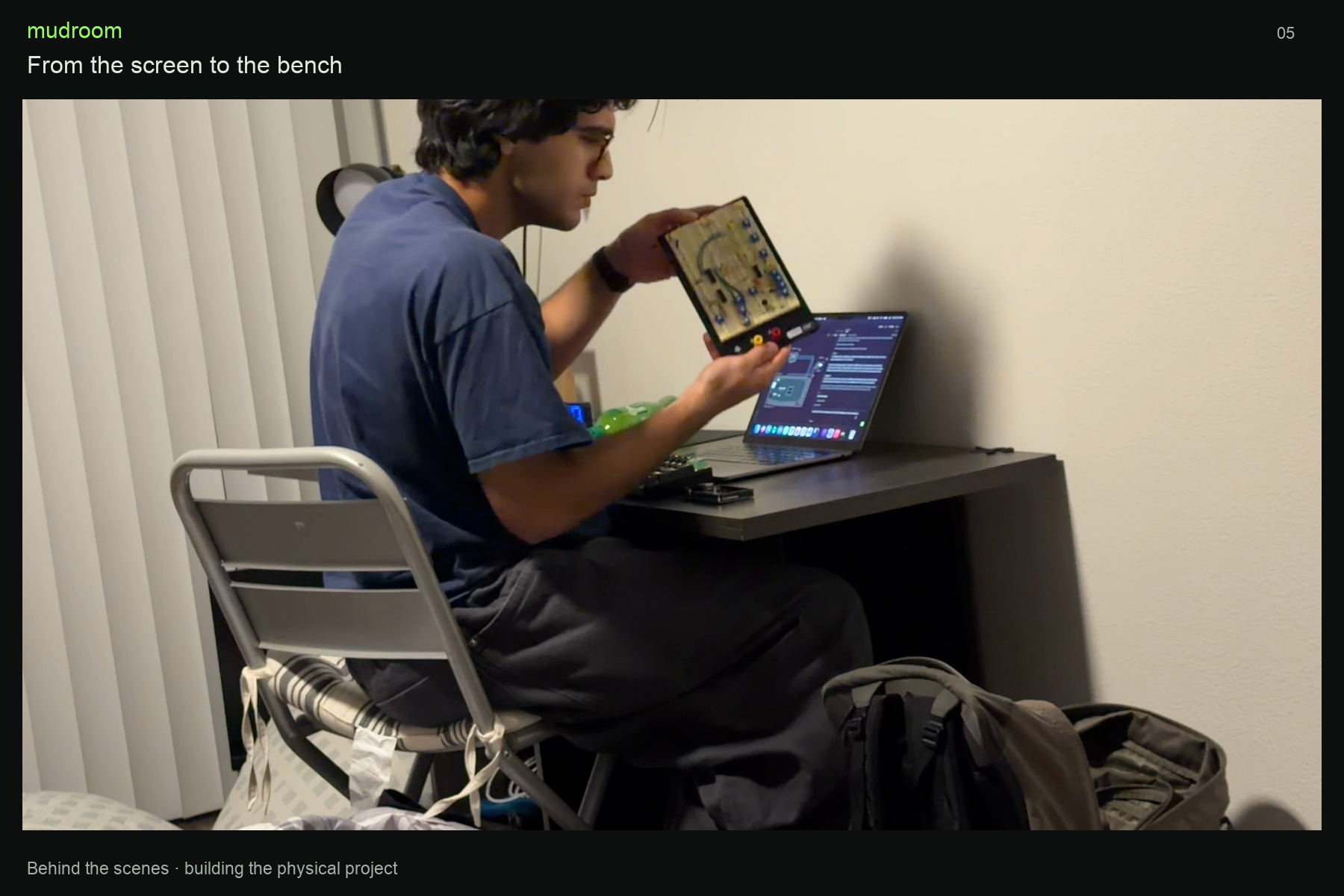
building
-
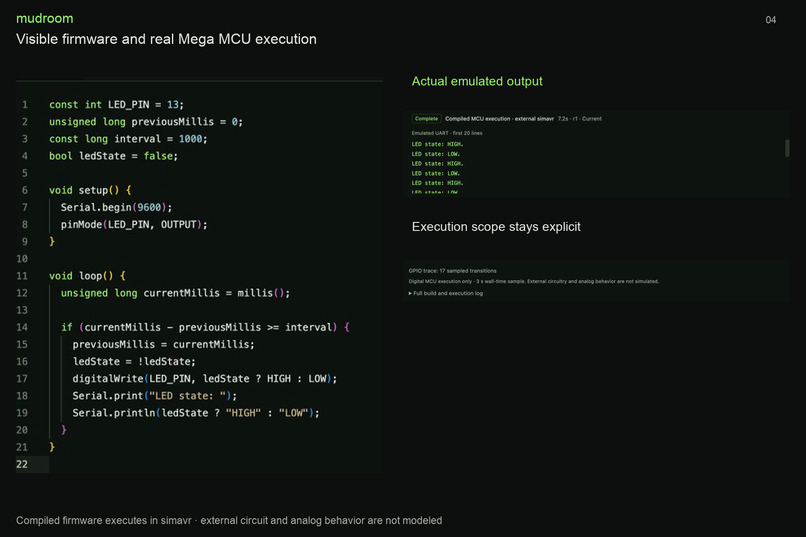
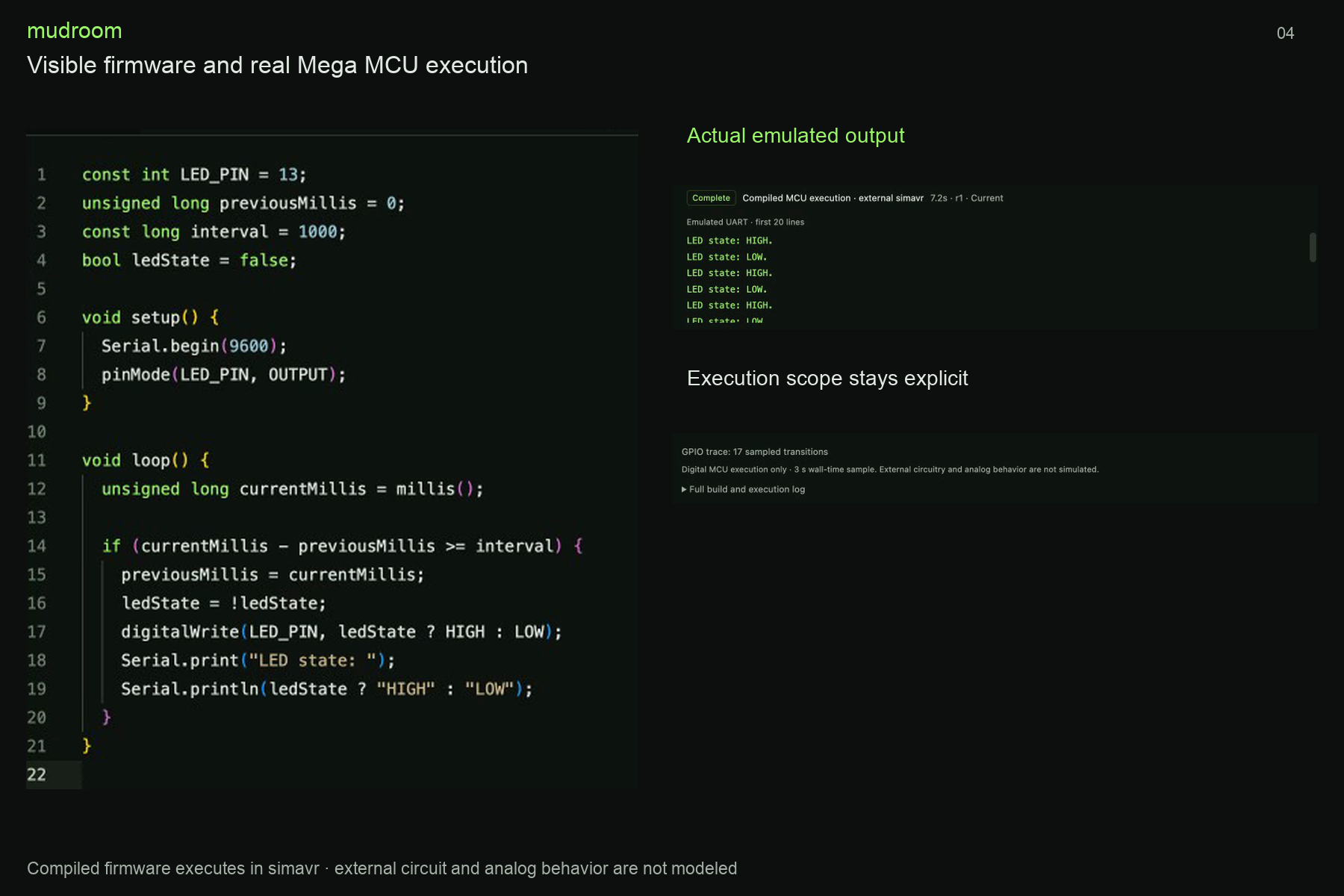
code and mcu output
-
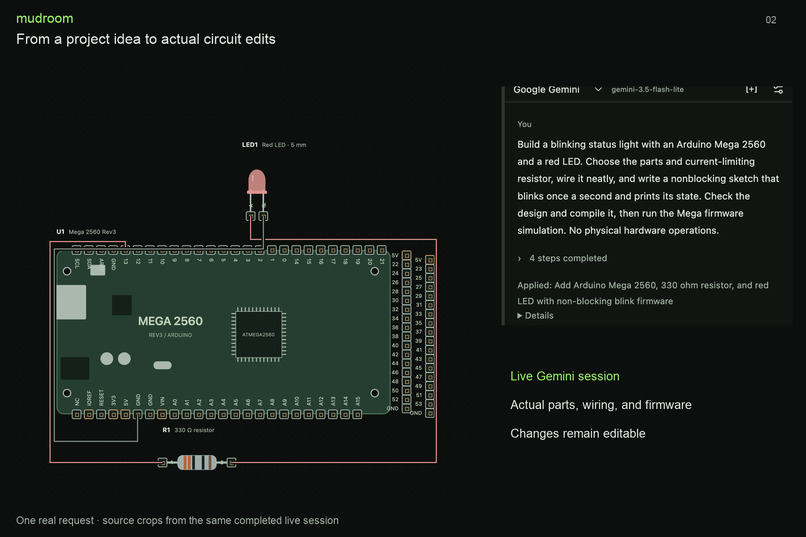
live agent project
-
Inspiration
As an ECE student, I know less about programming than I do circuits. With the advent of agentic AIs, I often find myself uploading code to my arduino without fully knowing how it works. Mudroom speeds up the embedded development process, and teaches users fundamental skills in hardware and software to build complex projects from scratch.
What it does
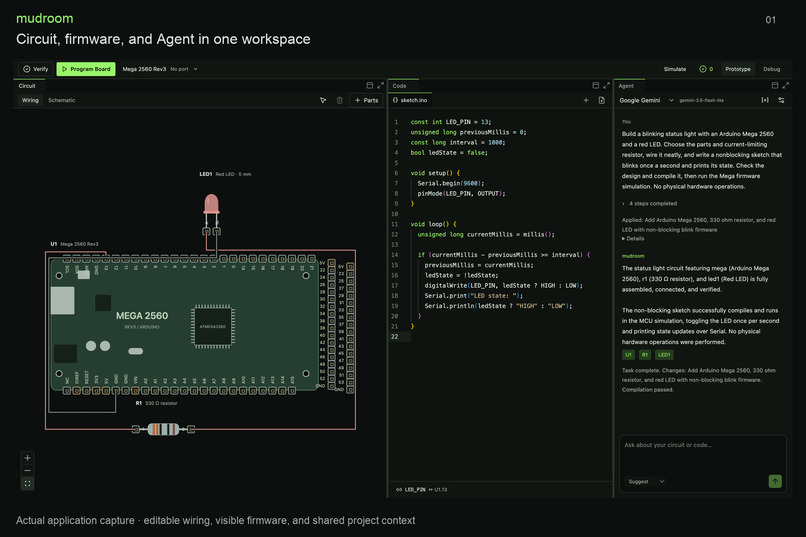
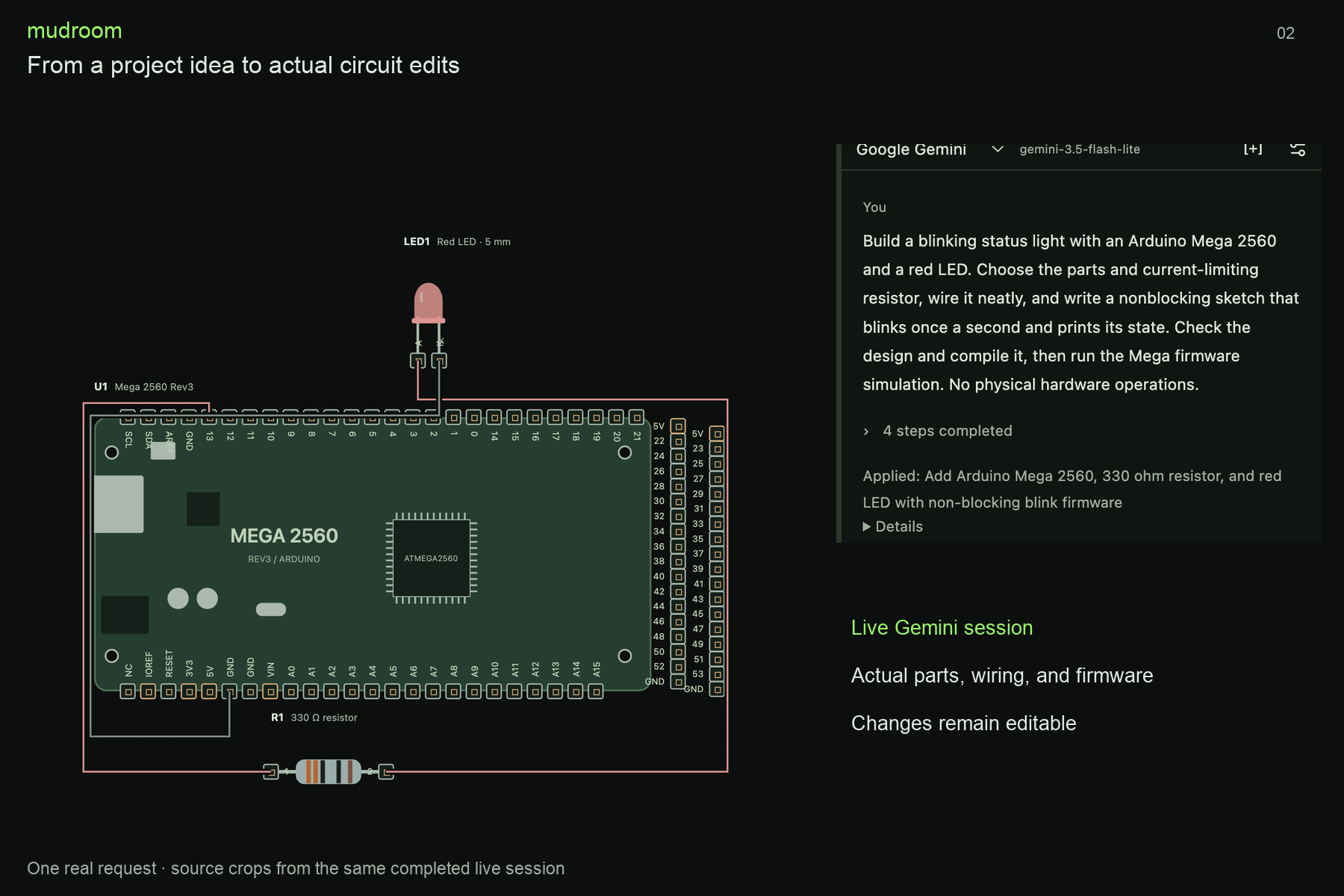
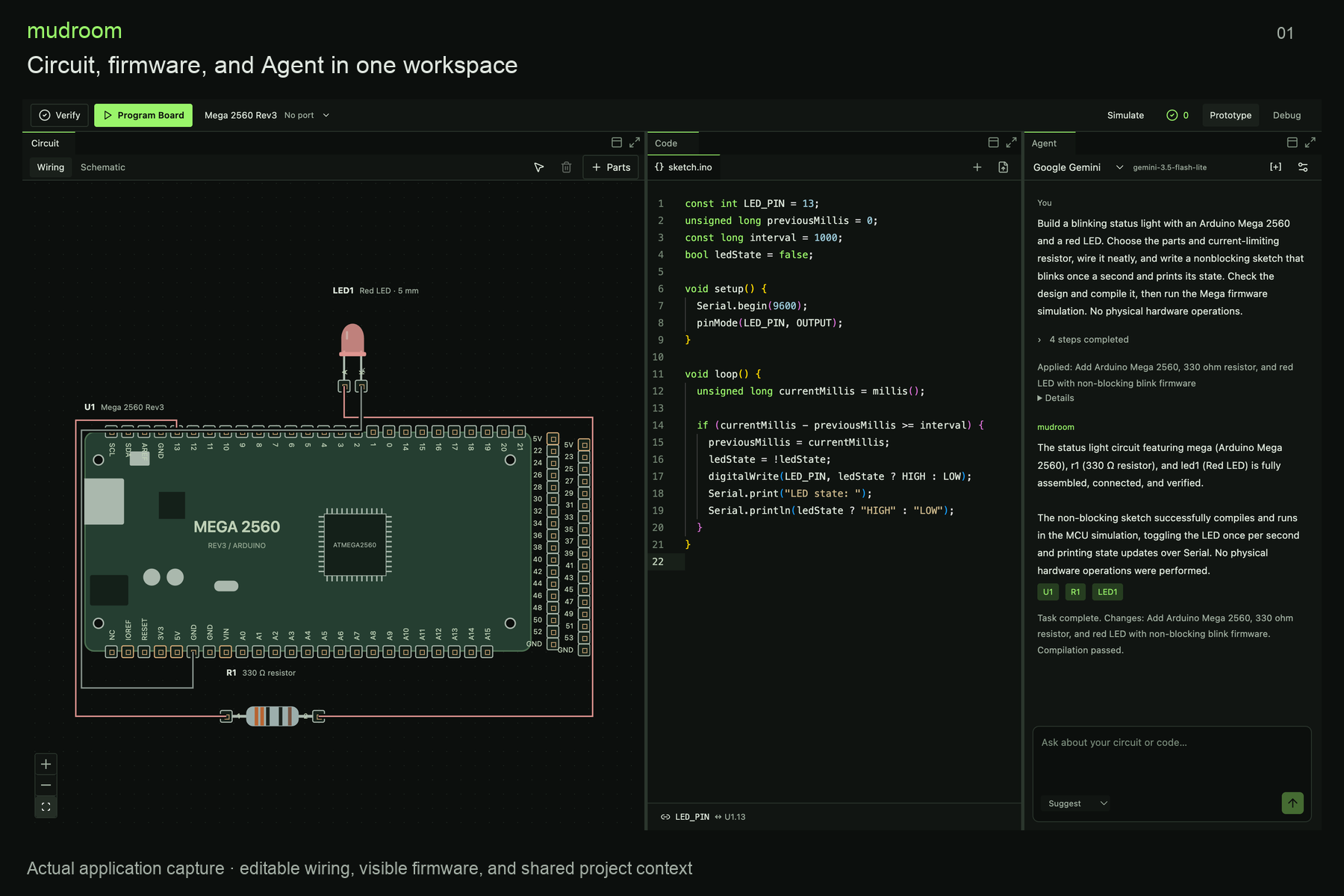
mudroom puts circuits, code, and an AI agent in the same workspace. You can describe a project, watch the agent build an editable circuit and write firmware, then inspect and change either yourself. It also brings compilation, board programming, and serial debugging into the app.
How we built it
I built mudroom with Electron, React, and TypeScript, using Gemini as the AI collaborator. The agent edits the same structured project as the user, so its changes appear in the actual circuit and code editor. Arduino CLI handles compilation and programming.
Challenges we ran into
Getting the agent to finish a working design was harder than getting it to suggest one. Sometimes it would “fix” a warning by disconnecting the component that caused it. I had to make sure repairs preserved the intended behavior, and that compilation wasn’t mistaken for proof that the physical circuit works.
Accomplishments that we're proud of
it works
What we learned
The visual design is extremely important for something like this, and required many tweaks. It has to be concise, deliver useful information, and be easy to pick up and use but still technical.
What's next for mudroom
I want to expand the component library, improve wire routing, and test the programming and debugging workflow on more physical hardware.


Log in or sign up for Devpost to join the conversation.