-
-
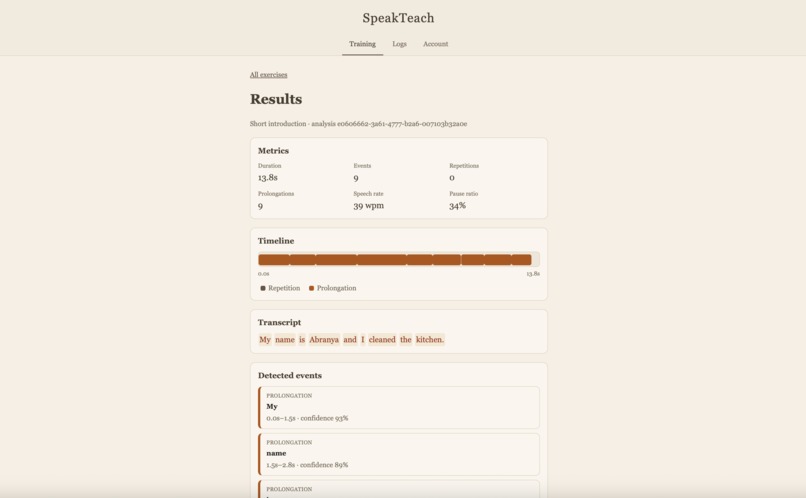
Training Feedback
-
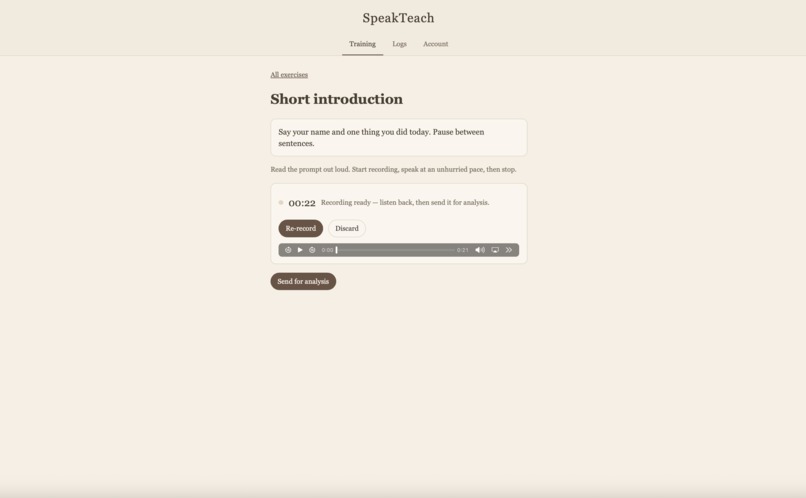
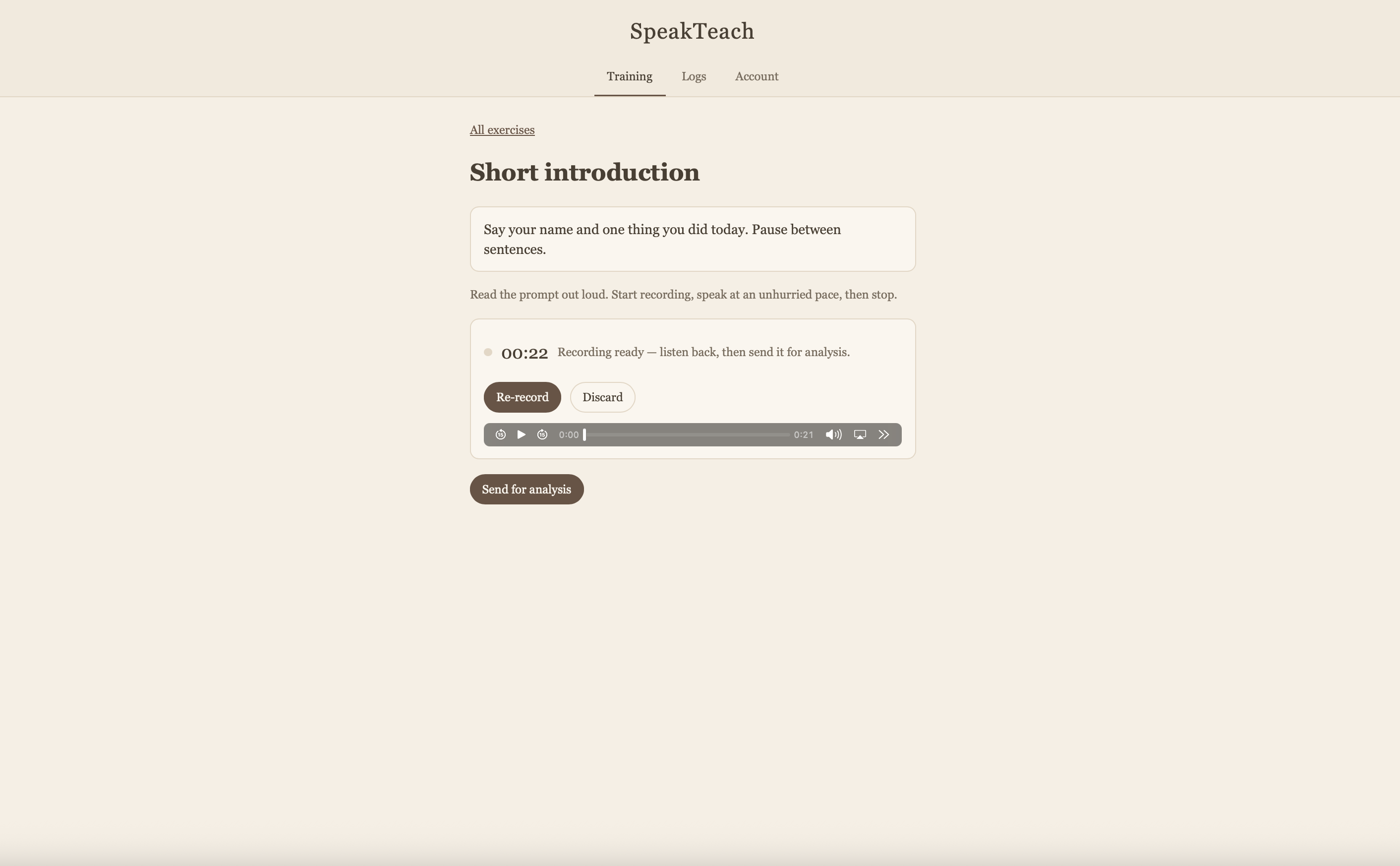
Recording Page
-
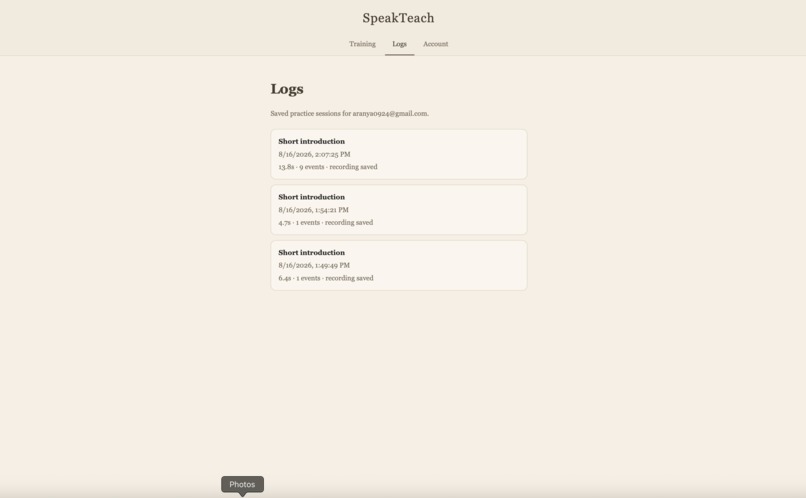
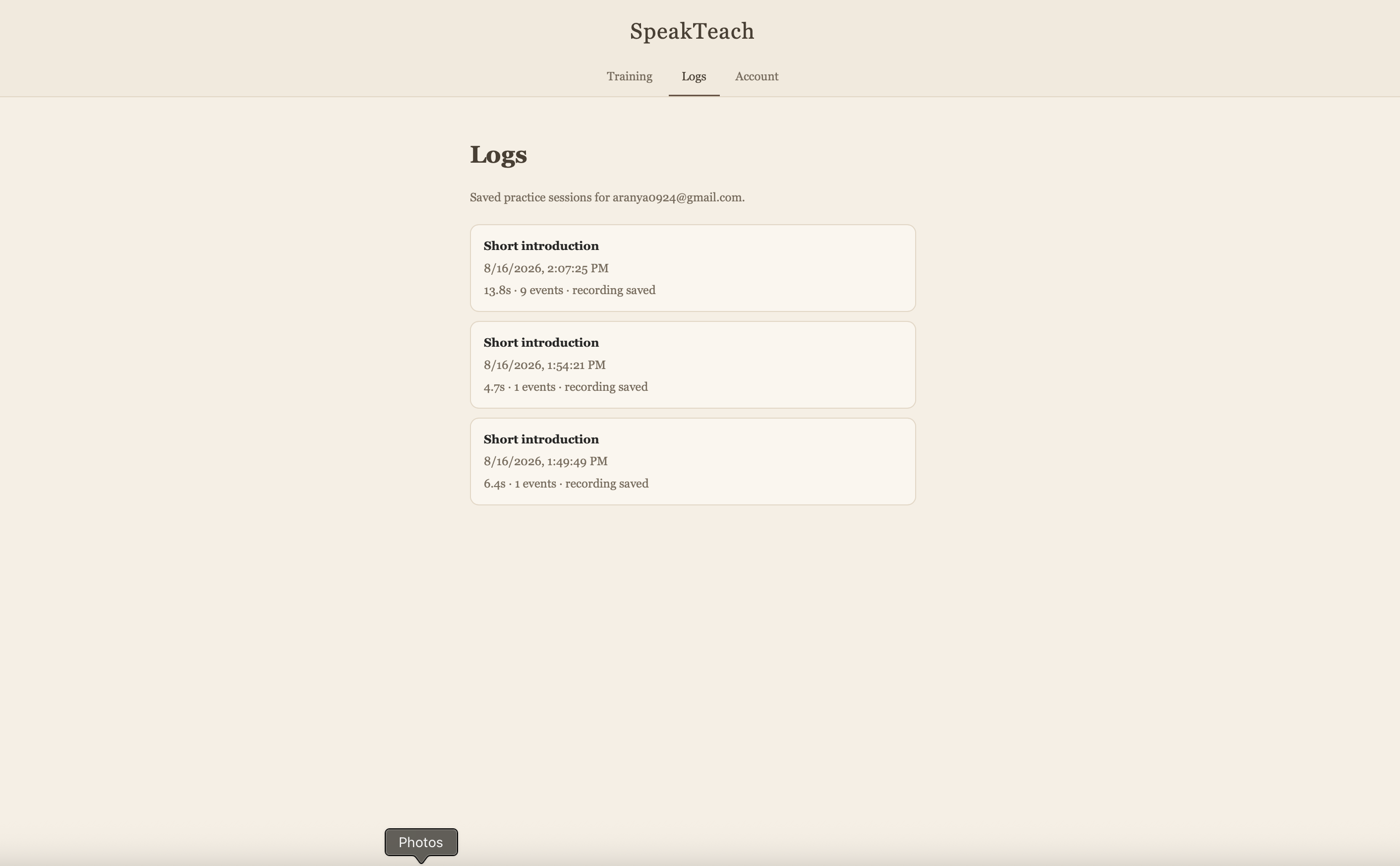
Previous Training Logs
SpeakTeach
What does it do?
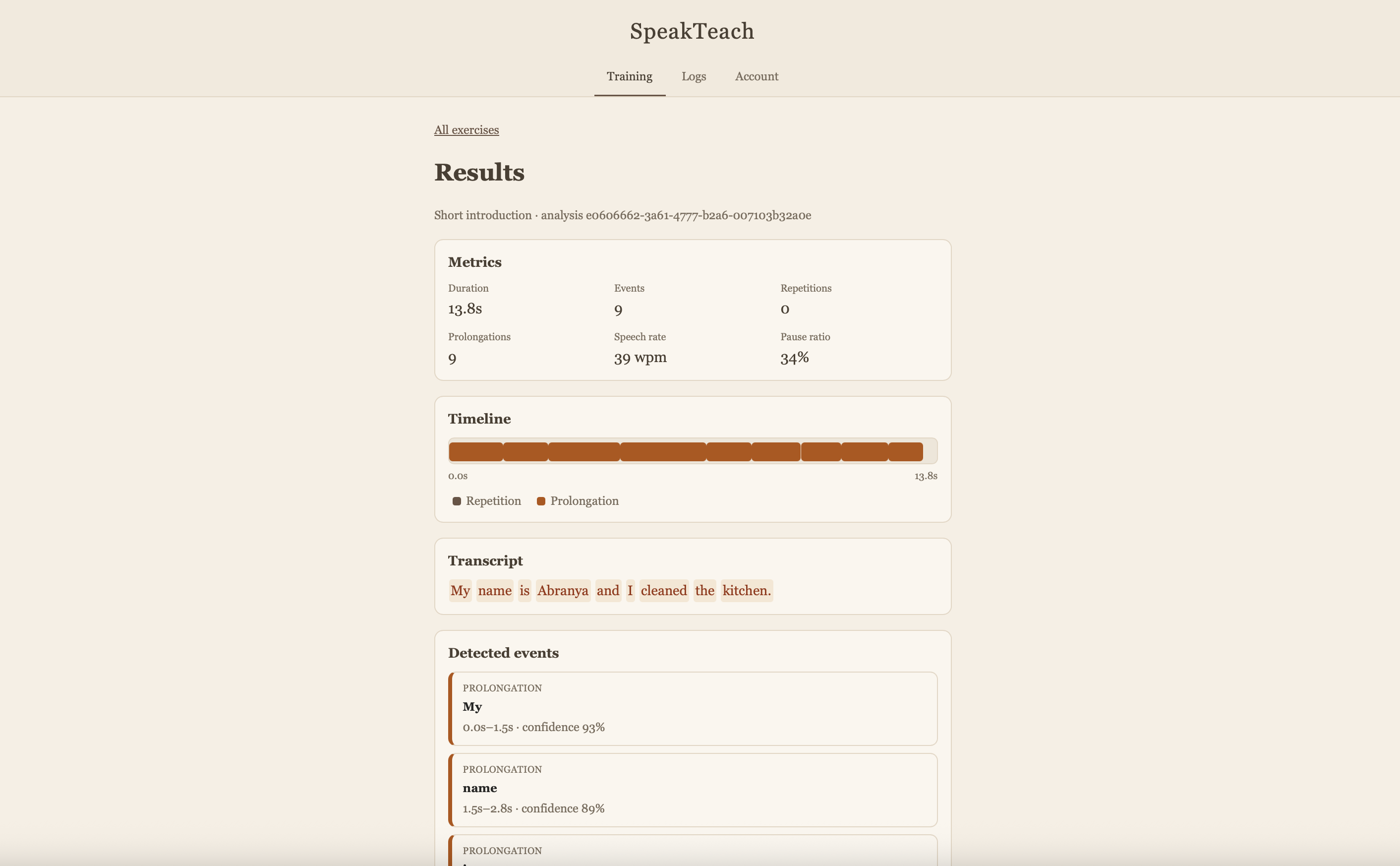
SpeakTeach is a web app that allows people who stutter to practice their speech in a private space. Users can choose exercises, record themselves performing them, and receive a transcript with feedback about moments of repetition and prolongation. The app also shows speech rate, allowing users to adjust their speed to speak more clearly. Users can create an account that saves previous audio recording sessions and their feedback as a way to track progress over time.
What inspired it?
We were inspired by stuttering problems in our siblings and ourselves. Having a speech therapist available often is not always possible. We wanted to create something that does not necessarily substitute for professional help but can be a helpful supplement. Allowing users to practice on their own can help keep track of progression or regression between sessions, as well as build better speaking habits through repetition.
What technologies did you use? Did you use AI? If you used AI, what model? Did you use a free or paid tier?
We built the frontend using React, TypeScript, and Vite and used FastAPI with Python for the backend. We used Supabase for authentication and for storing previous sessions' audio and feedback.
The speech analysis was done with OpenAI Whisper using the tiny.en model locally. Whisper creates the transcript and timestamps for spoken words. We then created rules for what could be considered "events," such as sounds or words being repeated or prolonged, based on the timestamps and transcript. These events are then classified and presented to the user alongside advice that may assist in improving those speech patterns. The feedback is rule-based and is not generated by an LLM.
AI was also used during the development of the project. ChatGPT was used to find useful software and help plan the monorepo for the project. AI coding agents were also used during development, including Grok 4.5 and Grok 4.6. We used a combination of free access and a free trial of a paid tier during development.
How we built it
We built SpeakTeach using AI agents and detailed prompts, while also doing research on the software we used and reading documentation to understand how everything worked. We also used a multi-agent workflow to work on different parts of the project.
Challenges we ran into
The biggest challenge we faced was using the tiny.en Whisper model and creating rules that could accurately notice the different speech events, especially repetitions and prolongations.
Accomplishments that we're proud of
We are most proud of the recording and logging system. It allows users to save previous sessions and feedback, giving the app more long-term value instead of only being useful for one recording.
What we learned
We learned how to use Supabase to store user data and recordings, as well as how to work with multi-agent workflows while building a larger project.
What's next for SpeakTeach
In the future, we hope to add more exercises that can change daily, more detailed speech detection and feedback, and accommodations for more speech disorders.
Which track are you submitting to?
We are submitting SpeakTeach to the Health Track.
Team Contributions
Aranya: I worked on the session logging system, the audio recording system, and the speech analysis system. Rose: Rose worked on the video editing, authentication system, Supabase setup, and project documentation.
Built With
- fastapi
- python
- react
- supabase
- typescript
- vite
- whisper


Log in or sign up for Devpost to join the conversation.