-
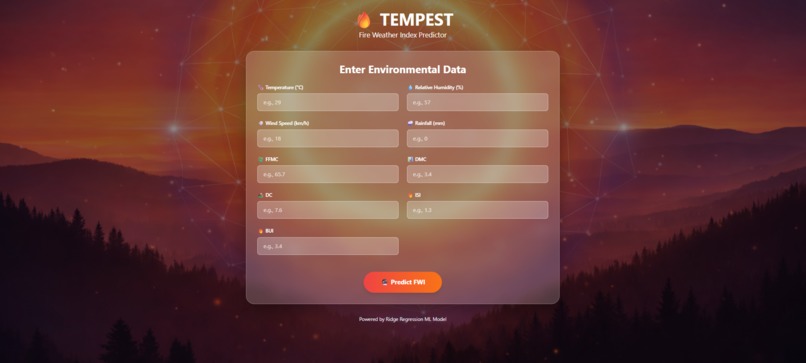
This is the frontal view..if it interests u then there is my repo see my project
Inspiration
Wildfires are becoming more frequent and destructive due to rising temperatures, prolonged droughts, and changing climate patterns. Existing fire risk data is often complex and difficult to interpret for non-experts. Tempest was inspired by the need to translate climate and fire weather data into clear, actionable wildfire risk insights that support early prevention rather than reactive response.
What it does
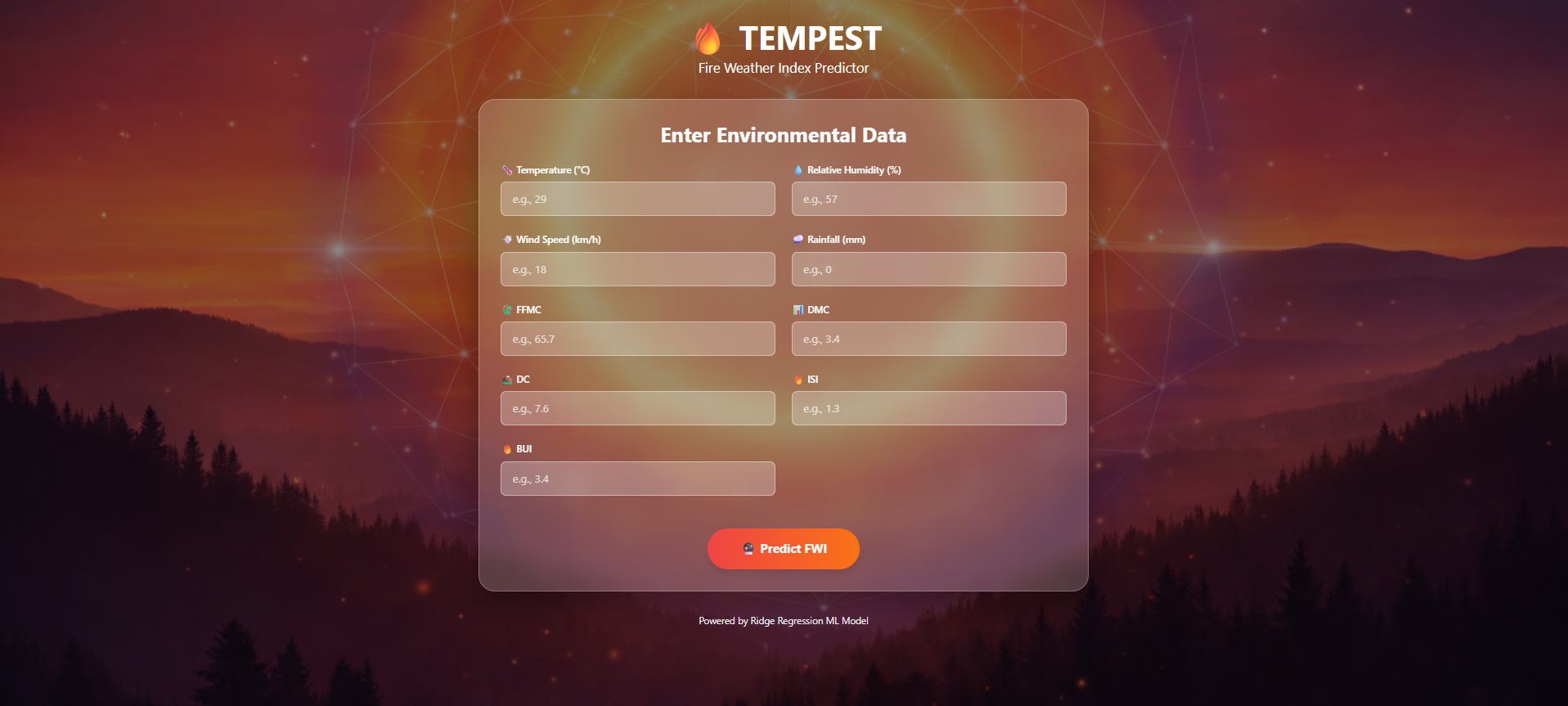
Tempest FWI predicts forest fire risk levels using meteorological data and Fire Weather Index (FWI) components. Users input environmental parameters such as temperature, humidity, wind speed, rainfall, and fuel moisture indicators. The system outputs a predicted Fire Weather Index value, classifies the risk as Low, Moderate, High, or Extreme, and explains what each level means in real-world wildfire behaviour terms.
How we built it
trained a Ridge Regression machine learning model using the Algerian Forest Fires dataset, performed feature selection and preprocessing for stable predictions, and implemented a Flask backend for inference. The frontend was built using Tailwind CSS with a glassmorphism design and climate-themed visuals to improve clarity, usability, and trust in the predictions.
Challenges we ran into
Key challenges included selecting the most relevant features while avoiding overfitting, maintaining consistent data scaling between training and inference, translating technical FWI values into plain-language explanations, and balancing a visually rich interface with readability and accessibility
Accomplishments that we're proud of
We successfully built a complete end-to-end ML web application, achieved reliable and interpretable prediction performance, created a polished and professional user interface, and combined climate science, machine learning, and UX design to make wildfire risk assessment accessible and understandable.
What we learned
We learned the importance of feature engineering in applied machine learning, how UI/UX design influences trust in ML outputs, why explaining the meaning of predictions is as important as the predictions themselves, and how to balance technical depth with real-world usability.
What's next for Tempest FWI — Climate-Aware Wildfire Risk Predictor
Future plans include integrating real-time weather APIs for live risk prediction, adding geographical mapping and regional visualisation, supporting batch predictions for large-scale assessments, exploring advanced models for improved accuracy, and adapting the platform for use by forest departments and emergency planners.


Log in or sign up for Devpost to join the conversation.