-
-

-
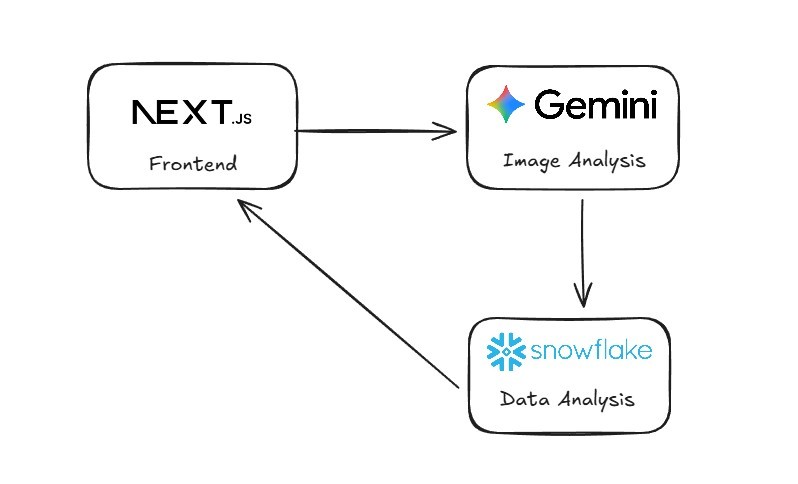
System Design of PlasticLens
-
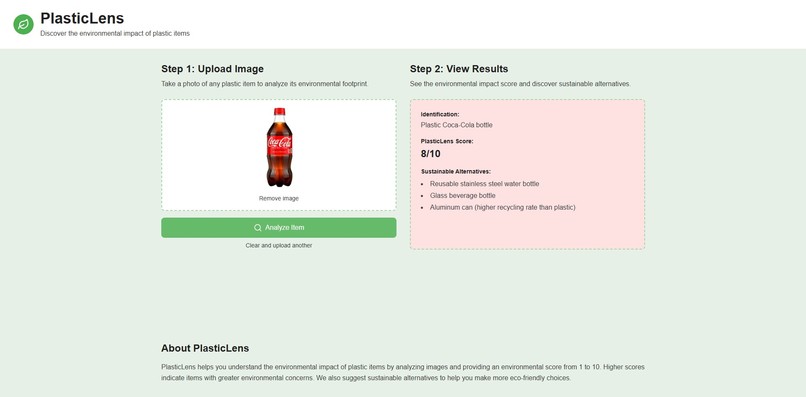
Website

Inspiration
Single-use plastics are deeply embedded in everyday life on college campuses, from food packaging to disposable drink containers. While recycling programs exist, the environmental impact of these plastics is often unclear at the moment of use. We were inspired to build PlasticLens to make the environmental cost of plastic products more visible and understandable, helping Georgetown community members make more informed and sustainable decisions.
What it does
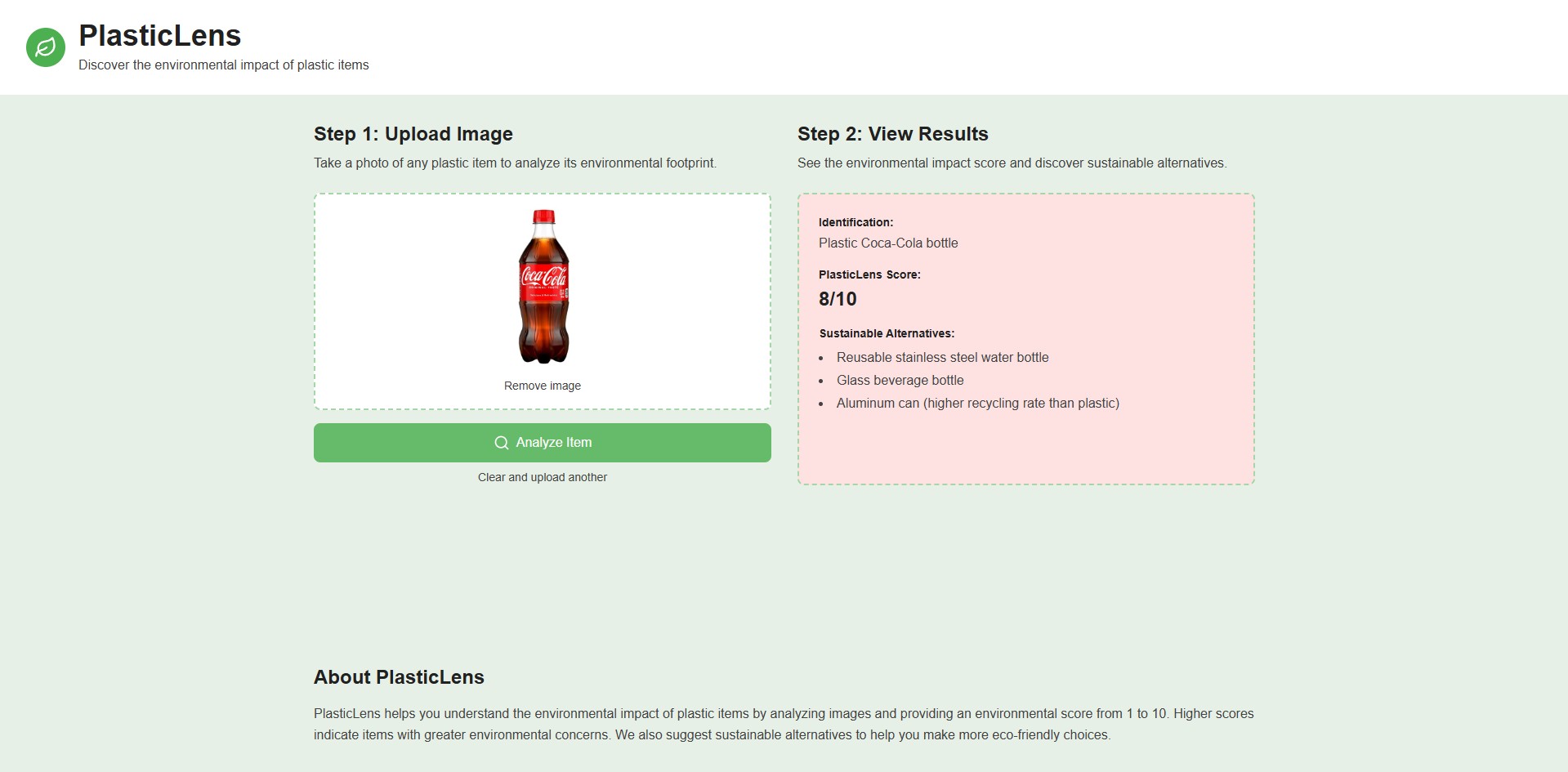
PlasticLens is a web-based prototype that allows users to take a photo of a plastic item and receive an environmental impact score. The score is generated using AI-assisted analysis of the item’s packaging and evaluates factors such as recyclability, estimated plastic type, chemical safety, and local recycling availability. The goal is to surface environmental information in a simple, accessible way.
How we built it
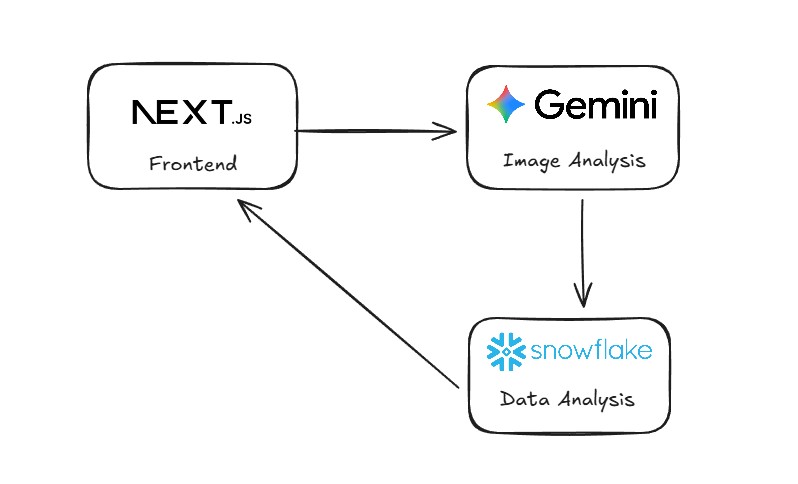
We built PlasticLens as a lightweight web application. Users upload an image of a plastic product, which is analyzed using the Google Gemini API to determine what it depicts. Then it is passed into a scoring framework processed using Snowflake Cortex AI, where sustainability metrics and reference data are applied. The final environmental score is then displayed to the user through the web interface.
Challenges we ran into
One of the biggest challenges was the lack of standardized public data linking consumer products to exact plastic compositions. To address this, we designed PlasticLens as an AI-assisted estimation tool rather than a system that claims exact material identification. Balancing technical ambition with transparency and realism within a limited hackathon timeframe was also a key challenge.
Accomplishments that we're proud of
We’re proud of building a working prototype that combines AI image analysis with sustainability-focused scoring in a short amount of time. We also successfully designed a system that communicates environmental impact responsibly, without overstating accuracy, while keeping the user experience simple and intuitive.
What we learned
Through this project, we learned how to integrate multimodal AI into a real-world sustainability application, how to design scoring systems using imperfect data, and how to collaborate effectively under time constraints. We also gained insight into the challenges of translating environmental data into actionable, user-friendly information.
What's next for PlasticLens
In the future, PlasticLens could be expanded with more robust product databases, improved campus-specific recycling data, and deeper educational insights into plastic reduction. The platform could also be adapted for broader use across campuses to support sustainability initiatives focused on reducing single-use plastic consumption. We hope to have it also run it on plasticlens.tech.
Built With
- gemini
- next.js
- snowflake
- typescript


Log in or sign up for Devpost to join the conversation.