Inspiration
We all noticed in our own local communities and in our college community that many people were not donating their goods to pantries simply due to inconvenience or lack of awareness. As a result, millions are left hungry every year. We hope that our application can streamline the donation process, empowering everyone to do their part in combating food insecurity and reducing waste.
What it does
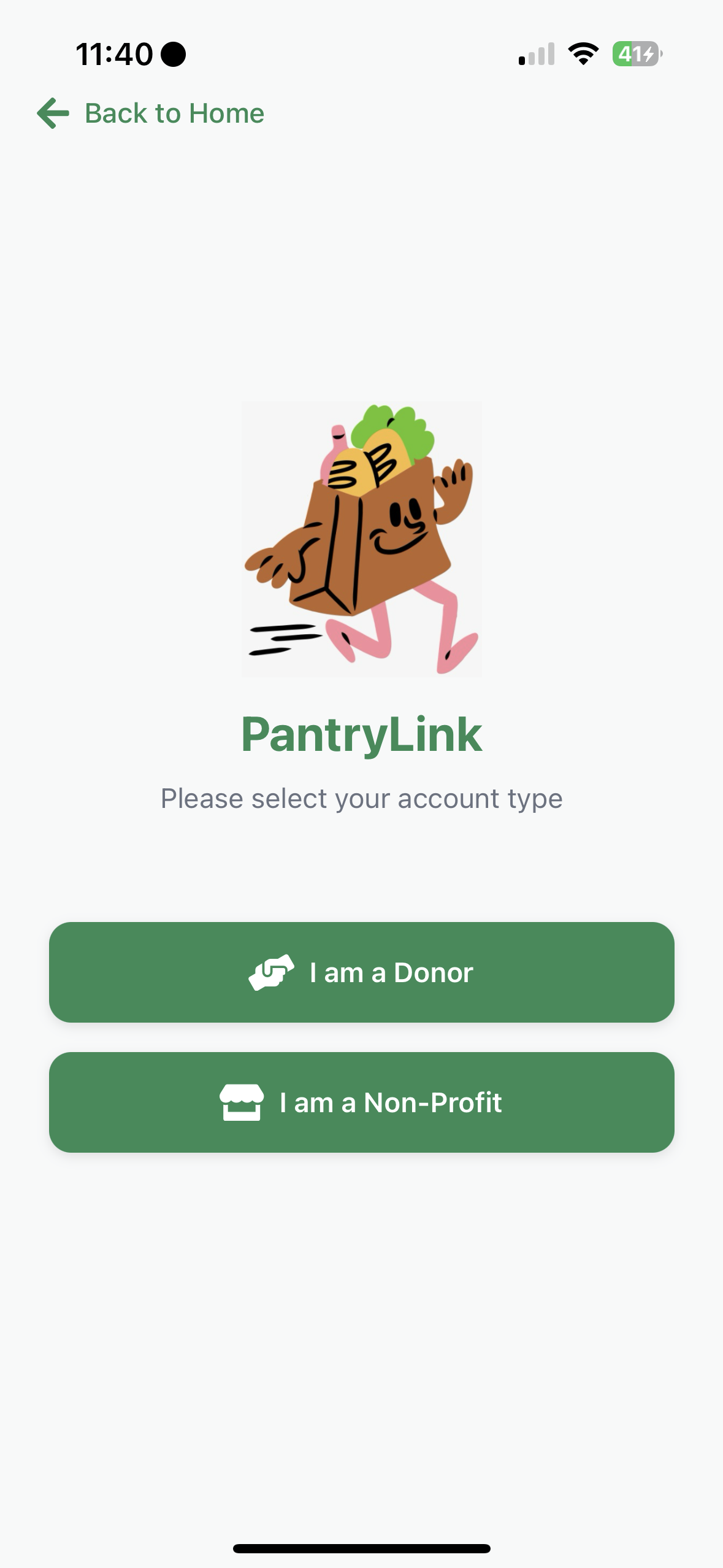
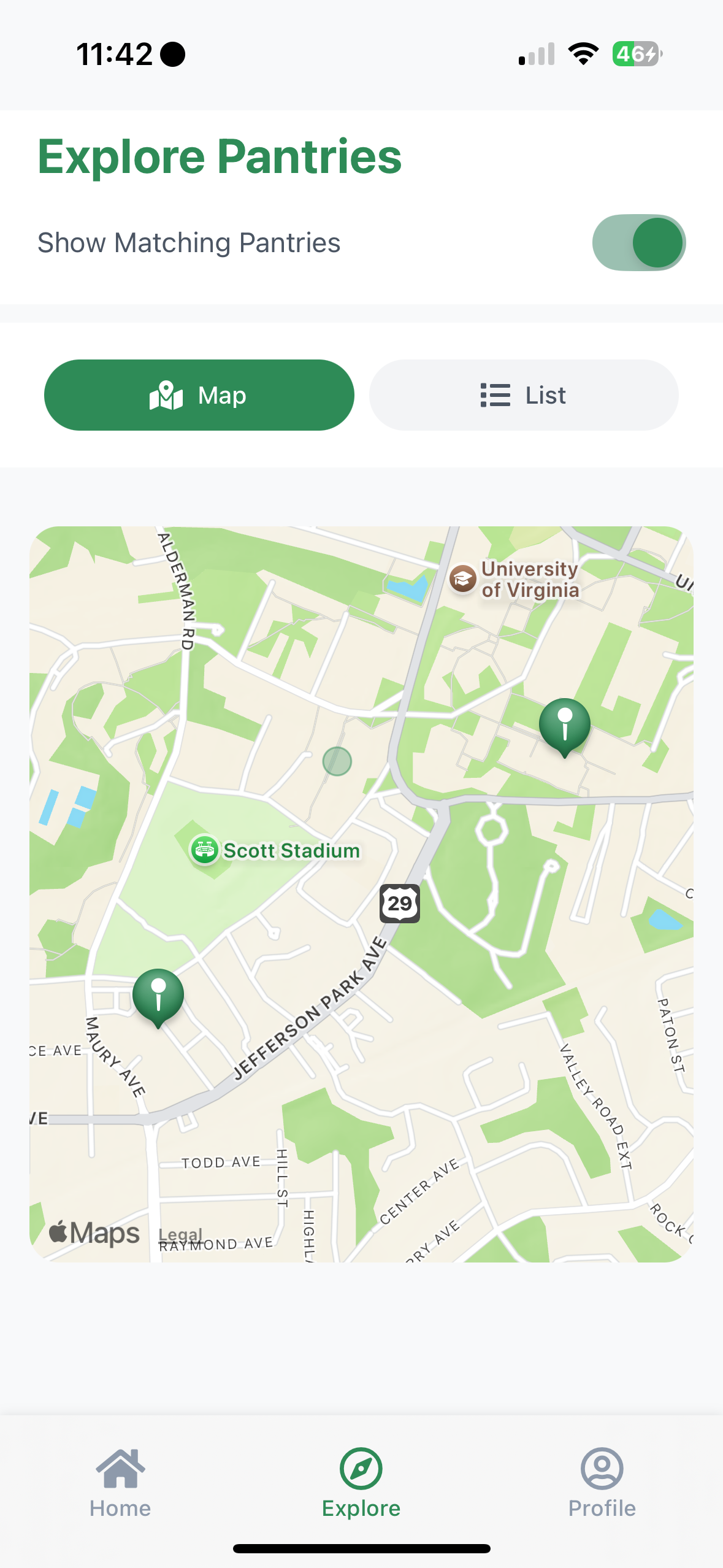
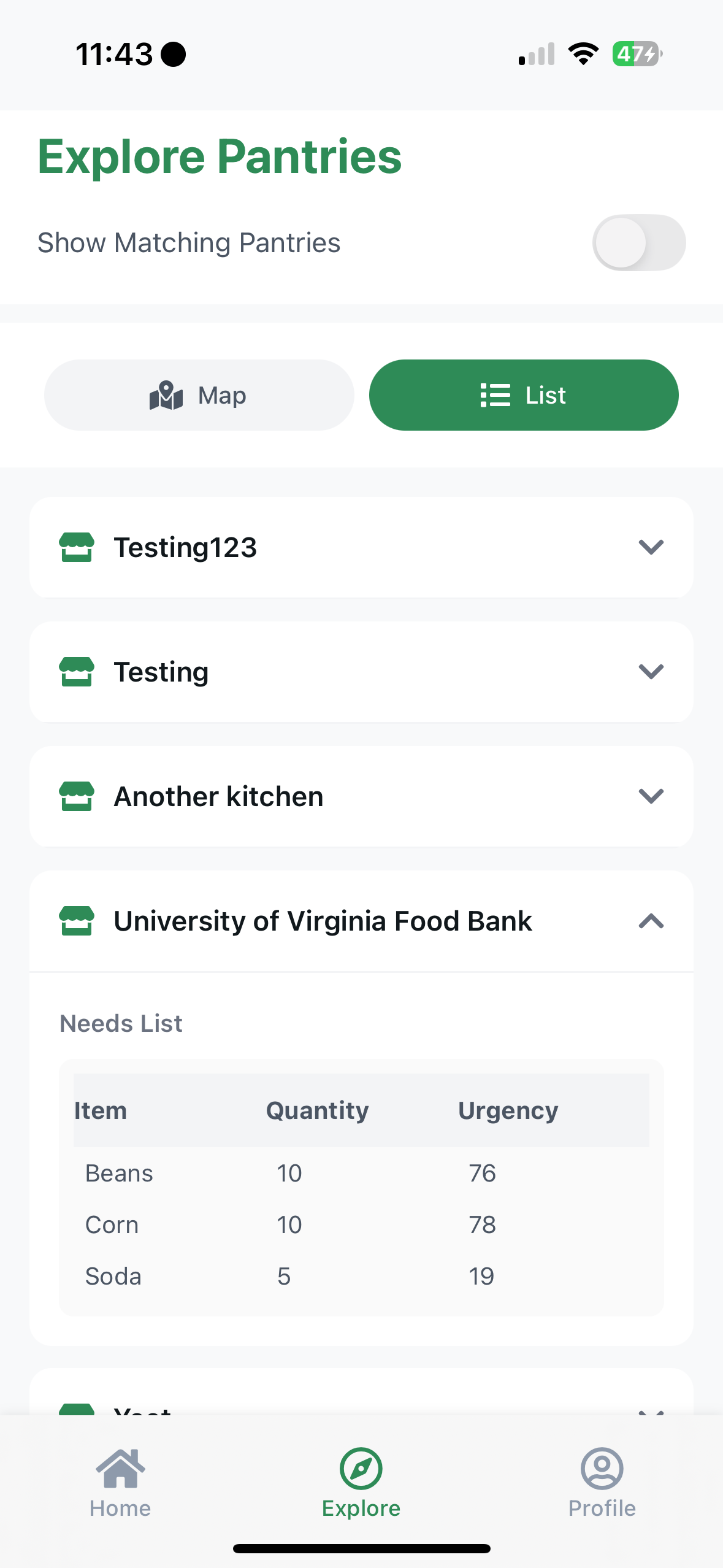
PantryLink is a mobile application that connects food donors with nearby pantries in need, making it easy to give and receive surplus food. Donors can manually enter or upload images of their items, which are automatically identified and labeled using Google Gemini’s computer vision. Once listed, the app matches these donations with local food pantries based on their real-time needs and location. Donors can view and manage their inventory, while pantries receive tailored recommendations for incoming donations. With built-in authentication via Auth0, users are securely categorized as donors or pantries, ensuring role-based access and a streamlined experience for both sides of the platform. The entire process—from listing food items to matching with a pantry—is designed to reduce waste, fight hunger, and encourage community-powered impact.
How we built it
To build this mobile app, we used React Native with Expo for cross-platform compatibility. Next, to simplify the donation process, we integrated the Google Gemini API to allow users to upload food images – automatically analyzed and labeled using AI. Google Maps API to geolocate nearby food pantries and display relevant matches based on pantry needs.
Our backend was built with Node.js and Express to handle user registration, donation management, and real-time matching between donors and pantries. For our data, we used MongoDB with Mongoose to store donor profiles, pantry needs, donation records, and item metadata. For secure access and user role management, we implemented Auth0 authentication. The app is supported by a RESTful API architecture, ensuring a clean separation between the frontend and backend components.
Challenges we ran into
One of the most complex hurdles was designing a well-structured database. Ensuring data integrity, avoiding redundancy, and properly managing references between collections in MongoDB required significant planning and iteration. Given our extensive number of API endpoints, testing locally became a time-consuming task.
Beyond that, our team had to quickly adapt to an unfamiliar tech stack. With limited prior experience in MongoDB and Express, we faced a steep learning curve in setting up our backend. Also, integrating multiple technologies—such as the computer vision model, Google Maps API, and frontend components—introduced additional complexity, requiring careful debugging.
Despite the struggles, the experience was incredibly rewarding, pushing us to learn, adapt, and collaborate more effectively as a team.
Accomplishments that we're proud of
We’re proud to have built an application for good that is easy to use and, hopefully, will one day be fully fleshed out for everyone to use. We felt like we went the extra mile to ensure a seamless user experience to increase engagement whether it was through Google Gemini computer vision or location matching with the Google Maps API. Lastly, when it came to connecting people together, something we took very seriously was setting up secure authentication with Auth0; we ensured that each user—whether a donor or a pantry—has a verified identity and role-based access to the platform’s features.
What we learned
This hackathon was an incredible learning experience for our team; we tackled the MERN tech stack that was largely unfamiliar to us. One of our biggest challenges was integrating the backend—housing our computer vision model and API endpoints—with the frontend, which utilized Express components and a React Native framework. This required us to carefully manage data flow and troubleshoot even the smallest errors, sometimes for hours. Through this process, we not only honed our problem-solving and teamwork skills but also deepened our understanding of full-stack development.
What's next for PantryLink
With only 24 hours to build our platform, time was our biggest constraint, but we hope to build on top of this in the future. One key feature we plan to add is driver integration for donation deliveries, allowing volunteer drivers to claim routes and transport donations, similar to Uber Eats or DoorDash. This will streamline logistics and ensure donations reach nonprofits efficiently. We also want to implement an urgency heatmap, providing real-time demand visualization so donors can prioritize high-impact contributions. By highlighting areas of greatest need, we can maximize the effectiveness of every donation. These are just the first steps in making food redistribution more efficient, data-driven, and impactful. With more time, we’re excited to expand our platform and bring even bigger ideas to life.

Log in or sign up for Devpost to join the conversation.