-
-
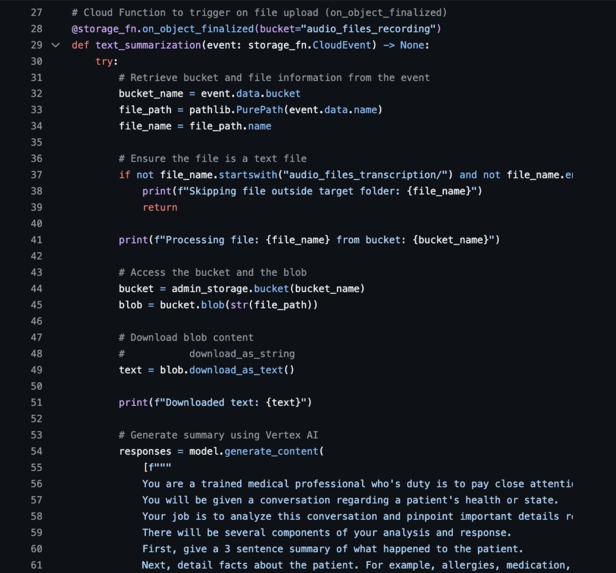
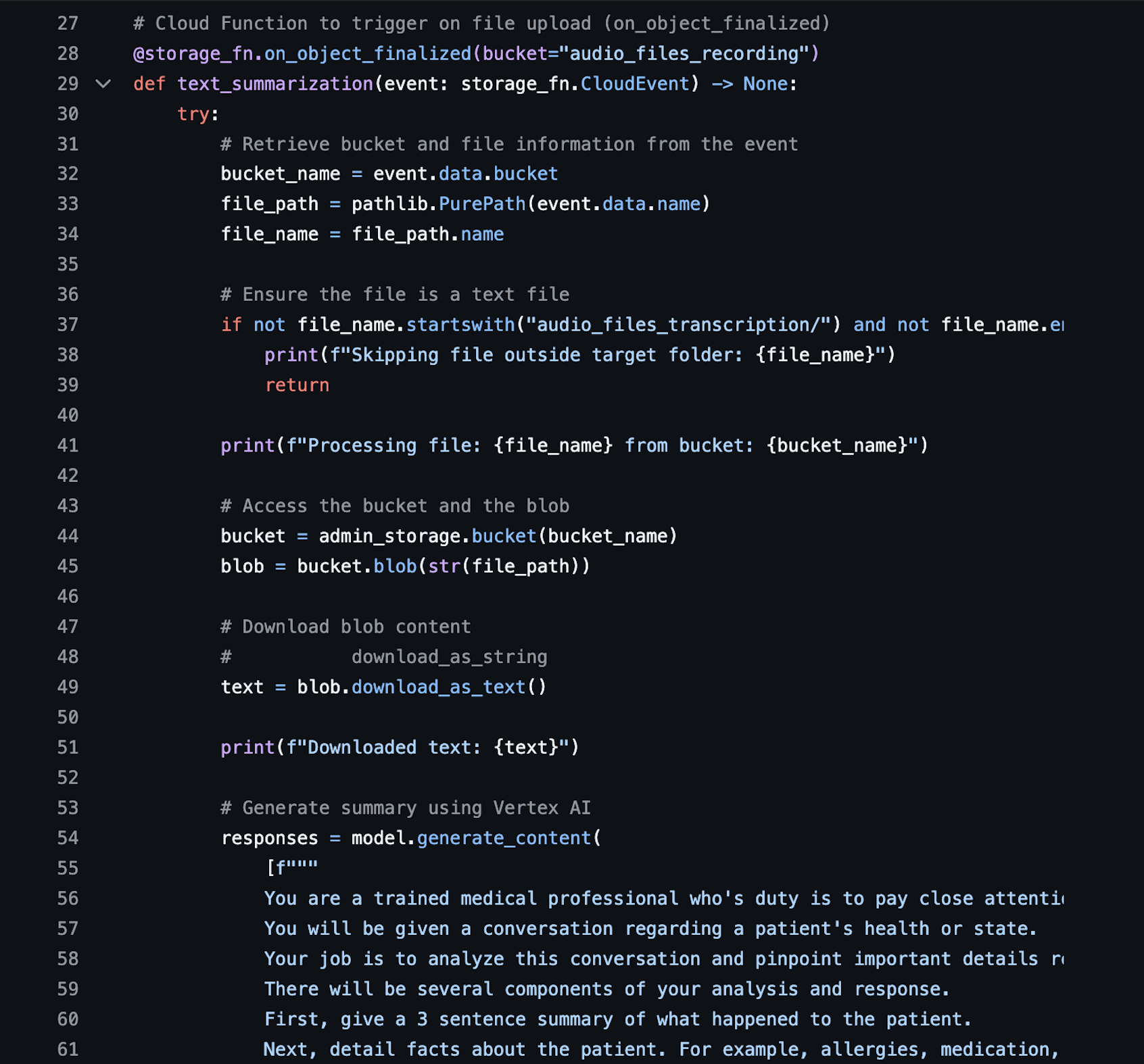
Code snippet of a Google Cloud Function leveraging Vertex AI to process and summarize audio file transcriptions.
-
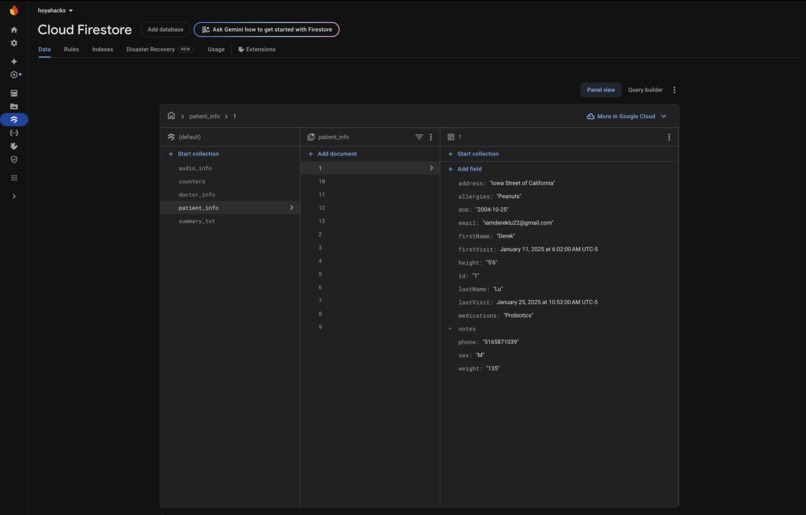
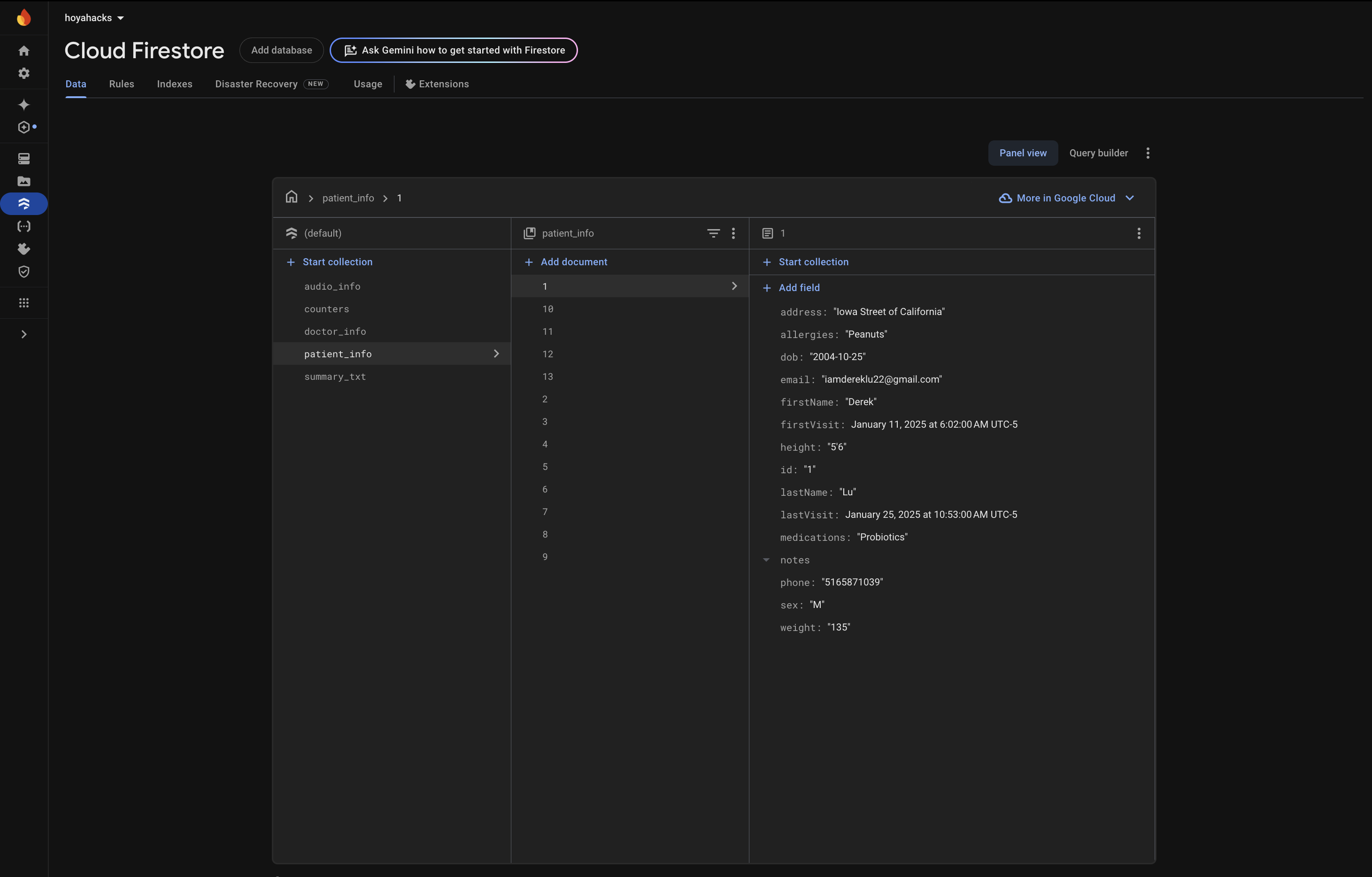
Firestore database screenshot showing a collection patient_info with detailed patient data.
-
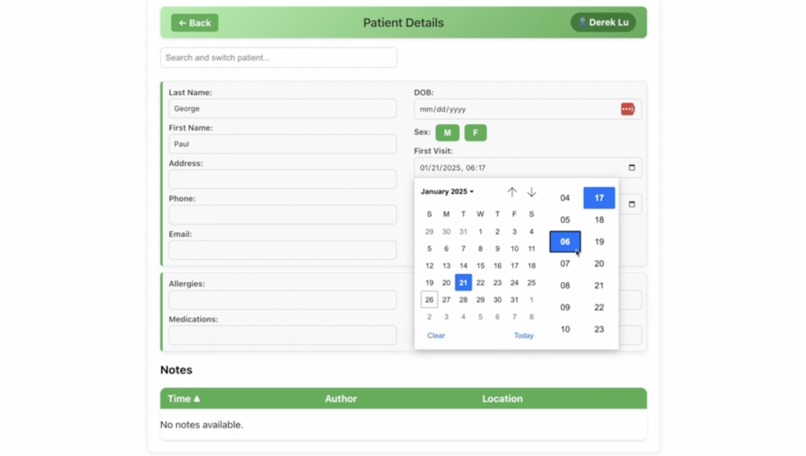
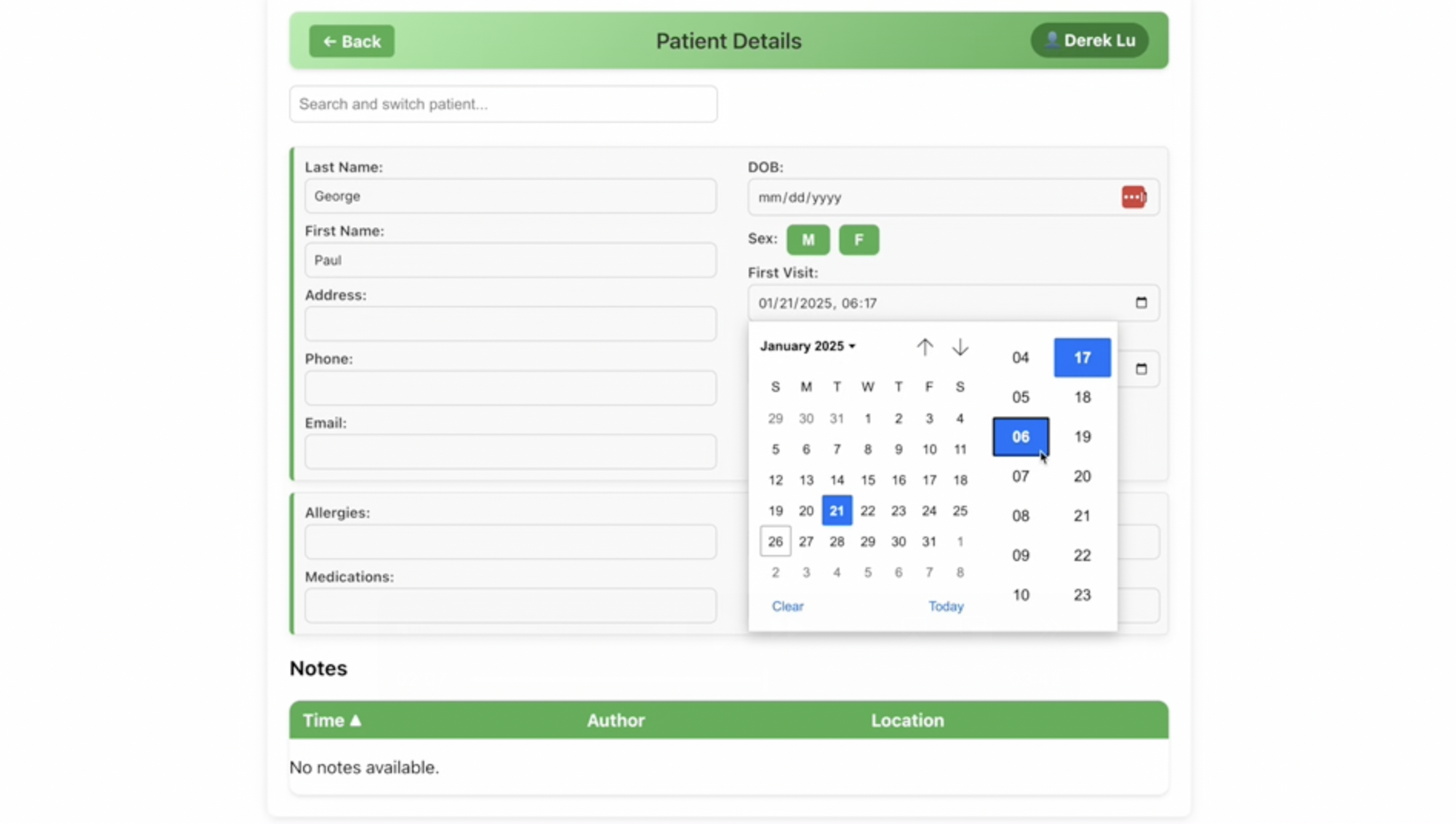
Patient Details form with editable fields and date selector.
-
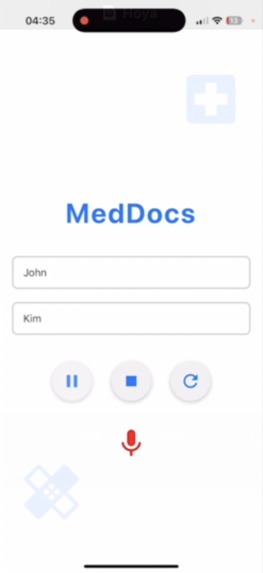
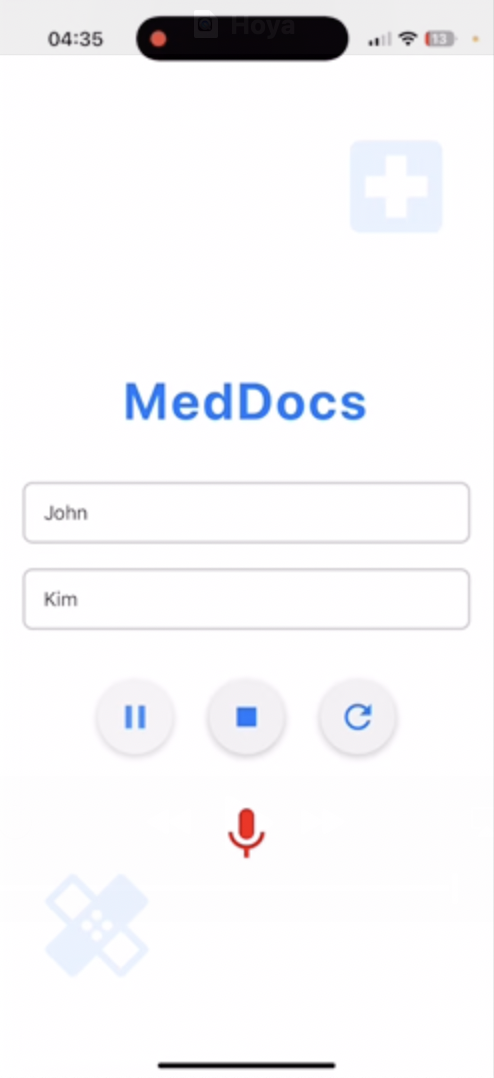
MedDocs app for recording patient details with playback controls.
-
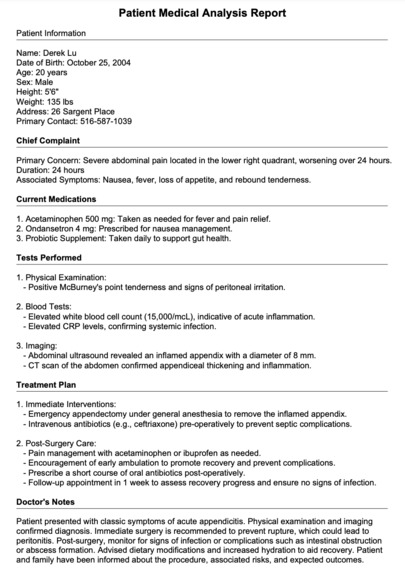
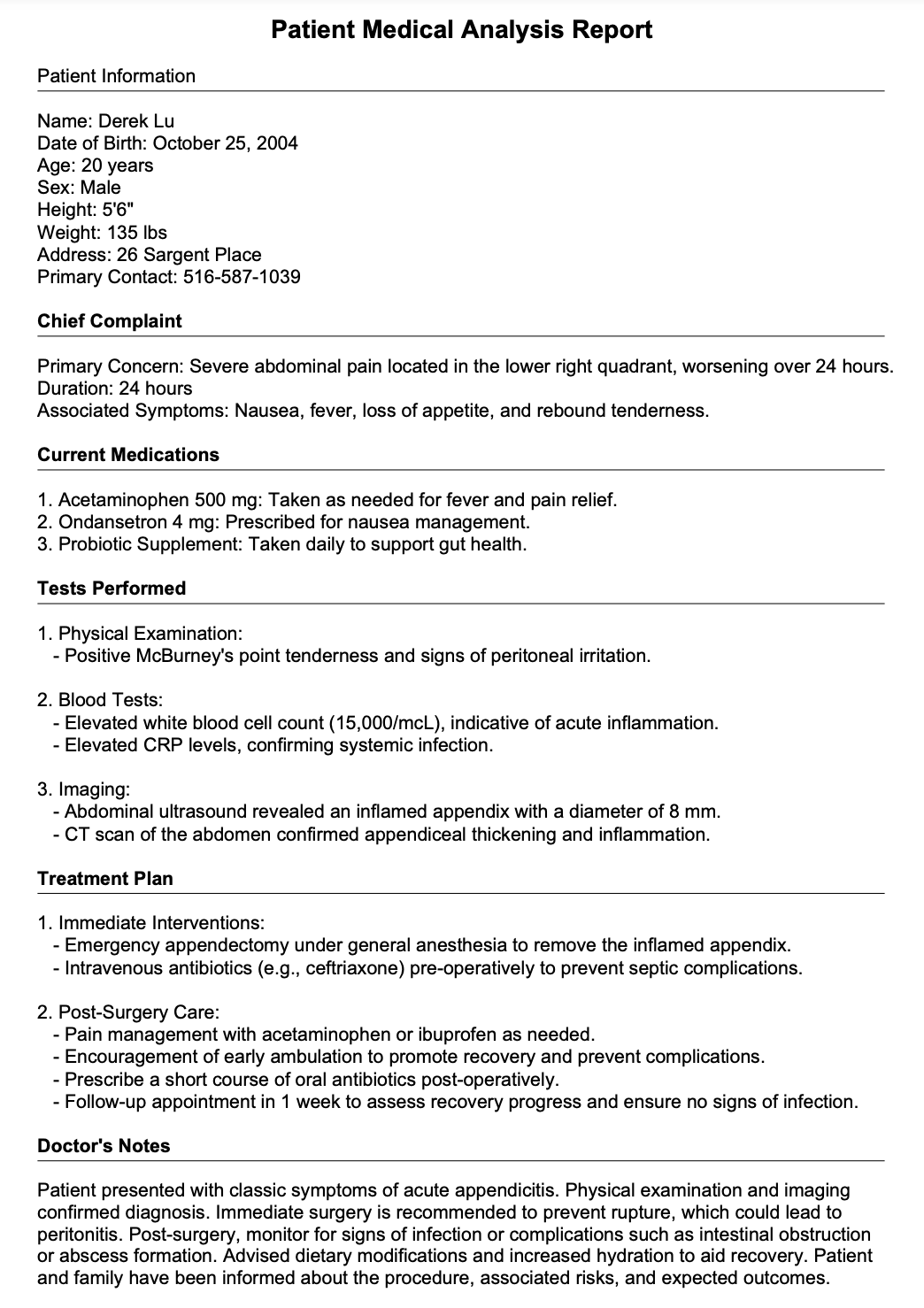
Detailed Patient Medical Analysis Report outlining symptoms, test results, treatment plan, and post-operative care.
Inspiration
Healthcare today faces a triple crisis: workforce shortages, growing distrust in the healthcare system, and an alarming increase in medical errors. Research shows that diagnostic errors and ineffective documentation are significant contributors to these challenges. Furthermore, 25% of patients report mistrust in their doctors, often due to a lack of time spent or insufficient communication.
Inspired by the 6 Characteristics of Quality Care—safe, effective, efficient, equitable, timely, and patient-centered—our team sought to address two key problems: the overwhelming burden of documentation on healthcare professionals and the risk of human error in critical situations.
We recognized that the diagnostic process, with its stages of patient engagement, information gathering, diagnosis, treatment, and outcomes, relies heavily on accurate and efficient documentation. This led us to create MedDocs, an application designed to capture and summarize critical conversations and emergencies, ensuring accurate, concise records that empower healthcare professionals to focus on providing care.
By tackling the inefficiencies and errors in medical documentation, we aim to build trust in healthcare, reduce the time professionals spend on paperwork, and ultimately improve patient outcomes.
What it does
MedDocs is an AI-powered documentation tool designed for healthcare professionals. It records conversations between healthcare providers and patients or during emergencies and transforms them into concise, accurate summaries. By automating this process, MedDocs significantly reduces the time spent on note-taking, minimizes the risk of human error, and ensures critical information is captured effectively.
With MedDocs, healthcare professionals can:
- Focus more on patient care rather than administrative tasks.
- Improve the accuracy and reliability of medical records.
- Provide timely and efficient documentation during emergencies.
How we built it
MedDocs was developed with three core components:
Frontend: Built using the React Native framework to create accessible and robust user interfaces for both web and mobile users, ensuring usability for people of varying tech literacy levels.
Backend: Leveraged Google Cloud Platform (GCP) for secure and scalable long-term storage of files. Firebase was used for event-driven cloud functions, Firestore Database, and Storage to manage and synchronize data efficiently.
Middleware: Implemented a Python middleware as a bridge between the React frontend and GCP backend. Using RESTful APIs, the middleware processes data, embeds prompts within files securely, and transfers them to GCP for storage. Additionally, Vertex AI and the Gemini language model power the summarization capabilities, enabling precise and automated natural language processing.
Collaboration and version control were managed using GitHub, ensuring smooth teamwork and iterative development.
Challenges we ran into
Developing MedDocs came with several challenges that pushed us to learn and adapt quickly.
On the frontend, designing UIs for both web and mobile platforms that were clean, intuitive, and visually appealing was a significant hurdle. Balancing the unique requirements of each platform while ensuring consistency was complex, especially since we were relatively new to React and had to learn on the go.
On the backend, working with Google Cloud Platform for the first time presented a steep learning curve. Setting up our initial functions was time-consuming, and transitioning from HTTP-based calls to event-driven triggers added further complexity.
Finally, integrating and ensuring seamless communication between the frontend, middleware, and backend systems proved challenging. Coordinating these components required extensive debugging and collaboration, but overcoming these obstacles strengthened our understanding of full-stack development.
Accomplishments that we're proud of
Despite the challenges we faced, our team persevered and successfully overcame each obstacle, from learning new technologies to solving complex integration issues. We’re incredibly proud of the app we produced—not only because of its visually stunning design but also because of the meaningful impact we believe it can have on society.
MedDocs holds a special place in our hearts as a testament to the grueling yet fun and rewarding work we put into it. It’s more than just a project; it’s a reflection of our teamwork, determination, and shared vision for improving healthcare documentation.
What we learned
Through the development of MedDocs, we gained valuable experience in building a full-stack application with integrated mobile and web components. We learned how to work with new technologies, including Firebase, Google Cloud Platform, and React, overcoming their challenges to implement robust solutions.
Equally important, we learned the value of effective teamwork and communication. Collaborating closely as a team highlighted how critical clear communication and task delegation are to the success of a project. This experience not only improved our technical skills but also strengthened our ability to work efficiently as a cohesive unit.
What's next for MedDocs
Our vision for MedDocs is to make it a reliable tool both in and outside the hospital. For healthcare professionals such as EMTs, caretakers, nurses, and doctors, MedDocs will streamline documentation, eliminating human error that could lead to patient harm. By reducing distractions, it allows these professionals to focus on the hands-on, interactive aspects of their jobs, improving overall care quality.
Additionally, we aim to make MedDocs accessible to everyday individuals. In emergency situations, it can empower users to accurately record critical events, preserving essential details that can assist in saving lives and improving outcomes.
Built With
- cloud-functions
- firebase
- firebase-storage
- firestore-database
- gemini-language-model
- github
- google-cloud
- javascript
- python
- react
- react-native
- restful-apis
- typescript
- vertex-ai

Log in or sign up for Devpost to join the conversation.