-
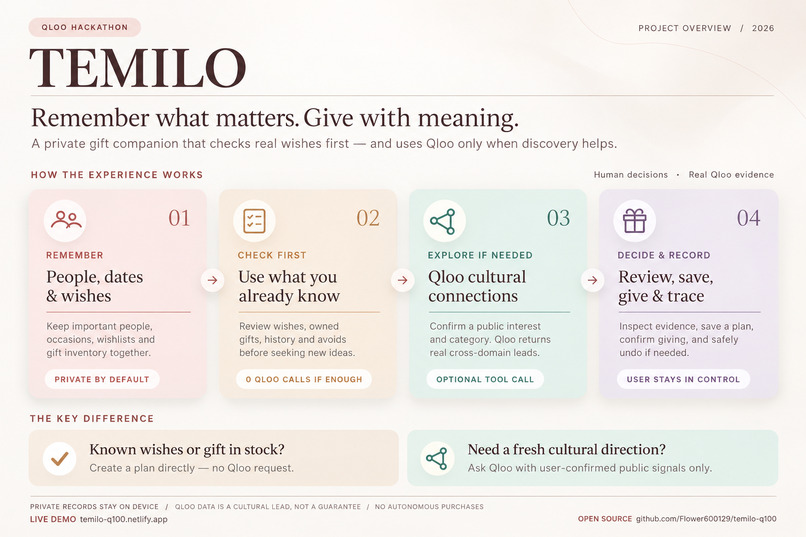
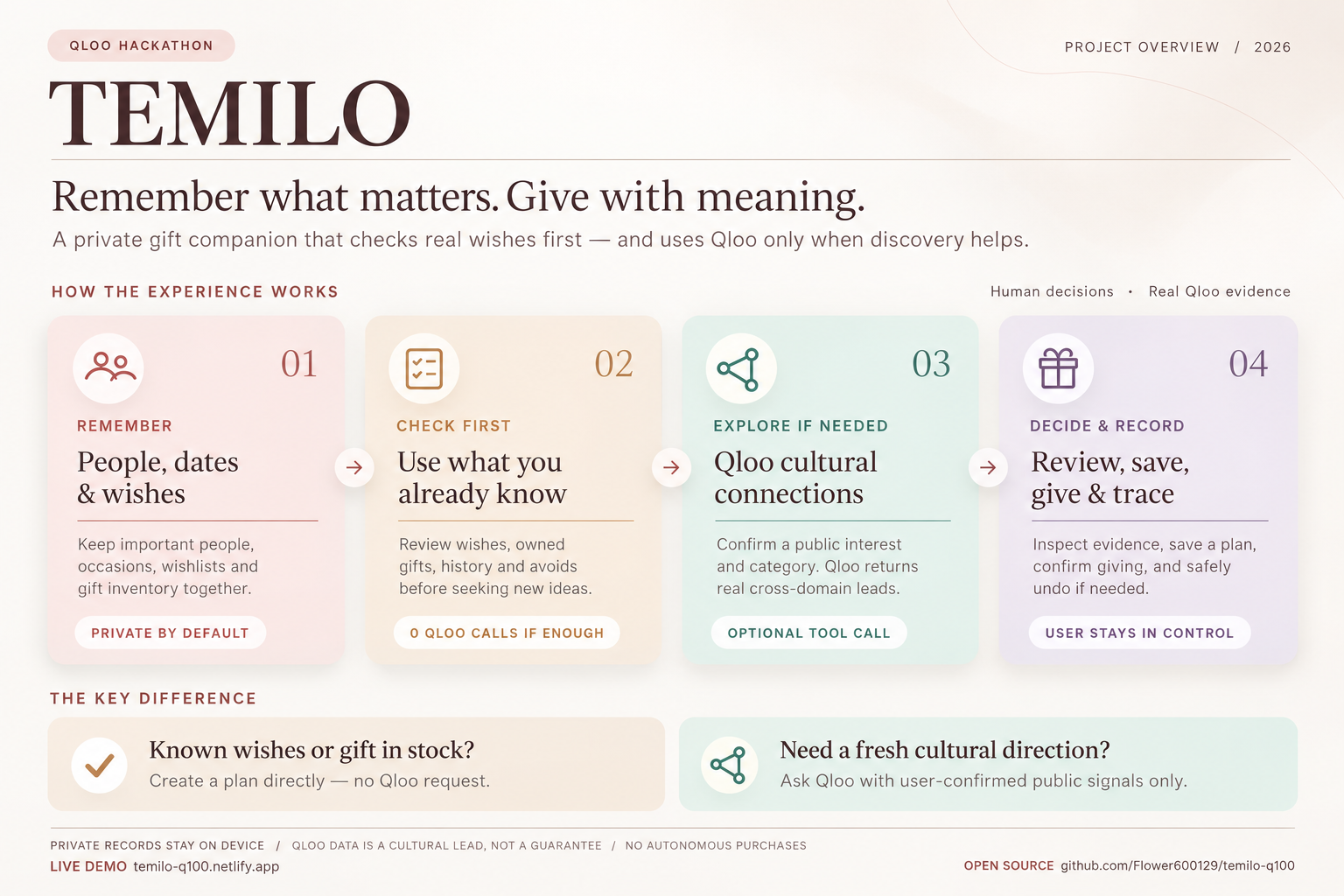
How TEMILO works: remember people, check existing wishes and stock, explore with Qloo when needed, then save and track gifts.
-
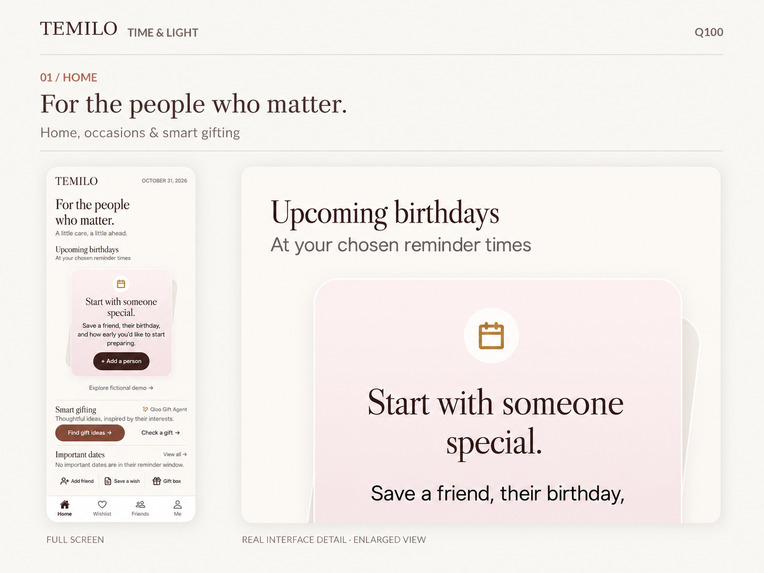
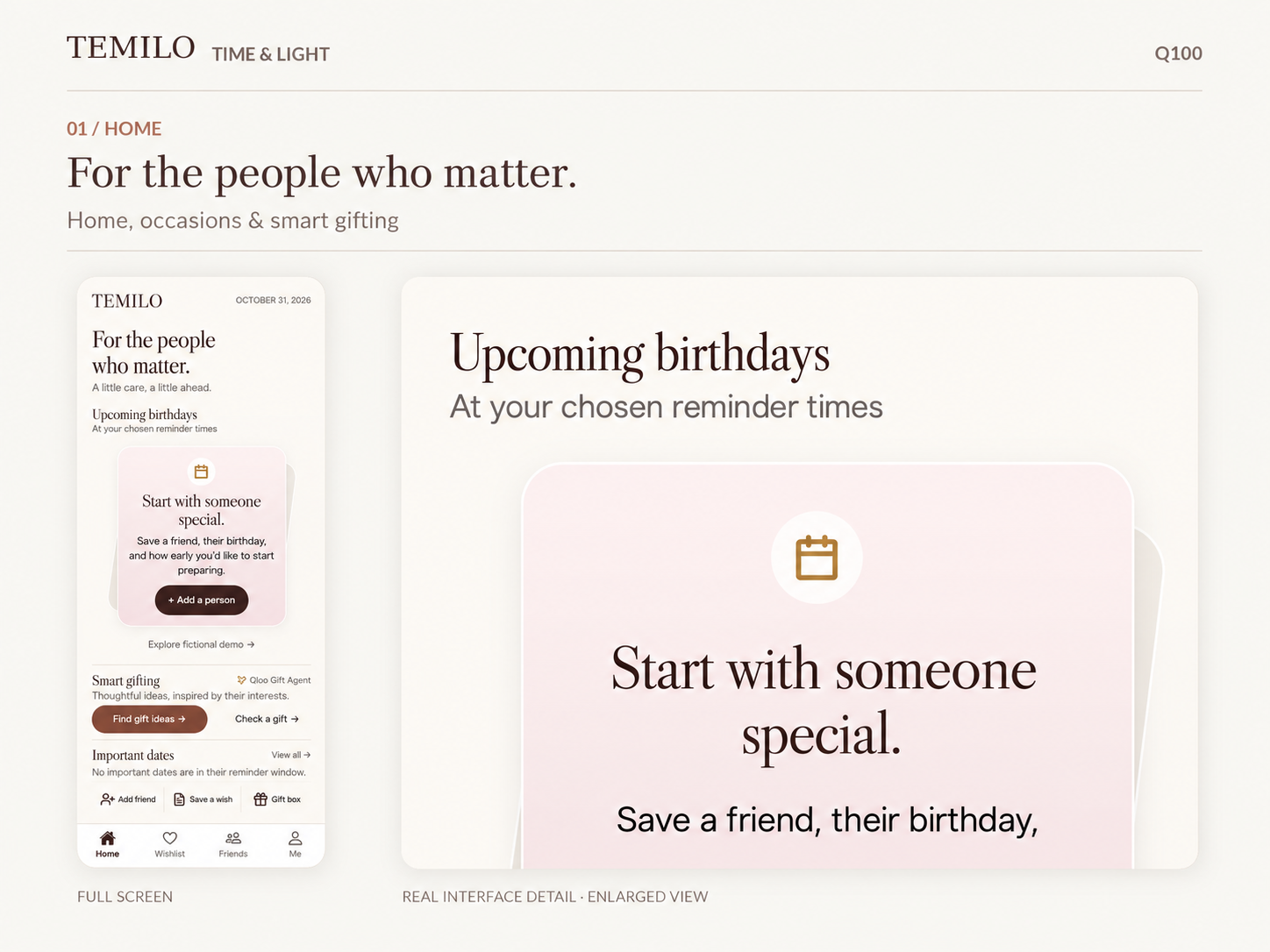
TEMILO Home — A thoughtful space for important dates, personal memories, and meaningful gift planning.
-
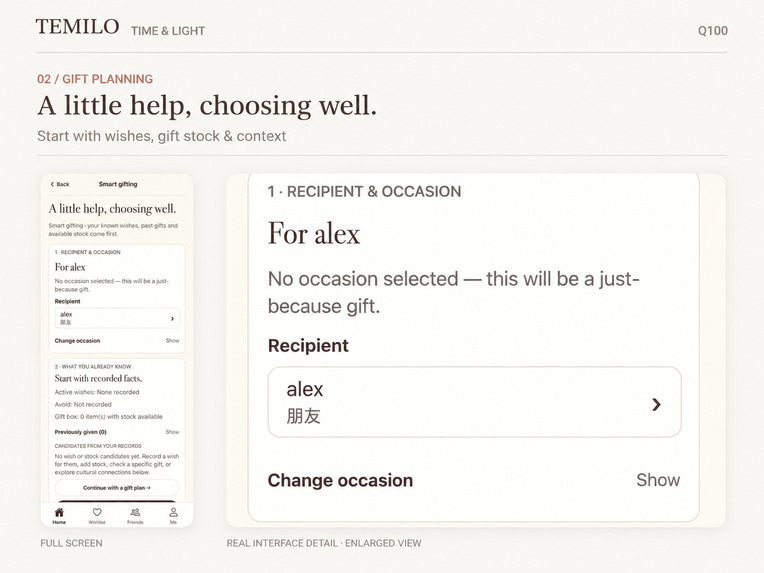
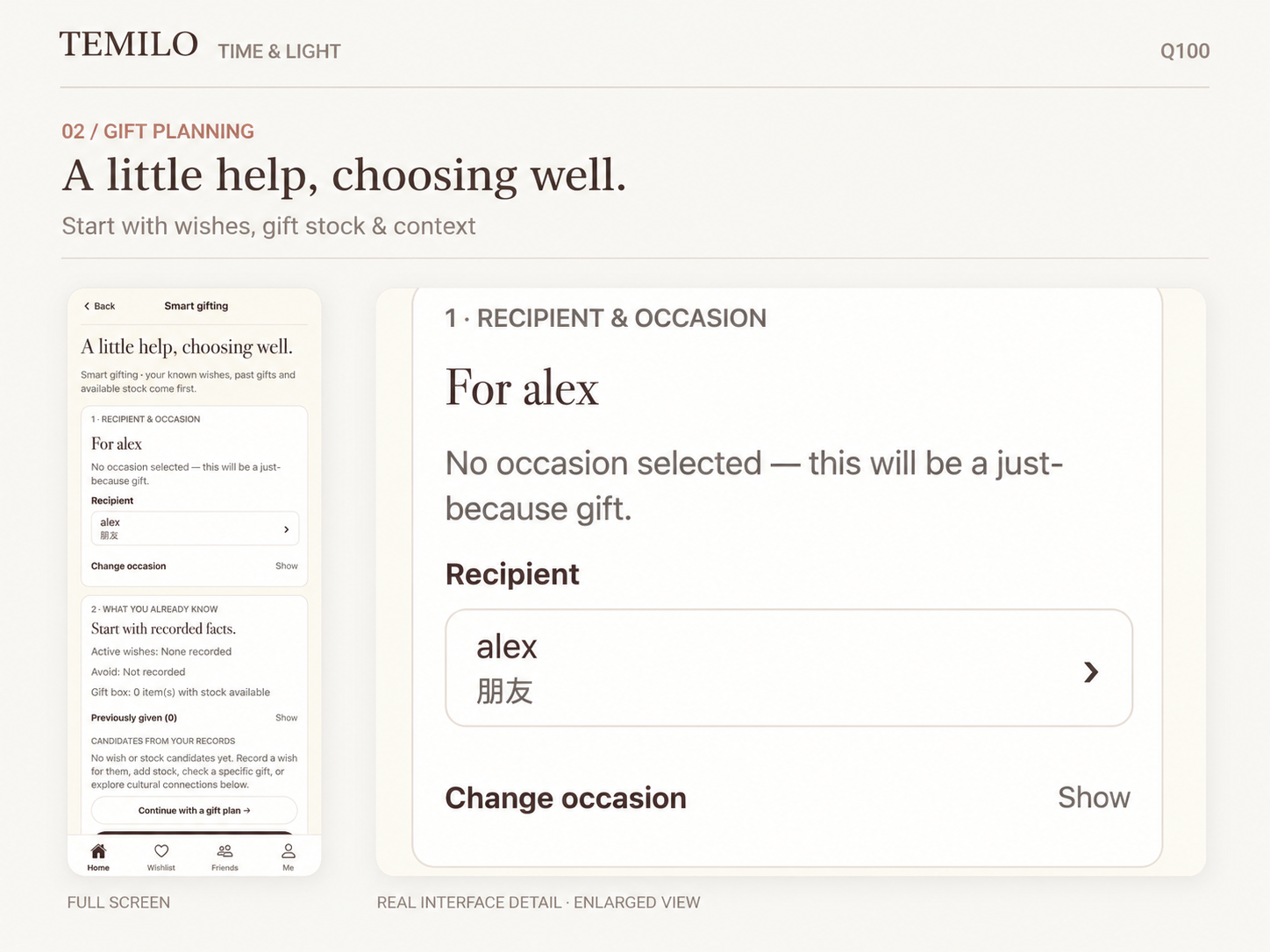
Smart Gifting — Review wishes, past gifts, and available inventory before creating a personalized gift plan.
-
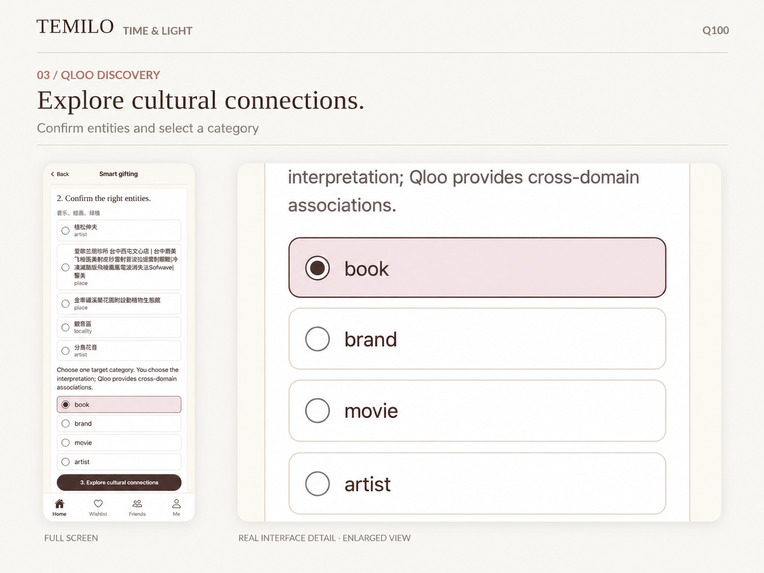
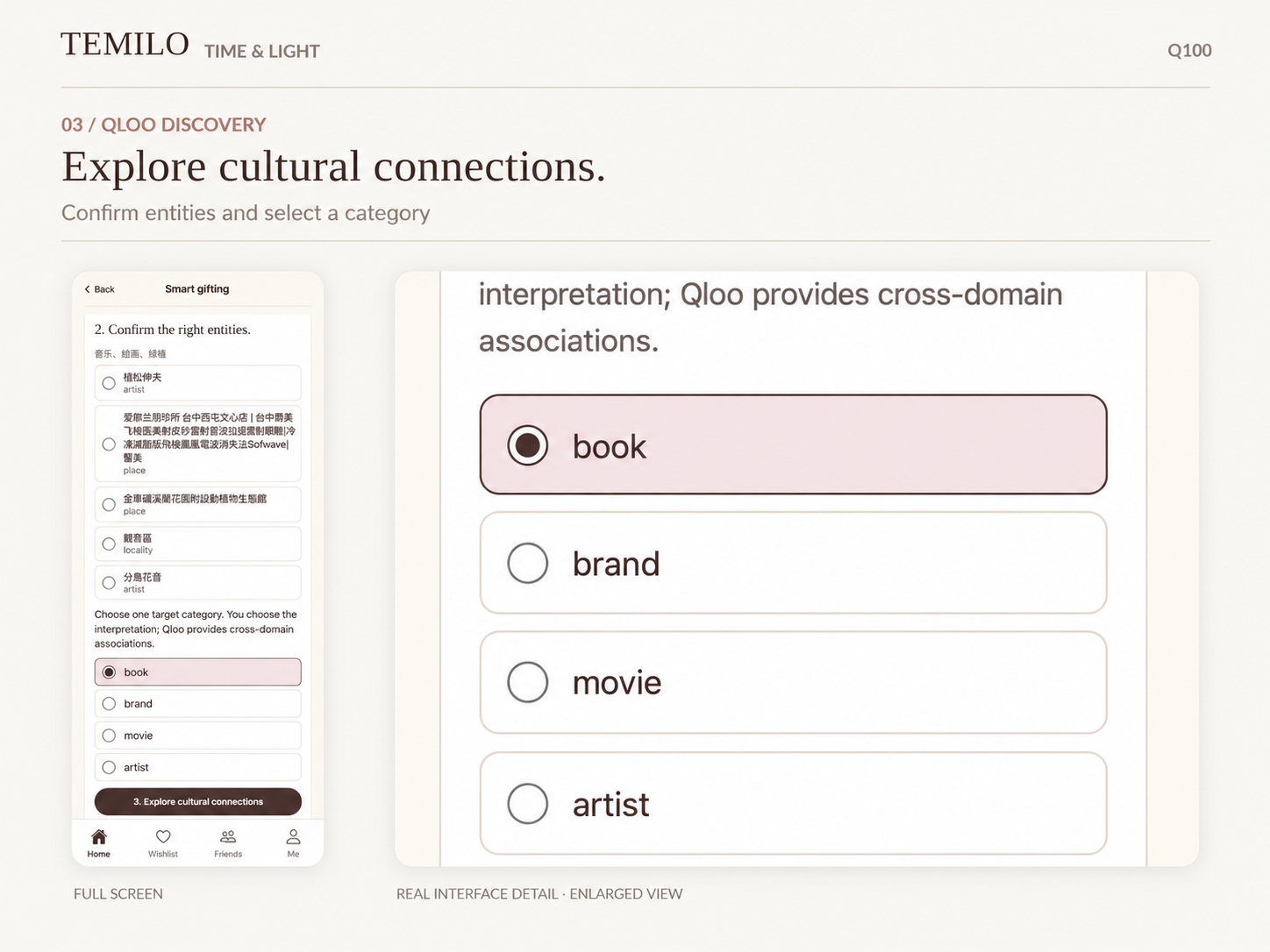
Qloo Discovery — Confirm cultural interests and target categories before exploring real cross-domain connections.
-
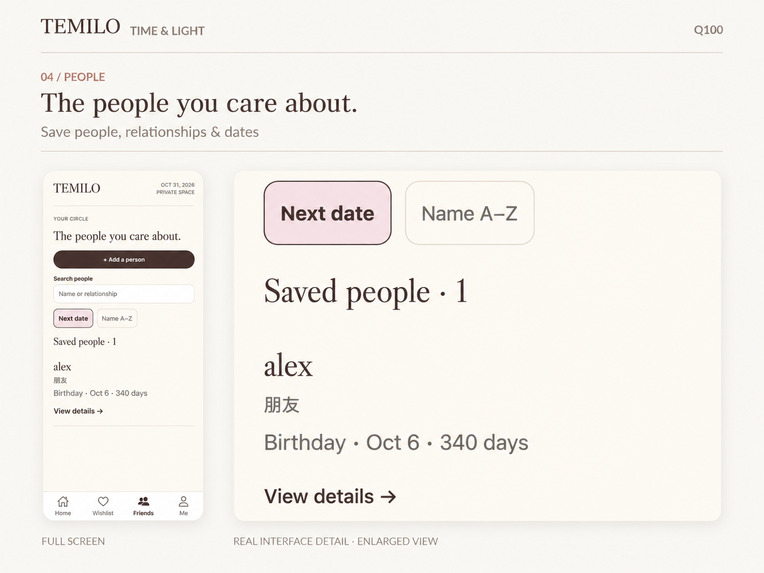
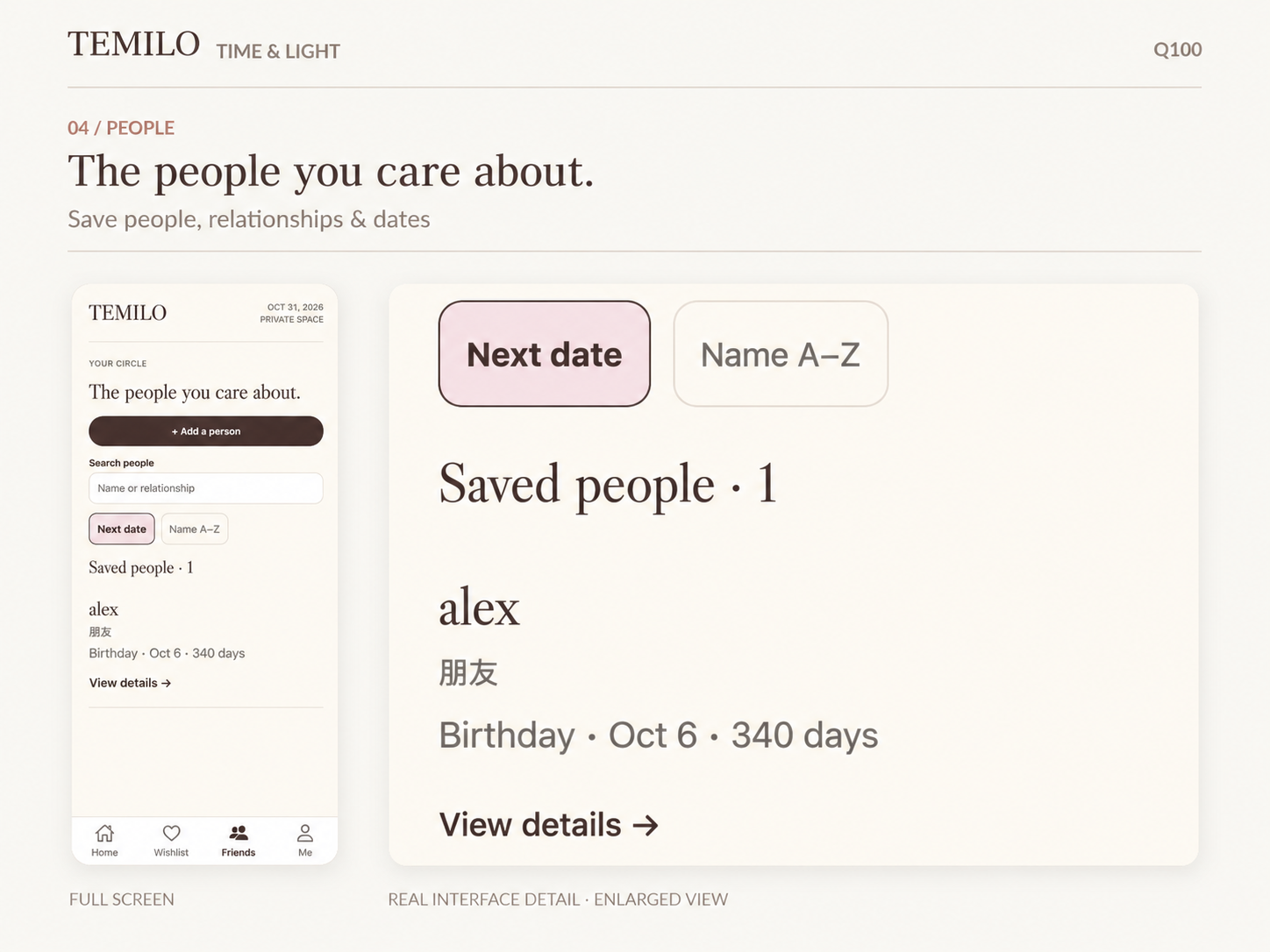
People & Occasions — Keep important people, relationships, and birthdays organized in one private space.
Inspiration
A meaningful gift is not just about buying something. It starts with remembering the people we care about, what they love, the wishes they have shared, and the moments worth celebrating.
Yet these details are often scattered across conversations, notes, calendars, and memory.
We built TEMILO — Time & Light to bring these small but meaningful details together and help turn thoughtful intentions into real actions.
What it does
TEMILO is a privacy-first, mobile-friendly gift planning companion.
It helps users:
- Remember important people, birthdays, and special occasions.
- Organize wishlists and gifts they already own.
- Prepare thoughtful gift plans based on personal context.
- Explore cultural connections through the Qloo API.
- Track gifts given, manage gift inventory, and preserve meaningful memories.
Unlike a traditional gift recommendation platform, TEMILO starts with what users already know and own, rather than immediately encouraging new purchases.
How it works
TEMILO uses a transparent, agentic decision workflow.
Step 1 — Understand context: The system reviews existing wishes, available gift inventory, previous gifts, and known constraints.
Step 2 — Decide when discovery is useful: When existing information is insufficient, users can choose to explore cultural interests.
Step 3 — Explore with Qloo: After user confirmation, the backend uses the Qloo API to retrieve real cultural associations across domains such as music, books, and movies.
Step 4 — Evaluate and plan: TEMILO presents possible gift directions, supporting evidence, and limitations. Users choose whether to adopt and save a recommendation.
Step 5 — Complete and remember: Users can confirm a gift has been given, update inventory, and revisit the original recommendation evidence.
The workflow includes conditional tool usage, user-controlled decisions, and safeguards against outdated recommendations. It does not claim to predict individual preferences with certainty or purchase gifts autonomously.
How we built it
Our technology stack includes:
- Expo SDK 54, React Native, Expo Router, and TypeScript.
- Qloo API for real cross-domain cultural discovery.
- Netlify and server-side Functions for public deployment.
- IndexedDB for local, privacy-conscious storage.
- Server-side API protection and shared quota management.
Personal information such as names, private notes, wishes, and gift history stays on the user's device. Only explicitly confirmed public cultural signals are sent to Qloo.
Challenges we faced
One major challenge was translating real cultural associations into meaningful gift planning without exaggerating recommendation accuracy.
We also had to manage asynchronous API responses, preserve existing personal data, maintain consistent gift inventory, and securely deploy the application.
The project involved AI-assisted development, extensive regression testing, and real Qloo API validation.
Accomplishments
We successfully deployed a publicly accessible application and an open-source GitHub repository.
Our public deployment was tested using real Qloo API requests, including a Radiohead-to-books exploration. We also verified the core flow of exploring, selecting, saving, confirming a gift, refreshing, and tracing recommendation evidence.
The experience demonstrates how real cultural data can support a practical, human-centered agentic workflow.
What we learned
AI-powered recommendations become more trustworthy when they distinguish verified evidence from suggestions and uncertainty.
The most valuable assistant is not always the one that makes more decisions. Sometimes it is the one that helps people make better decisions themselves.
What's next
We plan to improve recommendation relevance, accessibility, and the overall gift-planning experience, while continuing to prioritize privacy, transparency, and user control.
TEMILO — Remember what matters. Give with meaning.
Built With
- api
- expo.io
- functions
- indexeddb
- netlify
- node.js
- qloo
- react
- router
- typescript

Log in or sign up for Devpost to join the conversation.