-
-
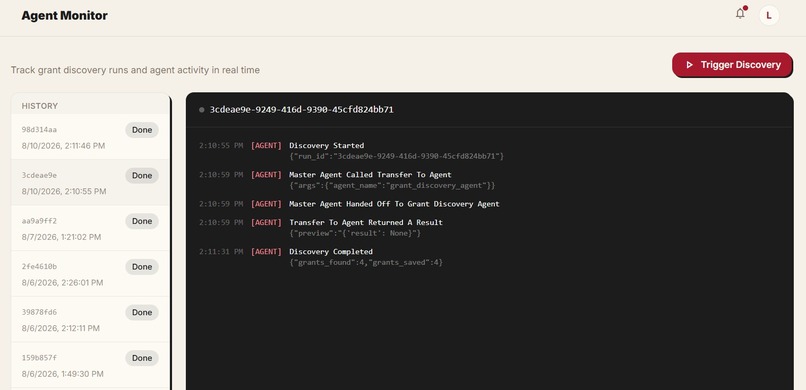
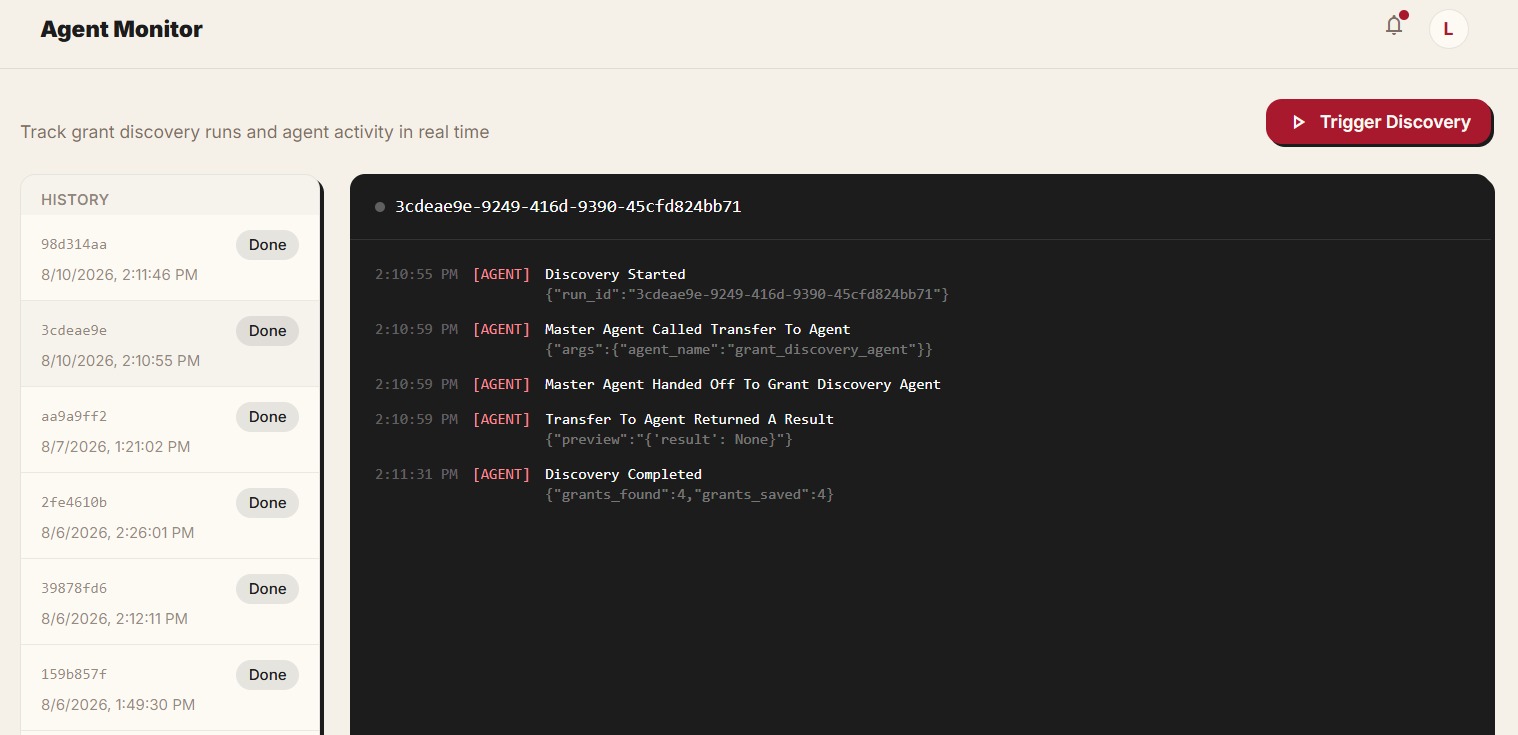
Agent monitor page
-
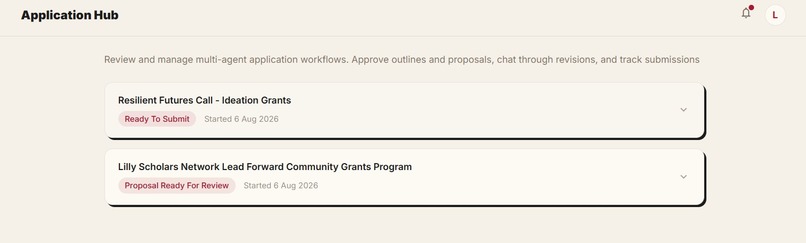
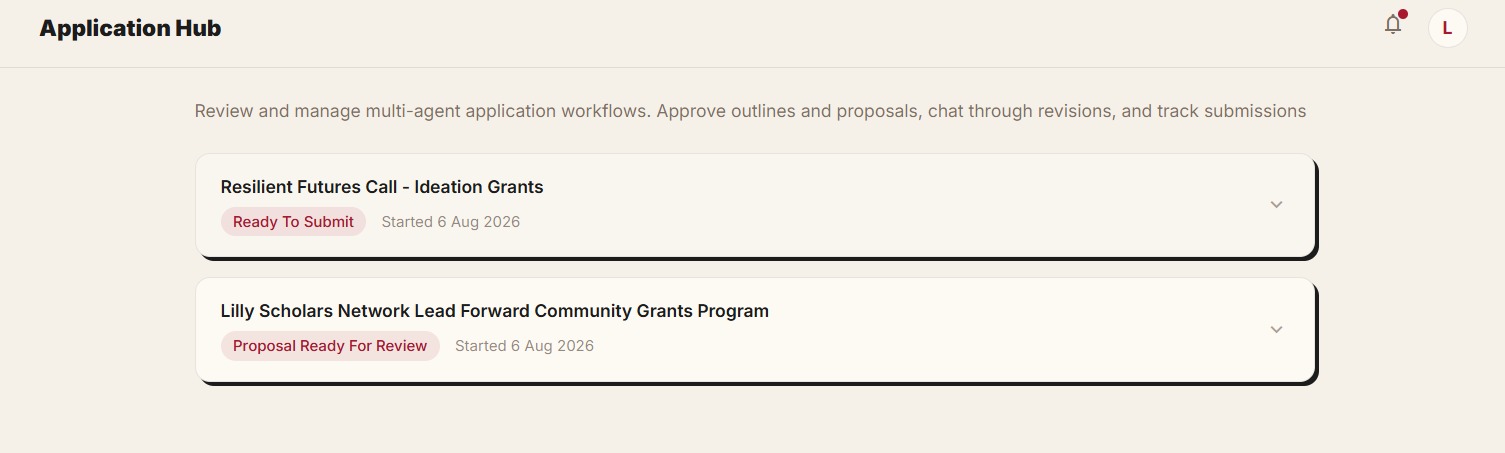
Application hub
-
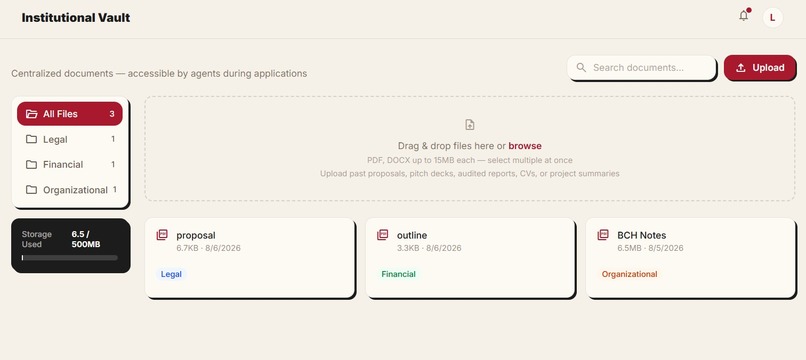
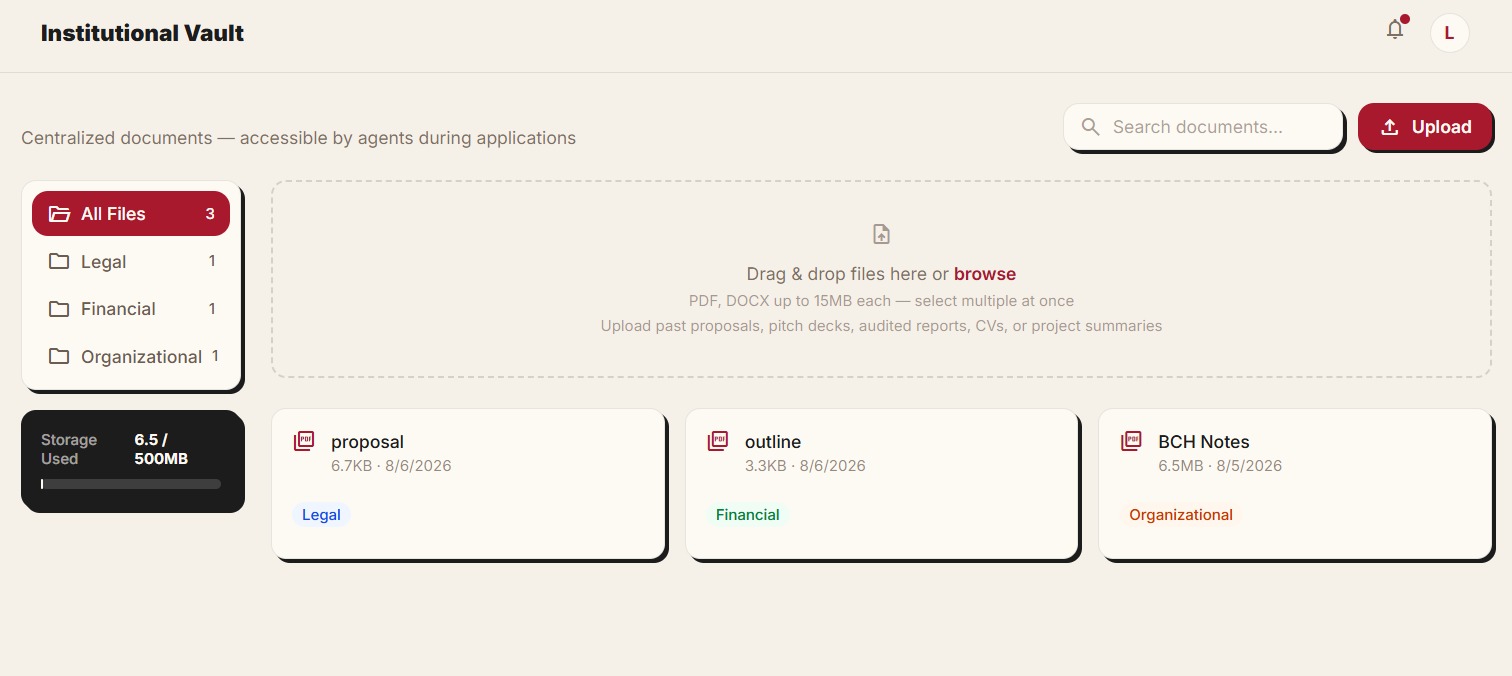
Document vault
-
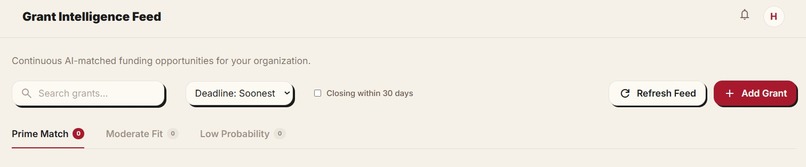
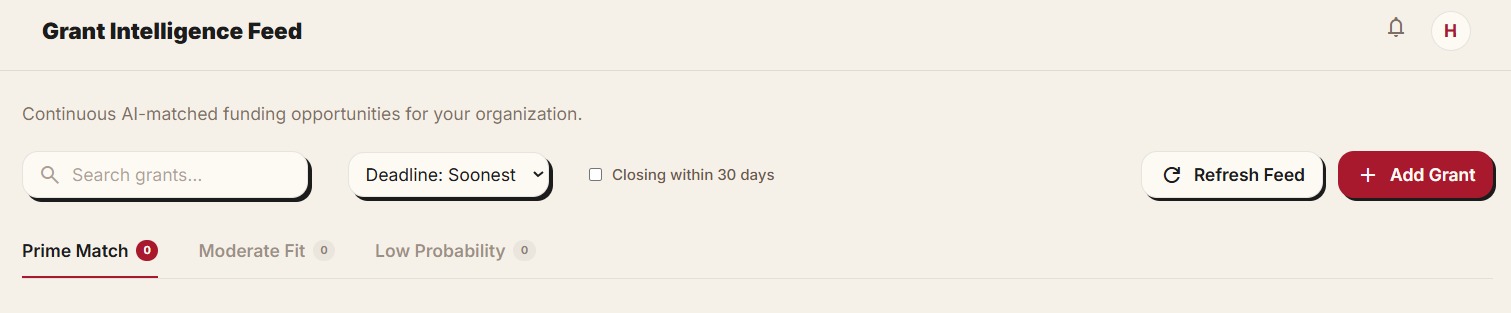
Home feed for selected grants
-
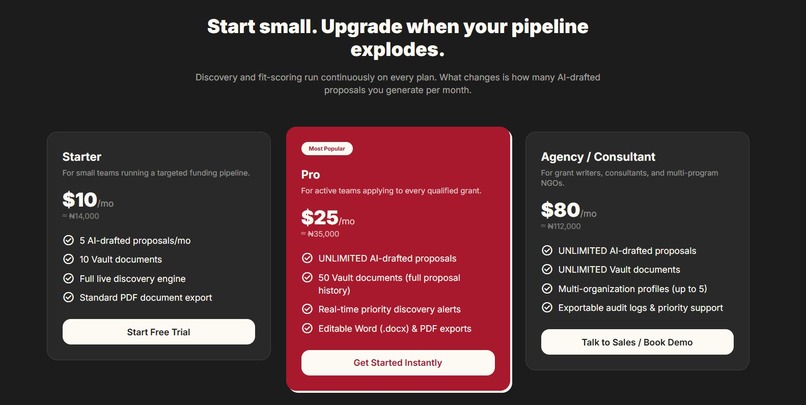
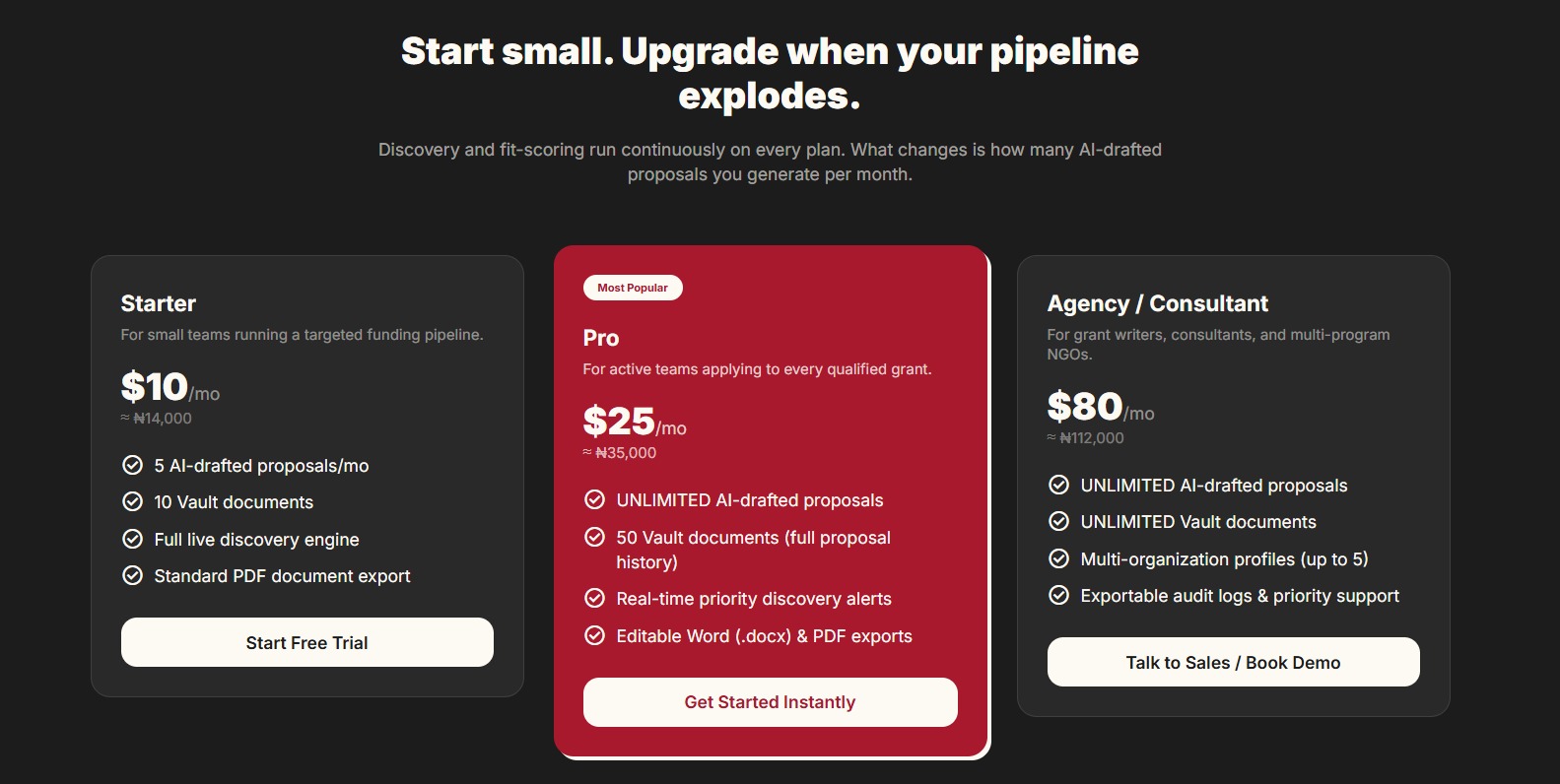
Pricing model
-
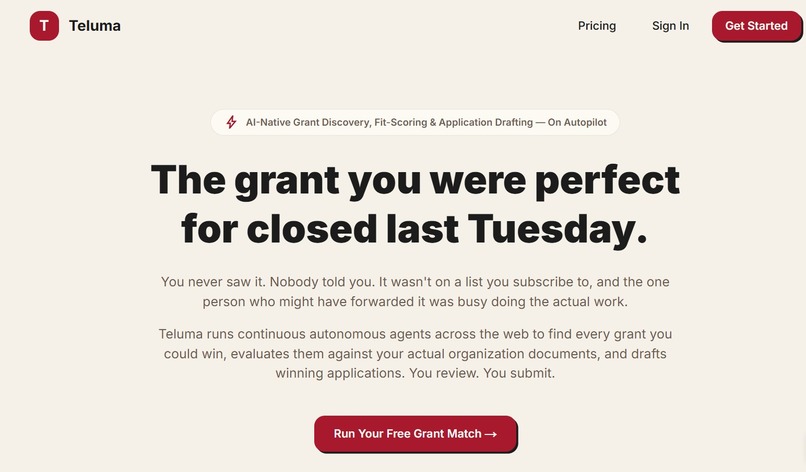
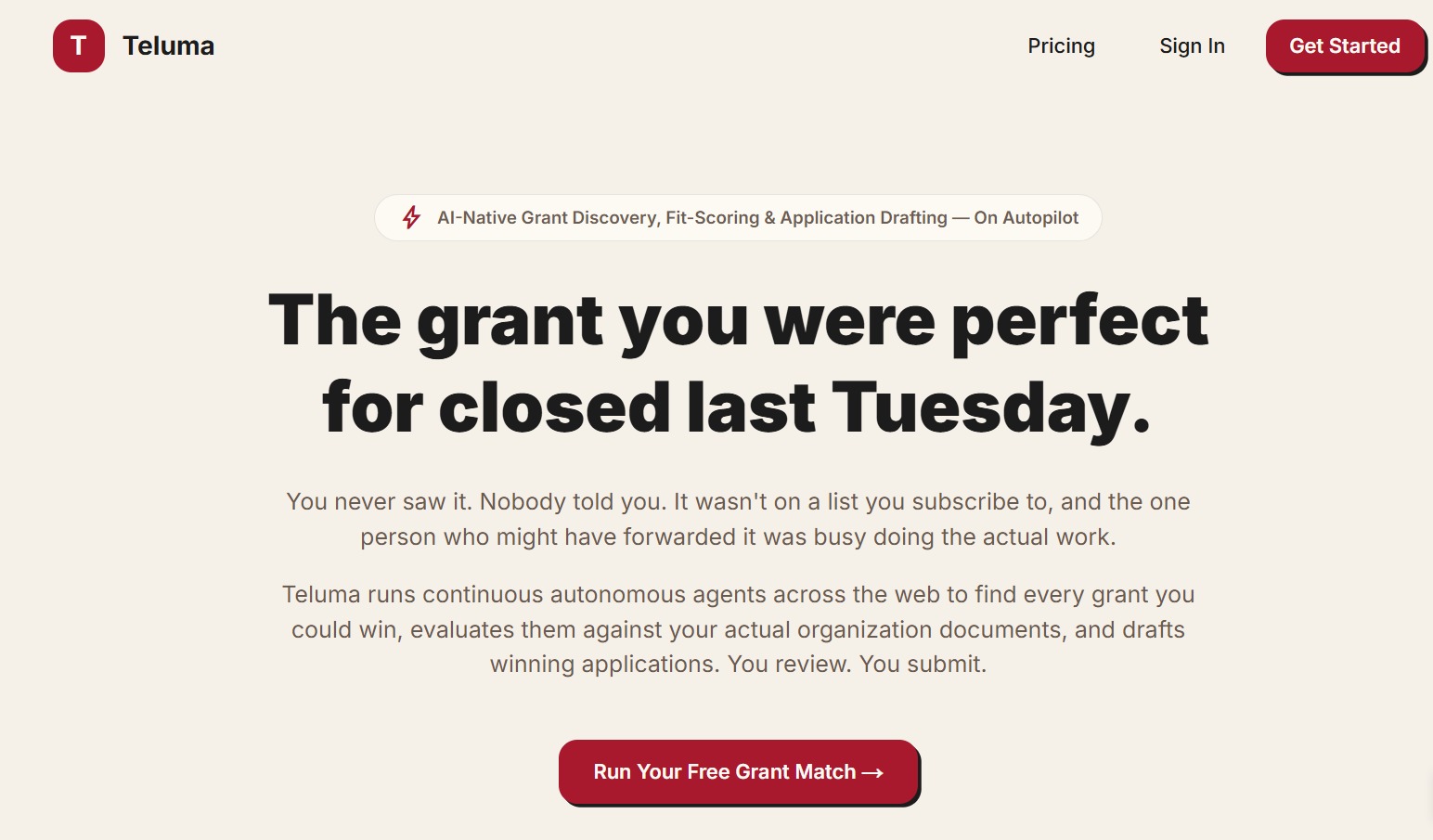
Homepage
Teluma — Hackathon Submission
Inspiration
Every year, billions of dollars in non-dilutive grant capital go unallocated while underfunded African startups, SMEs, and non-profits collapse for lack of runway. The problem isn't that money doesn't exist; it's that accessing it is broken on both ends of the pipeline: Discovery and Execution.
Small teams spend hundreds of hours manually wading through fragmented foundation portals, unsure if they even qualify. Meanwhile, traditional grant-writing agencies charge per application — an expensive tollbooth for everyday businesses.
I dedicated my build to bridging this gap. What keeps me up at night is seeing high-impact Nigerian founders fail simply because they lacked a dedicated grant team. What gets me up in the morning is building Teluma: an AI-native OS in Money & Financial Access that puts an enterprise-grade grant discovery, scoring, and proposal-drafting team in every founder's pocket on autopilot.
What It Does & AI-Native Operations
Teluma is an autonomous, multi-agent grant management platform that turns document repositories into non-dilutive capital.
Under the hood, Teluma operates a continuous 5-Agent AI Pipeline orchestrated via the Google Agent Development Kit (ADK) and Gemini 3.5 Flash:
[ Web Feeds ] ──> ( AG1: Discovery ) ──> [ Postgres DB ] ──> ( AG2: RAG Fit Evaluator )
                                                                     │
  ┌──────────────────────────────────────────────────────────────────┘
  ▼
( AG3: Outline Strategist ) ──> [ Human Review ] ──> ( AG4: Proposal & Budget Writer )
                                                                     │
                                                                     v
[ Auto-Vault Storage & PDF Export ] <── [ Human Approval ] <── ( AG5: Quality Reviewer )
AG1 (Discovery Agent): Continuously searches global web feeds for active funding calls open to African entities.
AG2 (Fit Evaluator): Extracts document passages from the user's private Vault and computes relevance, sorting matches into Prime Match ($\ge 90$), Moderate Fit ($60-89$), or Low Probability ($40-59$).
AG3 (Proposal Strategist): Synthesizes structured proposal outlines tailored to grant rules.
AG4 (Proposal & Budget Writer): Drafts complete proposal narratives and itemized budget tables grounded strictly in Vault facts.
AG5 (Quality Control Auditor): Evaluates compliance against funder word limits before human review.
Users watch agent tool calls in real time via Server-Sent Events (SSE) telemetry (/agents/stream/{run_id}) and chat directly with agents to refine drafts before final sign-off.
How I Built It
I chose technologies that balance precision, security, and scalability:
AI Core: Google ADK + Vertex AI & Gemini 3.5 Flash with custom RAG passage retrieval (
utils/rag_engine.py) to eliminate hallucination.Backend & Database: FastAPI (Python) with SQLAlchemy ORM and Supabase PostgreSQL for strict relational integrity across users, grants, applications, and documents. Supabase handles secure JWT authentication.
Storage & Telemetry: Google Cloud Storage (separate encrypted buckets for Vault documents and rendered PDF outputs served via GCS Signed URLs) and an Server-Sent Events (
SSE) endpoint (GET /agents/stream/{run_id}) streaming live agent tool execution steps directly to the frontendFrontend: Next.js (App Router, TypeScript, Tailwind CSS) for reactive UI dashboards.
Monetization & Email: Bachs API for USD/NGN subscription checkout sessions with HMAC-SHA256 webhooks; SendByte API for transactional email notifications.
Deployment: Render with GCP Service Account credentials.
—
Challenges Ran Into
- Document Privacy & User Trust: The single biggest non-technical hurdle was overcoming user hesitation around uploading sensitive organizational records (tax clearance, audited financials, incorporation certs). Testers were understandably guarded. I solved this by implementing strict per-organization isolation, clear data privacy guarantees, and enforcing that Vault documents are used only for deterministic prompt grounding — never for model re-training.
- Agent Session & State Synchronization: Wiring Google ADK agents into async FastAPI endpoints created subtle concurrency and session management challenges across worker processes. I resolved this by persisting cancellation flags (
cancel_requested) and agent status directly to the PostgreSQL database so state remains synchronized across multi-worker environments. - Third-Party API Integration Hurdles: Integrating local payments (Bachs webhook HMAC verification) and transactional email (SendByte) required extensive debugging due to evolving SDK documentation and signature verification tolerances.
Accomplishments I'm Proud Of
AI-Native Operations (Autonomous 5-Agent Execution): Successfully building a fully autonomous multi-agent pipeline where 5 Google ADK agents hand off work, perform real web searches, ground outputs using a RAG retriever, and stream live execution telemetry via SSE without requiring manual code intervention.
User-Validated Output Precision: Testing with real target users who validated that AG2 match rankings and AG4 proposal narratives were accurate, compliant, and grounded in their uploaded facts.
High-Conversion Monetization Architecture: Engineering a freemium model that caps free feed matches at 10 items (preventing grant title Google search bypass) and provides 1 lifetime sample proposal draft, driving conversion into paid tiers ($10/mo Starter, $25/mo Pro, $80/mo Agency).
Category Impact (Money & Financial Access): Creating a platform that levels the playing field for small businesses and non-profits, allowing a 2-person team to apply for capital with the speed and quality of a Fortune 500 grant-writing department.
What I Learned (Build $\rightarrow$ Measure $\rightarrow$ Learn)
Business Viability: Freemium design isn't just about giving features away - it requires balancing value delivery with revenue protection. Capping free feed items and locking multi-organization agency profiles protects unit economics while creating clear conversion triggers.
AI Tooling Precision: Gained deep hands-on expertise in Google ADK agent orchestration, RAG retrieval engines, and real-time SSE streaming architectures.
Category Impact: Democratizing access to non-dilutive capital is the highest-leverage growth engine for African small businesses and civic organizations. Removing the grant-writer barrier directly fuels economic resilience in emerging markets.
What's Next (Repeatability & Moonshot Scale)
Agency Multi-Org Profiles ($80/mo): Enabling grant consultants to manage up to 5 distinct client organization profiles with isolated Vaults from a single dashboard.
ML Grant Outcome Feedback Loop: Tracking application outcomes (Won/Lost) to automatically refine
AG2fit-scoring weights over time.Compliance Auto-Nudges & Mobile PWA: Automated alerts for expiring document certificates and a mobile-first PWA for on-the-go founders.
Built With
- bachs
- fastapi
- google-adk
- google-cloud
- nextjs
- postgresql
- python
- render
- sendbyte
- sqlalchemy
- supabase
- vercel
- vertex-ai


Log in or sign up for Devpost to join the conversation.