💡 Inspiration
Telmed AI Doctor was inspired by a simple but urgent reality: access to quality healthcare remains a major challenge, especially in underserved communities.
Growing up, I observed how many people delay seeking medical care due to cost, distance, or lack of available doctors. As a result, minor health issues often escalate into serious conditions. Many individuals resort to self-diagnosis or unreliable sources because they lack immediate access to professional guidance.
At the same time, the rise of artificial intelligence presents an opportunity to bridge this gap. This led to a key question:
What if people could receive instant, intelligent health insights before even visiting a hospital?
Telmed AI Doctor was created to answer that question — combining AI-driven symptom analysis with telemedicine to make healthcare more accessible, faster, and more proactive.
⚙️ What it does
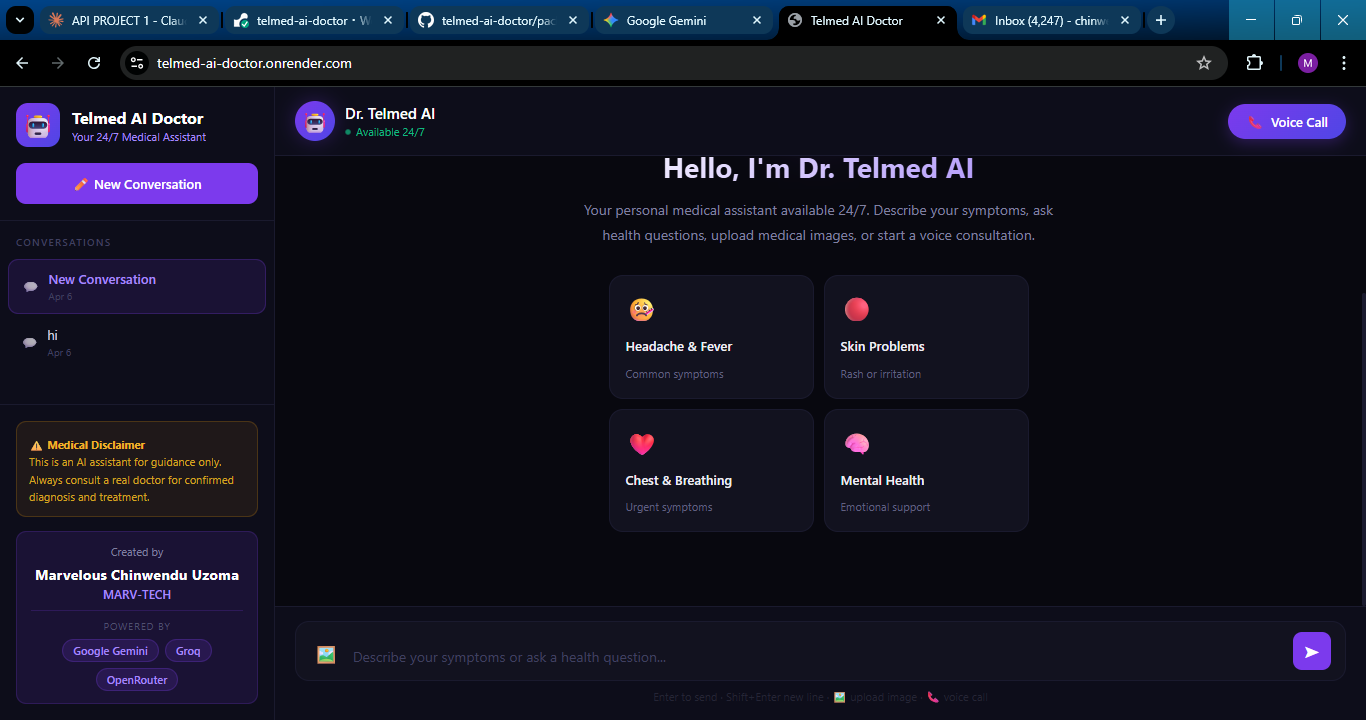
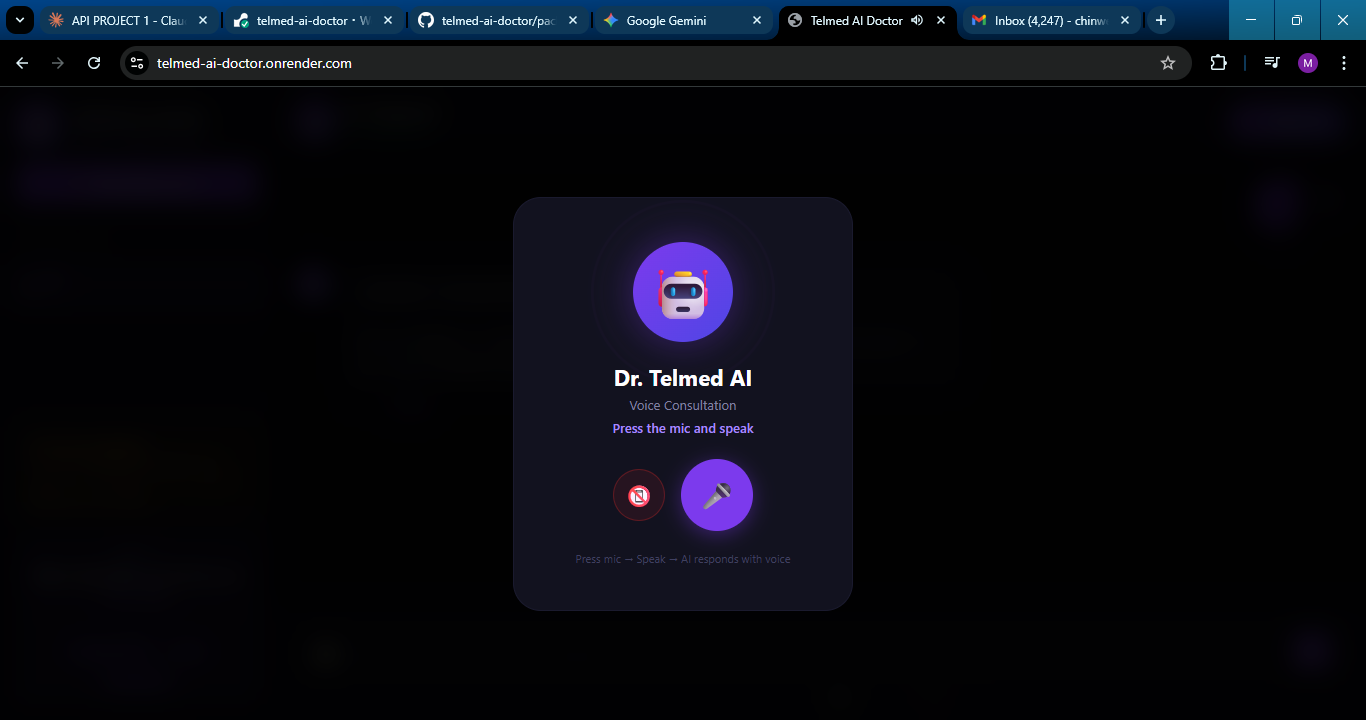
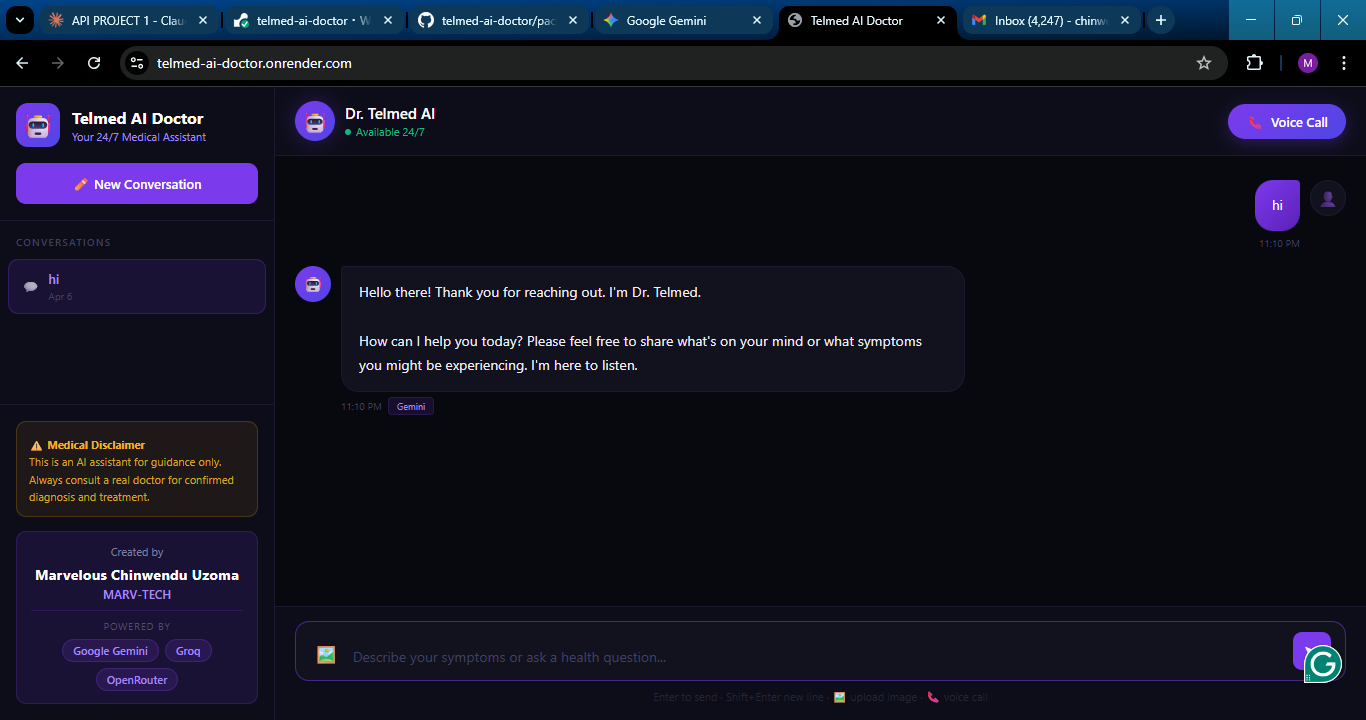
Telmed AI Doctor is an AI-powered telemedicine assistant that helps users:
Input symptoms and receive instant AI-based health insights Get possible condition suggestions and urgency levels Receive smart doctor recommendations based on their needs Access a simple, user-friendly platform for early health decision-making
The system acts as a first point of guidance, helping users take informed steps toward proper medical care.
🛠️ How we built it
The project was built using a combination of modern web and AI technologies:
Backend: Python with Django and Django REST Framework for API development AI Integration: Symptom analysis logic powered by AI models/APIs Database: Structured storage for users, symptoms, and recommendations Frontend: Lightweight and responsive interface for accessibility Architecture: Modular design to allow future scaling into a full telemedicine ecosystem
The focus was on building a working prototype that demonstrates the core idea clearly and effectively.
⚠️ Challenges we ran into Balancing accuracy and simplicity: Ensuring the AI provides useful insights without overcomplicating the system Limited medical datasets: Access to structured and reliable health data was a challenge Time constraints: Prioritizing core features within the hackathon timeline System design decisions: Choosing what to include in the MVP vs. what to leave for future development
These challenges required careful decision-making and iterative improvements.
🏆 Accomplishments that we're proud of Successfully building a functional AI-powered health assistant prototype Designing a system that addresses a real-world problem with meaningful impact Integrating AI into a practical and user-focused solution Creating a project aligned with a larger long-term vision (Telmed ecosystem) 📚 What we learned How to apply AI to real-world healthcare challenges The importance of user-centered design in sensitive domains like health How to prioritize features and build efficiently under time constraints The value of turning ideas into working solutions rather than just concepts 🚀 What's next for Telmed AI Doctor
The next steps include:
Improving the accuracy and intelligence of the AI system Integrating real doctor networks and consultation features Expanding into a full telemedicine platform (Telmed ecosystem) Adding health tracking, prescriptions, and pharmacy integration Optimizing for low-bandwidth environments to support wider accessibility
The long-term vision is to build a scalable, AI-powered healthcare platform that improves access to quality medical care globally, starting from underserved regions.


Log in or sign up for Devpost to join the conversation.