-
-
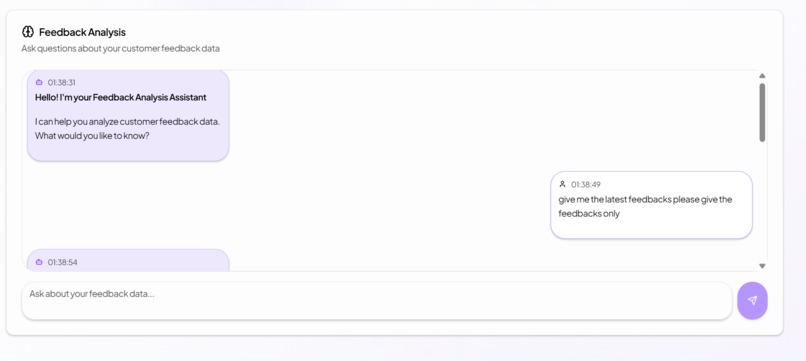
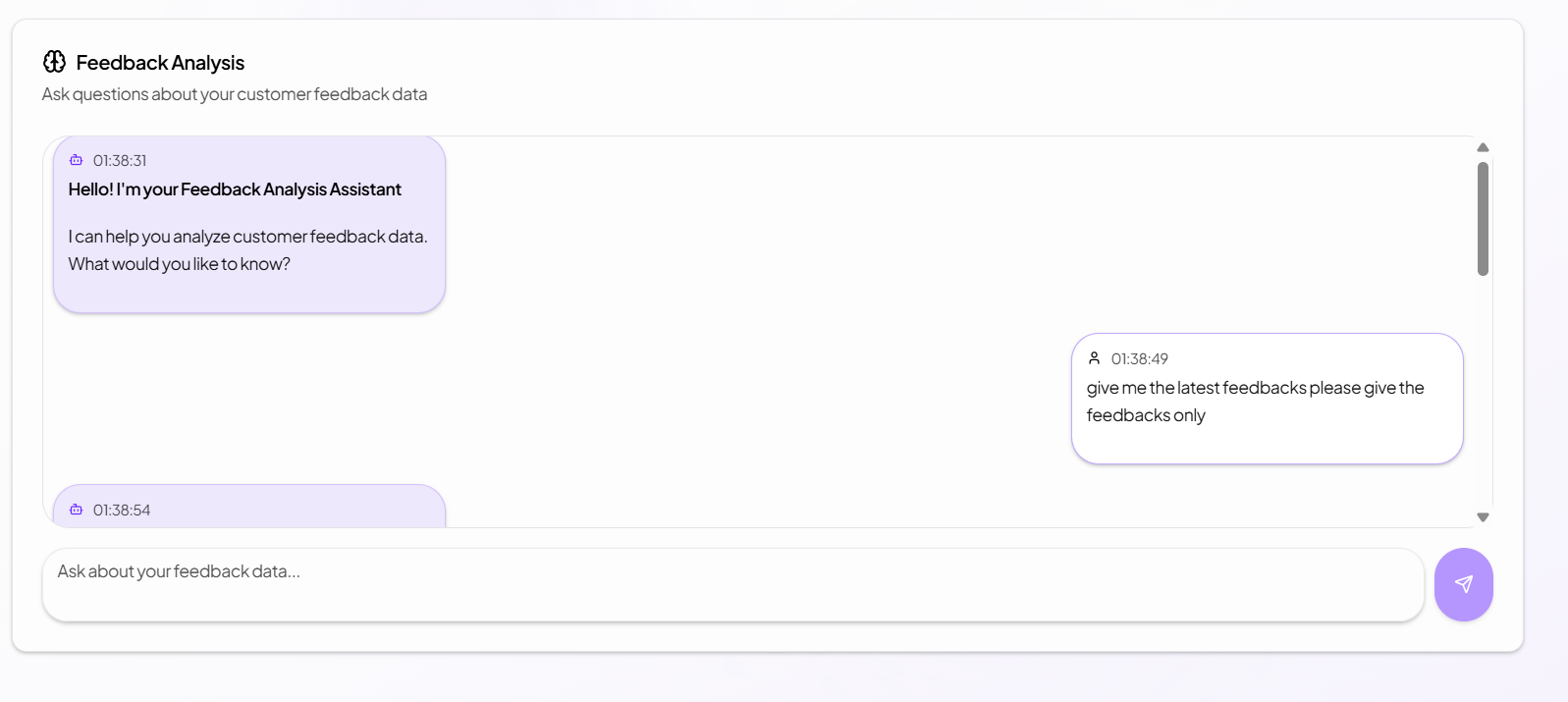
AI Chatbot Feedback Analysis we can ask questions about our customer feedback data and get ai powered suggestions for the reviews.
-
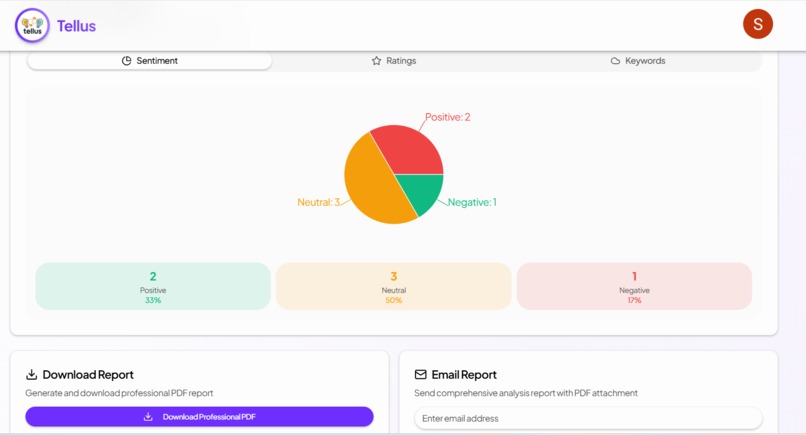
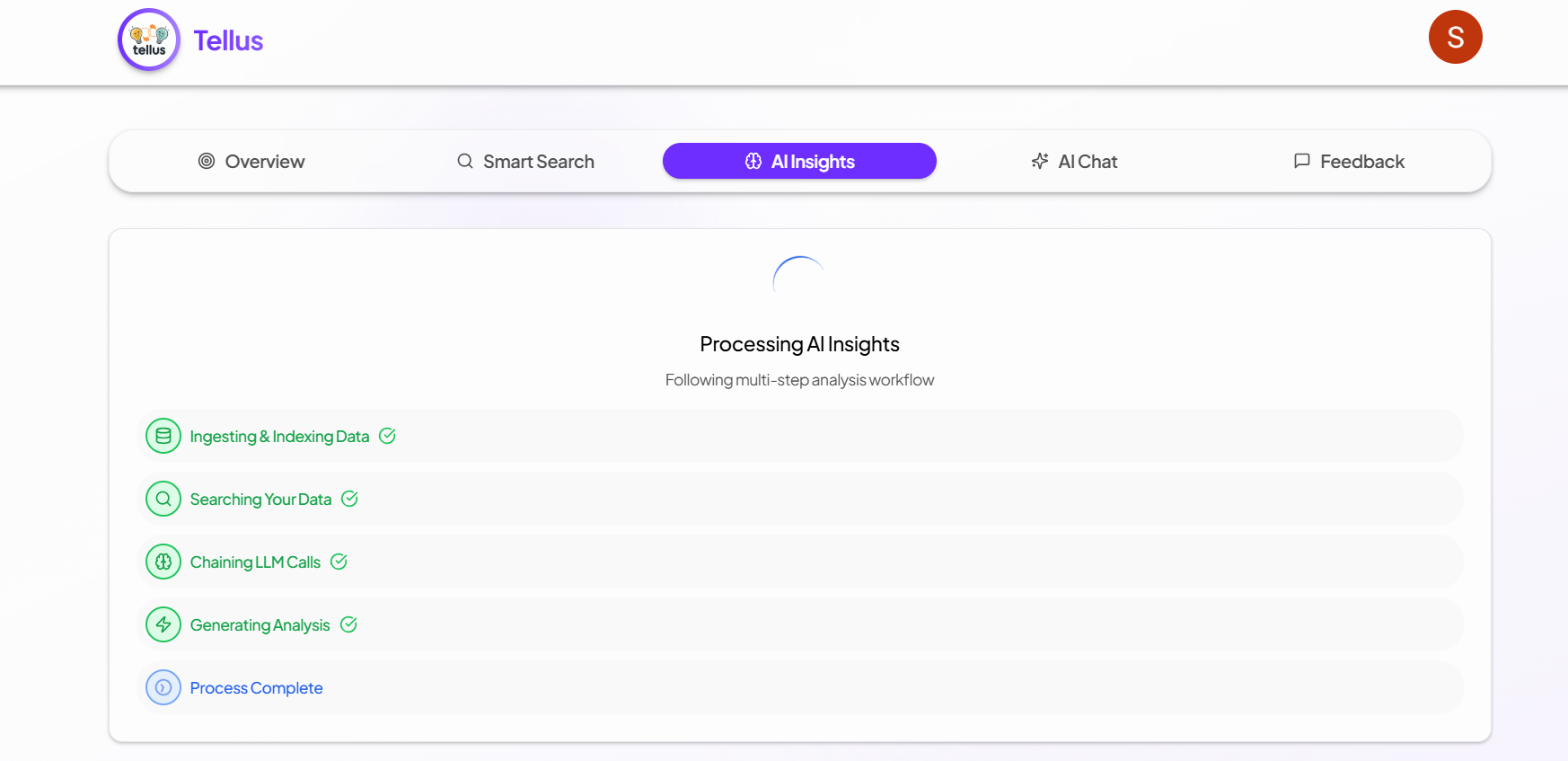
Enhanced AI Insights also contains external tools for Interactive Visualizations Comprehensive data visualization and trend analysis.
-
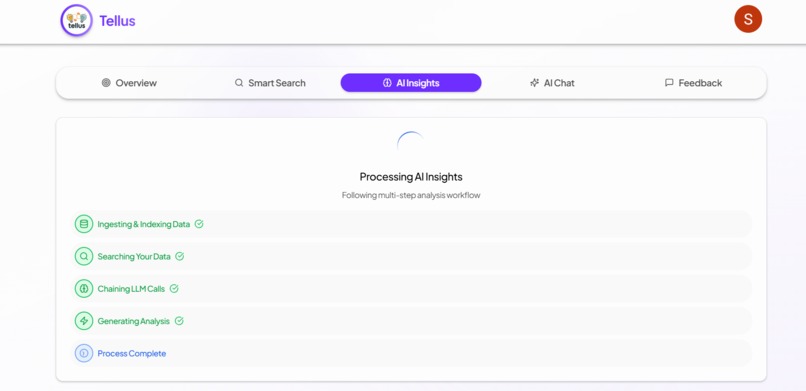
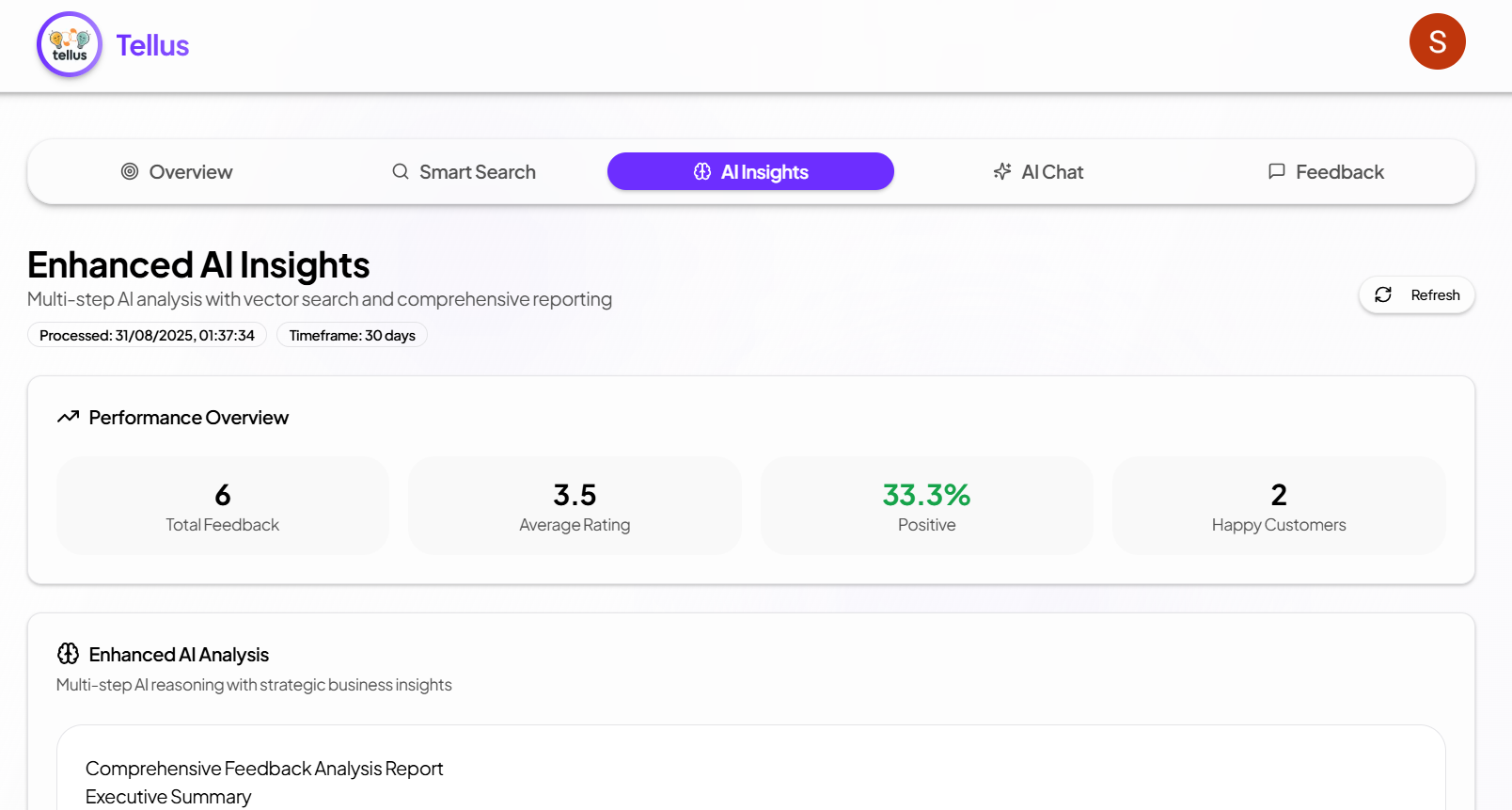
It gives AI insights where we get the over all analysis with Multi-step AI analysis with vector search and comprehensive reporting.
-
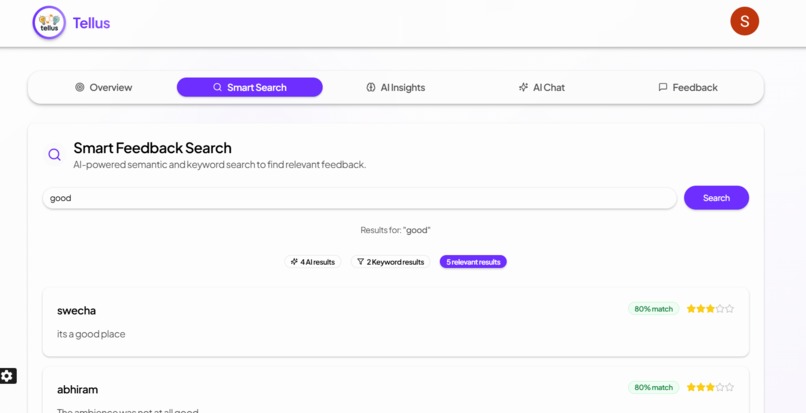
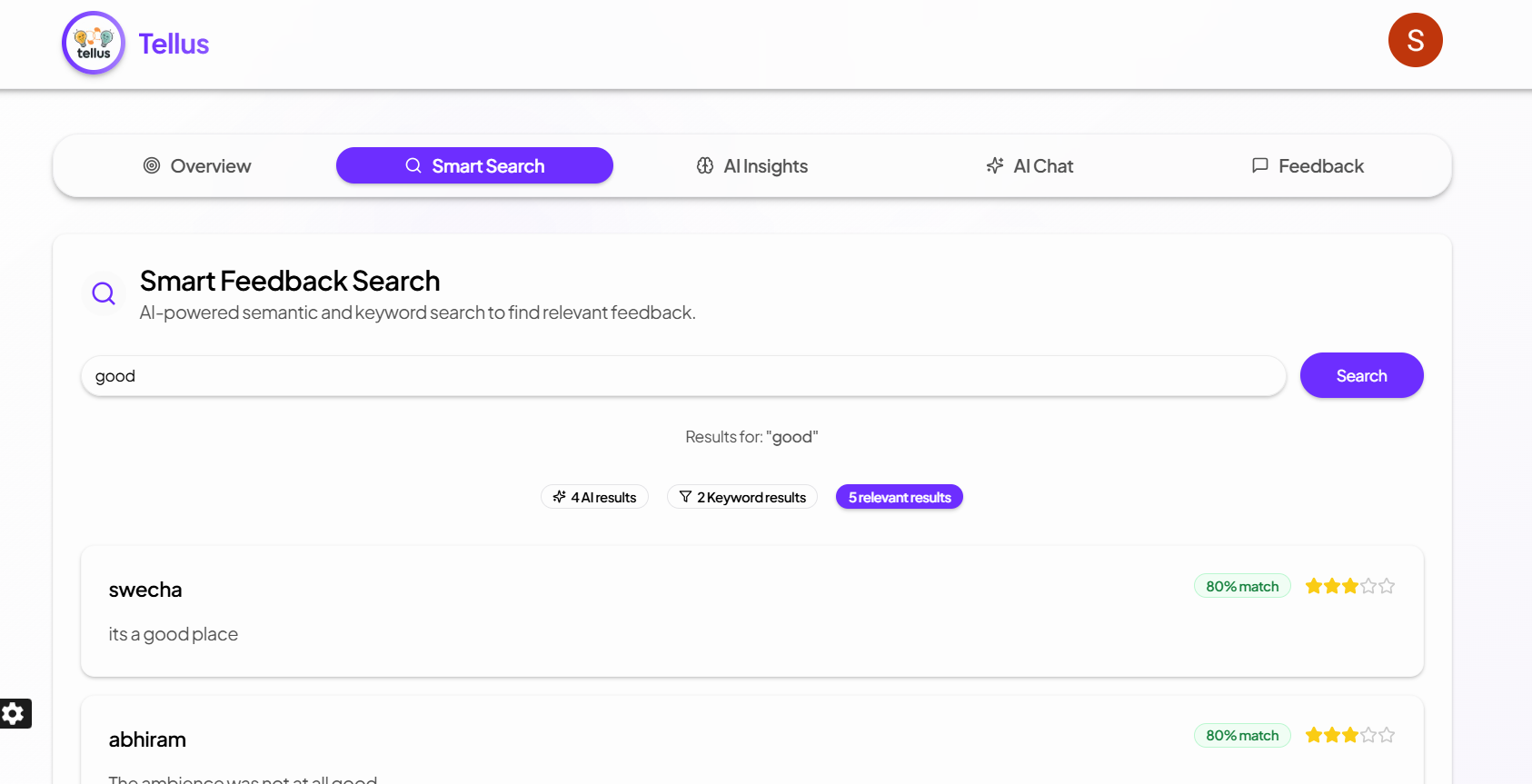
Smart Feedback Search AI-powered semantic and keyword search to find relevant feedback.
-
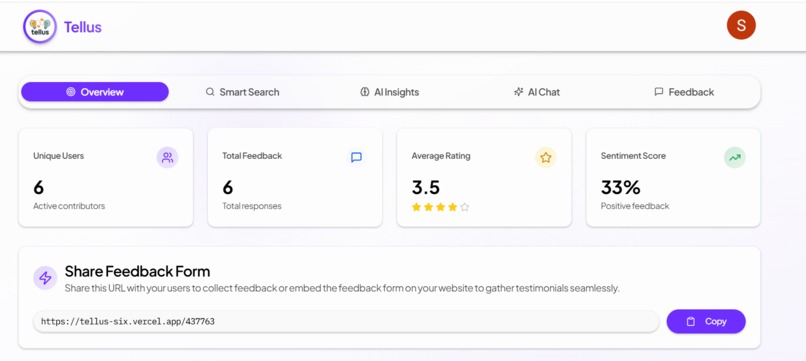
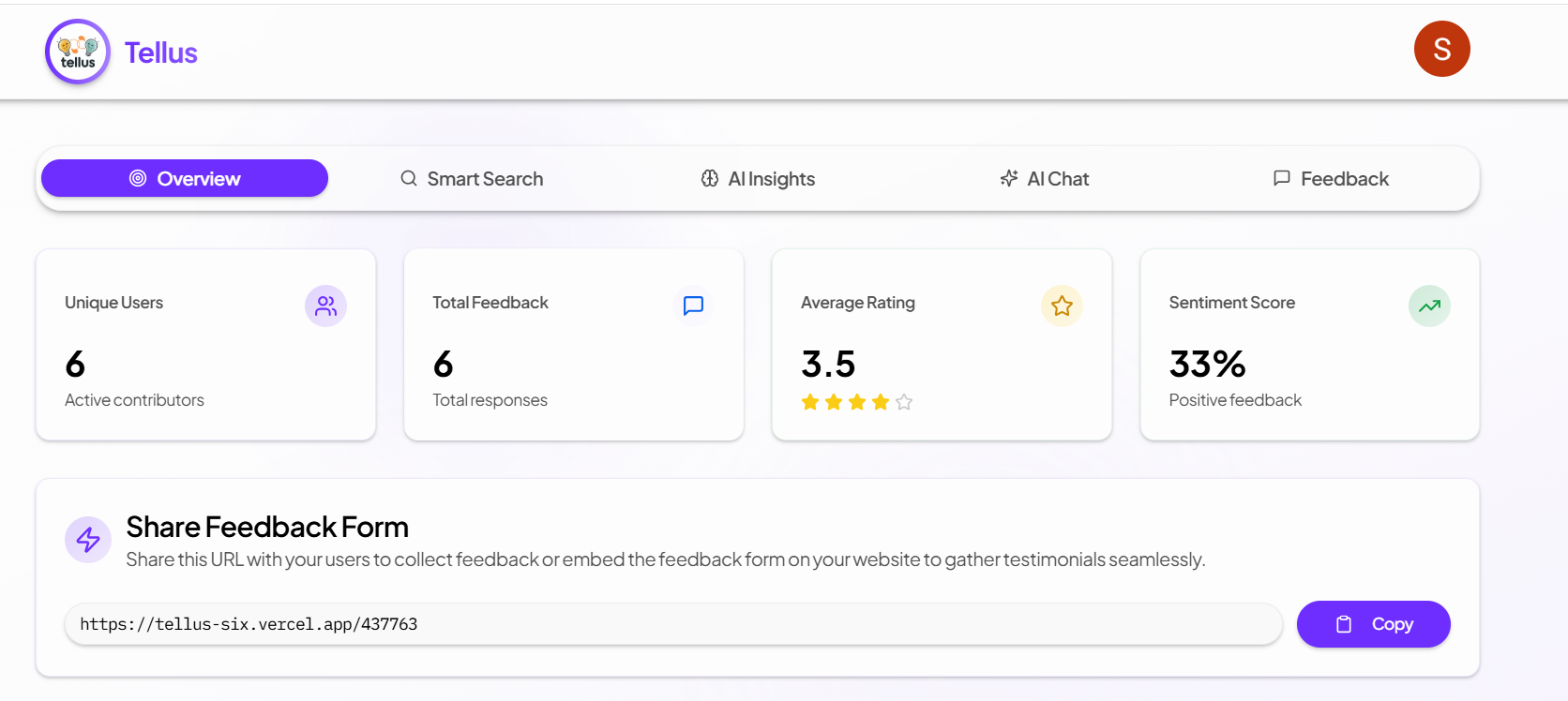
Home page with a dashboard and the unique link for the feedback form.
-
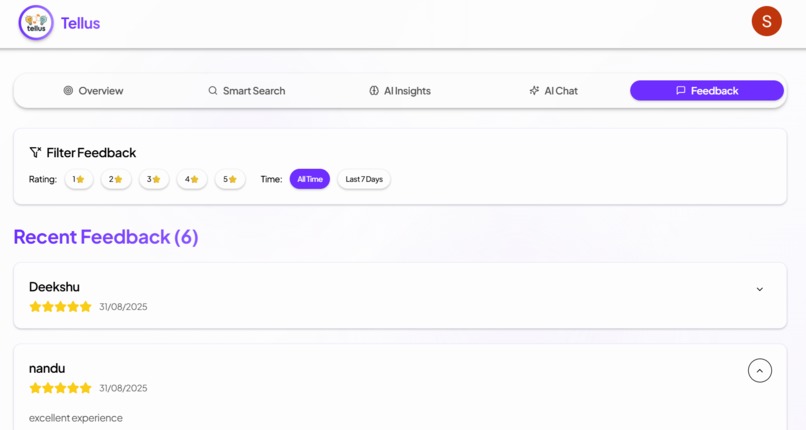
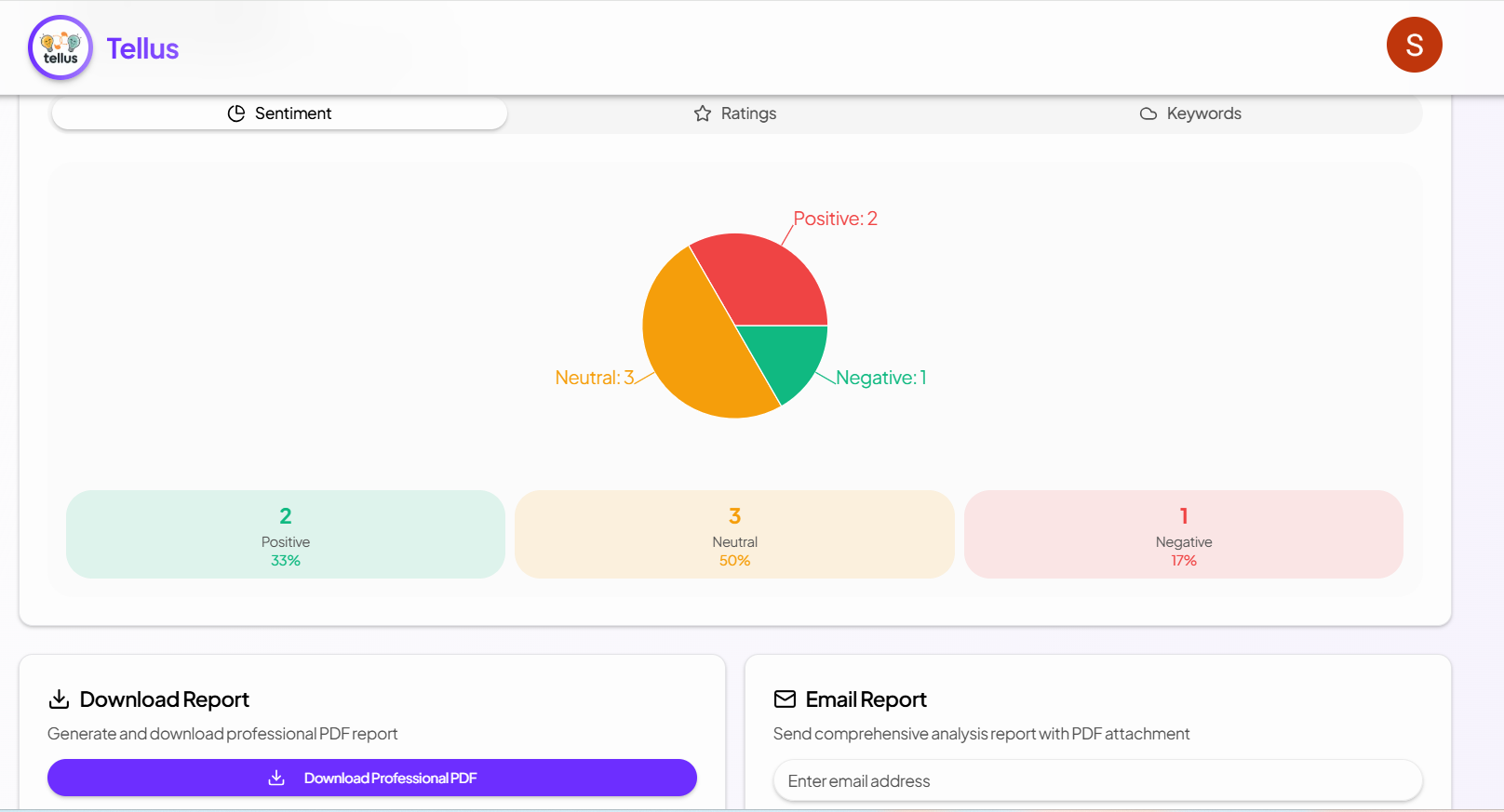
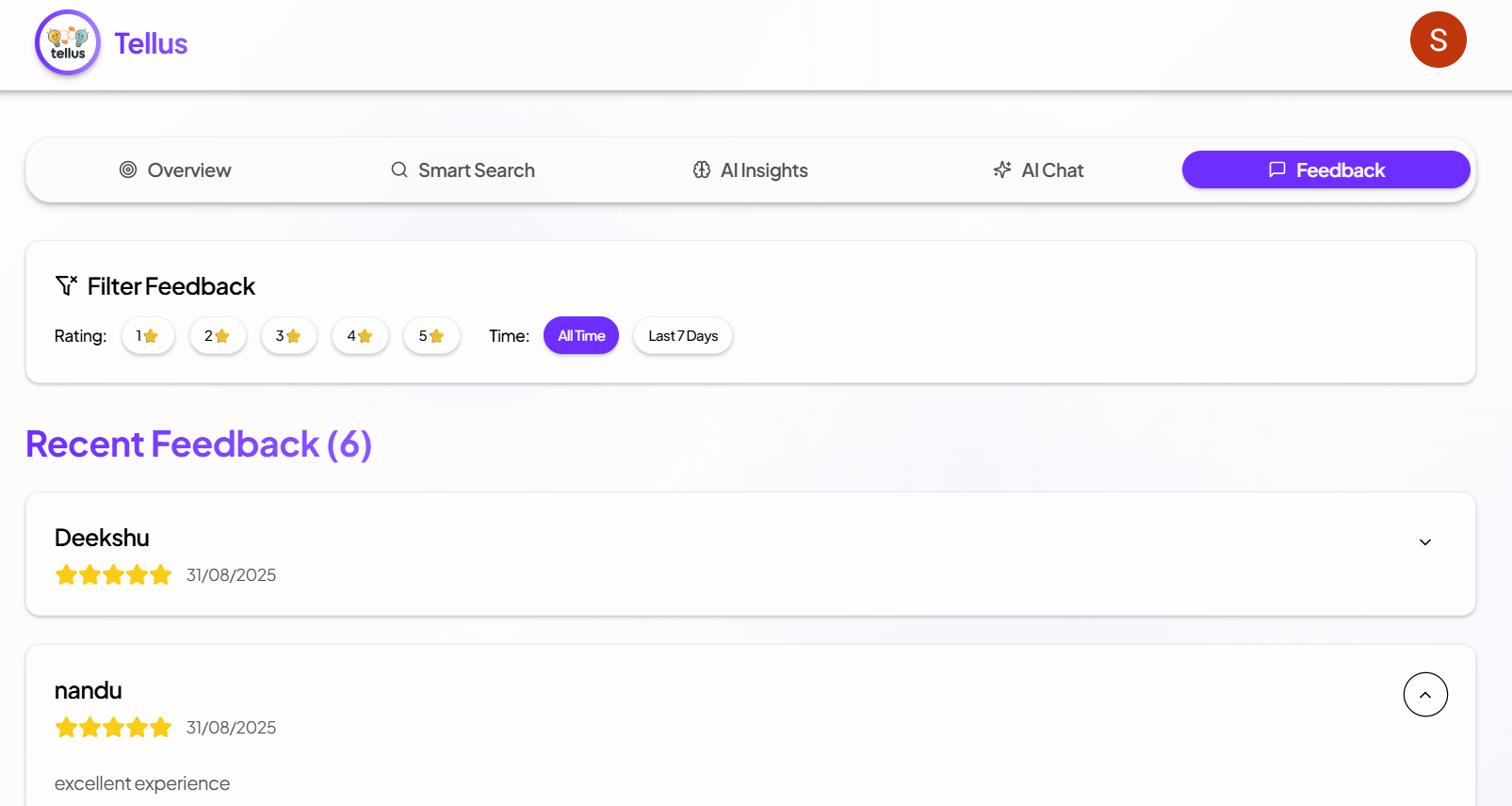
Here all the feedbacks will me visible along with the recent feedbacks , rating , date and name of the customer.
-
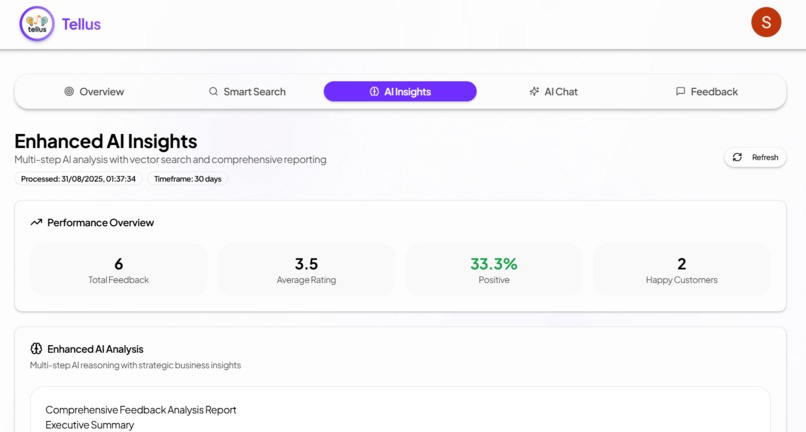
The Enhanced AI Insights contains Performance Overview, Enhanced AI Analysis.
Inspiration
Most feedback systems only collect reviews without offering engagement or insights to the user.
The inspiration for Tellus came from the idea that feedback should not remain static but instead
transform into a meaningful conversation. This motivated us to design a system where reviews are
analyzed by an AI agent that provides structured insights, suggestions, and follow-up dialogue.
What it does
Tellus is an AI-powered feedback platform that:
- Collects user reviews through a feedback form.
- Analyzes reviews to extract positive and negative aspects.
- Engages users in a chat interface where the AI discusses their feedback.
- Provides suggestions for improvement based on identified weaknesses.
- Summarizes common insights across multiple reviews for better decision-making.
How we built it
- Frontend: Designed using HTML, CSS, and JavaScript for the form and chat interface.
- Backend: Implemented with Django/Flask to handle submissions and process data.
- Database: Used TiDB Serverless to store both structured (ratings) and unstructured (reviews) data.
- Search: Applied vector and full-text search to find similar cases and patterns.
- AI Integration: Connected to the OpenAI API for summarization, sentiment analysis, and suggestions.
- Workflow: Combined multiple steps—data ingestion, search, LLM calls, and optional external tools—into a single automated flow.
Challenges we ran into
- Designing effective prompts to keep the AI responses structured.
- Ensuring smooth, real-time chat interaction for users.
- Managing unstructured data while keeping storage efficient.
- Balancing frontend design work with backend and AI integration within limited time.
Accomplishments that we're proud of
- Successfully built a system that goes beyond static feedback collection.
- Integrated AI in a way that feels interactive and helpful to users.
- Designed a workflow that can scale to different kinds of feedback and data sources.
- Created a foundation that can easily be extended with external tools and services.
What we learned
- How to integrate LLMs into real applications through APIs.
- The importance of prompt engineering in guiding AI outputs.
- Practical experience with handling unstructured user data.
- How multi-step AI workflows can generate meaningful insights from raw input.
What's next for Tellus
- Expanding support for multimedia feedback (voice, images).
- Adding advanced analytics dashboards for businesses to track trends.
- Improving personalization so the AI adapts to individual user preferences over time.
Built With
- coheer
- gemini
- nextauth
- nextjs
- shadcn
- sql
- tailwindcss
- tidb
- typescript

Log in or sign up for Devpost to join the conversation.