-
-
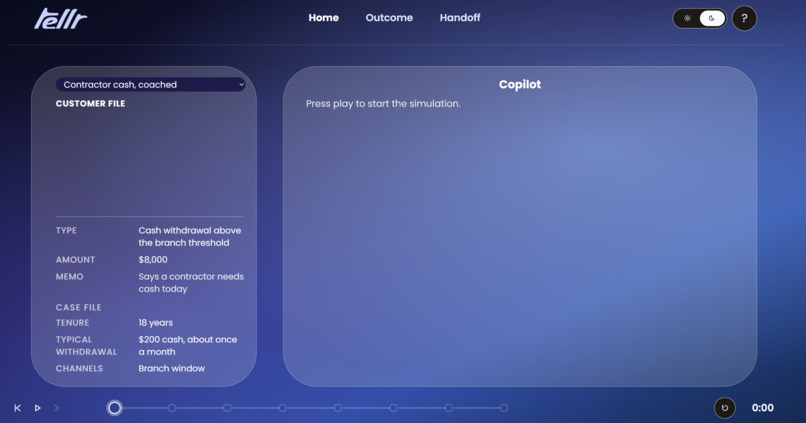
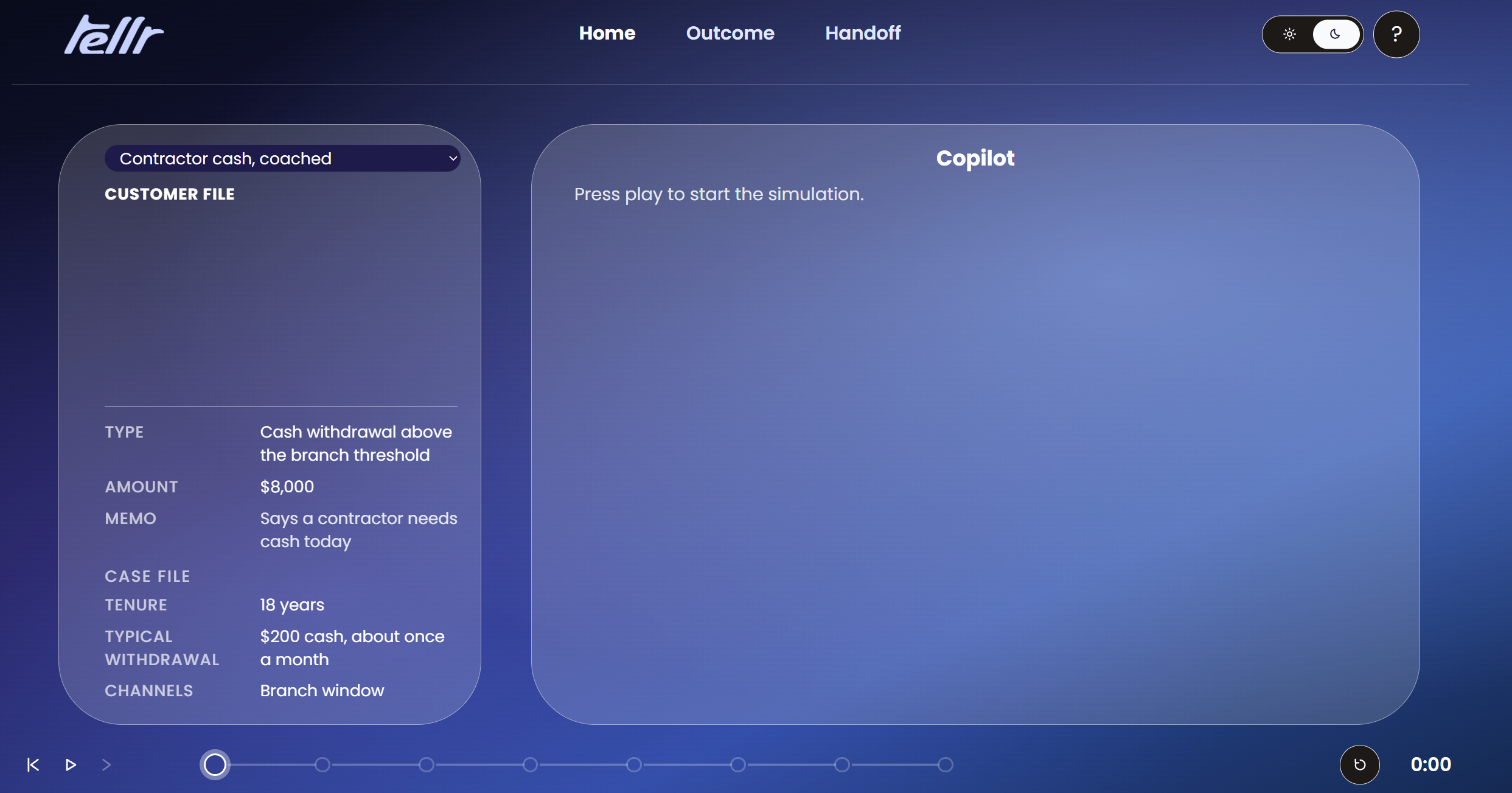
Base
-
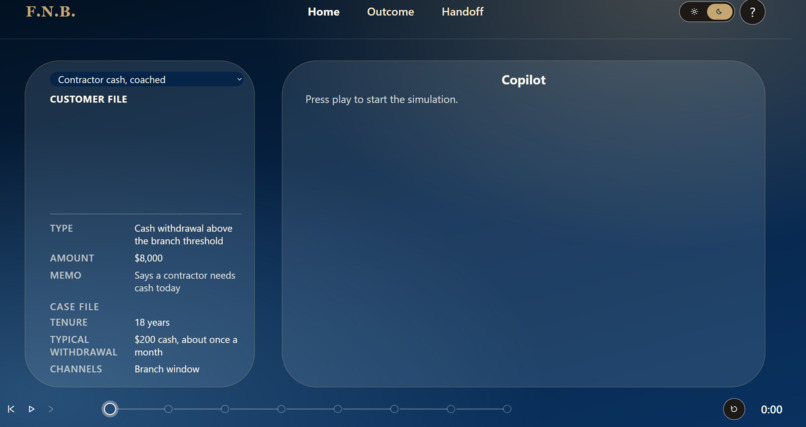
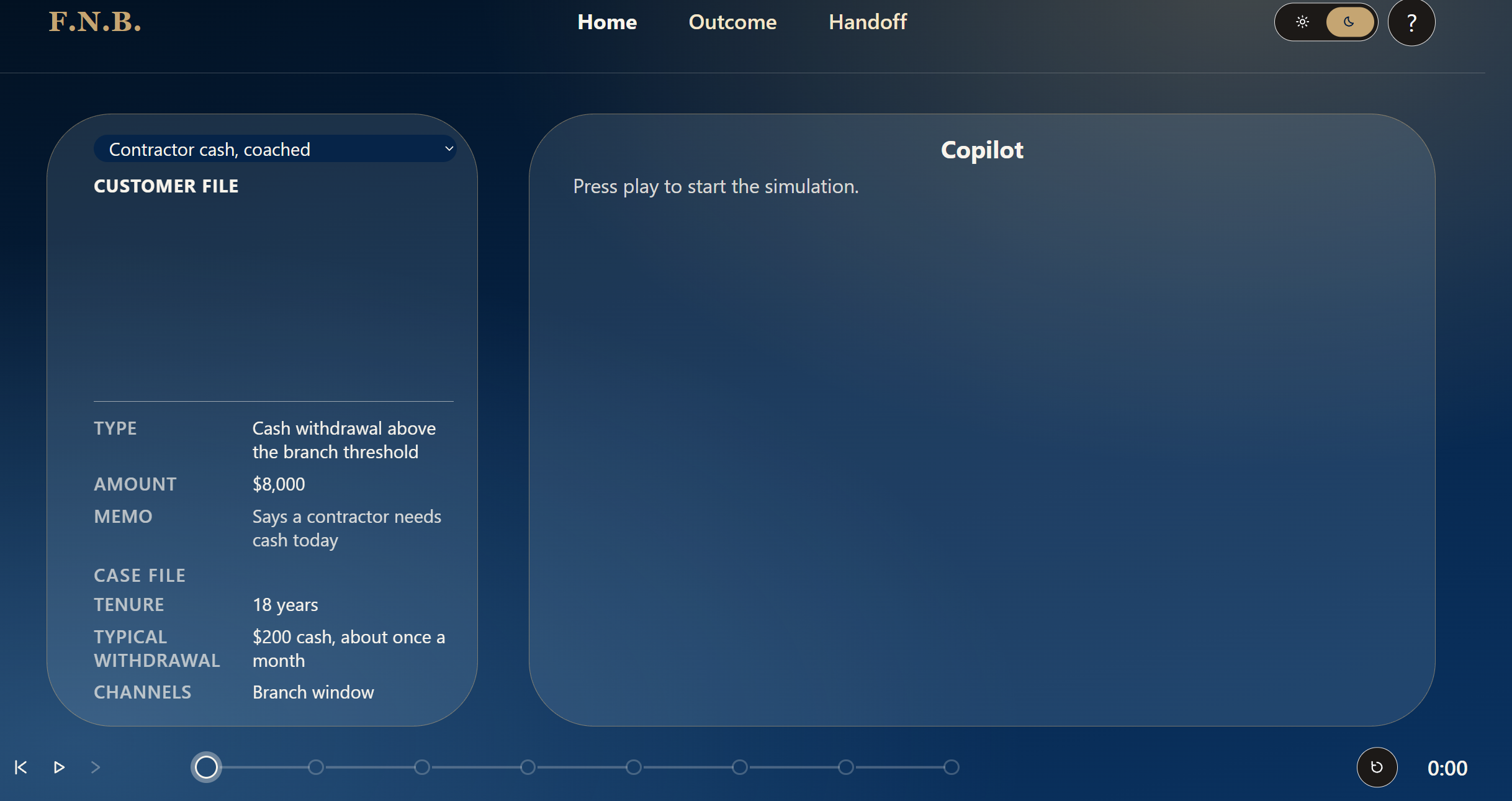
FNB
-
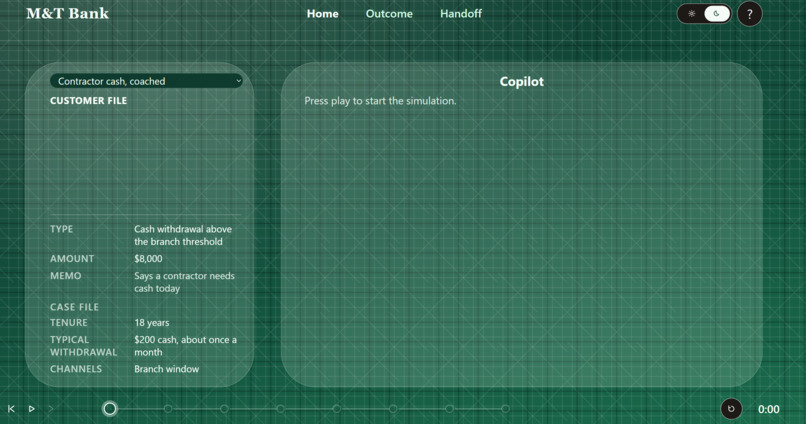
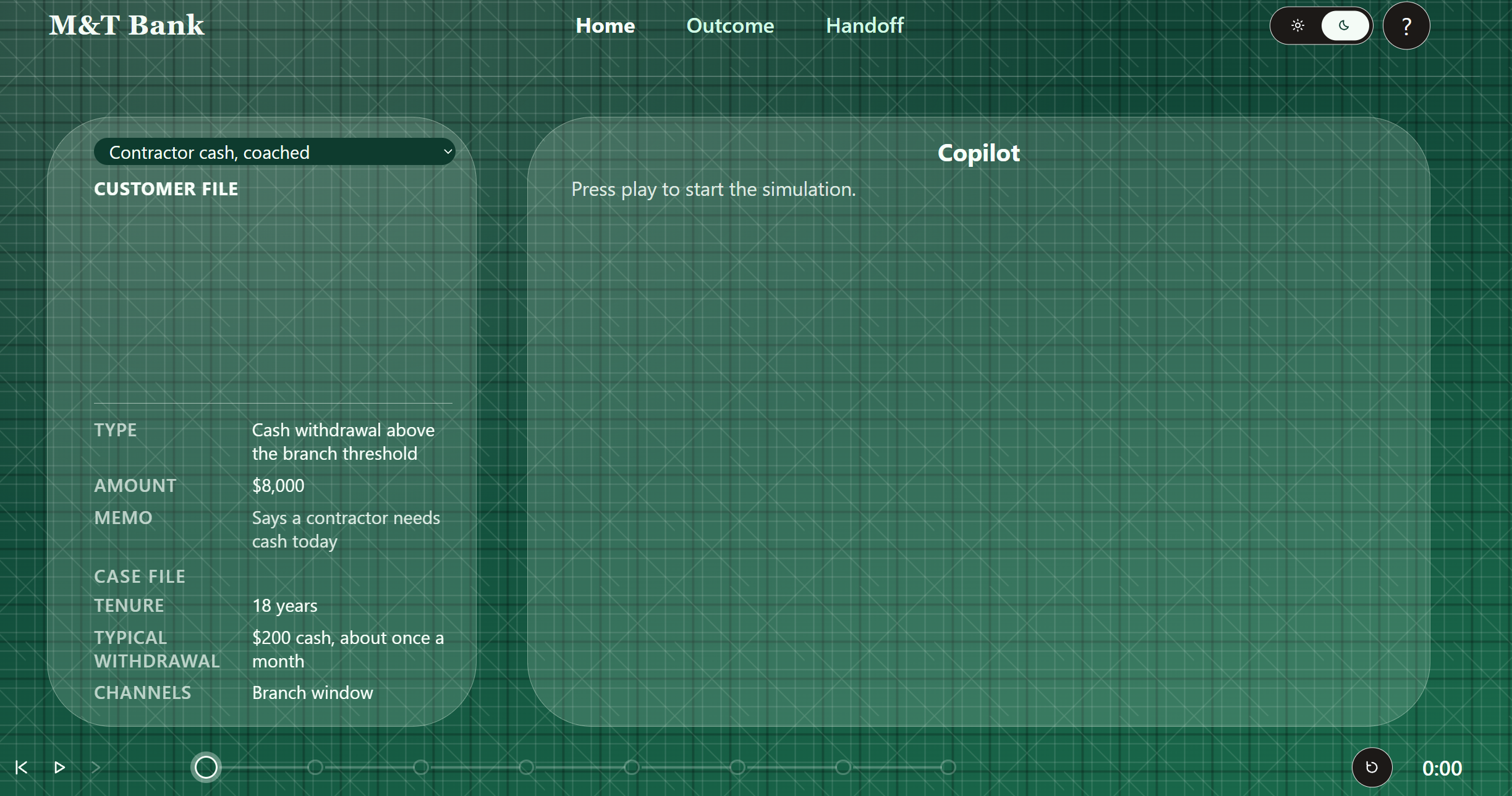
M&T
-
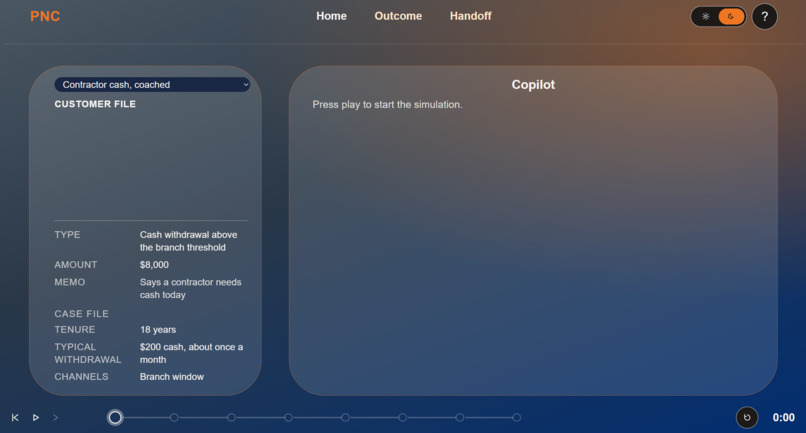
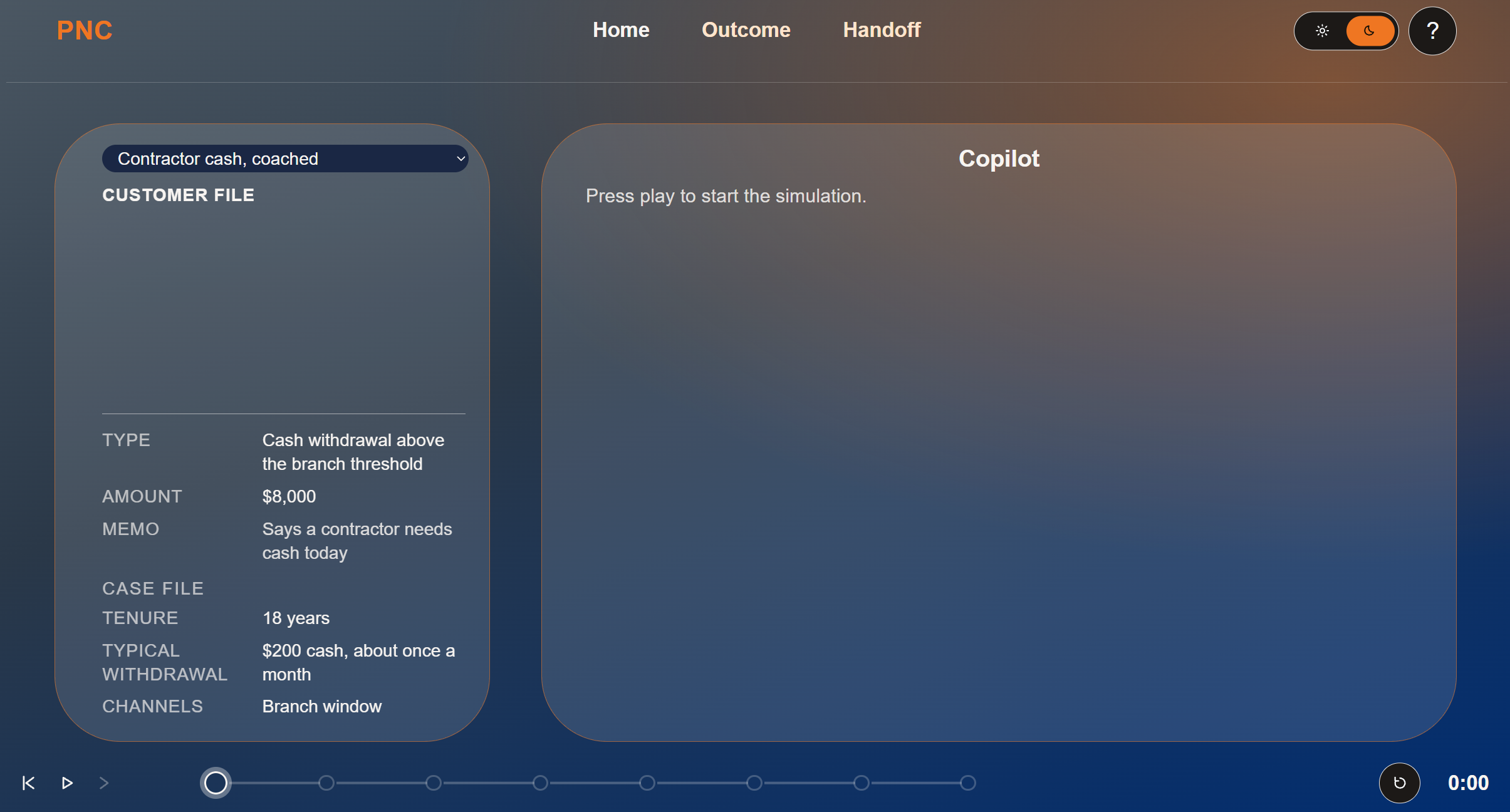
PNC
Inspiration
Our grandparents are not tech savvy. This is why knowing that older Americans lose billions of dollars to easily preventable scams inspired us to create Tellr. The FTC puts the total cost of scams targeted at older people between $13.3 billion to upwards of $119.5 billion, depending on how you measure the costs. These scammers often coach the victims on what to say to the bank, meaning that tellers at the front often only have minutes to react to strange requests from the victims.
What it does
"Tellr" is a copilot that is beside a bank teller on a machine at the front desk. The bank teller taps signals they notice from customers, such as "Told not to discuss with the bank," and answers the copilot's next question with a tap. "Tellr" turns those taps into a score from 0 to 100 and a level of recommended urgency: Clear, Caution or High. It then suggests an action that the teller should take, such as escalating the incident to a manager. "Tellr" does not take in any input other than the standardized tap prompts. This is so that the AI cannot get any context on the customer's bank information. If unusual events happen then the bank teller must use their own judgement, as "Tellr" exists to speed up the process and not to make decisions for the bank.
How we built it
We built Tellr with Cursor cloud agents, breaking up the project into sections A and B from an overarching architecture document. A had subsections A-01 through A-08 and B had subsections B-01 through B-07. A was the backend and ML and while B was the frontend. Each task had its own branch and pull request, plus a short handoff note for the next agent, meaning each agent communicated with each other. We dynamically added agents when tasks touched separate folders and held back when they shared files, shared rules, or depended on a step that had to be completed first. Our maximum concurrent cursor agents was 12 , open pull requests peaked at 9, and we totaled about 70,000 lines of code created (about 60,000 in the final repo). An automated check had to pass before each merge, and we merged one pull request at a time. More than 150 pull requests have merged.
Challenges we ran into
One of the big challenge we had was that bank data is very confidential. As such, our project had to be both useful and not touch any confidential data at the same time. This was hard to do because a program needs some amount of input to do anything. It was also hard working with so many agents at the same time because the volume of code being built was enormous, and difficult to keep track of. This also caused agents to run into each other and conflict more than a few times.
Accomplishments that we're proud of
We are proud of the fact that our model data is backed by benchmarks and that our project is backed by its sources. This project was very ambitious so we're glad we managed to create something useful. Of the simulated 30 customer visits, our model caught 14 of the 15 scams and falsely flagged 0 of the innocent requests (out of 15, for a total of 15 scams 15 legitimate requests).
What we learned
In the making of this project we learned that design is the most important part of a large-scale project. We spent the first few hours designing the architecture document and workflow environment for our cursor agents. That allowed us to proceed through the design of Tellr smoothly and spend more time refining the finished product.
What's next for Tellr
We plan to test Tellr out with real customers instead of synthetic simulated ones next. This would be the real test of whether or not our product is a viable banking software or not.


Log in or sign up for Devpost to join the conversation.