-
-
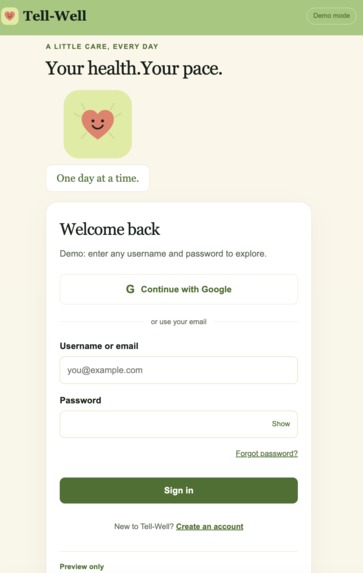
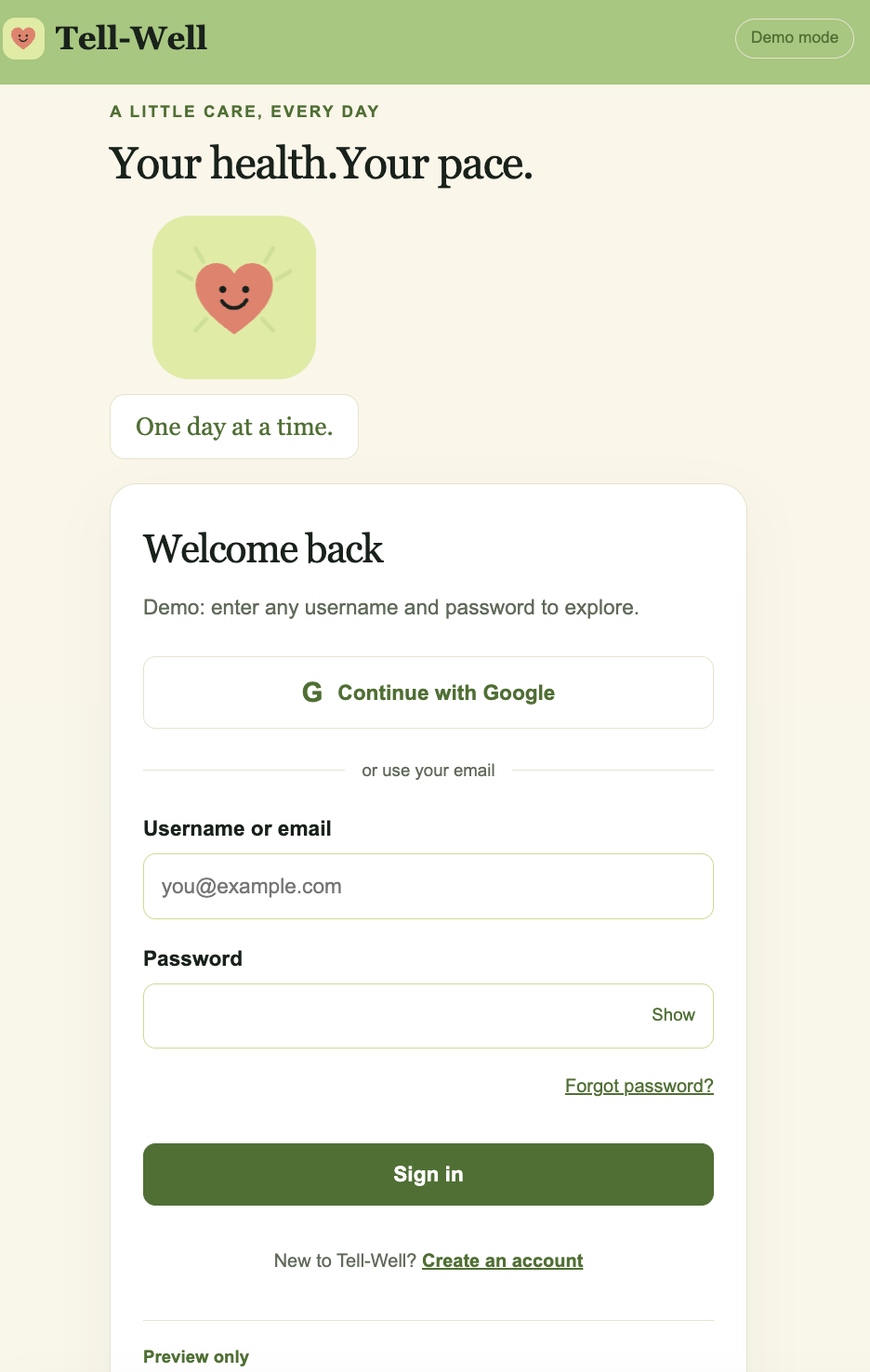
Login screen with mascot!
-
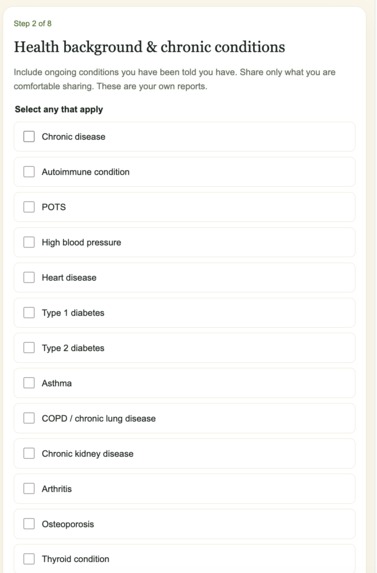
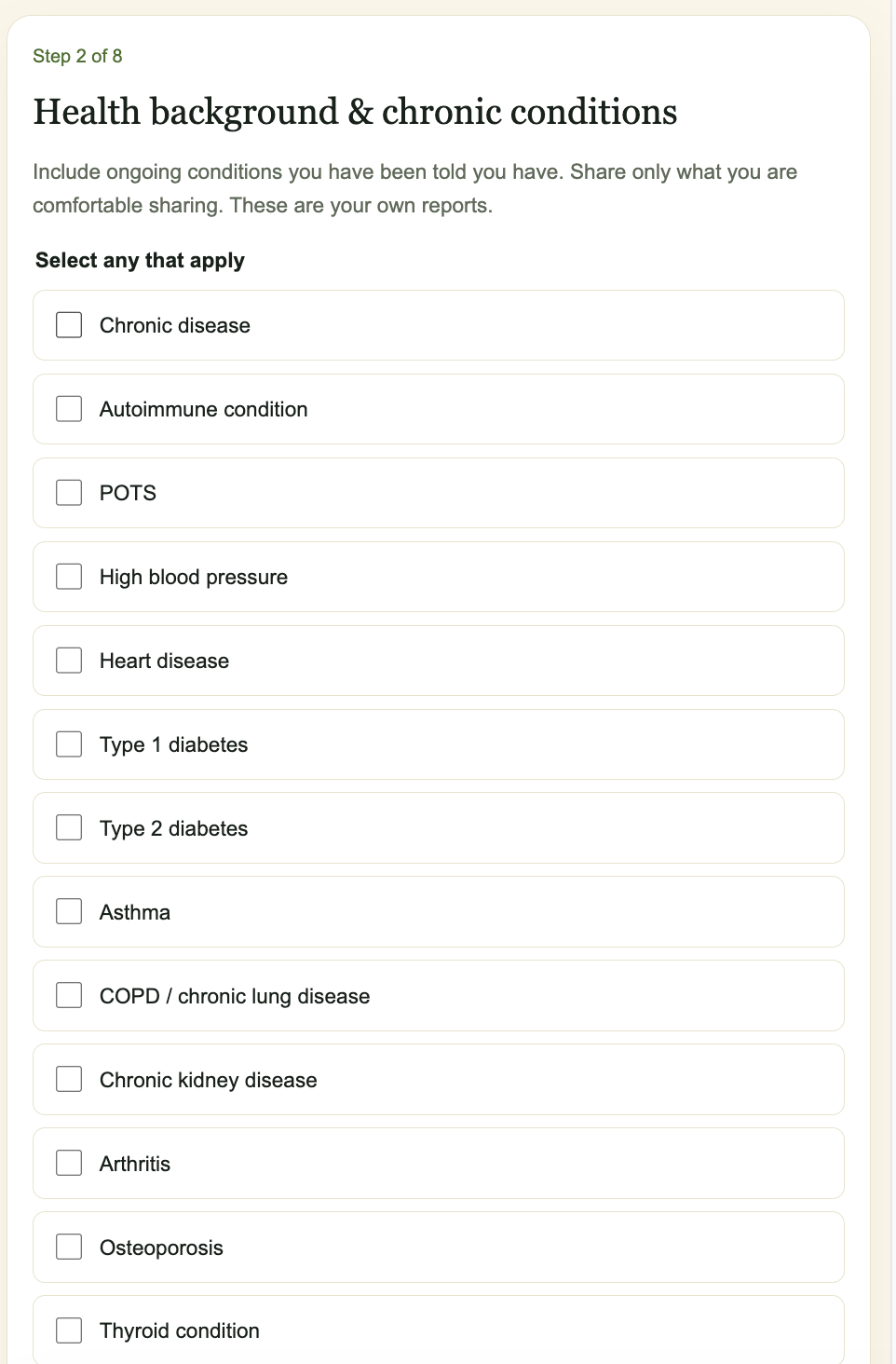
Drop down selection of conditions, input yourself, or click none. Helps with symptom management.
-
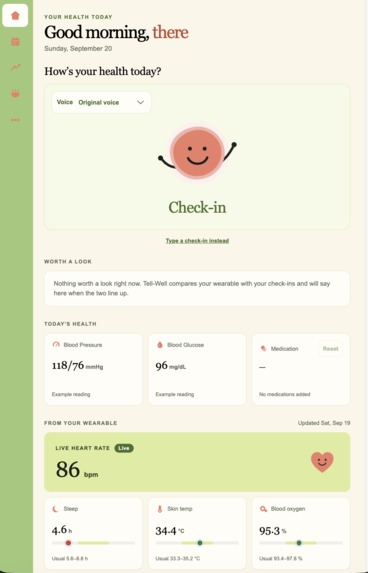
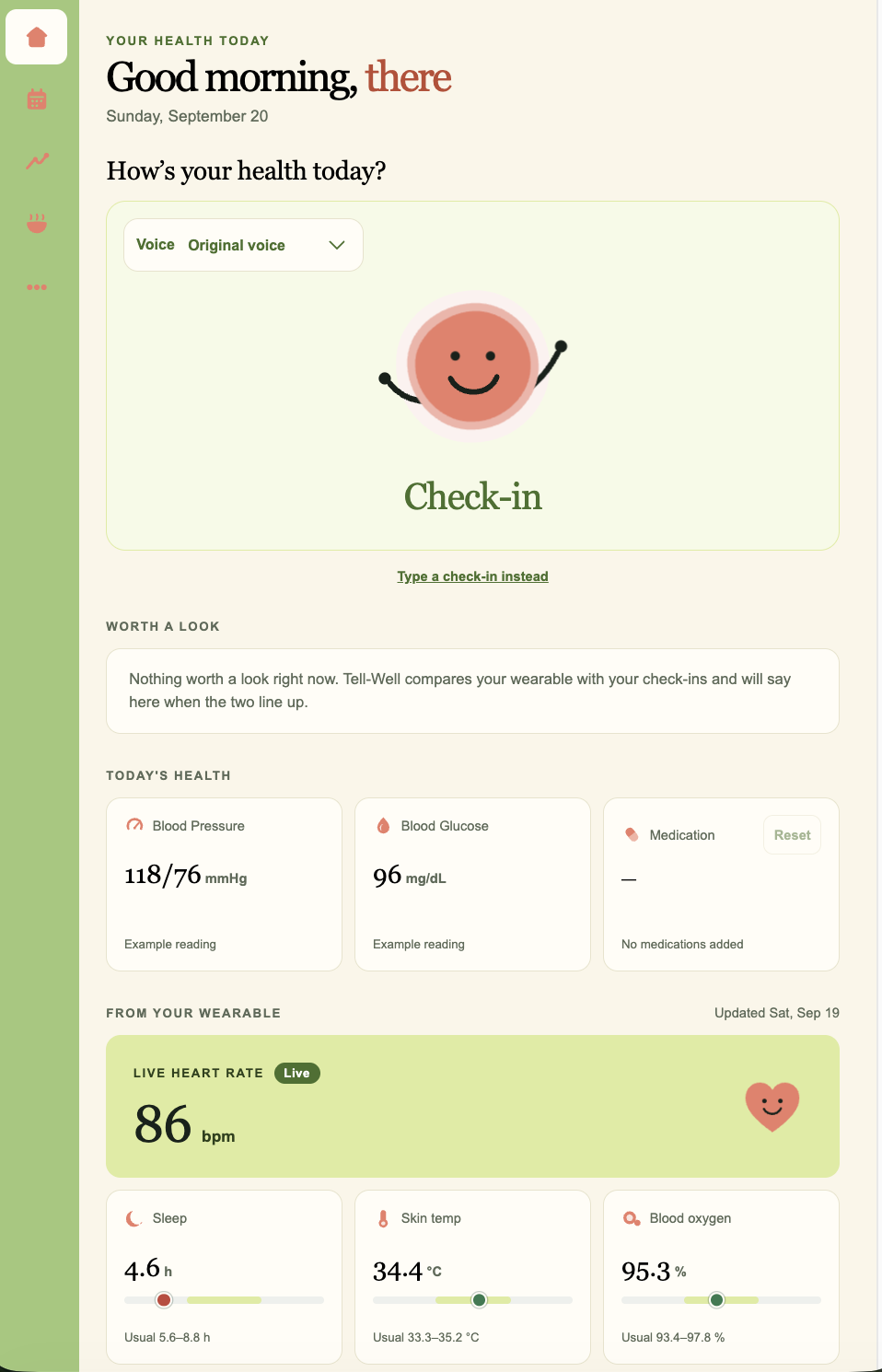
Home screen, with Telli-Welli "Check-in" button to track symptoms, prescription, pain, food, hydration, and more!
-
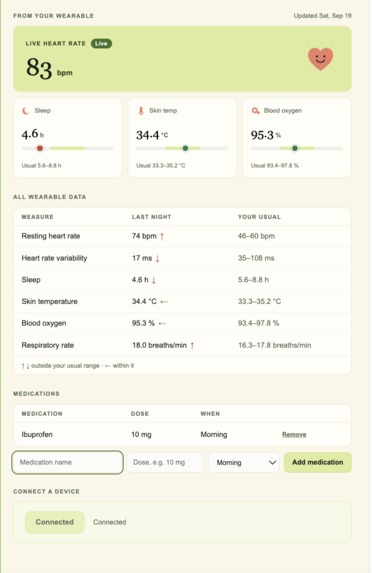
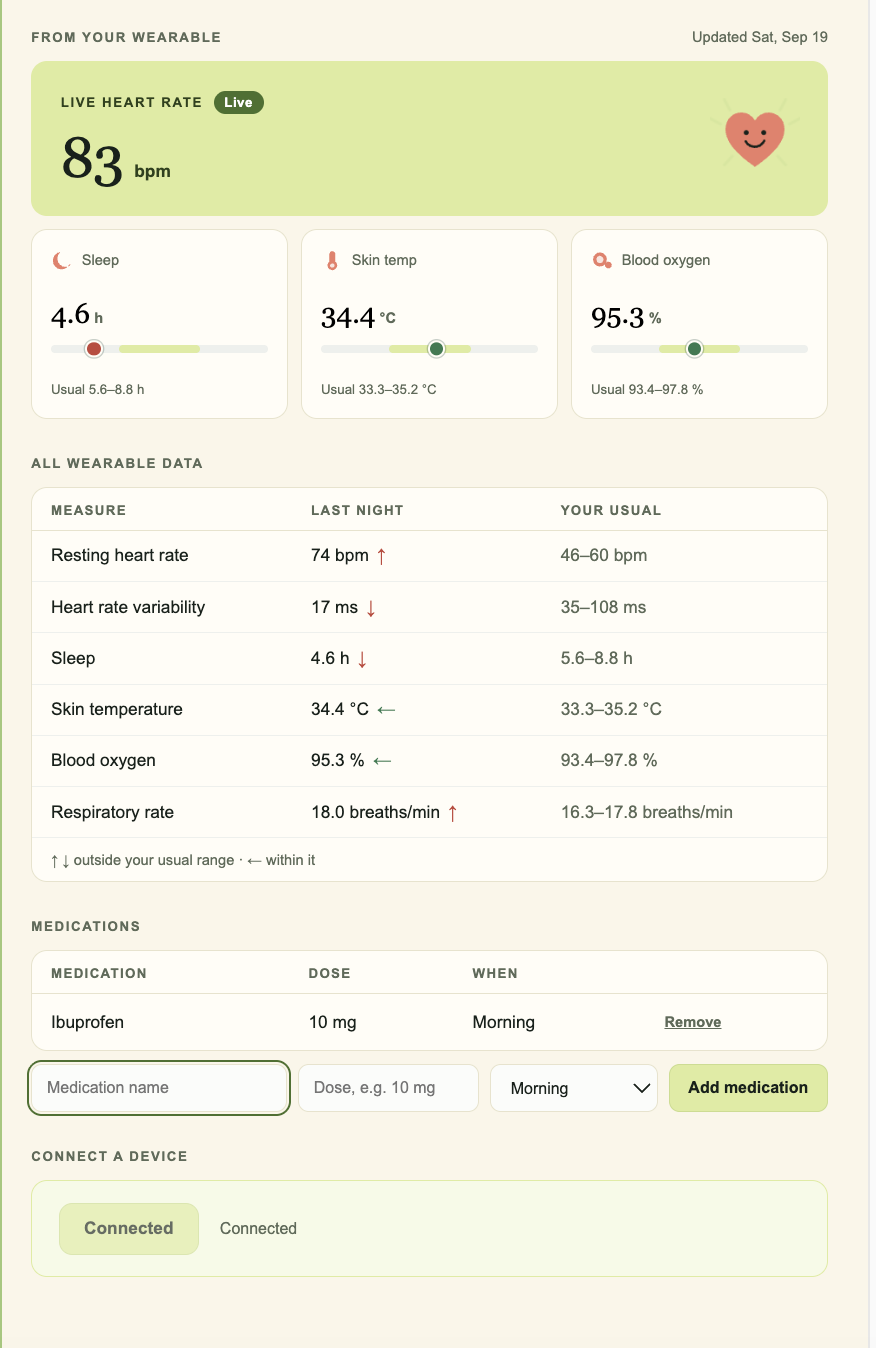
Live heartrate from wearable device, other biometrics and prescription medication input.
-
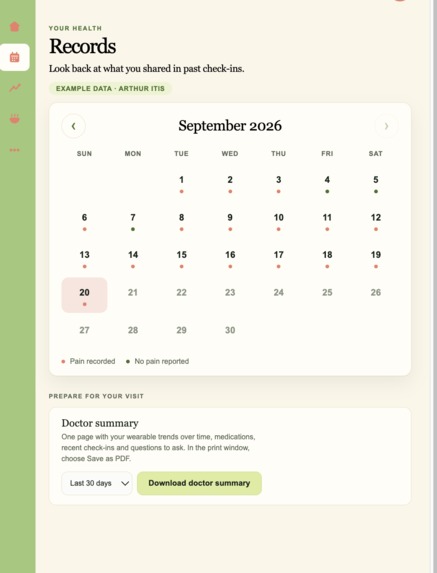
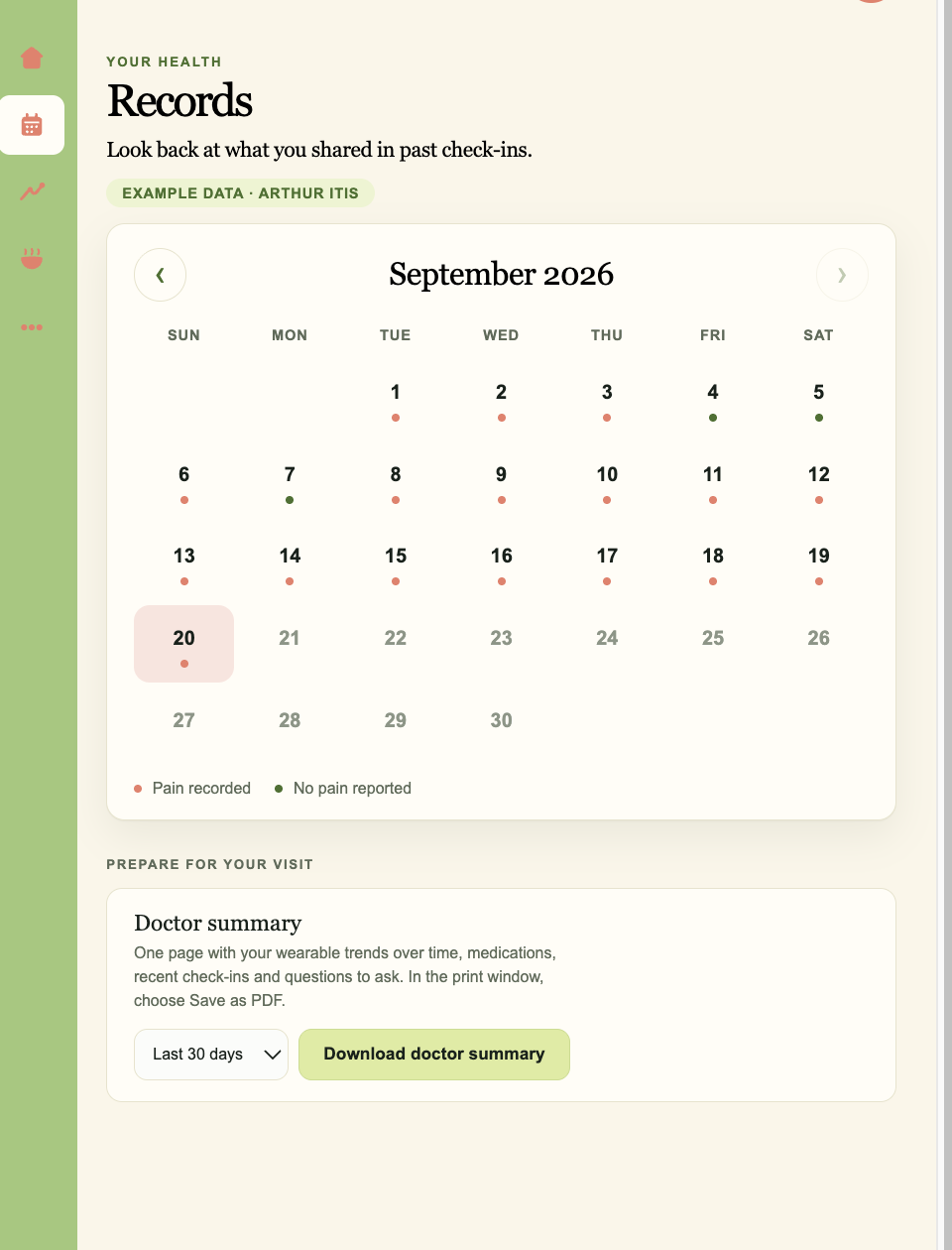
Records screen, with doctor summary which creates pdf of all data and inputs for easy tracking
-
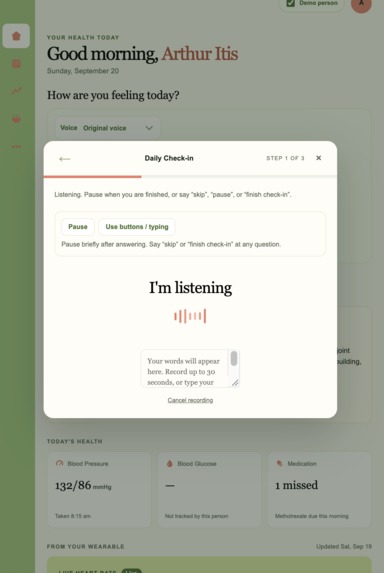
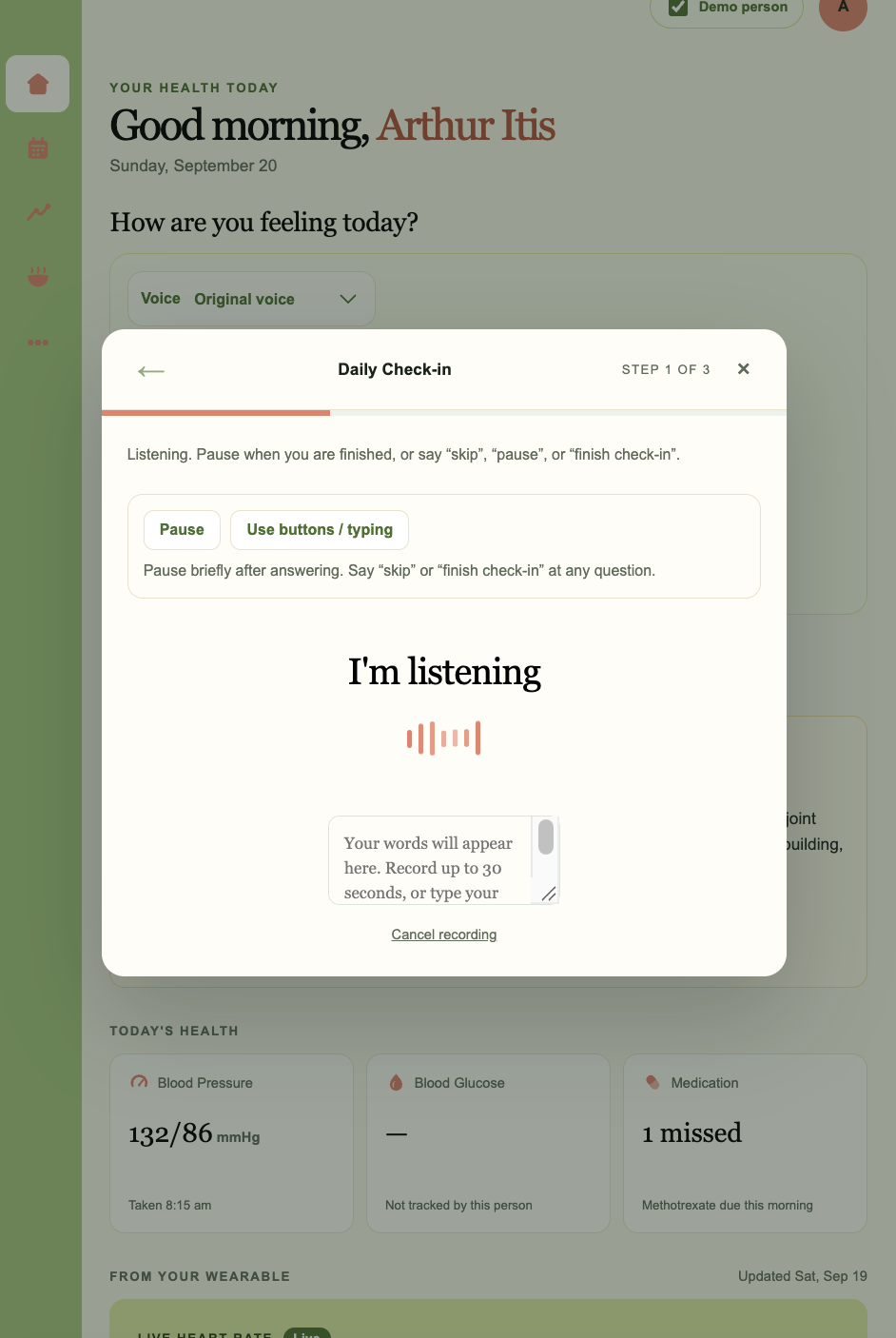
The ElevenLabs speech to text input listening to the user's input and writing a transcript for use by Gemini.
-
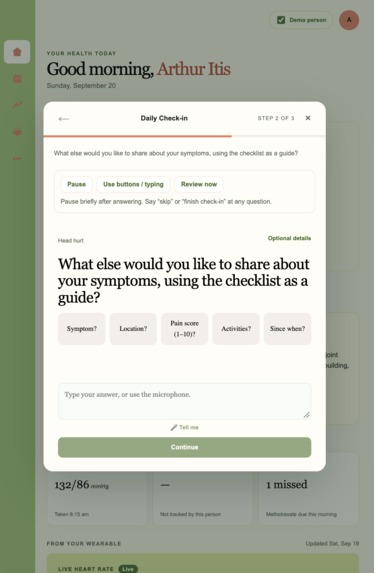
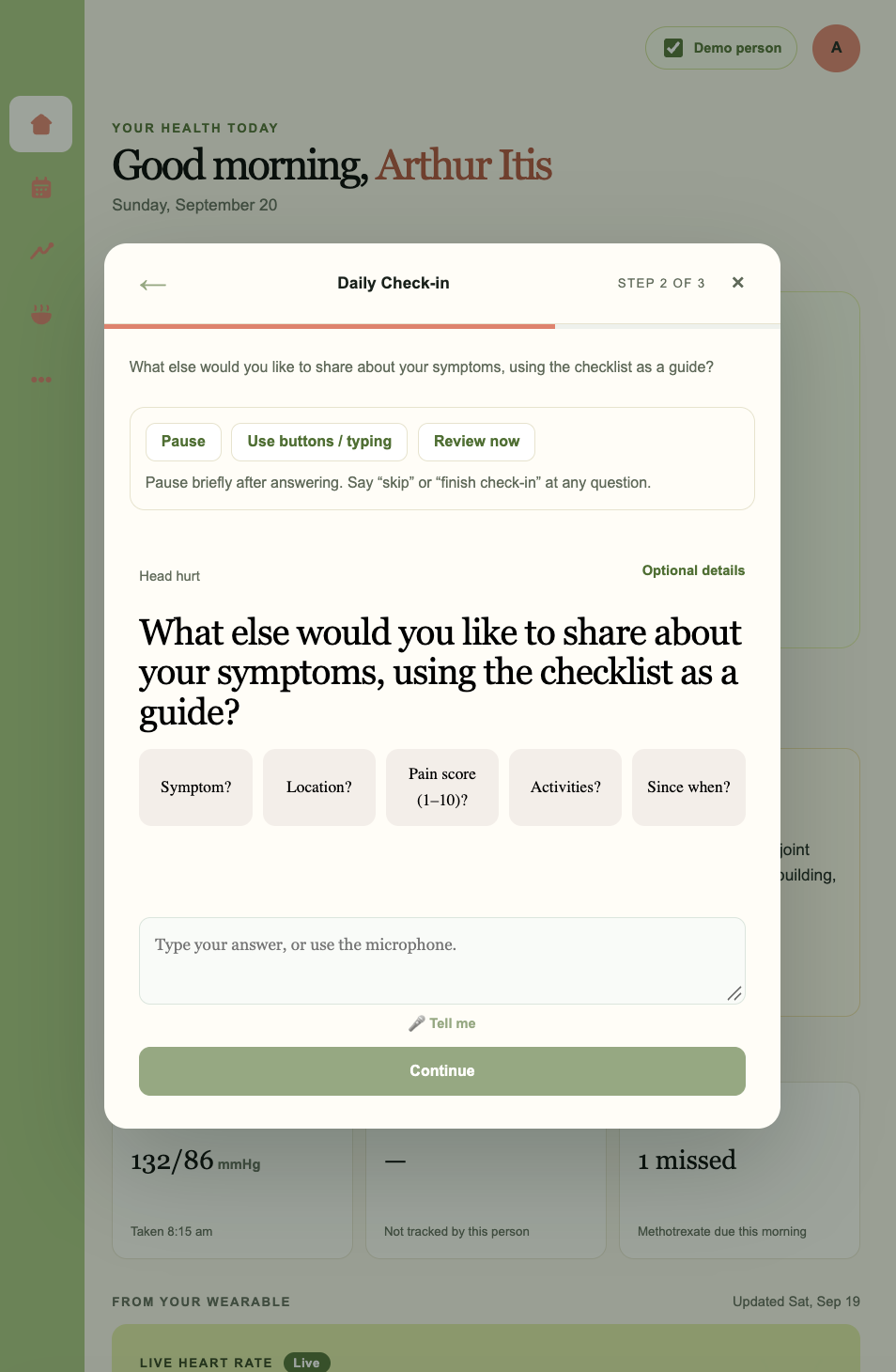
Open-ended follow up question, with suggestions on what information to provide.
-
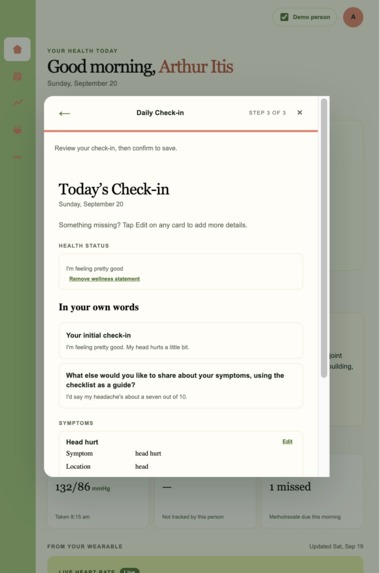
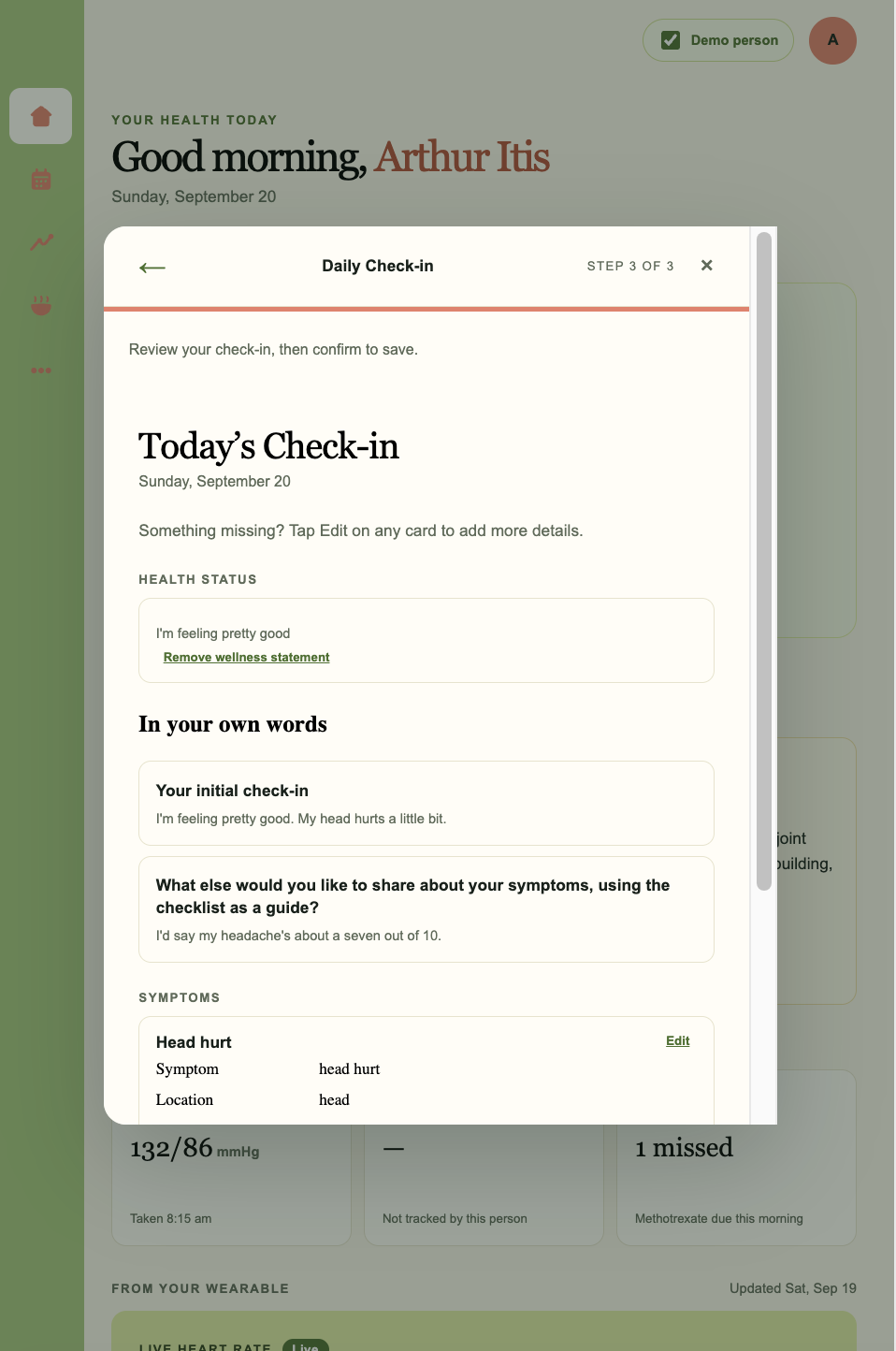
Check-in summary with overview and "save" button for the user.
-
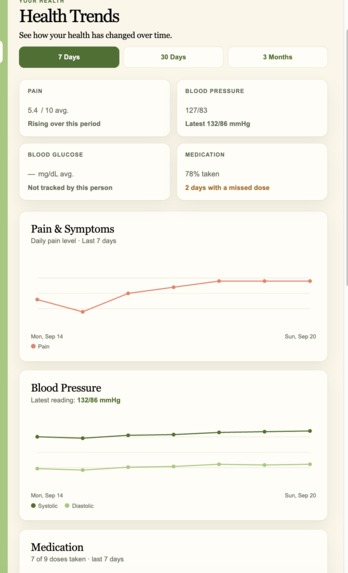
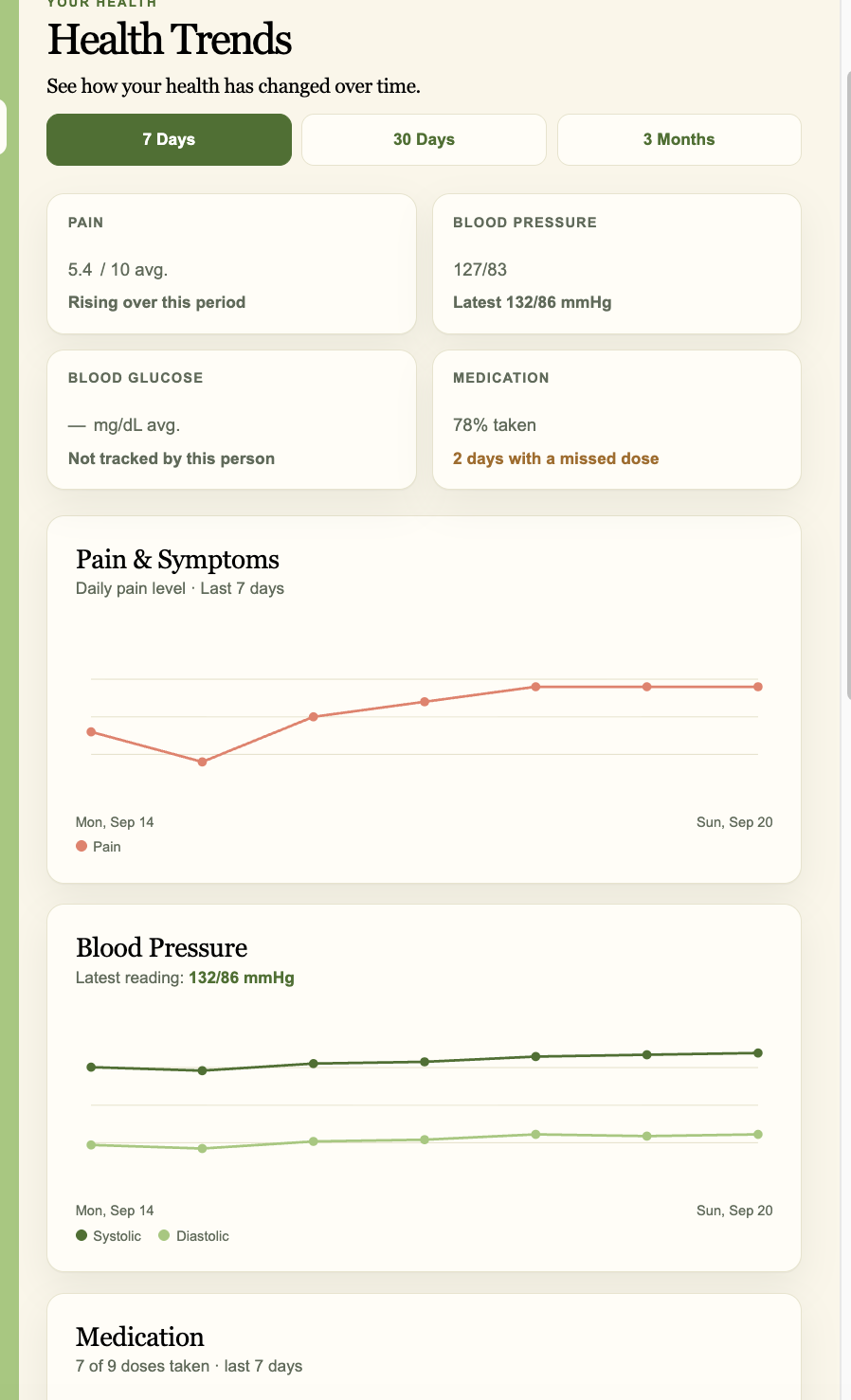
Health trends, with symptoms/pain, blood pressure, and medication over time (7 days, 30 days, 90 days). Also summarizes trends.
-
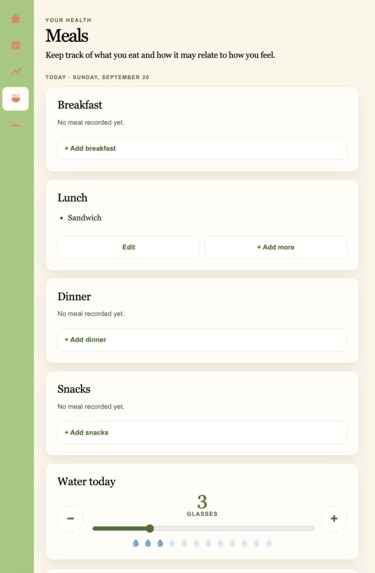
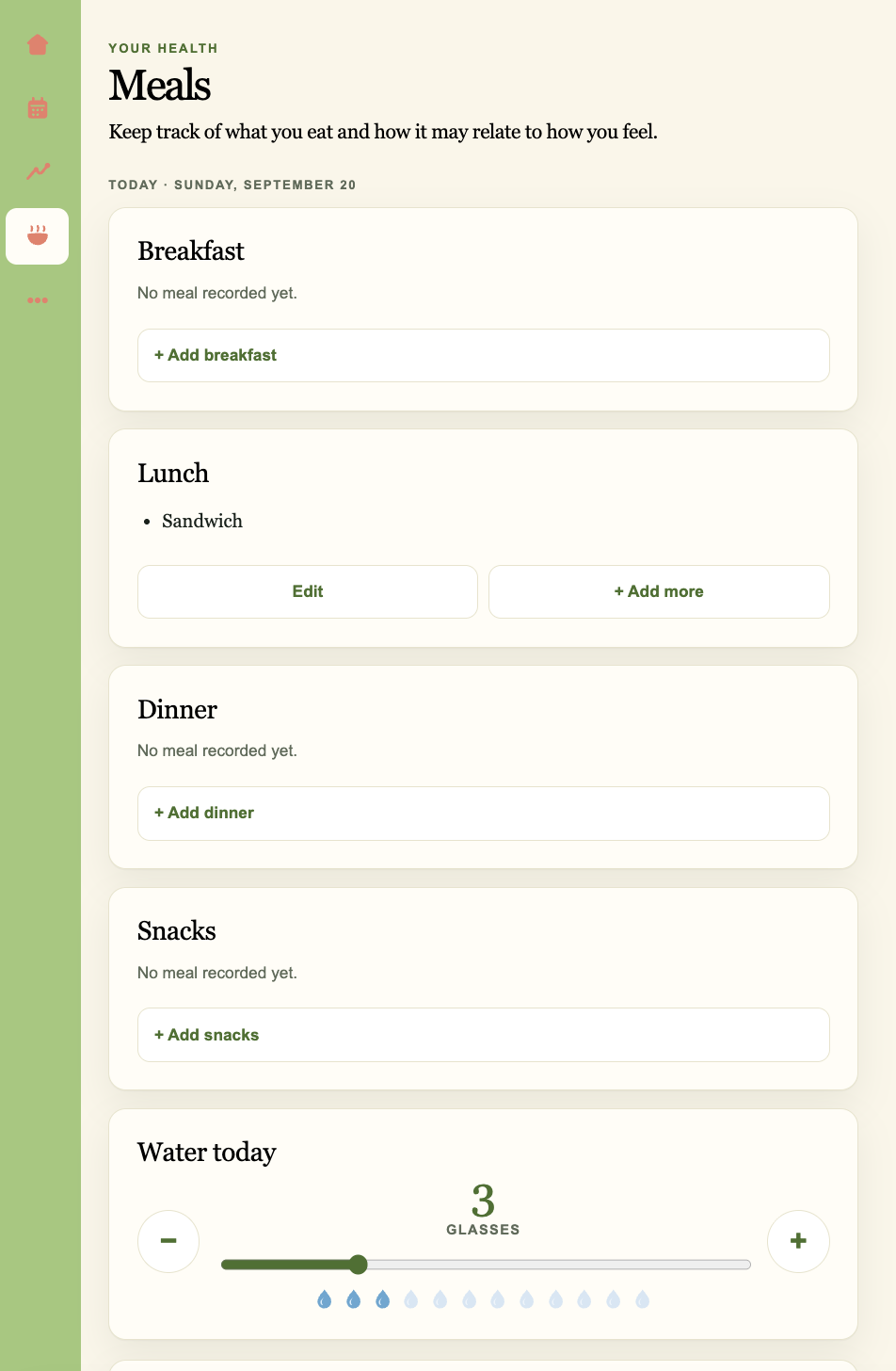
Meals tab with breakfast, lunch, dinner and snack. Also tracks water use. Takes both clickable input and audio input from check-in button.
-
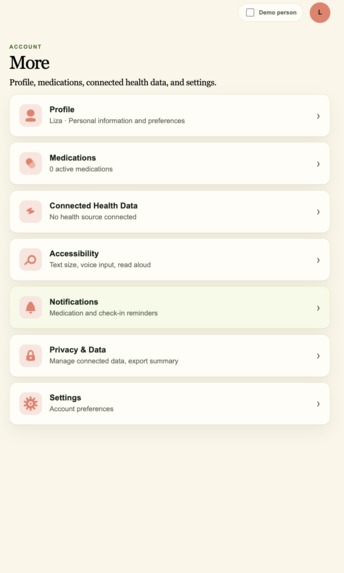
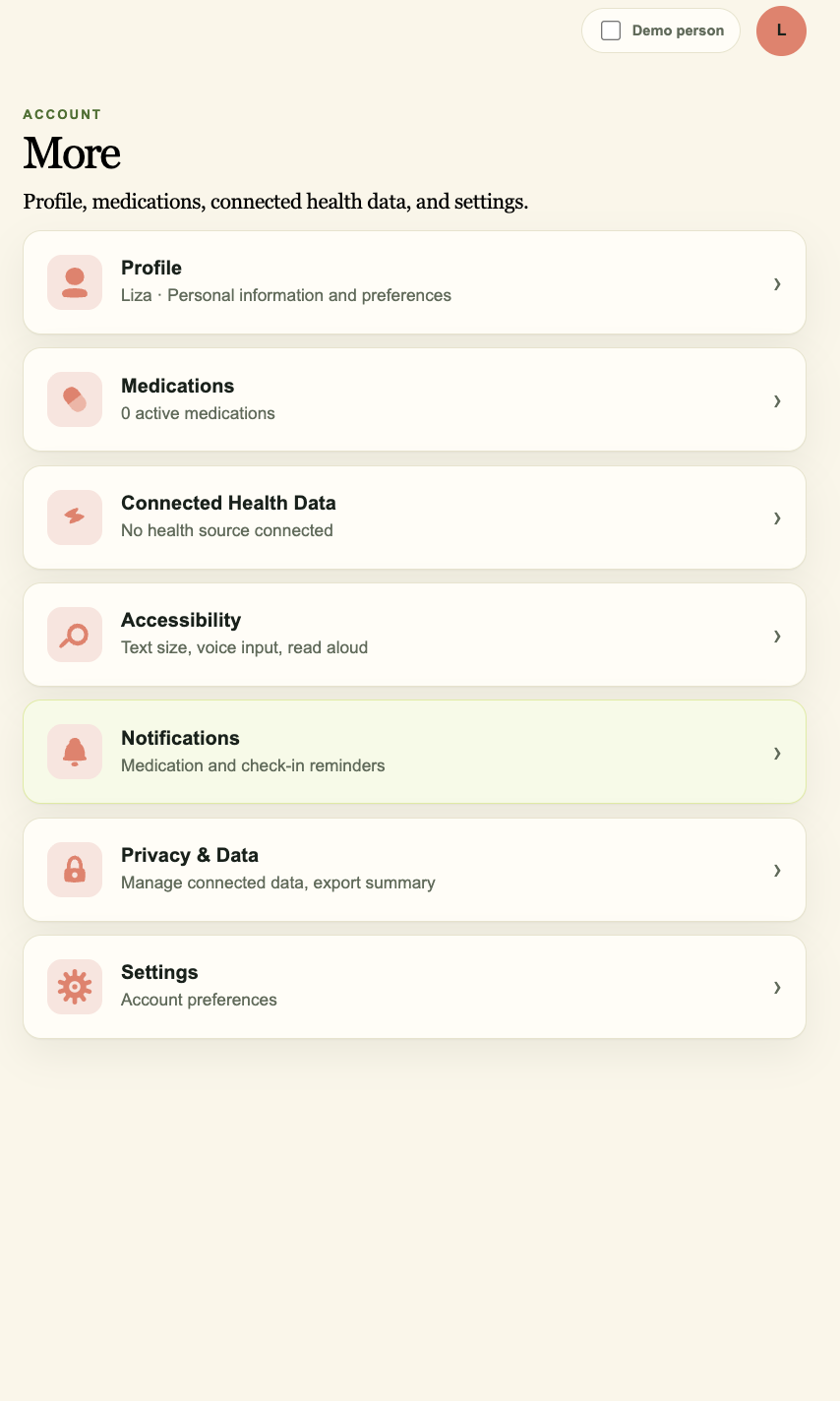
More tab with profile information
Inspiration
“How have you been since your last visit?” sounds simple, but remembering weeks of symptoms, medications and daily habits can be difficult.
We wanted to make that history easier to capture, especially for people who find typing uncomfortable. Our fictional example patient, Arthur Itis, has rheumatoid arthritis. When his hands feel stiff, filling out a long form becomes another obstacle.
That inspired Tell-Well, a voice-first, mobile-friendly health journal built by our Johns Hopkins University team.
What it does
Tell-Well lets users record health information in their own words. Someone can say, “My arm hurts. It started yesterday, and the pain is two out of ten,” and the app organizes those details into a structured check-in.
ElevenLabs handles transcription and spoken prompts, with five selectable voices. Gemini extracts reported symptoms, medications, meals, water intake and health measurements. Symptom conversations include one optional follow-up, and users can pause, skip or switch to typing.
Users can review and edit symptom and medication entries before saving. Confirmed reports of taking a listed medicine update its daily count, while food and water entries can log directly.
A Records calendar makes previous entries easy to revisit. WHOOP integration adds wearable readings for comparison with the user’s recent history. A printable visit summary brings together wearable charts, medications, recent check-ins and questions to discuss with a clinician.
How we built it
During the 30-hour hackathon, the three of us worked in parallel on the voice experience, app interface and WHOOP integration. We connected our features through a shared health-record format.
We used HTML, CSS and JavaScript for the frontend, with Node.js, TypeScript, Express and Zod on the backend. A Python FastAPI service handles the WHOOP connection.
We connected ElevenLabs and Gemini, added validation and basic urgent-symptom screening, and tested the main flows as we integrated everything.
Challenges we ran into
Making voice input reliable took several iterations. Short answers were sometimes misheard, and the microphone could miss the beginning of a response. We added English-language checks, relevant vocabulary and audio buffering.
The first conversation flow also asked too many questions. We shortened it to one optional symptom follow-up and allowed meals and water to log directly.
Another challenge was keeping related details together. We refined the extraction instructions so that difficulty eating could be recorded as an activity limitation rather than a separate complaint. Working with both sample histories and wearable data also showed us the importance of clearly identifying where each reading comes from.
What we learned
A useful AI experience needs more than accurate extraction. It needs short conversations, clear feedback and an easy way to correct mistakes.
We learned to leave unknown information unspecified and keep basic safety checks separate from AI-generated responses. A shared record format also helped three people build different features within a tight deadline.
What’s next
We plan to complete the remaining Trends calculations, improve history persistence, and finish separating sample data from live wearable readings. We also want to add verified accounts and durable storage.
After that, we hope to conduct consent-based usability testing with people managing chronic conditions and clinicians. Multilingual check-ins and a clinician-facing view are longer-term goals.
Tell-Well is a hackathon prototype designed to support health tracking and conversations with clinicians. It does not provide diagnoses.
Built With
- css3
- elevenlabs
- express.js
- fastapi
- github
- google-gemini-api
- html5
- javascript
- node.js
- python
- typescript
- whoop-api
- zod


Log in or sign up for Devpost to join the conversation.