-
-
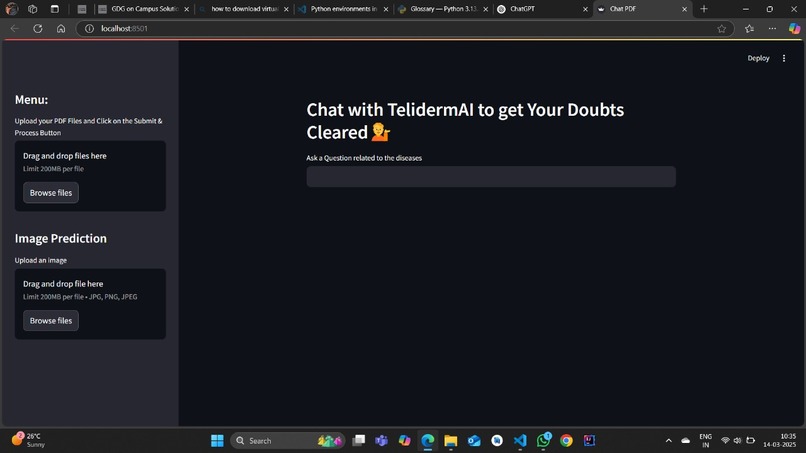
so here u can see the telidermai interface with the chatbot as well as image predictor
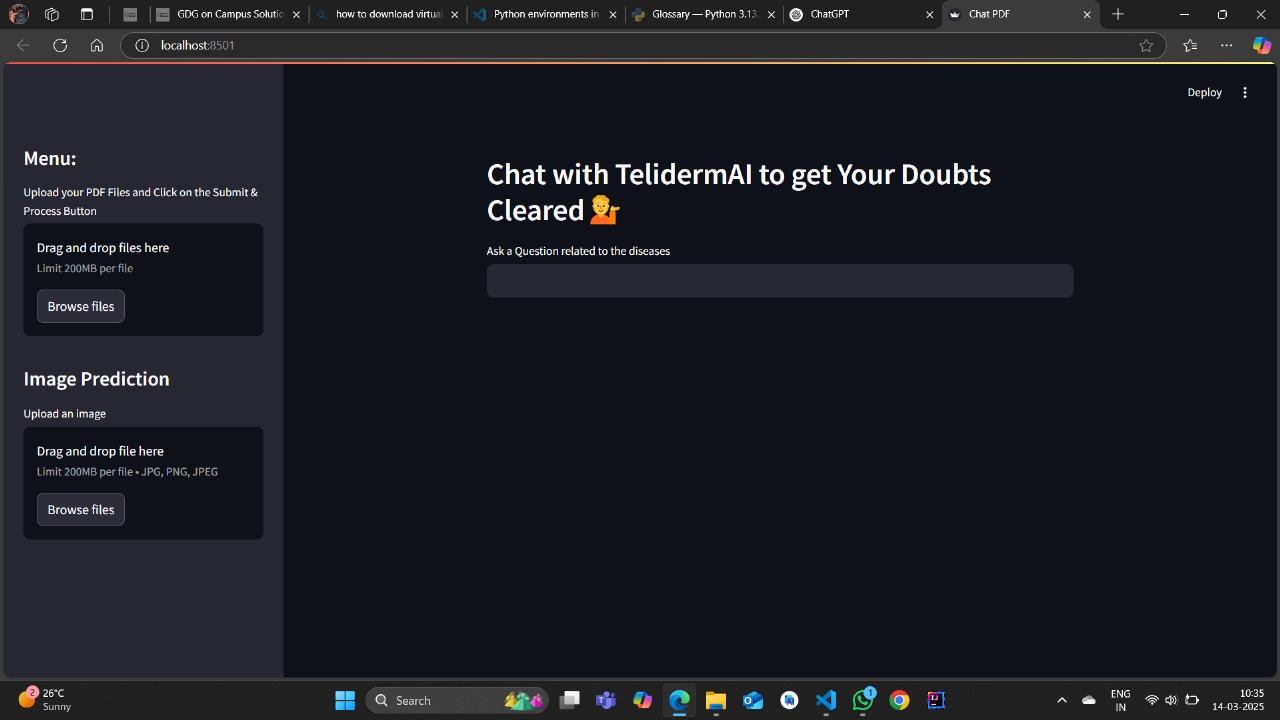
TeliDermAI
Inspiration
The inspiration behind TeliDermAI stems from the critical need for accessible and accurate early detection of skin diseases. Many individuals in remote areas face barriers to healthcare, making timely diagnosis and treatment difficult. By leveraging AI technologies, we wanted to provide innovative solutions that empower users and improve healthcare accessibility.
What it does
TeliDermAI combines advanced AI pipelines for:
- Skin Disease Classification: Using ResNet50 and EfficientNetB0, it accurately diagnoses 23 skin conditions from user-uploaded images.
- Interactive PDF Querying: Powered by Google Gemini LLM, it allows users to ask questions and retrieve relevant information from uploaded PDFs using natural language.
The platform offers a seamless user interface via Streamlit, catering to both image-based disease diagnosis and document-based information retrieval.
How we built it
We used:
- Python: To develop and integrate core functionalities.
- Models: Pre-trained ResNet50 and EfficientNetB0 architectures for image classification.
- Natural Language Processing: Google Gemini LLM and LangChain for PDF querying.
- Frameworks: Streamlit for an intuitive user interface.
- Libraries: TensorFlow, FAISS, PyPDF2, NumPy, OpenCV for efficient processing and embeddings.
The workflow involves preprocessing images and PDF text, embedding them into vectors, and leveraging AI models for classification and interaction.
Challenges we ran into
- Data Imbalance: Uneven representation in the skin disease dataset affected early training phases.
- Computational Efficiency: Optimizing model performance for high-complexity pipelines while maintaining accuracy.
- User Interface Design: Ensuring seamless integration of functionalities and enhancing user experience.
- Integration Hurdles: Combining image classification and PDF querying systems into a single platform posed technical challenges.
Accomplishments that we're proud of
- Successfully trained and integrated ResNet50 and EfficientNetB0 for accurate skin disease classification.
- Developed an efficient PDF querying system using Google Gemini LLM.
- Built a user-friendly Streamlit interface that bridges AI pipelines and healthcare needs.
- Addressed significant challenges like dataset imbalance and technical integration to deliver impactful results.
What we learned
- The importance of interdisciplinary collaboration in combining computer vision and NLP functionalities.
- Handling real-world dataset challenges like imbalance and noisy data.
- Advanced model integration techniques to enhance healthcare solutions.
- Building accessible and interactive platforms using AI technologies.
What's next for "TeliDermAI"
Looking forward, the roadmap for TeliDermAI includes:
- Mobile Integration: Developing a real-time diagnostic tool for mobile platforms.
- Explainable AI: Introducing interpretability features to boost clinical trust.
- Expanded Dataset: Incorporating diverse skin types and conditions for better generalization.
- Multimodal Learning: Combining patient history, genetic data, and laboratory results for holistic diagnostics.
- Integration with Healthcare Systems: Connecting the platform to Electronic Health Records (EHRs) for personalized care.

Log in or sign up for Devpost to join the conversation.