-
-
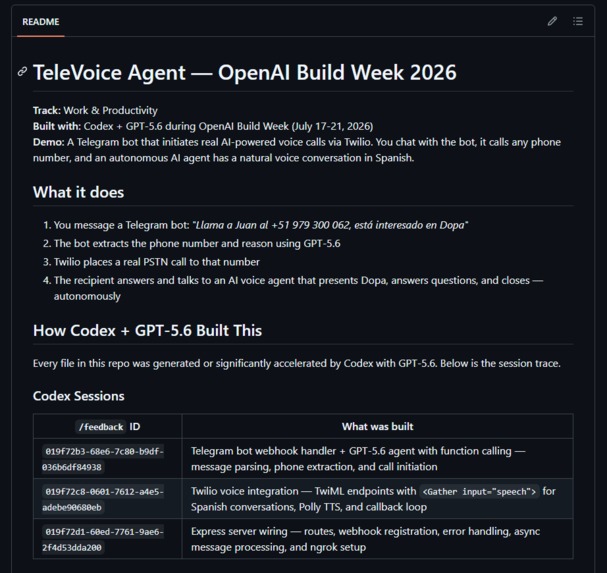
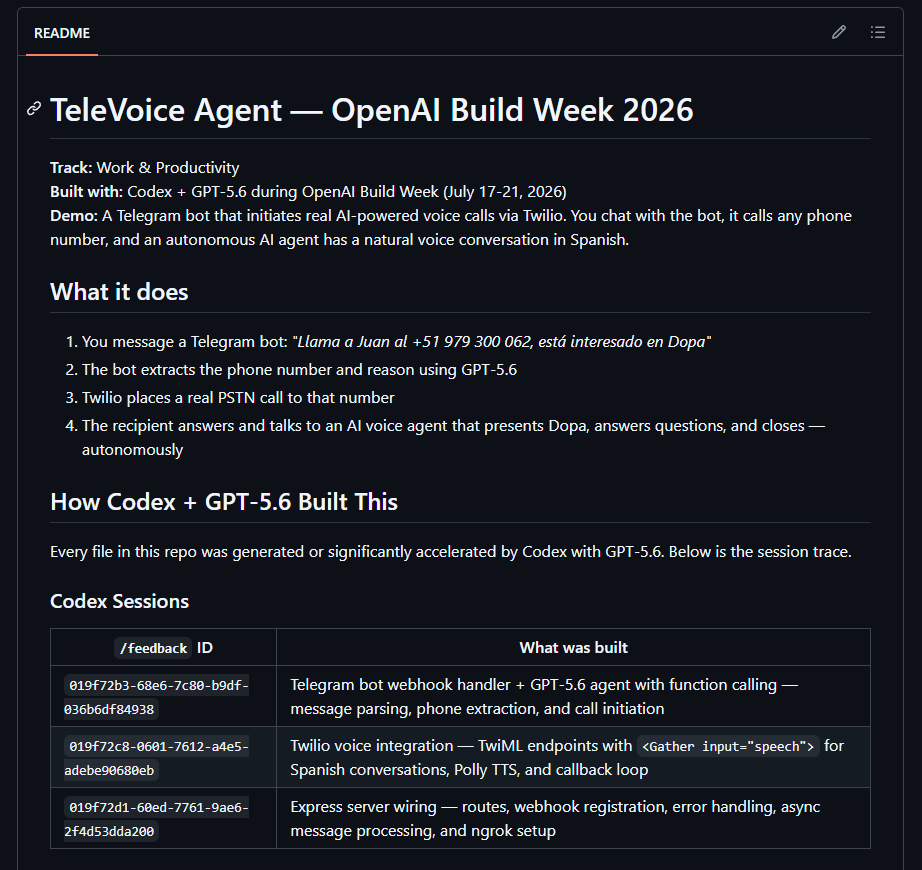
GPT-5.6 + Twilio = real AI phone calls from Telegram. Message a bot, it calls any number, and a Spanish voice agent closes the deal.
-
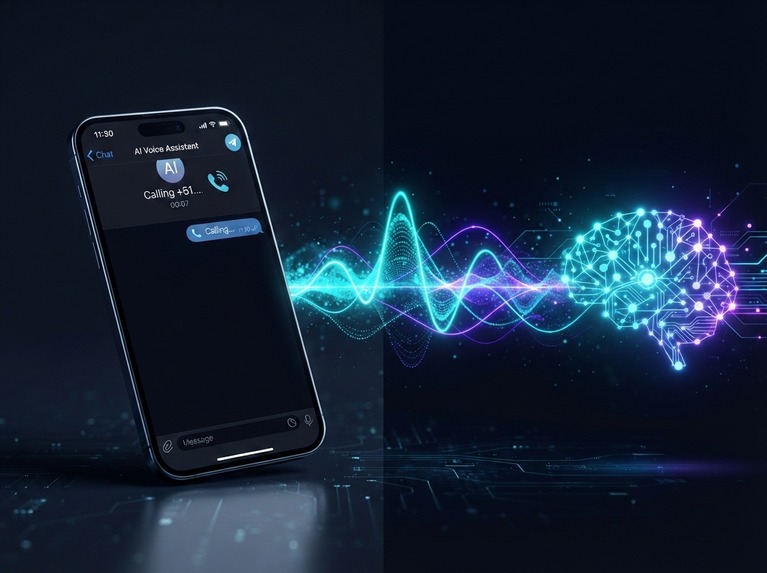
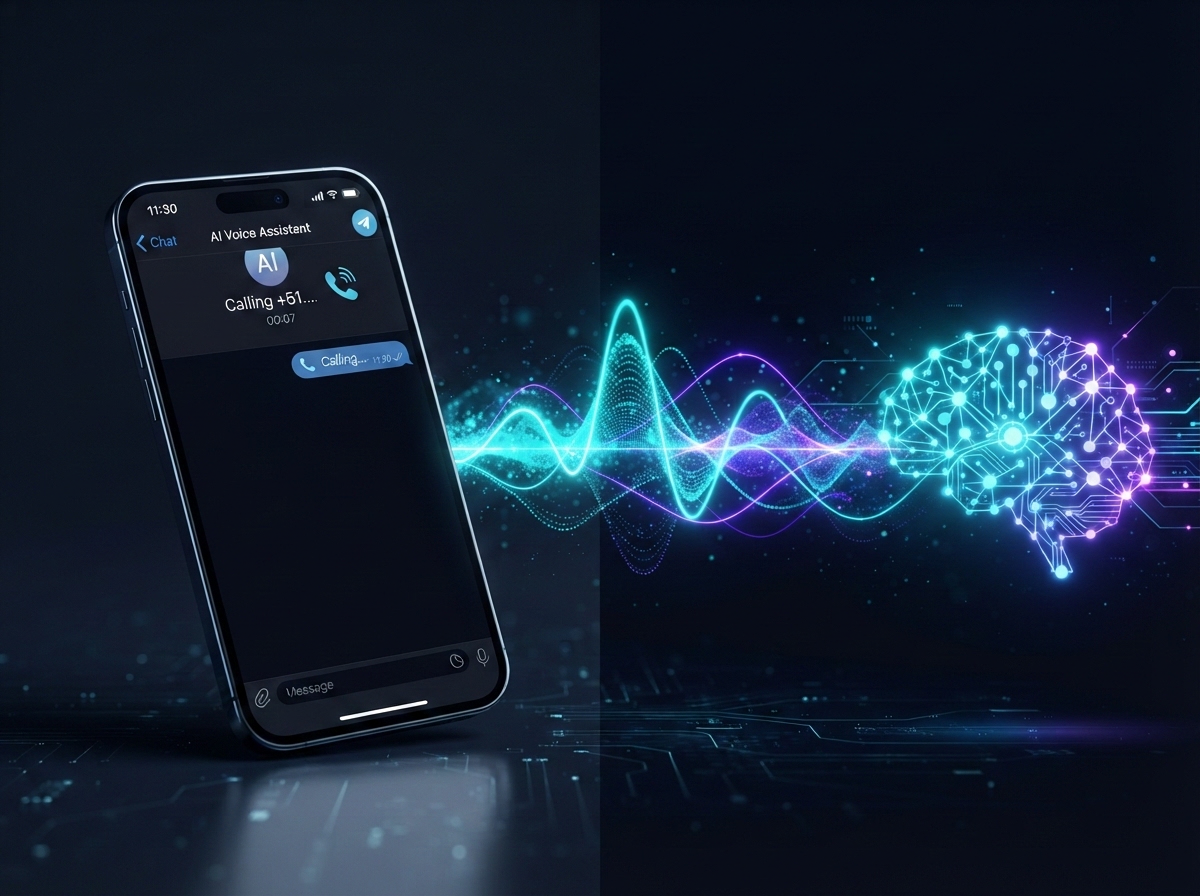
TeleVoice Agent — Autonomous AI voice calls via Telegram, built with Codex + GPT-5.6 during OpenAI Build Week 2026.
Inspiration
I run Dopa, an Agentic ERP for SMBs in Latin America. 44% of small business sales are lost because nobody answers the message in time. Our AI agents already handle text conversations — but nothing closes deals like a real phone call.
When OpenAI launched Build Week with Codex + GPT-5.6, I saw the chance to build the voice layer in 4 days that normally takes weeks: a Telegram bot that triggers AI voice calls through Twilio, autonomously.
What it does
- You message @DopaVoiceBot on Telegram: "Call Juan at +51 979 300 062, he wants to buy Dopa"
- GPT-5.6 extracts the phone number and conversation context
- Twilio places a real PSTN call to that number
- An AI voice agent (Sofia) answers, presents the product, handles objections, and closes — all in Spanish
- The caller has a natural voice conversation, unaware they're talking to AI
How we built it
Every line of code was generated or accelerated by Codex with GPT-5.6 during OpenAI Build Week.
- Telegram Bot — Webhook handler that receives messages and sends replies. Codex generated the Express route structure, error handling, and Telegram API integration.
- GPT-5.6 Agent — Tool-calling pattern to decide "should I call?" vs "should I reply?". Codex designed the function schema and fallback parsing logic.
- Twilio Voice — PSTN call initiation with
<Gather input="speech">for bidirectional conversation. Codex generated the complete TwiML loop. - Conversational Agent — GPT-5.6 processes caller speech in real time and responds with the right tone, context, and call-to-action. Codex crafted the system prompt for Spanish neutral LATAM voice.
Built with: Node.js, Express, TypeScript, ngrok, and the OpenAI Node SDK.
Challenges we ran into
- Twilio
<Gather>speech timeout — The speech recognition needed tuning for Spanish. Codex suggested usingspeechTimeout="2"and<Say>fallbacks when no speech is detected. - Telegram async flow — Telegram requires a 200 response within seconds. Codex structured the handler to respond immediately and process the call initiation asynchronously.
- Agent voice consistency — The AI agent needs to sound like a real salesperson: warm, brief, and Spanish-neutral. Codex iterated the system prompt through 5 versions.
What we learned
Codex + GPT-5.6 isn't just an autocomplete — it's an architecture partner. The most valuable moments weren't when it generated code, but when it suggested patterns I hadn't considered: the <Gather> approach over WebSockets for simplicity, the async Telegram handler to avoid timeouts, the tool-calling pattern for intent extraction.
What's next
This demo is a standalone version of the voice technology powering Dopa (dopa.solutions). Next steps: ConversationRelay for sub-second latency, multi-language support, and integration into Dopa's FlowBuilder for automated workflows.
Built With
- codex
- express.js
- gpt-5-6
- ngrok
- node.js
- openai
- telegram-bot-api
- twilio
- typescript


Log in or sign up for Devpost to join the conversation.