Inspiration
My inspiration originated from the problems that arised during Covid-19. We all saw how doctors and nurses were working days and nights to help the patients. During an epidemic, we all saw the need of a tool that can help doctors diagnose and treat patients easily.
What it does
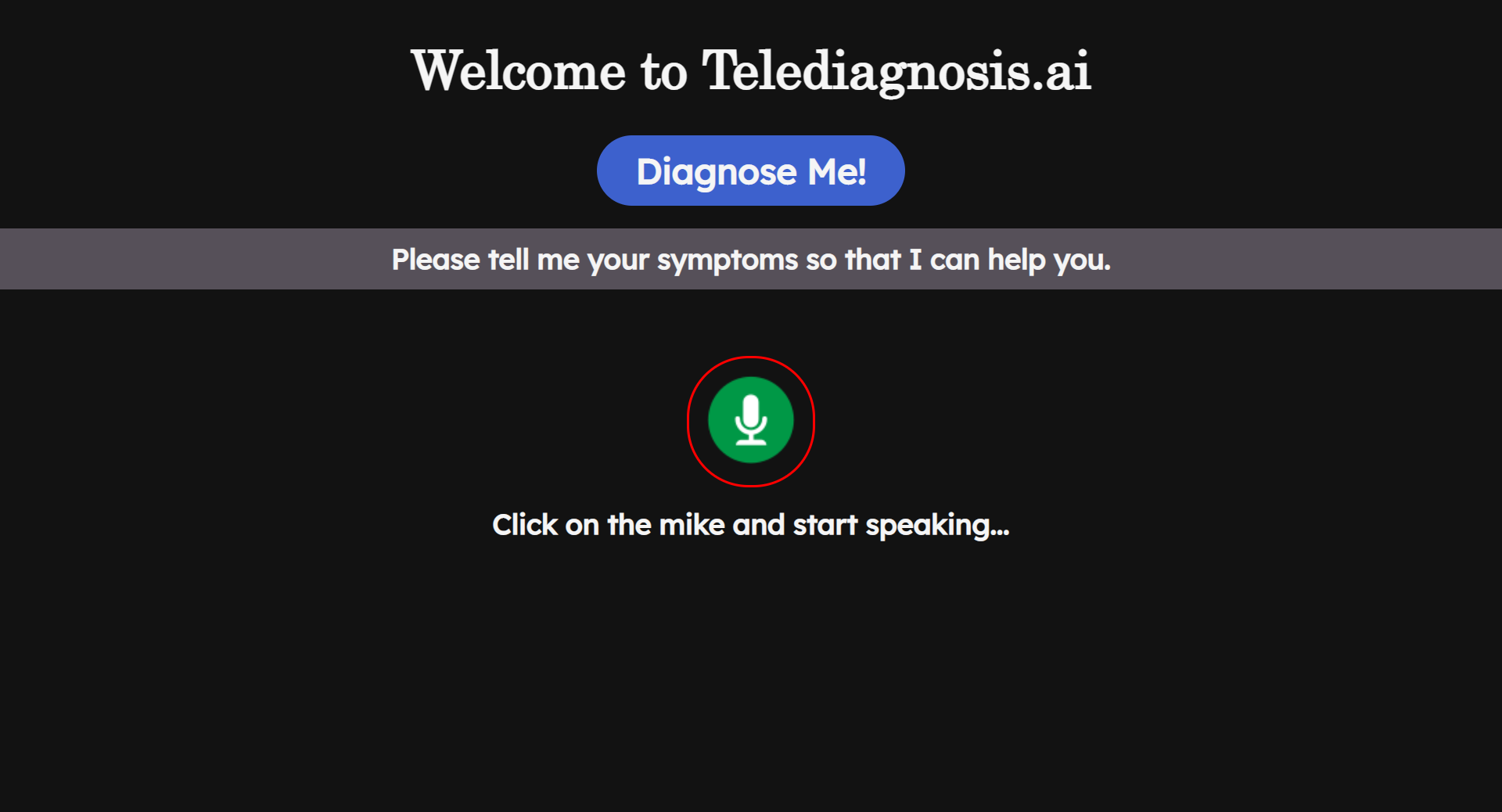
Telediagnosis.ai is a disease prediction system that uses a person speech in which that person expresses the symptoms that are ailing them, converts it to text and uses a machine learning model to predict a disease.
How we built it
I used Python's Speech Recognition library for speech-to-text and OpenAI API to extract symptoms from the user's speech using GPT-3 Davinci model. I used the scikit-learn library's Random Forest algorithm to train the dataset. I also made a web app with Flask as back-end and HTML, CSS and JavaScript for the front end. Flask framework was also used to create the API to access the machine learning model in the web app.
Challenges we ran into
Our initial plan was to use Nvidia's Audio2Face technology to create a 3d AI model that could communicate with the user. However, we ran into some unresolvable difficulties with it.
Accomplishments that we're proud of
We are proud that we could make such a large web app involving various different technologies in a short time frame.
What we learned
We learned the importance of having a back-up plan and how difficult and tiresome it is to integrate different technologies.
What's next for Telediagnosis.ai
There were a lot of goals that we had that couldn't be completed. We will try to implement those and improve our machine learning model.
Built With
- api
- css3
- flask
- gpt-3
- html5
- javascript
- machine-learning
- openai
- pandas
- python
- scikit-learn
- speech-recognition

Log in or sign up for Devpost to join the conversation.