-
-
Thumbnail
-
Calling List
-
Dashboard
Inspiration
Hello, I am Janesh, a final-year computer science student at IIIT Delhi. I, as a budding entrepreneur, always went to the incubation center at our college, IIITD Innovation and Incubation Center and had a chat with my senior founder friends. One thing I noticed there was that the customer support department was always in need of a real human and couldn't work if any of the individuals handling the customer support department were absent. This made me think about how this process could be automated to the extent that it requires minimum or no human intervention at all; that's when the idea of Telecalli came to my mind.
What it does
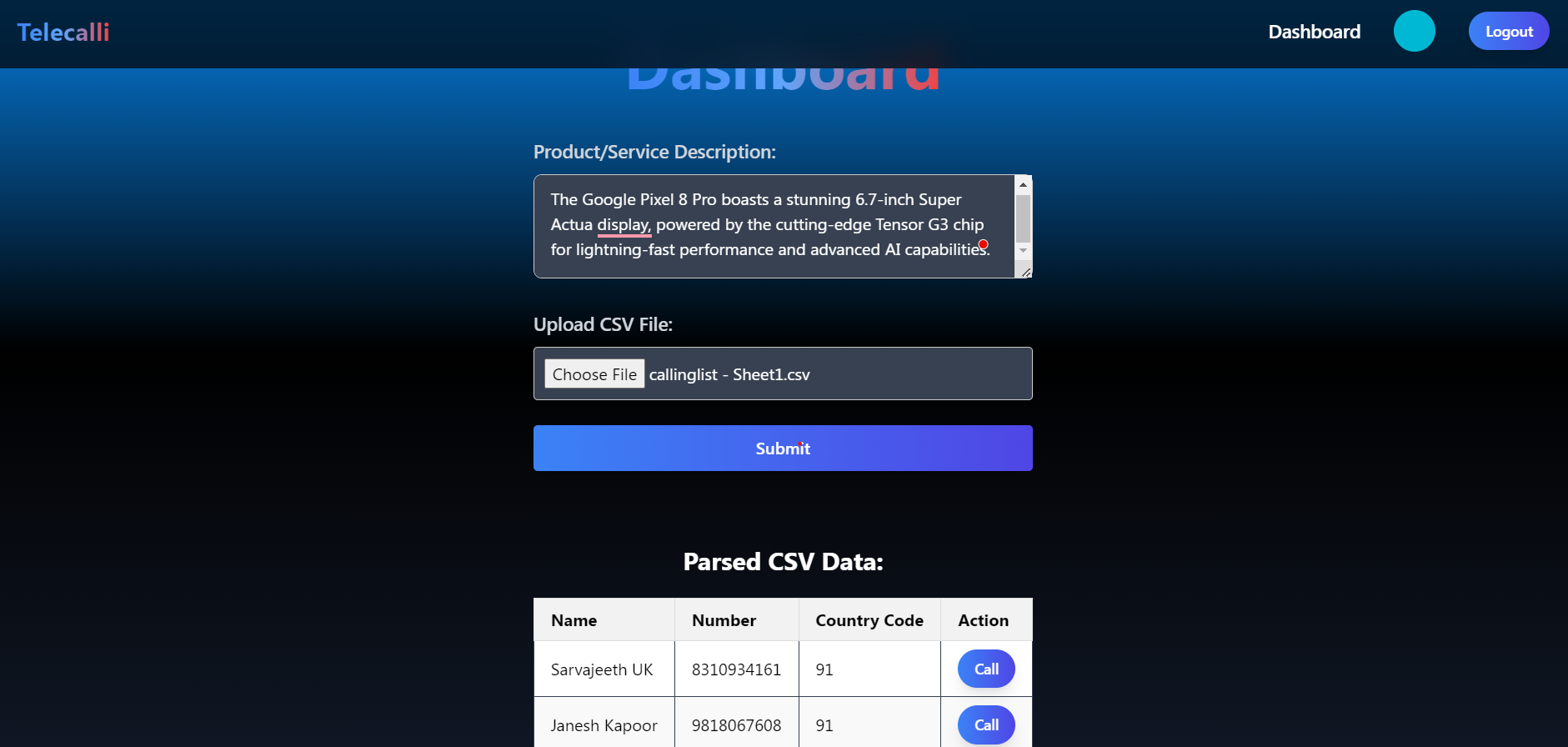
Telecalli is a simple tool that helps you automate your cold-calling and customer support calls for your organization. For example currently, a human has a limit to handle 50 calls a day. A Telecalli bot could talk in a human tone with 50 calls at the same time and that too in a personalized manner for each conversation, thereby automating the most tedious and cumbersome part of a customer support department.
How we built it
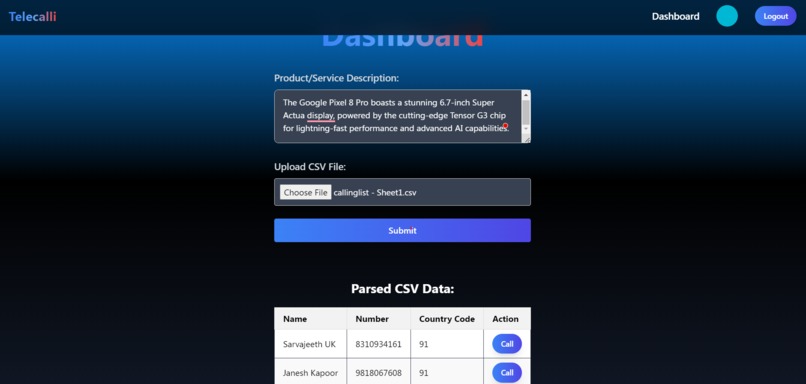
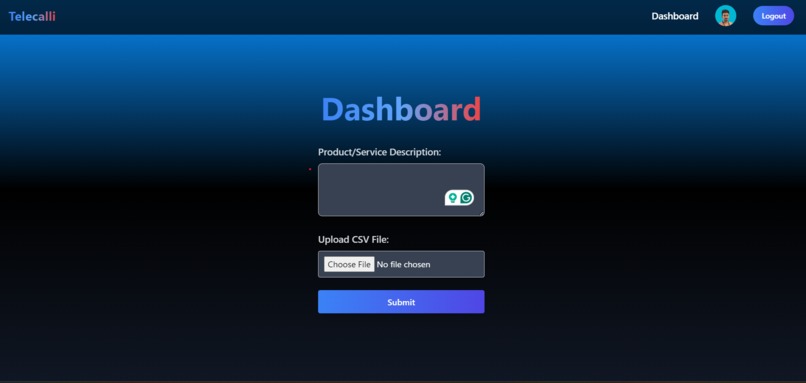
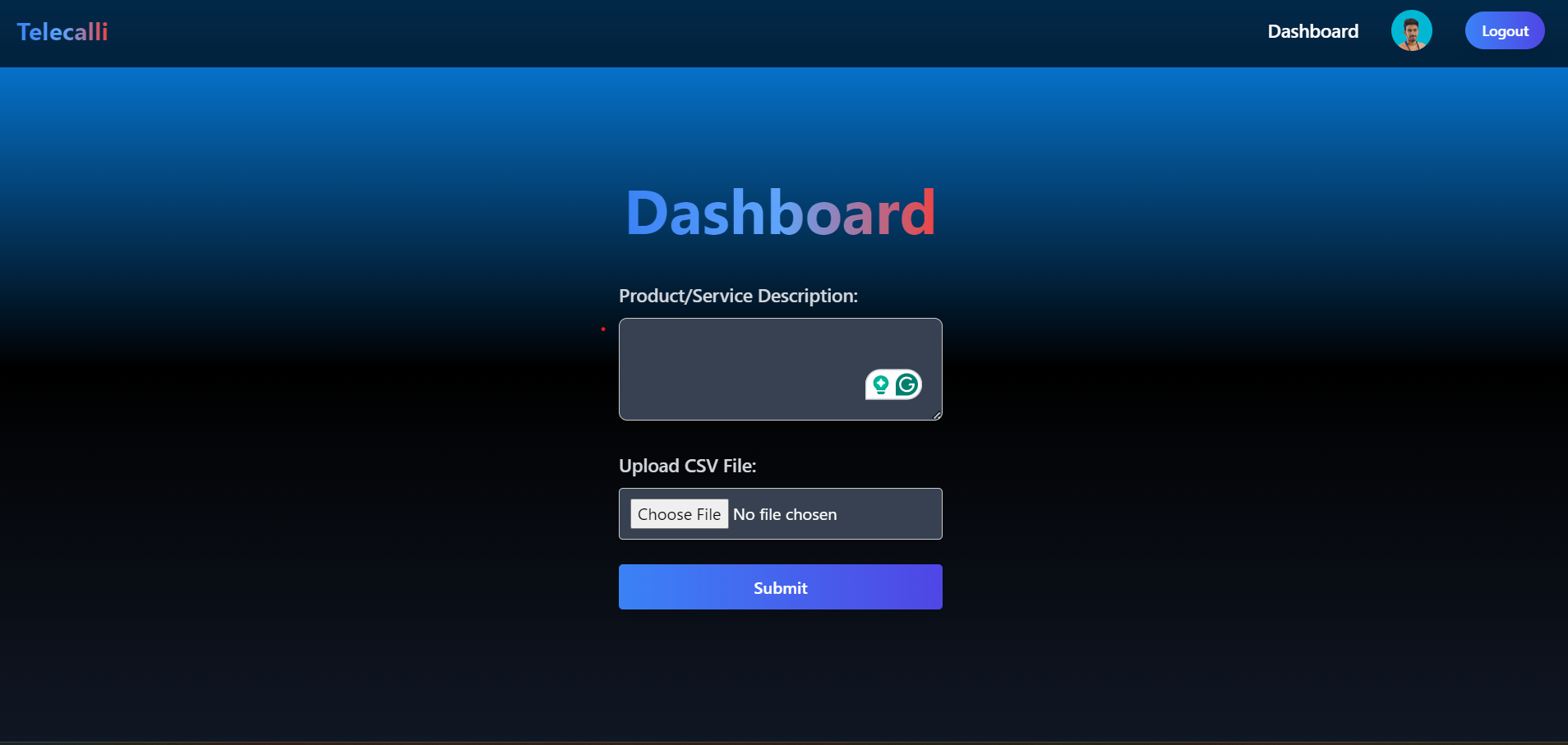
Telecalli was built and continuously monitored and improved during the hackathon in order to create better human-like interactions for customer support department. First the overall system architecture was prepared on how everything will coordinate with each other in order to make the product very simple to use for the end user. Once this was done, I went forward with the actual designing and coding part of the application. I started with the back-end part first, which included creating and verifying user authentication using Google Firebase, creating a summary of the product description that the user has entered, generating a call from the dashboard, handling customer input and insights, etc. After the back-end part, I moved towards creating the front-end, which was created in a manner that feels minimalistic and usable to the user, and it was created using Tailwind CSS, bootstrap, and JS.
Challenges we ran into
One of the challenges that I ran into was the handling of the user's response and parsing it into the LLM in order to generate output that is relevant to the previous conversation that the user has done with the automated bot. This included close working with APIs from Gemini, handling Gemini playground from the back-end, and using Twilio API to handle user input and dictation.
Accomplishments that we're proud of
The one accomplishment that I am proud of is that the project works very well, and a demo of the same can be seen on the video here: https://www.youtube.com/watch?v=lDo67P0z1qA The product needed some polishment such as reducing the response time and latency between each sentence of the conversation. The same could be made possible using some other APIs which overall helped us create a better product for our users.
What we learned
Well, honestly, there are a ton of learnings out there, from iteration to coding to figuring out how the user will flow through the application in order for him to make and manage cold calls from one single dashboard. A very well-detailed presentation to Telecalli can be checked out here: https://drive.google.com/file/d/12mcPppTuAL8g_9htfdI4-GAcNMZFJ0zC/view?usp=sharing
What's next for Telecalli: GenAI-based Voice Calling Service Assistant
Telecalli as a tool could be really useful for organizations that are looking forward to automating some of their tasks in the department of customer support. A lot of improvements could be made in Telecalli, such as handling responses in a better format, reducing the conversational latency to make it as human as possible, and then creating a more personalized UI according to the calls of each organization that Telecalli is catering to. Thanks and Regards Janesh Kapoor IIIT Delhi kapoorjanesh.2003@gmail.com (+91)9818067608


Log in or sign up for Devpost to join the conversation.