Inspiration
In the year 2030 clothing may not only sense the body’s movements but also listen to the neural signals that carry the body’s internal conversations to the brain. We will have advances in bioelectronic textiles allow everyday clothing to sense subtle bioelectric patterns associated with the body’s internal communication system. The body is already communicating through a complex network of neurological signals that travel through the spine to the brain. These signals carry information about the body’s position, tension, and balance — forming the basis of our proprioceptive sense, the body’s internal awareness of itself. In fast-paced, screen-heavy lifestyles, of a world of digital dynamism with constant stimulation and cognitive overload, this awareness has slowly faded into the background. As a result, people become increasingly disconnected from their own bodies. We move less, sit longer, and ignore the subtle messages our bodies send.
This raised a question: What if we could hear the body’s whispers before they turn into pain? What if the body could tease us — just a little — before things go wrong?
That idea became TEEZO — A Tee Reading Tiny Signals.
What it does
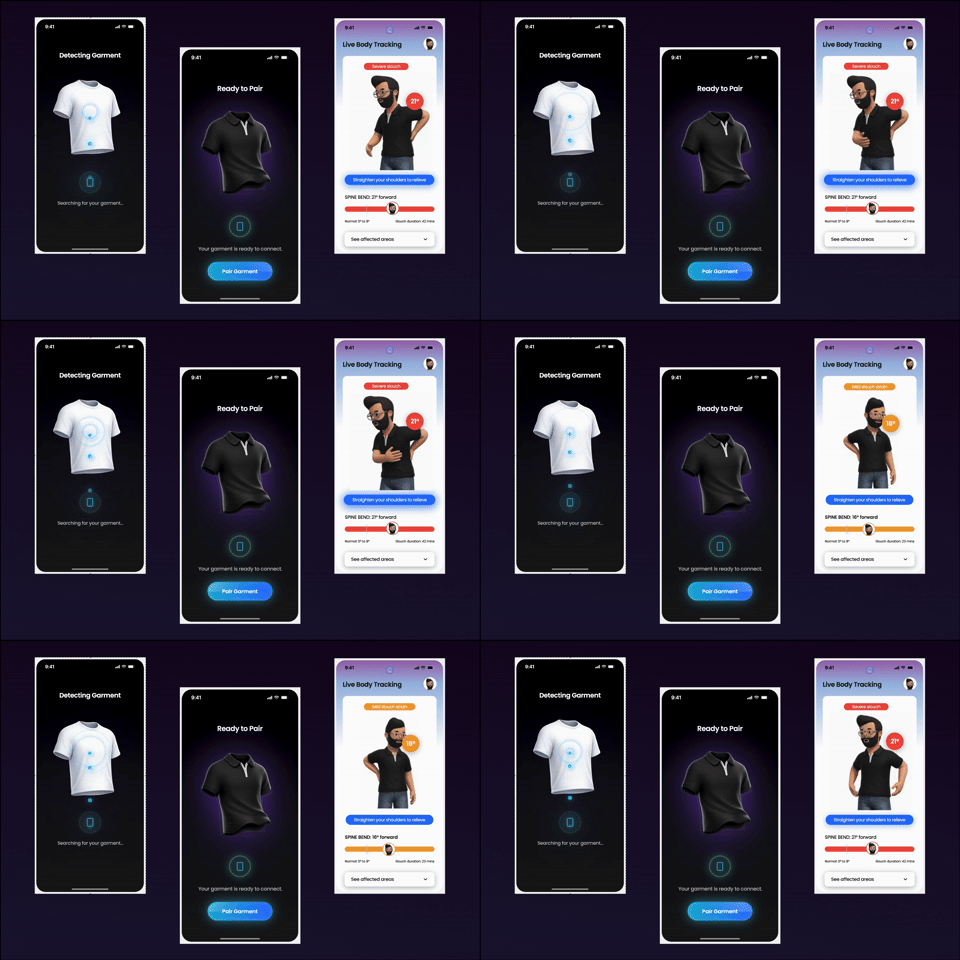
TEEZO is a system designed to reconnect people with the early neurological signals of their own body, helping them respond before discomfort appears. It is a sensor-embedded T-shirt paired with a digital companion interface that listens to subtle signals travelling along the spine — the body’s primary neurological axis. It detects early physiological patterns and translates them into gentle micro-prompts.
When the system senses emerging strain or imbalance, the t-shirt delivers a subtle tactile nudge, while the companion interface visually reflects the body’s state through a responsive avatar. This dual feedback system allows users to:
- notice early signs of strain
- make small corrective movements
- adjust posture or position before discomfort begins
Over time, these repeated micro-adjustments help retrain the user’s proprioceptive awareness, encouraging healthier movement habits and a stronger connection between body signals and conscious response.
Rather than correcting posture after pain occurs, TEEZO works earlier in the chain — at the level of bodily signals themselves.
How we built it
To explore this idea, we designed TEEZO as a three-layer interaction system combining wearable sensing, subtle physical feedback, and digital visualization.
The first layer is the sensor-embedded T-shirt. The garment integrates sensing nodes positioned along the spinal region, designed to capture patterns related to bodily strain, stillness, and imbalance. In our speculative near-future context, these sensors are capable of detecting subtle physiological fluctuations associated with neurological reception along the spine.
The second layer is subtle physical feedback. When the system detects early signals of distress, the shirt delivers small tactile nudges that prompt the user to move. These prompts are intentionally gentle — encouraging micro-movements rather than disruptive alerts.
The third layer is the companion interface, where the user’s body state is visualized through a dynamic avatar. The avatar mirrors the user’s posture and signals moments of strain, turning otherwise invisible bodily signals into something visible and engaging.
Together, these three components form a feedback loop: body signals → detection → gentle prompts → movement → improved awareness. Through repeated interaction, the system helps users gradually rebuild the habit of listening to their own bodies.
Challenges we ran into
- Translating an Invisible Sense
Proprioception is something people rarely think about because it operates unconsciously. One of our biggest challenges was figuring out how to visualize and communicate a sense that users cannot normally see or feel directly.
We had to explore ways to make subtle bodily signals visible and understandable without overwhelming the user.
- Designing for Signals Before Pain Most health technologies respond after discomfort appears. Our project required us to think earlier in the chain — detecting and responding to early neurological signals along the spine before they accumulate into pain.
Designing interactions around something so subtle required careful thinking about how much feedback is helpful and how much becomes noise.
- Balancing Intervention and Subtlety The goal of TEEZO is not to interrupt the user constantly. The challenge was designing a system that nudges without nagging — encouraging movement through gentle cues rather than disruptive alerts.
Accomplishments that we're proud of
- Reframing Wearables Beyond Fitness Tracking
Instead of tracking steps or posture, we explored how wearable technology could help users reconnect with a forgotten bodily sense — proprioception.
This allowed us to move beyond typical health monitoring toward body awareness and behavioral learning.
- Designing a Multi-Layer Interaction System We successfully created a system that integrates:
- Sensor-embedded clothing
- Subtle tactile feedback
- A digital avatar interface
Together these layers translate invisible body signals into playful, understandable interactions.
Turning Awareness into Habit Rather than solving discomfort once, the system aims to train micro-movements over time, allowing users to gradually rebuild proprioceptive awareness and healthier movement habits.
The system intervenes before proprioception fades So the garment becomes something like preventive sensory training, rather than correction or augmentation.
Who knew finding the right Tee could be so enriching?
What we learned
The Body Already Knows Through this project we realized that the body constantly communicates through signals — we simply tend to notice them too late. Design can play a role in bridging the gap between unconscious bodily signals and conscious awareness.
Designing for the Body Requires Designing for Time Body awareness is not something that changes instantly. It evolves through repeated interaction, learning, and habit formation.
This project helped us think about design not just as a moment of interaction, but as a long-term relationship between the user and their body.
What's next for TEEZO
- Expanding Contexts of Use While our project focused on sedentary desk work, the system could extend to other environments such as:
- rehabilitation
- sports training
long-duration sitting (travel, gaming, studying)
Developing the Behavioural Ecosystem The next step would be refining how the system builds long-term awareness through:
adaptive feedback
personalized movement patterns
long-term body insight visualizations
Turning TEEZO Into a Living System Ultimately, the vision is to develop TEEZO into a system that not only detects signals but learns the user’s unique movement patterns, creating a more personalized dialogue between the body and technology.


Log in or sign up for Devpost to join the conversation.