Inspiration
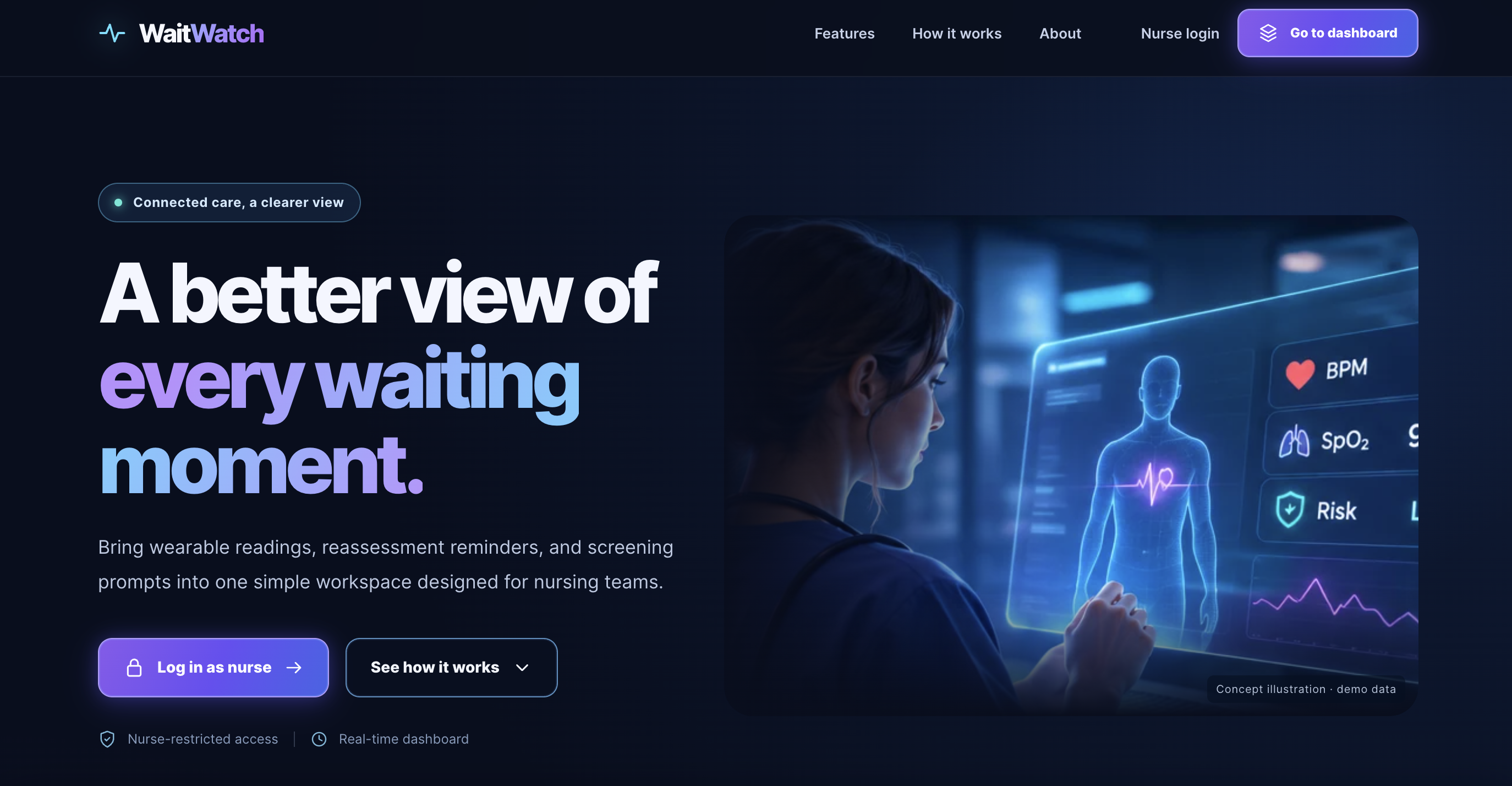
Patients may wait a long time between triage and treatment. During that wait, their condition can change while care teams are busy. Inspired by the Dartmouth General wearables pilot, we wanted to explore how wearable data could help nurses notice changes sooner, while keeping clinical judgment and CTAS triage in nurses' hands.
What it does
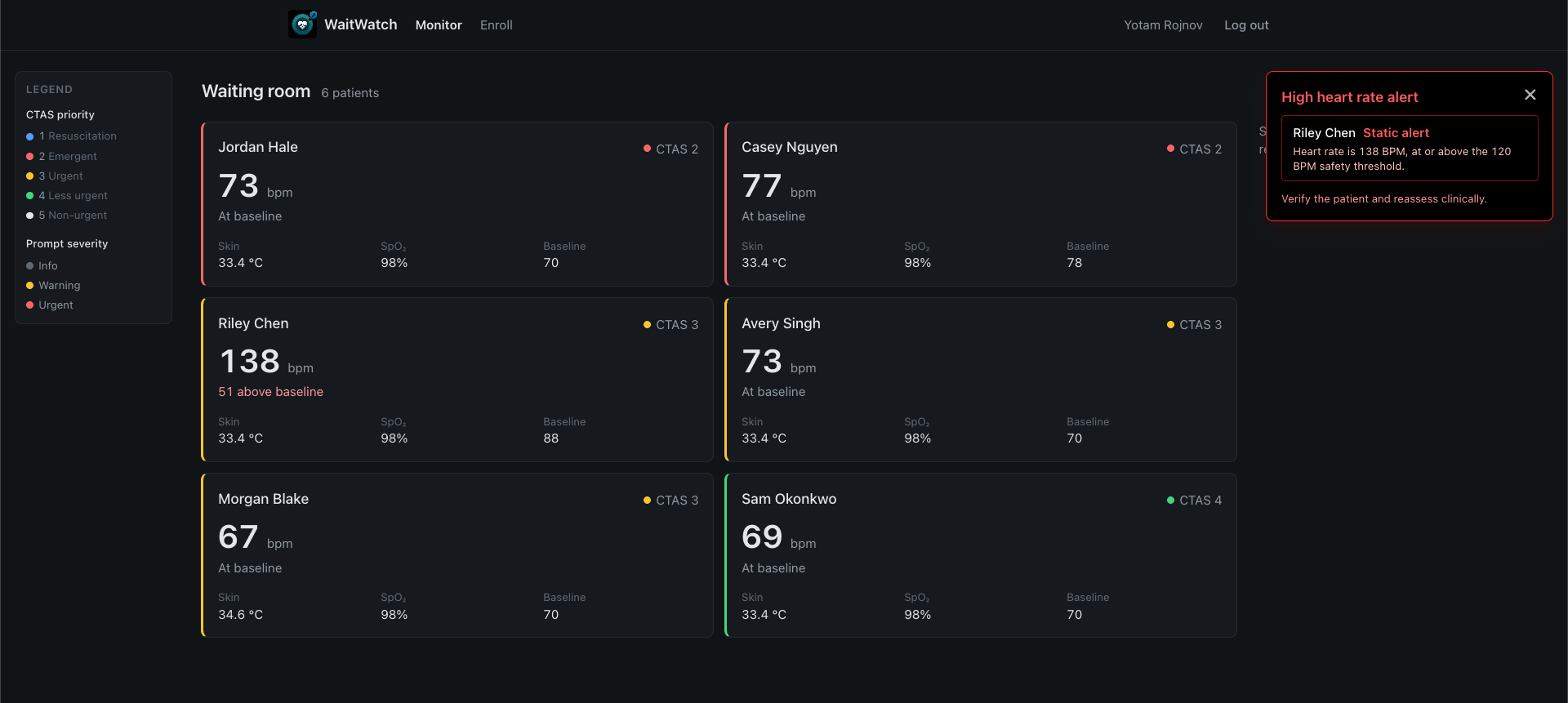
WaitWatch monitors wearable readings such as heart rate and movement while patients wait. It compares heart rate with each patient's personal resting baseline and creates prompts when rules detect concerning changes or possible sensor issues. Prompts can appear on the nurse dashboard in real time. Gemini can help draft supporting text; it does not decide who needs care. Priority is still in the power of nurses with human verification.
How we built it
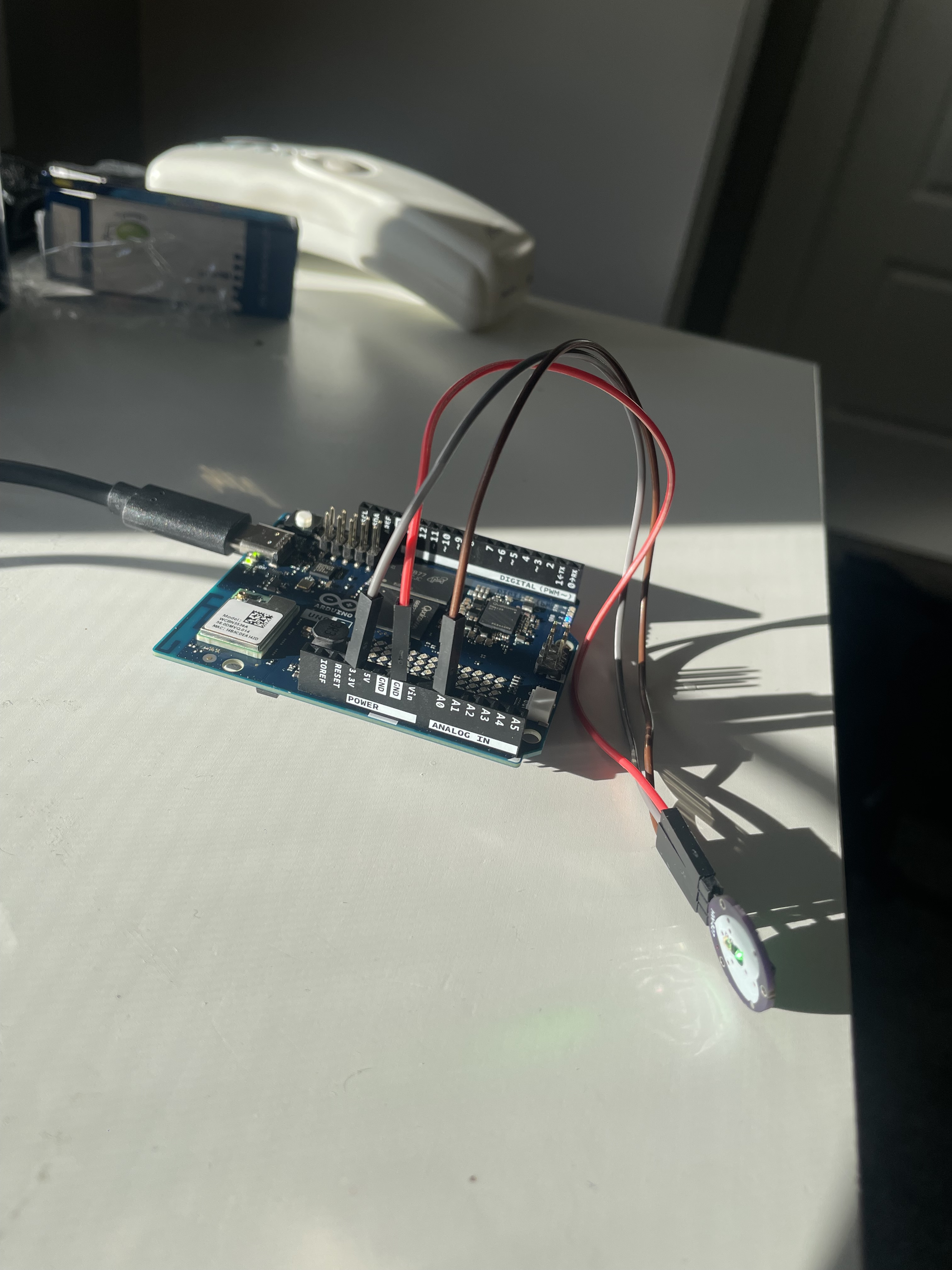
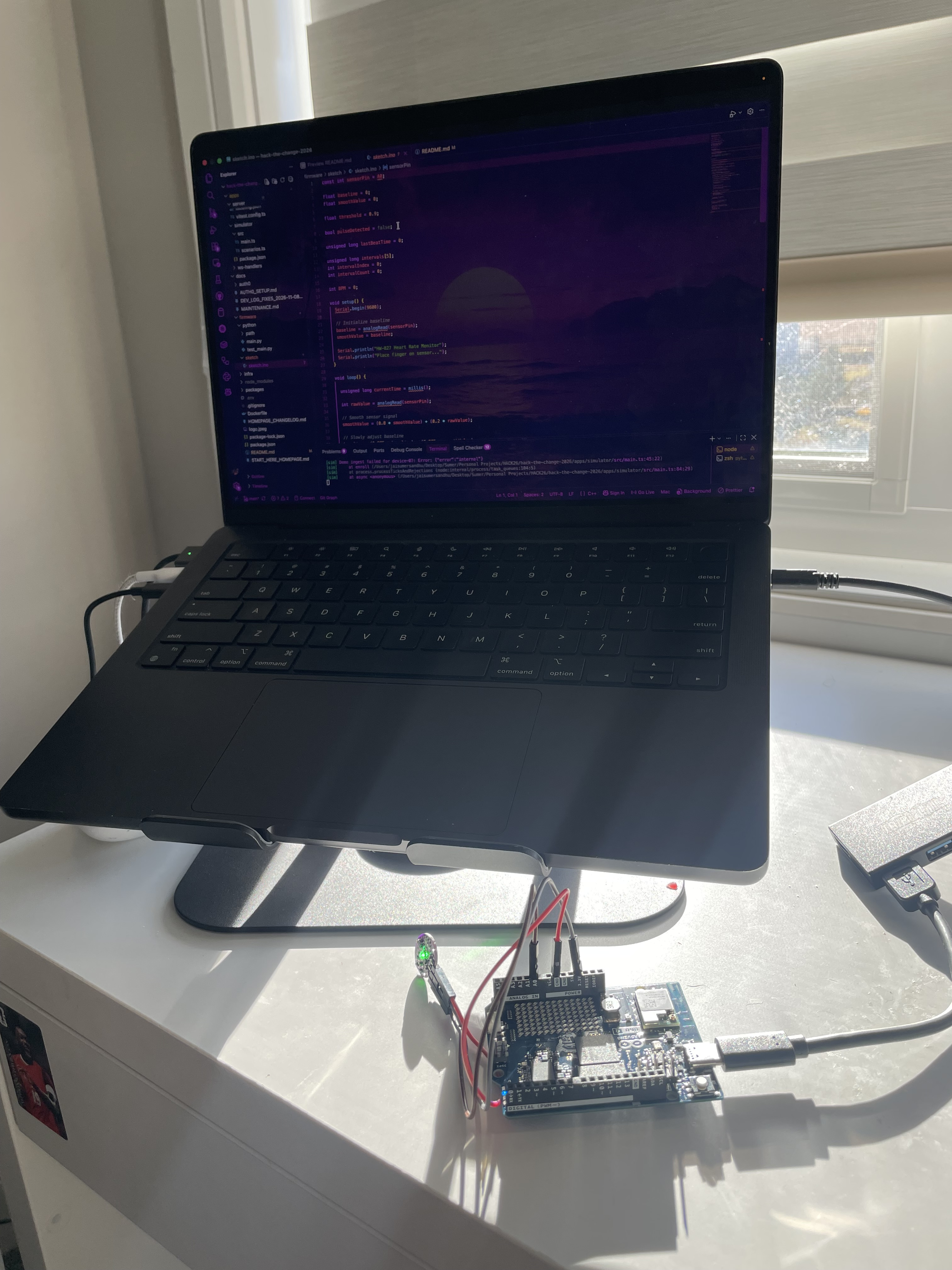
We built a React dashboard and Express backend, along with an Arduino-based wearable prototype and a simulator for generating patient readings and scenarios. The backend processes incoming readings, applies monitoring rules, and stores patient records, readings, and prompts.
Challenges we ran into
Wearable readings can be noisy, incomplete, or affected by movement. Sensor readings were especially difficult to deal with. Skin temperature is only an approximation, so it can’t replace a clinical temperature measurement. We also had to coordinate ingestion, stream processing, database writes, and real-time dashboard updates across separate services.
Accomplishments that we're proud of
We connected simulated and hardware-generated readings to a working monitoring pipeline and nurse dashboard. We’re proud that the system uses patient-specific baselines and separates rule-based prompts from AI-generated supporting text.
What we learned
A change can be more meaningful when compared with a person’s own baseline, but only when the sensor signal is reliable and the patient is resting. We also learned to make the role of AI clear and how to use new technology such as Auth0.
What's next for TEEZFAANG
Next, we’d improve the wearable signal quality, strengthen and test the alert experience, and make enrollment details easier for nurses to review. We’d also evaluate the system with clinical partners before considering any real-world use. Lastly, we would test the wearable device using different heart-rate sensors.
Built With
- auth0
- docker
- express.js
- gemini
- node.js
- pglite
- pyserial
- python
- react
- rest
- tailwind
- typescript
- vite
- websockets
- zod

