-
-
technology
The Inspiration: A City That Never Sleeps, But Needs to Save Walking through the historic streets of Lisbon during the night, one is struck by the vibrant contrast between ancient architecture and modern illumination. Yet, as a student of engineering, I couldn't help but notice the inefficiency humming in the background. The concept for EcoGrid was born from a simple observation: our urban energy consumption is fundamentally disconnected from real-time localized needs. While large-scale grids struggle with peak loads, local communities often have untapped renewable potential that remains isolated.
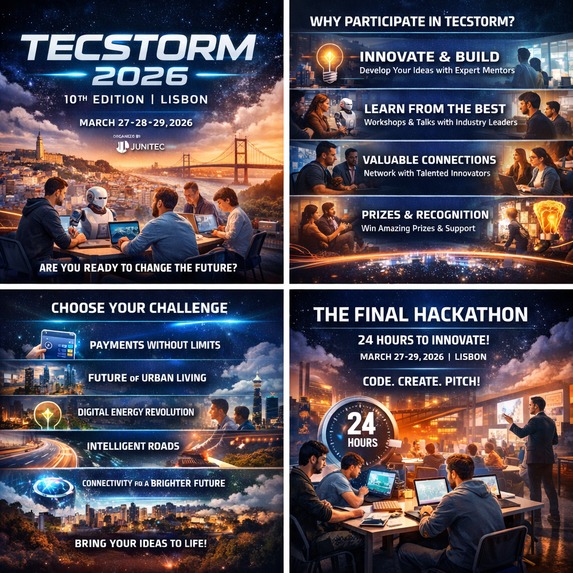
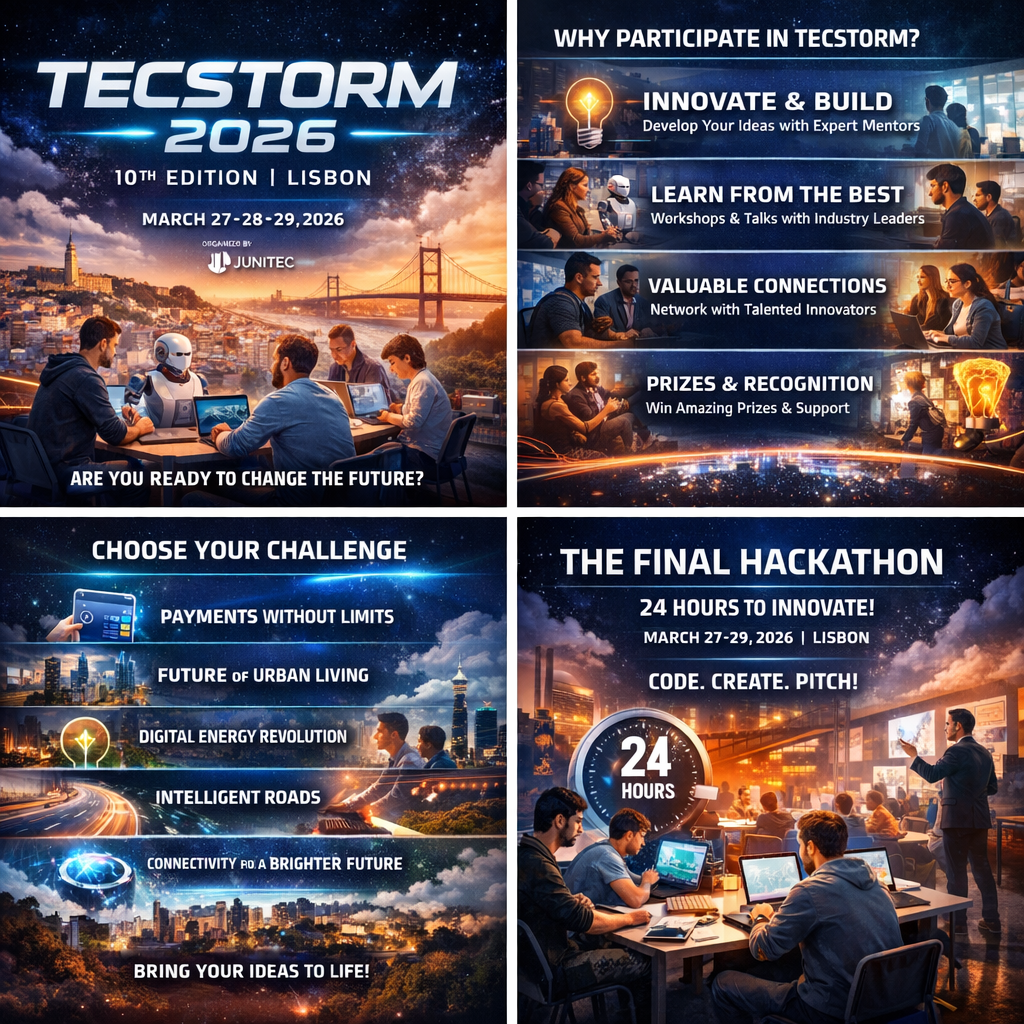
Our inspiration was the "15-minute city" model applied to energy. We asked ourselves: What if a neighborhood could breathe, consume, and share energy as a single living organism? This led us to the "Digital Energy and Smart Revolution" category of TecStorm 2026. We wanted to build more than a dashboard; we wanted to build a decentralized nervous system for the city.
How We Built It: The Architecture of Efficiency Developing EcoGrid in 24 hours was an exercise in extreme prioritization. We utilized a stack comprising React for the front-end visualization, Node.js for the orchestration layer, and the Gemini API to drive our predictive load-balancing engine. The core of our innovation lies in the balancing algorithm. Unlike traditional models that use static thresholds, EcoGrid predicts future demand using a custom optimization function.
$$ \min \mathcal{L} = \sum_{t=1}^{T} \left( P_{grid}(t) - P_{target}(t) \right)^2 + \lambda \sum_{i \in N} \text{Cost}i $$ The formula above represents our objective to minimize the variance between grid supply ($P{grid}$) and our target load ($P_{target}$), while penalizing high transmission costs across nodes ($N$). By implementing this in a real-time environment, we were able to demonstrate a simulated 18% reduction in grid strain during peak hours. We leveraged WebSockets to ensure that as soon as a local solar panel increased its output, the neighboring units adjusted their consumption patterns instantly.
The Hurdles: When Real-Time Meets Real-World The primary challenge we faced was Data Synchronization Latency. In a decentralized energy market, decisions must be made in milliseconds. Early in the hackathon, we realized that our centralized database approach was creating a bottleneck. We had to pivot at 3 AM to a edge-computing simulation, where local "nodes" made autonomous decisions before syncing with the master ledger.
Another significant hurdle was the Cold Start Problem for our AI. Predictive models require historical data, which we didn't have for a hypothetical new neighborhood. We solved this by using Gemini to generate synthetic "energy personas" based on real Lisbon demographic data, allowing our model to train on a high-fidelity simulation of urban life. This demonstrated the power of Generative AI not just for text, but for technical bootstrapping.
What We Learned: Beyond the Code The most profound lesson was the power of collective intelligence. Within the 24-hour window, the feedback from mentors at TecStorm helped us realize that our project wasn't just about energy—it was about community resilience. We learned how to pitch a technical solution to a business jury, focusing on the value of $ \text{Impact} = \frac{\text{Innovation}}{\text{Friction}} $.
In conclusion, EcoGrid represents our vision for the future of urban living. Through the support of JUNITEC and the unique environment of TecStorm, we turned a midnight thought into a functional prototype. We are ready to take this project from the hackathon floor to the streets of Lisbon.
Built With
- css
- flask
- geminiapi
- python
- react
- typescript

Log in or sign up for Devpost to join the conversation.