-
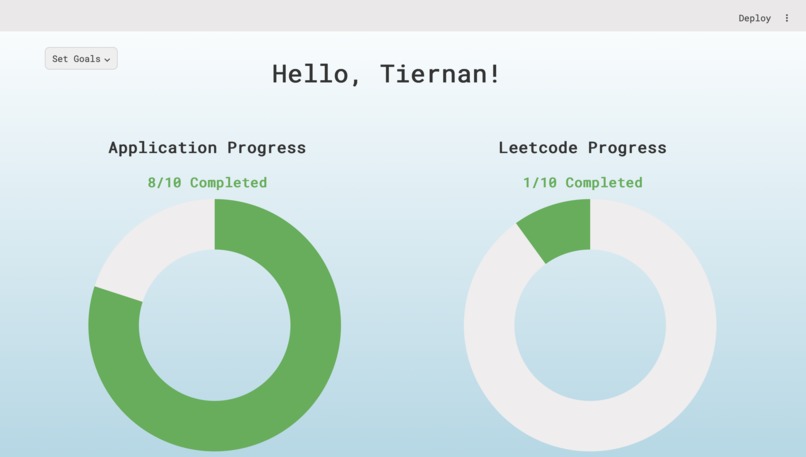
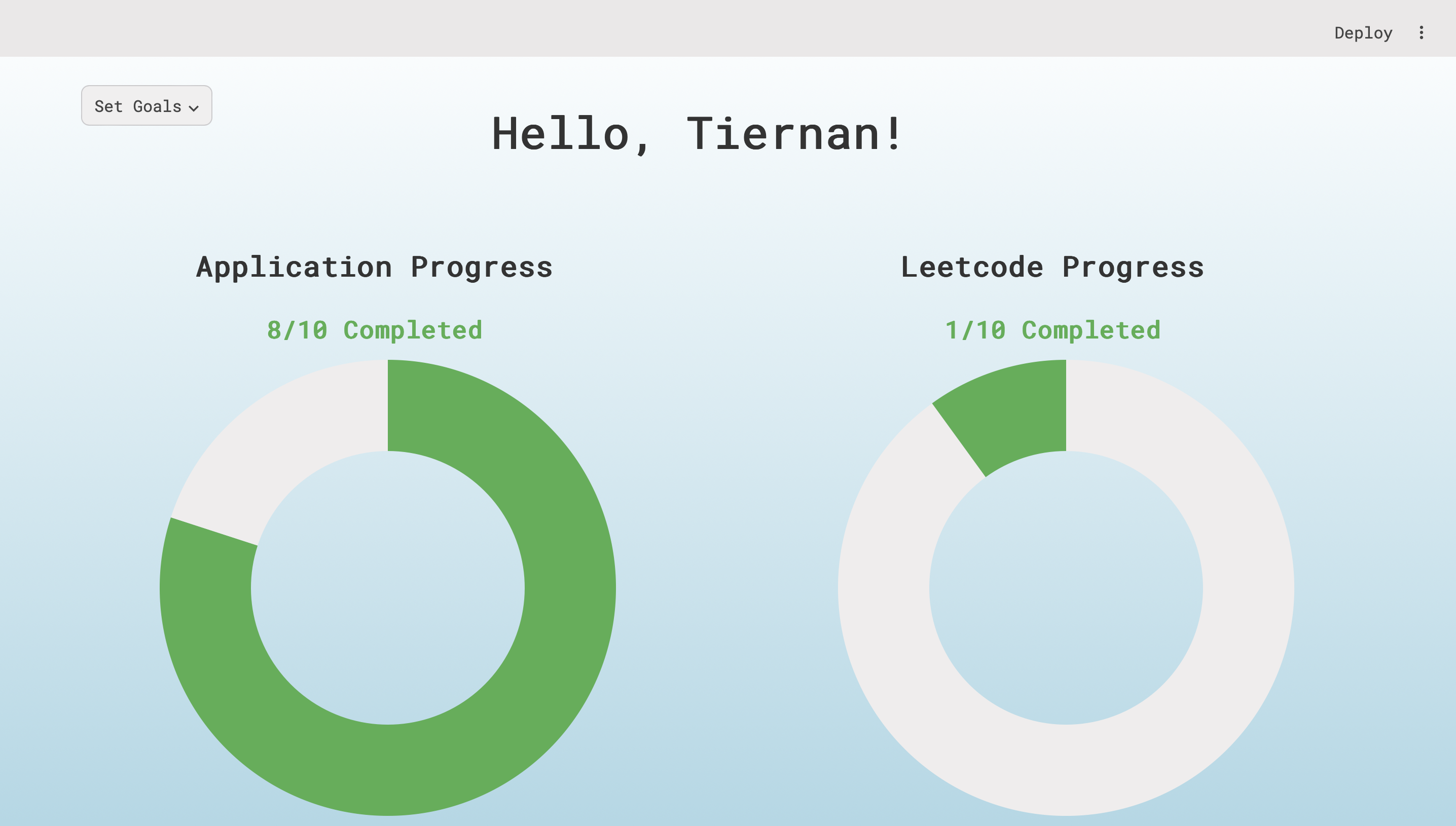
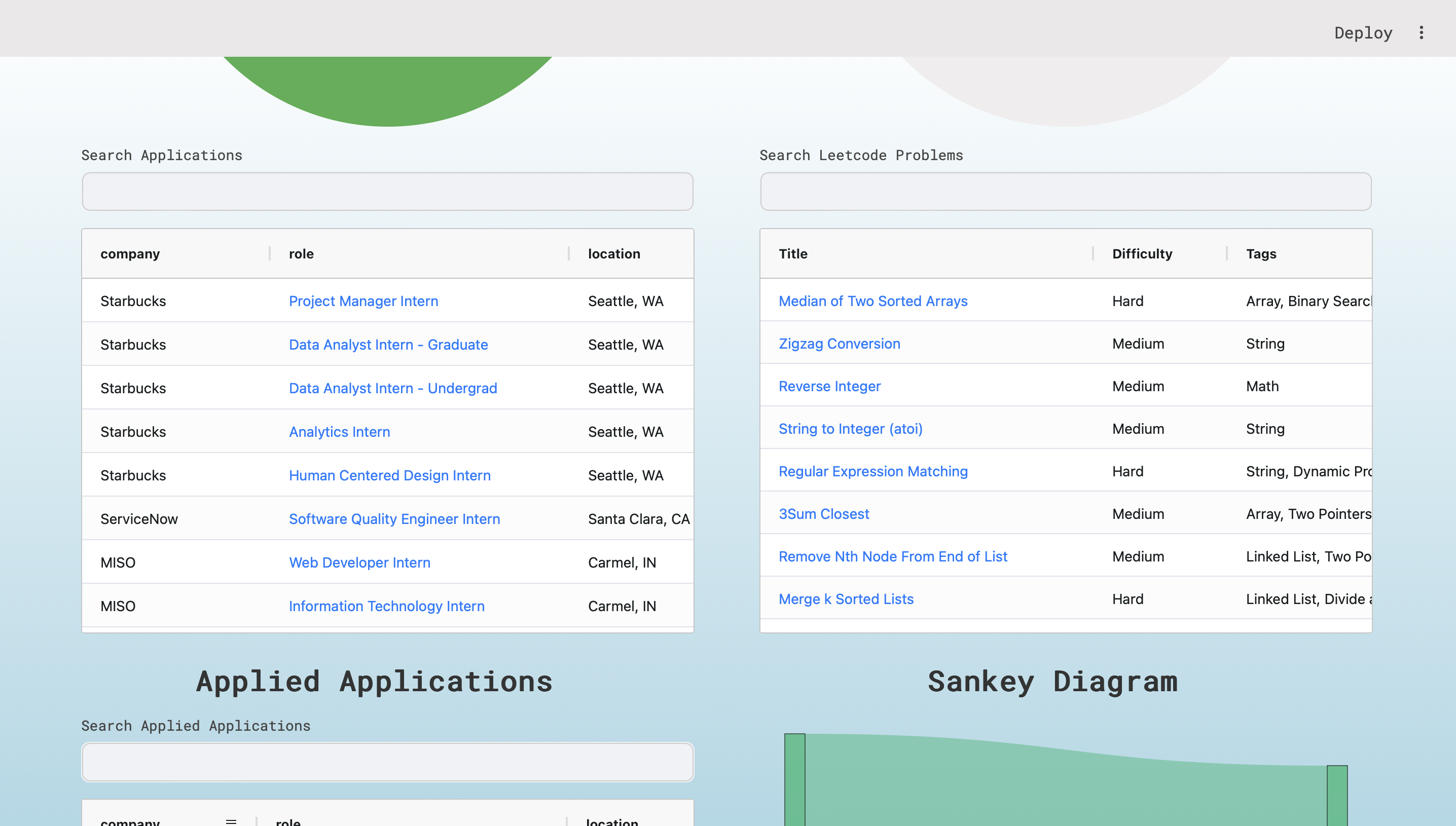
The weekly progress donut charts are changed dynamically, the application chart by interaction with below table, leetcode based on cache.
-
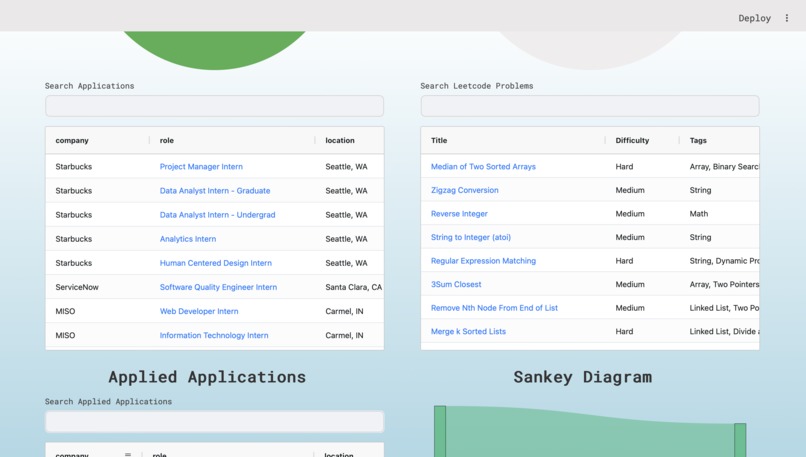
Applications the user has not applied for (is checked by db), leetcode problems the user has not completed (checked by cache and lc api)
-
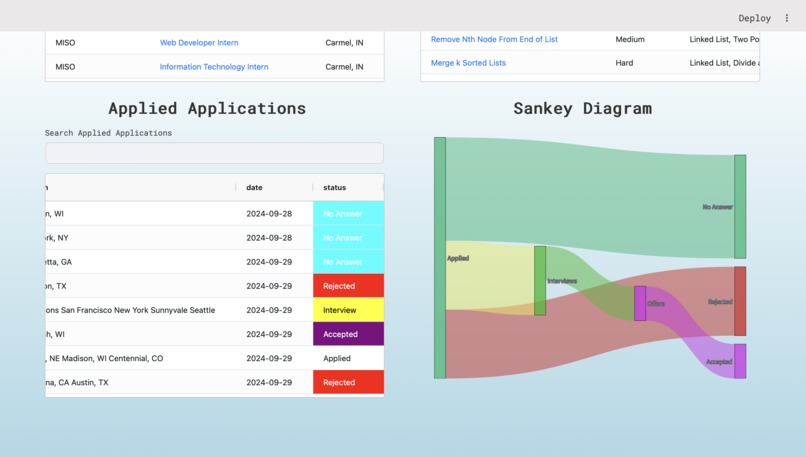
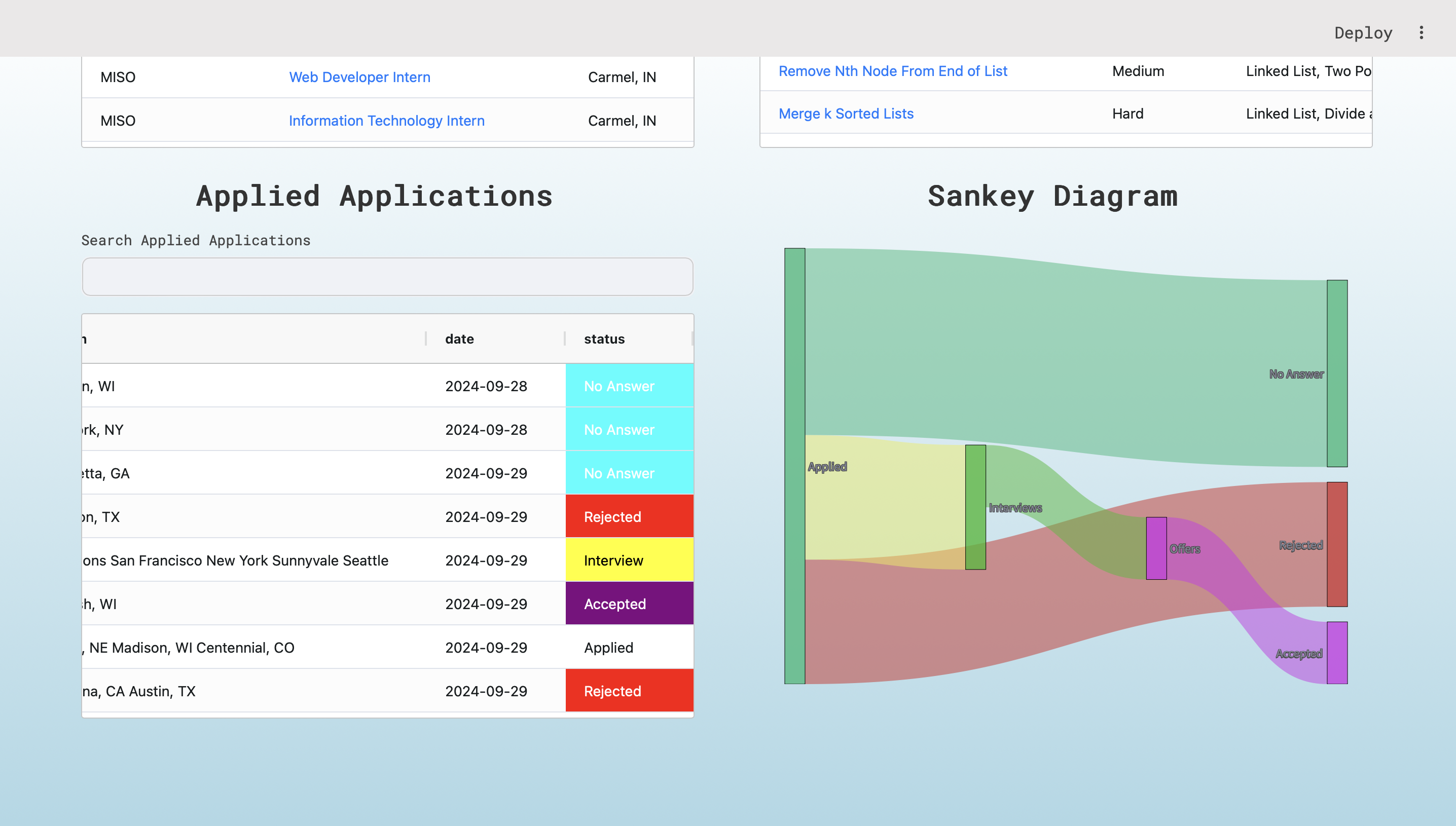
Applied apps (added to from other table, status of the user's application changed by dropdown), Sankey diagram, (pulled from applied table)
Inspiration
The job application process can be monotonous, and keeping track of coding progress and applications across multiple platforms can be overwhelming. We wanted a tool that integrates both application tracking and coding goals into one platform to help people stay organized and motivated.
What it does
TechTracker allows users to track job applications and LeetCode problem-solving goals in one place. It provides an easy-to-use interface for managing applications, updating their statuses, and visualizing progress through a Sankey diagram. Users can also monitor their LeetCode progress and draw from a bank of questions. Weekly goal progress is adjusted dynamically based on completed problems and applications.
How we built it
We built TechTracker using Streamlit for the frontend and MongoDB for the backend. Data is stored and retrieved efficiently through MongoDB, while Streamlit's interactivity powers the dynamic interface, including tables and visualizations. We also created a Sankey diagram to track the flow of applications and their statuses.
Challenges we ran into
One challenge we ran into was integrating Streamlit with our data processing and MongoDB. We overcame this challenge by carving out plenty of time to tackle this issue.
Accomplishments that we're proud of
We're proud of accomplishing everything we set out to do. And of building an integrated system that handles both job applications and coding goals in a clean, user-friendly interface. The dynamic goal-setting the problems, the database setup, and the UI were the biggest wins for us.
What we learned
We learned how to utilize Streamlit to build visually appealing and responsive user interfaces. Additionally, we learned how to leverage MongoDB effectively. The last thing we learned is to be ambitious and keep code clean and purposeful.
What's next for TechTracker
There are more features we'd like to add, such as resume feedback, and behavioral questions. We'd also like to deploy the project and start getting user feedback from users on the hunt for a job.

Log in or sign up for Devpost to join the conversation.