
Inspiration
TechNeighbor was inspired by my grandpa in India. He is mostly on his own and does not have much help with technology. Watching how difficult everyday digital tasks can be without someone nearby made me think about the connection between technology, independence, and loneliness.
I wanted to build something that could help him—and other older adults—find patient support, connect with people, and manage everyday responsibilities without giving up control.
What it does
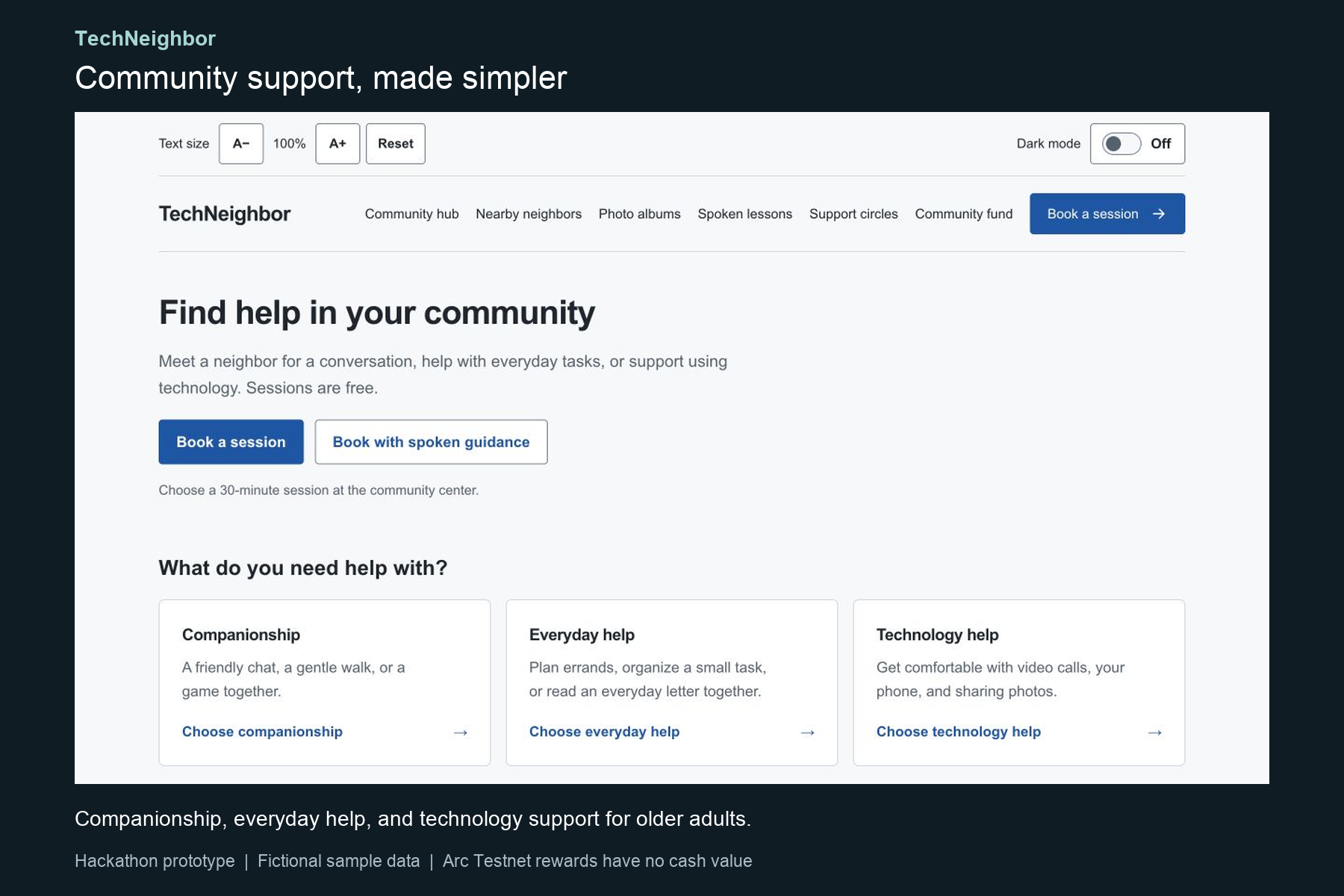
TechNeighbor combines community connection and practical support in one accessible app.
Older adults can:
- Book free sessions for companionship, everyday help, or technology support.
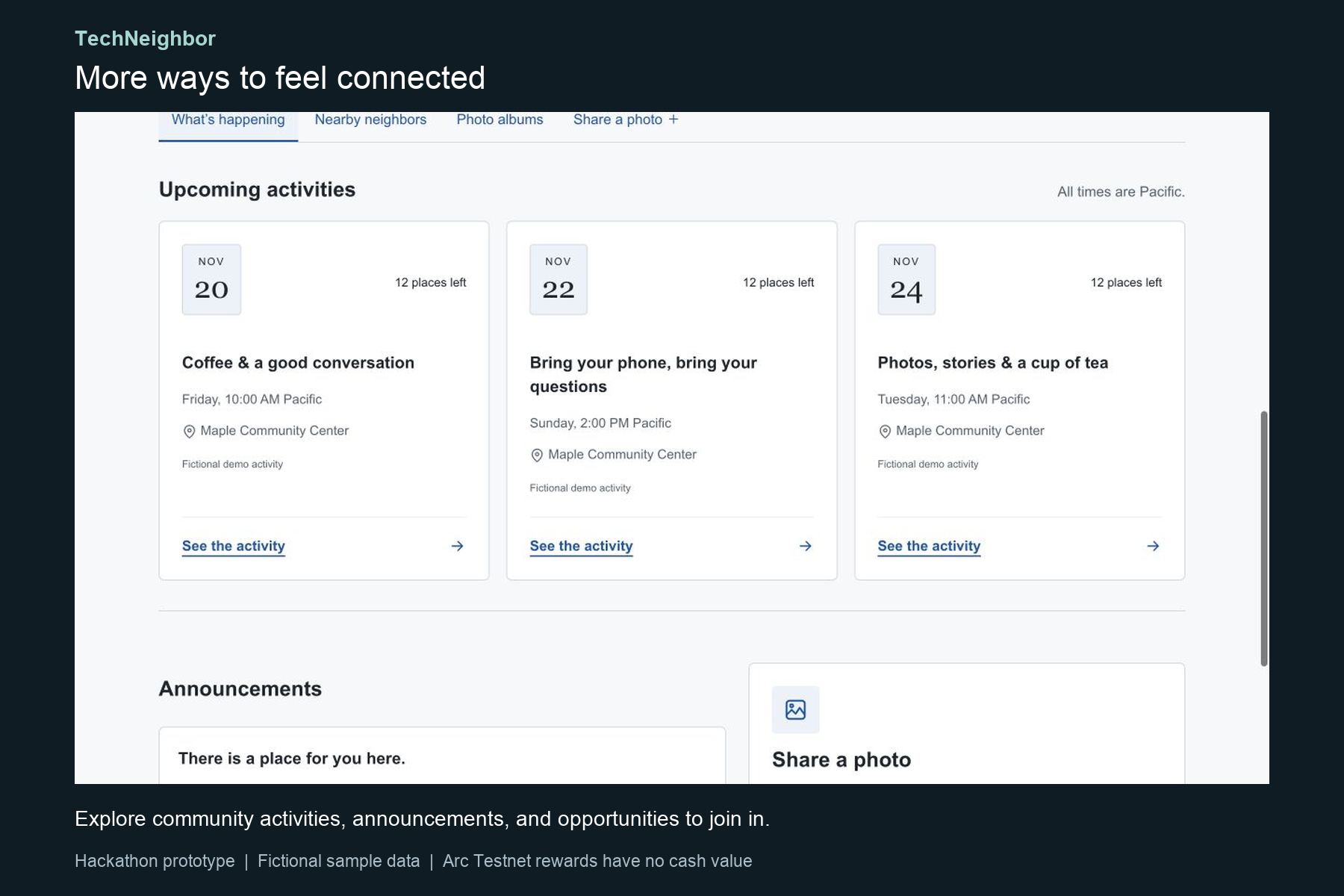
- Explore community activities and save a place.
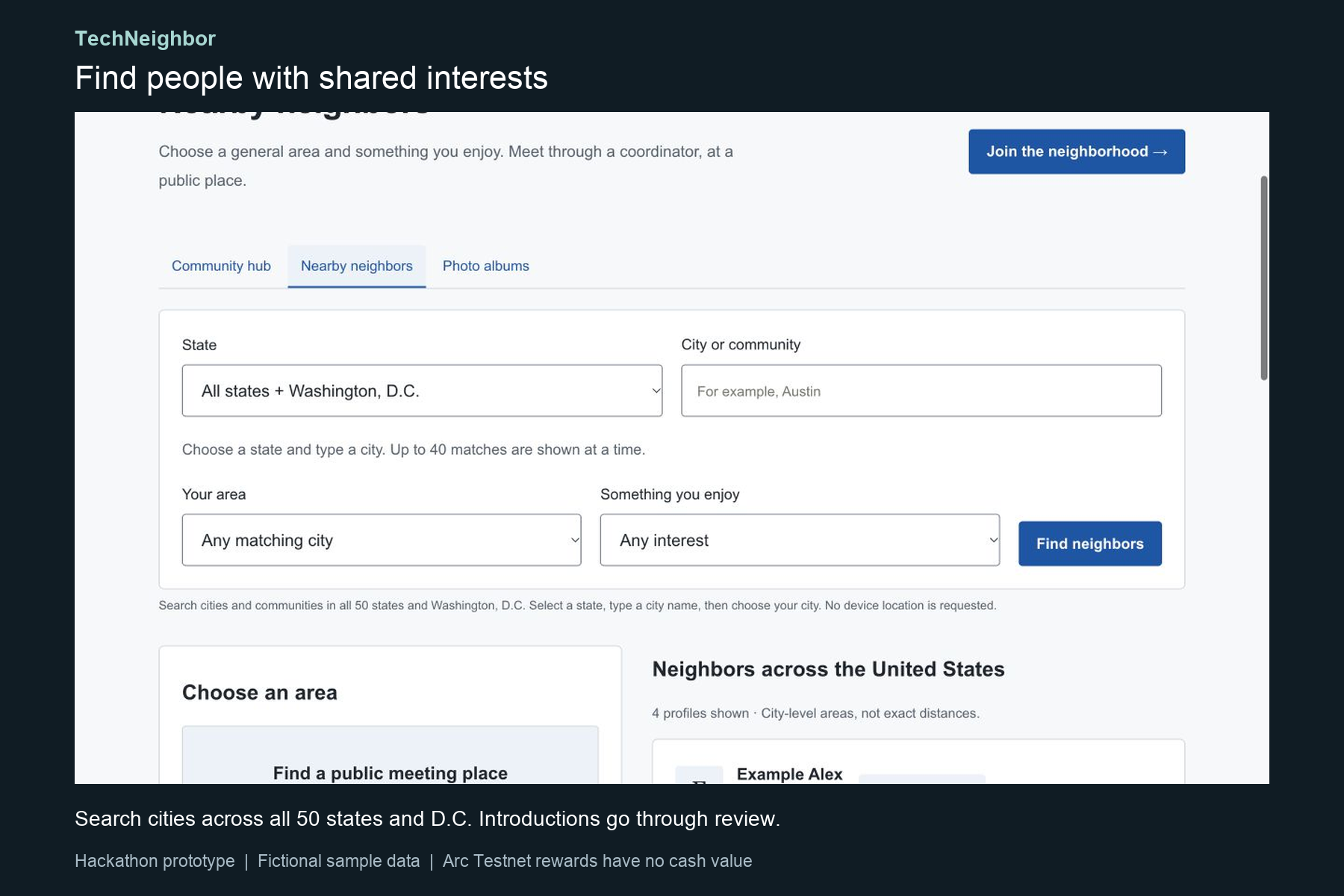
- Find neighbors by city and shared interests across the United States.
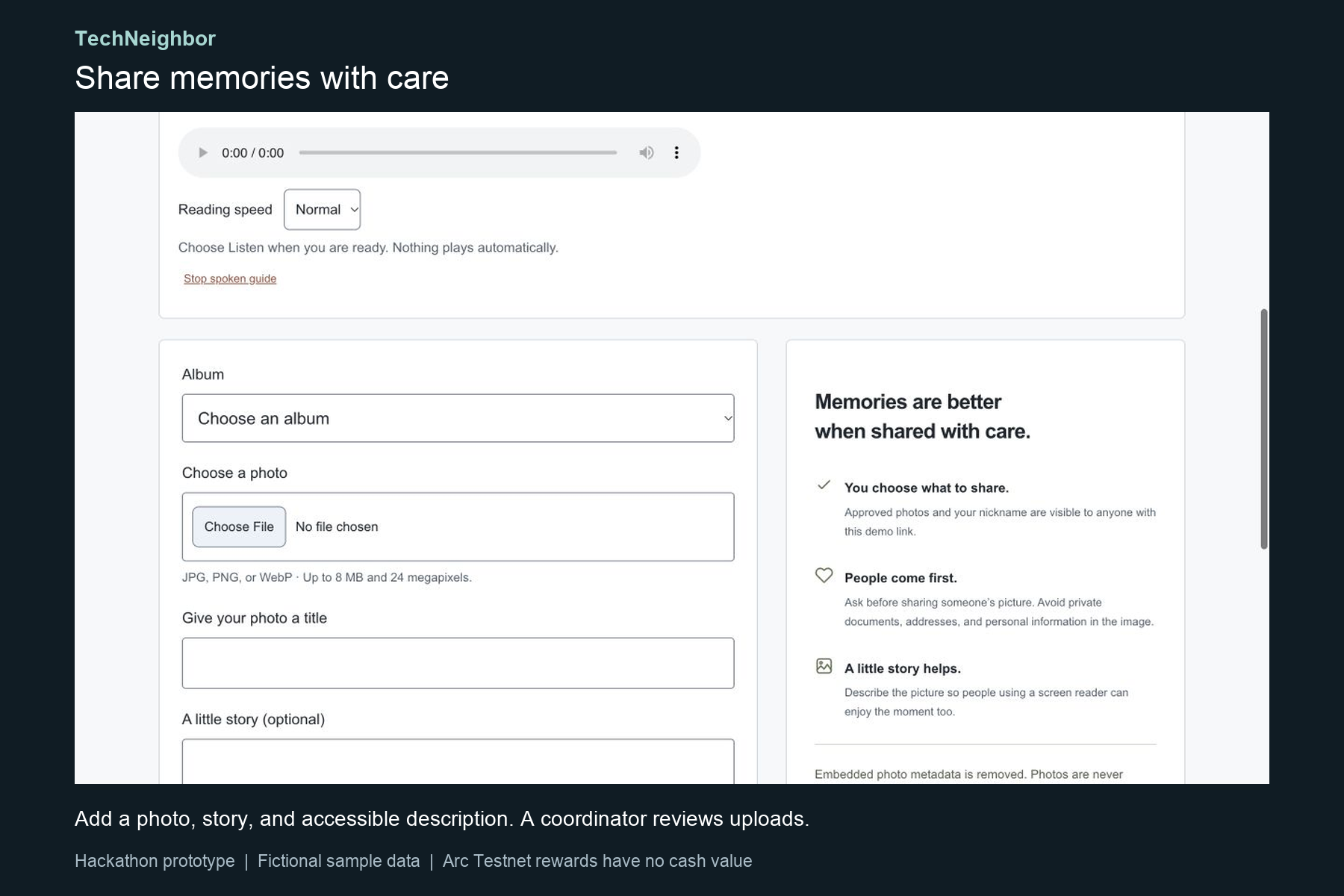
- Share photos and stories in community albums, with coordinator approval before publication.
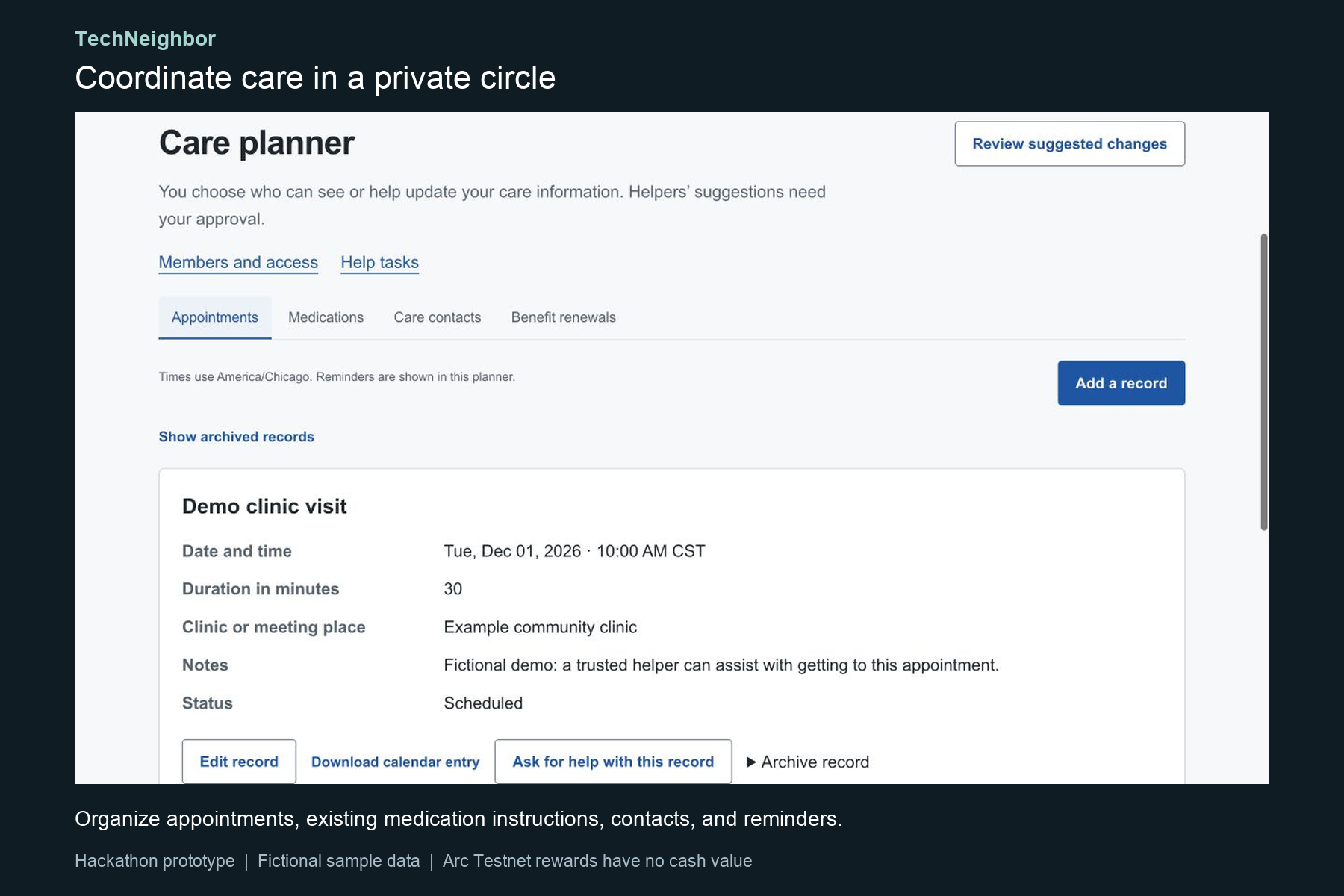
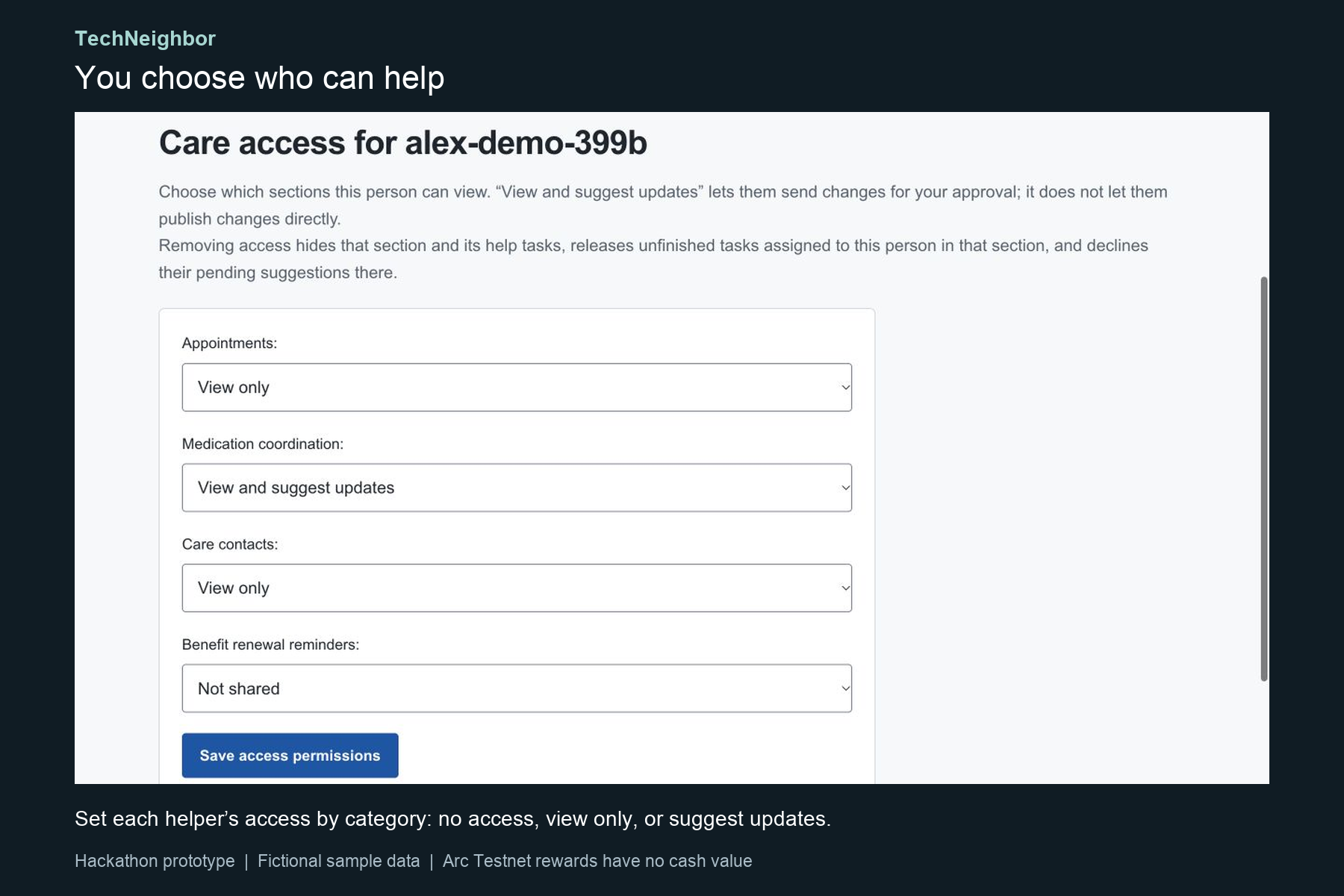
- Invite family members or eligible neighbors into private support circles.
- Organize appointments, existing medication instructions, care contacts, and benefit renewal reminders.
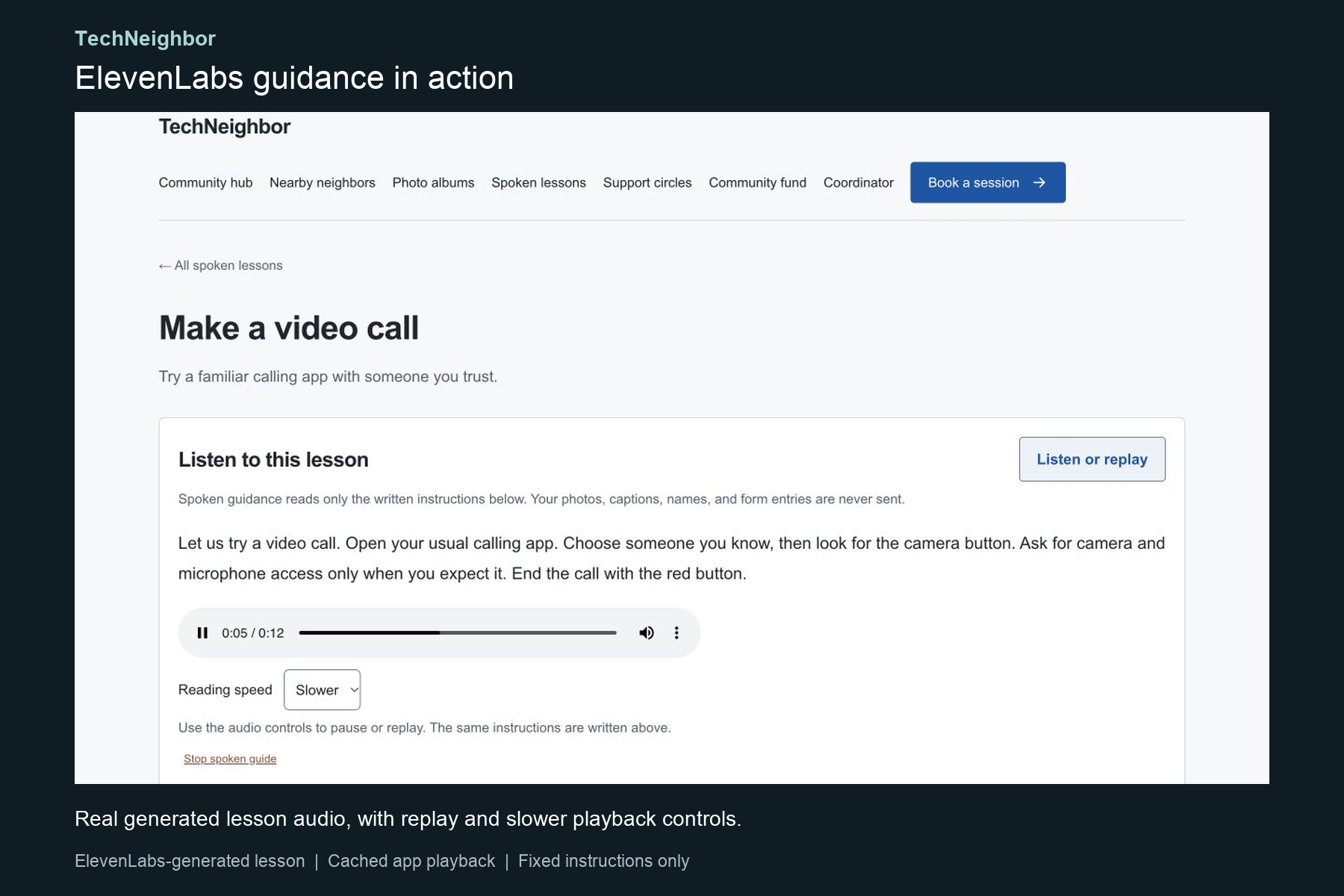
- Adjust text size, switch between light and dark modes, and follow spoken instructions.
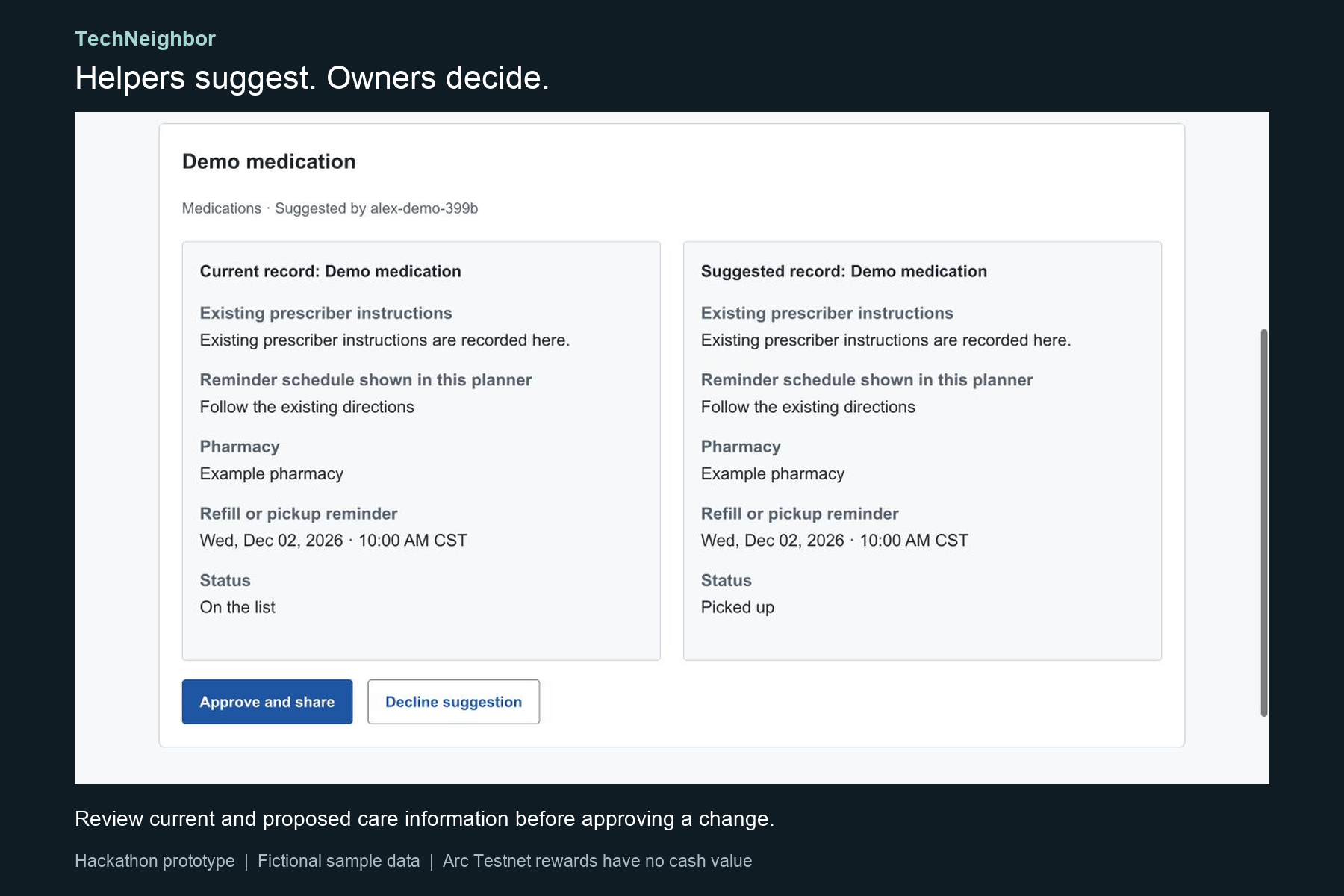
The care-circle owner decides what each helper can access. Helpers can suggest updates, but the owner reviews and approves changes before they become shared.
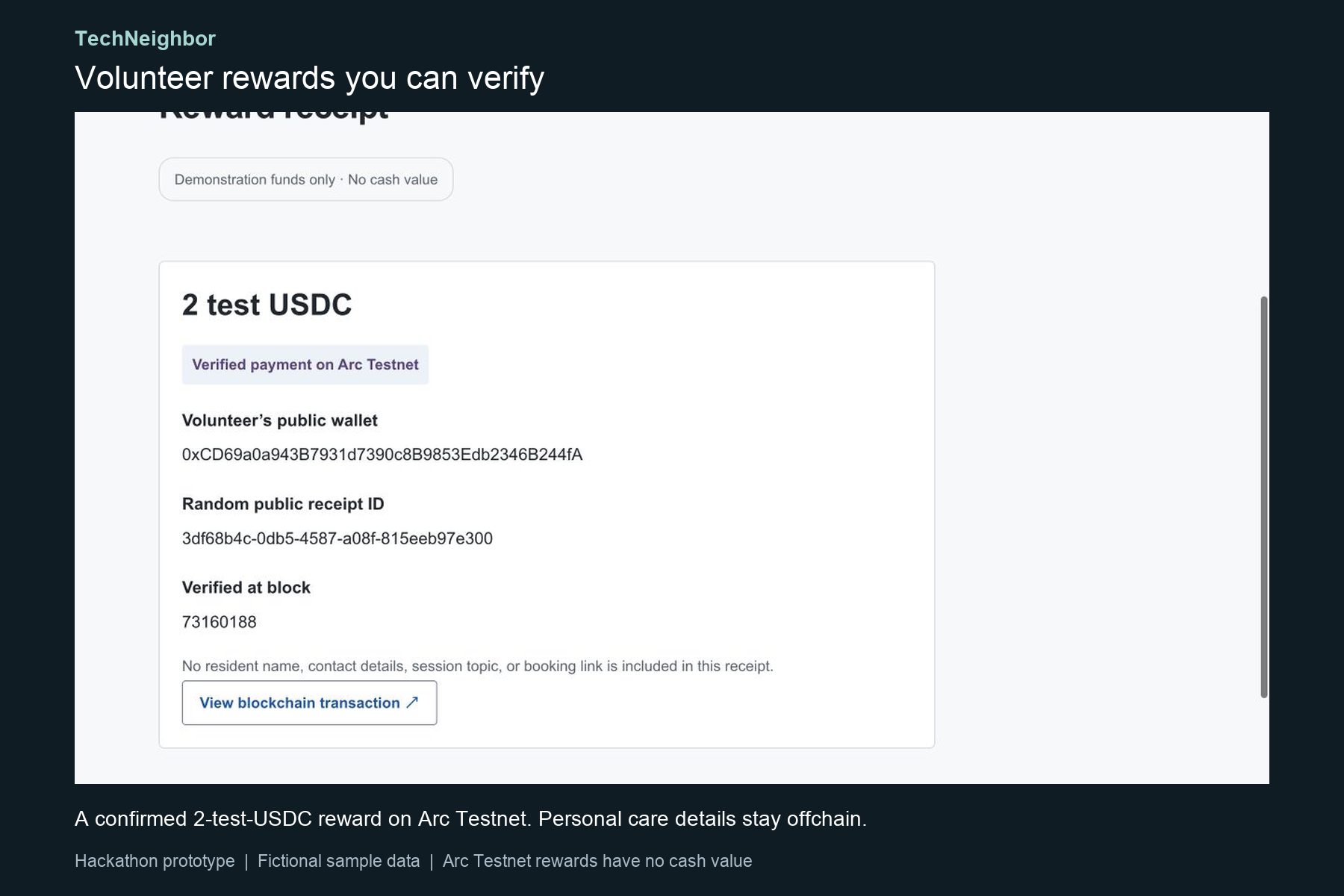
Volunteers can also receive coordinator-approved rewards through Arc Testnet. Public payment receipts make rewards verifiable while keeping personal care information off the blockchain.
How I built it
I built TechNeighbor with Python and Django, using HTML, CSS, and JavaScript for the frontend. The hosted demo runs on Render with a Neon PostgreSQL database to preserve records and uploaded photos.
For blockchain functionality, I integrated Arc Testnet and USDC-based volunteer rewards through smart contracts. The goal was to keep blockchain in the background: older adults can use the main community features without understanding wallets, gas fees, or seed phrases.
I integrated ElevenLabs to generate fifteen spoken guides and lessons covering booking, community features, and technology skills. The audio is cached for quick playback, and users can pause, replay, or slow it down. Only fixed instructions are sent for speech generation—not personal care records or form entries.
Private care-record contents are encrypted before storage. Photos remain offchain, and uploaded images require coordinator approval before appearing publicly.
What I learned
This project taught me that accessibility involves more than larger buttons. Clear wording, predictable navigation, readable text, and the ability to listen can make a significant difference in whether someone feels comfortable using an app.
I also learned how blockchain can support a familiar consumer experience. A person looking for companionship or help using their phone should not have to learn crypto first. Verifiable volunteer rewards gave blockchain a specific role behind the scenes.
Challenges I faced
One challenge was combining community activities, photos, booking, and care coordination without making the app overwhelming. I simplified the design and gave each feature a clear purpose.
Another challenge was protecting private information while providing public blockchain verification. I kept care details offchain and used separate, randomly generated payment receipt identifiers.
Deployment introduced challenges as well. I needed the app to work beyond my laptop, preserve submissions after restarts, and provide reliable voice playback without allowing visitors to trigger unexpected speech-generation charges.
I also had to learn how to demonstrate blockchain honestly. The current app uses Arc Testnet and demonstration USDC, so its rewards are not real-money payments.
It was my first time creating a blockchain consumer application so it took time to get familiar with how to incorporate crypto within the process and how it would fit best.
What’s next
The current neighbor directory supports the United States, but my inspiration comes from India. I would like to explore support for communities there, add more languages, and test the experience with my grandpa and other older adults.
My goal is to keep improving TechNeighbor around the people it is meant to serve: helping them feel more connected, supported, and confident while staying in control of their own lives.
Built With
- arc
- css3
- django
- elevenlabs
- github
- html5
- javascript
- neon
- postgresql
- python
- render
- usdc
- web3.py
