-
-
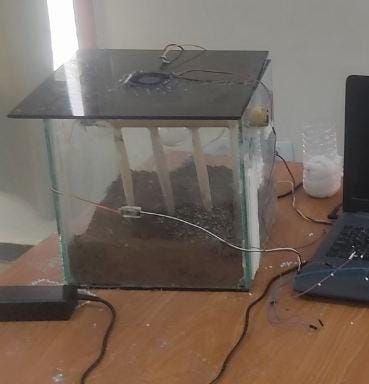
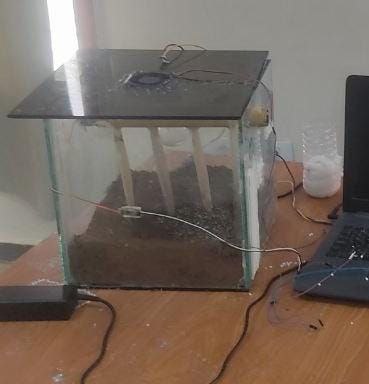
Agriculture system
-
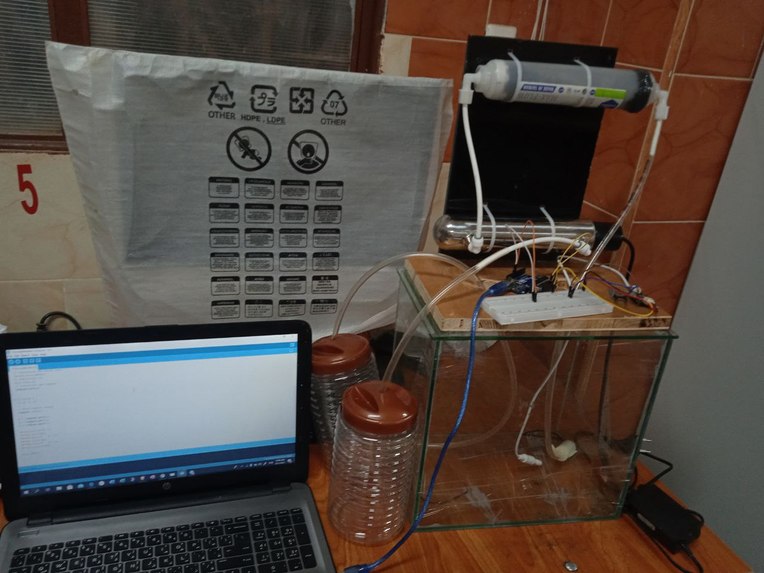
Aquaculture System
-
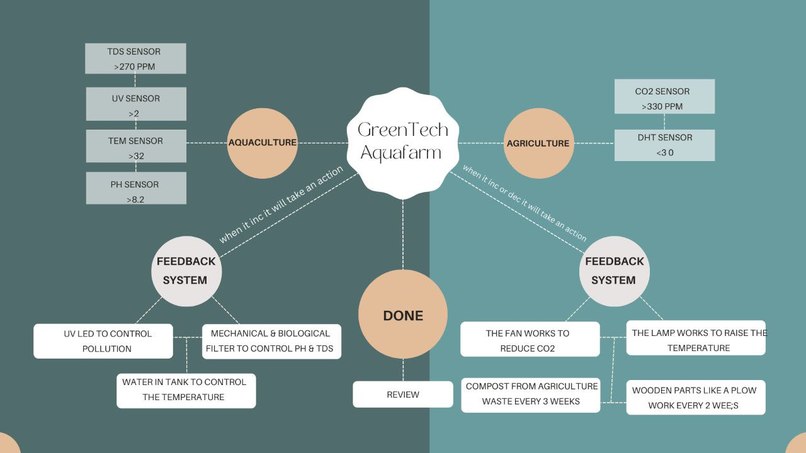
project map
Inspiration
Our inspiration for developing this smart farming system came from the increasing need for sustainable and efficient agricultural practices. We wanted to create a solution that would not only improve crop yields but also minimize environmental impact. Additionally, we recognized the potential of aquaculture as a means of sustainable food production and wanted to address the challenges faced in maintaining optimal conditions for fish.
What it does
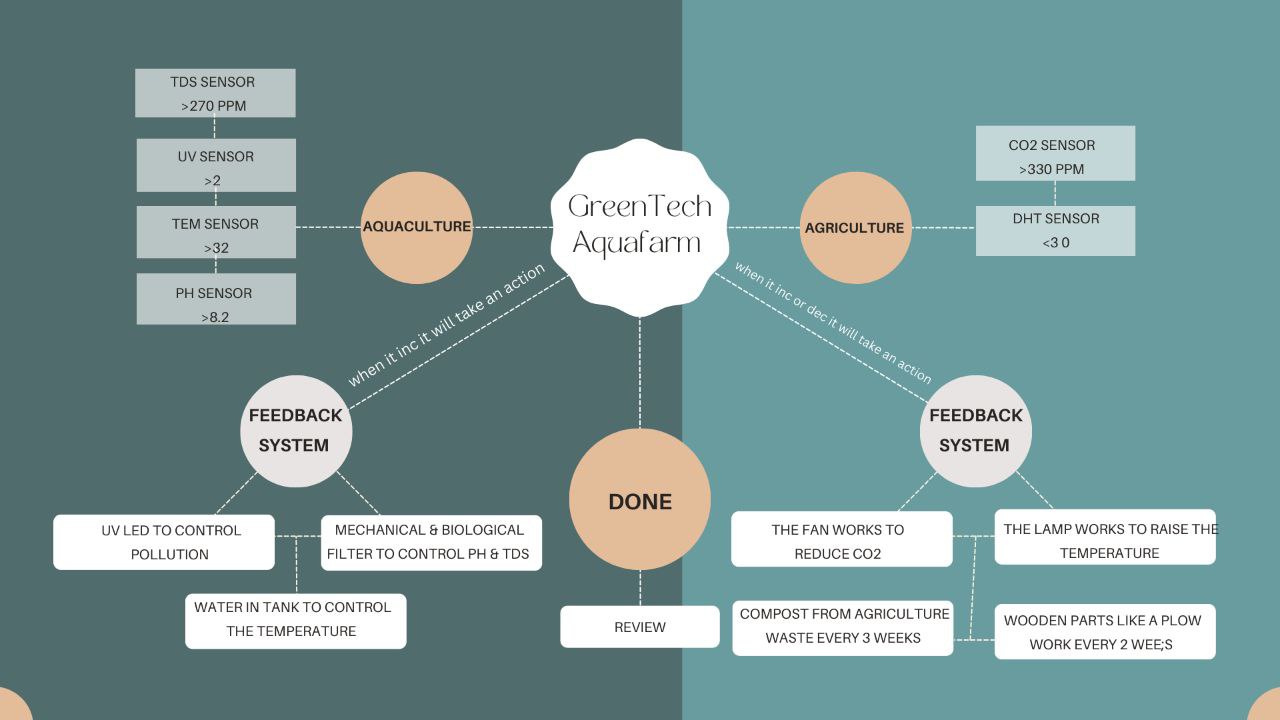
The first project focuses on smart farming and aims to monitor and control environmental factors such as temperature, humidity, soil moisture levels, and nutrient content. This allows for the creation of optimal growing conditions for crops and aquatic organisms. The system provides real-time data on plant health, water quality, and weather conditions, enabling informed decisions regarding irrigation schedules, fertilization requirements, disease prevention measures, and pest control strategies.
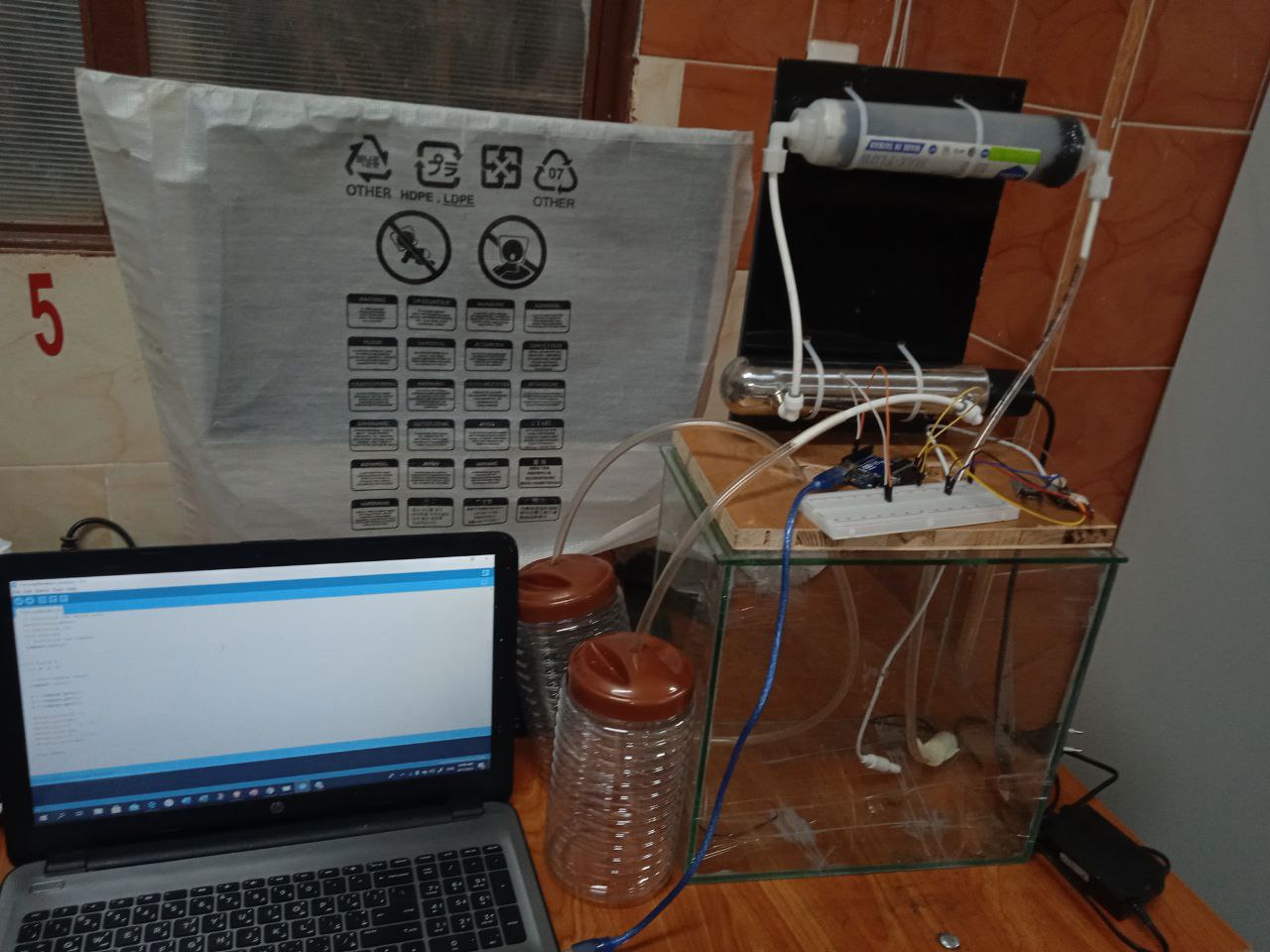
The second project focuses on improving conditions for fish in aquaculture. It utilizes Arduino UNO, TDS, UV, PH & Temperature sensors to create a feedback system that reduces pollution, dissolved solids, temperature, and alkali levels in the water where fish live. The use of UV diodes and filtration processes ensures effective treatment of the water.
Both projects stand out due to their unique combination of sensors and feedback systems that work together to create an optimal environment for both plants and fish. Real-time monitoring and adjustment of water quality help reduce pollution levels. Additionally, the smart agriculture system prioritizes factors like temperature, CO2 gas ratio, plowing, and fertilizer to ensure plants grow in a conducive environment.
It is mentioned that both projects were created separately using sensors and glass ponds.
How we built it
To build the smart farming system, we started by researching and selecting the appropriate sensors for monitoring temperature, humidity, soil moisture levels, nutrient content, TDS (Total Dissolved Solids), UV (Ultraviolet), pH, and CO2 gas ratio. We chose Arduino UNO as our microcontroller to collect data from these sensors.
For the crop monitoring system, we installed temperature and humidity sensors in the greenhouse or growing area to ensure optimal conditions. Soil moisture sensors were placed in different areas of the field to monitor irrigation needs. Nutrient content sensors were used to measure the levels of essential elements in the soil.
The aquatic organism monitoring system focused on improving conditions for fish in aquaculture. We utilized TDS, UV, pH, and temperature sensors to monitor water quality parameters. The collected data was then used to control UV diodes and filtration processes that effectively treated the water where fish live.
The Arduino UNO collected data from these sensors in real-time and transmitted it to a central control unit. The control unit processed this data using algorithms designed to analyze plant health indicators such as temperature variations, nutrient deficiencies or excesses, water quality issues (pollution or dissolved solids), pH imbalances, CO2 gas ratios for photosynthesis optimization.
Based on the analyzed data, the control unit made informed decisions regarding irrigation schedules, fertilization requirements, disease prevention measures (such as adjusting humidity levels), and pest control strategies (such as adjusting temperature or using UV diodes).
To ensure optimal conditions for fish in aquaculture settings, we incorporated UV diodes and filtration processes into our system. These components effectively treated the water where fish live, reducing pollution, dissolved solids, temperature, and alkali levels.
Challenges we ran into
Throughout the project, we faced several challenges. One of them was selecting the right combination of sensors that would provide accurate data for monitoring environmental factors. We also had to ensure that our feedback systems were properly calibrated to maintain optimal conditions for both plants and fish.
Another challenge was integrating all the components into a cohesive system that could collect real-time data and provide actionable insights. This required programming skills to develop algorithms that could analyze sensor data and make informed decisions regarding irrigation schedules, fertilization requirements, disease prevention measures, and pest control strategies.
Accomplishments that we're proud of
- trying to save our planet
-Successfully developing a smart farming system that monitors and controls various environmental factors for optimal crop and aquatic organism growth. - Creating a feedback system for aquaculture that reduces pollution, dissolved solids, temperature, and alkali levels using Arduino UNO, TDS, UV, PH & Temperature sensors.
- Standing out from existing solutions by combining unique sensors and feedback systems to create an optimal environment for both fish and plants.
- Monitoring and adjusting water quality in real-time to reduce pollution, dissolved solids, temperature, and alkali levels.
- Focusing on key factors such as temperature, CO2 gas ratio, plowing, and fertilizer in our smart agriculture system to ensure optimal plant growth.
- Prioritizing the CO2 temperature factor to create an environment conducive to plant needs. ## What we learned Throughout the development process, we gained valuable knowledge about the importance of environmental factors in crop growth and fish health. We learned about the specific requirements of different crops and aquatic organisms, such as temperature, humidity, soil moisture levels, nutrient content, water quality, and pH levels. Understanding these factors allowed us to design a system that could monitor and control them effectively. Overall, building these smart farming systems taught us about the importance of precision agriculture techniques in maximizing crop yield while minimizing environmental impact. We learned how technology can be leveraged to create a more sustainable and efficient farming industry. ## What's next for TechFarm Scaling up production: Once the research and development phase is complete, TechFarm can focus on scaling up production. This could involve expanding the size of aquaculture and smart agriculture systems, increasing the number of animals being bred, or growing a wider variety of crops. The goal would be to increase output and meet growing demand for sustainable food sources.
Commercialization and partnerships: TechFarm can explore opportunities for commercializing their products and technologies. This could involve partnering with local farmers, restaurants, or grocery stores to supply them with fresh produce or seafood. Collaborating with other companies in the agricultural technology sector could also lead to mutually beneficial partnerships.
Education and outreach: TechFarm can play a role in educating the public about the benefits of aquaculture and smart agriculture. This could involve hosting workshops or seminars for farmers, students, or community members to learn about sustainable farming practices and how they can implement them in their own operations.
Continuous improvement: As technology advances and new research emerges, TechFarm should continuously strive to improve their systems and processes. This could involve incorporating new sensors or automation technologies, optimizing feed formulations for better animal nutrition, or finding more efficient ways to manage water resources.
Sustainability initiatives: TechFarm can also focus on implementing sustainability initiatives within their operations. This could include using renewable energy sources to power their systems, reducing waste through recycling or composting programs, or implementing water conservation measures.
Overall, the future for TechFarm involves continued innovation, expansion, collaboration, education, and sustainability efforts to contribute towards a more efficient and sustainable food production system.


Log in or sign up for Devpost to join the conversation.