-
-
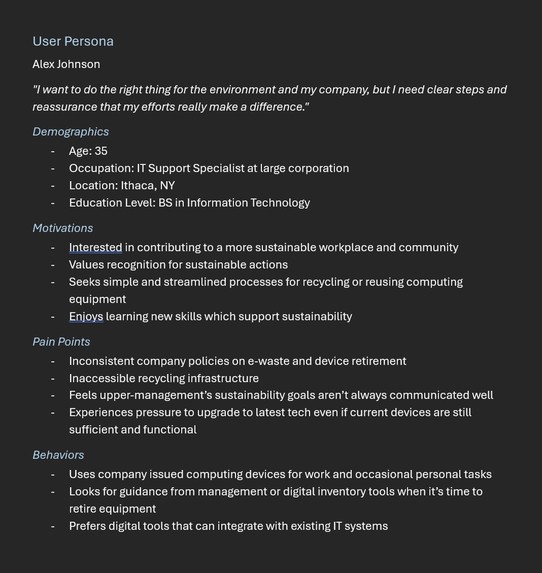
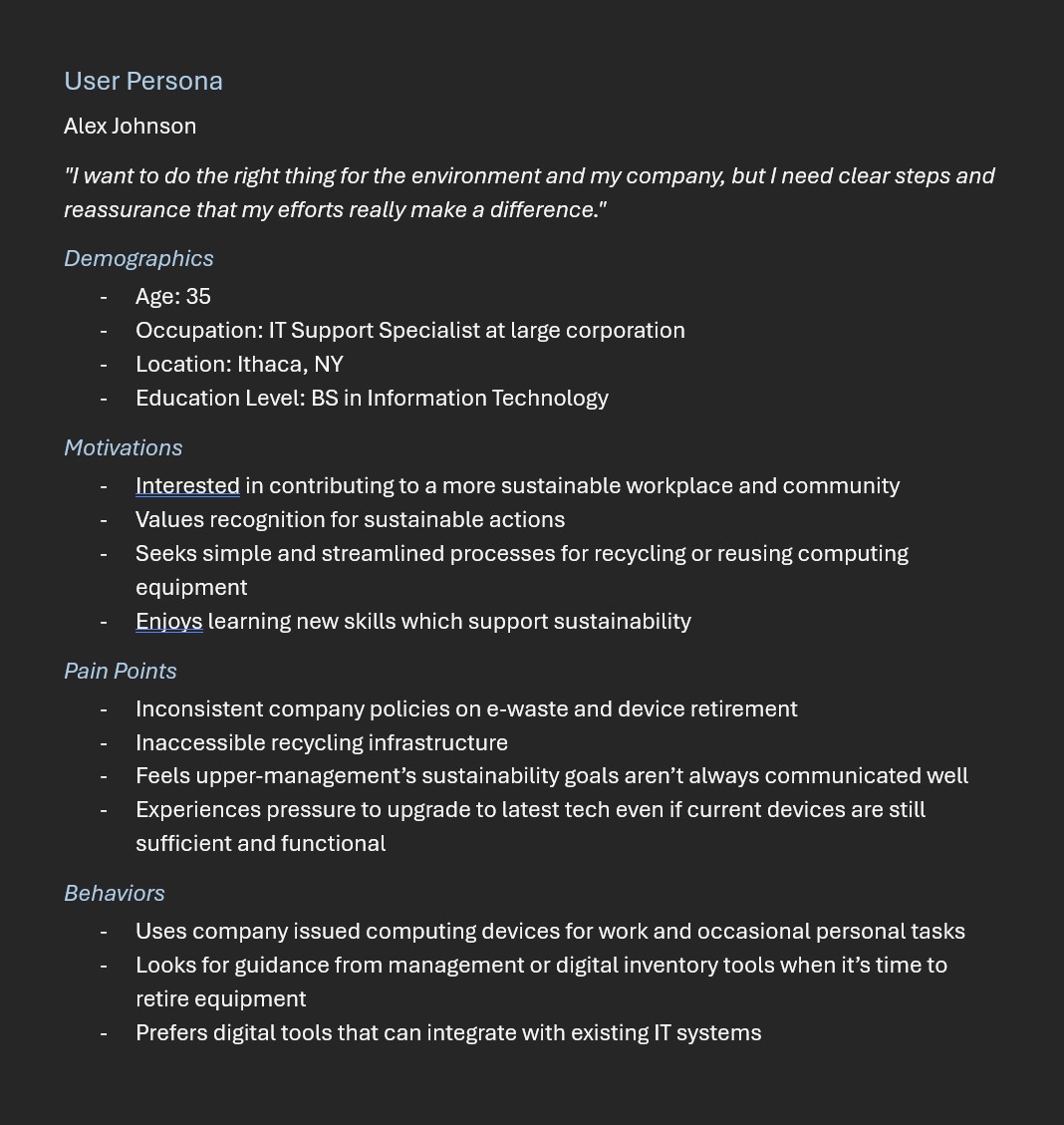
User Persona
-
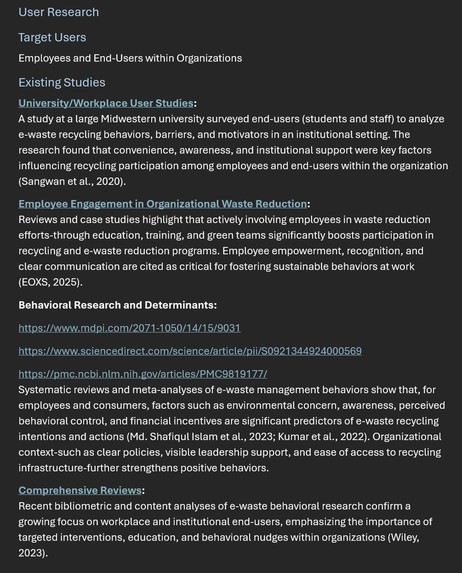
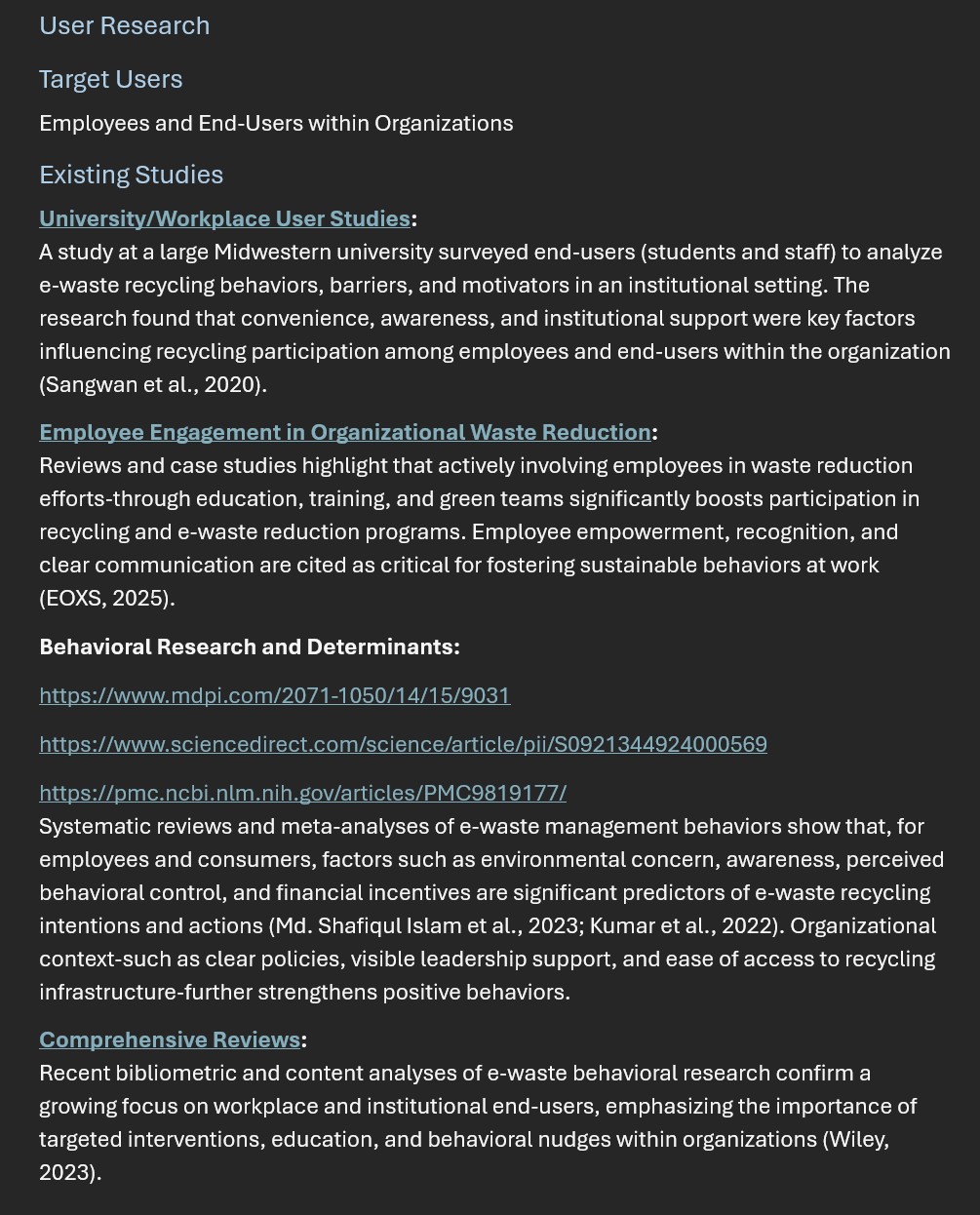
User Research
-
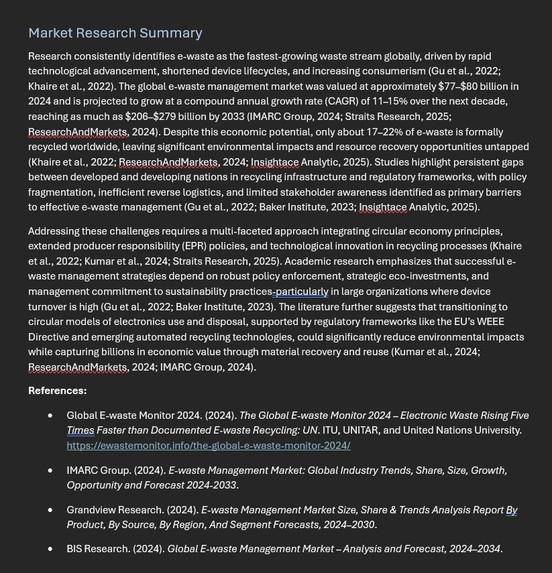
Market Analysis
-
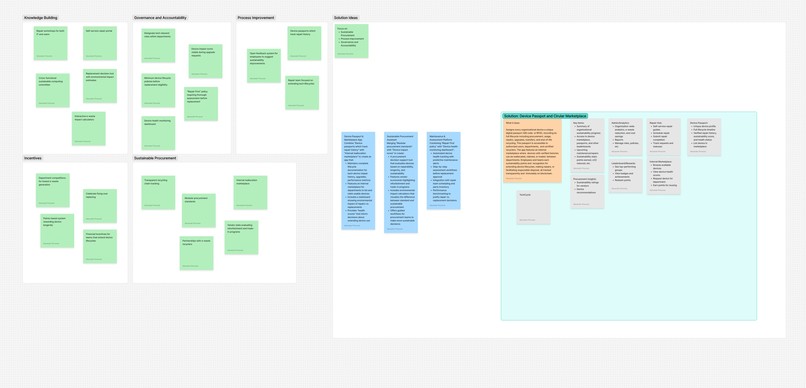
Solution Space
-
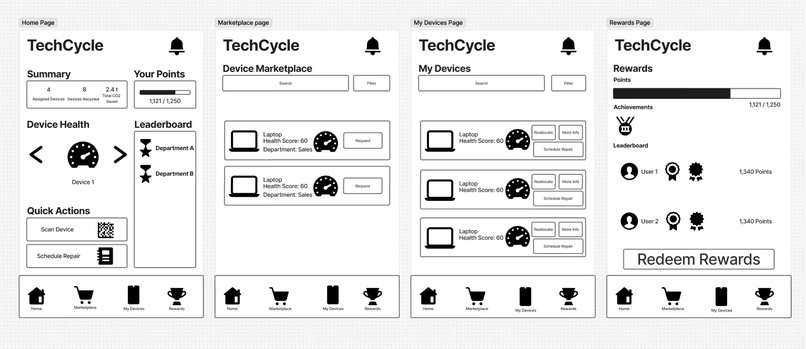
Low Fidelity
-
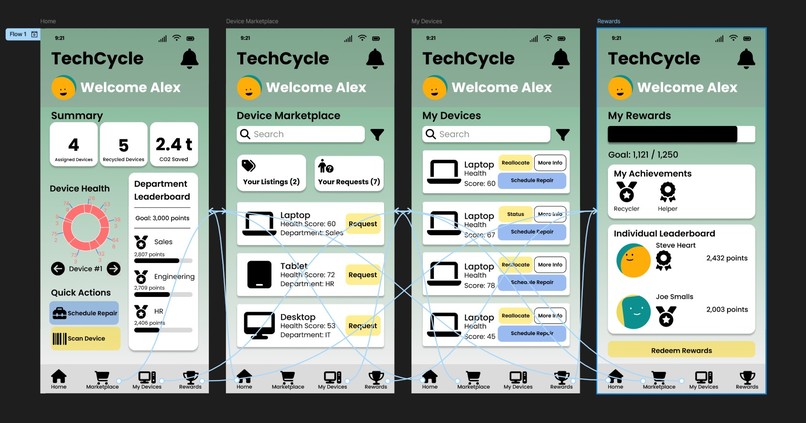
Final Prototype
Inspiration
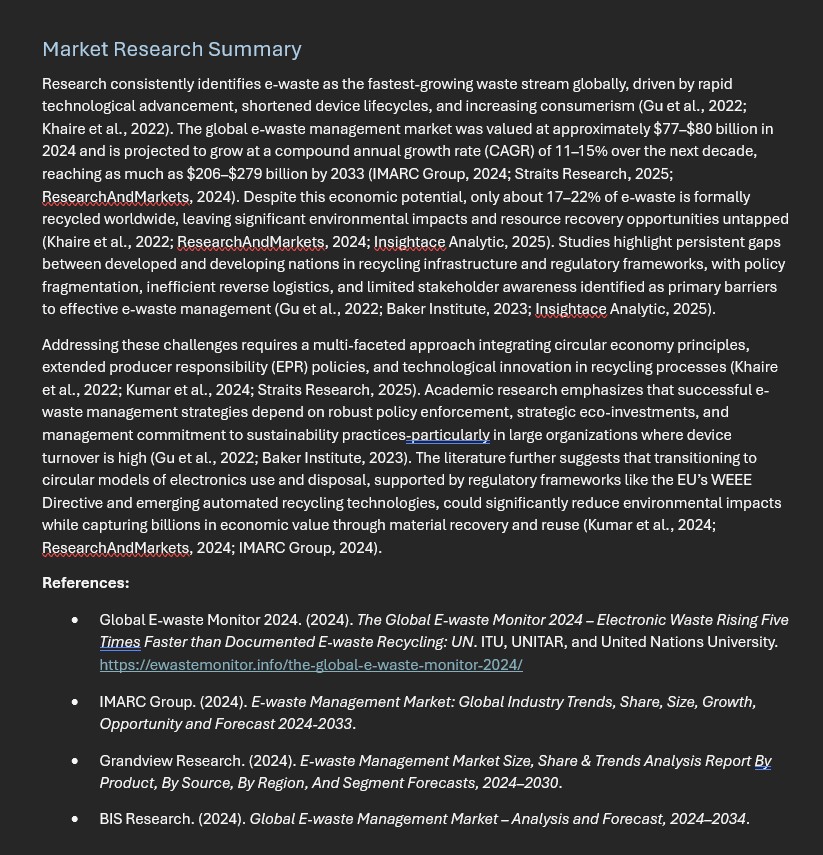
I was motivated by the mounting issue of organizational e-waste and the disconnect I saw firsthand between IT teams and everyday staff. Working as an IT Support Specialist while pursuing my graduate studies gave me a unique perspective on this problem. My market analysis and literature review confirmed that many tools tackle recycling or procurement, very few make it easy and rewarding for all employees to participate in device repair and reuse. This gap isn't just a technical issue-it's a chance to rethink how organizations approach sustainability by creating systems that everyone can use, understand, and benefit from.
What it does
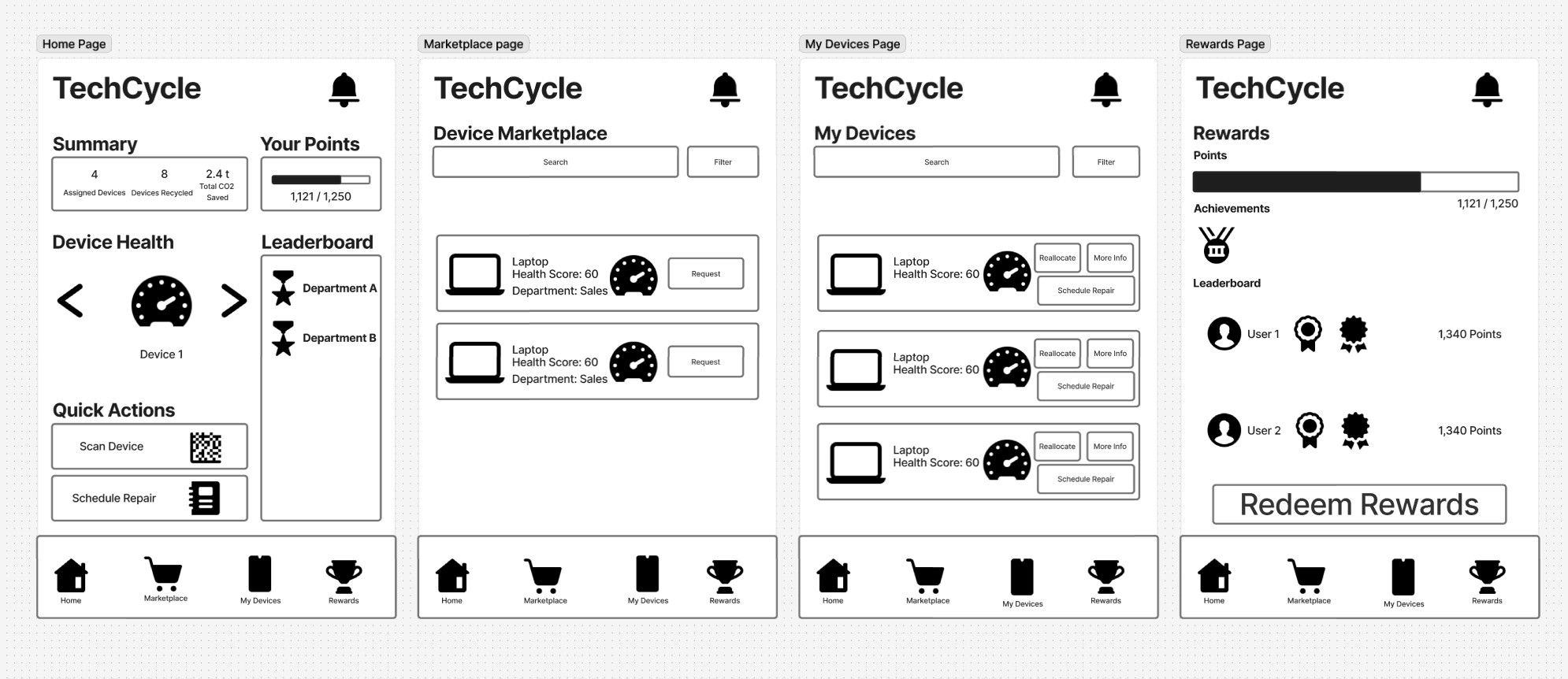
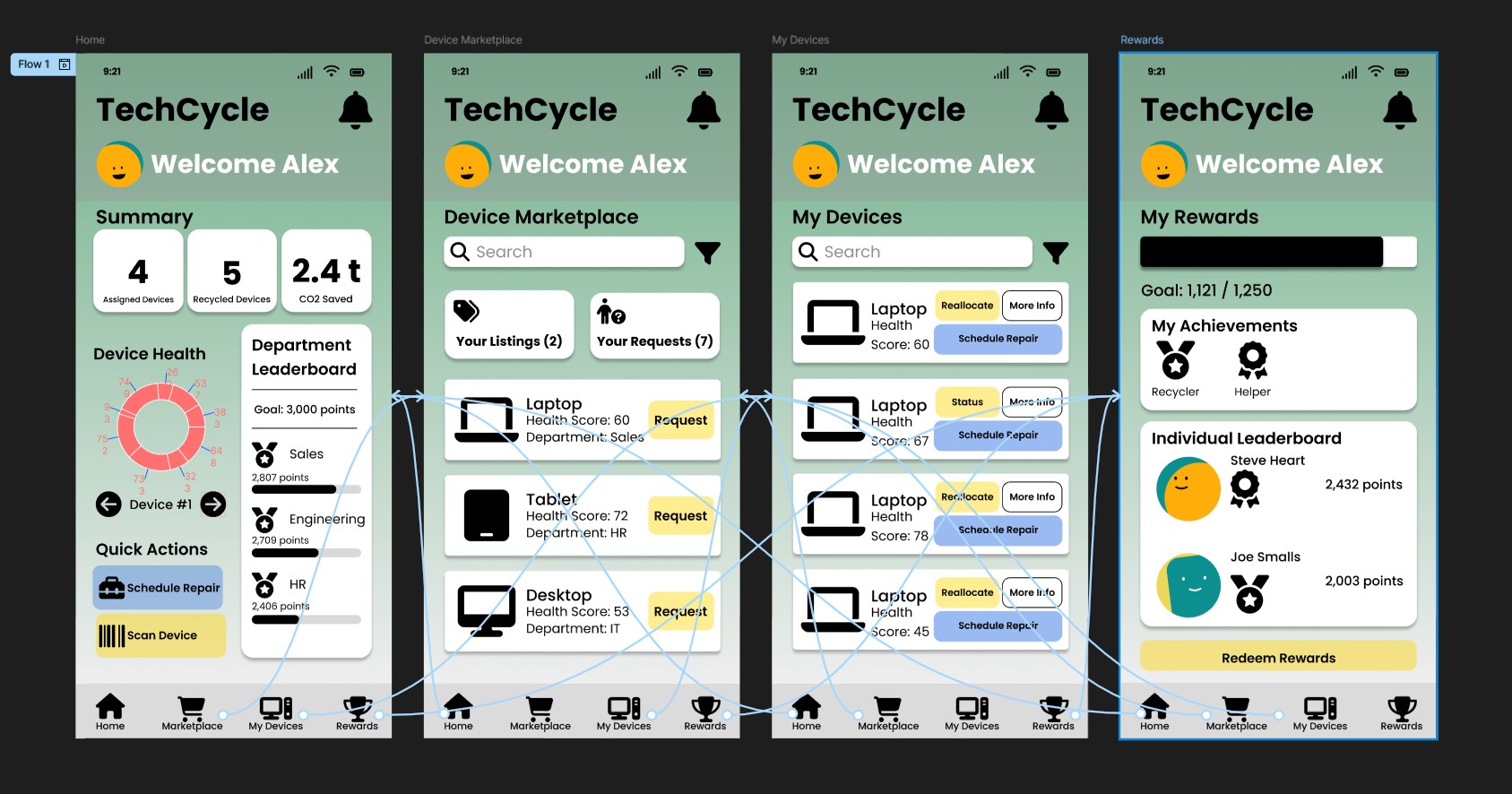
TechCycle is a platform that empowers anyone in an organization to manage, repair, reallocate, and recycle devices. It tracks each device’s lifecycle, encourages sustainable actions through gamified points and leaderboards, and provides a seamless marketplace for internal device sharing. Users can view device health, schedule repairs, and see their impact on e-waste and CO₂ savings-all in one intuitive app.
How I built it
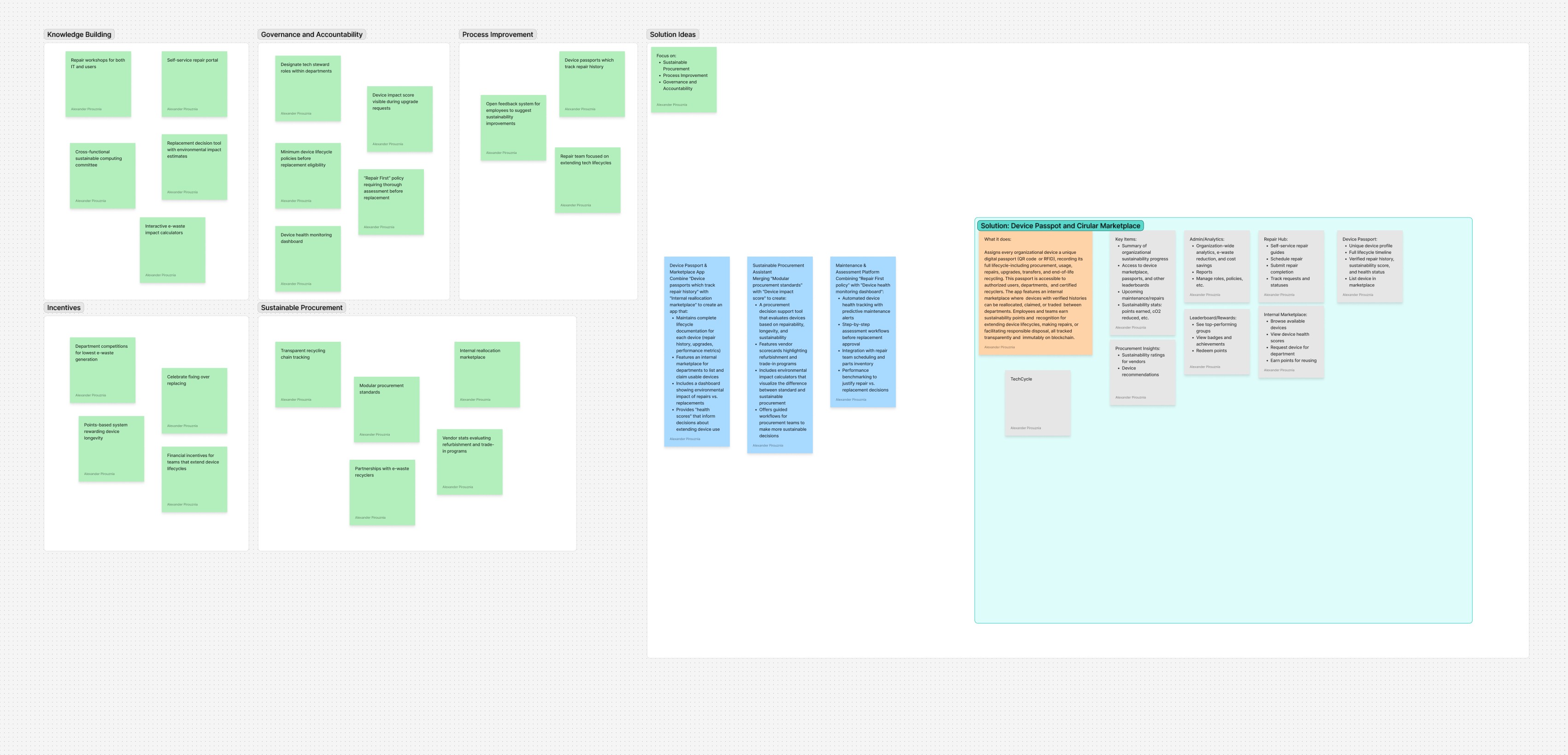
I began with a market analysis and a short literature review to benchmark existing solutions and identify unique opportunities for organizational e-waste management. Using these insights, I narrowed my focus to a specific group of target users and developed a sample user persona and journey map to guide my design decisions. I then mapped out the solution space with an affinity diagram, clustering ideas around key areas. With a clear direction, I used FigJam to create low-fidelity wireframes that visualized core features and user flows, iterating on layout and navigation for clarity and engagement. After evaluating these prototypes, I transitioned my design into Figma, where I developed a mid- to high-fidelity prototype to demonstrate how the application would be used in practice.
Challenges I ran into
A key challenge was balancing simplicity for non-technical users with the robust features needed by IT. I also had to carefully design the navigation and summary sections to ensure that critical metrics and actions were accessible but not overwhelming. Deciding how to visually prioritize quick actions and gamification elements required several rounds of refinement.
Accomplishments that I'm proud of
I’m proud of creating a prototype that brings circular economy principles into daily organizational life. My design merges complex workflows-repair, reallocation, and rewards-into a seamless experience, and establishes a clear visual hierarchy that guides users toward sustainable choices. Tech waste is a huge problem now and going into the feature, so I hope to use this project as a baseline for a longer-term project to apply at my job.
What I learned
I learned that the most effective sustainability solutions empower everyone. Visual clarity, gamification, and real-time feedback are powerful motivators for behavior change. Iterative design, informed by both research and user needs is essential for merging multiple functions into a single, approachable interface. Provided the time constraints, this project really provided me a lot of experience with market analysis and using literature reviews. As this topic has already been widely discussed, literature review turned out to be huge since there have been many studies already conducted.
What's next for TechCycle
Next, I plan to refine my prototype and create a high-fidelity prototype in Figma, incorporating a modern color palette, icons, and micro-interactions. I will conduct user testing with both IT and non-IT staff to validate flows and usability. The organization that I work at already uses a QR code passport system which allows staff to see very general inventory related information, so I hope to leverage that into the final development.
Built With
- figjam
- figma


Log in or sign up for Devpost to join the conversation.