-
-
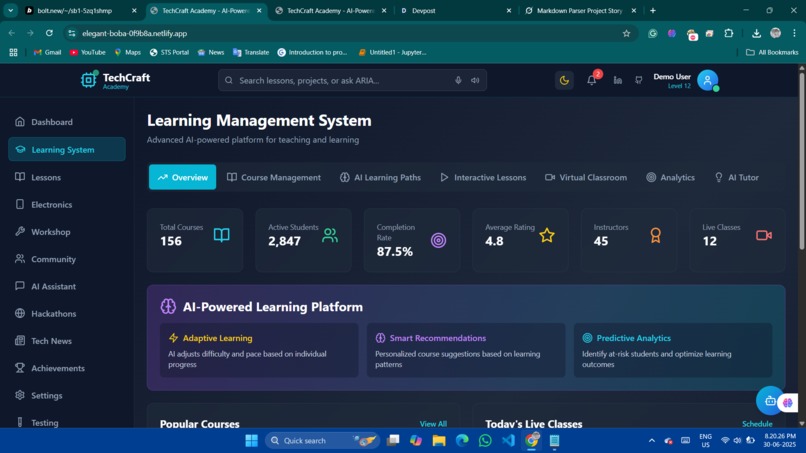
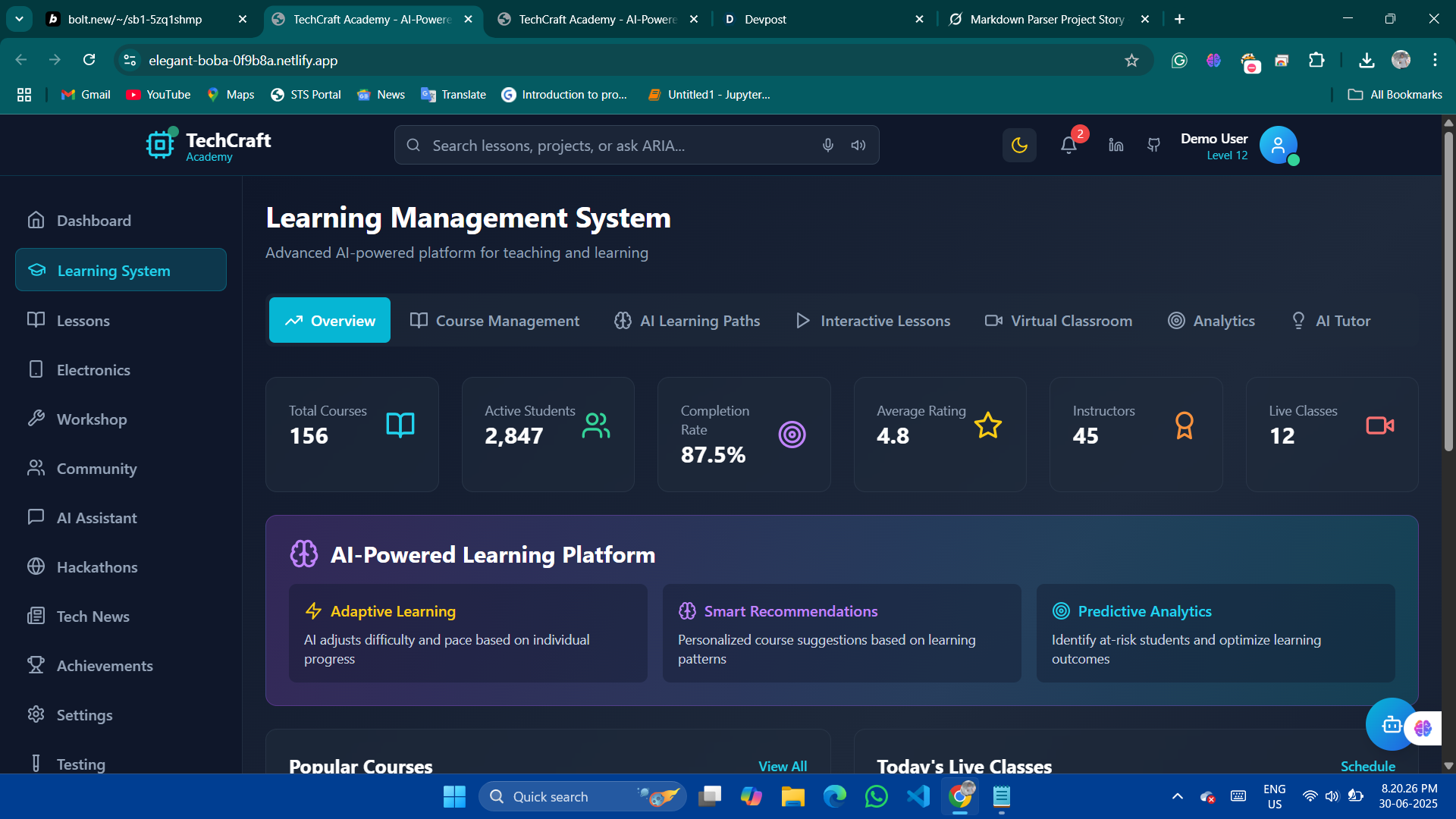
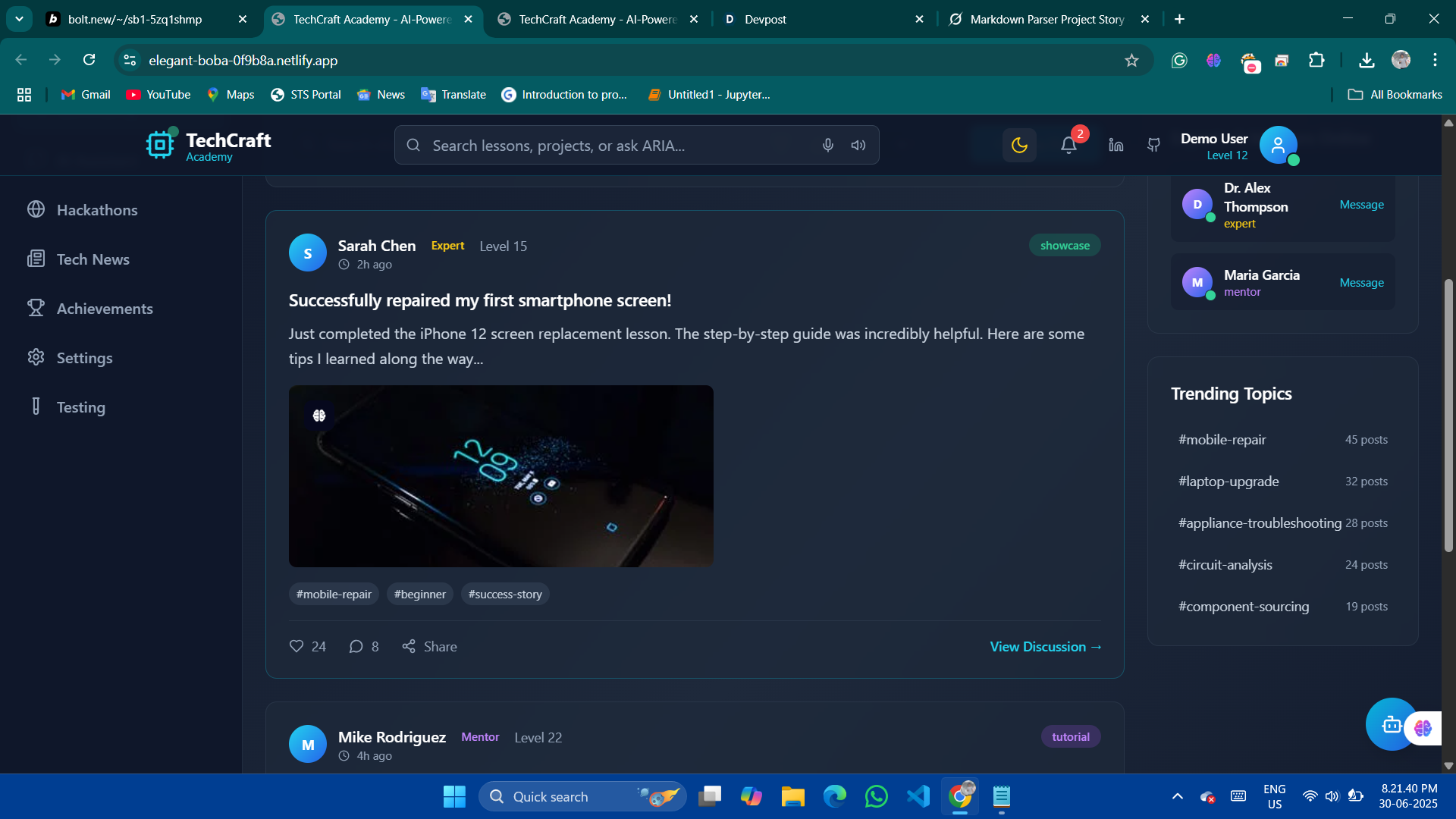
LMS preview
-
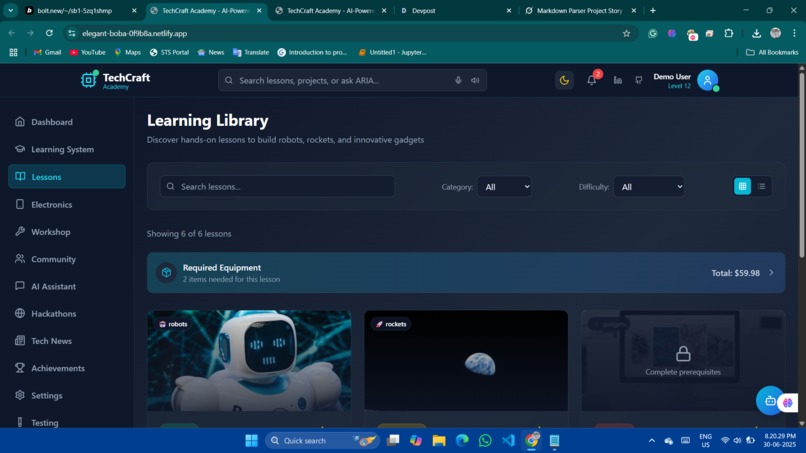
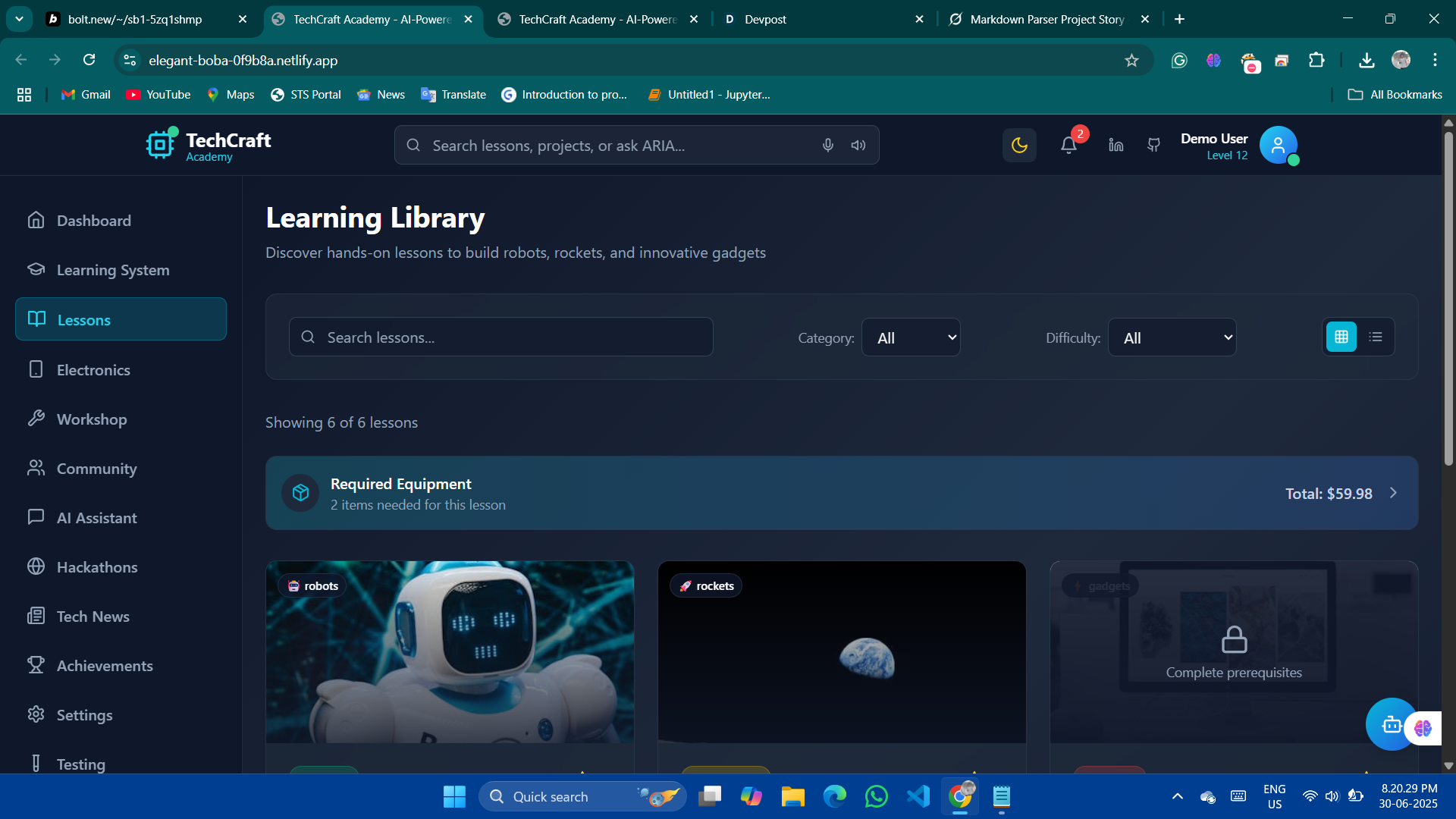
Learning Library
-
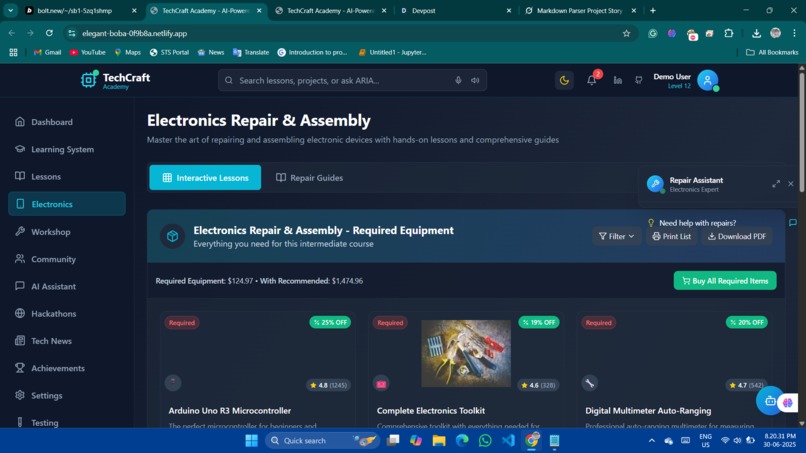
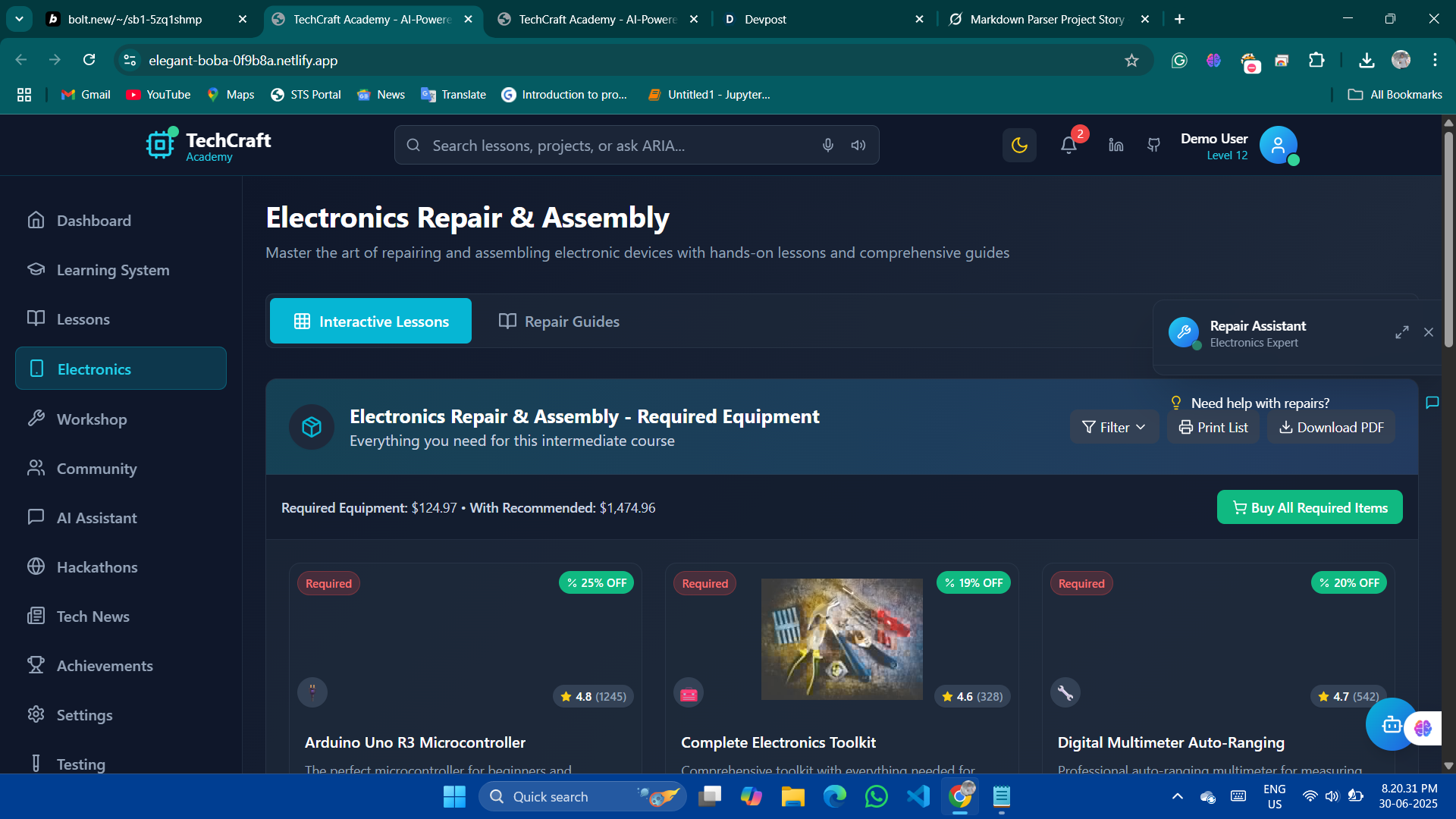
electronics repair and buy options
-
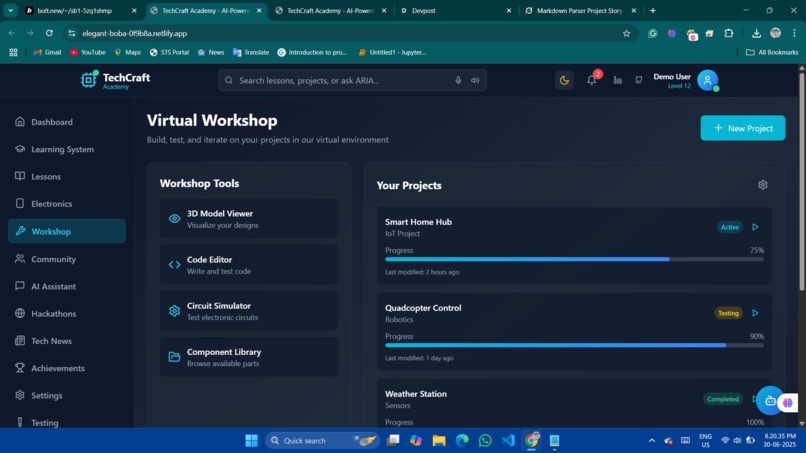
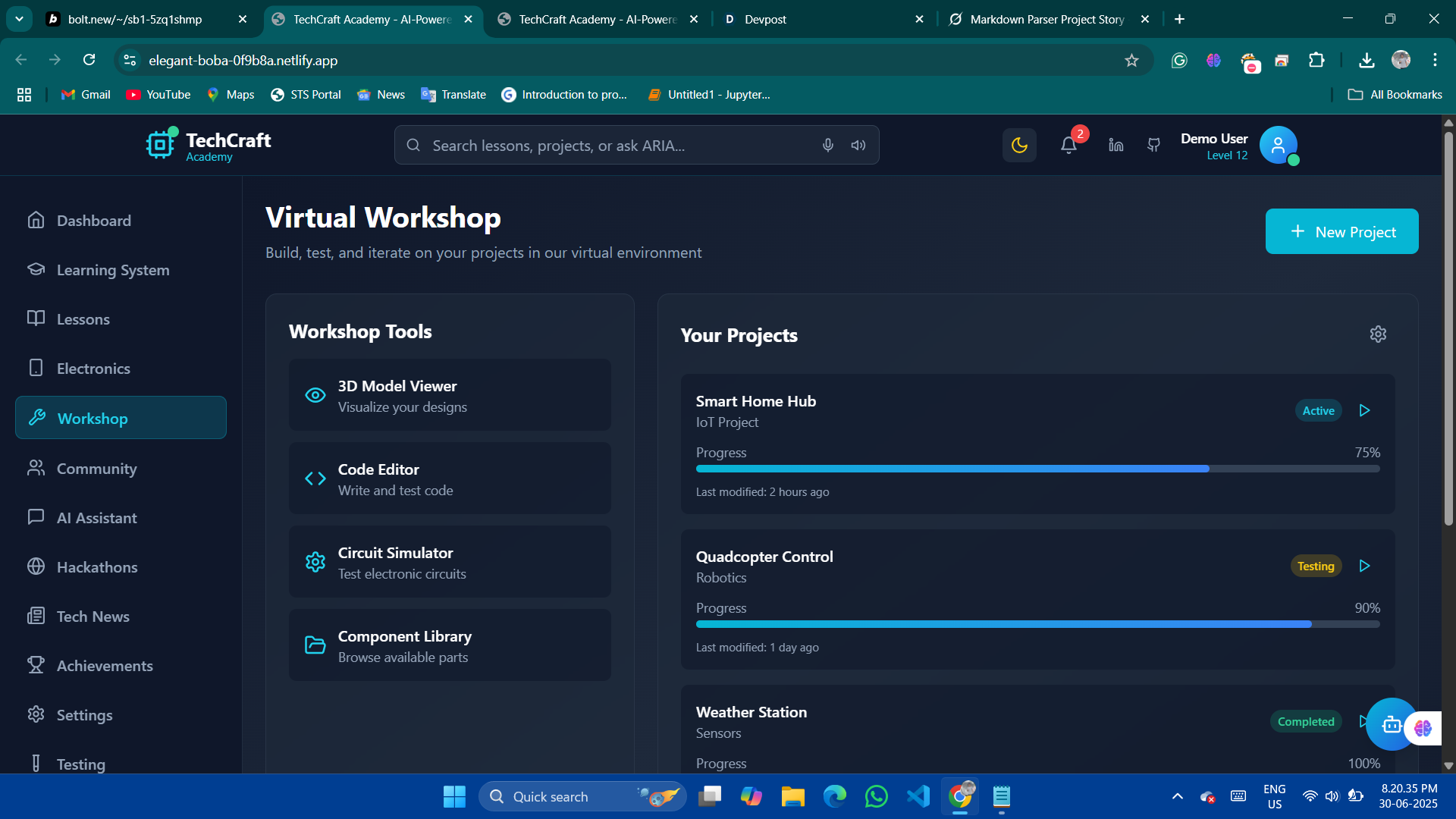
virtual internships
-
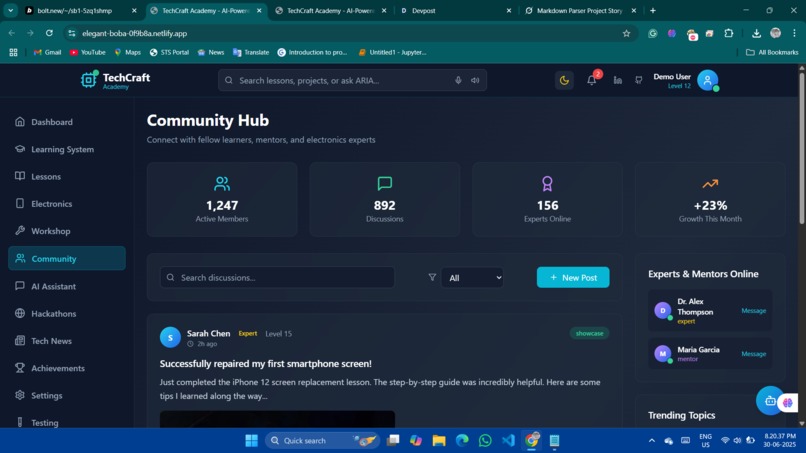
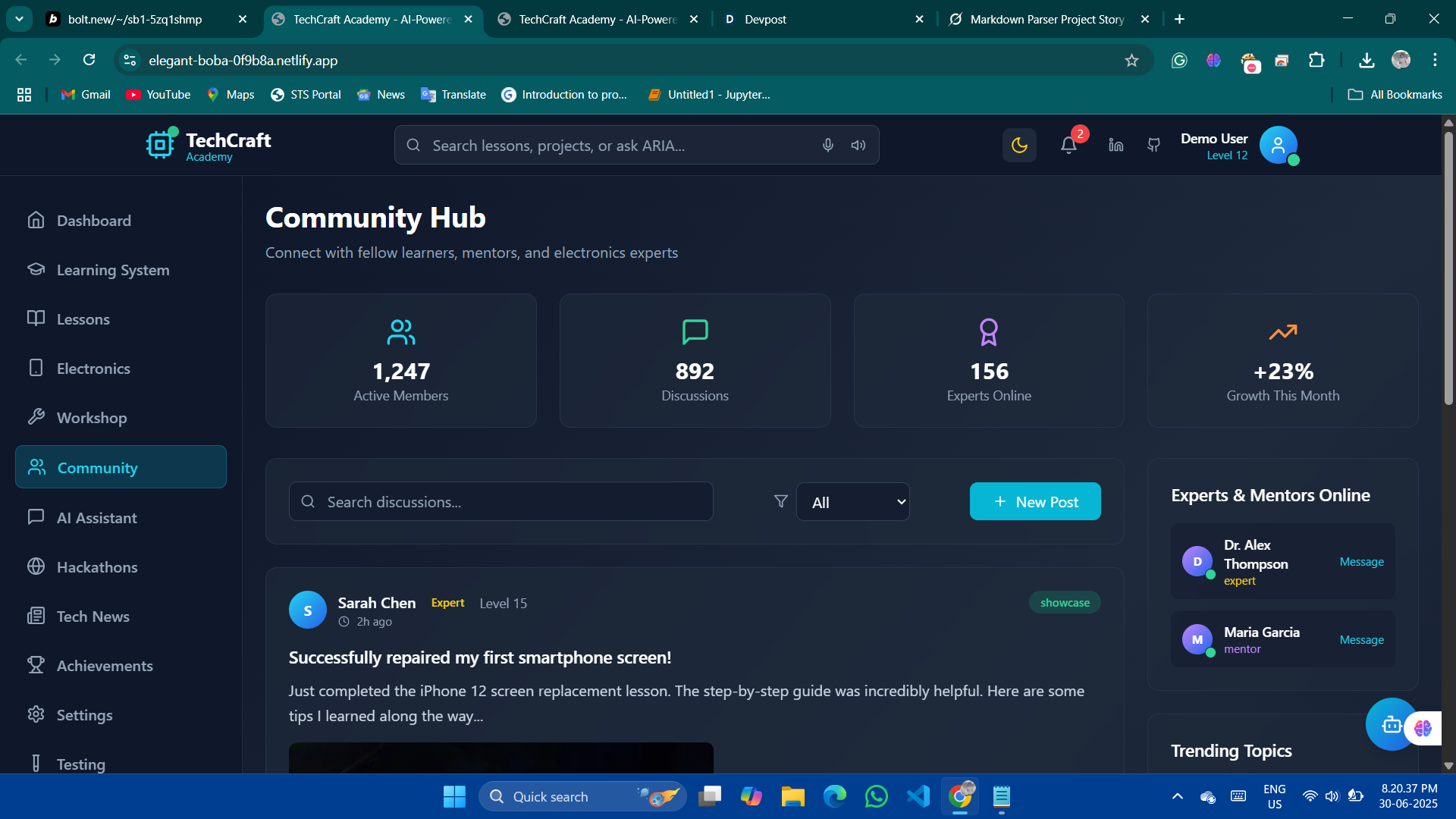
community hub
-
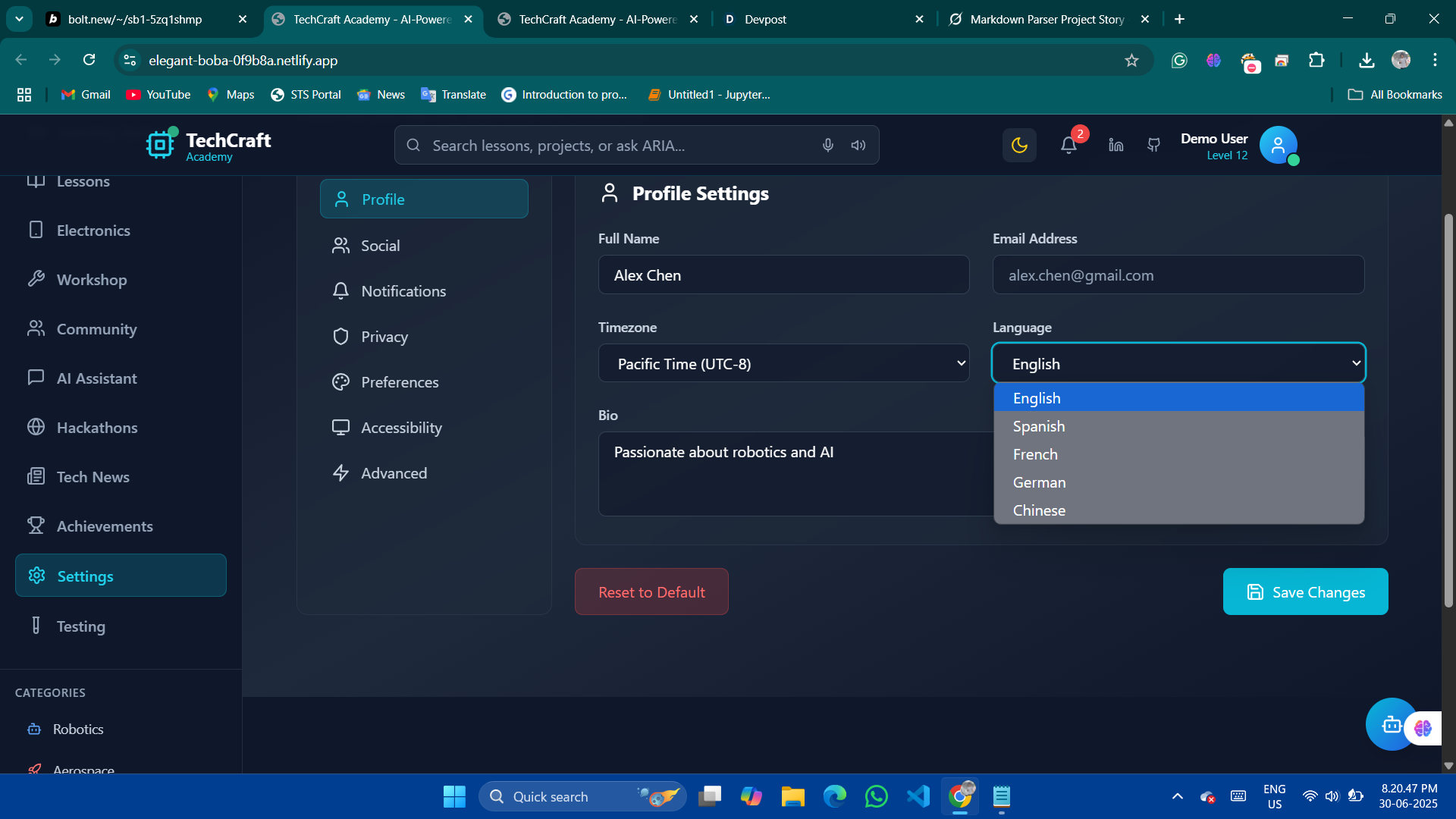
settings
-
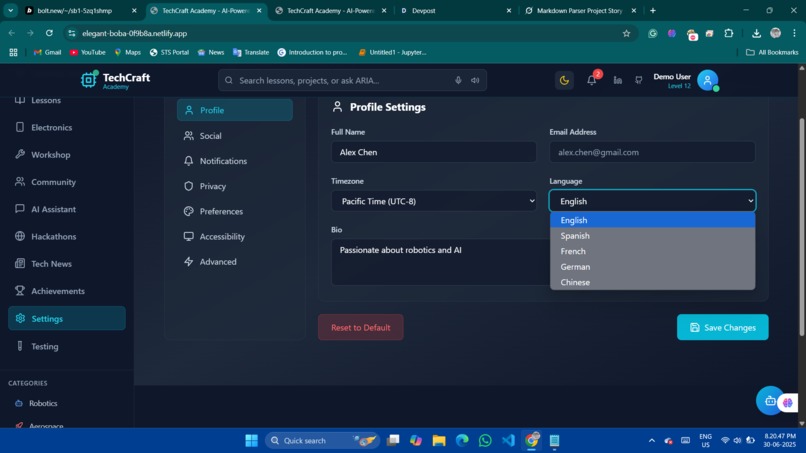
setting meu
-
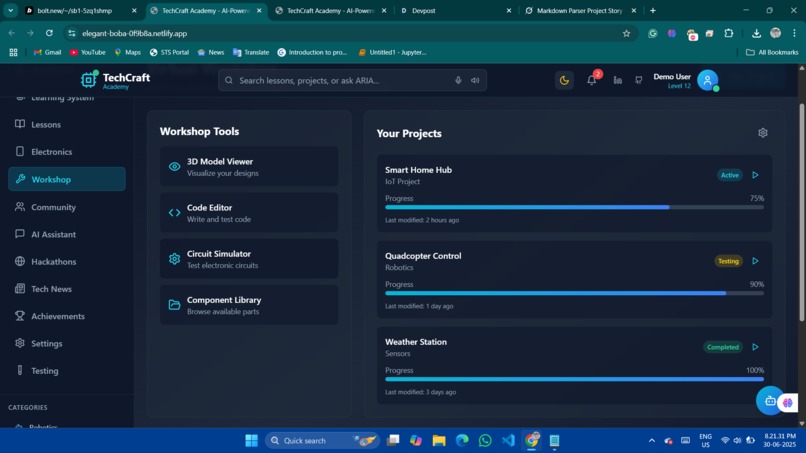
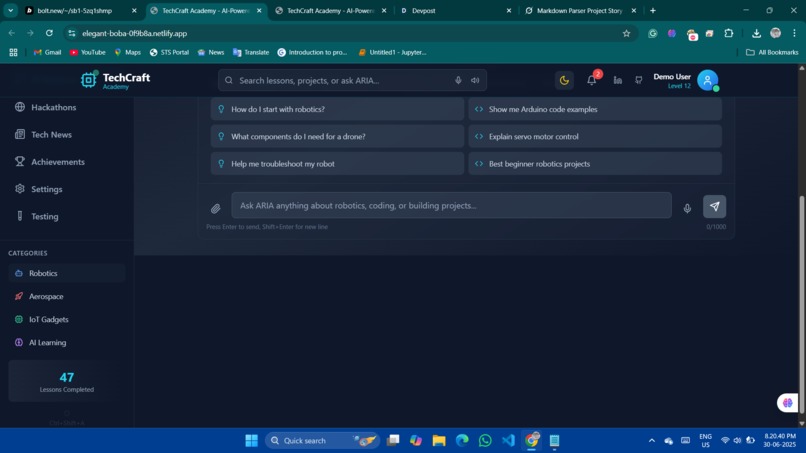
leabing hub and analysis
-
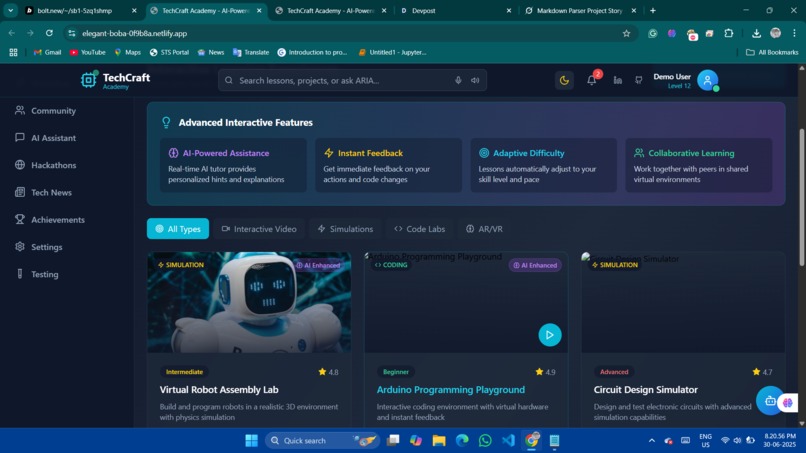
courses
-
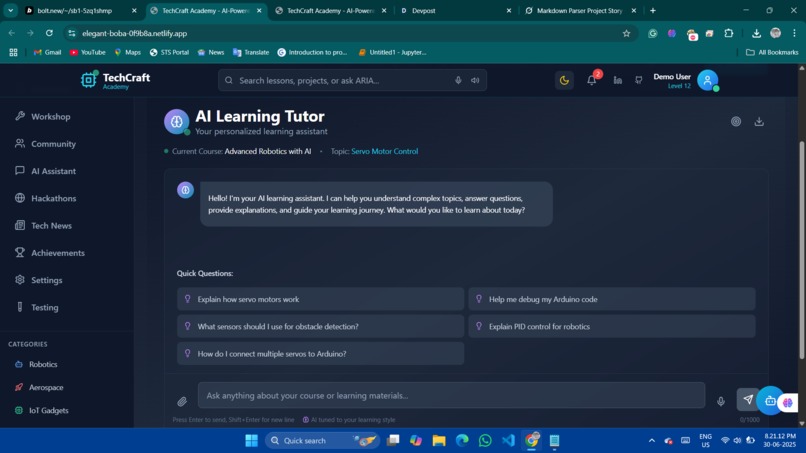
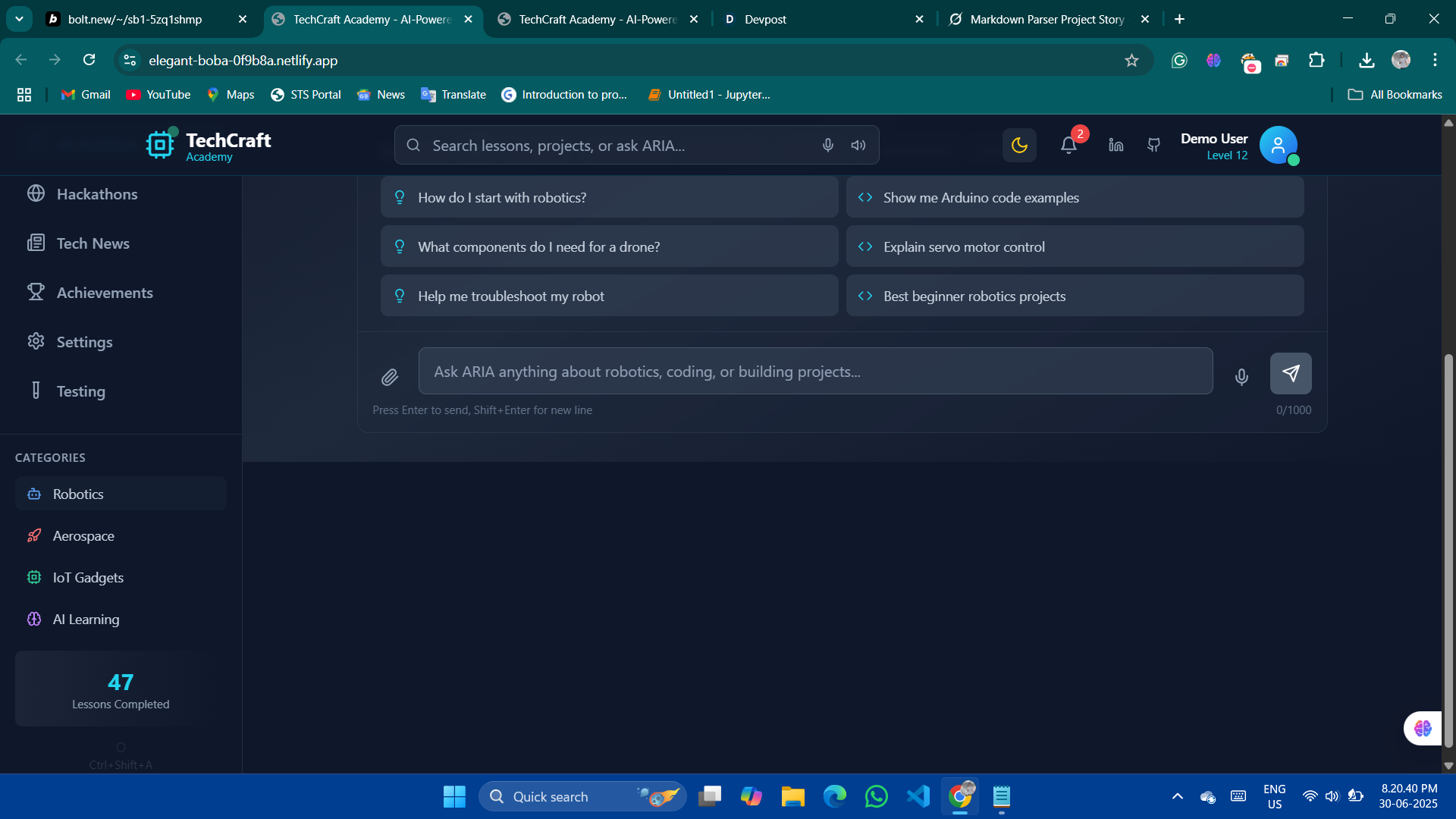
AI tutor
-
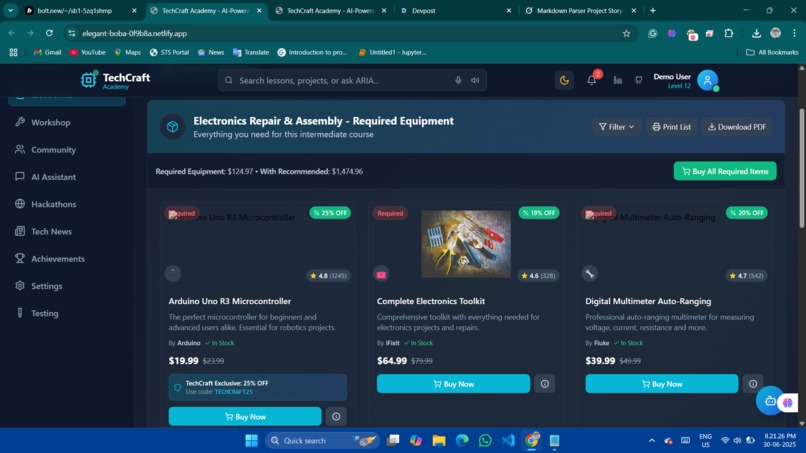
electronics shoping
-
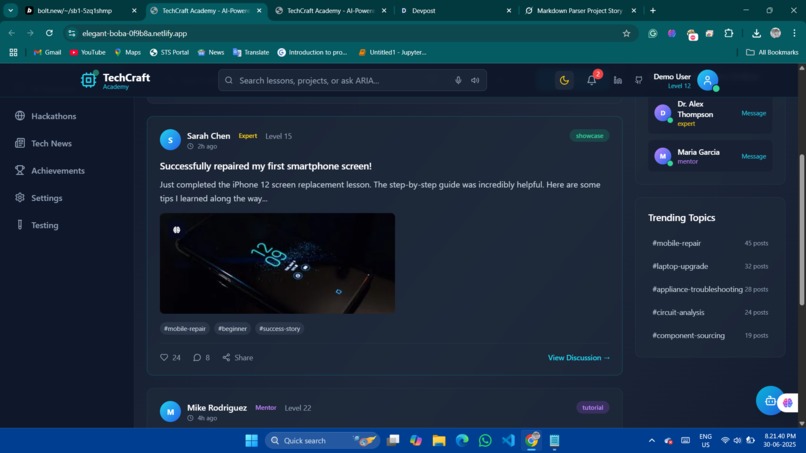
blogs
-
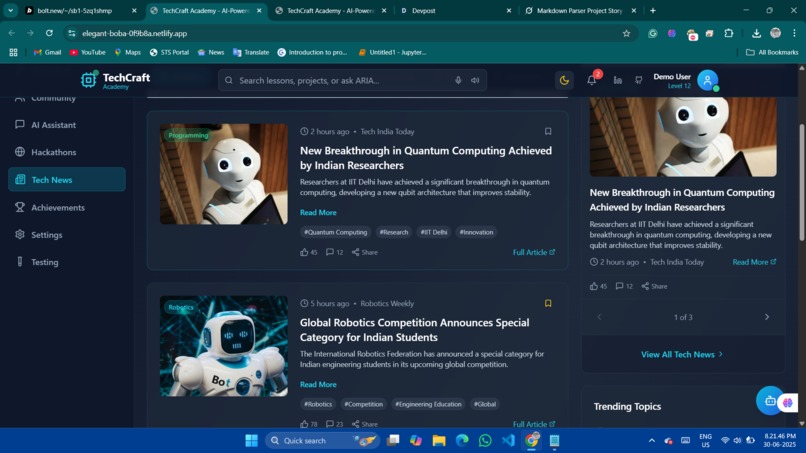
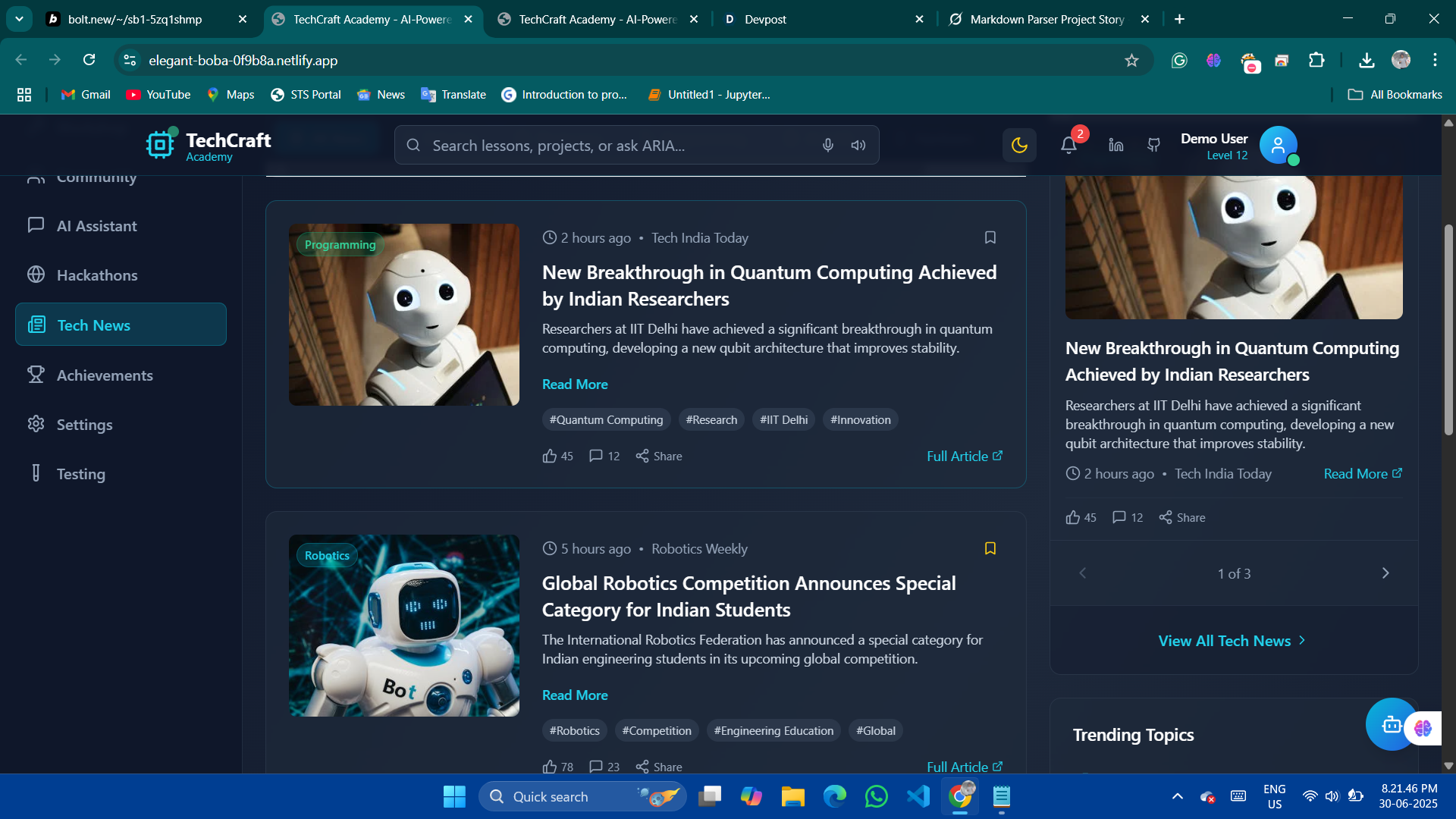
daily tech news and updates
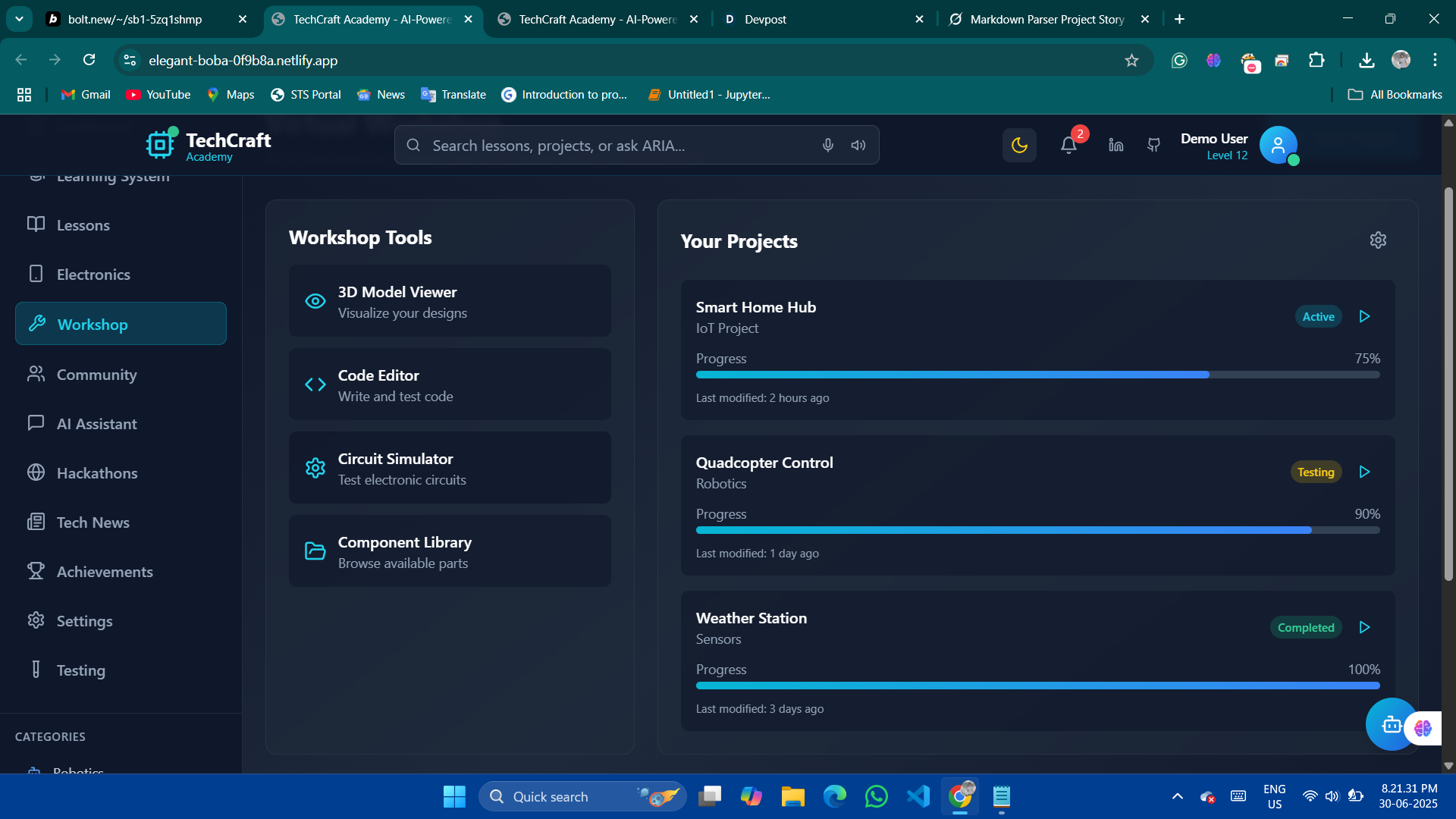
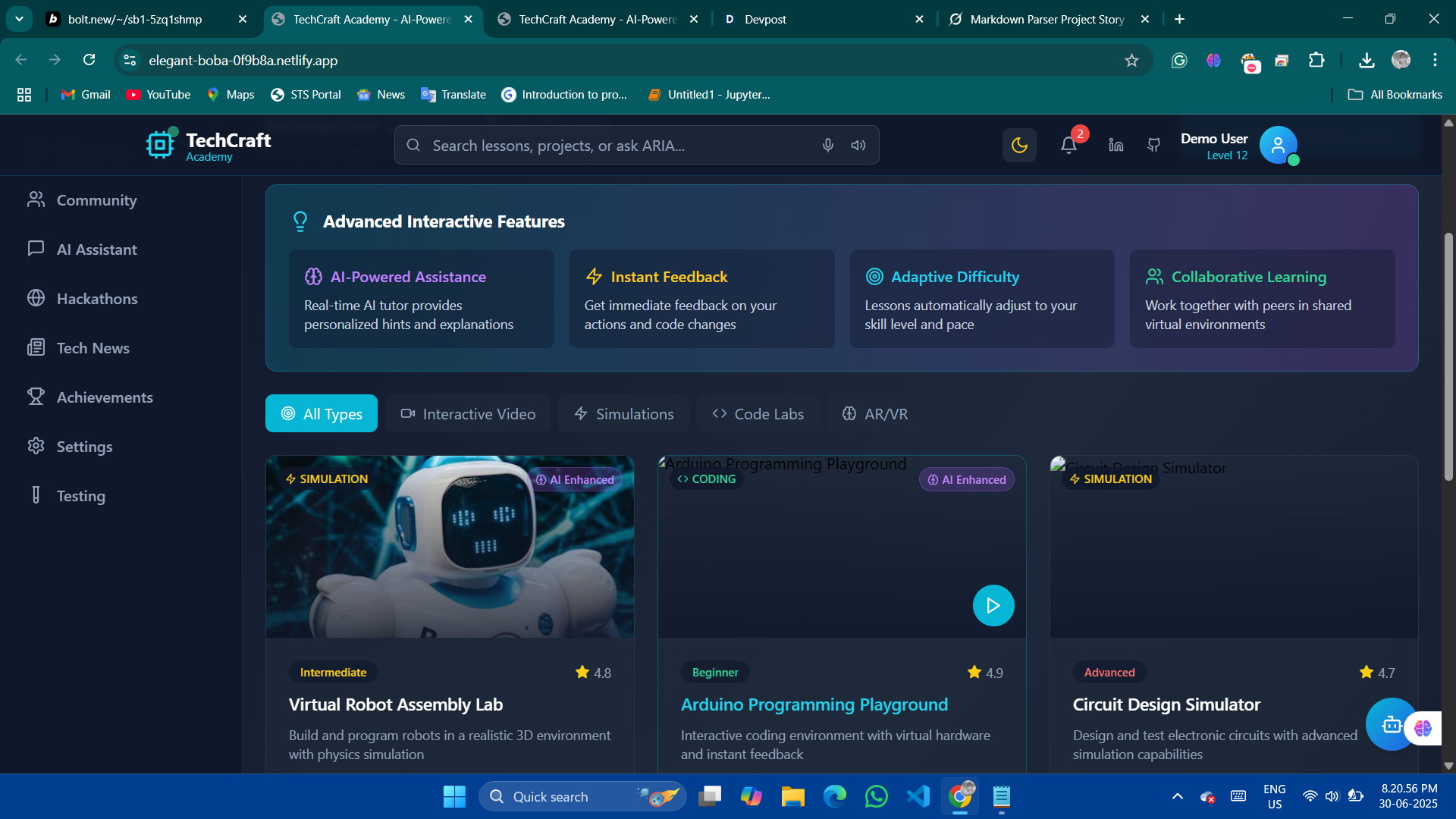
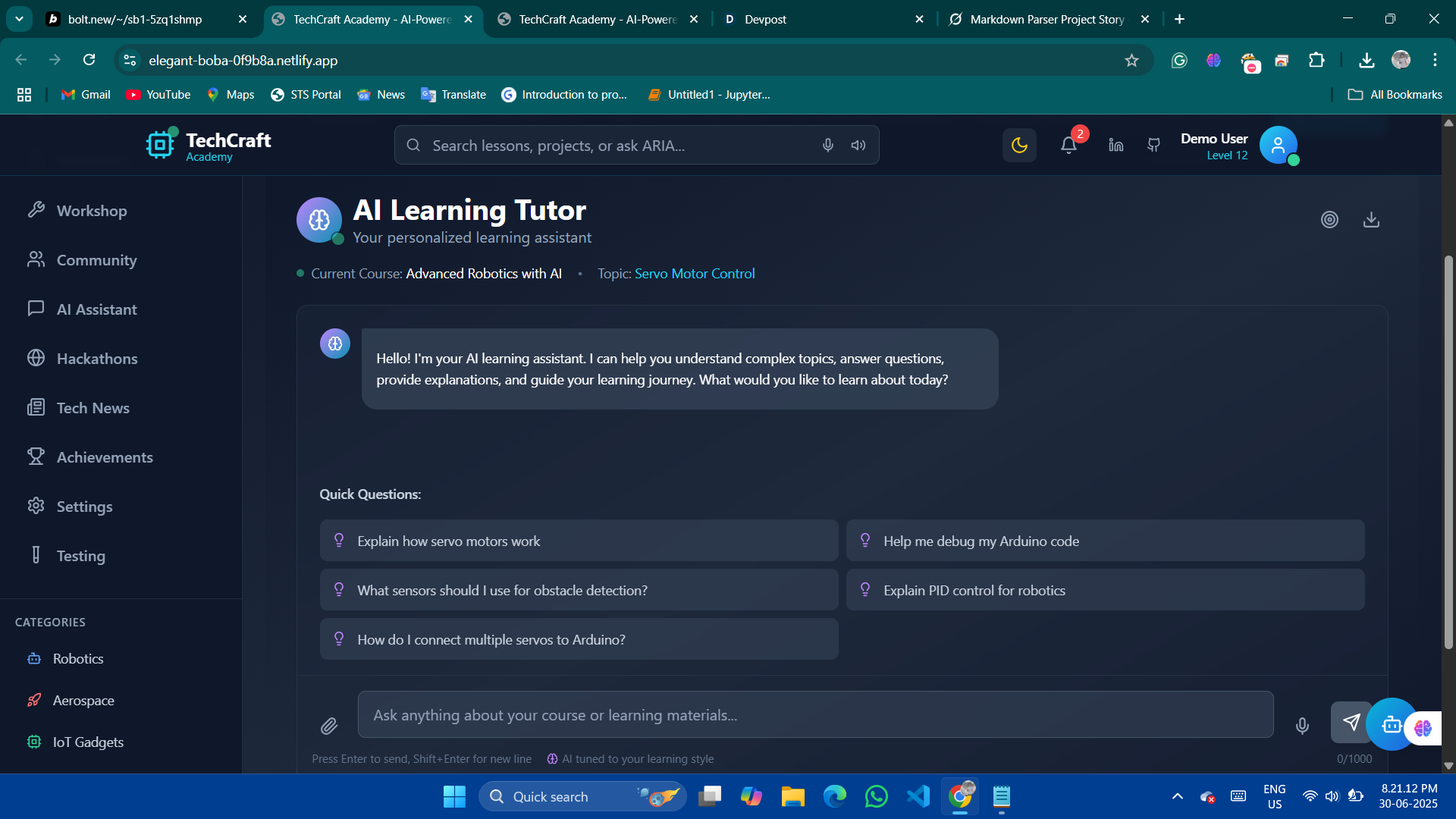
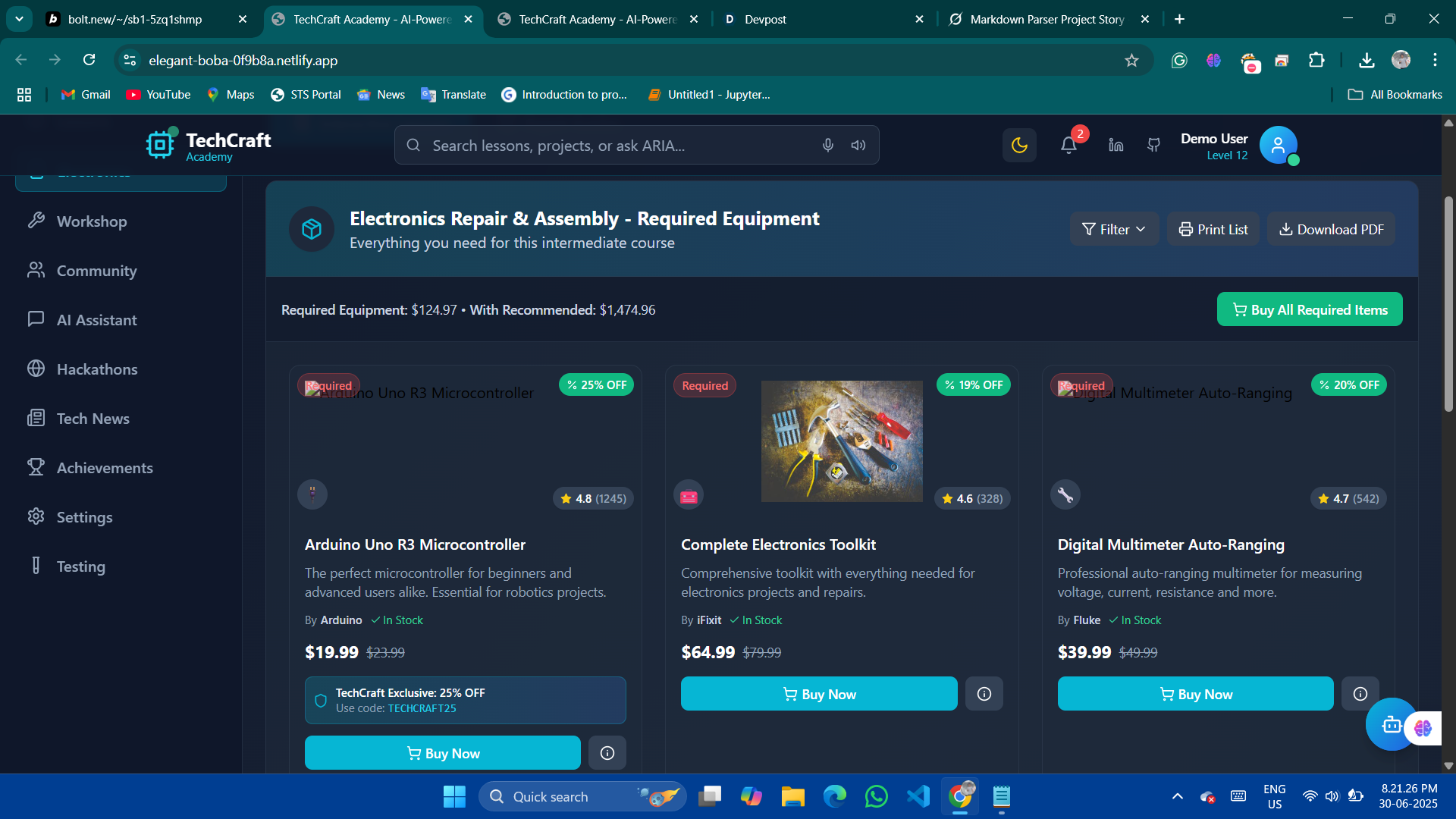
Techcraft Academy: My Journey in Building an Innovative Learning Platform Inspiration The idea for Techcraft Academy was born out of a desire to bridge the gap between theoretical knowledge and practical application in cutting-edge technologies like artificial intelligence (AI), the Internet of Things (IoT), and electronics. Many students, hobbyists, and even professionals were eager to learn these skills but were often deterred by the complexity of available tools and the lack of structured, hands-on learning opportunities. Traditional education often emphasizes theory, leaving learners unprepared for real-world applications. My inspiration crystallized when I discovered the platform, a powerful yet user-friendly solution for building IoT projects. Its combination of a WiFi-enabled microcontroller, cloud connectivity, and machine learning capabilities made it an ideal tool for educational purposes. I envisioned Techcraft Academy as a platform where learners could master AI, IoT, and electronics through practical projects, using tools like Bolt to create everything from smart home devices to data-driven AI models. My goal was to democratize access to these technologies, empowering learners to innovate and solve real-world problems. What I Learned Building Techcraft Academy was a transformative experience that deepened my technical and professional skills in several areas:
Curriculum Design: I learned how to create a curriculum that balances theoretical concepts with practical applications. This involved structuring courses to cater to beginners while offering depth for advanced learners, ensuring each module built on the previous one for a cohesive learning experience.
Technical Expertise: I gained hands-on experience with AI, IoT, and electronics, particularly through integrating the Bolt IoT platform. I learned how to use its APIs for device control and data visualization, as well as how to incorporate AI tools for personalized learning and simulations. This deepened my understanding of hardware-software interactions and cloud-based systems.
Web Development: Developing the online platform expanded my skills in modern web technologies. I used HTML, CSS, react and JavaScript for the frontend and Node.js for the backend, learning how to create a responsive, user-friendly interface. I also explored API integration, security protocols, and real-time data handling to ensure a seamless experience.
User-Centric Design: Engaging with students and educators during beta testing taught me the value of user feedback. Their insights helped me refine the platform, from improving navigation to fixing technical issues. This reinforced the importance of designing with the end user in mind.
Project Management: Managing the project required careful planning, prioritization, and adaptability. I learned to break down complex tasks, manage resources effectively, and iterate based on feedback. Balancing development with ongoing maintenance was a key lesson in sustainable project growth.
Community Building: I discovered the power of building a community around the platform. Engaging with students through forums, social media, and feedback sessions fostered a sense of belonging and encouraged retention. This taught me the importance of creating not just a platform but a learning ecosystem.
These lessons shaped not only the development of Techcraft Academy but also my approach to future projects, emphasizing the value of user-centric design and continuous learning. How I Built It Building Techcraft Academy was a multi-faceted process that involved curriculum development, platform creation, and technology integration. Here’s how I brought it to life:
Curriculum Design: I started by designing a comprehensive curriculum covering AI, IoT, electronics, and related technologies. Each course included theoretical lessons followed by hands-on projects. For example, an IoT module might teach students about sensor data collection, then guide them to build a smart weather station using the platform. AI modules covered machine learning basics, with projects like predicting sensor data trends.
Platform Development: The online learning platform was built using modern web technologies. The frontend was developed with HTML, CSS, and JavaScript to create an intuitive, responsive interface accessible on desktops, tablets, and smartphones. The backend, powered by Node.js, managed user accounts, course progress, and project submissions. I prioritized usability, ensuring learners could navigate courses and projects effortlessly.
Bolt IoT Integration: A key feature of Techcraft Academy was the ability for students to control and monitor IoT devices directly from the platform. I integrated the Bolt IoT platform’s APIs to enable this, allowing students to connect sensors and actuators to the WiFi module and interact with them via the cloud. This required setting up secure connections, managing device states, and providing real-time data visualization through dashboards.
AI Tools Integration: To enhance the learning experience, I incorporated AI tools for personalized learning paths, automated grading, and interactive simulations. For instance, machine learning models analyzed student performance to recommend tailored content, while simulations allowed learners to experiment with AI models without physical hardware. These tools made the platform more engaging and adaptive.
Content Creation: I developed a variety of learning materials, including video tutorials, written guides, and interactive quizzes. Each project was designed to be hands-on, encouraging immediate application of concepts. For example, a beginner project might involve using the Bolt IoT module to control an LED, while an advanced project could integrate AI to analyze sensor data for predictive maintenance.
Testing and Iteration: Before launching, I conducted beta testing with a group of students and educators. Their feedback was critical in identifying bugs, improving usability, and refining content. I iterated on the platform multiple times, addressing issues like slow API responses and unclear instructions to ensure a polished user experience.
The result was a robust platform that combined theoretical learning with practical application, leveraging the platform and AI tools to create an engaging and effective educational experience. Challenges Faced Building Techcraft Academy came with several challenges that tested my skills and resilience:
Curriculum Balance: Designing a curriculum that catered to diverse skill levels was a significant hurdle. Beginners needed simple, approachable content, while advanced learners required depth and complexity. Striking this balance required extensive testing and feedback to ensure all learners felt challenged yet supported.
Technical Integration: Integrating the Bolt IoT platform with the learning management system was technically complex. Handling hardware interactions over the internet involved addressing issues like latency, security, and scalability. Ensuring reliable device control and real-time feedback required careful optimization and robust error handling.
Keeping Content Current: The fields of AI and IoT evolve rapidly, with new tools and techniques emerging frequently. Keeping the curriculum up-to-date was resource-intensive, requiring constant research and updates to incorporate the latest advancements without overwhelming learners.
User Engagement: In a competitive online education market, attracting and retaining students was challenging. I had to invest in marketing strategies, such as offering free trials and creating engaging content, to draw learners in. Building a community through forums and social media, including platforms like X, helped foster engagement and loyalty.
Resource Management: As a solo developer, managing time and resources was a constant challenge. Balancing the development of new features with maintaining existing ones, while also handling marketing and user support, required ruthless prioritization. I learned to delegate tasks when possible and focus on high-impact features.
Despite these challenges, the process was incredibly rewarding. Watching students build their first IoT devices, apply AI to solve problems, and gain confidence in their skills validated the effort. Techcraft Academy became more than just a platform—it became a community of learners empowered to shape the future of technology. Technical Details The following table summarizes the key aspects of the Techcraft Academy project:
Aspect Details
Project Techcraft Academy, an online platform for learning AI, IoT, and electronics.
Inspiration Addressing the need for hands-on education using the Advanced platform.
Learned Curriculum design, web development, API integration, and +++user-centric design.
Built HTML, CSS, JavaScript, React.js, Node.js, Bolt IoT APIs, AI tools for personalization.
Challenges Balancing curriculum, technical integration, content updates, user engagement.
Conclusion Building Techcraft Academy was a journey of passion, learning, and perseverance. It started with a vision to make AI, IoT, and electronics accessible to all and grew into a platform that empowers learners to create and innovate. The challenges I faced—from technical hurdles to user engagement—only strengthened my resolve to deliver a valuable educational experience. Seeing students succeed and build real-world projects with tools like the Techcraft platform has been the ultimate reward, and I’m excited to continue evolving Techcraft Academy to inspire the next generation of technologists.

Log in or sign up for Devpost to join the conversation.