-
-
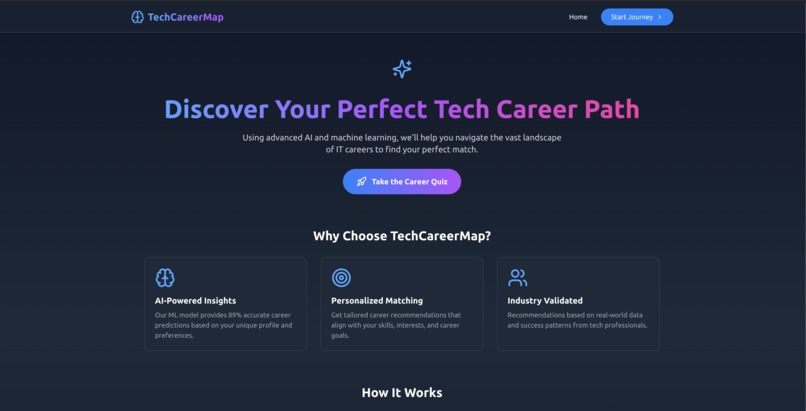
Homepage
-
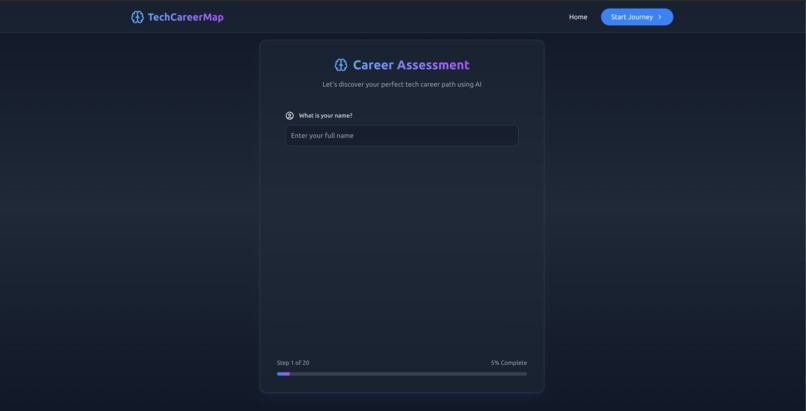
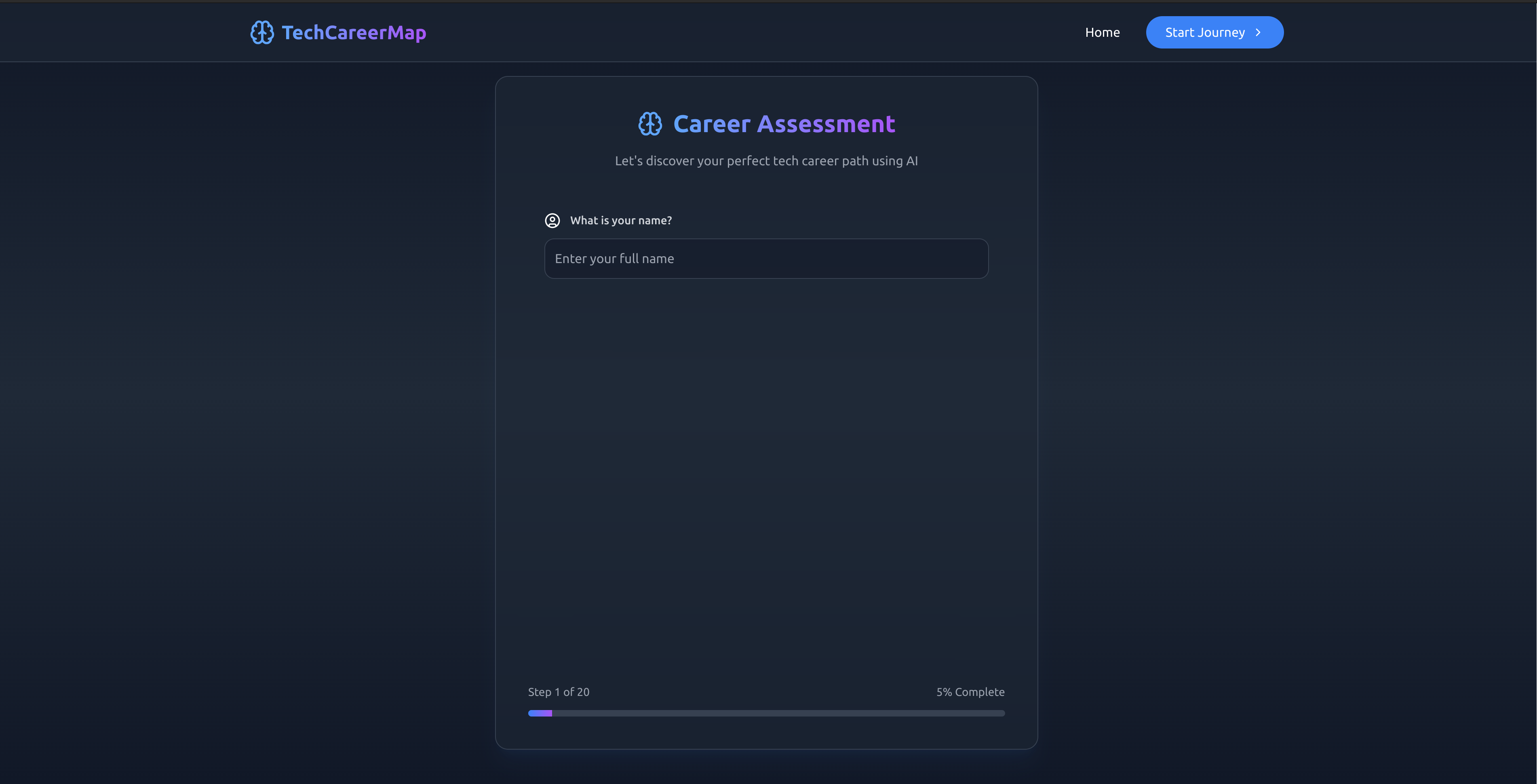
Career Form
-
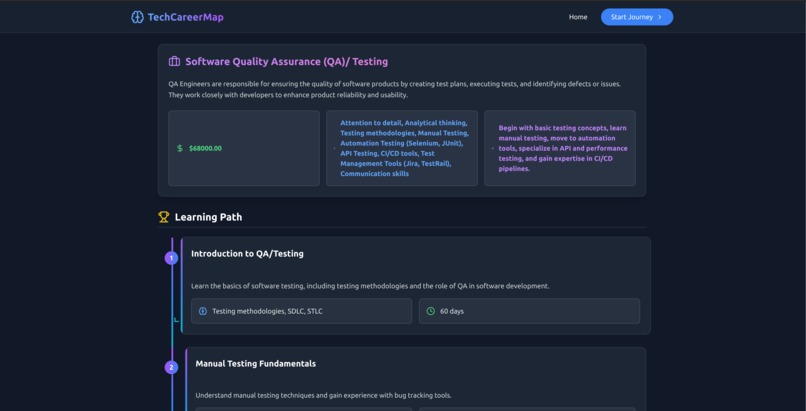
Roadmap Page
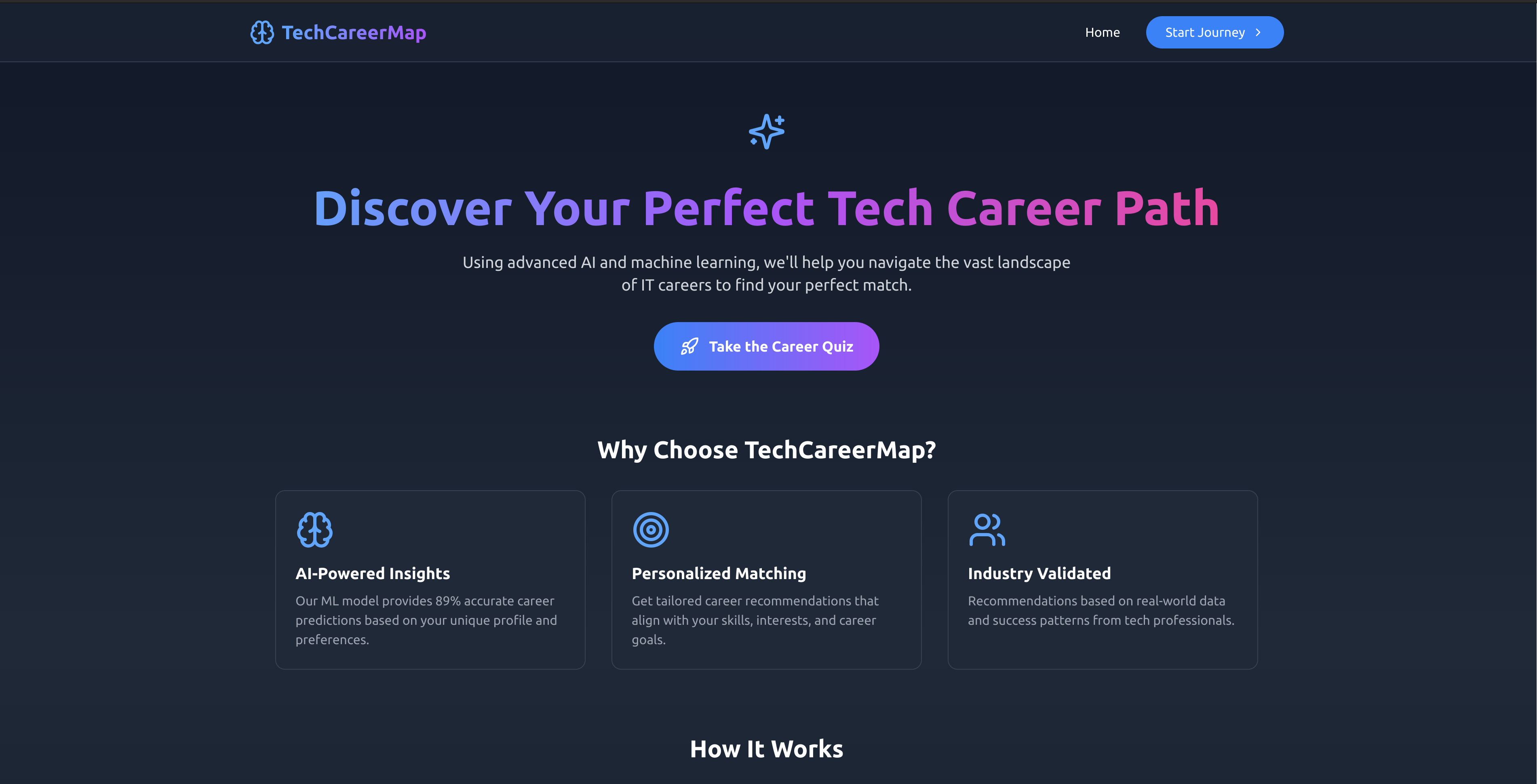

Inspiration
When I finished my high school studies, I was certain that I wanted to pursue a career in Tech. However, as I started exploring, I found myself overwhelmed by the vastness of the tech field. It quickly became clear that you can't be a jack of all trades here, and I began jumping from one tech stack to another. This led to me wasting a significant amount of time trying to figure out where to settle and begin my career.
Even when I decided to specialize in software development, I struggled to find a clear roadmap. I didn’t know where to start, what to learn first, or what to prioritize. Questions like "What should I focus more on, and what should I just not stress about?" lingered in my mind. On top of that, I lacked a clear understanding of what the future in software development looked like. I didn’t know the advantages of having specific skills, the expected salary for certain roles, or the kind of opportunities available in software development.
For me, the decision to become a software developer was driven purely by passion, but it took me longer than necessary to gain clarity, build momentum, and navigate the tech landscape.
I don’t want others with a similar desire to pursue a career in Tech to suffer or waste time figuring out what pathway is right for them. This experience inspired me to build this project—Tech Career Map—to guide aspiring tech professionals in finding their way more efficiently and confidently.
What it does
TechCareerMap is a tech career recommendation system that predicts an individual’s ideal IT career path based on detailed information they provide. This includes their interests, passions, personality traits, current skills, and more. The system utilizes a Random Forest Classifier, achieving an accuracy of 89%, making it a dependable tool for career guidance.
Users start by filling out a form with details such as their interests, passions, prior experiences, participation in activities like hackathons, and more. This information is then processed by the model, which predicts the most suitable career path for the user.
Based on the prediction, users are directed to a Roadmap Page for the suggested career. This page provides comprehensive resources tailored to that career path, including documents, tutorials, YouTube videos, and other tools to help them get started and succeed in their chosen field.
How I built it
Model Creation
The machine learning model was developed through the following steps:
- Data Collection: Gathered detailed data on individuals' interests, passions, personalities, and current skills.
- Data Preprocessing: Cleaned and prepared the data using pandas and numpy.
- Exploratory Data Analysis: Used seaborn to visualize data patterns and relationships for insights.
- Feature Engineering: Extracted and refined features essential for accurate predictions.
- Model Training: Trained a Random Forest Classifier using scikit-learn to predict IT career paths.
- Model Evaluation: Evaluated model performance using various metrics, achieving an accuracy of 89%.
Technologies Used
- Frontend: Vite, Tailwind CSS
- Backend: Django, REST APIs
- Database: MySQL
- Machine Learning: pandas, numpy, scikit-learn, scipy, seaborn
Challenges I ran into
Backend and Frontend Integration:
Faced challenges while testing the prediction functionality of the backend with the frontend through REST APIs. Debugging and ensuring smooth communication between the two was a significant hurdle.UI/UX Design:
Spent extra time researching and improving the user interface to make it more intuitive and visually appealing. Striving to balance aesthetics with functionality required additional effort and iteration.Model Performance:
Ensuring the machine learning model performed well across diverse inputs involved fine-tuning and retraining, which added complexity to the development process.
Accomplishments that I'm proud of
High Model Accuracy:
Successfully developed a machine learning model with an impressive accuracy of 89%, providing reliable career predictions based on user inputs.Seamless Integration:
Managed to integrate the backend prediction API with the frontend interface, enabling smooth and efficient communication between the two.User-Centric Design:
Delivered a polished and intuitive user interface, ensuring a seamless experience for users navigating their recommended career paths and accessing valuable resources.Comprehensive Career Guidance:
Built a system that not only predicts IT career paths but also provides users with detailed roadmaps, resources, and tools to kickstart their journey effectively.Overcoming Challenges:
Despite hurdles in testing, debugging, and design, I was able to overcome them and deliver a functional, innovative solution within the project timeline.
What I learned
Enhanced UI/UX Skills:
Gained valuable experience in designing and implementing user-friendly interfaces, ensuring that the platform is intuitive and visually appealing.API Testing and Debugging:
Discovered the robustness of using tools like Postman to test and debug REST APIs, which greatly improved the efficiency of backend and frontend integration.Machine Learning Insights:
Learned the importance of data preprocessing, feature engineering, and model evaluation to achieve high accuracy and reliability in predictions.Full-Stack Development:
Improved my understanding of full-stack development by integrating the frontend (Vite + TailwindCSS) with the backend (Django) and connecting it to a MySQL database.Problem-Solving:
Strengthened my ability to research and tackle challenges, such as debugging API issues and enhancing the user interface design.
What's next for TechCareerMap
User Authentication:
Implementing an authentication system to create user-based profiles, allowing career suggestions to be saved and personalized for individual users.Progress Tracking:
Integrating a system to track users' learning progress if they decide to use the platform for studying. This feature will enable users to monitor milestones, completed modules, and achievements as they navigate their career pathways.Blockchain Integration:
Utilizing blockchain technology to issue NFT certificates upon the successful completion of a career path. These certificates will serve as verifiable credentials for users' achievements.Tokenized Rewards System:
Introducing a rewards mechanism with fungible tokens to incentivize users. Tokens will be awarded for specific accomplishments, such as reaching 50% of their learning goals, completing assignments, or acing quizzes, motivating users to stay engaged.Expanded Resources:
Continuously adding more learning resources, such as videos, articles, and tools, to ensure users have comprehensive support in their chosen career paths.


Log in or sign up for Devpost to join the conversation.