-
Tech Stack Advisor
Inspiration
Choosing the right technology stack is one of the most critical and often daunting decisions when starting a new software project. With a plethora of languages, frameworks, databases, and tools available, developers and project managers can feel overwhelmed. I was inspired to create a tool that simplifies this process, guiding users through key project considerations to provide a tailored and informed tech stack recommendation, helping them build on a solid foundation.
What it does
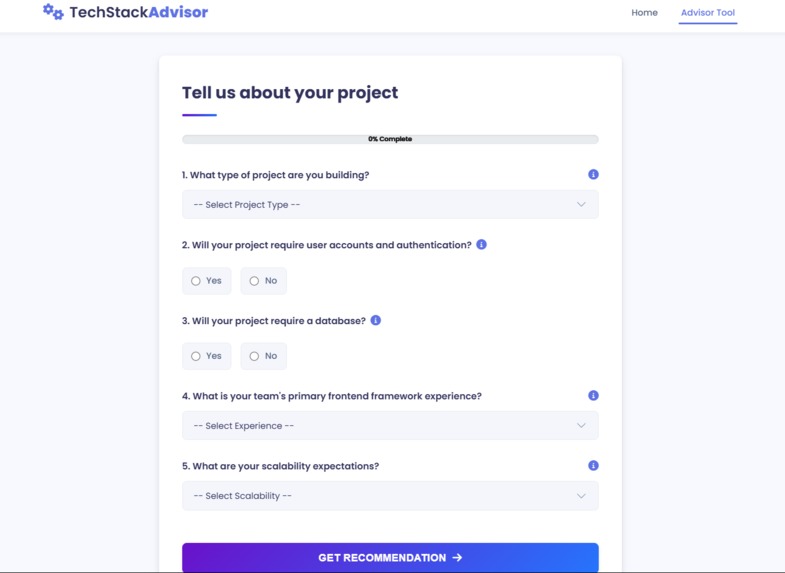
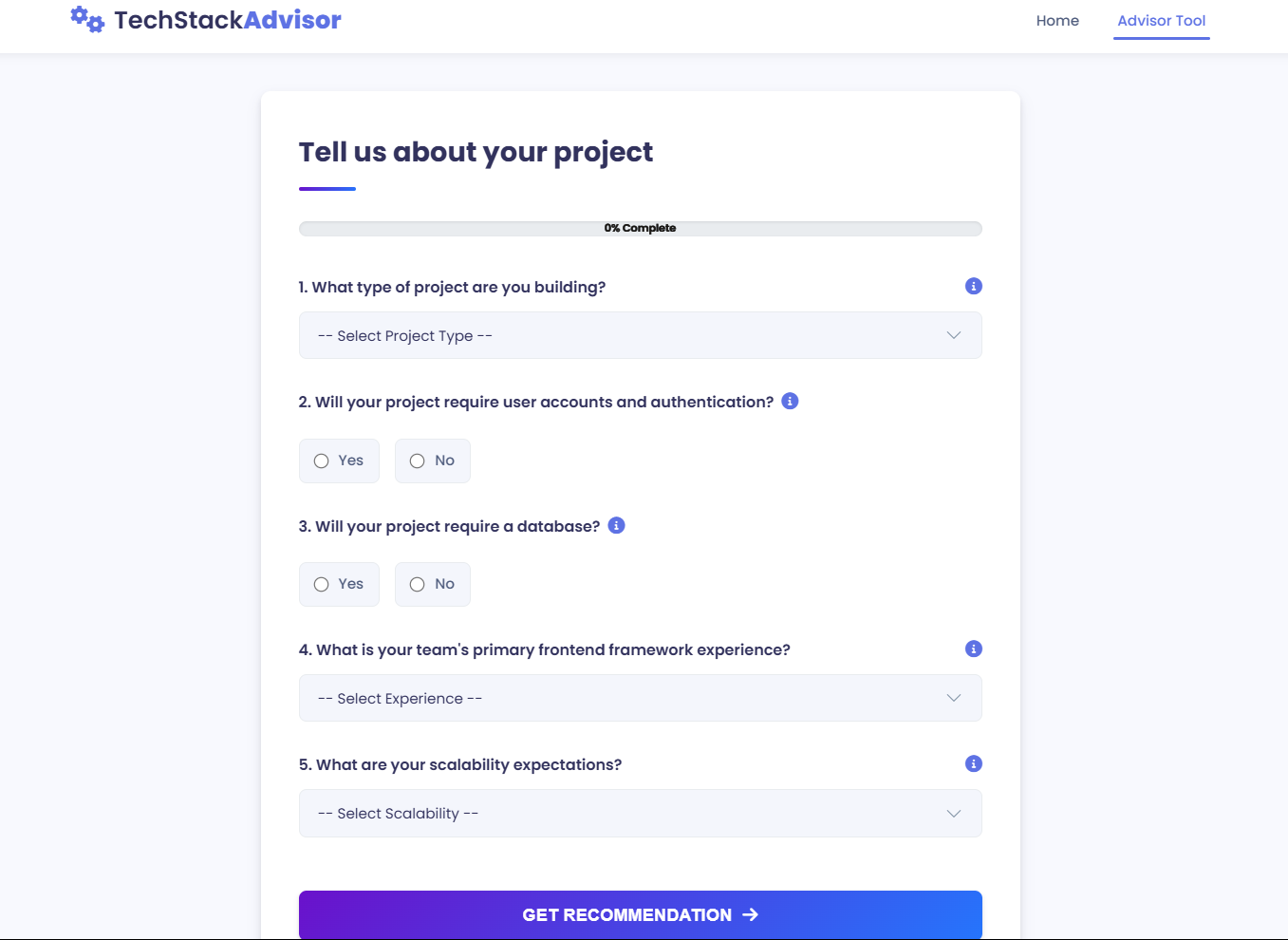
TechStackAdvisor is an interactive web application designed to help users determine an optimal technology stack for their software projects. It works by: Guiding Users Through a Questionnaire: Users are presented with a series of questions about their project, such as: The type of project (e.g., web app, mobile app, API). Requirements for user accounts and authentication. Need for a database. The team's existing frontend framework experience. Scalability expectations. Tracking Progress: A progress bar shows users how far they are in completing the questionnaire. Providing Information: Info icons next to questions likely offer tooltips or explanations to clarify technical terms or the implications of certain choices. Generating Recommendations: Based on the answers provided, TechStackAdvisor processes the information and, upon clicking "GET RECOMMENDATION," suggests a suitable technology stack (e.g., specific frontend frameworks, backend languages/frameworks, database types, and potentially deployment suggestions). The goal is to demystify tech stack selection and empower users to make better, data-driven decisions.
Challenges I ran into
Defining the Recommendation Logic: Creating a comprehensive and accurate set of rules or an algorithm that can translate diverse project requirements into sensible tech stack suggestions. This requires extensive knowledge of various technologies and their trade-offs. Keeping Technology Data Current: The tech landscape evolves rapidly. Ensuring the advisor's knowledge base and recommendations stay relevant and up-to-date is an ongoing challenge. Balancing Questionnaire Simplicity with Detail: Designing a questionnaire that is thorough enough to gather necessary information but not so long or complex that it deters users. Handling Nuance and Edge Cases: Some projects have unique requirements that might not fit neatly into predefined categories. Clearly Communicating Recommendations: Presenting the recommended stack in an understandable way, possibly with justifications for each choice.
Accomplishments that I'm proud of
Developing a Functional Recommendation Engine: Successfully creating the logic that provides relevant tech stack advice. Intuitive User Interface: Designing a clean, user-friendly questionnaire that guides users smoothly through the process. Providing Actionable Insights: Building a tool that offers genuine value by simplifying a complex decision-making process for developers and teams. Making Technical Knowledge Accessible: Helping users, regardless of their experience level, understand the factors that influence tech stack choices.
What I learned
Deep Dive into Tech Stacks: Gained a much broader and deeper understanding of various frontend and backend technologies, databases, and their suitability for different project types and scales. Rule-Based System Design: Learned how to structure and implement decision-making logic based on a set of inputs and predefined rules. Frontend Interactivity: Enhanced skills in building dynamic and responsive forms using JavaScript frameworks. The Importance of User Guidance: Understood how crucial clear questions, informational aids (like tooltips), and progress indicators are for complex forms.
What's next for Tech Stack Advisor
More Granular Questions & Options: Add more specific questions about project features (e.g., real-time needs, AI/ML components, specific third-party integrations). Detailed Recommendation Explanations: Provide justifications for why certain technologies are recommended, including pros, cons, and alternatives. Comparison Feature: Allow users to compare different recommended stacks or tweak inputs to see how recommendations change. Community Feedback & Ratings: Incorporate user feedback on recommended stacks or allow users to rate the usefulness of suggestions. Learning Algorithm: Potentially evolve the recommendation engine to learn from user choices and outcomes (if data can be ethically collected and analyzed). Integration with Resources: Link recommended technologies to their official documentation, tutorials, or relevant learning resources. Cost & Team Skill Considerations: Add options to factor in budget constraints or specific team skill sets more deeply into the recommendations. Save & Share Recommendations: Allow users to save their project profiles and recommendations, or share them with their team.

Log in or sign up for Devpost to join the conversation.