-
-
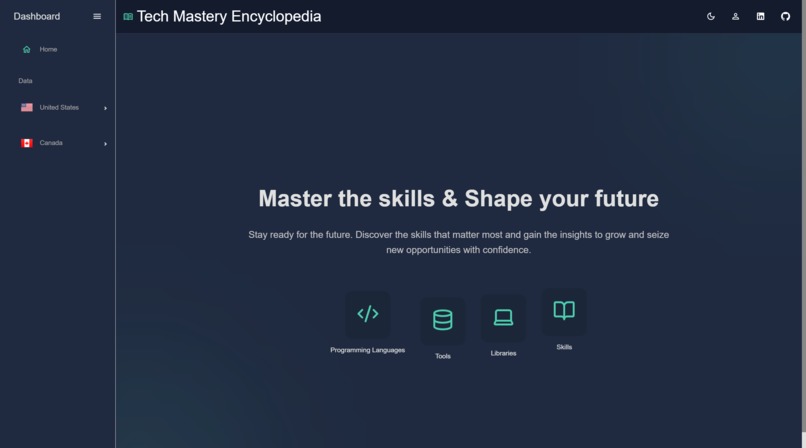
Home
-
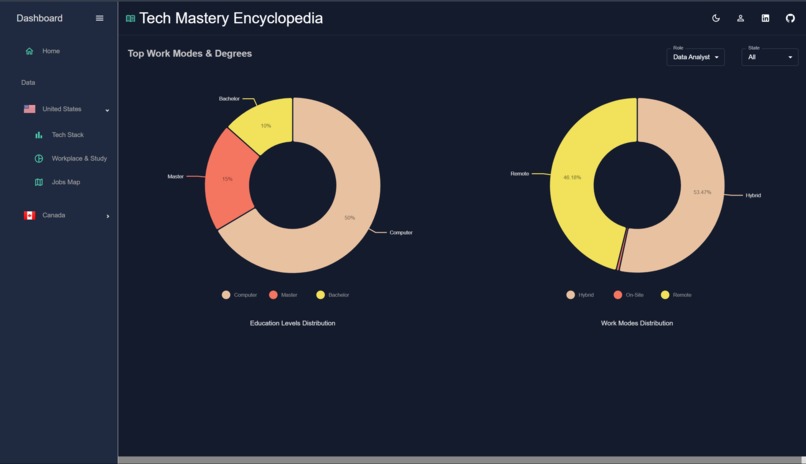
Work Modes
-
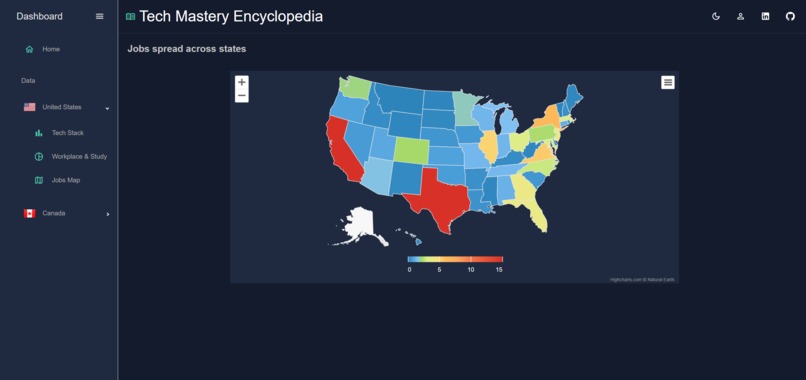
Job Heat Map
-
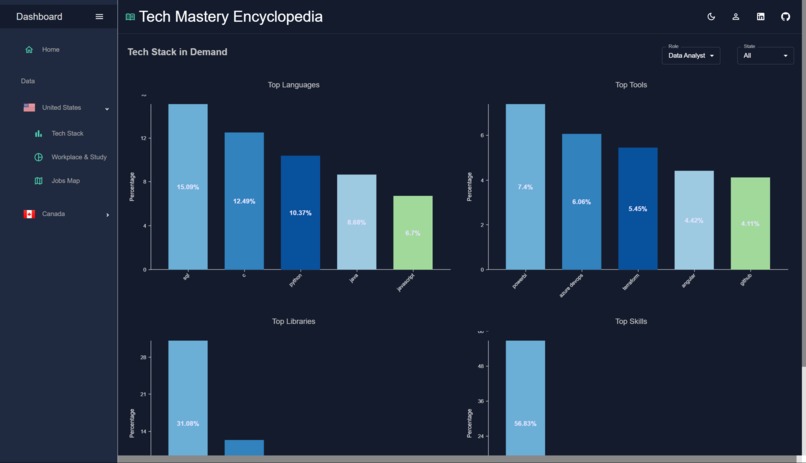
Tech Stack
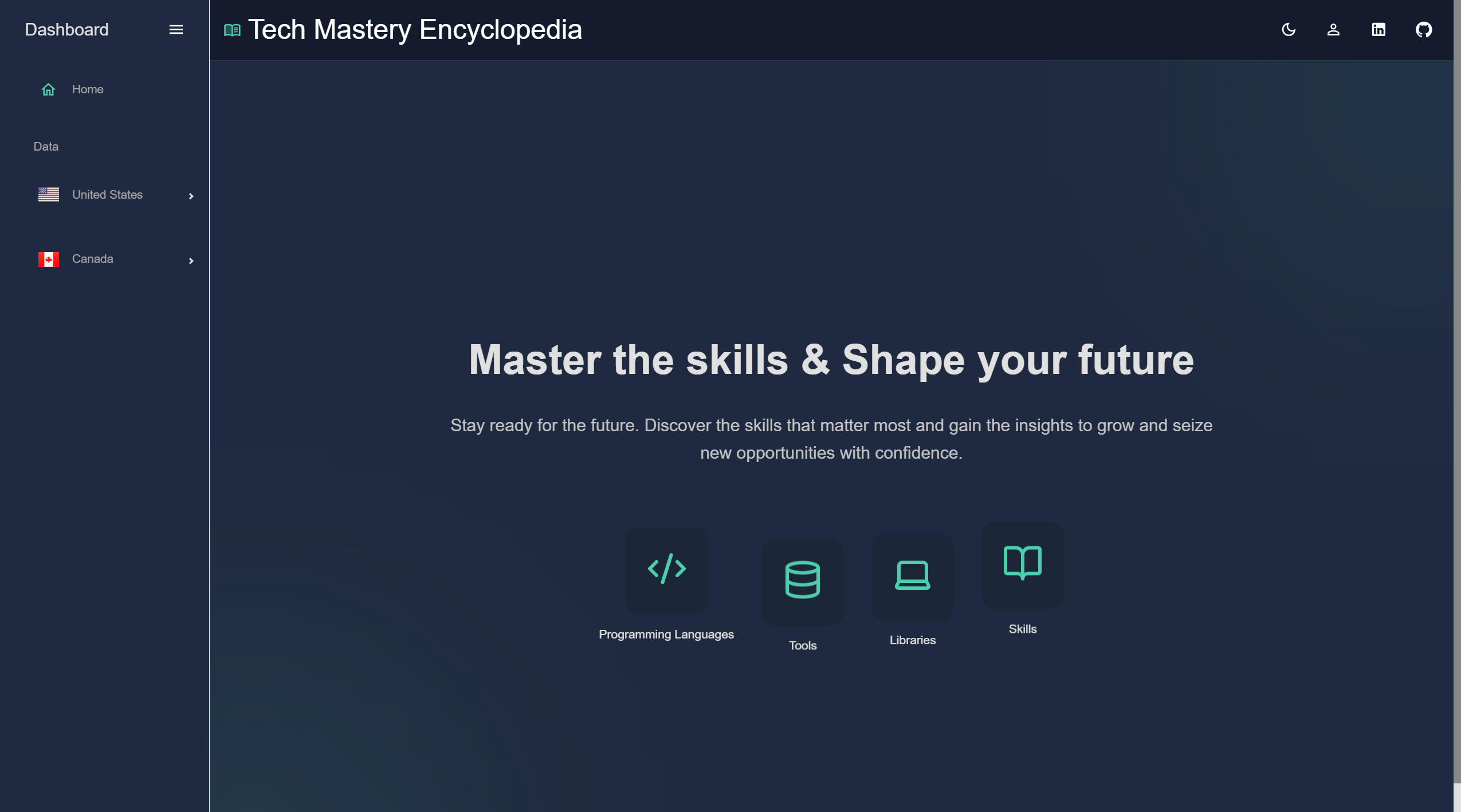
🧠 Inspiration
Many people looking to switch careers or enter the tech industry feel overwhelmed by the sheer number of skills and tools required for their dream jobs. The biggest challenge is:
"Which skills should I focus on?"
I built Tech Mastery Encyclopedia to simplify this journey. Instead of navigating through countless job postings and guessing what’s relevant, my platform scrapes real-world job data from LinkedIn (the most accepted professional network) and applies ML-powered analytics to provide clear, structured insights on the most in-demand skills, tools, and technologies for specific roles.
With this tool, anyone can make data-driven career decisions and focus on learning the right skills to land their dream job.
🔍 What It Does
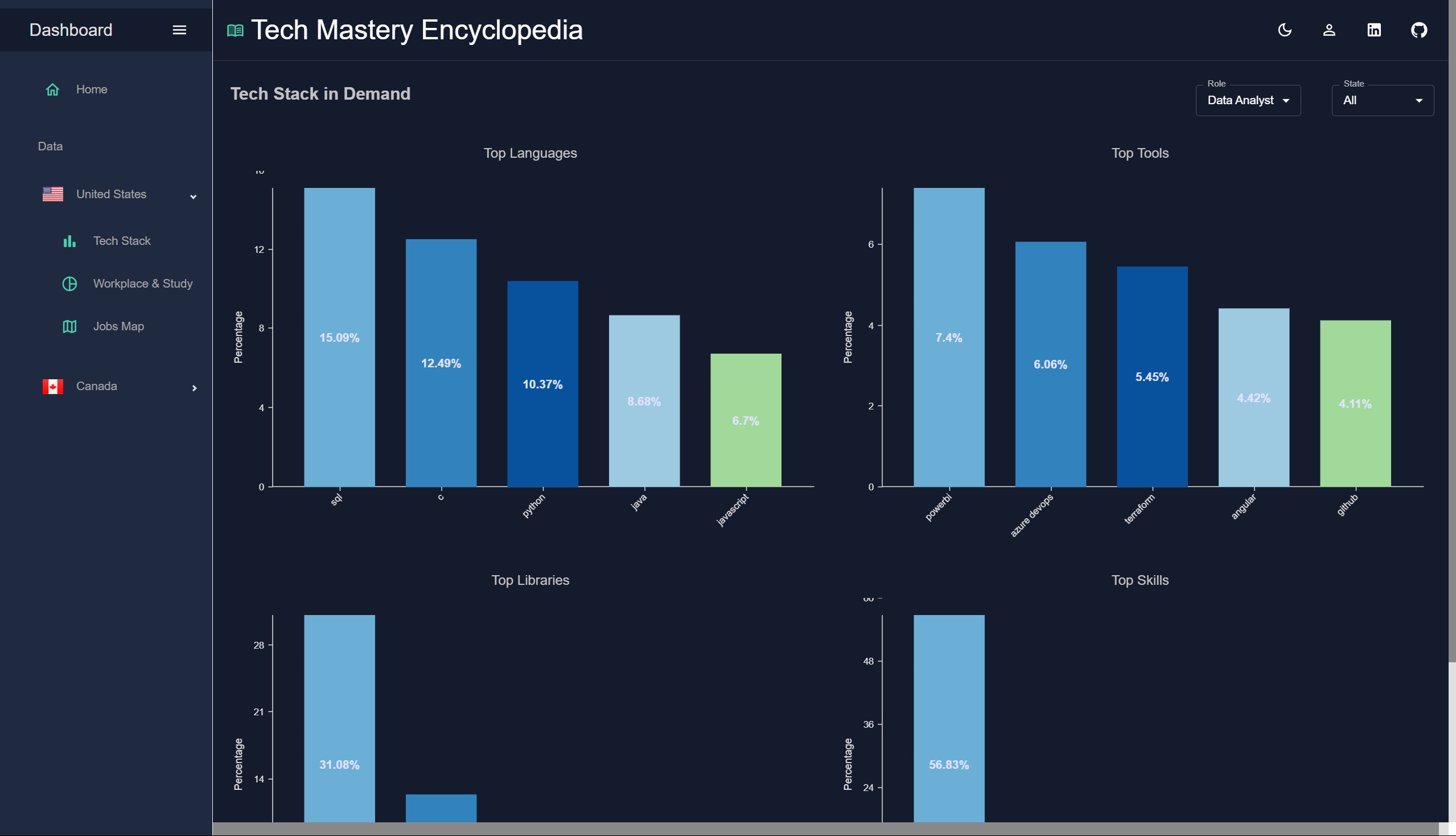
- Skill Trends Analysis – Identifies and ranks top programming languages, tools, and libraries in demand.
- Bigram Analysis – Extracts frequently mentioned skills, technologies, and job requirements from LinkedIn job postings.
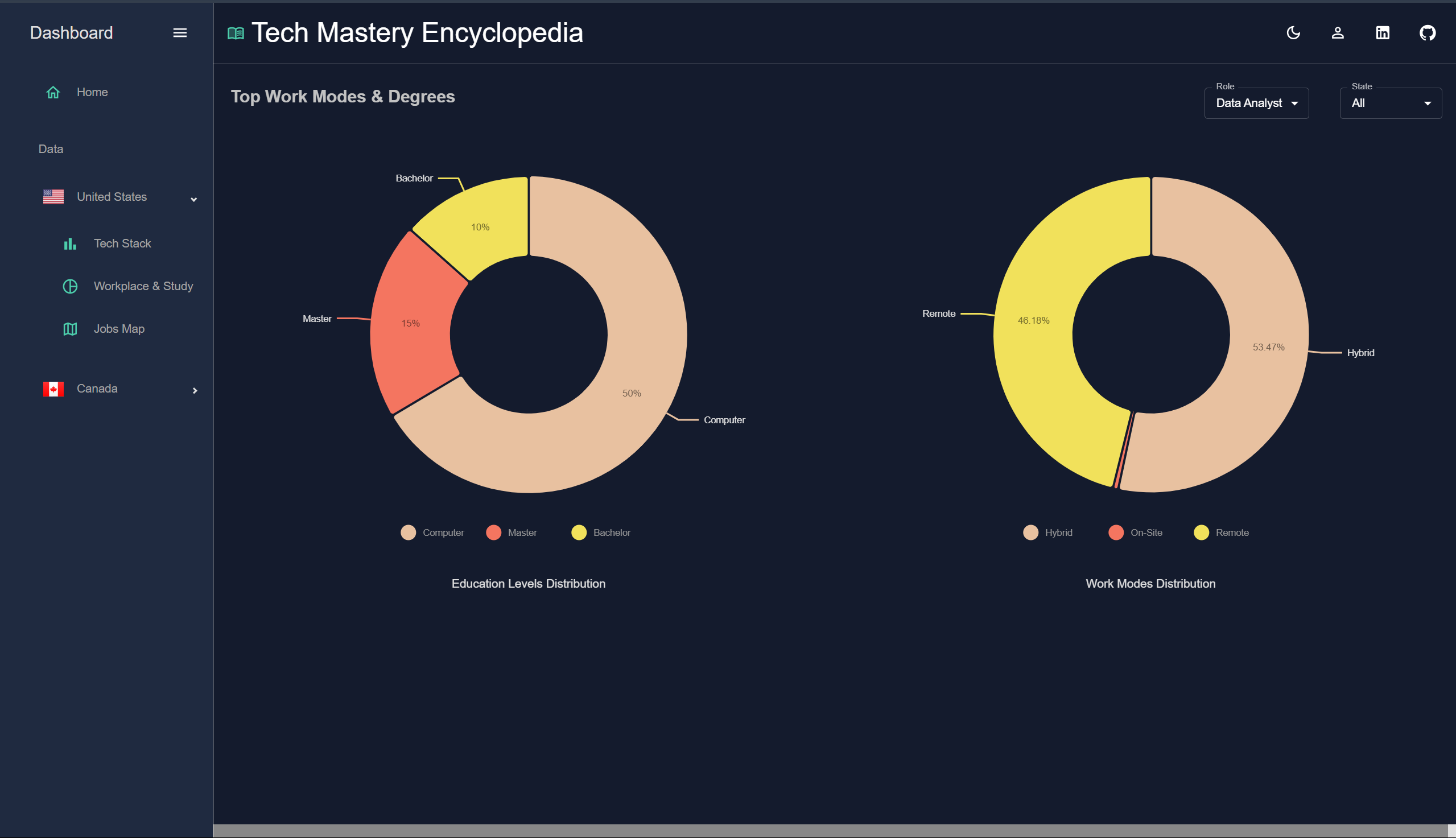
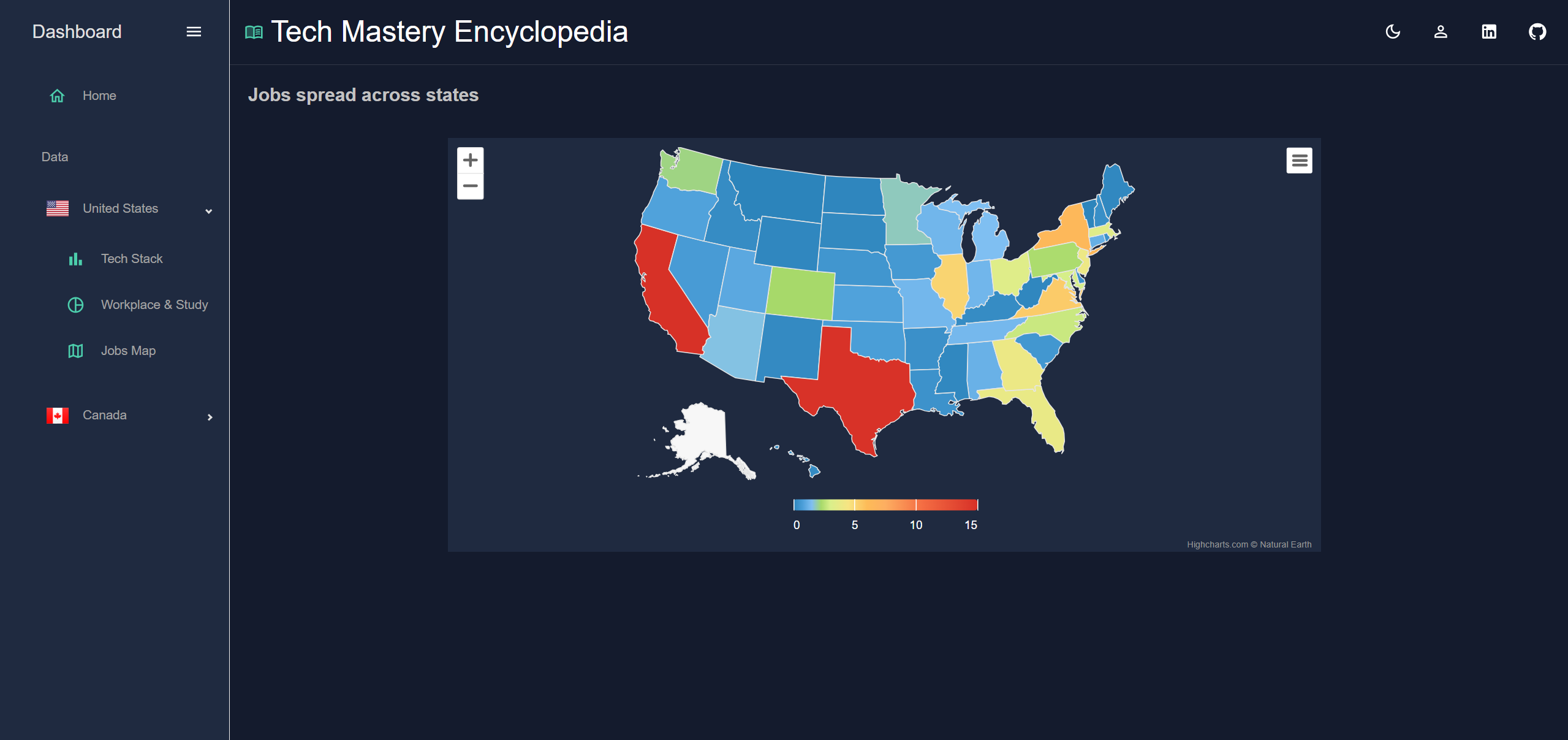
- Real-World Job Market Insights – Tracks education trends, work models (remote vs. on-site), and location-based job demand.
- Interactive Visualizations – Provides a dashboard with charts, heatmaps, and trend analysis to explore job requirements effortlessly.
⚙️ How I Built It
🔹 Frontend – Built with React, JavaScript, CSS, deployed on Netlify.
- GitHub: Presentation Layer
🔹 Backend API – Developed using FastAPI, hosted on AWS EC2, secured with authentication.
- GitHub: API Layer
🔹 Machine Learning & NLP – Uses BERT-based classification, LSTM, and Naive Bayes models to analyze LinkedIn job descriptions, automated via cron jobs.
- GitHub: Machine Learning Layer
🔹 Data Scraping – LinkedIn job postings are automatically scraped, structured, and analyzed to reflect real-world skill demand.
🛠 Challenges I Ran Into
1️⃣ Accurate Skill Classification from Job Descriptions
Since data is scraped from real-world job listings, there is a mix of essential skills and generic text in job descriptions. The challenge was to train the ML models to reduce false negatives rather than false positives—ensuring that I never miss a critical skill rather than filtering out too aggressively.
2️⃣ Handling Large-Scale Data Processing
With thousands of job descriptions being scraped, MongoDB indexing & query optimization was key to ensuring fast and efficient retrieval of insights.
3️⃣ Keeping Data Fresh & Meaningful
The job market is constantly evolving. I implemented automated cron jobs to refresh insights bi-weekly to reflect the latest skill demands.
🎯 Accomplishments That I am Proud Of
✅ Successfully implemented BERT-based text classification to extract job skills with high accuracy.
✅ Built an interactive dashboard that provides career insights in one click.
✅ Developed an automated LinkedIn job data pipeline, updating insights every two weeks.
📚 What I Learned
🔹 Data Can Be Noisy, But That’s Where the Magic Happens
Initially, I struggled with misclassified skills—some roles required expertise in "Python," but generic mentions of "Python" in job descriptions led to overfitting. I learned that real-world data is messy, and refining our preprocessing pipeline was key to improving classification accuracy.
🔹 Understanding the User Matters More Than the Tech
Even though BERT produced the best classification results, we learned the hard way that a highly accurate model that’s too slow is useless. Tuning ML models for efficiency without sacrificing accuracy was a valuable experience.
🔹 The Future of Work is Always Changing
One of the most exciting lessons was seeing how skill trends evolve over time. What was in demand six months ago may not be as relevant today. This project reinforced the importance of continuous learning and adaptability in today’s job market.
🚀 What’s Next for Tech Mastery Encyclopedia?
🔹 Expanding the job dataset to include more countries & industries.
🔹 Adding real-time job market monitoring with ML-powered trend predictions.
🔹 Enhancing career path recommendations based on emerging skills.
🏗 Built With
- Machine Learning & NLP: Python, BERT, LSTM, Naive Bayes
- Backend: FastAPI, MongoDB, Docker, AWS EC2
- Frontend: React, JavaScript, Netlify
🔗 Try It Out
📌 Live Project: Tech Mastery Encyclopedia
📌 GitHub Repository:
Built With
- amazon-web-services
- bert
- docker
- ec2
- fastapi
- javascript
- lstm
- mongodb
- naive-bayes
- netlify
- python
- react

Log in or sign up for Devpost to join the conversation.